This book was converted from its physical edition to the digital format by a community of volunteers. You may find it for free on the web. Purchase of the Kindle edition includes wireless delivery.
Hannah (Annie Gertrude) nee Gordon Landa was born in 1892. She was a journalist, novelist and playwright who wrote under the pseudonym Aunt Naomi. She was the sister of Samuel Gordon, the writer, and married Myer Jack Landa, a British Jewish writer. Together they published a number of novels and plays. She wrote a children's column in the Jewish Chronicle and published a book, Jewish Fairy Tales and Legends (1919).
This collection is full of vivid stories. Some are familiar to fairy-tales and folklore from other traditions while orher stories focus on Jewish struggle for survival and dignity.
The Palace of the Eagles The Giant of the Flood The Fairy Princess of Ergetz The Higgledy-Piggledy Palace The Red Slipper - a Cinderella version The Star-Child - a tale of Abraham's birth ( similar to Jesus's) and childhood Abi Fressah's Feast The Beggar King The Quarrel of the Cat and Dog The Water-Babe -a tale of Moses Sinbad of the Talmud - a Sinbad version The Outcast Prince The Story of Bostanai From Shepherd-Boy to King The Magic Palace The Sleep of One Hundred Years King for Three Days -Crusades , Godfrey de Bouillon The Palace in the Clouds The Pope's Game of Chess The Slave's Fortune - Elijah the prophet The Paradise in the Sea The Rabbi's Bogey-Man - a tale of golem The Fairy Frog Princess of the Tower
Rather a mixed bag of stories: some based on characters or events in the Bible, others semi-historical, and the rest straight from fairyland. Several stories of evil Christians and their nefarious doings; a mirror image to the antisemitic stories in Grimm.
Calling out a handful of them as worth reading for one reason or another: "The Red Slipper" is a very inferior version of Cinderella, where the prince never meets the girl, but instead finds her shoe and falls in love with her by proxy.
"Abi Fressah's Feast": the title character is a cadger after dinner invitations, and is tricked into a comeuppance.
"The Rabbi's Bogey-Man": a good Golem story, with bonus Christophobia.
I saw this book of tales referenced several times in other sources, most recently probably in "Jewish Myth, Magic & Mysticism," and I finally decided to give it a whirl. Most of the tales are deceptively simple (containing straightforward stories for the kids and timeless allegorical resonances for the parent or grandparent reading to said-kids). Others have the slack feel of biblical apocrypha, anti-climatic and without much lesson to impart other than that one should be nice to God's Chosen unless they wanted to be smited (sound advice, but not a lot of narrative to mine there).
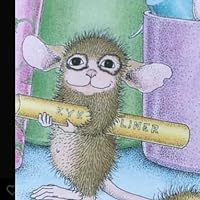
My favorite tale, far and away, was "The Pope's Game of Chess." I won't spoil it here for anyone who hasn't read it, but it is a poignant story about the inseparable bond that fuses a proud father and his loyal son across the chasm of time and space to underline the never-fading saliency of the Fifth Commandment (especially worthy of reiterating now when so much of our postmodern humor seems to center around the mocking of the aged). Illustrations proliferate throughout, and while they're capable enough (kids will definitely like them) there is unfortunately no name attached to them in the text I have. Mayhaps Aunt Naomi (Gertrude Landa) did them herself? Regardless, they're not as enchanting as those by Zionist draughtsman Ephraim Lilien Moses, but few things are.
If you like fairy tales, stories of the Jews of the Biblical era ( transposed mostly to German Jewry in the Rhine Valley) there is some good stuff in here. But a straight-through reading isn't quite rewarding enough for me to recommend it in toto. At least not enthusiastically.
Thought I would write an honest review that wasn’t Anti-Semitic like the top review currently. This book is a pretty good selection of Jewish folklore ranging from biblical to a modern Europe. Many new ones to me and some classics that I was told in Hebrew school, including the Golem of Prague. There is however a ton of spelling mistakes and grammatical errors as well as one or two tales that did not age too well. My biggest problem with the book is that sometimes Jewish folklore can end abruptly or the message is so entangled that it can be hard to understand what moral or message is being told. Sometime I wished there was a exploration or reference to the story as Jewish folklore is also really hard to find on the internet. If you are interested in reading this book to learn more about Jewish culture and it’s history, I would suggest instead to read ‘Folktales of the Jews’ edited by Dan Ben-Amos. It has explanations and write-ups that explain the tales in cultural, historical and literary background. There are 3 volumes of it out now and soon to be a total of 5 volumes in total, all with different stories from different regions. If you’re just looking for some strange stories and nothing more, go hard, The Fairy Frog is a particularly fun one.
My six year old enjoyed this book. I thought it was okay. There were many typos - the book needs a good editor and a second edition. Some of the stories were fantastic. Many were boring.
The most annoying thing about this book was its socialist politics.
The most interesting thing about this book was how permeated it was with "us-ness." Having just read Buddhist, Catholic and Muslim children's stories to my son, I had to explain to him in many stories what was particularly Buddhist or Catholic or Muslim about the stories. In this book I was reminded that this was a story about Jews, and Jews are different from other people, on every page many times. In other fairy tale books the hero saves his village or his family. In this book heroes save the Jews - which is always a race in this book, not a religion that anyone can adopt as in the Catholic book.
My favorite thing about this book was the emphasis on wisdom. If the Buddhist and Catholic stories said over and over "Be kind, be kind, be kind," these ones said, "Be wise, be wise, be wise."
Interesting collection of stories of "indeterminate origin"
This was an easy read, taking only part of an afternoon to finish. Many of the stories seemed to be a mix of both older and newer tales. I found the notion that Alexander the Great viewed "luminous" fish as I seem to recall those being a twentieth century discovery. I think it would be safe to conclude that this collection of stories are BASED on Jewish fairy tales and legends with many liberties taken in their retelling. I did find the similarities between the story of the red slippers and Cinderella entertaining and wish there had been more documentation concerning the origin of the included tales a nd their approximate age, country/region of creation, etc.
A lot of cute stories. Some of the stories feel like the equivalent of Bible fan fiction giving insight and fleshing out some of the characters, such as Abraham. This had the story of Abraham and smashing the idols. Also had a few others like one about David. It's good to help flesh out the characters.
This was a delightful, quick read. I was enchanted by many of the stories, and many of them felt very homey and familiar, like I'd heard a version of them before. They really did seem like Jewish fairy tales. Many of these short tales would make great bedtime stories.
These short stories have inspired me to go back and read more fables. Somehow I have forgotten about them. My favourite from these collection were ‘The Slave Who Became a King’ and ‘The Ragged Pedlar’.
This book, originally published in 1919, was the origin for Sol Aronson's picture of the laughing Og riding a unicorn behind Noah's Ark, which I'm sure I've mentioned several times. It gives some more details about Og, showing him carrying a bag of seeds for Noah, being Abraham's servant, and failing to kill Moses and his followers. Other stories also expand on stuff from the Bible, like one about the spirit who haunted the Pharaoh when Abraham and Sarah were visiting his palace; a tale of Moses as an infant; and an account of Abraham smashing the idols at his father's shop and surviving being thrown into a furnace by Nebuchadnezzar in an obvious parallel with the story from Daniel. A variation of the story of Esther involves a Persian Shah who kills all of the descendants of King David except one young boy, due to a dream he has about a rose garden. One story has a rabbi who sleeps for a century to see the restoration of Jerusalem. A fable, set in the time of Adam and Eve, explains why cats and dogs don't get along. Several of these are stories of people learning wisdom and humility, including King Hiram of Tyre, who thinks he's a god just because he's lived a long time. I think I'd come across the story of Alexander the Great before, which has him meeting the Amazons, visiting the gates of Paradise, being unable to cross the Sambatyon River, and going underwater and into the sky. It ends with his dying upon entering Babylon, which Jewish wise men had warned him not to do. A tale about the Crusader Geoffrey de Bouillon says that he ruled as King of Jerusalem for only three days, although it's a technicality because he just changes his title. Another is likely inspired by the tales of Sinbad, and has the protagonists visit an island that turns out to be a whale, receive help from a Ziz, journey through the lands where the Israelites wandered after leaving Egypt, and kill a demon. "The Fairy Frog" is about a couple who are kindly toward a giant frog, who then grants their wishes and reveals that he's a shapeshifting fairy "son of Adam." And there's a legend of Rashi, who wrote the first commentary on the Talmud.