In this intense and brilliant book Bowles focuses on Morocco, condensing experience, emotion, and the whole history of a people into a series of short, insightful vignettes. He distills for us the very essence of Moroccan culture. With extraordinary immediacy, he takes the reader on a journey through the Moroccan centuries, pausing at points along the way to create resonant images of the country, it's landscapes, and the beliefs and characteristics of its inhabitants.
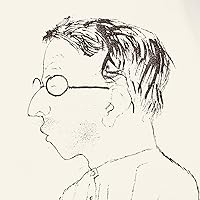
Paul Frederic Bowles grew up in New York, and attended college at the University of Virginia before traveling to Paris, where became a part of Gertrude Stein's literary and artistic circle. Following her advice, he took his first trip to Tangiers in 1931 with his friend, composer Aaron Copeland.
In 1938 he married author and playwright Jane Auer (see: Jane Bowles). He moved to Tangiers permanently in 1947, with Auer following him there in 1948. There they became fixtures of the American and European expatriate scene, their visitors including Truman Capote, Tennessee Williams and Gore Vidal. Bowles continued to live in Tangiers after the death of his wife in 1973.
Bowles died of heart failure in Tangier on November 18, 1999. His ashes were interred near the graves of his parents and grandparents in Lakemont, New York.
The river runs fast at the mouth where the shore is made of the sky, and the wavelets curl inward fanwise from the sea. For the swimmer there is no warning posted against the sharks that enter and patrol the channel. Some time before sunset birds come to stalk or scurry along the sandbar, but before dark they are gone.
Paul Bowles was a polymath, musician, writer, lover of North Africa, best-known now for The Sheltering Sky, but whose pieces on Morocco included here provide a brisk and knowledgeable background to the country and its mores. That said, this is an odd book which slaps together a few essays with some impressionistic renderings of moments in the country's religious and cultural history, and then capping them off with a scholarly essay about Bowles by Brian T. Edwards which is interesting, but rather clunky reading after the effortless flow of Bowles' prose. It is still recommended, though.
The experience of driving freely through the south of Morocco - something I have done twice - is unforgettable. The lunar landscapes, rural towns that melt into the red ochre hillsides, sharp reliefs provided by the odd Ksar or dune against the blue blue sky, friendly/wary people ultimately shown to have a hospitable and easygoing mindset, gorgeous valleys and oases: all of these are rendered in some way in this succinct book with the able brevity of familiarity. There are some excellent points, together with some hangovers of the Euro/Anglocentric belief systems of the mid-20th century. Bowles is sympathetic and judgmental, keen-eyed and occasionally prejudiced.
The essay gives us some context for the way literary and cultural critics have debated Bowles' relationship with Morocco and has a few points to make. There is a review of The Sheltering Sky viewed within the context of what certain US dreamers had labelled The American Century; there is also the view of local critics, who viewed Bowles in rather different terms to those American Century peddlers. He had played a role in diplomacy and in opening up the concept of the post-colonial model.
Literary theory aside, Bowles in essence 'colonised' Morocco himself in the eyes of the US context, gave it a plausible shape for many rich world undergrads and then to all intents and purposes led them there, where their search became one of Kif and camels. He became a kind of salesperson for a state of tolerant dilettantism among the heart-invoking Berbers and the power-hoarding Moroccan Arabs. Many took him up on it, turning parts of Morocco into magnets for the restless youth of the 1960s and 1970s. But the reason people listened was because his writing, and his translations of local unpublished writers like Mohammed Mrabet, was evocative beyond belief. And to evoke in this age of opportunities is indeed to sell.
quite a strange book. not realy stories more bits of ideas, reflections, some nice, a lot of them bizzare but what intetesting is that it brings out Morocco.
I have heard many great things about Bowles from other writers such as William Burroughs and Ira Cohen so figured it was about time that I checked him out.
If James A. Michener had been a short storywriter and had decided to write a book on Morocco, then maybe he would have written a book like Points in Time. Bowles gives us about 10 or 11 short stories about Morocco, tales of suffering, persecution, religious conflict and love which are poignant to the brink of heart-breaking.
This is a really good little book you can devour in an afternoon really but the reason I give it three stars is that I feel that it could have been much more and that this is not the best book by Bowles. Look forward to reading A Sheltering Sky and Delicate Prey later on this year.
Not surprisingly as Bowles was a composer before he was a writer, these very brief stories of Morocco are almost musical. Bowles most certainly gained a sense of place that comes through mystically.
“After half a day's voyage they came to a large lake or marsh. No such place now exists, the lagoons being all to the north of the cape. South of it the shore is either guarded by cliffs, steep slopes, or stony and sandy beaches. Nor is there any sign of such a lake having existed, and the sudden winter rains which make every dry watercourse roar from bank to bank are not of a character fit to cause floods likely to be mistaken for a marsh or a lake.” — “The old cemetery by the grottoes has been despoiled. To our great grief they have converted it into ploughed land. And by the seven sefarim and the seven heavens, by the twelve roes, by the bread and the salt, by the Name and the sacrifice, we swear that justice shall be made to prevail. A few can remember that summer. The sun's breath shrivelled what it touched. No one went out, for there was fever in the lower city. They say he had a walled-in garden where he walked at sunset. It could have been his prison, save that he was free, and with the leisure to invent the perils that beset him from within. 'Shall the pillar of the law be shattered, and the editice laid with the dust, the Mishnah desecrated and trodden underfoot?' With the seven categories of the just may his part and lot remain. No one went out. We waited in our darkened rooms, and with every breath of wind that clicked the blinds we shuddered. May those destroyed by fever rest in Eden, and their dwelling be under the Tree of Lite.” — “He had not been wrong in expecting them to show incredulity and amazement when he began to address them. They listened, nodding their heads slowly, puzzled by his strange metamorphosis. At one point he remarked that the halakkic material had little to do with God, and that even the haggadic midrashim contained no passages dealing with the nature of God. Rabbi Shimon Sagali stiffened. Every phrase contains an infinite number of meanings, he said. And an infinite number of meanings is equivalent to no meaning at all! cried Fra Andrea.” — “Every second, ten stars set behind the black water in the west.” — “Now that we had seen their blood, we felt better. The ship drifted ashore farther south.” — “He had fled from his tather, having had the misfortune to kill his elder brother, whom his father loved entirely. In the courtyard. By the fountain. There was no time. I heard my father at the door. Not even time to pull out the knife. Only to hide and then run out of the house. Allah! Allah!” — “The dogs raced here and there across the scrubland. They passed a hamlet where men and women were working in the fields, while cows grazed nearby. The greyhounds rushed onto the scene and made a concerted attack upon the cattle. As a calf fell, a farmer in the field raised his gun and shot one of the dogs. The others scattered.” — “Along the Oued Tensift beyond the walls, there were caves that had been hollowed in the red earth cliffs. The entrance to Sidi Youssef's cave was protected by high thorn bushes and could not be seen from the river. He sought solitude, and although he was known for his great holiness, the people of Marrakech granted him his privacy, for he had leprosy. He claimed that the disease had been conferred upon him by Allah as a reward for his piety. When pieces of his flesh caught on the thorns and remained hanging there, he gave hearttelt thanks for these extra proofs of divine favour.” — “There were days when the students trembled. Are you cold? the master said. We should sit in the courtyard, they told him. There are djenoun in hiding here. Sidi Ali ben Harazem rebuked them, saying: Be still. If the prayers we send to Allah can reach the darker world, friends can be made from enemies, and Islam can enter there. And the students shivered and wrote, hearing the water's gurgle beneath the tiles. And Sidi Ali ben Harazem talked until dusk, when the swallows no longer flew above the city.” — “When she remonstrated with Mohammed, saying that she needed to go out for a walk in the tresh air, he answered that it was common knowledge that a woman goes out only three times during her life: once when she is born and leaves her mother's womb, once when she marries and leaves her father's house, and once when she dies and leaves this world. He advised her to walk on the roof like other women.” — “Days of less substance than the nights that slipped between. And in the streets they whispered: Where is he?” — “When he had finished with this task, he withdrew to another tent to confer with Cheikh Abdeljbar on the form of death to provide for their prisoner the next morning. They sat up half the night diverting themselves and each other with suggestions which grew increasingly more grotesque. By the time the cheikh rose to retire to his own tent, he was in favour of cutting a horizontal line around El Aroussi's waist and then flaying him, pulling the skin upwards over his head and eventually twisting it around his neck to strangle him. This did not seem sufficiently drastic to Sidi Ali, who thought it would be more fitting to cut off his ears and nose and force him to swallow them, then to slash open his stomach, pull them out and make him swallow them again, and so on, for as long as he remained alive. The older man reflected for a moment. Then, wishing his son-in-law a pleasant night, he said that with Allah's consent they would continue their discussion in the morning. The dialogue was never resumed.” — “One day when she was in the garden, she found a gate unlocked, and quickly stepped outside. What happened to her after that is a mystery, for she was not seen again. The people of the countryside claimed that she had returned to the forest in search of El Aroussi. They sang a song about her: ‘Days of less substance than the nights that slip between / And Rahmana wanders in the forest, and the branches catch her hair.’” — “At night the Légionnaires in the oasis, drunk with hot beer and self-pity, howl songs of praise for a distant homeland. The sand is cold under the branches of the tamarisks where the camels lie, shaded from the moon-light.” — “Money for everybody. It was the girls who brought it back. They carried handbags. They wanted to be with the Americans. And all you could hear was Hokay, bokay! Give me dollar. Come on! Bye bye!” — “A certain night the air was heavy with jasmine, and the bodies of Frenchmen and their families were left lying along the roads, under the cypresses in the public gardens, among the smoking ruins of the little villas. While it was still dark, a breeze sprang up.” — “The women of the household were awakened by the furious bellowing of a stag, a sound that everyone in the tchar had learned to dread. They called to Mohammed, but he did not answer. The men from a nearby farm had heard the animal's call, and they came running. As they approached Si Abdelaziz's house, the stag bellowed again. First they saw Mohammed's white garments moving on the ground as the stag stamped on them and gored them with his antlers. Then they saw Mohammed lying on his side, with his intestines coiling out of him into the dirt. The stag bellowed once more, turned, and disappeared into the darkness. They carried the body up to the house and covered it.” — “The river runs fast at the mouth where the shore is made of the sky, and the wavelets curl inward fanwise from the sea. For the swimmer there is no warning posted against the sharks that enter and patrol the channel. Some time before sunset birds come to stalk or scurry along the sandbar, but before dark they are gone.”
The pieces included in Points in Time are brief and dreamlike, and entirely effective in painting a historical portrait of Bowles' adopted homeland, Morocco. Although written twenty-five years ago, these short prose poems are surprisingly effective at exploring the divide between Islam and the West, and do so without any overt moralizing on the author's part. As always, Bowles is a prose stylist of the first order, and the crystalline nature of his writing is all the more effective at these shorter lengths, where every word has such a significant footprint.
A collection of short stories, poems and observations, all taking place in Morocco. A very quick read and worth the time. Bowles has a keen understanding of the Muslim faith and weaves this into his stories. The short stories read like fables. He is a very engaging writer.
I have wonderful memories of a trip to Morocco, a few years ago and interested to read this slim volume. Some stunning descriptions and I liked is use of language. Some of the images were quite violent. A worthwhile read.
read in a single sitting in the bath. it's alright. seems like he published almost nonstop (i have a mild respect for that) and probably didn't think about any of it very much and in consequence it didn't make me think about anything at all.
One night, alone in a hotel in Rabat, I had a couple of Casablancas in the bar. As I had nothing to read, I found a book in the hotel library. Many were in French and, not wanting to appear pretentious (moi?), I decided not to try and navigate my way through a French one. Consequently, there were only a few to choose from. Most of these were the usual best-sellers left behind by English speakers and they didn't appeal to me. However, amongst them I found this little gem (pretentious, moi?) It's only a small book and I actually finished it in an evening (I had a steak and two glasses of red, I was enjoying myself so much!) It's a collection of short stories that move through time, gradually telling a history of Morocco, especially the country's relationship with foreigners and the relationships between Islam, Judaism and Christianity. Some of the tales are only a paragraph long, others a few pages. It's a clever collection because each story is pared down to the bare minimum and there is no narrative inter-linking them. I found the book inspiring: I have tried to do something similar to tell the story of my travels in Southeast Asia, but have never managed it. Bowles has perfected what I was trying to achieve.
Good read only if you know what to expect. This is 11 super short "stories" many of which leave you wondering if it wasn't a few paragraphs lifted out of a longer story. A few of the stories are pleasing reads, and they are all told in a perhaps overly poetic or at least overly stylized manner. I had no issue with the lack of quotation marks, but the way that events are told is too cryptic.
I was hoping to get a sense of Morocco from this, but cant say much that I did. At least it was extremely short.
Yet again i was just not impressed by Paul Bowles. The book is interesting in that it is like poems, short stories, essays...etc all rolled in to one. I just feel like he smokes too much kif! He begins to make interesting points and calls upon the spiritual side, then ends with something trivial if he even eer concludes his points. The main point here is that Paul Bowles is not for me...
Snippets of Morocco. Bowles has a way of being too abrupt when he concludes a story, but it reminds me of Middle Eastern fairy tales I read as a child, and maybe that's the point. The lack of sentiment in the story of the beautiful Jewish girl who marries a Muslim man and later runs away from him, only to be beheaded, renders its very telling as flat, emotionless---yet, comic?
I think that after fifty years of reading modern and post-modern novels, I'm tired of authors who feel it is necessary to reinvent narrative at the expense of story. I love Paul Bowles, but not so much this. Felt reading these vignettes like I was flipping through postcards in a bin at an antique store in order to assess a distant, gone culture.
Nearly a prose poem of short, odd, and dark tales from the tribes of Morocco retold by Paul Bowles and ranging over hundreds of years. Little has changed in that time as the tales demonstrate. Best read after his great landmark novels: A Spider's House, Let It Come Down, The Sheltering Sky.
Paul Bowles skill at conveying the feel, the taste, the smells of Morocco is masterful in these short stories. And each story feels like afable, old tales passed down through generations, familiar yet each uniquely surprising. Paul Bowles has further ensconced himself as one of my favorite writers.
This is a sparse collection of anecdotes and stories told to Paul Bowles. If you've ever read Sayings of the Desert Fathers, or something similar, that's what reading this is like, except there isn't much in the way of spiritual reflection. Still, they were interesting, like reading folk tales, although I think many of these were rooted in truth.
To be honest, I'm not really sure what this brief work is...poetry? vignettes? fables? Whatever it was, I enjoyed the way I felt when I read it, as when listening to a good piece of music I can't really define.
This book is very clever. I read it shortly after returning from Morocco. Reading it made my experience there somehow make more sense. I can recommend Paul Bowles, especially if you have ever been, or ever plan to go, to Morocco..
Points In Time by Paul Bowles, one of the most overlooked American writers, is a fascinating little book that brings mysterious, exotic Morocco to life. The brutalities of the desert tribes come alive in the stories as does the lyricism of Bowles' language.
after Sheltering Sky and after reading Points in Time I feel like I have breathed the air of Morocco and its geography and experienced a culture so foreign to the one I live in. Paul Bowles can create that--
A very creative and interesting (though somewhat disjointed) short book. Great for those interested in Morocco and who are fans of Paul Bowles' somewhat morbid style.