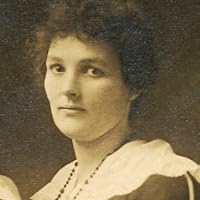
The Duchess of Devonshire's second book, first published in 1778, chronicles the life of a young, newly married lady of high society not unlike its author. Written in epistolary format, the story follows Julia from her idyllic country life to her marriage to a rich aristocrat. She soon discovers her husband is nothing other than a rake, spending all his and her money on gambling and mistresses. Without the protection of a husband, soon others come on the scene, intent on taking advantage of young and naive Julia. An anonymous guardian, in the guise of The Sylph, writes to her, giving her guidance through her troubles...but will it be enough?
Georgiana Cavendish, Duchess of Devonshire (née Spencer) was the first wife of William Cavendish, 5th Duke of Devonshire, and mother of the 6th Duke of Devonshire. Her father, John Spencer, 1st Earl Spencer, was a great-grandson of John Churchill, 1st Duke of Marlborough. Her niece was Lady Caroline Lamb. She was the great-great-great-great-aunt of Diana, Princess of Wales. She attained a large amount of fame in her lifetime.She became notorious for her marital arrangements, her catastrophic love affairs, and her love of gambling; she was famous for her beauty and her political campaigning; and she was a leader of fashionable style. Cavendish wrote a number of works of both prose and poetry during her lifetime. In 1779, she anonymously published the epistolary novel The Sylph. It has been speculated that The Sylph was written by Sophia Briscoe. A receipt at the British Library suggests that Briscoe was paid for The Sylph, but it is thought more likely that Briscoe may have served as an intermediary between the duchess and her publisher, so that Georgiana could keep her anonymity.
When this novel was published anonymously in 1779, its author, an indirect ancestor of the late Diana, Princess of Wales*, was twenty-two years old and had been unhappily married to the 5th Duke of Devonshire since the age of seventeen. She had already become a leader of fashion in London society, a famous hostess who gathered around her a large number of literary and political figures and an important campaigner for the Whig Party. Georgiana was also a prolific letter writer and later became a gifted amateur scientist. Less positively, Georgiana had developed a addiction to gambling which afflicted her until her death at the age of forty-eight. After a series of miscarriages, Georgiana went on to bear four children, including one by her lover Charles Grey (later 2nd Earl Grey, he later became Prime Minister and gave his name to the tea), raised her husband’s illegitimate daughter and lived in a ménage à trois for twenty-five years, with her husband and his mistress, Lady Elizabeth Foster.
The Sylph is an epistolary novel which tells the story of an innocent and beautiful country girl, Julia Grenville, who marries an older man and goes to live in London high society. Her husband treats her brutally and the narrative touches on marital infidelity, miscarriage and sexual and physical assault. Julia, who sees through the vapidity of the fashionable life she leads, nevertheless becomes entangled in it and starts to gamble. Unlike her creator, Julia manages to extricate herself from this particular vice. She acquires an anonymous protector – the Sylph of the title – to whom she turns for moral guidance. Ultimately, Julia finds happiness in a fairy tale ending.
Georgiana’s biographer, Amanda Foreman, calls the The Sylph a “thinly disguised autobiographical novel”. It is also a roman à clef, although a casual reader – and even a reader who is reasonably well-acquainted with Georgiana’s life through reading Foreman’s biography - would be unlikely to identify any characters other than the heroine, who is a stand-in for Georgiana. It is fair to say that for all her other skills, Georgiana was not a gifted novelist. The novel is, for readers with modern tastes, wildly melodramatic and completely implausible. It is the kind of novel which Jane Austen parodied to great effect in early works such as Love and Friendship and Lesley Castle.
The real value of the work is the glimpse it provides into upper class life in late 18th century England, and more particularly, the insight it offers into Georgiana’s mind. Recommended to anyone who enjoyed Amanda Foreman’s biography of Georgiana. For everyone else, don’t bother, or at any rate read the wonderful Georgiana, Duchess of Devonshire first.
I enjoyed reading this with my friend Jemidar.
*From memory, Diana was Georgiana's great-great-grandniece, with maybe another great in there.
Imagine if Kim Kardashian (or one of the other Hollywood celebutantes) wrote an insider's account of the scandalous lives of the rich and powerful.
Scratch that. Imagine that she wrote a SMART, COMPELLING insider's account of the scandalous lives of the rich and powerful.
Written by Georgiana, The Duchess of Devonshire, and published in 1781, "The Sylph" is an epistolary novel that follows a young Welsh beauty named Julia, who is plucked from the obscurity of her small country village and the happiness she shares with her sister and father by the rakish Sir William, and thrown into the debauchery of London's elite society.
Sadly, the novel closely mirrors Georgiana's own life and her painfully disappointing marriage to the Duke of Devonshire. It isn't always pleasant to watch Julia stumble and suffer through many of the same pitfalls that plagued Georgiana, but it is fascinating and well worth checking out.
Description: A novel in letters in which the heroine and letter-writer, Julia, has married a dashing man-about-town, Sir William. He leads a dissolute life in town, racking up gambling debts which he seeks to pay off by using his wife’s inheritance.
Opening: LETTER I.
TO LORD BIDDULPH.
It is a certain sign of a man's cause being bad, when he is obliged to quote precedents in the follies of others, to excuse his own. You see I give up my cause at once. I am convinced I have done a silly thing, and yet I can produce thousands who daily do the same with, perhaps, not so good a motive as myself. In short, not to puzzle you too much, which I know is extremely irksome to a man who loves to have every thing as clear as a proposition in Euclid; your friend (now don't laugh) is married. "Married!" Aye, why not? don't every body marry? those who have estates, to have heirs of their own; and those who have nothing, to get something; so, according to my system, every body marries.
Week 3 of Literature of the English Country House is split between Nostell Priory in West Yorkshire and Chatsworth House in Derbyshire.
Ah, this long-forgotten little novel from the 18th century is tops. It gives a great insight into the world of the Ton, some of it shocking. Where else would you find attempted rape, suicide, the selling of one's wife and gambling treated as the norm? If only the BBC would snap it up and pop it on the box.. I'd recommend it, if you can get hold of a copy that is!
Was it a tad overly melodramatic? Of course. It was written in 1778 after all. But I loved the women issues Georgiana raises and her subtle feminist viewpoint. Plus, I always love how an epistolary novel lends itself to such ambiguity since the narrators are usually so unreliable; Julia Stanley is no exception to this general rule.
Back in July, when I read Amanda Foreman’s Georgiana: Duchess of Devonshire, I made a note that, fairly early into her marriage, she’d written a novel called The Sylph and decided to read it. Rather like her own life, it’s an anti-Cinderella tale, where the troubles really begin with the happily-ever-after marriage.
It’s an epistolary novel of rakes and high-life, and it’s hard not to imagine that Georgiana must have read some Richardson as inspiration. Interestingly, the first few letters are from the rake, Lord Stanley, which gains him some sympathy in the reader which he will then squander away, much as he squanders everything. At the beginning, however, he seems a little impetuous but certainly not a psycho like Lovelace.
Stanley is holidaying in Wales and sees some beautiful women, with one in particular. In following these women, he falls off a rock and is taken in by them where he must rest. As he says; “reflection never agreed with me: I hate it confoundedly”, and to pass the time he discovers a growing infatuation for Julia. Unable to win her round any other way, he marries her and takes her into London and the ‘ton’.
Julia is a little unsure of this new life. She’s aware that she’s not all that bright; “I am a wretched reasoner at best” so she writes to her sister, who is the clever one. She’s shocked at the ways of fashionable London, especially the way that people are always doing things but never seem to think about any of them. She’s shocked how little time she spends with her husband, only chatting at breakfast and sometimes not even then.
Most intriguingly, she is appalled by London’s fashion. She things the clothing absurd and overly showy and is utterly distressed at the hairdressing. Now more are her “brown, silky locks”, she must have her hair powdered and piled on with “half a bushel of trumpery”, all kinds of head-worn nonsense including some radishes which were originally intended for the Duchess of Devonshire. It seems odd that the woman famous for playing with tall hair and outré hair decoration is mocking it so clearly. At one masque, she lets her husband pick her costume. “What character I assumed, I know not, unless I was an epitome of all the folly in the world.” Julia realises that “fashion makes fools of us all”, something that could be described as the thesis of the book. An interestingly unexpected thesis for a committed leader of fashion.
While her husband ignores her, other sharks circle the naive young wife. Most obviously and disgustingly, there’s Biddulph, who desperately wants a piece of her so he can get one over on Lord Stanley. Then there’s the Baron Ton-Hausen, who seems like a decent sort. In the distance there’s also Henry Woodly, who’s loved her since they were children. Half-way through the book, another man enters, the Sylph.
A Sylph is an air spirit, and this one appears in letters and offers advice. He suggests being careful of the baron and warns about her growing love of gambling, as that is nothing more than a debt-trap. This title figure doesn’t enter until half-way through the book and Julia quickly accepts this mysterious man and his advice. The book doesn’t encourage the reader to see this man in creepy in any way but I found something very menacing about an unknown figure claiming to have deep knowledge and understanding of her.
Again, it’s interesting that the book specifically mentions gambling as a danger. Georgiana was gambling at this time but it hadn’t spiralled into the inescapable trap it became. Once again, she seems to understand and recognise dangers in the book that would consume her in life. Stanley didn’t moderate his gambling though and he quickly burns through his money and hers. In the end, he sells a “commission for his own cuckoldom”, essentially allowing Biddulph to have her. Then he goes and kills himself, and Biddulph realises he has gone too far. I wander if husband-suicide was a daydream of hers?
The book also includes a number of interesting side-stories. There’s a lesser rake who starts his seduction by giving his target a copy of Pamela because he knows that her own lover will not stack up to Mr B. Really? Mr B… he’s one of the most pathetic lovers I’ve read in fiction. Works for that rake at least.
Another good side-story is the one behind Julia’s dad. A long-ish, action-packed story of love, where he joins the army and his lover disguises herself as a soldier to meet him and they both get captured. In terms of action, it has more than the main story, but maybe less in character and social comedy.
The Sylph is a smart, funny book with some decent character building. Especially given its author, it’s strange how clearly she sees her own problems and the idiocy she’s trapped in, and how little she did with that knowledge.
The first thing to remember about this book is that the author must have been about 19 or 20 when she wrote it. The second thing to remember is that she was (after Queen Elizabeth 1st) Britain's first real celebrity. It was published in 1778 when she was just 21 years old, but had already been married to the Duke of Devonshire for 4 years.
Within this context, and assuming she had no real guidance or editorial help, the work is exceptionally good. Georgiana's characterisation is well expressed through a series of letter between different parties, which I think was a popular style of writing novels at the time. The story is complex and surprising, but a little too diluted at times. I would have preferred more evidence of a stronger attachment between Julia and the Baron for instance.
At other times (2 in particular) the author goes into excruciating detail in side stories (about her father and the Baron). These were far too long, detailed, and mostly superfluous. I think these are some examples of where a stronger hand in editing would have helped.
It is just terribly sad to me that the author did not experience her own happy ending in real life like her protagonist, Julia, did. What Georgiana made clear was that a woman of that day and age could only really be free of marriage--no matter how bad the marriage and no matter how revolting the husband--through death of the spouse. A man could divorce his wife but a woman could not divorce her husband and either way she could not have access to her children thereafter. I am sure that Georgiana, Duchess of Devonshire, did not wish her Duke dead but I am also sure that given the options available to women today, the relationship would have ended sooner rather than later in divorce and freedom for her.
This entire review has been hidden because of spoilers.
A story of how limited an English woman's choices were once married. The idea that those who married wealth and power obtained it- rather than they were a trophy to showcase it- was driven home in this book. I completely understand why Georgiana would need to write this under a pen name. Showing the ton as gambling, cheating, immoral character probably wouldn't have made many friends. But when written under another name, I'm sure there were many a lady who read the book and saw their lives reflected in the story (for better or worse). In reality, a wife could be that angel of house and everything good and proper. If her husband wanted to cheat, beat her, rape her, sell everything she possess- he could. It was wonderful that this story gives a "happy" ending. Those who do well receive happy endings and those who act poorly have bad ends. The Sylph interaction with Julia and getting the hair locket seemed a bit inappropriate for the man who was trying to save her virtue. Also, one could question whether he was manipulating her the whole time. As he seems to genuinely care for her, faults and all, I'm ok with how things turn out. I found the ending abrupt. As if someone walked in she closed it and sent it off immediately. If it had ended a couple letters before or later I think it would be concluded reasonably. Either way a magnificent way to explore a perspective that is so rarely seen.
This entire review has been hidden because of spoilers.
This one's pretty cheap on Kindle and definitely worth a read if you are interested in either the history of Georgiana, Duchess of Devonshire (who wrote this book during the early years of her marriage) or eighteenth-century culture. The novel covers the early days of a young heroine named Julia's marriage and how her new husband - a fashionable man of society - disappoints her. It's a pretty good response really as novels go to the letters of Chesterfield which caused such controversy during the eighteenth-century with their licentiousness and lessons in how to behave as a gentleman.
The gentlemen in the novel, of course, aren't gentlemen at all as we'd perceive them. Rather they are all fops of the worst order, overly concerned with fashion, desperately in debt, dishonest and sleeping around far too much. It's a good read, and Julia, thank goodness, gets her happy ending ultimately so worth persevering with.
The Sylph by Georgiana Cavendish is an epistolary novel about the main character Julia Grenville, her marriage to Lord William Stanley and her introduction to polite London society written in 1778. The epistolary novel is told through a series of letters rather than the prose of a regular novel. These letters come a variety of characters including Louisa Grenville, Julia's beloved sister; Lord Biddulph, a brazen member of London society and Lord Stanley's circle; Colonel Montague, another member of Lord Stanley's circle; and then there is the ever mysterious Sylph. After marrying Lord Stanley on a burst of young infatuation, Julia comes to realize that she was plucked from her family, the beautiful landscape of Wales and thrust into a strange polite society much too soon. Through these letters and interactions, Julia enters into a world of gambling, frivolity and lust. She realizes her husband isn't as caring as he initially appeared to be and longs for a deeper connection with someone who truly cares for her. Enter the Sylph, an ethereal advisor who appears to Julia in order to help her navigate this harsh new society and remain pure despite it all.
I picked up 'The Sylph' from my country house literature class syllabus but I am so very happy that I did. Cavendish's writing is beautiful, engaging and thoroughly enjoyable. For me, Julia's woes came to life as she was forced to acknowledge her husband not as the charismatic gentleman she met but as a gambling, self-centered individual who cared little for her interests. You truly feel her call out to her sister through the letters she sends and you can also feel the love and admiration for her sylph grow. The sylph himself is an interesting character who seems to be both above and of Julia's world as he constantly offers advice on how to better herself and correct her behavior for her own sake. What was most enjoyable for me in this novel was the epistolary style and the pure emotion weaved into the story. I wasn't sure how I would like the style but it was almost like watching a movie with voice-overs. I also liked the sophistication of Cavendish's writing. I would recommend this novel to anyone interested in social history of the 1700s, London society and dramatics. I do want to make a small note that the only way I was able to get the novel was via Project Gutenberg, which factored into why it took so long to read.
Oh how did I love this!! The predecessor of Jane Austen and The Brontes. I was undone with pleasure at the ending. My love for Georgiana ever increases!
This is one of the book that became interesting more because the actual story behind the writing than the writing itself. Initially anonymously published, 'The Sylph' is an epistolary novel revolved around the life of Julia Greenville, a country girl who was thrown into the superficial world of 'elegant' court by her marriage to Sir William Stanley. Being young and inexperienced, the new world is confusing and detestable for Julia. In the whirlwind of seduction and temptation, Julia found a guardian angel in the form of mysterious man she called 'The Sylph'.
The protagonist, Julia Stanley was based on the author, Georgiana, the Duchess of Devonshire. Sadly, the real Georgiana didn't find her Sylph. Georgiana's life was actually quite interesting (and had been filmed with Keira Knightley as Georgiana) and if you're interested in personality analysis/something like that, this book offers valuable insight to Georgiana's mind and life.
The beginning is really slow and the correspondence confusing. It actually become more interesting halfway through, but the end feels rushed. So many characters wrote to and fro, but the voices were inseparable. I prefer that this story was written in a diary form, so we can learn more about the protagonist. I don't really care about the other (except maybe Lord Biddulph and Baron Tonhausen).
Well, it's not like Lady Georgiana would revise this anyway.
Many reader recommend to read this book as an accompaniment to 'Georgiana : Duchess of Devonshire' by Amanda Foreman, which is a biography of the real Lady Georgiana. Worth to try.
This book was apparently dashed off in between social whirls by the Duchess of Devonshire, the subject of the film “Duchess.” Hurried it might have been, slapdash it is not. It is written entirely as letters, and they read like real letters (far more detailed than we might write today, but with the sort of information people actually pass on, rather than crude attempts at scene setting like “As you know, my dear sister, our family home was far simpler..” Each letter has a slightly different tone – careless, astonished, naïve – giving insight into the main players. At first the pace is gentle, setting up the courtship and marriage of Julia Grenville, a country-bred girl to a man of fashion. As the marriage runs into trouble the pace picks up, with stories told within the story, until it slides into a dramatic climax and happy resolution. Bred on 20th century scepticism and Jane Austen, I expected a more complex answer to the riddle of who the Sylph was (the mysterious character who befriends the heroine) and I wanted to doubt the reliability of the father’s tale. The latter is still possible – maybe Georgiana left it open to doubt on purpose. But to make up for the lack of complexity is the way the author wittily puts herself into her book as a background figure, the Lady D, whose ire the heroine’s hairdresser risked provoking by giving Julia first choice of feathers. This book is available free from those lovely people at the Guttenberg Project, and downloads nicely onto an ipod, and probably other ebook formats.
This book is pretty good, being as it is from another era and from someone likely unpracticed in crafting fictional narrative. However, she was likely quite the letter-writer, which is no doubt how she was able to craft a believable epistolary story. It is said to people taking their first dives into writing fiction that one should "write what you know", and I think that happened here. While the disippated and morally lax society our heroine encounters gives rise to a bit of melodrama in this story, it never jumps the shark - even the most dramatic moments, with their somewhat cheesy dialogue, retain verisimilitude. The letters themselves are also decently written in terms of propelling the story for the reader and still seeming like real letters. And, it was actually a bit of a fun mystery to wonder: who is the Sylph? The ultimate resolution of the book struck me as somewhat inelagent, but not dreadfully so. I wish this book had gone into more depth as to why people behaved as they did - why London society behaves so rakishly, why people like our heroine Julia do or do not give in to it, etc. Motivation is not particularly well-examined. However, this book holds up to the test of time nicely.
I give this book a rating of 5 because it is a fascinating read when paired with The Duchess by Amanda Foreman. Written by Georgiana herself, the little known novel provides invaluable insight for the fan of Foreman's work. Having gotten to know Georgiana through the biography, it is excellant to follow up such reading with this short novel as a way of understanding the duchess in an even more personal way.
The novel tells the story of a woman who enters into a marriage without knowledge of her husband's character, which cannot be described as upstanding, and the efforts of an anonymous letter writer called the Sylph who offers her advice. Having found the book on the shelves of the University of New Hampshire's Dimond library, I thought the novel complemented the biography by further exposing Georgiana's psychology. Fiction is a convenient cloak for hashing out one's own fears and desires, and the novel certainly echoes some of the darker aspects of Georgiana's life, while the protaganist's ending is much happier than hers. The novel exposes Georgiana's hope for her own guardian angel, whom she so obviously needs in Foreman's biography.
If you have a taste for 18th century literature, this is a great read. It's an epistolary novel, written in letters, about a young and innocent women from the country who marries a rake. She is introduced to the London court. Her husband drinks and gambles, and before long is completely out of control. We learn how corrupt the Ton, court circle, is and how her husband's enemies are out to seduce her. Real insight into the powerlessness of women at the time, and how rape was a part of patriarchal culture, as men clearly viewed women as property and felt entitled to enjoy them, thus no accident that we find rape culture still exists since we still live in a society based on patriarchy. Georgiana, the Duchess of Devonshire, who wrote the novel, was also the great, great aunt of Princess Di. It certainly resonates with her tragic life, only this novel has a happy ending. It's available on Gutenberg.
This novel, written by the Duchess of Devonshire, is an interesting if overly melodramatic read. I picked it up after finishing Georgiana: Duchess of Devonshire and found it a worthwhile companion. Written in a series of letters, "The Sylph" tells the story of a young woman not unlike Georgiana herself, coping with the big, bad city, an inattentive husband, and a few inner demons. Though it isn't very long, I found it hard to get through. It was more interesting as an insight into the Duchess of Devonshire's mind than a work of fiction. In the former regard, though, it was actually quite useful, a great follow-up to Amanda Foreman's biography.
Ho letto questo romanzo epistolare schedandolo mentalmente tra le 'opere moraleggianti' tipiche della produzione femminile dell'ultimo '700 (fatta salva Jane Austen), con il consueto armamentario di ingenue fanciulle, mariti disamorati, intrighi, tentativi di seduzione capaci di violare anche una camera da letto, debiti di gioco… il tutto in una Londra viziosa, estenuata dal lusso e dalla noia. Solo dopo averlo concluso ho realizzato pienamente che l'autrice era 'The Duchess', la giovane duchessa del Devonshire, amica di Maria Antonietta, alla quale sono stati dedicati libri e film – e che le vicende che racconta sono ampiamente autobiografiche. Ma a lei non toccò la fortuna di incontrare il gentile mentore che assume nel romanzo le vesti di The Sylph per salvare l'eroina dal disonore e garantire alla sua travagliata vita un lieto fine.
Georgiana, Duchess of Devonshire, wrote this expose of the debased morals of the bon ton. As the leader of the bon ton in the period from 1774 to 1800, she may have been the person most able and least likely to pen this jaundiced view of the useless life led by the wealthy aristocracy in London. Adulterous relationships were ubiquitous, gambling was a daily event with debts reaching into the millions of dollars. As shown in "Dangerous Liaisons" roues sought to debauch virtuous women simply for bragging rights. Men and women married for money or prestige, but seldom for love.
description: late 18th century England. A novel in letters, tales between two sisters of unfaithful husband, miscarriage, disillusionment with the city and its fashions. A guardian angel (The sylph) from the past guides Julia toward redemption.Ends like a Gilbert and Sullivan with happy couples going on to liver happy ever after."
I have been reading this book as part of a course on the Literature of the English Country House and really enjoyed the content as well as the light it shed on understanding the context of what "politeness" meant in the period and the debates on the role of women at the time and the contrast between what we would consider innate good manners and the veneer of socially acceptable behaviour.
A chick-lit from XVII century! It is an epistolary novel written by Georgiana Cavendish, Duchess of Devonshire. I was surprised to find it such an easy read, a page-turner even. Complete with villains, a fair innocent heroine, a secret guardian ("The Sylph"), and a twist in the end :)
Overall this was a good story. I had difficulty though following grammar of that time period. I also do not recommend reading the full "Forward" as it spoils some of the surprises of the storyline.



 Read here