

What do you think?

The Sunne in Splendour
A glorious novel of the controversial Richard III - a monarch betrayed in life by his allies and betrayed in death by history.
In this beautifully rendered modern classic, Sharon Kay Penman redeems Richard III - vilified as the bitter, twisted, scheming hunchback who murdered his nephews, the princes in the Tower - from his maligned place in history with a dazzling combination of research and storytelling.
Born into the treacherous courts of fifteenth-century England, in the midst of what history has called The War of the Roses, Richard was raised in the shadow of his charismatic brother, King Edward IV. Loyal to his friends and passionately in love with the one woman who was denied him, Richard emerges as a gifted man far more sinned against than sinning.
This magnificent retelling of his life is filled with all of the sights and sounds of battle, the customs and lore of the fifteenth century, the rigors of court politics, and the passions and prejudices of royalty.
In this beautifully rendered modern classic, Sharon Kay Penman redeems Richard III - vilified as the bitter, twisted, scheming hunchback who murdered his nephews, the princes in the Tower - from his maligned place in history with a dazzling combination of research and storytelling.
Born into the treacherous courts of fifteenth-century England, in the midst of what history has called The War of the Roses, Richard was raised in the shadow of his charismatic brother, King Edward IV. Loyal to his friends and passionately in love with the one woman who was denied him, Richard emerges as a gifted man far more sinned against than sinning.
This magnificent retelling of his life is filled with all of the sights and sounds of battle, the customs and lore of the fifteenth century, the rigors of court politics, and the passions and prejudices of royalty.
936 pages, Mass Market Paperback
First published October 1, 1982
About the author
Sharon Kay Penman
36 books4,162 followersPenman received her bachelor's degree from the University of Texas at Austin, she majored in history, and also received a Juris Doctor (J.D.) degree from Rutgers University School of Law, and later worked as a tax lawyer.
The Sunne in Splendour, a novel about Richard III of England is one of the most popular books on the Historical Novel Society's list of best historical novels. In 1996, following the success of When Christ and His Saints Slept (which dealt with the Anarchy and the early career of King Henry II of England), Penman ventured into the historical whodunnit with four mysteries set in the court of Eleanor of Aquitaine during the reign of Richard I. The mysteries did not enjoy the same success as her "straight" historical novels, to which she returned in 2002, with Time and Chance, again covering the life of Eleanor of Aquitaine and Henry II. In 2008, she published Devil's Brood, which was to be the final book in her trilogy about Henry II and Eleanor of Aquitaine. She soon realized that there was still more of the Angevins' story to tell and the result was Lionheart , followed by The King's Ransom. Henry and Eleanor's celebrated and controversial son, Richard the Lionheart is the major character in both books, although Eleanor, John, and Richard's favorite sister, Joanna, also get to spend time on center stage. She has just finished The Land Beyond the Sea, set in the Kingdom of Jerusalem in the late 12th century. It will be published in the U.S. by G.P. Putnam's and in the U.K. and Down Under by Macmillan and co; the publication date is early March, 2020.
The Sunne in Splendour, a novel about Richard III of England is one of the most popular books on the Historical Novel Society's list of best historical novels. In 1996, following the success of When Christ and His Saints Slept (which dealt with the Anarchy and the early career of King Henry II of England), Penman ventured into the historical whodunnit with four mysteries set in the court of Eleanor of Aquitaine during the reign of Richard I. The mysteries did not enjoy the same success as her "straight" historical novels, to which she returned in 2002, with Time and Chance, again covering the life of Eleanor of Aquitaine and Henry II. In 2008, she published Devil's Brood, which was to be the final book in her trilogy about Henry II and Eleanor of Aquitaine. She soon realized that there was still more of the Angevins' story to tell and the result was Lionheart , followed by The King's Ransom. Henry and Eleanor's celebrated and controversial son, Richard the Lionheart is the major character in both books, although Eleanor, John, and Richard's favorite sister, Joanna, also get to spend time on center stage. She has just finished The Land Beyond the Sea, set in the Kingdom of Jerusalem in the late 12th century. It will be published in the U.S. by G.P. Putnam's and in the U.K. and Down Under by Macmillan and co; the publication date is early March, 2020.
Ratings & Reviews
Friends & Following
Create a free account to discover what your friends think of this book!
Community Reviews
Displaying 1 - 30 of 1,546 reviews

August 22, 2020
Some historical spoilers in this review
Wow. It's not often historical fiction drastically changes my view of what actually happened in history. Change my perspective? Yes. But have me questioning whether the commonly-held view of what happened is incorrect? Not so much. Here Penman makes a very compelling case for Richard III's innocence.
I now really look forward to reading Penman's Afterwords, where she admits the limitations of her research, explains why she told the story the way she did, and lays out the evidence for or against certain ideas that have trickled down through the centuries. In her Afterword for this book, she stacks up the available evidence and shows some quite tremendous gaps in logic if we are to continue believing Richard III committed all the crimes he is charged with by history. I felt quite disturbed after finishing The Sunne in Splendour, and quite convinced that a loyal brother and good man was deliberately disparaged by his enemies. Fuck Henry Tudor.
Honestly, I'm not sure how widely this is known around the world outside of Britain and small circles of Shakespeare fans, but Richard III has been repeatedly portrayed as a grotesque villain. Historical fact has been distorted to portray him as born under a bad sign and hunchbacked (this was regarded as a sign of a corrupt soul in Europe at the time, though no contemporary accounts of Richard's appearance note a disfigurement other than a mild scoliosis). He is seen as a man who murdered his brother's children and seized the crown for himself. It's funny, though, how such a view grew in popularity under the man who defeated him-- Henry VII.
The disappearance - and assumed murder - of the Princes in the Tower is a mystery that has never been solved, but the popular opinion is that Richard III had them killed to place himself on the throne. As Penman shows, however, this actually makes no sense. Richard III was crowned king while the princes were still very much alive. He was crowned because their parents' marriage was deemed bigamous. He gained nothing from their deaths.
So who did have motive? Well, the man looking to overthrow Richard and legitimize his own claim to the throne. Henry Tudor. Who had opportunity? Lord Buckingham-- the man who appointed the guards in charge of watching the boys and the man who later betrayed Richard and fought for Henry.
But let's go back. Let's argue Richard might have had motive because he wanted to remove any chance of an uprising from the delegitimatized youngsters. What, then, of his track record, his personality? Contemporary accounts portray a man steadfast and loyal to his brother Edward, a man loved by the people he oversaw in Yorkshire, a man who had never sought lands and personal gains, a man who had introduced legal reform, founding the Court of Requests so that poor people could obtain legal representation.
I'm very moved and unnerved by this book, in case you couldn't tell. Penman convinced me with her account, and I then went to do some more outside reading on Richard to get a balanced view of the facts. I know they say "history is written by the victors", but I was quite shook to have such a stark reminder of it here.
This is not just a 900-page debate on Richard's guilt, though. It's an epic life story, that follows young Richard through unbelievable horrors and loss, through political backstabbing and betrayals, and then an older Richard through the deaths of virtually everyone he held dear. Penman seems to suggest that when Richard III rode out into battle against Henry Tudor at Bosworth field, he was going out to die.
We will likely never know exactly what happened more than 500 years ago, but whether Richard was guilty or not, this book shows one thing for certain: the evidence against him was minimal, and arguably nonexistent. No jury worth their salt would have been able to convict him. Yet the masses have again and again. A disquieting thought.
Wow. It's not often historical fiction drastically changes my view of what actually happened in history. Change my perspective? Yes. But have me questioning whether the commonly-held view of what happened is incorrect? Not so much. Here Penman makes a very compelling case for Richard III's innocence.
I now really look forward to reading Penman's Afterwords, where she admits the limitations of her research, explains why she told the story the way she did, and lays out the evidence for or against certain ideas that have trickled down through the centuries. In her Afterword for this book, she stacks up the available evidence and shows some quite tremendous gaps in logic if we are to continue believing Richard III committed all the crimes he is charged with by history. I felt quite disturbed after finishing The Sunne in Splendour, and quite convinced that a loyal brother and good man was deliberately disparaged by his enemies. Fuck Henry Tudor.
Honestly, I'm not sure how widely this is known around the world outside of Britain and small circles of Shakespeare fans, but Richard III has been repeatedly portrayed as a grotesque villain. Historical fact has been distorted to portray him as born under a bad sign and hunchbacked (this was regarded as a sign of a corrupt soul in Europe at the time, though no contemporary accounts of Richard's appearance note a disfigurement other than a mild scoliosis). He is seen as a man who murdered his brother's children and seized the crown for himself. It's funny, though, how such a view grew in popularity under the man who defeated him-- Henry VII.
The disappearance - and assumed murder - of the Princes in the Tower is a mystery that has never been solved, but the popular opinion is that Richard III had them killed to place himself on the throne. As Penman shows, however, this actually makes no sense. Richard III was crowned king while the princes were still very much alive. He was crowned because their parents' marriage was deemed bigamous. He gained nothing from their deaths.
So who did have motive? Well, the man looking to overthrow Richard and legitimize his own claim to the throne. Henry Tudor. Who had opportunity? Lord Buckingham-- the man who appointed the guards in charge of watching the boys and the man who later betrayed Richard and fought for Henry.
But let's go back. Let's argue Richard might have had motive because he wanted to remove any chance of an uprising from the delegitimatized youngsters. What, then, of his track record, his personality? Contemporary accounts portray a man steadfast and loyal to his brother Edward, a man loved by the people he oversaw in Yorkshire, a man who had never sought lands and personal gains, a man who had introduced legal reform, founding the Court of Requests so that poor people could obtain legal representation.
I'm very moved and unnerved by this book, in case you couldn't tell. Penman convinced me with her account, and I then went to do some more outside reading on Richard to get a balanced view of the facts. I know they say "history is written by the victors", but I was quite shook to have such a stark reminder of it here.
This is not just a 900-page debate on Richard's guilt, though. It's an epic life story, that follows young Richard through unbelievable horrors and loss, through political backstabbing and betrayals, and then an older Richard through the deaths of virtually everyone he held dear. Penman seems to suggest that when Richard III rode out into battle against Henry Tudor at Bosworth field, he was going out to die.
We will likely never know exactly what happened more than 500 years ago, but whether Richard was guilty or not, this book shows one thing for certain: the evidence against him was minimal, and arguably nonexistent. No jury worth their salt would have been able to convict him. Yet the masses have again and again. A disquieting thought.

November 17, 2011
This was Penman's first novel and still one of my favorites. A little trivia: she actually hand wrote a good deal of this novel, lost it and then started all over again. That's commitment! SUNNE traces the life of Richard III, breaking it into three sections of this 800+ page novel:
PART ONE sheds light on that confusing Historical time known as the Wars of the Roses (back in the day I never "got it" until I read this piece). For those who never truly understood it, you will get a better grasp from this flowery novel. The Wars of the Roses was basically one of cousins who were all descended from an ancestor king. Add a weak king to the pot and we have a civil war.

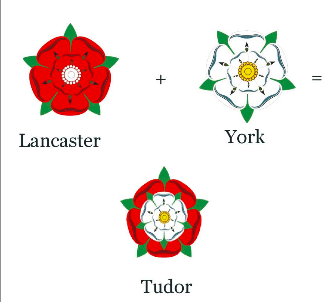
Anyway, during that period, we get to see a very young Richard and the many relatives he lost to the early Wars of the Roses. Major players such as Richard's older brother, Ned (i.e. future Edward IV), are revealed as are the monk-like, insane King Harry (Henry VI), as well as his wife, Margerite Anjou . . and let us not forget Richard Neville, the Kingmaker, who at one point during his life, held two different English kings captive. During this section, Ned eventually prevails for the Yorks and becomes King Edward IV. Immediately, he has a clash of wills with his cousin, Richard Neville, and this sets up the scenario for . . .
PART TWO:where Edward IV takes the throne and immediately unsettles everyone by marrying into the Woodville family, taking Elizabeth as his queen. Unfortunately for everyone, the Queen has a poor personality compared to her ravishing beauty, which creates a number of conflicts. Richard, who is heaped with honors, is not comfortable in court nor are the Neville Family, as well as many other allies. Edward IV keeps them all from killing each other and also puts up with more Lancastrian attempts to seize the throne, as well as an eventual civil war with his Neville cousins, and his very antagonist brother, George, Duke of Clarence. George also makes life hell for Richard's love interest, Ann Neville, but, in the end, Ann and Richard are married. Continuing friction grows on all sides as Ann sees that Richard is overlooking the flaws of his brother, Edward IV.

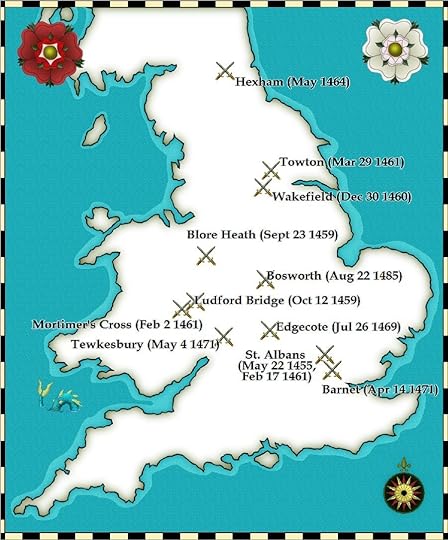
PART THREE: follows us as Edward IV's reign spirals downward. His ailing health and his methods to contain a very sensitive secret force him to not only slay mad King Harry but his brother, George, as well. Of course, other reasons are used but that's another story. In the end though, Edward IV's lifestyle catches up with him, leaving his kingdom in an upheaval. Richard III is appointed as the protectorate of the realm until Edward's son comes of age, but, in truth, the queen and her people do not trust him. Civil war is averted when Richard captures the heir to the throne but even then, things are going badly. Richard loses his one blood son and his allies begin to turn on him. Worse, In the end, Richard loses his wife, feels he is cursed and takes a number of risky measures when a distant Lancastrian pretender to the throne (i.e. future Tudor dynasty) challenges him on the battlefield. Through betrayal and circumstances, Richard III is slain and the Plantaganet line dies out with him.
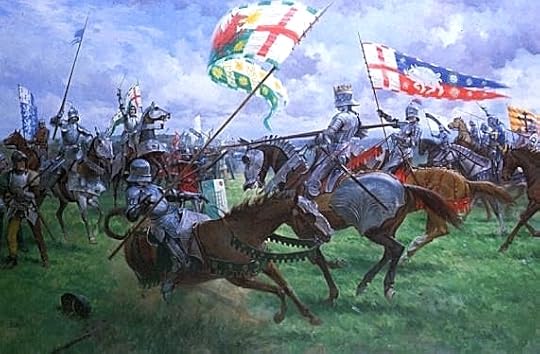
After re-reading many of Penman's novels I have to say that this is still my favorite. Unusual that a first book is written well enough to be comparable or better than later books but there you have it. Penman's writing strengths are in her vivid descriptions, her real and varied characters, her build up of conflict and conclusions and, of course, let us not forget that her love stories are pretty good, too.
Overall, this is sterling silver quality, so read it right away. Fans of George Martin's A SONG OF ICE AND FIRE should know a good chunk of this historical period influenced him greatly (per some online interviews GRRM did).
STORY/PLOTTING: A minus to A; CHARACTERS/DIALOGUE: A; HISTORICAL ACCURACY: A minus to A; ACTION & WAR SCENES: A minus; WHEN READ: 2003 (third reading) (revised review in March 2012; then later in early October 2012); OVERALL GRADE: A minus to A.
PART ONE sheds light on that confusing Historical time known as the Wars of the Roses (back in the day I never "got it" until I read this piece). For those who never truly understood it, you will get a better grasp from this flowery novel. The Wars of the Roses was basically one of cousins who were all descended from an ancestor king. Add a weak king to the pot and we have a civil war.
Anyway, during that period, we get to see a very young Richard and the many relatives he lost to the early Wars of the Roses. Major players such as Richard's older brother, Ned (i.e. future Edward IV), are revealed as are the monk-like, insane King Harry (Henry VI), as well as his wife, Margerite Anjou . . and let us not forget Richard Neville, the Kingmaker, who at one point during his life, held two different English kings captive. During this section, Ned eventually prevails for the Yorks and becomes King Edward IV. Immediately, he has a clash of wills with his cousin, Richard Neville, and this sets up the scenario for . . .
PART TWO:where Edward IV takes the throne and immediately unsettles everyone by marrying into the Woodville family, taking Elizabeth as his queen. Unfortunately for everyone, the Queen has a poor personality compared to her ravishing beauty, which creates a number of conflicts. Richard, who is heaped with honors, is not comfortable in court nor are the Neville Family, as well as many other allies. Edward IV keeps them all from killing each other and also puts up with more Lancastrian attempts to seize the throne, as well as an eventual civil war with his Neville cousins, and his very antagonist brother, George, Duke of Clarence. George also makes life hell for Richard's love interest, Ann Neville, but, in the end, Ann and Richard are married. Continuing friction grows on all sides as Ann sees that Richard is overlooking the flaws of his brother, Edward IV.
PART THREE: follows us as Edward IV's reign spirals downward. His ailing health and his methods to contain a very sensitive secret force him to not only slay mad King Harry but his brother, George, as well. Of course, other reasons are used but that's another story. In the end though, Edward IV's lifestyle catches up with him, leaving his kingdom in an upheaval. Richard III is appointed as the protectorate of the realm until Edward's son comes of age, but, in truth, the queen and her people do not trust him. Civil war is averted when Richard captures the heir to the throne but even then, things are going badly. Richard loses his one blood son and his allies begin to turn on him. Worse, In the end, Richard loses his wife, feels he is cursed and takes a number of risky measures when a distant Lancastrian pretender to the throne (i.e. future Tudor dynasty) challenges him on the battlefield. Through betrayal and circumstances, Richard III is slain and the Plantaganet line dies out with him.
After re-reading many of Penman's novels I have to say that this is still my favorite. Unusual that a first book is written well enough to be comparable or better than later books but there you have it. Penman's writing strengths are in her vivid descriptions, her real and varied characters, her build up of conflict and conclusions and, of course, let us not forget that her love stories are pretty good, too.
Overall, this is sterling silver quality, so read it right away. Fans of George Martin's A SONG OF ICE AND FIRE should know a good chunk of this historical period influenced him greatly (per some online interviews GRRM did).
STORY/PLOTTING: A minus to A; CHARACTERS/DIALOGUE: A; HISTORICAL ACCURACY: A minus to A; ACTION & WAR SCENES: A minus; WHEN READ: 2003 (third reading) (revised review in March 2012; then later in early October 2012); OVERALL GRADE: A minus to A.

September 24, 2019
this goes straight to favorites.

May 22, 2014
"Richard was utterly surrounded by Stanley soldiers, hemmed in on all sides. He’d lost his axe, was lashing out with his sword, gripping it with both hands and swinging in like a scythe as more and more men fought with each other to get close enough to strike him, beating against his armour, with mace and halberd In a frenzy of fear and rage, White Surrey was going up again and Francis saw a pike thrust go into the animal’s unprotected belly. The stallion screamed in agony and crashed heavily to earth, dragging Richard down, too. Stanley’s men closed in."

Writing historical fiction about a dynastic struggle, the Wars of the Roses, that’s outcome is well known is a risky business. I’m sure that any reader who would pick up this mighty tome, that chronicles the life of Richard III, would know the ending that history dictates. Indeed, the author had more work to do because of this; she had to take a well know ending and make it interesting, and effectively breathe new life into it. A twelve hundred page novel is a rather large reading investment, nobody wants to get halfway through and abandon it, so this book had to be marvellous from the beginning; it had to be splendid, and it was. It really was.
The novel starts with a seven year old Richard and ends with his defeat at the field of Bosworth; it is an entire chronicle of his life. At the beginning a very young Richard has just received news that his father, Richard Duke of York, has been defeated in battle; his head has been cut off and decorated with a paper crown by Margret of Anjou the wife of King Henry VI. This is a low point for the house of York as Lancaster temporarily triumphs over its foe. Edward, Earl of March, promptly picks up the torch dropped by his farther and carries on the struggle, except this time it’s about more than just power: he wants revenge.
This leads to another chapter in the wars of the roses. Richard’s soldering life, and later his kingship, is filled with dynastic battles that attempt to establish and reassert his house, York, as the rulers of England over the house of Lancaster. From this early on Richard’s fate is asserted; he will naturally follow his eldest brother, Edward IV, to revenge upon the defeat of his father and the dishonour committed against his body.

Richard admires his brother; he looks up to him and respects him .He is fiercely loyal to him unlike George, the middle York brother, who is jealous of Edward being the first son. George, Duke of Clarence, is the favourite of his mother, and to make thing worse he loves Richard. This leaves Richard in the middle of sibling rivalry. This is asserted in just the first chapter and asserts the strained relationship between the brothers of York, and superbly foreshadows the eventual rivalries and betrayals that occur later on in the novel.
The novelist is deeply loyal to the house of York: she portrays Richard III as a noble king rather than Shakespeare’s hunchbacked villain. Certainly, Richard has been presented as a man of honour and adherent to the code of chivalry , but he is not without his flaws. He is somewhat naïve and rash to make decisions, which the novelist translates to his political blunders made in his kingship, such as trusting the traitorous Duke of Buckingham and executing the loyal Will Hastings.
He is often referred to, by his mother, as the only son of York with a conscience. Indeed, Penman’s Richard would have been incapable of murdering his brother’s sons, the princes in the tower, because he is just too good. Whether he did or not is for the historians to argue about, but I love this novelist interpretation of him: I too would like to think he did not kill his nephews and that the Duke of Buckingham was responsible.
As I said at the beginning of my review, the ending of this book is well known. It is obvious that a novel chronicling his life must end at the field of Bosworth. Consequently, the author had to create a Richard that was compelling enough to make the reader want to reach the ending of this massive volume. And she did. She really did. Penman’s envisioning of Richard is that of a tragic character who was honourable and just, but just made a series of bad political moves that, consequently, ended in betrayal and his own demise. This resulted in a death that was dramtic and emotional

Writing historical fiction about a dynastic struggle, the Wars of the Roses, that’s outcome is well known is a risky business. I’m sure that any reader who would pick up this mighty tome, that chronicles the life of Richard III, would know the ending that history dictates. Indeed, the author had more work to do because of this; she had to take a well know ending and make it interesting, and effectively breathe new life into it. A twelve hundred page novel is a rather large reading investment, nobody wants to get halfway through and abandon it, so this book had to be marvellous from the beginning; it had to be splendid, and it was. It really was.
The novel starts with a seven year old Richard and ends with his defeat at the field of Bosworth; it is an entire chronicle of his life. At the beginning a very young Richard has just received news that his father, Richard Duke of York, has been defeated in battle; his head has been cut off and decorated with a paper crown by Margret of Anjou the wife of King Henry VI. This is a low point for the house of York as Lancaster temporarily triumphs over its foe. Edward, Earl of March, promptly picks up the torch dropped by his farther and carries on the struggle, except this time it’s about more than just power: he wants revenge.
This leads to another chapter in the wars of the roses. Richard’s soldering life, and later his kingship, is filled with dynastic battles that attempt to establish and reassert his house, York, as the rulers of England over the house of Lancaster. From this early on Richard’s fate is asserted; he will naturally follow his eldest brother, Edward IV, to revenge upon the defeat of his father and the dishonour committed against his body.
Richard admires his brother; he looks up to him and respects him .He is fiercely loyal to him unlike George, the middle York brother, who is jealous of Edward being the first son. George, Duke of Clarence, is the favourite of his mother, and to make thing worse he loves Richard. This leaves Richard in the middle of sibling rivalry. This is asserted in just the first chapter and asserts the strained relationship between the brothers of York, and superbly foreshadows the eventual rivalries and betrayals that occur later on in the novel.
The novelist is deeply loyal to the house of York: she portrays Richard III as a noble king rather than Shakespeare’s hunchbacked villain. Certainly, Richard has been presented as a man of honour and adherent to the code of chivalry , but he is not without his flaws. He is somewhat naïve and rash to make decisions, which the novelist translates to his political blunders made in his kingship, such as trusting the traitorous Duke of Buckingham and executing the loyal Will Hastings.
He is often referred to, by his mother, as the only son of York with a conscience. Indeed, Penman’s Richard would have been incapable of murdering his brother’s sons, the princes in the tower, because he is just too good. Whether he did or not is for the historians to argue about, but I love this novelist interpretation of him: I too would like to think he did not kill his nephews and that the Duke of Buckingham was responsible.
As I said at the beginning of my review, the ending of this book is well known. It is obvious that a novel chronicling his life must end at the field of Bosworth. Consequently, the author had to create a Richard that was compelling enough to make the reader want to reach the ending of this massive volume. And she did. She really did. Penman’s envisioning of Richard is that of a tragic character who was honourable and just, but just made a series of bad political moves that, consequently, ended in betrayal and his own demise. This resulted in a death that was dramtic and emotional

January 7, 2010
I've become hooked on Richard III. We all know what he's accused of, but until recently, I've never given much thought to his defence. After reading various accounts of him and his contemporaries, I've realised that history, based on Tudor propaganda, could have very badly betrayed him.
The Sunne In Splendour covers his entire life from the age of about 7. In a 900 page book, the first third read like an increasingly interesting history lesson, but then the more personal story-telling side kicked in and it became engrossing.
The author has clearly done an amazing amount of detailed research into Richard's life. Whilst I suspect she over-romanticises him at times, she reasons well. She portrays him as a loyal man, a trusted brother, a beloved husband and a skilled leader on the battlefield. From what I've read elsewhere, this seems a very believable view of him. Her account of the missing princes mystery, the key point for his portrayal in history, is both logical and believable.
She brings Richard to life so vividly, and I was moved by his death, I mourned him. I actually feel very riled that history may have got him horribly wrong.
This is the best historical fiction book I've read to date; a fascinating, detailed and thought-provoking look at one of Englands most controversial men. I am most definitely on his side!
The Sunne In Splendour covers his entire life from the age of about 7. In a 900 page book, the first third read like an increasingly interesting history lesson, but then the more personal story-telling side kicked in and it became engrossing.
The author has clearly done an amazing amount of detailed research into Richard's life. Whilst I suspect she over-romanticises him at times, she reasons well. She portrays him as a loyal man, a trusted brother, a beloved husband and a skilled leader on the battlefield. From what I've read elsewhere, this seems a very believable view of him. Her account of the missing princes mystery, the key point for his portrayal in history, is both logical and believable.
She brings Richard to life so vividly, and I was moved by his death, I mourned him. I actually feel very riled that history may have got him horribly wrong.
This is the best historical fiction book I've read to date; a fascinating, detailed and thought-provoking look at one of Englands most controversial men. I am most definitely on his side!

May 28, 2014
The story evolves around Edward IV and Richard III (and lots of other characters) with a plot so rich, you could be forgiven in thinking that it is pure fiction. Simply too involved to summarize here; my reactions/comment follow.
With a novel this lengthy, you really need a hearty liking of Tudor based stories. I didn't realize that I had so enjoyed Richard III's story until the last 50 pages or so, when I found I had deliberately slowed my reading because I simply did not want to come to the end. Although tethered in 2014 and well aware of historical facts, I dreaded the final moments enacted at Bosworth (Redmore Plains); felt a sickening fear for Richard's fate.
I found I genuinely liked Richard whereas before I had harboured a vague distaste for this man rumored to have stolen the crown. Shakespeare, you should be ashamed of the spread of misinformation you have participated in! Read Ms Penman's novel and learn of a fact based contrasting view of this much pilloried monarch.
What a triumphant debut; I can scarcely believe this is Penman's first book! It is a glorious novel, one that is not filled with the histrionics that are often found in other books of this genre. A stunning achievement by Ms Penman. Most Highly Recommended. 5★

With a novel this lengthy, you really need a hearty liking of Tudor based stories. I didn't realize that I had so enjoyed Richard III's story until the last 50 pages or so, when I found I had deliberately slowed my reading because I simply did not want to come to the end. Although tethered in 2014 and well aware of historical facts, I dreaded the final moments enacted at Bosworth (Redmore Plains); felt a sickening fear for Richard's fate.
I found I genuinely liked Richard whereas before I had harboured a vague distaste for this man rumored to have stolen the crown. Shakespeare, you should be ashamed of the spread of misinformation you have participated in! Read Ms Penman's novel and learn of a fact based contrasting view of this much pilloried monarch.
What a triumphant debut; I can scarcely believe this is Penman's first book! It is a glorious novel, one that is not filled with the histrionics that are often found in other books of this genre. A stunning achievement by Ms Penman. Most Highly Recommended. 5★


January 7, 2016
This is one of my top five favourite historical fiction novels of all time!
What makes Sharon Penman's historical novels set in medieval Britain so amazing is how they combine sticking quite close to historical facts, with making a thrilling read enjoyable to modern readers, together with an engaging cast of characters.
This novel documents English Civil War and the life of Richard of Gloucester from the age of seven in 1459 until his death through treachery at The Battle of Bosworth in 1485.
We get to read about Richard and his brothers the reflective and scrupulous Edmund, the charming and impetuous Edward, and the reckless conniving George.
After reading of the devastation rendered on England by the ruthless and malign Queen Marguerite de Anjou , consort to the pious and half mad weakling Henry VI, we experience the execution and desecration of Richard's father the Duke of York and his oldest son Edmund by Marguerite and the malicious Earl of Somerset. Richard's mother Cecily is a deeply religious women with endless strength of character and forbearance - she suffers many losses as we see through the novel.
The feud between the cynical and vengeful master power broker Richard Neville , Earl of Warwick (who aligns with his erstwhile archenemy Marguerite of Anjou) and Edward of York after Edward weds the ambitious and magnificently beautiful Elizabeth Woodville, eventually leads to the death of Warwick and the total defeat of the forces of Lancaster at the Battle of Barnet.
Edward's rule is a period of peace and security in England at the time, though his dissolute court and his many mistresses certainly suggest a man of decadence His Queen Elizabeth Woodville and her hated family irk both Richard and his treacherous bother George Duke of Clarence
George earns Richard's hatred by his incarceration of Richard's great love of his life Anne Neville, daughter of Earl Warwick.
We journey through Richard's rescue of Anne, and George's imprisonment and death because of his knowledge of claims of King Edward's earlier marriage which makes his marriage to Elizabeth Woodville illicit and his children 'bastards'
Elizabeth Woodville is ambitious and ruthless in the extreme, but one cal also see in her actions a determination to protect at all costs the welfare and fortunes of her children.
There is a vast cast of character in this magnificent evocative novel. Sharon Penman shows not only a brilliant grasp of the history of England at the time but also a absolutely penetrating perception of human nature
It is the way she threads this epic together with never a dull moment, full of adventure and romance, intrigue and heartbreak, while never departing from the known historical facts that makes this a masterpiece.
The last part of the novel covers Richard's ill fated reign after Edward IV's death, his seizure of the crown which he sees as being for the good of England, and of course the fate of Edward IV's sons Edward V and Richard, 'the princes in the tower' Richard aims to protect the boys and give them security and comfort in new lodgings but is thwarted by the treacherous Duke of Buckingham , Henry Stafford, who in this narrative is the man who during his rebellion against Richard has the boys murdered.
The book also encapsulates one of my favourite women of English history, Edward's mistress and the 'merriest whore in court' the good natured and sexually adventurous Jane Shore. One thing I did not like seeing Richard do to her was her penance of being marched throgh London clad only in her kirtle and holding a taper, as a humiliating penance , But the support the people of London is heartwarming as is the happy ending to her story as she is rescued from Ludgate Prison by the King's Solicitor General, Thomas Lynom, who Richard reluctantly agrees to let wed her.
Haunting and heartrending is Richard's great love for his Queen Anne, and the death of fist their son Prince Edward and then of consumption of Anne herself and the terrible torment suffered by Richard therein
Richard is presented as a thoughtful noble and valiant man , a man of chivalry and altruism , loved greatly in England's North He is anything but the deformed and evil murderous villain painted by Tudor propagandists and made famous by Shakespeare's play Richard III.
The novel proceeds to the Battle of Bosworth which would have seen Richard defeat and kill the invader, the conniving and unscrupulous Henry Tudor if he were not betrayed by Lord Stanley.
The novel comes to a close with Edward IV and Elizabeth Woodville's daughter Princess Elizabeth of York (Bess) , who was Richard's must loved niece and a great admirer of his, being forced to marry Henry Tudor (now Henry VII) which she agrees to do for the peace of the realm
And ends with Bess about o give birth to England's heir, discussing with her half-sister Grace, how Richard's name will be sullied by Tudor's propaganda and wishing history would remember him as he really was
The novel is epic and haunting and one in which you will read again and again. It will be enjoyed by all afficionadoes of good literature, and not only history buffs like myself.
What makes Sharon Penman's historical novels set in medieval Britain so amazing is how they combine sticking quite close to historical facts, with making a thrilling read enjoyable to modern readers, together with an engaging cast of characters.
This novel documents English Civil War and the life of Richard of Gloucester from the age of seven in 1459 until his death through treachery at The Battle of Bosworth in 1485.
We get to read about Richard and his brothers the reflective and scrupulous Edmund, the charming and impetuous Edward, and the reckless conniving George.
After reading of the devastation rendered on England by the ruthless and malign Queen Marguerite de Anjou , consort to the pious and half mad weakling Henry VI, we experience the execution and desecration of Richard's father the Duke of York and his oldest son Edmund by Marguerite and the malicious Earl of Somerset. Richard's mother Cecily is a deeply religious women with endless strength of character and forbearance - she suffers many losses as we see through the novel.
The feud between the cynical and vengeful master power broker Richard Neville , Earl of Warwick (who aligns with his erstwhile archenemy Marguerite of Anjou) and Edward of York after Edward weds the ambitious and magnificently beautiful Elizabeth Woodville, eventually leads to the death of Warwick and the total defeat of the forces of Lancaster at the Battle of Barnet.
Edward's rule is a period of peace and security in England at the time, though his dissolute court and his many mistresses certainly suggest a man of decadence His Queen Elizabeth Woodville and her hated family irk both Richard and his treacherous bother George Duke of Clarence
George earns Richard's hatred by his incarceration of Richard's great love of his life Anne Neville, daughter of Earl Warwick.
We journey through Richard's rescue of Anne, and George's imprisonment and death because of his knowledge of claims of King Edward's earlier marriage which makes his marriage to Elizabeth Woodville illicit and his children 'bastards'
Elizabeth Woodville is ambitious and ruthless in the extreme, but one cal also see in her actions a determination to protect at all costs the welfare and fortunes of her children.
There is a vast cast of character in this magnificent evocative novel. Sharon Penman shows not only a brilliant grasp of the history of England at the time but also a absolutely penetrating perception of human nature
It is the way she threads this epic together with never a dull moment, full of adventure and romance, intrigue and heartbreak, while never departing from the known historical facts that makes this a masterpiece.
The last part of the novel covers Richard's ill fated reign after Edward IV's death, his seizure of the crown which he sees as being for the good of England, and of course the fate of Edward IV's sons Edward V and Richard, 'the princes in the tower' Richard aims to protect the boys and give them security and comfort in new lodgings but is thwarted by the treacherous Duke of Buckingham , Henry Stafford, who in this narrative is the man who during his rebellion against Richard has the boys murdered.
The book also encapsulates one of my favourite women of English history, Edward's mistress and the 'merriest whore in court' the good natured and sexually adventurous Jane Shore. One thing I did not like seeing Richard do to her was her penance of being marched throgh London clad only in her kirtle and holding a taper, as a humiliating penance , But the support the people of London is heartwarming as is the happy ending to her story as she is rescued from Ludgate Prison by the King's Solicitor General, Thomas Lynom, who Richard reluctantly agrees to let wed her.
Haunting and heartrending is Richard's great love for his Queen Anne, and the death of fist their son Prince Edward and then of consumption of Anne herself and the terrible torment suffered by Richard therein
Richard is presented as a thoughtful noble and valiant man , a man of chivalry and altruism , loved greatly in England's North He is anything but the deformed and evil murderous villain painted by Tudor propagandists and made famous by Shakespeare's play Richard III.
The novel proceeds to the Battle of Bosworth which would have seen Richard defeat and kill the invader, the conniving and unscrupulous Henry Tudor if he were not betrayed by Lord Stanley.
The novel comes to a close with Edward IV and Elizabeth Woodville's daughter Princess Elizabeth of York (Bess) , who was Richard's must loved niece and a great admirer of his, being forced to marry Henry Tudor (now Henry VII) which she agrees to do for the peace of the realm
And ends with Bess about o give birth to England's heir, discussing with her half-sister Grace, how Richard's name will be sullied by Tudor's propaganda and wishing history would remember him as he really was
The novel is epic and haunting and one in which you will read again and again. It will be enjoyed by all afficionadoes of good literature, and not only history buffs like myself.

December 5, 2012
Sharon Kay Penman is a top class writer and is on my short list of favourite authors of historical fiction. This magnificent book 'The Sunne in Splendour' centres around the life and times of Richard III and his Yorkist family. Without question it is a huge read. It is the first book of hers I bought years ago and was utterly asorbed by it (1229 pages) Richard III has always fascinated me as an historical figure. The discovery of his bones in recent times lead to much interest among all those who consider him innocent of the murder of his two young nephews while imprisoned in the Tower of London and of course a similar amount of interest from among those who consider him a ruthless and evil murderer. The truth will probably never be known because of the unreliability of historians who wrote from the point of view of the King who hired them.
Arguments for and against his guilt have gone on over the centuries and the discovery of his bones caused an uprise in these arguments and an upsurge of books both non fiction and historical fiction. Sadly; Richard was inevitably portrayed as evil and unscrupulous in the records of Henry Tudor's own historians who condemned him outright as the killer. Shakespeare's prejudiced play 'Richard III was an enormous help towards the case for him being guilty. There have been many books written about Richard III over the years. The author Josephine Tey wrote a much smaller book entitled 'Daughter of Time' which is in the form of a most original detective novel searching for proof among the evidence available as to whether Richard was guilty or not. I found her book well worth a read. It is fiction, but anyone interested in this centuries old mystery and who favours Richard's innocence would find it well worth a read. Richard was portrayed by his own historians as a warrior, a man of great courage and strong principles and a family man who was uncomfortable among the intrigues that went on in his brother, the charismatic King Edward IV's Court. He is said to have loved his brother deeply as different as they were and was intensely loyal to him. Henry Tudor also had valid reasons to have the two young princes murdered but these reasons were obviously underplayed by his historians, so over the centuries Richard is the one blamed for the death of the Princes in the Tower.
Sharon Kay Penman is well known by fans of the historical novel as her research is always meticulous but she always weaves a fascinating fictional story around the facts. Her book 'Here be Dragons' is my favourite of her historical novels, but this superb story of Richard III comes a close second. I have read this book a few times and recently did so again. I recommend it highly without hesitation.
Arguments for and against his guilt have gone on over the centuries and the discovery of his bones caused an uprise in these arguments and an upsurge of books both non fiction and historical fiction. Sadly; Richard was inevitably portrayed as evil and unscrupulous in the records of Henry Tudor's own historians who condemned him outright as the killer. Shakespeare's prejudiced play 'Richard III was an enormous help towards the case for him being guilty. There have been many books written about Richard III over the years. The author Josephine Tey wrote a much smaller book entitled 'Daughter of Time' which is in the form of a most original detective novel searching for proof among the evidence available as to whether Richard was guilty or not. I found her book well worth a read. It is fiction, but anyone interested in this centuries old mystery and who favours Richard's innocence would find it well worth a read. Richard was portrayed by his own historians as a warrior, a man of great courage and strong principles and a family man who was uncomfortable among the intrigues that went on in his brother, the charismatic King Edward IV's Court. He is said to have loved his brother deeply as different as they were and was intensely loyal to him. Henry Tudor also had valid reasons to have the two young princes murdered but these reasons were obviously underplayed by his historians, so over the centuries Richard is the one blamed for the death of the Princes in the Tower.
Sharon Kay Penman is well known by fans of the historical novel as her research is always meticulous but she always weaves a fascinating fictional story around the facts. Her book 'Here be Dragons' is my favourite of her historical novels, but this superb story of Richard III comes a close second. I have read this book a few times and recently did so again. I recommend it highly without hesitation.

December 6, 2020
”Now is the winter of our discontent made glorious summer by this sun of York.”---Richard III by William Shakespeare
In my opinion, there may not be a person in history, other than maybe Mary Magdalen, who has been more maligned by a writer than Richard III. Shakespeare turns him into a scheming hunchback with few redeeming qualities, and he does it so brilliantly.
There is a Richard III Society who have and are working diligently to repair the damage to Richard’s character. They call themselves Ricardians. They have deftly laid out all the charges against Richard.
The negative perception of Richard III relates to some or all of the following points:
he was a nasty hunchback who plotted and schemed his way to the throne;
He killed Henry VI's son Edward;
He killed Henry VI (a sweet, innocent saint);
He got his brother, the duke of Clarence, executed;
He killed the Princes in the Tower (sweet, innocent children);
He killed his wife Anne because he wanted to marry his niece Elizabeth;
He was a bad king, and so it was lucky that Good King Henry Tudor got rid of him for us.
I don’t know if Sharon K. Penman would call herself a Ricardian, but she certainly does a wonderful job restoring Richard’s reputation in the course of this novel. I want to talk about each one of these points and how Penman viewed them.
He was a nasty hunchback.
Historically, a deformity of the body was betraying the evil sins of the soul, so a hunchback would be seen as a disfigurement that went deeper than skin and bone. I think about Igor from the Frankenstein movies and how unsettling it was to watch him shuffle and scurry about, abused, but happy to have a place, even if it is as an assistant to a madman. Penman explains that Richard’s deformity is not from birth but from a shoulder injury, improperly set, from a jousting tournament. Needless to say, it was an injury that plagued him, but it certainly didn’t keep him from being a successful battlefield commander under his brother Edward IV.
He killed Henry VI's son Edward or Edouard.
There isn’t any evidence, that I know of, that Richard was anywhere near Edouard during the Battle of Tewkesbury. I’ve always believed that Richard’s brother George, the Duke of Clarence, and some of his followers beheaded the lad after the battle. Penman agrees with that assessment. Due to the number of betrayals and uprisings that Edward IV, or Ned as he is referred to in this novel, had to contend with, it would make sense to begin lobbing heads off. Ned has shown great statesmanship and a capacity for forgiving that exceeds any expectation for a Middle Ages ruler (The Tudors were much less forgiving). For the future of the kingdom and for the safety of his family Ned was forced to be merciless. In the first struggle between Yorks and Lancasterians Edward and Richard’s seventeen year old brother Edmund was ordered murdered by Edouard’s mother Marguerite, who was of course married to the deposed mad king Henry VI. Some could say that Edouard’s abrupt parting of body and head may have been a partial payment for the death of Edmund.
He killed Henry VI (a sweet, innocent saint)
Penman believes that Edward IV did instruct his brother to make arrangements for Henry VI to have an “accident”. It wasn’t something the Yorkist wanted to do, but again, given the fact that the Earl of Warwick, otherwise known as the kingmaker, and others would use him as a point of rebellion, it only made practical sense that he must be taken off the chessfboard. As far as the saintly part, that is just absurd, not that he was a bad man, just certifiably insane. He was completely incapable of ruling a kingdom.
He got his brother, the Duke of Clarence, executed.
Well, George was suffering from a multitude of middle child issues. Ned was the great champion and king of England, in comparison any sibling would feel like a second, unstrung fiddle. Ned definitely favored Richard over George. Of course, it didn’t help their strained relationship George joined with Warwick to rebel against the crown. He was married to Warwick’s daughter, Isabel, and Warwick had visions of putting George on the throne so that his grandchildren would eventually rule England. After they were defeated, Edward, instead of lobbing off his brother’s head, elected to give him a second chance, as he did with many people. Over time as George became more and more mentally unstable, Edward eventually lost his patience and ordered his trial and execution. Richard had nothing to do with that; in fact, Penman makes the case that he tried to change his brother’s mind about the execution. I feel that Ned also reached the conclusion that if something happened to him George would make a grab for the throne and that would be bad for England. George’s death does benefit Richard in the dynastic struggle. He is one step closer to the throne.
He killed the Princes in the Tower (sweet, innocent children).
Okay, this is one of the most fascinating mysteries in history. Did Richard have Edward V and his brother murdered? The trouble is that Ned died too young. If he’d managed to live a few more years, until his oldest son Edward was at least a teenager, the succession would have been much easier. He appointed Richard Lord Protector of the Realm until Edward came of age. There was a lot of animosity between Elizabeth Woodville, wife of Edward IV and mother of Edward V, and Richard. She wanted to use her son to continue to move her upstart clan into even more advantageous positions and knew that Richard was the main stumbling block between her and her schemes. Penman reasons that Richard put his brother’s sons in the Tower to protect them and crowned himself king out of self-preservation. I do find it hard to believe that Richard would kill his brother’s sons. He adored Ned. He owed everything to Ned. Penman makes the case that another aristocrat ( I won’t say who), as a first step to achieving the throne for himself, had the boys murdered.
He killed his wife Anne because he wanted to marry his niece Elizabeth.
Complete bollocks. Richard grew up with Anne and, according to Penman, carried a torch for her his entire life. She was forced to marry Edouard, another scheme by Warwick to have one of his daughters be married to a future king of England. He hedged his bets by marrying his daughters to Edouard and George and lost both bets. After Edouard is beheaded, finally Richard can marry the love of his life. They have one son, who dies at age ten, which leaves Richard very vulnerable on the throne. A living heir would have meant stability for the realm. From a practical, alliance standpoint, he should have married someone who would have been more advantageous to him. Anne was also sickly and, with her tiny frame, hardly inspired confidence that she would provide a brood of healthy children. My assessment is that it could have only been love that inspired him to marry Anne.
He was a bad king, and so it was lucky that Good King Henry Tudor got rid of him for us.
He was a man beset by too many enemies, and as we will discover, he was ultimately betrayed at Bosworth Field. After his defeat and death, he was maligned by Henry VII in an attempt to solidify the Tudor claim to the throne. Henry was merely doing England a favor, ridding them of such a deformed and evil king. I actually think that if Richard had survived the war, beheaded Henry Tudor, and managed to remarry and produce an heir, history would have been much kinder to him. Shakespeare’s pen may have been blunted regarding Richard. He had to rid his kingdom of all the treasonous, vile bastards who had over the years insinuated themselves into positions of power from which they now worked diligently to undermine his rule. There were many people who needed Richard to not only lose his final battle but also die, because if he had lived, there would have been a bloody reckoning. ”A horse! a horse! my kingdom for a horse!” Richard fought bravely; in fact, he fought like a madman and made the fatal mistake to try to go for the killing blow. He nearly made it to Henry in the melee of the battle, and I have no doubt that, if he’d gotten within a sword thrust, the Tudors would have been a mere footnote to history. Richard got close enough to Henry that I’m pretty sure Henry dropped a load in his brais. “What is that stench?” the peasants said as Henry rode past on his way to London.
All Richard had to do was survive the battle. He could afford to lose the battle and still retain his kingdom. When he discovered he was betrayed, he should have fled to Northern England, where he enjoyed great support, and raised another, even bigger army and defeated Henry Tudor in their second meeting. This reminds me of Harold II dying at the Battle of Hastings. If he had ducked and that arrow had passed over his head instead of into his eye, I have no doubt that William the Conqueror would have been known as William Pisspants as he fled back to Normandy. Again, Harold didn’t have to win the battle. He just had to win the war.
This book is a monster. 1,073 pages. Penman takes us from the time when Richard is a mere lad up until his death. There are so many intrigues and so many more fascinating side stories about the Plantagenets that Penman could have written a book three times as long. I don’t really understand the fascination with those usurping, infertile Tudors. Of course, some might say the Plantagenets were too fertile with too many legitimate claimants to the throne. The Plantagenets and the War of the Roses, for me, is infinitely more fascinating than that misogynist bastard Henry VIIII and his flurry of abused wives. Penman really puts flesh on the bones of these historical figures and certainly made me much more of a Ricardian than I was before.
If you wish to see more of my most recent book and movie reviews, visit http://www.jeffreykeeten.com
I also have a Facebook blogger page at:https://www.facebook.com/JeffreyKeeten and an Instagram account https://www.instagram.com/jeffreykeeten/
In my opinion, there may not be a person in history, other than maybe Mary Magdalen, who has been more maligned by a writer than Richard III. Shakespeare turns him into a scheming hunchback with few redeeming qualities, and he does it so brilliantly.
”And thus I clothe my naked villany
With old odd ends stolen out of holy writ;
And seem a saint, when most I play the devil.”
There is a Richard III Society who have and are working diligently to repair the damage to Richard’s character. They call themselves Ricardians. They have deftly laid out all the charges against Richard.
The negative perception of Richard III relates to some or all of the following points:
he was a nasty hunchback who plotted and schemed his way to the throne;
He killed Henry VI's son Edward;
He killed Henry VI (a sweet, innocent saint);
He got his brother, the duke of Clarence, executed;
He killed the Princes in the Tower (sweet, innocent children);
He killed his wife Anne because he wanted to marry his niece Elizabeth;
He was a bad king, and so it was lucky that Good King Henry Tudor got rid of him for us.
I don’t know if Sharon K. Penman would call herself a Ricardian, but she certainly does a wonderful job restoring Richard’s reputation in the course of this novel. I want to talk about each one of these points and how Penman viewed them.
He was a nasty hunchback.
Historically, a deformity of the body was betraying the evil sins of the soul, so a hunchback would be seen as a disfigurement that went deeper than skin and bone. I think about Igor from the Frankenstein movies and how unsettling it was to watch him shuffle and scurry about, abused, but happy to have a place, even if it is as an assistant to a madman. Penman explains that Richard’s deformity is not from birth but from a shoulder injury, improperly set, from a jousting tournament. Needless to say, it was an injury that plagued him, but it certainly didn’t keep him from being a successful battlefield commander under his brother Edward IV.
He killed Henry VI's son Edward or Edouard.
There isn’t any evidence, that I know of, that Richard was anywhere near Edouard during the Battle of Tewkesbury. I’ve always believed that Richard’s brother George, the Duke of Clarence, and some of his followers beheaded the lad after the battle. Penman agrees with that assessment. Due to the number of betrayals and uprisings that Edward IV, or Ned as he is referred to in this novel, had to contend with, it would make sense to begin lobbing heads off. Ned has shown great statesmanship and a capacity for forgiving that exceeds any expectation for a Middle Ages ruler (The Tudors were much less forgiving). For the future of the kingdom and for the safety of his family Ned was forced to be merciless. In the first struggle between Yorks and Lancasterians Edward and Richard’s seventeen year old brother Edmund was ordered murdered by Edouard’s mother Marguerite, who was of course married to the deposed mad king Henry VI. Some could say that Edouard’s abrupt parting of body and head may have been a partial payment for the death of Edmund.
He killed Henry VI (a sweet, innocent saint)
Penman believes that Edward IV did instruct his brother to make arrangements for Henry VI to have an “accident”. It wasn’t something the Yorkist wanted to do, but again, given the fact that the Earl of Warwick, otherwise known as the kingmaker, and others would use him as a point of rebellion, it only made practical sense that he must be taken off the chessfboard. As far as the saintly part, that is just absurd, not that he was a bad man, just certifiably insane. He was completely incapable of ruling a kingdom.
He got his brother, the Duke of Clarence, executed.
Well, George was suffering from a multitude of middle child issues. Ned was the great champion and king of England, in comparison any sibling would feel like a second, unstrung fiddle. Ned definitely favored Richard over George. Of course, it didn’t help their strained relationship George joined with Warwick to rebel against the crown. He was married to Warwick’s daughter, Isabel, and Warwick had visions of putting George on the throne so that his grandchildren would eventually rule England. After they were defeated, Edward, instead of lobbing off his brother’s head, elected to give him a second chance, as he did with many people. Over time as George became more and more mentally unstable, Edward eventually lost his patience and ordered his trial and execution. Richard had nothing to do with that; in fact, Penman makes the case that he tried to change his brother’s mind about the execution. I feel that Ned also reached the conclusion that if something happened to him George would make a grab for the throne and that would be bad for England. George’s death does benefit Richard in the dynastic struggle. He is one step closer to the throne.
He killed the Princes in the Tower (sweet, innocent children).
Okay, this is one of the most fascinating mysteries in history. Did Richard have Edward V and his brother murdered? The trouble is that Ned died too young. If he’d managed to live a few more years, until his oldest son Edward was at least a teenager, the succession would have been much easier. He appointed Richard Lord Protector of the Realm until Edward came of age. There was a lot of animosity between Elizabeth Woodville, wife of Edward IV and mother of Edward V, and Richard. She wanted to use her son to continue to move her upstart clan into even more advantageous positions and knew that Richard was the main stumbling block between her and her schemes. Penman reasons that Richard put his brother’s sons in the Tower to protect them and crowned himself king out of self-preservation. I do find it hard to believe that Richard would kill his brother’s sons. He adored Ned. He owed everything to Ned. Penman makes the case that another aristocrat ( I won’t say who), as a first step to achieving the throne for himself, had the boys murdered.
He killed his wife Anne because he wanted to marry his niece Elizabeth.
Complete bollocks. Richard grew up with Anne and, according to Penman, carried a torch for her his entire life. She was forced to marry Edouard, another scheme by Warwick to have one of his daughters be married to a future king of England. He hedged his bets by marrying his daughters to Edouard and George and lost both bets. After Edouard is beheaded, finally Richard can marry the love of his life. They have one son, who dies at age ten, which leaves Richard very vulnerable on the throne. A living heir would have meant stability for the realm. From a practical, alliance standpoint, he should have married someone who would have been more advantageous to him. Anne was also sickly and, with her tiny frame, hardly inspired confidence that she would provide a brood of healthy children. My assessment is that it could have only been love that inspired him to marry Anne.
He was a bad king, and so it was lucky that Good King Henry Tudor got rid of him for us.
He was a man beset by too many enemies, and as we will discover, he was ultimately betrayed at Bosworth Field. After his defeat and death, he was maligned by Henry VII in an attempt to solidify the Tudor claim to the throne. Henry was merely doing England a favor, ridding them of such a deformed and evil king. I actually think that if Richard had survived the war, beheaded Henry Tudor, and managed to remarry and produce an heir, history would have been much kinder to him. Shakespeare’s pen may have been blunted regarding Richard. He had to rid his kingdom of all the treasonous, vile bastards who had over the years insinuated themselves into positions of power from which they now worked diligently to undermine his rule. There were many people who needed Richard to not only lose his final battle but also die, because if he had lived, there would have been a bloody reckoning. ”A horse! a horse! my kingdom for a horse!” Richard fought bravely; in fact, he fought like a madman and made the fatal mistake to try to go for the killing blow. He nearly made it to Henry in the melee of the battle, and I have no doubt that, if he’d gotten within a sword thrust, the Tudors would have been a mere footnote to history. Richard got close enough to Henry that I’m pretty sure Henry dropped a load in his brais. “What is that stench?” the peasants said as Henry rode past on his way to London.
All Richard had to do was survive the battle. He could afford to lose the battle and still retain his kingdom. When he discovered he was betrayed, he should have fled to Northern England, where he enjoyed great support, and raised another, even bigger army and defeated Henry Tudor in their second meeting. This reminds me of Harold II dying at the Battle of Hastings. If he had ducked and that arrow had passed over his head instead of into his eye, I have no doubt that William the Conqueror would have been known as William Pisspants as he fled back to Normandy. Again, Harold didn’t have to win the battle. He just had to win the war.
This book is a monster. 1,073 pages. Penman takes us from the time when Richard is a mere lad up until his death. There are so many intrigues and so many more fascinating side stories about the Plantagenets that Penman could have written a book three times as long. I don’t really understand the fascination with those usurping, infertile Tudors. Of course, some might say the Plantagenets were too fertile with too many legitimate claimants to the throne. The Plantagenets and the War of the Roses, for me, is infinitely more fascinating than that misogynist bastard Henry VIIII and his flurry of abused wives. Penman really puts flesh on the bones of these historical figures and certainly made me much more of a Ricardian than I was before.
If you wish to see more of my most recent book and movie reviews, visit http://www.jeffreykeeten.com
I also have a Facebook blogger page at:https://www.facebook.com/JeffreyKeeten and an Instagram account https://www.instagram.com/jeffreykeeten/

May 15, 2021
3.5★
Ms Penman sadly died of pneumonia earlier this year, so the Retro Reads Group decided to read this as a tribute to her. Most of the group loved this book. I also loved it - in parts.
Let me explain.
This book was always going to be a challenge for me as I generally like my fiction to come in at under 450 pages and this was a whopping 886 pages. I applaud Ms Penman's dedication & determination in recreating this after her original (much shorter) manuscript was stolen from her car, but I think this would have worked better as a two volume series. I did find that portions of Part Three dragged and that towards the end of Part Two Anne Neville & Richard's love story became a bit sickly - just a bit!
But; Penman gave Edward the IV's character a lot of complexity. Like most real life people sometimes there was just no way to explain some of his actions & Penman does find solutions for some of them.
I loved the way Jane Shore was depicted - Jane lit up the pages whenever she appeared (I just kept thinking of Cyndi Lauper & Girls Just Want to Have Fun)
It could really be that simple that Shore was a nice, generous woman who loved sex and wanted to enjoy life. I would love to read a book where Jane was the central character if anyone has a recommendation. (other than Mistress to the Crown - couldn't get through that one)
Where the book did fall down for me was that some of the characters were a little too black and white. Unfortunately that includes Edward the IV's wife, the beautiful Elizabeth Woodville
(If this portrait by an unknown artist is accurate, Elizabeth must have been stunning!)
& his beloved & trusted brother Richard. In fact almost all the Woodvilles are shown as uniformly evil. This becomes a bit much. Richard, on the other hand, is almost saintly, other than when he (allegedly) had his former close ally Hastings beheaded without a trial. I almost welcomed this gruesome action to show Richard as having some human feelings.
The ending for Richard III & his close ally, Humphrey Stafford is the stuff of nightmares, but those were indeed cruel times.
When I give a rating of 3.5★ it means I liked the book enough to read more by the author and that is how I feel about this book! We will have to see if I can cope with the Middle Ages brutality.
https://wordpress.com/view/carolshess...
Ms Penman sadly died of pneumonia earlier this year, so the Retro Reads Group decided to read this as a tribute to her. Most of the group loved this book. I also loved it - in parts.

Let me explain.
This book was always going to be a challenge for me as I generally like my fiction to come in at under 450 pages and this was a whopping 886 pages. I applaud Ms Penman's dedication & determination in recreating this after her original (much shorter) manuscript was stolen from her car, but I think this would have worked better as a two volume series. I did find that portions of Part Three dragged and that towards the end of Part Two Anne Neville & Richard's love story became a bit sickly - just a bit!
But; Penman gave Edward the IV's character a lot of complexity. Like most real life people sometimes there was just no way to explain some of his actions & Penman does find solutions for some of them.
I loved the way Jane Shore was depicted - Jane lit up the pages whenever she appeared (I just kept thinking of Cyndi Lauper & Girls Just Want to Have Fun)

It could really be that simple that Shore was a nice, generous woman who loved sex and wanted to enjoy life. I would love to read a book where Jane was the central character if anyone has a recommendation. (other than Mistress to the Crown - couldn't get through that one)
Where the book did fall down for me was that some of the characters were a little too black and white. Unfortunately that includes Edward the IV's wife, the beautiful Elizabeth Woodville
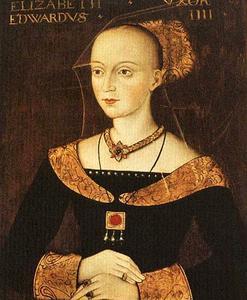
(If this portrait by an unknown artist is accurate, Elizabeth must have been stunning!)
& his beloved & trusted brother Richard. In fact almost all the Woodvilles are shown as uniformly evil. This becomes a bit much. Richard, on the other hand, is almost saintly, other than when he (allegedly) had his former close ally Hastings beheaded without a trial. I almost welcomed this gruesome action to show Richard as having some human feelings.
The ending for Richard III & his close ally, Humphrey Stafford is the stuff of nightmares, but those were indeed cruel times.
When I give a rating of 3.5★ it means I liked the book enough to read more by the author and that is how I feel about this book! We will have to see if I can cope with the Middle Ages brutality.

https://wordpress.com/view/carolshess...

April 19, 2010
A GR friend just started reading this. I read it many, many years ago and added it in 'bulk' when I first joined GR's without an adequate review. It deserves so much more than that. When I'm asked the question 'what is your favorite book', without a moments hesitation, this is the novel that springs off my lips. The Sunne in Slpendour began my love affair with historical fiction and it is as close to a perfect novel as can be written. It has action, adventure, and characters that I will never forget. If you have not had the pleasure of reading this, then you are really depriving yourself of one of the best literary journeys you can take. I cannot give a novel a higher recommendation.

December 2, 2007
Sharon Kay Penman's biography of Richard III is one of my favorite books of all time. I have hesitated in writing this review for quite a while because I'm not sure I can do it justice.
Born into an England ripped apart by the bloody War of the Roses, Richard was in awe of his older brother Edward. He stayed loyal to his brother and loyal to Anne Neville, the daughter of the enemy. It was this loyalty that was his strength, and finally his undoing.
There are many things to enjoy. Her construction of the characters, how we slowly get to know them, their motivations and fears. Her description of the political backgroung of that complicated period that was 15th century England. And how she brings Richard III to life in a way that is totally convincing and very human.
The book follows Richard from a young age when he is still in the shadow of his brother till the powerful Earl he becomes under Edward IV reign and finally his rise to throne and his death. Her writing is full of historical detail, she gives us the historical background but also those little everyday happenings that make the story and the characters come alive.
It is inevitable that what stands out more when speaking of this book is her defense of Richard regarding the death of his nephews. She makes a compelling and believable case presenting other suspects and exonerating Richard from the dark legend Shakespeare made known.
Grade: A+
Born into an England ripped apart by the bloody War of the Roses, Richard was in awe of his older brother Edward. He stayed loyal to his brother and loyal to Anne Neville, the daughter of the enemy. It was this loyalty that was his strength, and finally his undoing.
There are many things to enjoy. Her construction of the characters, how we slowly get to know them, their motivations and fears. Her description of the political backgroung of that complicated period that was 15th century England. And how she brings Richard III to life in a way that is totally convincing and very human.
The book follows Richard from a young age when he is still in the shadow of his brother till the powerful Earl he becomes under Edward IV reign and finally his rise to throne and his death. Her writing is full of historical detail, she gives us the historical background but also those little everyday happenings that make the story and the characters come alive.
It is inevitable that what stands out more when speaking of this book is her defense of Richard regarding the death of his nephews. She makes a compelling and believable case presenting other suspects and exonerating Richard from the dark legend Shakespeare made known.
Grade: A+

April 20, 2007
When my friend described The Sunne in Splendour as "a historical fiction about two English kings," I thought, "Sounds like a real page turner." But, it is a real page turner. I've never found English history so fascinating.
This was my first experience with the genre of historical fiction. Naively, I always assumed the writers chose between history and fiction. But, this book was written by a well-known English historian, and the fiction only supplements the history. That's what makes it exciting to read: if it's honest historical fiction written by a qualified historian, then the facts you read are real.
The story is about England's War of the Roses. It describes many important battles and politics, revolving mostly around the lives of King Edward IV and King Richard III. Until I read this book, I didn't even know that there's a controversy about Richard III. This book portrays him as a noble figure. Shakespeare paints him as a hunchbacked villain with staggeringly evil plans, but people say Shakespeare was just serving as a Tudor propagandist. I think it's great to be able to say that: “Da's just Tudor propaganda, is all dat is.”
I would say that you should read this if you're interested in English history, but then no one would read it. So, I'll say you should read it if you want a good story, and don't mind some English history with it.
This was my first experience with the genre of historical fiction. Naively, I always assumed the writers chose between history and fiction. But, this book was written by a well-known English historian, and the fiction only supplements the history. That's what makes it exciting to read: if it's honest historical fiction written by a qualified historian, then the facts you read are real.
The story is about England's War of the Roses. It describes many important battles and politics, revolving mostly around the lives of King Edward IV and King Richard III. Until I read this book, I didn't even know that there's a controversy about Richard III. This book portrays him as a noble figure. Shakespeare paints him as a hunchbacked villain with staggeringly evil plans, but people say Shakespeare was just serving as a Tudor propagandist. I think it's great to be able to say that: “Da's just Tudor propaganda, is all dat is.”
I would say that you should read this if you're interested in English history, but then no one would read it. So, I'll say you should read it if you want a good story, and don't mind some English history with it.

July 23, 2019
When I finally turned the last page on the last Plantagenet King of England, in Sharon Penman's The Sunne in Splendour my sense of loss was immense.
The cure would have been to pick up the next volume and roll right on with the new Tudor dynasty. But there was no next volume. So instead I started over, relived the personal and political rivalries, the dynastic ambitions of powerful families and the war that inevitably followed.
Did I enjoy it second time around? Every minute of it. Is it history? Not exactly. Did I care? Not a bit.
The cure would have been to pick up the next volume and roll right on with the new Tudor dynasty. But there was no next volume. So instead I started over, relived the personal and political rivalries, the dynastic ambitions of powerful families and the war that inevitably followed.
Did I enjoy it second time around? Every minute of it. Is it history? Not exactly. Did I care? Not a bit.

April 25, 2021
Edward of House Plantagenet, King of England, Fourth of His Name. Duke of York, the White Rose of York, the Sword of York. "The Sunne in Splendour". Many people that lack a knowledge of history will, no doubt, be confused by a book that on its cover states "A novel of Richard III" be so focused on his older brother. In fact, almost 2/3rds of this novel revolves around Edward. The reason being that they are inextricably linked. Much like their Plantagenet ancestors of Henry II and Eleanor of Aquitaine, the story of Edward IS the story of Richard.
Sharon Kay Penman's books have been excellent. "The Sunne in Splendor" is the best one I've read so far and one of the best historical fiction novels I've ever read. It takes a figure, Richard III, whose reputation has been destroyed by the Tudor historians and William Shakespeare. A cruel, deformed, hunchbacked troglodyte with a withered arm who killed his nephews and was capable of almost any vileness. It could be argued Richard III has a worse reputation than Richard II (This Plantagenet actually did deserve his reputation and ended up being starved to death). Penman's magisterial work does a wonderful job of dispelling many of the myths and her extensive research does much to explain the complicated historical issues surrounding the Edward of York-Elizabeth Woodville-Richard of Gloucester triangle of power.
When the magnificent Henry V had as heir the simple-minded Henry VI, the trouble was brewing. When he married the powerful and ruthless Frenchwoman Margaret of Anjou, it all comes to a boil. Eventually in that conflict, the son of the Duke of York- Edward of the White Rose Yorkists will defeat the Red Rose Lancastrians, with the help of the Kingmaker (Earl Warwick), and become Edward IV. His brothers are the erratic and possibly unstable George of Clarence and Richard of Gloucester.
Edward was a fine battle king. In the line of past Plantagenets, quite a few have been battle kings. Few have been as gifted as Edward. He also had many of the qualities of a good king. Sadly, his tendency to think with his prick, sometimes above all other body parts, will have dire consequences for his family and all of England. His secretly married the ravishingly beautiful Elizabeth Woodville and it turns out that she is a spectacular bitch and her family is greedy beyond measure.
Throw into this mix the mentally unstable and perpetually greedy Geroge, the Duke of Clarence and I'd say between wife and brother, these two did a number on Edward's mental well-being. It is Richard who turns out to be the loyal and trustworthy brother. It is Richard who acts decently and morally and turns out to be a far more stable character than even Edward whose insatiable lusts have unintended consequences. Penman navigates these complicated waters effortlessly and the tale unfolds before your eyes.
Not only is this one of the best historical "explanations" of the real reign of Richard III, but it is a story that has it all- lust, power, greed, betrayal, ambition, and honor. It is a real-life Game of Thrones made all the more exciting since it actually happened. It is this reign of Edwards and Richards that marks the end of the Plantagenet rule of England and starts the rise of Tudor England.
A brilliant novel. A must-read for any history fan who has been interested in Richard III. But even those who don't care for history will enjoy this as a novel. It's a great story with a plot most fiction writers would be hard-pressed to match. A truly wonderful book.
Sharon Kay Penman's books have been excellent. "The Sunne in Splendor" is the best one I've read so far and one of the best historical fiction novels I've ever read. It takes a figure, Richard III, whose reputation has been destroyed by the Tudor historians and William Shakespeare. A cruel, deformed, hunchbacked troglodyte with a withered arm who killed his nephews and was capable of almost any vileness. It could be argued Richard III has a worse reputation than Richard II (This Plantagenet actually did deserve his reputation and ended up being starved to death). Penman's magisterial work does a wonderful job of dispelling many of the myths and her extensive research does much to explain the complicated historical issues surrounding the Edward of York-Elizabeth Woodville-Richard of Gloucester triangle of power.
When the magnificent Henry V had as heir the simple-minded Henry VI, the trouble was brewing. When he married the powerful and ruthless Frenchwoman Margaret of Anjou, it all comes to a boil. Eventually in that conflict, the son of the Duke of York- Edward of the White Rose Yorkists will defeat the Red Rose Lancastrians, with the help of the Kingmaker (Earl Warwick), and become Edward IV. His brothers are the erratic and possibly unstable George of Clarence and Richard of Gloucester.
Edward was a fine battle king. In the line of past Plantagenets, quite a few have been battle kings. Few have been as gifted as Edward. He also had many of the qualities of a good king. Sadly, his tendency to think with his prick, sometimes above all other body parts, will have dire consequences for his family and all of England. His secretly married the ravishingly beautiful Elizabeth Woodville and it turns out that she is a spectacular bitch and her family is greedy beyond measure.
Throw into this mix the mentally unstable and perpetually greedy Geroge, the Duke of Clarence and I'd say between wife and brother, these two did a number on Edward's mental well-being. It is Richard who turns out to be the loyal and trustworthy brother. It is Richard who acts decently and morally and turns out to be a far more stable character than even Edward whose insatiable lusts have unintended consequences. Penman navigates these complicated waters effortlessly and the tale unfolds before your eyes.
Not only is this one of the best historical "explanations" of the real reign of Richard III, but it is a story that has it all- lust, power, greed, betrayal, ambition, and honor. It is a real-life Game of Thrones made all the more exciting since it actually happened. It is this reign of Edwards and Richards that marks the end of the Plantagenet rule of England and starts the rise of Tudor England.
A brilliant novel. A must-read for any history fan who has been interested in Richard III. But even those who don't care for history will enjoy this as a novel. It's a great story with a plot most fiction writers would be hard-pressed to match. A truly wonderful book.

September 10, 2020
What a pleasure this was. It's an assiduously researched counterpoint to the villain caricature of Richard III in Shakespeare and a perfectly creditable history of the War of the Roses, and it's also just a wonderfully engrossing novel. The prose is often exquisite but actually mostly keeps out of the way, with just the lightest dusting of period-evoking "it be" constructions - enough to gently displace the sense of a modern voice but no more than that. All in all, the book is rather admirably restrained, however strongly a glance at its 1000-page bulk might suggest otherwise.
Three minor-ish quibbles, two of them related, and none of which seem worth dropping the rating for in my view, given how extraordinarily compelling, impressive, humane and respectful of the historical details the novel is otherwise: First, there's a tendency at times to move certain key moments of significant narrative weight off-scene and summarize them where direct dramatization would have far greater impact (I'm thinking of a few key battlefield moments and things like that that I won't spoil here). Perhaps this is just more authorial restraint, to avoid lengthening an already long book or to let imagination make the move from telling to showing. But it's tough to square this with some of the quotidian matters of court politics and realm-administration that are presented in comparatively lavish detail. Second, and more significant, the book is a bit hagiographical in its handling of Richard III. This seems a missed opportunity twice over: to offer a more complex and "rounder" character and, chances are, to come closer to the likely reality of the historical figure along the way. At any rate, we're given a sort of saintly icon here, which is perhaps an overcorrection. And then of course the story needs a villain. Since the novel is committed to rehabilitating Richard III, it obviously can't be him. So it's perhaps unsurprising, though a bit of a shame, that - third - the solution here is to uphold the conventional view of the Woodville family as wicked, self-interested traitors eating through the kingdom like termites. This is surely not much less contrived and unfair than Richard’s Tudor-built reputation as the twisted, nepoticidal monster. (Opportunities to get that word in are thin on the ground; that's one thing the Richard III story gives you.)
Three minor-ish quibbles, two of them related, and none of which seem worth dropping the rating for in my view, given how extraordinarily compelling, impressive, humane and respectful of the historical details the novel is otherwise: First, there's a tendency at times to move certain key moments of significant narrative weight off-scene and summarize them where direct dramatization would have far greater impact (I'm thinking of a few key battlefield moments and things like that that I won't spoil here). Perhaps this is just more authorial restraint, to avoid lengthening an already long book or to let imagination make the move from telling to showing. But it's tough to square this with some of the quotidian matters of court politics and realm-administration that are presented in comparatively lavish detail. Second, and more significant, the book is a bit hagiographical in its handling of Richard III. This seems a missed opportunity twice over: to offer a more complex and "rounder" character and, chances are, to come closer to the likely reality of the historical figure along the way. At any rate, we're given a sort of saintly icon here, which is perhaps an overcorrection. And then of course the story needs a villain. Since the novel is committed to rehabilitating Richard III, it obviously can't be him. So it's perhaps unsurprising, though a bit of a shame, that - third - the solution here is to uphold the conventional view of the Woodville family as wicked, self-interested traitors eating through the kingdom like termites. This is surely not much less contrived and unfair than Richard’s Tudor-built reputation as the twisted, nepoticidal monster. (Opportunities to get that word in are thin on the ground; that's one thing the Richard III story gives you.)

August 20, 2008
This was a wonderful story. Although I was prepared to keep an open mind as to my previous opinions on Richard III (from reading Alison Weir's Princes in the Tower), I was sure I would still come out believing that Richard did the kids. Now I am not so convinced, I am prepared to believe he was a good man. This book also covers much about Edward the IV, Richard's brother. All in all a very good history lesson.
The book was well written, the story line kept me interested through all 900 + pages and I will definitely read more from this author. I have already read the Welsh trilogy (highly recommended).
The book was well written, the story line kept me interested through all 900 + pages and I will definitely read more from this author. I have already read the Welsh trilogy (highly recommended).

February 9, 2017
This is a superb historical novel set during the War of the Roses and the aftermath, ending with the reign and death of Richard III.
Both the golden Edward IV and Richard himself come alive in all their human frailties and excellencies, and Penman never fights shy of dealing with the complexities of political power: getting it, maintaining it, and the impact it has on the human life and soul.
A perfect lesson in how to write a historical novel that doesn't skim over the history and yet makes it alive and relevant and about real people.
Both the golden Edward IV and Richard himself come alive in all their human frailties and excellencies, and Penman never fights shy of dealing with the complexities of political power: getting it, maintaining it, and the impact it has on the human life and soul.
A perfect lesson in how to write a historical novel that doesn't skim over the history and yet makes it alive and relevant and about real people.

December 1, 2014
Belated wordskirtlejoys; so I finally got around to reading this one. Breakneck speed took on another meaning as I plowed through this book and I enjoyed it - for the most part. I did take a lot from this tome on the bitter struggle that would eventually lead to the rise of the Tudors, a subject that fascinates me and further fuels my obsession with 15th century England. This book covers a lot and it is still the best book on War of the Roses, well comparatively. Something has to be said about the painstaking research in this work very informative, a treasure trove of words, if archaic wordlings is your thing, as they are mine certainly. This book definitely raised the bar for this genre and set the standard for others to follow and many do emulate her style and use her extensive research for their own work, Penman is a pioneer through and through. What I did find annoying however was that the chapters were not from the character's viewpoint, but from storyline's, from the story's point of view. Whilst unique itself since it read like a nonfictional account of a fictionalized real-life events, all the shifting of one character's thoughts to another in the same sentence, let alone the same chapter, felt lazy and ultimately irritating. And the dialogue, while very very authentic wasn't that appealing though it was effective and sometimes even fun to read. I suppose it went with the overall structure of the book and what Penman was trying to pull with this.
I can definitely see George RR Martin being inspired by this book, quite taken with its themes and settings and the usage of phrases and all the research itself. There were too many similarities between this and his magnum opus, the song of all songs; Song of Jon and Dany, but seriously how is Edward not Robb Stark, I just loved the connection between these two and many others, the obvious ones. But I digress. But hey hey lemme digress a little bit. Yeah yeah, so I can really see how GRRM got the taste for warring and wenching from this one. But to me, it feels like he just took an idea, say the Hobbit, and Peter Jacksoned the hell out of it. Only. And let's have a CM Punk moment here OK and say how it really is. Martin made history more entertaining with his work, never boring, and his dialogue is just so brilliantly constructed; he has spoiled us rotten with his love for the lore of this kind. All for a song.
War of the Roses is just a family dispute on a grand scale. Despite their time and the times they lived in, all the belligerents involved displayed certain decency and leniency toward the families of their enemies that was rather surprising. Because in another time and in another land, in another not so far away place, things would not have been the same.
However, the portrayal of the Woodviles (especially of Anthony Woodville's, an accomplished man in every right) is unacceptable. Yes, for sure for sure Elizabeth Woodville is behind the creation of Cersei Lannister. OK, no more talking about our beloved wizened wiz. But the fact of the matter is, Elizabeth Woodville has been painted by a very biased paintbrush and Penman is more guilty of this than Saintifiying Dickon. However, based on this book Cersei Lannister is Elizabeth Woodville, by giving us the character's viewpoint chapters Martin gave us a lot, and by writing from history's POV Penman took a lot from us. But no more discussing Santa Fe's Santa and let's just talk about this book.
The battle scenes were pitch-perfect there is no denying that they were brutal, bloody, gory- as they should be given the history of humanity, you can almost see the blood-lust in the air.
I do have a certain affinity for Richard; I feel for all the disfigured monsters especially those distorted by history. Throughout the book, I was more or less on his side and when he said he wanted the crown, I thought that was honest. I shivered at that moment and marked the fuck out....then I felt sad. As manipulative as Penman's attempts are of exonerating Richard, I couldn't help but root for him toward the end. Lonely and beleaguered; how can I not. I loved his last stand and his valor on the field is undeniable (Though I absolutely love his brother's recklessness; Robb Young Wolf the North Remembers; fuck the Boltons). However, whilst I don't think he murdered his own nephews, I believe he is not entirely blameless of their disappearance either. You cannot whitewash that. Nope. He did take this nephews' throne and inevitably led Tudor to take it from him and for that, I can't forgive Richard and maybe I hold Elizabeth responsible for that too, they should have worked together. Ah, family disputes.
Sudden questions of Edward's marriage and the suspicions about the legitimacy of his children were just too convenient. Sometimes the most simple of answers are the correct ones. And the way Richard hastily dispatched William Hastings with such abruptness, shorting for him his head, the manner of it speaks volumes. Even Penman couldn't offer any valid excuse, sorry any valid theory.
Another omission, while their marriage is depicted here like it was quite amenable however no mention is made of how Henry Tudor and Elizabeth of York, in spite of political arrangement of their plight-troth, came to truly love one another and Henry was distraught beyond repair when Elizabeth died so much so that he died soon after her. I point this out and I detest the Tudors.
I think Cecily Neville, Duchess of York was my favorite character in this book. Her portrayal was much better than that of in the White Queen show, which was typical, based on the hearsay that is Philippa Gregory's work. Cecily, Edward, and Elizbeth Woodville (despite Penman's best efforts) were my favorites.
I wish Elizabeth of York had been born in another time, then she would have been the real Queen as she should have been, being the heir. Like her granddaughters were. Maybe some other George RR Martin would get inspired and rewrite that Elizabeth of York. Just throwing the gauntlet here, maybe I'll pick it up myself.
last thoughts: Penman lost an early draft of this book and she had to write again from scratch. Kudos to Ms. Penman, that's hard work and she did make us if not love Richard, then be a little less harsh with him, and in that, I think she achieved her objective.
What else can you ask of an author other than the clear enunciation of their point?
Bravo, Ms. Penman.
Bravo.

March 7, 2010
This is one of the most difficult reviews I’ve ever decided to write. Difficult is … to find the right words when something touches you so deeply. THE SUNNE IN SPLENDOUR is honestly one of the most compelling and gripping novels I’ve ever read and a book to add to my “ the unforgettable”shelf . Actually it is still on my bedside table and it’ll stay there for long. Difficult is also to part from what and whom you love. And I have loved Ms Penman’s Dickon and his heartwarming story so much that it’ll be impossible to substitute him with other heroes for a while. Dickon was the family nick name for the last born son of the Duke of York. He would become the last Plantagenet king of England. He is perhaps the most controversial monarch ever to rule that island nation. Certainly the most vilified. He was Richard III.
Richard III - Shakespeare's Victim
For one who only knew Richard III as the cruel, ambitious villain protagonist of Shakespeare’s tragedy, reading this book and entering the world of the numerous faithful Ricardians is a great lesson on history. I’ve read so many interesting articles and documents online , both during and after my reading of THE SUNNE , that now I feel ashamed of my past ignorance.
Among the several enlightening texts I’ve found, an interesting document is “What History has to say about Richard III”
William Shakespeare’s play Richard III, written sometime between 1591 and 1593, can indisputably be called his masterpiece. In it, he has created a character of evil incarnate in the form of Richard III. Richard’s line, ‘I am determined to prove a villain’ foreshadows Shakespeare’s intent for the whole play.1 If asked of an average person to describe King Richard III, most would probably come up with a picture straight out of Shakespeare. Paul Murray Kendall wrote, "While the Tudor chroniclers made up the minds of subsequent historians about Richard III, Shakespeare has made up the imagination of everybody else".
The list of ‘crimes’ attributed to Richard III by William Shakespeare is long. In the play, he satisfies his all-consuming ambition by:
1.Murdering King Henry VI and murdering Edward of Lancaster
2.Contriving the death of his brother Clarence
3.Killing William, Lord Hastings
4.And, most famously, the disposing of his two child nephews in the Tower of London.
5.Not content with all this, Shakespeare also has Richard poisoning his wife in order to marry his niece.
6.Physically, we are presented with a Richard, ‘Deform’d, unfinish’d…’, a twisted hunchback with a shriveled arm, reflecting a profoundly evil character
Penman’s detailed historical research permitted her not only to rescue King Richard III’s reputation from what Tudors’ historians first then Shakespeare did of it, but also to tranform the vilified king into a modern romantic hero. The deformed killer with no moral scruples becomes a man with a conscience and capable of deep love and loyalty, both reasons of his success and his undoing. A complex modern literary creature, not merely a chivalric hero.
Female characters
I loved the interaction between Richard and his charismatic brother, King Edward IV; Richard and Warwick, from whom he learnt both how to become a man after his father death and the painful lesson of a friend’s betrayal; Richard and his friend Francis Lovell, whose loyalty to him remained intact from childhood to death. But I find his interactions with the female figures the most touching and memorable. My romantic side always prevail, you know.
Anyhow, I think it is impossible to deny that the love story between Richard and Anne Neville is one of the best parts in the novel. Anne loved Richard since their childhood spent together a Middleham Castle, the house of the Earl of Warwick , her father, and Richard returned her love. They went on loving each other from a distance even when Warwick betrayed the House of York and was killed in a battle against Richard and his brother, King Edward. Their love survived the impossibility to get married, the marriage of her to a Lancastrian heir, the trauma she experienced in that marriage, all the intrigues and betrayals, the lies and hatred which surrounded them . Their marriage was unusual for the time, it was based on love, loyalty and faithfulness. Their love was so deep that Richard could not have endured and survived the tragic loss of his beloved for long.
I also liked Bess much, Richard’s niece, Edward’s eldest daughter . She is a very modern female character. She is brave, loyal, independent- minded, honest and even blunt when necessary. She faced her own mother’s ambition and hypocrisy, loved Dickon dearly and loyally against all odds. She will be Queen in the end. She will marry Henry Tudor, Dickon’s victorious rival, who will defeat him at Redmore Plain (Bosworth) , will have Richard’s corpse mutilated and vilified, and will took the crown as Henry VII. Bess and Henry Tudor’s marriage will not be for love but it will sign the end of the long and bloody War of the Roses. Bess will be the mother of Henry VIII.
I will go on talking about this novel and its characters for hours but I heartily recommend you to read it , if you haven’t done that already. And , before I end this review, I must thank one person for letting me know about the existence of this unique novel: Richard Armitage. I owe to Ms Penman’s and to him the pleasure of hours of unforgettable emotions.
( see the complete review on my blog, http://flyhigh-by-learnonline.blogspo... )
Richard III - Shakespeare's Victim
For one who only knew Richard III as the cruel, ambitious villain protagonist of Shakespeare’s tragedy, reading this book and entering the world of the numerous faithful Ricardians is a great lesson on history. I’ve read so many interesting articles and documents online , both during and after my reading of THE SUNNE , that now I feel ashamed of my past ignorance.
Among the several enlightening texts I’ve found, an interesting document is “What History has to say about Richard III”
William Shakespeare’s play Richard III, written sometime between 1591 and 1593, can indisputably be called his masterpiece. In it, he has created a character of evil incarnate in the form of Richard III. Richard’s line, ‘I am determined to prove a villain’ foreshadows Shakespeare’s intent for the whole play.1 If asked of an average person to describe King Richard III, most would probably come up with a picture straight out of Shakespeare. Paul Murray Kendall wrote, "While the Tudor chroniclers made up the minds of subsequent historians about Richard III, Shakespeare has made up the imagination of everybody else".
The list of ‘crimes’ attributed to Richard III by William Shakespeare is long. In the play, he satisfies his all-consuming ambition by:
1.Murdering King Henry VI and murdering Edward of Lancaster
2.Contriving the death of his brother Clarence
3.Killing William, Lord Hastings
4.And, most famously, the disposing of his two child nephews in the Tower of London.
5.Not content with all this, Shakespeare also has Richard poisoning his wife in order to marry his niece.
6.Physically, we are presented with a Richard, ‘Deform’d, unfinish’d…’, a twisted hunchback with a shriveled arm, reflecting a profoundly evil character
Penman’s detailed historical research permitted her not only to rescue King Richard III’s reputation from what Tudors’ historians first then Shakespeare did of it, but also to tranform the vilified king into a modern romantic hero. The deformed killer with no moral scruples becomes a man with a conscience and capable of deep love and loyalty, both reasons of his success and his undoing. A complex modern literary creature, not merely a chivalric hero.
Female characters
I loved the interaction between Richard and his charismatic brother, King Edward IV; Richard and Warwick, from whom he learnt both how to become a man after his father death and the painful lesson of a friend’s betrayal; Richard and his friend Francis Lovell, whose loyalty to him remained intact from childhood to death. But I find his interactions with the female figures the most touching and memorable. My romantic side always prevail, you know.
Anyhow, I think it is impossible to deny that the love story between Richard and Anne Neville is one of the best parts in the novel. Anne loved Richard since their childhood spent together a Middleham Castle, the house of the Earl of Warwick , her father, and Richard returned her love. They went on loving each other from a distance even when Warwick betrayed the House of York and was killed in a battle against Richard and his brother, King Edward. Their love survived the impossibility to get married, the marriage of her to a Lancastrian heir, the trauma she experienced in that marriage, all the intrigues and betrayals, the lies and hatred which surrounded them . Their marriage was unusual for the time, it was based on love, loyalty and faithfulness. Their love was so deep that Richard could not have endured and survived the tragic loss of his beloved for long.
I also liked Bess much, Richard’s niece, Edward’s eldest daughter . She is a very modern female character. She is brave, loyal, independent- minded, honest and even blunt when necessary. She faced her own mother’s ambition and hypocrisy, loved Dickon dearly and loyally against all odds. She will be Queen in the end. She will marry Henry Tudor, Dickon’s victorious rival, who will defeat him at Redmore Plain (Bosworth) , will have Richard’s corpse mutilated and vilified, and will took the crown as Henry VII. Bess and Henry Tudor’s marriage will not be for love but it will sign the end of the long and bloody War of the Roses. Bess will be the mother of Henry VIII.
I will go on talking about this novel and its characters for hours but I heartily recommend you to read it , if you haven’t done that already. And , before I end this review, I must thank one person for letting me know about the existence of this unique novel: Richard Armitage. I owe to Ms Penman’s and to him the pleasure of hours of unforgettable emotions.
( see the complete review on my blog, http://flyhigh-by-learnonline.blogspo... )

August 19, 2018
This was one the best historical novels I’ve read so far and I’m really glad to have found this author. The novel’s only minor weakness is its length (936 pages) and I personally feel it could’ve been trimmed down a bit without losing any of its flavors. I was fully immersed except for a few places where the story veers off with insignificant side stories. I can certainly see why so many historical fiction aficionados on Goodreads raved about the novel.
I’m one of those historical fiction fans who are particularly drawn to the Wars of the Roses in English history. Previously I had read Conn Iggulden’s Stormbird and Bloodline, Paul Doherty’s Roseblood and Philippa Gregory’s The White Queen. So going into Penman’s epic, I’m already quite familiar with the historical characters and the family trees. But none of those novels gives a detailed description of Richard III. Having watched last year BBC’s TV series The Hollow Crown – The War of the Roses, which is based on Shakespeare’s plays, I became hooked on Richard III. In fact I’ve had The Sunne in Splendour on my to-read list for almost two years and I am very pleased to have finally read it.
The novel is divided into four books.
Book One deals with the violent conflict between Marguerite of Anjou (Henry VI’s queen) and Richard of York who tries to make a claim for the throne due to Henry VI’s mental infirmity, how Richard’s son Edward eventually ascends the throne with the help of the Kingmaker Richard Neville of Warwick, marries the avaricious and conniving Elizabeth Woodville, and later, caught between his wife’s power grabbing demands and those of Warwick, goes into a vehement showdown with the latter.
Book Two introduces Anne, younger daughter of Warwick, who falls deeply in love with Richard, Edward’s loyal younger brother, but who is made a victim and pawn in the vortex of scheming politics involving Edward, Warwick, George of Clarence (Edward’s traitorous younger brother) and Marguerite of Anjou. First she is forbidden by Edward to marry Richard, then she is forced to marry Marguerite’s son Edouard of Lancaster, heir to Henry VI. The hostility between Edward and Warwick deepens as the latter uses George as a puppet to rival for the throne. When Edouard is killed in battle and Marguerite concedes defeat at last, Anne is finally reunited with Richard and marries him.
Book Three tells how Edward leads a debauched and dissolute life, while having to parry aggression from France and deal with growing discontent at home. He relies on Richard to fight his battles and in governance. George discovers a big secret about Edward’s marriage; Elizabeth learns about this, becomes paranoid and urges Edward to kill George, which he eventually does, to Richard’s utter dismay. . Edward then becomes very ill and dies, willing Richard to be the Protector of his heir.
Book Four is about Richard’s claim of protectorship, and later of kingship when he learns of Edward’s secret and when Anne convinces him of necessity for their son’s safety. Once crowned, he finds himself betrayed time and again by people he thinks he can trust. The most egregious betrayal surfaces when he is blamed for the disappearance of Edward’s two sons from custody in the Tower. Meanwhile he has to deflect ploys by Elizabeth and her allies who are plotting his murder. Then misfortune begins to pile on him. His son and heir dies; then Anne dies. He begins to regret having claimed the throne. At the same time, Henry Tudor, aided by France, emerges to rival with him for the throne. At the fateful Battle of Redmore Plain (Battle of Bosworth Field), Richard III is killed, dying a gruesome death and ending the Plantagenet line.
The strengths of the novel are aplenty: seamless weaving of fact and fiction; fluid and lucid writing style; tension-building deploy of twists and turns and heartfelt dialogue. In my view, the greatest strength lies in the author’s depiction through dialogue and action and thought processes of the intricate relationships between the various main actors, giving these characters true-to-life dimensions. Those relationships, shaded by torn loyalties, goodwill, compassion, betrayal, greed, selfishness, envy and hatred, are striking because they speak right to our human heart. That being said, I do tend to agree with one reviewer’s comment that the characterization of Richard III may be over-romanticized.
As a fan of serious historical fiction, I am keen on learning history through reading historical novels and particularly appreciate that Penman tries to stay close to what are known as true historical facts and only exercises artistic license where there are gaps and blanks.
I’m giving this novel 4.5 stars, rounding up to 5.
I’m one of those historical fiction fans who are particularly drawn to the Wars of the Roses in English history. Previously I had read Conn Iggulden’s Stormbird and Bloodline, Paul Doherty’s Roseblood and Philippa Gregory’s The White Queen. So going into Penman’s epic, I’m already quite familiar with the historical characters and the family trees. But none of those novels gives a detailed description of Richard III. Having watched last year BBC’s TV series The Hollow Crown – The War of the Roses, which is based on Shakespeare’s plays, I became hooked on Richard III. In fact I’ve had The Sunne in Splendour on my to-read list for almost two years and I am very pleased to have finally read it.
The novel is divided into four books.
Book One deals with the violent conflict between Marguerite of Anjou (Henry VI’s queen) and Richard of York who tries to make a claim for the throne due to Henry VI’s mental infirmity, how Richard’s son Edward eventually ascends the throne with the help of the Kingmaker Richard Neville of Warwick, marries the avaricious and conniving Elizabeth Woodville, and later, caught between his wife’s power grabbing demands and those of Warwick, goes into a vehement showdown with the latter.
Book Two introduces Anne, younger daughter of Warwick, who falls deeply in love with Richard, Edward’s loyal younger brother, but who is made a victim and pawn in the vortex of scheming politics involving Edward, Warwick, George of Clarence (Edward’s traitorous younger brother) and Marguerite of Anjou. First she is forbidden by Edward to marry Richard, then she is forced to marry Marguerite’s son Edouard of Lancaster, heir to Henry VI. The hostility between Edward and Warwick deepens as the latter uses George as a puppet to rival for the throne. When Edouard is killed in battle and Marguerite concedes defeat at last, Anne is finally reunited with Richard and marries him.
Book Three tells how Edward leads a debauched and dissolute life, while having to parry aggression from France and deal with growing discontent at home. He relies on Richard to fight his battles and in governance. George discovers a big secret about Edward’s marriage; Elizabeth learns about this, becomes paranoid and urges Edward to kill George, which he eventually does, to Richard’s utter dismay. . Edward then becomes very ill and dies, willing Richard to be the Protector of his heir.
Book Four is about Richard’s claim of protectorship, and later of kingship when he learns of Edward’s secret and when Anne convinces him of necessity for their son’s safety. Once crowned, he finds himself betrayed time and again by people he thinks he can trust. The most egregious betrayal surfaces when he is blamed for the disappearance of Edward’s two sons from custody in the Tower. Meanwhile he has to deflect ploys by Elizabeth and her allies who are plotting his murder. Then misfortune begins to pile on him. His son and heir dies; then Anne dies. He begins to regret having claimed the throne. At the same time, Henry Tudor, aided by France, emerges to rival with him for the throne. At the fateful Battle of Redmore Plain (Battle of Bosworth Field), Richard III is killed, dying a gruesome death and ending the Plantagenet line.
The strengths of the novel are aplenty: seamless weaving of fact and fiction; fluid and lucid writing style; tension-building deploy of twists and turns and heartfelt dialogue. In my view, the greatest strength lies in the author’s depiction through dialogue and action and thought processes of the intricate relationships between the various main actors, giving these characters true-to-life dimensions. Those relationships, shaded by torn loyalties, goodwill, compassion, betrayal, greed, selfishness, envy and hatred, are striking because they speak right to our human heart. That being said, I do tend to agree with one reviewer’s comment that the characterization of Richard III may be over-romanticized.
As a fan of serious historical fiction, I am keen on learning history through reading historical novels and particularly appreciate that Penman tries to stay close to what are known as true historical facts and only exercises artistic license where there are gaps and blanks.
I’m giving this novel 4.5 stars, rounding up to 5.

February 10, 2017
"Now is the winter of our discontent
Made glorious summer by this sun of York;
And all the clouds that lour'd upon our house
In the deep bosom of the ocean buried".
Richard III has been linked to that monologue for as long as I can remember. I was just a kid when I heard those words for the first time spoken by no other than Al Pacino. It was on a documentary called "Looking for Richard" where he tried to explain how difficult it was to portray him. I wasn't paying attention but those words lingered and I kept repeating them in my mind not knowing what they really meant until I read Shakespeare's play. Then I was mesmerized. I know that Shakespeare wanted us to see a monster in Richard, and a monster he is, but what a monster!! I did not justify his actions in the play, however I couldn't help but admire somebody who from the very same start reveals how evil he is, what his plans are and tells you - the audience- that you are going to witness and somehow be part of his cohort. So I loved him despite his crimes
Imagine how happy I was when I found this book where, far from being a murderous villain, Richard is loyal and true and even loving. I could stop feeling bad for having liked him all my life.
The truth is that -as the saying goes - “history is always written by the victors” And when it comes to War of the Roses -as in any other civil war-thruth was altered depending on the perspective the story took. It's known that the Tudors tried to erase and alter the way Edward IV and his brother, Richard, were remembered. Documents were burned, other were changed, and then again Shakespeare turning Richard III into a monstrous hunchback living in the shadows, murdering, plotting and betraying. Sharon Kay Pennman tries to do the opposite: she gives the monster a heart:
Starting while Richard is still a child, she allows us to see the world of war, where men are lost in the dangerous game of power and petty politics. You can see him growing up and develop, his loves and hates, where his loyalty lies,everything that made him the man he was. Contrary to what you may expect Richard is presented as a young man who, despite the tragedy that affects his early life (or maybe because of that), is rather an idealist. Loyal, ethical, honest, and a victim of his own capacity for forgiveness, and quick temper. He is far from perfect he has flaws and is not good at choosing whom to trust, but he loves and thus he suffers and is damaged.
It's a great read because it's not easy to keep you interested in a book this long and knowing how everything is going to end. I didn't want it to finish, I was about to close the book before getting to the end not only because I could see it coming but because I knew this time it was going to hurt bad.
For everybody, but specially for Richard-haters
Made glorious summer by this sun of York;
And all the clouds that lour'd upon our house
In the deep bosom of the ocean buried".
Richard III has been linked to that monologue for as long as I can remember. I was just a kid when I heard those words for the first time spoken by no other than Al Pacino. It was on a documentary called "Looking for Richard" where he tried to explain how difficult it was to portray him. I wasn't paying attention but those words lingered and I kept repeating them in my mind not knowing what they really meant until I read Shakespeare's play. Then I was mesmerized. I know that Shakespeare wanted us to see a monster in Richard, and a monster he is, but what a monster!! I did not justify his actions in the play, however I couldn't help but admire somebody who from the very same start reveals how evil he is, what his plans are and tells you - the audience- that you are going to witness and somehow be part of his cohort. So I loved him despite his crimes
Imagine how happy I was when I found this book where, far from being a murderous villain, Richard is loyal and true and even loving. I could stop feeling bad for having liked him all my life.
The truth is that -as the saying goes - “history is always written by the victors” And when it comes to War of the Roses -as in any other civil war-thruth was altered depending on the perspective the story took. It's known that the Tudors tried to erase and alter the way Edward IV and his brother, Richard, were remembered. Documents were burned, other were changed, and then again Shakespeare turning Richard III into a monstrous hunchback living in the shadows, murdering, plotting and betraying. Sharon Kay Pennman tries to do the opposite: she gives the monster a heart:
Starting while Richard is still a child, she allows us to see the world of war, where men are lost in the dangerous game of power and petty politics. You can see him growing up and develop, his loves and hates, where his loyalty lies,everything that made him the man he was. Contrary to what you may expect Richard is presented as a young man who, despite the tragedy that affects his early life (or maybe because of that), is rather an idealist. Loyal, ethical, honest, and a victim of his own capacity for forgiveness, and quick temper. He is far from perfect he has flaws and is not good at choosing whom to trust, but he loves and thus he suffers and is damaged.
It's a great read because it's not easy to keep you interested in a book this long and knowing how everything is going to end. I didn't want it to finish, I was about to close the book before getting to the end not only because I could see it coming but because I knew this time it was going to hurt bad.
For everybody, but specially for Richard-haters

January 25, 2026
So thankful to my friend Melissa for being a history buff and both recommending this tome to me and buddy reading it with me. Before reading this, the Wars of the Roses were a complete muddle to me. Now I get it. I get why the struggle was so fierce and prolonged and who was on what side and who flipped sides and why.
As I learn more, I’m always confronting my own assumption that history was inevitable. But of course those in the past were in the same human predicament that we are: we all only live in our own uncertain present. The next day’s story has yet to unfold. We don’t know how the future will tell the story. This novel really makes all that clear and I loved it. The historical figures become flesh and blood and have tangled and conflicting desires and duties and loyalties. Families are complex and messy. The sins of the father (and mother) hurt their children. And I, the reader, live again in the uncertain present with the characters. My imagination expands to ask questions of history that never occurred to me before. There are so many examples of this in this novel that I couldn’t even begin to list them.
My most favorite part of this novel is the complexity of Dickon’s character (Richard III). Duh because it’s about him primarily but so many of the other many many characters are drawn so well that it would be easy to love other characters more. But I just really loved how we get to know Richard as Dickon, the little boy, and follow him through to his death. I loved his relationship with Johnny, Ned, his mother, Anne, Francis, and Bess. I loved the contrast of his character with Ned’s (Edward IV). I mourned his death with Francis, Bess, and others and wrestled with the chance nature of life that does, slowly but surely, shape the story of history.
As I learn more, I’m always confronting my own assumption that history was inevitable. But of course those in the past were in the same human predicament that we are: we all only live in our own uncertain present. The next day’s story has yet to unfold. We don’t know how the future will tell the story. This novel really makes all that clear and I loved it. The historical figures become flesh and blood and have tangled and conflicting desires and duties and loyalties. Families are complex and messy. The sins of the father (and mother) hurt their children. And I, the reader, live again in the uncertain present with the characters. My imagination expands to ask questions of history that never occurred to me before. There are so many examples of this in this novel that I couldn’t even begin to list them.
My most favorite part of this novel is the complexity of Dickon’s character (Richard III). Duh because it’s about him primarily but so many of the other many many characters are drawn so well that it would be easy to love other characters more. But I just really loved how we get to know Richard as Dickon, the little boy, and follow him through to his death. I loved his relationship with Johnny, Ned, his mother, Anne, Francis, and Bess. I loved the contrast of his character with Ned’s (Edward IV). I mourned his death with Francis, Bess, and others and wrestled with the chance nature of life that does, slowly but surely, shape the story of history.

March 26, 2016
The Wars of the Roses is new territory for me, and having invested in 12th-13th century Plantagenet and Anglo-Saxon histories for so long, I admit I was a little hesitant about breaking into an unfamiliar historical era. Before this read, I absolutely knew nothing about the York and Lancaster wars; I actually wondered at first why the Wars of the Roses was named as such (yeah, silly me!), and later on, recognized Cersei’s infamous walk of shame in Jane Shore’s public penance. And only while reading this book did I also belatedly realize that it was actually Richard III I was seeing on the news a few years back when the discovery of a medieval king’s skeleton under a car park was made public.
I’m glad I have chosen The Sunne in Splendour when I finally decided to dive into another period in English history, as Miss Penman always makes it easier for me to appreciate history and find interest in exploring other similar reading materials. She retells history in a vivid canvas of finer points that even the most trivial of themes seem suddenly integral to the storyline and rarely indulges in the author’s “discretion” by sticking to facts as much as possible. It also helped that most of my GR friends who like historical fiction have enjoyed this read and most of the posted reviews are decidedly positive.
Penman’s partiality to Richard III and the Yorkist cause is explained in a well-thought-out logic and analysis of human behavior. She resurrects him in a passionate manner that is plausible and humane, and so different from the other source materials--even online blogs--that depict him as otherwise (and something that Shakespeare would probably approve of)
I finished this book and learned of what befell Richard III today when the sun is noticeably absent and the skies are threatening to rain after weeks of insufferable heat. It seems like this forlorn weather also agrees with the book’s cheerless ending (which makes me want to curl up and weep), and without making any sense at all, I feel like one of those superstitious 15th-century folks who readily equate bizarre occurrences to portents of doom.
Overall, this is five solid stars for me.
I’m glad I have chosen The Sunne in Splendour when I finally decided to dive into another period in English history, as Miss Penman always makes it easier for me to appreciate history and find interest in exploring other similar reading materials. She retells history in a vivid canvas of finer points that even the most trivial of themes seem suddenly integral to the storyline and rarely indulges in the author’s “discretion” by sticking to facts as much as possible. It also helped that most of my GR friends who like historical fiction have enjoyed this read and most of the posted reviews are decidedly positive.
Penman’s partiality to Richard III and the Yorkist cause is explained in a well-thought-out logic and analysis of human behavior. She resurrects him in a passionate manner that is plausible and humane, and so different from the other source materials--even online blogs--that depict him as otherwise (and something that Shakespeare would probably approve of)
I finished this book and learned of what befell Richard III today when the sun is noticeably absent and the skies are threatening to rain after weeks of insufferable heat. It seems like this forlorn weather also agrees with the book’s cheerless ending (which makes me want to curl up and weep), and without making any sense at all, I feel like one of those superstitious 15th-century folks who readily equate bizarre occurrences to portents of doom.
Overall, this is five solid stars for me.

April 6, 2011
I'd read one of Penman's books before, and was impressed, but this one really blew me away.
For starters, I like historical fiction but don't usually read the sort that stars real historical figures. The characters in such books often lack personality and the plots are frequently dull. Happily, The Sunne in Splendour bears no resemblance to such books.
This is the story of the War of the Roses, spanning 33 years, from 1459 to 1492. It's also the story of Richard III, one of the most vilified kings in English history. When I picked up this book, I didn't understand the time period at all; I'd read some summaries but found them confusing. I "get it" now: in 931 pages, Penman shows us the battles, the politics, the intriguing, and the rise and fall of kings (plural), and without resorting to simplification, conveys it all so that it not only makes sense but is memorable. As for Richard III, I had no opinion about him before reading this book, but Penman has turned me into a partisan--which is, I'm sure, exactly what she intended.
So what makes Penman's work great isn't just her attention to historical detail (although I've never seen anyone question that) but her attention to psychological complexity. The characters are real people, with conflicting loyalties and moral ambiguities and all the rest. There aren't any evil villains (although there are characters you'll dislike) and there aren't really any heroes (even though Penman really likes Richard), but there are a lot of interesting and complicated people, who experience a lot of interesting and often tragic events. It makes for great drama.
In the end, I think maybe this book is so universally admired by readers--although it's Penman's first book, many consider it her best--because it's so passionate. She's passionate about her subject, and the characters are passionate about a variety of things, and it all adds up to a truly compelling read. There were a couple of minor annoyances, like the overuse of character names in dialogue, but I found them easy to overlook.
On a more mundane note, I want to commend Penman and/or her publisher for including a couple of things that greatly enhanced my reading experience: one, a map of Great Britain and northern France with all relevant locations marked; and two, a family tree as of 1459. That's right: for those of us who don't know who marries whom, or when major characters die, there are no spoilers in the family tree. Thank you for that.
What else can I say? Buy this book!
For starters, I like historical fiction but don't usually read the sort that stars real historical figures. The characters in such books often lack personality and the plots are frequently dull. Happily, The Sunne in Splendour bears no resemblance to such books.
This is the story of the War of the Roses, spanning 33 years, from 1459 to 1492. It's also the story of Richard III, one of the most vilified kings in English history. When I picked up this book, I didn't understand the time period at all; I'd read some summaries but found them confusing. I "get it" now: in 931 pages, Penman shows us the battles, the politics, the intriguing, and the rise and fall of kings (plural), and without resorting to simplification, conveys it all so that it not only makes sense but is memorable. As for Richard III, I had no opinion about him before reading this book, but Penman has turned me into a partisan--which is, I'm sure, exactly what she intended.
So what makes Penman's work great isn't just her attention to historical detail (although I've never seen anyone question that) but her attention to psychological complexity. The characters are real people, with conflicting loyalties and moral ambiguities and all the rest. There aren't any evil villains (although there are characters you'll dislike) and there aren't really any heroes (even though Penman really likes Richard), but there are a lot of interesting and complicated people, who experience a lot of interesting and often tragic events. It makes for great drama.
In the end, I think maybe this book is so universally admired by readers--although it's Penman's first book, many consider it her best--because it's so passionate. She's passionate about her subject, and the characters are passionate about a variety of things, and it all adds up to a truly compelling read. There were a couple of minor annoyances, like the overuse of character names in dialogue, but I found them easy to overlook.
On a more mundane note, I want to commend Penman and/or her publisher for including a couple of things that greatly enhanced my reading experience: one, a map of Great Britain and northern France with all relevant locations marked; and two, a family tree as of 1459. That's right: for those of us who don't know who marries whom, or when major characters die, there are no spoilers in the family tree. Thank you for that.
What else can I say? Buy this book!

July 16, 2010
This is Sharon Penman's first novel, and over the course of 900 pages she deals with the life and times of Richard of Gloucester, the man who was to become Richard III of England. History has not dealt kindly with Richard - Tudor propaganda has dealt him a cruel blow by making him out to be a deformed and evil man who was able to put his nephews to death and contemplate bedding his niece while his beloved wife lay close to death.
In this story, we follow the fortunes of the Yorkists from Richard's early life when Edward moved to claim the throne from Harry of Lancaster. Richard is written to be an intensely loyal and clever man, beloved by his elder brother and honoured by many positions of authority. It is easy to develop a strong sympathy for the character of Richard, which lends understanding to why he would then claim the throne after his brother's death.
The book looks at the events of the time through many character's eyes - including Francis Lovell, Richard's friend from childhood; Anne, destined to become Richard's cherished wife; and Bess, the first-born daughter of Edward and Elizabeth Woodville.
The strongest element of Penman's writing is her ability to draw vivid and realistic characters. From the pleasure-seeking Edward to his ambitious and conniving queen; from the dignified Cecily who watched four sons be buried to the arrogant and self-seeking Buckingham. None of the characters can be assigned a 'good' or 'bad' tag - all have very believable motives assigned to them, and you end up feeling huge empathy for why they might act the way they do.
Although the book is a lengthy tome, I read it in under a week, drawn into a world where Richard is allowed to take his place as a man who cared deeply about his family and as a king who took the throne reluctantly. The last few hundred pages were heartbreaking as Buckingham sought to claim the crown for himself, and Richard was forced to experience the death of his nephews at someone else's command, then the illness and death of both his son and wife. When he eventually took to battle at Bosworth Field, he treated it as a trial by combat to be judged by God.
I think this is a stunning achievement, a book that should be read time and again. It was absorbing and extremely poignant - especially knowing the outcome prior to beginning the story.
In this story, we follow the fortunes of the Yorkists from Richard's early life when Edward moved to claim the throne from Harry of Lancaster. Richard is written to be an intensely loyal and clever man, beloved by his elder brother and honoured by many positions of authority. It is easy to develop a strong sympathy for the character of Richard, which lends understanding to why he would then claim the throne after his brother's death.
The book looks at the events of the time through many character's eyes - including Francis Lovell, Richard's friend from childhood; Anne, destined to become Richard's cherished wife; and Bess, the first-born daughter of Edward and Elizabeth Woodville.
The strongest element of Penman's writing is her ability to draw vivid and realistic characters. From the pleasure-seeking Edward to his ambitious and conniving queen; from the dignified Cecily who watched four sons be buried to the arrogant and self-seeking Buckingham. None of the characters can be assigned a 'good' or 'bad' tag - all have very believable motives assigned to them, and you end up feeling huge empathy for why they might act the way they do.
Although the book is a lengthy tome, I read it in under a week, drawn into a world where Richard is allowed to take his place as a man who cared deeply about his family and as a king who took the throne reluctantly. The last few hundred pages were heartbreaking as Buckingham sought to claim the crown for himself, and Richard was forced to experience the death of his nephews at someone else's command, then the illness and death of both his son and wife. When he eventually took to battle at Bosworth Field, he treated it as a trial by combat to be judged by God.
I think this is a stunning achievement, a book that should be read time and again. It was absorbing and extremely poignant - especially knowing the outcome prior to beginning the story.
October 3, 2012
It has the glory of being the first book in my life I almost put down without finishing. And I'm sure I won't pick it up again, except to re-read one or two chapters.
A shiny red apple, juicy and mouth-watering... with a big ugly worm in the middle. That's the way I've felt about it and I think it fits the whole book. I don't really understand all the hype around it and I feel a little bit cheated.
We'll all true and honest with each-other : people love this book, I can see why, I loved it too til the second part. It is very well written. The battles are amazing, my heart did skip a lot of beats and suffering from a heart condition, it's not that healthy. But I felt thrilled. Excited. From the first, I grew quickly fond of Penman's Richard. I also loved poor Edmund. Warwick and George of Clarence's characterizations were brillant. John Neville too. Maybe he is the one character whom I pitied the most and wept for the most. I just felt his portrayal of an honest man torn between loyalties was simple, true to heart, and his death heart-wrenching. Even more so than Warwick's.
George's fall was amazing too, driving us between pity and contempt and never ever quite letting us choose which it was we ought to feel the most.
So why, why, why in light of such good writing did I suddenly stumble upon a whole cast of Disney villains in the Woodville family ?
Before I complain, I will make a point there : I'm quite fresh to the War of Roses. It didn't interest me till a few months ago and I've read very few on the subject. Plus, I've always been taught to process historical informations with great care, because they are more often than not easily biased by personnal feelings. So I try to keep indifferent, factual. I can guess at someone's character and ambitions but I never let mysefl be carried away into becoming Team This or Team That. So I'm no Yorkist, no Lancastrian, no Woodvilles-Rivers, no Nevilles, no nothing. The world is not black and white. Noone is utterly good or bad. They are all humans. End of the story.
But I felt Penman suddenly, inexplicably, somewhere in her book, lost sight of that truth. Lost sight of what it was she was aiming for... or more exactly, became too narrow-minded on exactly her own intent : to prove Richard's innocence in the events that surrounded him. Til the second part, she had drawn a very human and very likable character. So why did she felt the need to suddenly make antagonists out of nowhere only to make him a saint by comparison ? As Anne and Richard became more and more martyrs-like, I grew to like them less and less and pity instead the Woodvilles for such bad character developpement. Honestly, they all seemed to originate from a bad Snow Queen parody. We had the vain Bad Queen, stupid and plotting while trying new jewels, her evil son, the stupid brute out to draw blood, her stupid minion, the poor Anthony Woodville from whom, when I read about him, I've heard only good most of the time... And so on, and so on. Even Edward V, poor child, didn't seem to find grace in Penman's eyes and was cruelly portrayed as a cold and capricious child for the sole crime of being Elisabeth's son (but his brother Richard miraculously escaped that fate thanks to being her beloved Richard of Gloucester's namesake).
Those parts were what spoilt the book for me. I would have forgiven it had Penman been an overall bad author, had she been not good with evil characters, not in her element... But she is. She is a good author, good with "evil" characters, good with tensions and rivalry. So this misstep of her is even more unforgivable. I don't care about dry facts, and we have not a lot of documentation on the Woodvilles anyway. She writes a fiction, not a parody. And bad characters ultimately make bad fictions. And she almost destroyed her own work with what felt a personal vendetta against the Woodvilles. For them, she had been the worst Yorkist slanderer I've seen so far. And I don't like it.
When I read about characters in a fiction, be they on the good or bad side, I like to be given the choice of whether I pity them, like them, forgive them, or hate them. I want to be given good reasons for that, not hastily assembled ones. I hate having my free-will hammered at by the author's personal feelings. And that's exactly what I felt here. Being forced, not subtly, to see them as evil, stupid, violent, and to hate them, and to burn a candle for Saint Anne and Saint Richard.
No. No can do. And I'm growing angry. And hating it. And I want to fling your book into a wall. You're lucky you've done wonders with Warwick, George, even Margaret of Anjou and her son. That's what saved your book. And that's why I condemn you so harshly for it Penman. You were able, for a few pages, to paint a nice if cold and full of pride Edward of Lancaster. Why were you not able to portray an evil (if you want so) but clever, calculating and greedy (but not ridiculously so) Woodvilles ? The kind we wouldn't be surprised to see in power ? Why not make us understand why Edward IV, who was far from an idiot, trusted them ? Because in the characters you draw, so blatantly stupid and evil... No, I don't see why Ned and others would have trusted them. I don't see how they could even have tenants. I can't see why the King would give his precious son and heir into the keeping of a coward and idiot man like Anthony Woodville. And no, I can't see Edward IV being forced into it by his evil wife. He is no Henry VI and I doubt she was a she-wolf and even as determined and subtle as Margaret of Anjou.
So yeah... What should have been a great experience for me turned just ok because of that big mistake. The worm in the apple it was and I was disgusted by it to the point of being unable to stomach the book furthermore. Thanks to some encouragements I did. But I won't relive it again.
Still, to end on a happier note, I've really loved the other characters and now I'm compelled to learn more about George of Clarence than I did before. Him I want to understand. And I think I can imagine how everyone put up with him for so long. That's what I call a good "evil character". (The better would be Warwick still).
A shiny red apple, juicy and mouth-watering... with a big ugly worm in the middle. That's the way I've felt about it and I think it fits the whole book. I don't really understand all the hype around it and I feel a little bit cheated.
We'll all true and honest with each-other : people love this book, I can see why, I loved it too til the second part. It is very well written. The battles are amazing, my heart did skip a lot of beats and suffering from a heart condition, it's not that healthy. But I felt thrilled. Excited. From the first, I grew quickly fond of Penman's Richard. I also loved poor Edmund. Warwick and George of Clarence's characterizations were brillant. John Neville too. Maybe he is the one character whom I pitied the most and wept for the most. I just felt his portrayal of an honest man torn between loyalties was simple, true to heart, and his death heart-wrenching. Even more so than Warwick's.
George's fall was amazing too, driving us between pity and contempt and never ever quite letting us choose which it was we ought to feel the most.
So why, why, why in light of such good writing did I suddenly stumble upon a whole cast of Disney villains in the Woodville family ?
Before I complain, I will make a point there : I'm quite fresh to the War of Roses. It didn't interest me till a few months ago and I've read very few on the subject. Plus, I've always been taught to process historical informations with great care, because they are more often than not easily biased by personnal feelings. So I try to keep indifferent, factual. I can guess at someone's character and ambitions but I never let mysefl be carried away into becoming Team This or Team That. So I'm no Yorkist, no Lancastrian, no Woodvilles-Rivers, no Nevilles, no nothing. The world is not black and white. Noone is utterly good or bad. They are all humans. End of the story.
But I felt Penman suddenly, inexplicably, somewhere in her book, lost sight of that truth. Lost sight of what it was she was aiming for... or more exactly, became too narrow-minded on exactly her own intent : to prove Richard's innocence in the events that surrounded him. Til the second part, she had drawn a very human and very likable character. So why did she felt the need to suddenly make antagonists out of nowhere only to make him a saint by comparison ? As Anne and Richard became more and more martyrs-like, I grew to like them less and less and pity instead the Woodvilles for such bad character developpement. Honestly, they all seemed to originate from a bad Snow Queen parody. We had the vain Bad Queen, stupid and plotting while trying new jewels, her evil son, the stupid brute out to draw blood, her stupid minion, the poor Anthony Woodville from whom, when I read about him, I've heard only good most of the time... And so on, and so on. Even Edward V, poor child, didn't seem to find grace in Penman's eyes and was cruelly portrayed as a cold and capricious child for the sole crime of being Elisabeth's son (but his brother Richard miraculously escaped that fate thanks to being her beloved Richard of Gloucester's namesake).
Those parts were what spoilt the book for me. I would have forgiven it had Penman been an overall bad author, had she been not good with evil characters, not in her element... But she is. She is a good author, good with "evil" characters, good with tensions and rivalry. So this misstep of her is even more unforgivable. I don't care about dry facts, and we have not a lot of documentation on the Woodvilles anyway. She writes a fiction, not a parody. And bad characters ultimately make bad fictions. And she almost destroyed her own work with what felt a personal vendetta against the Woodvilles. For them, she had been the worst Yorkist slanderer I've seen so far. And I don't like it.
When I read about characters in a fiction, be they on the good or bad side, I like to be given the choice of whether I pity them, like them, forgive them, or hate them. I want to be given good reasons for that, not hastily assembled ones. I hate having my free-will hammered at by the author's personal feelings. And that's exactly what I felt here. Being forced, not subtly, to see them as evil, stupid, violent, and to hate them, and to burn a candle for Saint Anne and Saint Richard.
No. No can do. And I'm growing angry. And hating it. And I want to fling your book into a wall. You're lucky you've done wonders with Warwick, George, even Margaret of Anjou and her son. That's what saved your book. And that's why I condemn you so harshly for it Penman. You were able, for a few pages, to paint a nice if cold and full of pride Edward of Lancaster. Why were you not able to portray an evil (if you want so) but clever, calculating and greedy (but not ridiculously so) Woodvilles ? The kind we wouldn't be surprised to see in power ? Why not make us understand why Edward IV, who was far from an idiot, trusted them ? Because in the characters you draw, so blatantly stupid and evil... No, I don't see why Ned and others would have trusted them. I don't see how they could even have tenants. I can't see why the King would give his precious son and heir into the keeping of a coward and idiot man like Anthony Woodville. And no, I can't see Edward IV being forced into it by his evil wife. He is no Henry VI and I doubt she was a she-wolf and even as determined and subtle as Margaret of Anjou.
So yeah... What should have been a great experience for me turned just ok because of that big mistake. The worm in the apple it was and I was disgusted by it to the point of being unable to stomach the book furthermore. Thanks to some encouragements I did. But I won't relive it again.
Still, to end on a happier note, I've really loved the other characters and now I'm compelled to learn more about George of Clarence than I did before. Him I want to understand. And I think I can imagine how everyone put up with him for so long. That's what I call a good "evil character". (The better would be Warwick still).
This entire review has been hidden because of spoilers.
March 31, 2009
From the very first pages into this book, I found myself liking the young Richard, and I wondered, "How in the heck can this be the same boy who will grow up to murder his own nephews?" A fiercely loyal and earnest lad, he is the youngest of his family, small, dark and intense and very different from his three tall and fair brothers. He is Richard Plantagenet, who, as King Richard III, will go down in history as the epitome of evil, a murderous usurper.
Murderer he wasn't, claims Sharon Penman. Believable and compelling, the story of the four sons of Richard, Duke of York unfolds with all the relentlessness and inescapability of a Greek tragedy.
Although far from being the monster More and Shakespeare described, Richard is shown partly responsible for his nephews' fate. In Penman’s version he does not order their killing, but he fails to realize that by his taking the throne the children become pawns in other people's power games and pay for his thoughtlessness with their lives. Sharon Penman's explanation of the princes' disappearance and Richard's strange silence is as good and plausible as others. Her Richard is brave and loyal, but he can also be aloof and stubborn to the point of inflexibility. He can display subtle irony, but also biting wit, and is capable of considerable aggression, yet lacks the ultimate ruthlessness to secure his power. Reflecting upon his decision makes him admit his guilt - that he yielded to the temptation the Crown of England represented - and for the last months of his life he does feel bitter remorse.
Richard was born on the brink of the Modern Age and grew up in a world that witnessed the death throes of the medieval system of values, and yet, at a time when all conventional notions of loyalty and feudal allegiance had become a sham, he cherished a core of chivalrous conduct that is very appealing, apparent for example in his just administration of the North and his legislation as King - supporting the weak as demanded by the knightly code of conduct. Richard's physical courage, praised even by his detractors, originates in his chivalrous ideals, and his last ferocious charge down Ambion Hill to challenge Henry Tudor to single combat evokes heroic tales of earlier centuries.
"The Sunne in Splendour" is a magnificent book. Intimate family scenes alternate with bloody battles, scenarios of betrayal and murder are followed by tender love scenes. We meet a host of unforgettable characters – lovable Edmund, the first of the four Plantagenet princes to die; proud foolish Warwick and his tragic brother John Neville; the icily beautiful Elizabeth Woodville, Edward's queen; Bishop Morton, the snake in the grass; sweet-natured Elizabeth of York and Richard's dignified mother Cecily. All of them are complex, and stay with the reader for a long time.
Richard III died at thirty-two, his reign cut short by rebellion and treason. Sharon Penman brings him gloriously back to life. The great achievement of this book is to show that there was nobility in Richard's cause as well as in his failure.
Murderer he wasn't, claims Sharon Penman. Believable and compelling, the story of the four sons of Richard, Duke of York unfolds with all the relentlessness and inescapability of a Greek tragedy.
Although far from being the monster More and Shakespeare described, Richard is shown partly responsible for his nephews' fate. In Penman’s version he does not order their killing, but he fails to realize that by his taking the throne the children become pawns in other people's power games and pay for his thoughtlessness with their lives. Sharon Penman's explanation of the princes' disappearance and Richard's strange silence is as good and plausible as others. Her Richard is brave and loyal, but he can also be aloof and stubborn to the point of inflexibility. He can display subtle irony, but also biting wit, and is capable of considerable aggression, yet lacks the ultimate ruthlessness to secure his power. Reflecting upon his decision makes him admit his guilt - that he yielded to the temptation the Crown of England represented - and for the last months of his life he does feel bitter remorse.
Richard was born on the brink of the Modern Age and grew up in a world that witnessed the death throes of the medieval system of values, and yet, at a time when all conventional notions of loyalty and feudal allegiance had become a sham, he cherished a core of chivalrous conduct that is very appealing, apparent for example in his just administration of the North and his legislation as King - supporting the weak as demanded by the knightly code of conduct. Richard's physical courage, praised even by his detractors, originates in his chivalrous ideals, and his last ferocious charge down Ambion Hill to challenge Henry Tudor to single combat evokes heroic tales of earlier centuries.
"The Sunne in Splendour" is a magnificent book. Intimate family scenes alternate with bloody battles, scenarios of betrayal and murder are followed by tender love scenes. We meet a host of unforgettable characters – lovable Edmund, the first of the four Plantagenet princes to die; proud foolish Warwick and his tragic brother John Neville; the icily beautiful Elizabeth Woodville, Edward's queen; Bishop Morton, the snake in the grass; sweet-natured Elizabeth of York and Richard's dignified mother Cecily. All of them are complex, and stay with the reader for a long time.
Richard III died at thirty-two, his reign cut short by rebellion and treason. Sharon Penman brings him gloriously back to life. The great achievement of this book is to show that there was nobility in Richard's cause as well as in his failure.

April 23, 2021
This fictionalized account of the life of England’s Richard III was more of an impressive achievement than a pleasurable read for me. At more than 900 pages in trade paperback format, it definitely requires a commitment of time and attention. And those pages contain a relentless series of gory battles, sneaky court betrayals, and wenchifying, none of which are favorite things for me to read about.
We start in Richard’s childhood, introducing his brothers (sisters are mostly offstage) in their family life, then moves forward to his premature entry into warriorhood, his brother’s reign, his own, and ultimately his death. (These aren’t spoilers to anyone who knows any history from the period.) The cast of characters is legion—most of them named Richard, Edward, John, or Elizabeth—and it’s a testament to the author’s skill that most of the time I was clear on who was who, even though my acquaintance with the era is of the slightest. Penman was also adept at making clear the stakes in each episode of skulduggery, each twist of fortune among the central figures. If I enjoyed this sort of story more, I would have become deeply invested in the players, and it is no fault of the author that I was mostly gritting my teeth and enduring.
This is historical fiction of the old school, all about the highest lords and ladies in the land and their power struggles. The fifteenth century was, of course, a man’s world, but to my taste that doesn’t entirely excuse the stereotypical portrayals of women in this book, who fall into a narrow range of types—maiden, mother, whore. The men felt much more well-rounded.
Penman has a light touch with period detail, but unfortunately I found some of her repeated flourishes—flagons of wine in every scene, her relentless insertion of the verb “to do” into sentences to give people’s speech an olde flavor—pretty annoying. On the other hand, the infusion of religious faith into characters’ worldviews was very well done and believable, and her attention to historical detail impressive. In her notes at the end she says she did not set a scene at Windsor Castle unless the people in the scene are known to have been at Windsor on that day, and I approve of that fidelity to detail. Just when a voice in the back of my mind was starting to object, “All this must cost a lot more money than the court could afford,” she took that issue into account (at least gave a nod in that direction). It is not the author’s fault that she wrote this before Richard’s body was found, so she was unable to know that he suffered from scoliosis and could not have been the rigidly upright super-warrior she depicts.
For those who like this sort of thing, it is doubtless an excellent book that will teach you a lot about the Wars of the Roses in a memorable way. Just not my cuppa, I’m afraid.
We start in Richard’s childhood, introducing his brothers (sisters are mostly offstage) in their family life, then moves forward to his premature entry into warriorhood, his brother’s reign, his own, and ultimately his death. (These aren’t spoilers to anyone who knows any history from the period.) The cast of characters is legion—most of them named Richard, Edward, John, or Elizabeth—and it’s a testament to the author’s skill that most of the time I was clear on who was who, even though my acquaintance with the era is of the slightest. Penman was also adept at making clear the stakes in each episode of skulduggery, each twist of fortune among the central figures. If I enjoyed this sort of story more, I would have become deeply invested in the players, and it is no fault of the author that I was mostly gritting my teeth and enduring.
This is historical fiction of the old school, all about the highest lords and ladies in the land and their power struggles. The fifteenth century was, of course, a man’s world, but to my taste that doesn’t entirely excuse the stereotypical portrayals of women in this book, who fall into a narrow range of types—maiden, mother, whore. The men felt much more well-rounded.
Penman has a light touch with period detail, but unfortunately I found some of her repeated flourishes—flagons of wine in every scene, her relentless insertion of the verb “to do” into sentences to give people’s speech an olde flavor—pretty annoying. On the other hand, the infusion of religious faith into characters’ worldviews was very well done and believable, and her attention to historical detail impressive. In her notes at the end she says she did not set a scene at Windsor Castle unless the people in the scene are known to have been at Windsor on that day, and I approve of that fidelity to detail. Just when a voice in the back of my mind was starting to object, “All this must cost a lot more money than the court could afford,” she took that issue into account (at least gave a nod in that direction). It is not the author’s fault that she wrote this before Richard’s body was found, so she was unable to know that he suffered from scoliosis and could not have been the rigidly upright super-warrior she depicts.
For those who like this sort of thing, it is doubtless an excellent book that will teach you a lot about the Wars of the Roses in a memorable way. Just not my cuppa, I’m afraid.

June 22, 2014
This is a difficult one for me to review. I think Sharon Kay Penman is a very talented author, and her novel "Here Be Dragons" is my favourite novel of all time, but I have very mixed feelings about this one. Perhaps it's because I already have my own opinions upon this period of English history after so many years of reading about the Cousins War, but there are just some things about this novel that seriously grate on me. First and foremost, the portrayal of the Woodville family. If Richard III has been so vilified by history then cannot the same be said of the Woodville family? In one giant sweep Penman has proclaimed to show an alternate side to Richard but has painted the Woodville clan with the exact same brush that Richard himself has so often been painted with. This really bothers me. Yes, there are two sides to every story but I don't see why in order to portray one side in a more forgiving light the other side must therefore be so negative. Nothing is so black and white. Neither side is completely innocent or blameless, but neither are they the devil incarnate. Every time Elizabeth Woodville was referred to in such terms as "bitch" (page 108) or the Woodville family as "grasping" (page 163) I was repelled and had to put the book down. Such a shame really, when otherwise Ms. Penman writes so well.
Trying to put this aside for the moment, I will say that Ms. Penman has done her research into the various events that occur during this turbulent period of English history and for the most part has done an excellent job in sticking to the timeline, except for where mentioned in her author's note. As a reader I am always sure that when I pick up one of her books I will be given an insight into history that is as factually accurate as possible. This is absolutely true for this novel as well, it's just the author's overlying appraisal of the history that I take issue with.
Trying to put this aside for the moment, I will say that Ms. Penman has done her research into the various events that occur during this turbulent period of English history and for the most part has done an excellent job in sticking to the timeline, except for where mentioned in her author's note. As a reader I am always sure that when I pick up one of her books I will be given an insight into history that is as factually accurate as possible. This is absolutely true for this novel as well, it's just the author's overlying appraisal of the history that I take issue with.
Displaying 1 - 30 of 1,546 reviews