

What do you think?

La deshumanización del arte y otros ensayos de estética
Book by Jose Ortega y Gasset, Ortega y Gasset, Jose
222 pages, Paperback
First published January 1, 1925
About the author
José Ortega y Gasset
719 books802 followersJosé Ortega y Gasset was a Spanish liberal philosopher and essayist working during the first half of the 20th century while Spain oscillated between monarchy, republicanism and dictatorship. He was, along with Kant, Schopenhauer, and Nietzsche, a proponent of the idea of perspectivism.
Ratings & Reviews
Friends & Following
Create a free account to discover what your friends think of this book!
Community Reviews
Displaying 1 - 30 of 126 reviews

August 17, 2018
Vaya por delante que no soy un enamorado de las artes plásticas. Me gustan, sin pasión, algunas obras de estilos diversos, un gusto que va disminuyendo a medida que nos adentramos en el siglo XX. También debo decir que, siendo un gran apasionado del jazz, soy muy consciente de que para saborear convenientemente cualquier expresión artística es necesario educar los sentidos, y es desde ese gusto analfabeto que les hablo con el único fin de dar mi más modesta opinión. Y desde esa ignorancia, creo que mucho, muchísimo, de eso que llaman arte en los últimos 120 o 130 años puede ser todo lo que ustedes quieran, pero no arte.
Se supone que el arte debe provocar gozo, y qué placer se desprende de obras como el célebre urinario de Duchamp o de aquel plátano pegado a la pared de Maurizio Cattelan o de la escultura invisible de Salvatore Garau, o de la mierda enlatada de Manzoni, en fin, miles y miles de ejemplos de las que la única satisfacción que yo consigo obtener es la risa. También recuerdo aquel caso del visitante de un museo que dejó sus gafas en el suelo y el público se arremolinó en torno a la supuesta obra alabándola y comentándola.
Ahora, leyendo a Ortega, lo que siempre es un placer por lo elegante y lo claro que se explica, resulta que esos artistas han conseguido conmigo justo lo que querían (motivo adicional para irritarme con ellos), provocarme rechazo al mismo tiempo que me confunden y me humillan.
Ortega nos viene a contar aquí de una forma ligera y amena el cambio copernicano del concepto de arte que se produjo en el siglo pasado desde aquello que era valorado por su destreza en su realización, por su belleza en el acabado y por su capacidad de estimular sentimientos profundos (nada de esto es buscado por el “nuevo” artista, motivo por el que lo rechazo), llevando el arte a un mero juego irónico sin trascendencia alguna en el que solo prima la idea (para mí, jeroglíficos a los que difícilmente les encuentro significado, de ahí mi humillación) o a la más grosera provocación (de ahí mi confusión), burlándose incluso del arte mismo, de los artistas y, sobre todo, del mundo artificial que los rodea (fin que puede seducirme, asombrarme, agradarme y divertirme, pero nunca llevarme a admirar la obra que, seguramente por ser un espectador “viejo”, para mí sigue siendo algo muy distinto al arte).
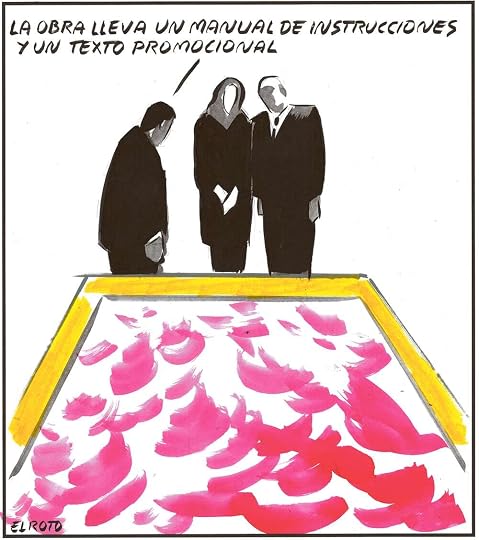
Las obras de arte, según el filósofo, han dejado de centrarse en los objetos para plasmar las ideas que tenemos de esos objetos. La obra de arte pasa a ser autónoma, desligada totalmente de la realidad exterior y de las emociones espontaneas que surgen en el espectador. Son obras con frecuencia de carácter irónico, como un juego o una broma, y renegando de la trascendencia.
“El arte era trascendencia en un doble sentido. Lo era por su tema, que solía consistir en los más graves problemas de la humanidad, y lo era por sí mismo, como potencia humana que prestaba justificación y dignidad a la especie… a un artista de hoy sospecho que le aterraría verse ungido con tan enorme misión… si cabe decir que el arte salva al hombre, es sólo porque le salva de la seriedad de la vida y suscita en él inesperada puericia… Al vaciarse el arte de patetismo humano queda sin trascendencia alguna —como solo arte, sin más pretensión”
A todo este proceso denomina el autor la deshumanización del arte.
Otro elemento que introduce aquí Ortega, posiblemente el más polémico de su ensayo es que “El arte joven contribuye también a que los «mejores» se conozcan y reconozcan entre el gris de la muchedumbre y aprendan su misión, que consiste en ser pocos y tener que combatir contra muchos” (entre esos muchos ando yo). Así, el arte nuevo separa, dice Ortega, entre aquellos que se emocionan ante una obra de arte porque apela a los sentimientos y, por tanto, la conexión se produce espontáneamente, incluso a pesar de ellos, y aquellos que son capaces del disfrute de un “placer inteligente”, de un placer que ellos encuentran y que no les es dado sin su intervención consciente, un placer que emana de la obra como objeto autónomo, desligado de lo puramente humano (entendido como aquello por lo que el ser humano se emociona, aunque lo intelectual sea tan humano, posiblemente más, que lo emocional).
Termino con mi adhesión a las palabras con las que finaliza Ortega su ensayo:
“De las obras jóvenes he procurado extraer su intención, que es lo jugoso, y me he despreocupado de su realización… La empresa que acontece es fabulosa —quiere crear de la nada—. Yo espero que más adelante se contente con menos y acierte más”

January 20, 2018
In my judgment, the characteristic feature of new art “from the sociological point of view” is that it divides the public into two categories: those that understand it, and those that don’t.
The more I read of José Ortega y Gasset, the more I discover that he was one of the most complete intellectuals of the previous century. During his prolific career he made contributions to political theory, to philosophy, to literary criticism, and now I see to art criticism.
In the title essay of this collection, Ortega sets out to explain and defend the “new art.” He was writing at the high point of modernism, when the artists of the Generation of ’27 in Spain—a cadre that included Dalí, Buñuel, and Lorca—were embarking on new stylistic experiments. Somewhat older and rather conservative by temper, Ortega shows a surprising (to me) affinity for the new art. He sees cubism and surrealism as inevitable products of art history, and thinks it imperative to attempt to understand the young artists.
One reason why Ortega is attracted to this art is precisely because of its inaccessibility. An elitist to the bone, he firmly believed that humankind could be neatly divided into two sorts, the masses and the innovatives, and had nothing but scorn for the former. Thus new art’s intentional difficulty is, for Ortega, a way of pushing back against the artistic tyranny of the vulgar crowd. This shift was made, says Ortega, as a reaction against the trend of the preceding century, when art became more and more accessible.
The titular “dehumanization” consists of the new art’s content becoming increasingly remote from human life. The art of the nineteenth century was, on the whole, confessional and sympathetic, relying on its audience’s ability to identify with characters or the artist himself. But the new art is not based on fellow-feeling. It is an art for artists, and appeals only to our pure aesthetic sense.
As usual, Ortega is bursting with intriguing ideas that are not fully developed. He notes the new art’s use of irony, oneiric symbolism, its rejection of transcendence, its insistence on artistic purity, and its heavy use of metaphor. But he does not delve deeply into any of these topics, and he does not carefully investigate any particular work or movement. Ortega’s mind is like a simmering ember that sheds sparks but never properly ignites. He has a seemingly limitless store of pithy observations and intriguing theories, but never builds these into a complete system. He is like a child on a beach, picking up rocks, examining them, and then moving on. He wasn’t one for sand castles.
One reason for this is that he normally wrote in a short format—essays, articles, and speeches—and only later wove these into books. It is a journalistic philosophy, assembled on the fly. Personally I find this manner of philosophizing intriguing and valuable. His books are short, punchy, and rich; and even if I am seldom convinced by his views, I also never put down one of his books without a store of ideas to ponder. He is even worth reading just for his style; like Bertrand Russell in English, Ortega manages to combine clarity, sophistication, and personality. I look forward to the next book.

Read
March 15, 2018The Dehumanization of Art, and Other Essays, Ortega y Gasset
When I bought this book, the title sounded to me as something negative that art was, according to Ortega, undergoing, its dehumanization. As I read the essays, (the first one who gives title to the book, and which contains different sections, being the longest), I realized dehumanization is not necessarily a negative process, but it's more just a process going on. Ortega believes the XIX century's art (and literature, and music), was bent on trying to be 'realistic', on trying to capture reality (even though that's not possible, -since what's left on canvas is a draft, a schematic selection chosen by the artist, of the infinity integrated in each person. What about, instead of trying to paint the person, aiming to paint our abstraction or our idea of a person?, then, in his words:
And, according to Ortega, art and artistic (and historic) ages, can be understood as we see the relation between the artists and their intentions, -which, in modern art (for him, early XX century), has undergone a switch in focus, and it's now bent over itself, art is the content of art, the goal of art, and thus, it's dehumanized.
This quote towards the end, explains the core of the essay:

The last essays also address the change of vision. First, paintings (and philosophy), are looking at the short distance objects, and painters paint those objects, their voluminous nature. Then, the artists look to the distance, and try to depict those objects that are further away, (there's the search for perspective, -trying to find a geometric arrangement, and chiaroscuro, as transitions between painting objects to trying to paint the space we perceive when we stop looking at what we have in front, and when we try to paint the whole of what's perceive as we project our sight into the distance. Painters pay attention to the space, and start painting the space (Velazquez in Las hilanderas, or Las meninas). When they look at a scene or a landscape, they now paint their 'vision' of it (Impressionism), they don't go after 'reality', but they give us their idea of reality, thus painting what's subjective to them.
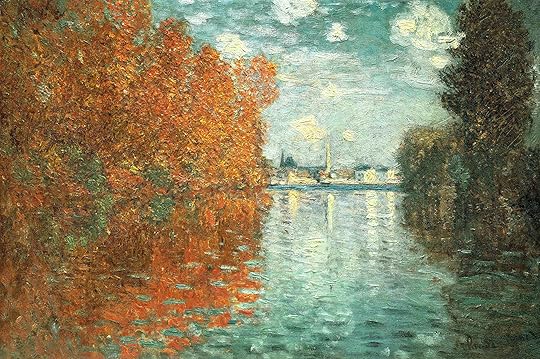 Autumn Effect at Argenteuil, 1873 by Claude Monet. Impressionism. landscape. Courtauld Gallery, London, UK
Modern art goes beyond the subjective to the intra-subjective. Art is now painting 'ideas', (cubism). He says art started to bring the outside to the canvas, and continued to bring the inside to the canvas, to end, -in his times-, focused on art itself. (This is why many of us claim we don't like new art, -we say that to mean, a) we got it but it's not our cup of tea, b) we don't understand it, thus we can't enjoy it. And if we don't understand art, it's probably because artists were left with just this one more thing to explore, -art itself. (I don't know about you, but this resonated true to me. With art from the XX century up to now, the moment I know something about the artist, what he was trying to accomplish, what he meant in art's timeline, -the new questions, new dilemmas, new techniques, the artist uncovers-, the more I can understand and thus appreciate.
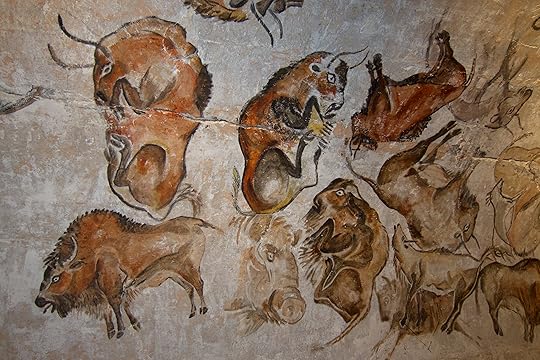 Altamira Paintings
Part of the first essay, also, is his explanation of what he calls: primitive man, classic man, oriental man, Mediterranean man, and Gothic man. In his Meditations on Don Quixote, he also talked about Mediterranean man and Gothic man, and here I understood that difference even better. Those type of historic man go hand in hand with their view of reality, and the art they left us.
Ortega talks to us a lot about literature too, -in his view, art, literature, philosophy, history, they are all, needless to say, connected.
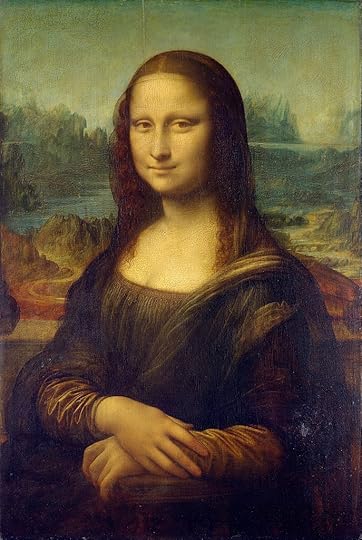
There's lovely stand alone short essays too, like the one devoted and entitled La Gioconda.
In all honesty, I'm too ignorant of art history as to know if Ortega is onto something good, of if he is missing the mark. (I'll be reading again the difficult introduction by someone new to me, Valeriano Bozal. In it, Bozal gives us the philosophical background of Ortega, -what he understood by image, or by idea. He also tells us that Ortega had many detractors, as many as defenders. It's true that Ortega starts with very bold assertions, and those may prompt many to not go further, and rebuke him from the start. Here it's where my ignorance was bliss. I also have a bias, -I do like his style, and I do tend to, in my ignorance, take him face value.
Bozal says that it's much better to suspend any foundational agreement or disagreement, and let him unravel his thinking, and give us the wealth of his own questions, suggestions, and propositions. I can assure you that reading Ortega is always a rewarding experience. One doesn't have to know anything about philosophy, and have no more than common place knowledge of art, literature, and history, to be fascinated and informed about many interesting theories and explanations of the world around us he gives to us.
When I bought this book, the title sounded to me as something negative that art was, according to Ortega, undergoing, its dehumanization. As I read the essays, (the first one who gives title to the book, and which contains different sections, being the longest), I realized dehumanization is not necessarily a negative process, but it's more just a process going on. Ortega believes the XIX century's art (and literature, and music), was bent on trying to be 'realistic', on trying to capture reality (even though that's not possible, -since what's left on canvas is a draft, a schematic selection chosen by the artist, of the infinity integrated in each person. What about, instead of trying to paint the person, aiming to paint our abstraction or our idea of a person?, then, in his words:
"el cuadro, renunciando a emular la realidad, se convertiría en lo que auténticamente es: un cuadro, una irrealidad".
my translation: "the picture, renouncing to emulate reality, will become what it genuinely is: a picture, a non-reality."
And, according to Ortega, art and artistic (and historic) ages, can be understood as we see the relation between the artists and their intentions, -which, in modern art (for him, early XX century), has undergone a switch in focus, and it's now bent over itself, art is the content of art, the goal of art, and thus, it's dehumanized.
This quote towards the end, explains the core of the essay:
La aspiración al arte puro no es, como suele creerse, una soberbia, sino, por el contrario, gran modestia. Al vaciarse el arte de patetismo humano queda sin trascendencia alguna —como sólo arte, sin más pretensión.
Pure art's aspiration is not, as we believe, prideful, much on the contrary, it reveals great modesty. Once art is emptied of all that's pathetically human, it stands without any transcendence, —just art, no pretensions.
The last essays also address the change of vision. First, paintings (and philosophy), are looking at the short distance objects, and painters paint those objects, their voluminous nature. Then, the artists look to the distance, and try to depict those objects that are further away, (there's the search for perspective, -trying to find a geometric arrangement, and chiaroscuro, as transitions between painting objects to trying to paint the space we perceive when we stop looking at what we have in front, and when we try to paint the whole of what's perceive as we project our sight into the distance. Painters pay attention to the space, and start painting the space (Velazquez in Las hilanderas, or Las meninas). When they look at a scene or a landscape, they now paint their 'vision' of it (Impressionism), they don't go after 'reality', but they give us their idea of reality, thus painting what's subjective to them.
Autumn Effect at Argenteuil, 1873 by Claude Monet. Impressionism. landscape. Courtauld Gallery, London, UKModern art goes beyond the subjective to the intra-subjective. Art is now painting 'ideas', (cubism). He says art started to bring the outside to the canvas, and continued to bring the inside to the canvas, to end, -in his times-, focused on art itself. (This is why many of us claim we don't like new art, -we say that to mean, a) we got it but it's not our cup of tea, b) we don't understand it, thus we can't enjoy it. And if we don't understand art, it's probably because artists were left with just this one more thing to explore, -art itself. (I don't know about you, but this resonated true to me. With art from the XX century up to now, the moment I know something about the artist, what he was trying to accomplish, what he meant in art's timeline, -the new questions, new dilemmas, new techniques, the artist uncovers-, the more I can understand and thus appreciate.
Altamira PaintingsPart of the first essay, also, is his explanation of what he calls: primitive man, classic man, oriental man, Mediterranean man, and Gothic man. In his Meditations on Don Quixote, he also talked about Mediterranean man and Gothic man, and here I understood that difference even better. Those type of historic man go hand in hand with their view of reality, and the art they left us.
Ortega talks to us a lot about literature too, -in his view, art, literature, philosophy, history, they are all, needless to say, connected.
There's lovely stand alone short essays too, like the one devoted and entitled La Gioconda.
In all honesty, I'm too ignorant of art history as to know if Ortega is onto something good, of if he is missing the mark. (I'll be reading again the difficult introduction by someone new to me, Valeriano Bozal. In it, Bozal gives us the philosophical background of Ortega, -what he understood by image, or by idea. He also tells us that Ortega had many detractors, as many as defenders. It's true that Ortega starts with very bold assertions, and those may prompt many to not go further, and rebuke him from the start. Here it's where my ignorance was bliss. I also have a bias, -I do like his style, and I do tend to, in my ignorance, take him face value.
Bozal says that it's much better to suspend any foundational agreement or disagreement, and let him unravel his thinking, and give us the wealth of his own questions, suggestions, and propositions. I can assure you that reading Ortega is always a rewarding experience. One doesn't have to know anything about philosophy, and have no more than common place knowledge of art, literature, and history, to be fascinated and informed about many interesting theories and explanations of the world around us he gives to us.

December 26, 2020
"Es posible que el arte actual tenga poco valor estético, pero quien vea en él sino un capricho, puede estar seguro de no haber comprendido ni el arte nuevo ni el viejo"
En general, estoy de acuerdo con su descripción de la situación histórica, pero no con su interpretación de las consecuencias. Toda su teoría de la deshumanización viene del supuesto de que lo realista (y por lo tanto, lo popular) es lo humano, pero lo mas personal no siempre es realista. No me parece obvio que lo que humaniza una obra de arte es el efecto que tenga en el publico, mas bien me inclinaría a creer que son las condiciones en las que fue creado. La obra en occidente no tiene que transmitir sentimientos, tiene que alcanzar un nivel de universalidad que nos permita proyectar los propios a ella y la autenticidad es la mejor forma de lograrlo. Y aunque en un sentido estricto el arte jamas se puede deshumanizar, incluso si tomamos la humanidad como que tenga un efecto emocional "puro", creo que esta equivocado. Esto porque separar los sentimientos en estéticos o humanos según que tan racionalizados o inmediatos son, viene de un dogma clásico de la filosofía occidental (dualismo cuerpo/alma), pero no muy fundamentado. El proceso en uno puede ser más consciente, pero las emociones por sí solas no son capaces de comprender el arte y la razón por si sola no es capaz de disfrutarlo o tener motivación por él. El "refinamiento estético" puede hacer al arte impopular, pero nunca inhumano (o in-emocional). No porque el arte permita un mayor análisis va a tener un efecto emocional menos intenso y muchas veces no es necesaria la comprensión previa de la obra para él goce emocional, solo tener desarrollada una sensibilidad particular. Me atrevería a decir incluso lo contrario: las vanguardias permitían disfrutar estéticamente una obra sin entenderla, mientras en el arte realista/romántico es imposible de separar la emoción de la racionalización, porque la emoción viene de la comprensión del motivo de la obra (cuando no es simplemente sorprenderse por la técnica). Él mismo lo dice muy bien en otros ensayos posteriores: el arte pasado está menos involucrado con nosotros y requiere una comprensión de sus convenciones, es vital antes que estético.
No envejeció muy bien, especialmente su creencia de que las vanguardias eran para artistas, mientras el arte romántico era para las masas. Creo que eso responde mas al estatus social del arte en cada periodo y no a cambios estéticos específicos. Sí, es cierto que ocurrió una elitización de las vanguardias a medida que avanzaba el siglo XX, pero también ocurrió una elitización de todo lo demás, incluyendo al arte romántico. El pasatiempo de las masas dejo de ser el arte (considerado como tal por la academia) y se volvió el consumo, pero el arte de las masas nunca es bien visto por la elite en su época. Mirando hacia atrás siempre va a parecer que el arte actual es de las elites.
El titulo te predispone un poco a esperar una critica, un ataque al arte del siglo XX, pero esta lejos de serlo. Es una explicación histórica/sociológica e incluso una defensa del ritmo de la historia. Si bien el autor claramente tiene una sensibilidad por el arte romántico, ve que la desmitificación del arte no significa una banalización de él, sino simplemente un cambio de la percepción de su rol a uno individual y no social.
Es una mezcla, a veces impenetrable, de estetica y filosofia. Empieza y termina los ensayos con su tesis estética, pero todo el razonamiento es filosófico. A pesar de mis diferencias, su estilo, lógica y humor son impecables y se aprende mucho leyéndolo.
En general, estoy de acuerdo con su descripción de la situación histórica, pero no con su interpretación de las consecuencias. Toda su teoría de la deshumanización viene del supuesto de que lo realista (y por lo tanto, lo popular) es lo humano, pero lo mas personal no siempre es realista. No me parece obvio que lo que humaniza una obra de arte es el efecto que tenga en el publico, mas bien me inclinaría a creer que son las condiciones en las que fue creado. La obra en occidente no tiene que transmitir sentimientos, tiene que alcanzar un nivel de universalidad que nos permita proyectar los propios a ella y la autenticidad es la mejor forma de lograrlo. Y aunque en un sentido estricto el arte jamas se puede deshumanizar, incluso si tomamos la humanidad como que tenga un efecto emocional "puro", creo que esta equivocado. Esto porque separar los sentimientos en estéticos o humanos según que tan racionalizados o inmediatos son, viene de un dogma clásico de la filosofía occidental (dualismo cuerpo/alma), pero no muy fundamentado. El proceso en uno puede ser más consciente, pero las emociones por sí solas no son capaces de comprender el arte y la razón por si sola no es capaz de disfrutarlo o tener motivación por él. El "refinamiento estético" puede hacer al arte impopular, pero nunca inhumano (o in-emocional). No porque el arte permita un mayor análisis va a tener un efecto emocional menos intenso y muchas veces no es necesaria la comprensión previa de la obra para él goce emocional, solo tener desarrollada una sensibilidad particular. Me atrevería a decir incluso lo contrario: las vanguardias permitían disfrutar estéticamente una obra sin entenderla, mientras en el arte realista/romántico es imposible de separar la emoción de la racionalización, porque la emoción viene de la comprensión del motivo de la obra (cuando no es simplemente sorprenderse por la técnica). Él mismo lo dice muy bien en otros ensayos posteriores: el arte pasado está menos involucrado con nosotros y requiere una comprensión de sus convenciones, es vital antes que estético.
No envejeció muy bien, especialmente su creencia de que las vanguardias eran para artistas, mientras el arte romántico era para las masas. Creo que eso responde mas al estatus social del arte en cada periodo y no a cambios estéticos específicos. Sí, es cierto que ocurrió una elitización de las vanguardias a medida que avanzaba el siglo XX, pero también ocurrió una elitización de todo lo demás, incluyendo al arte romántico. El pasatiempo de las masas dejo de ser el arte (considerado como tal por la academia) y se volvió el consumo, pero el arte de las masas nunca es bien visto por la elite en su época. Mirando hacia atrás siempre va a parecer que el arte actual es de las elites.
El titulo te predispone un poco a esperar una critica, un ataque al arte del siglo XX, pero esta lejos de serlo. Es una explicación histórica/sociológica e incluso una defensa del ritmo de la historia. Si bien el autor claramente tiene una sensibilidad por el arte romántico, ve que la desmitificación del arte no significa una banalización de él, sino simplemente un cambio de la percepción de su rol a uno individual y no social.
Es una mezcla, a veces impenetrable, de estetica y filosofia. Empieza y termina los ensayos con su tesis estética, pero todo el razonamiento es filosófico. A pesar de mis diferencias, su estilo, lógica y humor son impecables y se aprende mucho leyéndolo.

Read
July 13, 2021pues un elitista de puta madre

June 25, 2019
Recuerdo leer La Deshumanización del Arte durante la carrera, hace ya muchos años, y recuerdo también lo que me gustaron las ideas estéticas de Ortega y Gasset. Muy bueno.

April 9, 2026
capaz de producirme admiración y odio dentro de un mismo párrafo

October 4, 2017
Un libro que es una tela de araña, si se toma y saca lo substancial de él, es bien poco. Una constante en muchos filósofos.
No comparto casi nada de lo que propone el autor. Imagino que para la persona que ha leído más sobre estética o historia del arte le puede ser útil. No creo que vuelva a Ortega y Gasset por mucho tiempo (quizás nunca).
No comparto casi nada de lo que propone el autor. Imagino que para la persona que ha leído más sobre estética o historia del arte le puede ser útil. No creo que vuelva a Ortega y Gasset por mucho tiempo (quizás nunca).

February 13, 2016
If you think Ortega y Gasset's notion of humanization more as the episteme of constructing, generating and understanding any form of human sentiment and activity in our "reality", this essay can say something even to the 21th century readers.

March 4, 2022
"Kunsten bort fra det menneskelige" - Cappelens Upopulære Skrifter. 1949. Utgitt første gang i Spania i 1925.
Interessant men unødig arrogant og tidvis svært usubstansiert og rotete argumentert. Spennende tanker men oppleves som et mer eller mindre ufullendt essay. Forfatteren trekker også en del drøye slutninger etter mitt syn. Uansett, alt i alt ålreit lesning.
2,75. Stjerner rundet opp.
Interessant men unødig arrogant og tidvis svært usubstansiert og rotete argumentert. Spennende tanker men oppleves som et mer eller mindre ufullendt essay. Forfatteren trekker også en del drøye slutninger etter mitt syn. Uansett, alt i alt ålreit lesning.
2,75. Stjerner rundet opp.

February 22, 2025
Sigo opinando lo mismo al volver a leerlo tiempo después, la deshumanización del arte sigue siendo algo que aplica a día de hoy aplicará siempre que se creen nuevas ramificaciones de cualquier arte (pinturas, literatura, música...) y la división de los 2 grupos seguirá fluyendo hasta que haya gente que sea capaz de dar el paso de comprender que la evolución siempre sigue su curso

January 18, 2026
Thought provoking & beautifully written, Jose Ortega y Gasset's 5 essays in The Dehumanization of Art reaffirms the deeply metaphysical effects inherent to art. He discusses art, novels, and the soul in a philosophical voice that reads casually conversational yet thoroughly educated, like a tenured professor sitting with you at the library hearth's fireside. This is a book I can return to again and again and glean something new.
Aside from Gasset's lovely writing, something else I loved about my copy of this book was that it was pre-owned and annotated by Michael Wurmfeld from NYC in 1961, as written in pen on the inside cover. He underlined, annotated, and circled passages and sentences throughout the book. I did research on him and discovered he was a Princeton graduate as an architecture major and led an extremely distinguished life. He passed in 2000. He owned this book as a student. This added yet another layer of fascination to the book, as I was now beside the library hearth's fireside with Gasset and Wurmfeld, transcending time as I learned from these two distinctly separate, yet weirdly united men in this book.
Overall, a fascinating series of essays that I recommend to anyone who wishes to delve into the philosophy of art and grapple with what are truly is and ought to be.
"Let us observe ourselves the moment we have finished reading a great novel. Is it not as though we were emerging from another world...perchance a sudden wave of recollection washes us back into the universe of the novel, and with certain effort, as though struggling through a liquid element, we must regain the shores of our existence proper. Were someone to find us just that moment, our dilated pupils would betray our shipwrecked condition."
Aside from Gasset's lovely writing, something else I loved about my copy of this book was that it was pre-owned and annotated by Michael Wurmfeld from NYC in 1961, as written in pen on the inside cover. He underlined, annotated, and circled passages and sentences throughout the book. I did research on him and discovered he was a Princeton graduate as an architecture major and led an extremely distinguished life. He passed in 2000. He owned this book as a student. This added yet another layer of fascination to the book, as I was now beside the library hearth's fireside with Gasset and Wurmfeld, transcending time as I learned from these two distinctly separate, yet weirdly united men in this book.
Overall, a fascinating series of essays that I recommend to anyone who wishes to delve into the philosophy of art and grapple with what are truly is and ought to be.
"Let us observe ourselves the moment we have finished reading a great novel. Is it not as though we were emerging from another world...perchance a sudden wave of recollection washes us back into the universe of the novel, and with certain effort, as though struggling through a liquid element, we must regain the shores of our existence proper. Were someone to find us just that moment, our dilated pupils would betray our shipwrecked condition."

April 6, 2023
Ser artista es no tomar en serio al ser humano tan serio que somos cuando no somos artistas.

January 13, 2025
Ortega podría haber tomado más en cuenta la experiencia que vive el ser al contemplar una obra, incluso si es una obra moderna y la comprende; para mí, la experiencia que vive el ser en aquellos momentos donde contempla una obra, es casi mágica, es un ensimismamiento que te lleva a múltiples rincones de tu vida, de tus recuerdos, de tus reflexiones... y terminas abriéndote a todo el mundo artístico que te ofrece la obra. Es este sentido trascendental que también se encuentra en la intrascendencia del arte nuevo lo que considero que ha faltado por tratar en el ensayo, pues incluso el arte más deshumanizado puede marcar un antes y un después en la vida del espectador al poseer aquello que se escapa al propio entendimiento y que solo se puede vivir al contemplar la obra.
En cualquier caso, es un ensayo muy recomendable si te interesa comprender el arte nuevo y todas aquellas reflexiones que envuelven al artista contemporáneo.
En cualquier caso, es un ensayo muy recomendable si te interesa comprender el arte nuevo y todas aquellas reflexiones que envuelven al artista contemporáneo.
September 24, 2012
José Ortega y Gasset provides quite a good overview of the paradigm shift that happened with the beginning of self-consciously modern art (in different media) in the mid-19th century and onwards. He describes very well how it's very different worldviews or even definitions of art that lie behind "traditional" and "modern" art styles, even in the more subtle cases. It's also a fascinating read in this era when modernist art and literature is generally regarded as rather "old fashioned". (at least among my generation)
That's also kind of the title essay's downfall, though, and you can see it in the title: Though the author by his own confession attempts to stay neutral and descriptive rather than prescriptive, the general tone of the writing remains almost ridiculously conservative. He just can't resist letting disapproving remarks about the impersonal and esoteric nature of modern art slip through.
It also gets kind of schizophrenic, borderline surreal, when Ortega y Gasset also shows some admiration for how far the avant-garde of his day was willing to go, and he even seems to admire their personal and artistic integrity elsewhere. Near the end he goes on an interesting tangent on how much "modern" art was even then not that modern at all, for example abstract art in a sense being rather regressive in its attempt to "start from scratch". He doesn't spent much time on that, though, and that's kind of the main problem: The whole thing frequently feels like a summary of a much longer text that explains things in more detail, but the author did not have time or patience to write.
That's also kind of the title essay's downfall, though, and you can see it in the title: Though the author by his own confession attempts to stay neutral and descriptive rather than prescriptive, the general tone of the writing remains almost ridiculously conservative. He just can't resist letting disapproving remarks about the impersonal and esoteric nature of modern art slip through.
It also gets kind of schizophrenic, borderline surreal, when Ortega y Gasset also shows some admiration for how far the avant-garde of his day was willing to go, and he even seems to admire their personal and artistic integrity elsewhere. Near the end he goes on an interesting tangent on how much "modern" art was even then not that modern at all, for example abstract art in a sense being rather regressive in its attempt to "start from scratch". He doesn't spent much time on that, though, and that's kind of the main problem: The whole thing frequently feels like a summary of a much longer text that explains things in more detail, but the author did not have time or patience to write.

June 6, 2025
Después de 3 meses de lectura por fin lo he terminado... A pesar de algunos de los ensayos que son tan machistas que ni siquiera lo he podido intentar olvidar justificándolo con "la época", ha sido una lectura muy disfrutable por lo lírico que es su lenguaje y por la seguridad y humildad con la que expone sus argumentos.
Por supuesto han pasado 100 años desde que se escribió esto asi que muchas ideas esteticas están ya más que superadas, pero hay algunas que siguen siendo pertinentes y el ensayo que da titulo a la compilación es muy buena base sobre la que entender las primeras vanguardias.
La gran sorpresa de este libro para mi y el motivo por el que mas me ha gustado ha sido por las ideas que tiene sobre la literatura... son BUENISIMAS. Quizas es porque no se tanto de critica literaria contemporánea y por eso me ha volado la cabeza, pero "Ideas para la novela" y "Ensayo de estética a manera de prólogo" han sido probablemente mis dos lecturas favoritas del libro. La forma en la que desgrana la metáfora es algo que me va a acompañar durante el resto de mi vida yo no tengo dudas. Me niego a leer ningun otro ensayo que tenga menos pasion que la que este hombre le pone a los suyos
Por supuesto han pasado 100 años desde que se escribió esto asi que muchas ideas esteticas están ya más que superadas, pero hay algunas que siguen siendo pertinentes y el ensayo que da titulo a la compilación es muy buena base sobre la que entender las primeras vanguardias.
La gran sorpresa de este libro para mi y el motivo por el que mas me ha gustado ha sido por las ideas que tiene sobre la literatura... son BUENISIMAS. Quizas es porque no se tanto de critica literaria contemporánea y por eso me ha volado la cabeza, pero "Ideas para la novela" y "Ensayo de estética a manera de prólogo" han sido probablemente mis dos lecturas favoritas del libro. La forma en la que desgrana la metáfora es algo que me va a acompañar durante el resto de mi vida yo no tengo dudas. Me niego a leer ningun otro ensayo que tenga menos pasion que la que este hombre le pone a los suyos
June 13, 2017
Lo que me llevó a este libro fue que Susan Sontag lo citaba en "sobre el estilo", el segundo de los ensayos de "Contra la interpretación".
Algunos de los ensayos incluidos son mejores que el titular, y en general forman un conjunto interesante. No pueden aplicarse a todo el arte de vanguardia, pero hay que celebrar la confianza mostrada en la modernidad y en el formalismo.
Una idea: me pareció curioso que Bazin, en "La ontología de la imagen fotográfica", llegase con la deshumanización al realismo, idea aparentemente opuesta (aunque en realidad es otro tipo de realismo).
Algunos de los ensayos incluidos son mejores que el titular, y en general forman un conjunto interesante. No pueden aplicarse a todo el arte de vanguardia, pero hay que celebrar la confianza mostrada en la modernidad y en el formalismo.
Una idea: me pareció curioso que Bazin, en "La ontología de la imagen fotográfica", llegase con la deshumanización al realismo, idea aparentemente opuesta (aunque en realidad es otro tipo de realismo).

April 23, 2009
Some very exciting ideas in this selection. Sadly some rather fanciful ones as well. Promises a lot more than it delivers, but Oh my! What promises!

December 11, 2022
"¿Pues qué quieren? ¿Qué el poeta sea un pájaro, un ictiosaurio, un dodecaedro?"

June 27, 2026
През 2025 г. се навършиха сто години от първата цялостна публикация на „Дехуманизацията на изкуството“ – труд с ключово място в размишленията на испанския философ Хосѐ Ортѐга-и-Гасѐт върху изкуството. По този повод „Колибри“ предлага на българските читатели настоящия сборник в превод на Анна Златкова. Подборът на есетата и бележките в края на изданието са заслуга на преводачката. Художник на корицата е Стефан Касъров.
„Дехуманизацията на изкуството“ и други есета“ обхваща есетата „Педагогиката на пейзажа“, „Размишление за рамката“, „Въведение към един „Дон Хуан“, „За гледната точка в изкуството“, „Двете големи метафори“, „Произходът на държавата от спорта“, „Дехуманизацията на изкуството“, „Изкуството в сегашно и в минало време“, „В търсене на Гьоте отвътре, „Интелектуалецът и другият“.
„Всички особености на новото изкуство може да бъдат изведени от тази липса на значимост, която на свой ред не означава нищо друго, освен че изкуството е заело друго място в йерархията на човешките интереси и дейности. Тези интереси и дейности може да бъдат представени като концентрични кръгове, чиито радиуси измерват динамичното разстояние от оста на живота, където действат нашите върховни въжделения. Всички неща – от жизнено или от културно естество – се движат по различните орбити, привличани повече или по-малко от емоционалния център на системата. И така, аз бих казал, че изкуството, разположено преди – както науката или политиката – много близо до оста на влечение, гръбнак на нашата личност, сега се е отместило към периферията. То не е изгубило нито един от външните си признаци, но е станало далечно, второстепенно и по-малко сериозно.
„Стремежът да се твори чисто изкуство не издава, както обикновено се приема, високомерие, а напротив, голяма скромност. Освобождавайки се от човешки патос, изкуството губи каквато и да било значимост – остава само изкуство, без други претенции.“ - из „Дехуманизацията на изкуството“, 1925 г.
Хосе Ортега-и-Гасет (1883-1955) е виден испански философ, социолог и есеист. През 1914 г. пише първата си книга – „Размисли за дон Кихот“. През 1916 г. става съосновател на всекидневника „Сол“. През 1934 г. публикува книгата „По повод на Галилей“, а през 1935 г. излиза „Историята като система“. Най-известният му текст е „Бунтът на масите“, а сборникът „Мисли за Европа“ включва статии и лекции, писани през различни периоди от първата половина на ХХ век. Избран е за депутат през 1931 година, не след дълго се оттегля разочарован от политиката, а след началото на гражданската война през 1936 г. живее в емиграция до 1948 година.
„Дехуманизацията на изкуството“ и други есета“ обхваща есетата „Педагогиката на пейзажа“, „Размишление за рамката“, „Въведение към един „Дон Хуан“, „За гледната точка в изкуството“, „Двете големи метафори“, „Произходът на държавата от спорта“, „Дехуманизацията на изкуството“, „Изкуството в сегашно и в минало време“, „В търсене на Гьоте отвътре, „Интелектуалецът и другият“.
„Всички особености на новото изкуство може да бъдат изведени от тази липса на значимост, която на свой ред не означава нищо друго, освен че изкуството е заело друго място в йерархията на човешките интереси и дейности. Тези интереси и дейности може да бъдат представени като концентрични кръгове, чиито радиуси измерват динамичното разстояние от оста на живота, където действат нашите върховни въжделения. Всички неща – от жизнено или от културно естество – се движат по различните орбити, привличани повече или по-малко от емоционалния център на системата. И така, аз бих казал, че изкуството, разположено преди – както науката или политиката – много близо до оста на влечение, гръбнак на нашата личност, сега се е отместило към периферията. То не е изгубило нито един от външните си признаци, но е станало далечно, второстепенно и по-малко сериозно.
„Стремежът да се твори чисто изкуство не издава, както обикновено се приема, високомерие, а напротив, голяма скромност. Освобождавайки се от човешки патос, изкуството губи каквато и да било значимост – остава само изкуство, без други претенции.“ - из „Дехуманизацията на изкуството“, 1925 г.
Хосе Ортега-и-Гасет (1883-1955) е виден испански философ, социолог и есеист. През 1914 г. пише първата си книга – „Размисли за дон Кихот“. През 1916 г. става съосновател на всекидневника „Сол“. През 1934 г. публикува книгата „По повод на Галилей“, а през 1935 г. излиза „Историята като система“. Най-известният му текст е „Бунтът на масите“, а сборникът „Мисли за Европа“ включва статии и лекции, писани през различни периоди от първата половина на ХХ век. Избран е за депутат през 1931 година, не след дълго се оттегля разочарован от политиката, а след началото на гражданската война през 1936 г. живее в емиграция до 1948 година.

September 26, 2026
He disfrutado especialmente los ensayos sobre estética. Ortega y Gasset tiene una manera de escribir que resulta clara y distendida y, al mismo tiempo, no se aleja de profundidades y matices. Me he reído en el metro leyéndolo. Que consideraciones tan interesantes y tan bien escritas (bonitas, además, conmovedoras) sobre el arte pero, también, a partir de él.
"El mismo gesto con que alejamos de nuestro trato actual el pasado, hace a éste renacer justamente como pasado. En vez de una sola dimensión donde hacer resbalar la vida —el presente-, tenemos ahora dos, pulcramente diferenciadas, no sólo en la idea, sino en el sentido."
"El mismo gesto con que alejamos de nuestro trato actual el pasado, hace a éste renacer justamente como pasado. En vez de una sola dimensión donde hacer resbalar la vida —el presente-, tenemos ahora dos, pulcramente diferenciadas, no sólo en la idea, sino en el sentido."

July 9, 2026
Varios de los puntos filiales del arte nuevo de la época sobre la que escribió Ortega siguen compartiéndose con el actual, y me ha inspirado a buscar los nuevos. Su tarea me parece interesante y creo que hay que leerlo varias veces para poder reflexionar sobre todas las preguntas que hace, que son muchas y como escribí antes, totalmente coherentes con nuestra actualidad. Su estilo de escritura nunca decepciona.

March 14, 2024
«Ya en la evolución del arte prehistórico vemos que la sensibilidad comienza por buscar la forma viva y acaba por eludirla, como aterrorizada o asqueada, recogiéndose en signos abstractos, último residuo de figuras animadas o cósmicas.»
Lo que me gustaría a mí vivir en un mundo esquemático…
Lo que me gustaría a mí vivir en un mundo esquemático…
December 30, 2025
Ya no sé lo que he leído

February 23, 2026
Curioso, pero a veces me ha costado mantener la concentración.

April 6, 2024
Basadísimo

December 20, 2018
Me ha sorprendido, la verdad, pensaba que me iba a gustar menos.

December 24, 2012
If you ask your own self, strictly and peremptorily, Who am I? -- not, What am I? but, Who is that I of whom I perpetually talk in my daily life -- you will become aware of the incredible manner in which philosophy has always gone astray by giving the name of the "I" to the most unlikely things but never to the thing that you call the "I" in your daily life. That I which is you, my dear friend, does not consist in your body, nor yet in your soul, your consciousness, or your character. You found yourself with a body, a soul, a character, as you found yourself with the capital which your parents left you, with the country in which you were born, and with the human society in which you move. Just as you are not your liver, be it sound or diseased, neither are you your memory, be it good or bad, nor your will, be it strong or weak, nor your intelligence, be it acute or dull. The I which you are, found itself with these physical or psychical things when it found itself alive. You are the person who has to live with them, by means of them, and perhaps you spend your life protesting against the soul with which you were endowed -- of its lack of will, for example -- as you protest against your bad stomach or of the cold climate of your country. The soul, then, remains as much outside the I which you are, as the landscape remains outside your body. Let us say, if you choose, that among the things with which you found yourself, your soul is the closest to you, but it is not you yourself. We must learn to free ourselves from the traditional idea which would have reality always consist in some thing, be it physical or mental. You are no thing, you are simply the person who has to live with things, among things, the person who has to live, not any life but a particular life. There is no abstract living. Life means the inexorable necessity of realizing the design for an existence which each one of us is. This design in which the I consists, is not an idea or plan ideated by the person involved, and freely chosen. It is anterior to (in the sense of independent from) all the ideas which his intellect forms, to all the decisions of his will. Our will is free to realize or not to realize this vital design which we ultimately are, but it cannot correct it, change it, abbreviate it, or substitute anything for it. We are indelibly that single programmatic personage who must be realized. The outside world or our own character makes that realization easier or more difficult. Life is essentially a drama, because it is a desperate struggle -- with things and even with our character -- to succeed in being in fact that which we are in design.
January 12, 2021
El ensayo se centra en las vanguardias y como rompieron el arte en su momento. Más allá de lo que supuso de su momento. Es interesante sus conclusiones que podemos sacar más allá del contexto de su tiempo. Por ejemplo el conflicto entre realismo, el sentimiento y el propio arte. Por eso hablaba de la deshumanización en ir más allá de las formas realistas, superar el realismo y el romanticismo del siglo XIX para crear arte. Podemos ver que en su definición de arte se reserva para unos privilegiados que sean capaces de disfrutarlo. Ortega anima a ir más allá de la forma "bonita" o del sentimiento que provoca.
El texto propone ideas interesantes. Pero también elitistas y que chocan por como veo al arte y su papel en el sociedad. Interesante saber que la pelea entre cultura popular y arte selecto ya existía hace diez años en nuestro país. Hay algunas cosas que no termino de entender, quizá por contexto histórico o cultura artística de ese momento, como cuando llama a Beethoven y a Wagner realistas y los contrapone al nuevo arte de Debussy.
Sin embargo, me gusta la idea del arte como ampliación de nuestra realidad. No quedarnos en ella como dice en este párrafo:
"Nuestras convicciones más arraigadas, más indubitables, son las más sospechosas. Ellas constituyen nuestro límite, nuestros confines, nuestra prisión. Poca es la vida si no piafa en ella un afán formidable de ampliar fronteras. Se vive en la proporción en que se ansía vivir más. Toda obstinación en mantenernos dentro de nuestro horizonte habitual significa debilidad, decadencia de energías vitales. El horizonte es una línea biológica, un órgano viviente de nuestro ser; mientras gozamos de plenitud el horizonte emigra, se dilata, ondula elástico casi al compás de nuestra respiración. En cambio, cuando el horizonte se fija es que se ha anquilosado y que nosotros ingresamos en la vejez.”
El texto propone ideas interesantes. Pero también elitistas y que chocan por como veo al arte y su papel en el sociedad. Interesante saber que la pelea entre cultura popular y arte selecto ya existía hace diez años en nuestro país. Hay algunas cosas que no termino de entender, quizá por contexto histórico o cultura artística de ese momento, como cuando llama a Beethoven y a Wagner realistas y los contrapone al nuevo arte de Debussy.
Sin embargo, me gusta la idea del arte como ampliación de nuestra realidad. No quedarnos en ella como dice en este párrafo:
"Nuestras convicciones más arraigadas, más indubitables, son las más sospechosas. Ellas constituyen nuestro límite, nuestros confines, nuestra prisión. Poca es la vida si no piafa en ella un afán formidable de ampliar fronteras. Se vive en la proporción en que se ansía vivir más. Toda obstinación en mantenernos dentro de nuestro horizonte habitual significa debilidad, decadencia de energías vitales. El horizonte es una línea biológica, un órgano viviente de nuestro ser; mientras gozamos de plenitud el horizonte emigra, se dilata, ondula elástico casi al compás de nuestra respiración. En cambio, cuando el horizonte se fija es que se ha anquilosado y que nosotros ingresamos en la vejez.”

July 3, 2018
Scritto nel 1925, parla di quella che allora era "arte nuova" e senza dubbio fa considerazioni che possono essere applicate anche all'arte contemporanea d'oggi. La posizione di Ortega è ambigua nella misura in cui da un lato afferma di non voler affermare la superiorità né dell'arte contemporanea né di quella precedente, dall'altro si tradisce quando descrive la separazione tra volgo ed élite intellettuale (l'unica in grado di capire l'arte contemporanea - e non è difficile credere che lui se ne senta parte). Ci sono senz'altro note corrette e del tutto precorritrici di quanto è poi accaduto, in particolare il carattere intrinsecamente ironico dell'arte contemporanea.
Displaying 1 - 30 of 126 reviews