What do you think?
Rate this book


368 pages, Hardcover
First published October 25, 2011
"MycophiliaThe book covers many mushroom-related topics in here. The author mentions early on that she became interested in foraging for wild mushrooms because she enjoys cooking with them and eating them. The book details many different fungi, interspliced with accounts of her travels to various mushroom festivals, and some of the people she met along the way.
From the Greek,
myco = fungus, philos = loving."
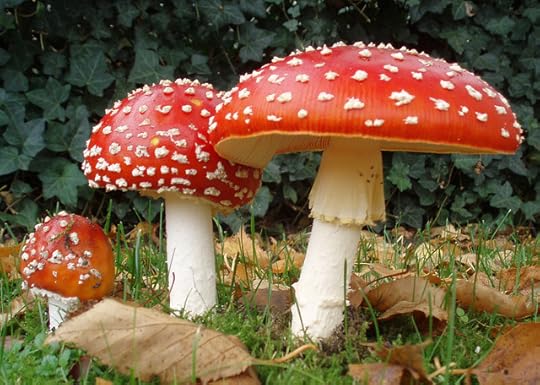
"...It slowly became evident to me that fungi were everywhere: We inhale 1 to 10 spores with every breath, as many as 300,000 spores a day. They live on every surface, in every organism to some degree or another, and some can theoretically live forever. They function as a shadow immune system for all plants, a shadow digestive system for trees, and are the source of some of the worst plagues of man and animals and crops, and the best medicine we have. Fungi can decompose all sorts of organic compounds, even petroleum and sarin gas; and given enough time, they will likely evolve to recycle all the rest of our chemical inventions. Indeed, as the mycologist C. J. Alexopoulos put it, “scarcely a day passes when we aren’t helped or harmed by fungi.”Some more interesting factoids; morels are somewhat toxic when raw. Also, there is no "poop" on common button mushrooms; the fungus breaks down the organic material.
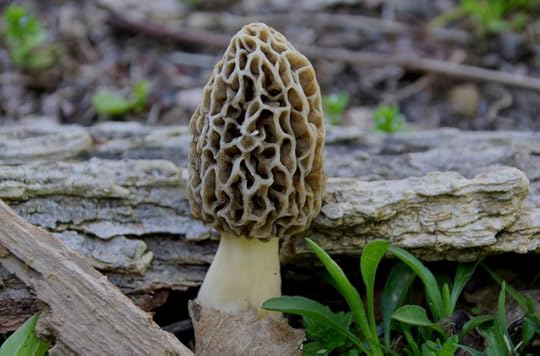
"...After an hour of labor, Andrew and I had collected about 10 pounds of morels.The morel:
All along the road back to camp, we saw the tents of morel buyers. The buyers tend to be independent contractors who work for one or more wild mushroom distribution companies. These companies may front substantial amounts of cash to the buyers who purchase mushrooms directly from the pickers, but most buyers finance their purchases independently. It is not uncommon for buyers to purchase tens of thousands of dollars worth of mushrooms a day. Prices depend on species; demand in the United States, Europe, and Japan; quality; and availability. If mushrooms are scarce, then the price goes up; if the mushrooms are prolific, then the price will be lower, but more mushrooms are purchased.
Indeed, wild mushroom transactions may be the largest legal cash-based commerce in the USA..."
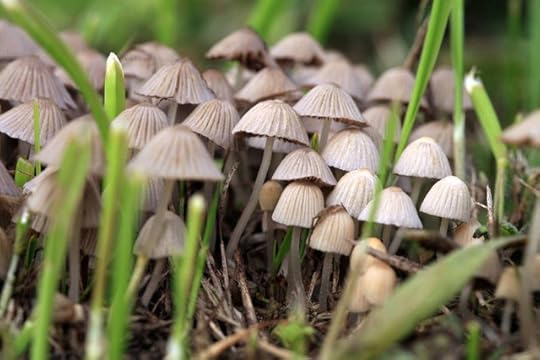
"...The Western approach to medicine is based on the notion of the silver bullet, the one shot that cures the disease, either by eradicating or relieving illness surgically or chemically. It is, according to Dr. Denis Benjamin, a “reductionist” approach.The terms "Eastern", "traditional", "alternative" or "Western" medicines are unscientific misnomers. There is no such thing as alternative medicine. There's only medicine that works and medicine that doesn't.
In contrast, Asian medicine promotes health, including improvements of a more general sort, like immune system enhancement and increased vigor.
You could say the definition of Western doctoring is to respond to disease and the definition of Eastern doctoring is to avoid disease..."