Jump to ratings and reviews
Rate this book

A Traveller in Time

Rate this book
The “superb” time travel adventure of one lonely young girl, a remarkable family, and an impossible task, set between modern and Elizabethan England (The Washington Post)"A beautiful book . . . a form of enchanting ghost story, with the ghosts drawn in with the grace of a painter on a fan." —The ObserverPenelope Taberner Cameron is a solitary and a sickly child, a reader and a dreamer. Her mother, indeed, is of the opinion that the girl has grown all too attached to the products of her imagination and decides to send her away from London for a restorative dose of fresh country air. But staying at Thackers, in remote Derbyshire, Penelope is soon caught up in a new mystery, as she finds herself transported at unforeseeable intervals back and forth from modern to Elizabethan times. There she becomes part of a remarkable family that is, Penelope realizes, in terrible danger as they plot to free Mary, Queen of Scots, from the prison in which Queen Elizabeth has confined her. Penelope knows the tragic end that awaits the Scottish queen, but she can neither change the course of events nor persuade her new family of the hopelessness of their cause, which love, loyalty, and justice all compel them to embrace. Caught between present and past, Penelope is ever more torn by questions of freedom and fate. To travel in time, she discovers, is to be very much alone. And yet the slow recurrent rhythms of the natural world, beautifully captured by Alison Uttley, also speak of a greater ongoing life that transcends the passage of the years.

336 pages, Kindle Edition

First published January 1, 1939

80 people are currently reading
4171 people want to read

About the author

Alison Uttley

260 books61 followers
Alison Uttley (17 December 1884 – 7 May 1976), née Alice Jane Taylor, was a prolific British writer of over 100 books. She is now best known for her children's series about Little Grey Rabbit, and Sam Pig.

For more information, please see:

http://en.wikipedia.org/wiki/Alison_U...

http://www.answers.com/topic/alison-u...

Ratings & Reviews

What do you think?
Rate this book

Friends & Following

Create a free account to discover what your friends think of this book!

Community Reviews

5 stars
1,237 (44%)
4 stars
873 (31%)
3 stars
499 (17%)
2 stars
137 (4%)
1 star
58 (2%)
Displaying 1 - 30 of 232 reviews
Profile Image for Manybooks.
3,801 reviews101 followers
January 11, 2025
As a young and lonely teenager, I both dreamed of and desperately wanted to open a door and be magically transported into the past and thus Allison Uttley's A Traveller in Time (where young Penelope Taberner does precisely that) was right up my proverbial alley so to speak (especially since she is transported into the past of the United Kingdom).

However, as Penelope is caught up in the life and times of a rural Tudor manor house and the Babingtons' striving to save Mary Queen of Scots, both her and also the reader's infatuation with especially young and dashing Francis Babington is clouded by the knowledge of the future (of British history), that the family's plot to free Mary Queen of Scots from imprisonment is doomed to epically fail (and the first time I read A Traveller in Time knowing what would happen, being painfully aware of the fact that the Babingtons would not succeed, did bother me a tiny bit, but it also piqued my historical interest and made me engage in supplemental research on Tudor England which definitely helped me in grade nine when we were taking the history of the British and Scottish monarchies in Social Studies).

Although readers not all that versed in Tudor history (and especially the religious conflicts of the time between Church of England Queen Elizabeth I and her Roman Catholic cousin Mary Queen of Scots) might time find A Traveller in Time potentially a trifle difficult and challenging, the novel is indeed (and in my humble opinion) a simply and utterly wonderful, enlightening sojourn and romp, not only into the past to which Penelope travels, but also into 1930s rural Derbyshire from where or perhaps more to the point from whence Penelope opens her aunt's farmhouse doors into the past, into Tudor era Derbyshire. And while the pace of A Traveller in Time is definitely rather slow and descriptive, this is to and for me precisely what has always made this novel such a constant and perennial favourite (although yes, if a potential reader really does need and require constant action and adventure, then A Traveller in Time would likely not be that good a choice or that successful a reading fit).
Profile Image for Choko.
1,496 reviews2,683 followers
July 13, 2017
*** 4 ***

I love the way this author tells a children's story! It has the feel of a fairy tale, but using time travel as a means to connect a girl living in the 1930's Chelsea, England with the 16th century Tudor period. The book itself was published in 1939 and the author was one of J. R. R. Tolkien's favorites:) And since everyone who loves stories of this sort likes to compare them to Narnia, I would say that C.S. Lewis took some inspiration from Ms. Uttley's, much earlier book:)

A group of siblings visit their aunt and uncle in a country farmhouse for a time and Penelope, who is a dreamer, finds herself traveling through time and connecting with the people who used to live in this place in the 1500's... It so happens that they were supporters of the exiled Queen Mary, and were involved in an attempt to free her from her house imprisonment. Penelope wants to warn them and desperately wishes she could change their faiths, but she learns that history is very stubborn and doesn't allow meddling with it.

I have very fond memories of the first time reading this book. I have always been a devoted fan of children's tales, Fantasy of any kind and history. This is a gentle mixture of all of them, very accessible to children and as it did in my case, makes you want to learn more about the Tudor period and the whole line of Tudors as a whole. I can honestly say that this was the first book that made me want to read more about British History, since that was not a point of great educational focus for the Bulgarian School curriculum.

Overall, I think this is a wonderful read for young people and a very gentle tale. May awaken their historical curiosity as it did mine.🙂
Profile Image for Hilary .
2,294 reviews489 followers
September 3, 2017
We really loved this book. Penelope goes to live at her Aunt's manor house and farm, and finds herself slipping back in time to visit ancient relatives that are caught up in the Babington plot, seeking to overthrow Queen Elizabeth and replace her with Mary, Queen of Scots. This book was slow to get into but we loved it more and more. There are long descriptions which probably lend more to reading to self than reading aloud, but did give a great insight into daily life in Elizabethan times. We found the details of what they ate and how they lived fascinating. We thought perhaps this book had inspired The Children of Green knowe, but if it did, they are both very different, but both very great childrens books. There were several derogatory terms for women that I feel don't have any place in a childrens book, but perhaps these words were not so offensive when the book was written. The other minor downside of this book is that since it is set in rural 1930s it sometimes was not always easy to tell when the time had changed. However this is still a very poignant book about loyalties, family, and attachments to homes and history and how memories of people live on.
Profile Image for JimZ.
1,293 reviews751 followers
April 25, 2020
I very much liked this book. I am not sure my review will entice anybody to put it on their TBR list but that’s OK. We pick our books for all sorts of reasons. This book I chose because I subscribe to the New York Review of Books and I buy the periodical as much for the book ads from private presses, university presses, and the New York Review of Books (NYRB) Publishers, as I do the actual articles in the periodical (which are great). NYRB Publishers have the BEST books, and I doubt anybody would disagree with me on that. And they are a relative bargain. And they bring books out of hibernation….books that are out of print but for one reason or another should be available to me you and the rest of the world. So, one day I came upon a NYRB advertisement for one of their books and it is this one. And it is a young adolescent (YA) work but this did not dissuade me because the description hooked me and it was this:
• Penelope Taberner Cameron is a solitary and sickly child, a reader and a dreamer. Her mother, indeed, is if the opinion that the girl has grown all to attached to the products of her imagination and decides to send her away from London for a restorative dose of fresh country air. But staying in Thackers, in remote Derbyshire, Penelope is soon caught up in a new mystery, as she finds herself transported unexpectedly back and forth from modern to Elizabethan times. There she becomes part of a remarkable family that is, Penelope realizes, in terrible danger as they plot to free Mary, Queen of Scots, from the prison in which Queen Elizabeth has confined her. Penelope knows the tragic end that awaits the Scottish queen but she can neither change the course of events nor persuade her new family of the hopelessness of their cause, which love, loyalty, and justice all compel them to embrace. Caught between present and past, Penelope is ever more torn by questions of freedom and fate. To travel in time, Penelope discovers, is to be very much alone. And yet the slow recurrent rhythms of the natural world also speak of a greater ongoing life that transcends the passage of years.

The book for some people might be a slow read. Number one, we all know what happens to Mary, Queen of Scots. Number two, nothing much happens. But the way Alison Utley is able to write and to transport me to a small English village both in the 1930s and also in the late 1500s, and to describe life amongst those who live in Thackers, is truly a treat. Most of Penelope’s relatives and ancestors are simple but kind folk. Her description of life at Thackers and such things as the different herbs found in the forest or Christmas time in the late 1500s took me back to somewhere I wanted to go, at least for an hour or two.

What’s funny in a way is that when I ordered the book online I got a non-NYRB edition – it was from Jane Nissen Books (London), 2007. Each chapter (14 of them) had a nice woodcut at the beginning from 1977 by Faith Jacques (illustrator of one issue of Roald Dahl’s Charlie and the Chocolate Factory, https://www.peterharrington.co.uk/com... ). And there was an Introduction to the book by Margaret Mahy which was quite nice (a children’s writer, twice winner of the Carnegie Medal [as of 2012 only 1 of 7 to have achieved two Carnegie awards], and at her death one of thirty writers to win the biennial, international Hans Christian Andersen Medal for her "lasting contribution to children's literature).

I thought Allison Uttley was interesting - this is from the NYRB: Alison Uttley (1884–1976) was born Alice Jane Taylor in Derbyshire, England, into a tenant farming family that had lived on the same land for two hundred years. Uttley would return to the Derbyshire landscape and the house she grew up in, Castle Top Farm, in many of her books, including A Traveller in Time. A bright scholarship student throughout her childhood, Uttley went on to Manchester University, and in 1906 became the second female student to graduate with honors in physics from the university. Marriage and motherhood put an end to her teaching career, and it was only after her son, John, began school that she published her first book, The Squirrel, the Hare and the Little Grey Rabbit (1929). Uttley’s husband died the next year, and she began publishing books at a rapid rate in order to support herself and her son. Among her works are naturalistic novels of youth, adventure tales, and a cookbook, as well as books that grew out of her belief in enchantment, time travel, and the supernatural. By the end of her life, Uttley had written some one hundred books of fiction and nonfiction, including thirty in the little Grey Rabbit series, and become one of twentieth-century Britain’s most popular children’s writers.

If you go to the Wikipedia website you see the productivity of this writer, yikes!!! Children’s books, memoirs, essays: https://en.wikipedia.org/wiki/Alison_...

Further article on Uttley: https://www.theguardian.com/books/200...

She admired Walter de la Mare, an author and a fellow believer in time travel.

Profile Image for Caren.
493 reviews115 followers
April 14, 2015
Feeling a bit overcome by stress this time of year, I decided I needed to escape into a classic British children's book, books which are not just for children, after all. For the past several days, I would look forward to retreating to bed early, entering the world of Penelope Taberner Cameron. I would have loved this book when I was young, as I have always been fascinated by time travel. As an adult, I loved the story, but also appreciated the rich, evocative language and the dream-like, wistful style of writing. Penelope lives in the early twentieth century, but is able to pass into sixteenth-century England when she is visiting her family's manor house in the country. Here is the classic British plot of three children being sent away from London to stay with older relatives in a very old country house which holds secrets from its past for the right person to discover. Penelope, the youngest of the three children, is considered a bit dreamy, so her sister and brother don't pay much attention to her mentions of her travels. Her aunt, however, is aware that some family members, through time, have had this gift, and validates Penelope's experiences. Over several years of visits to the house, as Penelope is growing up, she travels back to a specific time in the life of the house, a time when the Babingtons owned the house and Penelope's ancestors were servants there. The Babingtons were involved in a plot to unseat---in fact, to murder---Queen Elizabeth in order to place Mary, Queen of Scots on the throne and restore the Catholic religion to England. Penelope is well aware the plot failed, with tragic ends for Mary as well as the Babingtons. As she continually visits the past, she comes to love the Babingtons and their servants. In particular, she quietly falls in love with the younger Babington son, Francis, a feeling which is reciprocated. While she visits the past, time stands still for her in the present, so that she returns to just the moment she had left. While in Elizabethan England, she is uneasily, subtly aware that tragedy looms, but she is unable to quite realize it, thoroughly voice it, or stop it while she is in that time. There is a sort of nightmare feel to that, and , indeed, the author notes in a foreword that some of the scenes in the book came directly from dreams she had. Some of the closing scenes describe Christmas celebrations in Elizabethan England, which include the visit of mummers to the manor house. (This tied in nicely for me with the season and with another book I was reading.) This book is superbly written and , having originally been published in 1939, has stood the test of time. I read its wistful ending with a sigh, knowing my visit with Penelope was at an end. What a lovely read!
Profile Image for Pondering Pig Newton.
33 reviews4 followers
September 16, 2011
Is there an American anywhere in this country who lives in the same house where his great-grandmother was born? This story is set in a world so foreign to us it might as well be fantasy, a world where families and the land they live on are deeply bound together -- forever, it would seem. A self-sufficient world where money is nearly irrelevant. Actually, it is the common world as people experienced it before the Industrial Revolution -- when most never travelled farther than a day's walk from home. But, rather than dwell on the isolation, frustration suffocation etc etc that industrial people tend to imagine that world would be like, Uttley finds deep roots and full-throated pleasures, a society where, for example, girls sing rounds together at their work without self-consciousness.

Uttley pulls this off because she is a brilliant writer. I felt like I had gone time travelling myself and wandered into an Elizabethan era farm in Derbyshire. Her prose is delicious and wholesome, like the world she describes.

I think this book could be opened at random and read as an meditative exercise. There is a plot of sorts, but just enough of it to hang a different world on. It concerns a pre-adolescent girl living in pre-WWI England. She has the gift of 'second sight', and finds herself pulled into a drama unfolding on the same farm three hundred years before she is born.

Uttley wrote this in the late 30s, as war clouds loomed over England and, as she looks back on the rural world of her childhood and the older Elizabethan world, I couldn't but feel a sense of sadness and loss brooding over the pages.

It's really a most remarkable book. Thanks to Goodreads friend Anne for pointing it out.
Profile Image for Margaret.
1,053 reviews400 followers
January 3, 2010
I don't think this is a well-known fantasy novel, but it certainly deserves to be. When Penelope stays with her aunt and uncle at Thackers farm, she slips back in time to the 16th century, when the Babington family lived at Thackers and plotted to help Mary Queen of Scots, imprisoned by Elizabeth I. Uttley evokes both Penelope's life on the farm and her experiences in Tudor England with a sure touch and lovely language, and although A Traveller in Time is quietly written, it's haunting and emotionally powerful, as Penelope is drawn further and further into the events of the past, knowing that she can't change history but becoming attached to her Elizabethan life and friends.
Profile Image for Sarah.
986 reviews173 followers
April 16, 2023
A Traveller In Time was one of my favourite books as a child - the idea that someone could step through some sort of portal and witness historically-significant events fascinated me. It still does, to be honest, so I was excited to return to a modern edition of the book, which I read aloud to my 10-year-old daughter.
The book's "present" is 1930's Britain, initially the Cameron family's home in Chelsea, which was then a working and lower-middle-class suburb of London. For the remainder of the book, we travel north to Derbyshire with early teenage Penelope and her older siblings, Ian and Alison. They are sent to stay for several weeks with their great aunt and uncle, Cicely (Aunt "Tissie") and Barnaby, at the Taberner family farmhouse, Thackers.
It seems that a rare power, to see and/or travel backwards to an earlier time, has occasionally been bestowed upon certain women in the Taberner female line, a power that Penelope seems to have inherited and that Aunt Tissie also experienced briefly as a young woman. At first, Penelope experiences this by glimpsing people dressed in an Elizabethan manner through windows and open doors. Within a short period, she finds she is able to step through doors which appear only to her and join in the activities of the Thackers estate as it was in the early 1580s. She's taken under the wing of the housekeeper, "Aunt Cicely" Taberner, who bears a striking resemblance to her own Aunt Tissie, and seems to have some sympathy with the nature of Penelope's visits. The farmhouse is owned by the wealthy Babington family of Derby, who secretly practice as Catholics and support the cause of the captive Mary, Queen of Scots. The remainder of the book sees Penelope visit the past on several occasions over two separate stays at present-day (1930s) Thackers.
The strangely-dressed and unusually literate Penelope is accepted into the daily life of 16th-century Thackers, both above and below stairs and gets to know members of the Babington family, owner Anthony Babington, his young new wife, his mother Mistress Foljambe, and his younger brother, Francis Babington. Gradually, she is made aware of a plan on which Anthony is working, to allow for the escape of the Scottish Queen from nearby Wingfield Manor, where she is temporarily imprisoned, via underground tunnels to Thackers and thence to freedom in France. (Note that this is a plot that predates the notorious "Babington Plot" of 1585-6, whose discovery spelled the doom of both Anthony Babington and Queen Mary).
Penelope's sense of foreboding about Anthony's involvement with the Queen is constant, although her ability to recall specifics of what their "future" (which to her is British history) entails waxes and wanes over the duration of her journeys into the past. She builds a sympathetic relationship with the younger brother, Francis Babington, who is aware of her forebodings and her origins in a future time.
Alison Uttley's prose is beautifully elegant and descriptive, as she describes the coming and going of the seasons in both ages at Thackers and the attendant work of the farm and household. She explores an idea of the simultaneously parallel and circular nature of time and the unrelenting and familiar passage of the days and seasons, regardless of human concerns and dramas taking place.
Uttley was a contemporary and friend of C.S. Lewis at Cambridge (where she studied maths and physics) and her writing was reputedly much admired by him and J.R.R. Tolkien. A Traveller in Time has certainly stood the test of time as one of the seminal works of the golden age of children's fantasy literature.
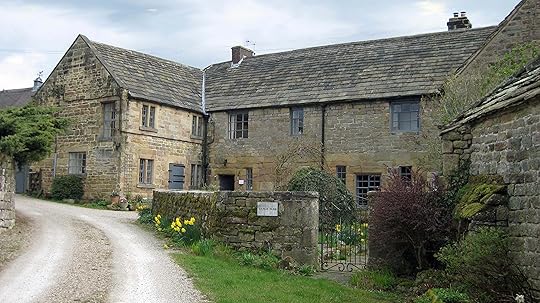
Her depictions of Thackers were based upon her own experience of living in the area as a child, and Penelope's adventures upon a series of dreams she reputedly had in which she visited the ill-fated past inhabitants of the farm. I was very excited to learn that the property upon which Uttley based Thackers, which was a seat of the Babington family during the 16th century, still stands and in fact operates as an accommodation business. Now I desperately want to go and stay there!
I should add that my daughter wasn't quite as engaged in the story as I was. Although it's an enthralling story, the complex prose and relatively languid plot development might make this a challenging read for younger readers of the twenty-first century.
description
Profile Image for LeahBethany.
676 reviews19 followers
December 4, 2024
After finishing A Traveller in Time, I still found myself thinking about it and its characters and setting. It's a slower read but one that stays with you with its fascinating glimpse into the same British rural setting but seen through the lens of the 1930s and the 1580s.
Profile Image for Daisy May Johnson.
Author 3 books198 followers
August 17, 2019
It's interesting how you can sometimes come to the right book at the wrong time. The first time I read this book, I was in the basement of a dusty university library and I was late for my shift. I skim-read and I did not really get it. I suppose you wouldn't get anything under such circumstances, not when your mind is elsewhere and the sort of book you're reading isn't the sort to want to bring you back. I know that A Traveller In Time doesn't work like that. It doesn't seek to be heard; rather it wants you to listen, and sometimes it takes a long while to find the moment where that can occur.

But it does occur, that is the thing with these books; moments happen when you least expect them, and I found a copy of this in a seaside town this week and I thought: it is time that I read this again. Properly. Completely. Not with the sort of half mind that looks elsewhere, but rather my whole attention. And so I did, and I realised that this is a fearlessly well-told story in the manner of something very eternal in British children's literature; complex, challenging, wildly magical, ferociously melancholic, and rather, utterly good. It is also that rare thing: a classic that feels classic, timeless, a pebble thrown into the pond and felt in books like Charlotte Sometimes; Tom's Midnight Garden; and the Green Knowe books. The reverberations, endless.

Penelope is visiting family at Thackers; the year is 1934, and somehow - even the text lets it happen in a blink, a sentence - she becomes a traveller in time and part of the 16th century. She can move from one time to the next and back again; a ghost, a dreamer, and whilst in the past, she becomes part of something beyond her control. A plot to rescue Mary, Queen of Scots. It is the sort of deliciously big story that only children's literature of a certain time and place can do, and Uttley revels in it. Her language is complex, challenging, and big. So big. Everything about this story and its fantastical, grey, magic is so very big.

And it is melancholic, as somebody on Twitter described it to me. It is full of a desperate ache for the inevitability of things; the world turns, people live, people die, and to be a brief part of that world is a painful, brutal gift. It is a gift that nobody would ever return; the preciousness of it. The perfection of it. But it is not easy and it is all the better for it. I have increasingly come to think that those authors who can do this understand the brutality of childhood. The raw truth of it. The way perfection and heartbreak can dance together, so close, so tightly wound. The way a day can be beautiful and then desperate, all at once.

It is a book that will wait for you to be ready to find it. And once you are? It will give you everything.
Profile Image for Melissa.
26 reviews
June 17, 2009
If you like time travel and English history and wistfulish endings, this is the book for you. I loved it! Yes, it does take a little bit to get into it, but once you're in, you're in! Penelope's longing to help her friends from the past is always unfulfilled, but I kept rooting her on, willing her to try again, hoping maybe someone would hear her. I loved the way "Greensleeves" was wound in and out of the story plot. I admit, after reading this book, I came away with more sympathy for the Babingtons and Mary Queen of Scots than I expected to. I've always been staunchly for Queen Elizabeth, but I wholly agreed with Dame Cicely when she says, "I say 'God save Queen Elizabeth,' but I would like the poor Scottish Queen, who has seen such terrible trouble, to be safe and sound overseas." That was the very best statement about being loyal to Queen Bess, and still being kind to Queen Mary that I ever read.
I also felt badly about Francis. Oh, how I wanted Penelope to stay back with him, or for him to escape the trouble and trials by coming back with her! Of course, I knew he would never desert his brother, and Penelope loved her family far too much, but still...!
This entire review has been hidden because of spoilers.
Profile Image for Elizabeth.
1,565 reviews183 followers
May 3, 2023
This is a lovely book because it brings both the early 1900s English farm vividly to life as well as the 1580s to life with the drama of Catholics v. Anglicans and how that played into the political drama between Mary, Queen of Scots and Elizabeth I. I know almost nothing about Tudor England, so the vivid portrait of life in a small manor house and working farm at that time was fascinating and also mind boggling. I can’t imagine having so little of the written word and being so isolated in a remote Derbyshire valley. The contrast between the rich and poor was very startling—the rich can travel, read, write, etc.

Alison Uttley’s attention to detail is splendid. Penelope is such a good character to follow because she has deep sensitivity and imagination that allow her to see Thackers as a thin place where the richness of history is present. The book has a dream like quality—how is it that Penelope can move back and forth between present and past? Is it because she is a sickly child and has extended dreams? Is she half mad? Is she just that sensitive to the magic quality of the place? It’s never clear but that makes all the more rich.

I love how the more Penelope is in the past, the more she recognizes pieces of the past that are in the present, like the bobbin doll, the embroidery in the quilt, Anthony Babington’s signature on a piece of paper, the bread bowl, etc. What a gift to live in a house and grounds that have been continuously occupied for generations. It’s a unique gift of the “old world”, as Willa Cather might say.

Having just read Alison Uttley’s memoir of her childhood living on a farm in Derbyshire, I could see so many ties between the two books and how the richness of her experience as a child colored Penelope’s. This book was better written and dense with detail and meaning, such an excellent reflection on history and how vivid it was to those who lived in it, as our present day is to us.
Profile Image for Deacon Tom (Feeling Better).
2,624 reviews234 followers
November 4, 2020
I thought Time Traveler was a nice book, not a good book but just average.

The 1939 novel starts out like a very common story of British fantasy, in the style of "The Lion, the Witch and the Wardrobe" (one of my all-time favorites) However, the magic just didn’t happen for me.

I saw Penelope as an imaginative child and it was easy to understand how in her curious ways, she would love traveling back to the 1850‘s.

One of the strengths of this book is its giving insight into history. Specifically, Penelope got to know her 20th century family as well as the 16th century one. On a another positive note, I really do enjoy the story of Mary Queen of Scots. I am a fan to the point that I’ve actually visited in her castle in Edinburgh.

The children who were the lead characters were very well presented and in someways and memorable. I can’t say the same for the rest of the characters.

Personally I wanted to do a good review and I finished the book but I struggled greatly about the 65% point and plodded to the end.

It’s not a genre I normally read, nor was it a surprise book that I love just fell in the with. Finally, it’s a book that people who know me thought that I would love—just didn’t happen, maybe next time around.

Therefore I continue conditionally recommend based on your personal reading habits.
Profile Image for Belinda.
Author 1 book25 followers
March 23, 2016
I enjoyed this book because it's well written, describes the beauty of a lost world (pre-Wars, horses, fires to warm rooms) and captures the life and morals of a family.

I liked Penelope too, her Aunt and Uncle, and Francis Babington. There's real warmth in the relationships and a nostalgia for the past and the rapidly changing present. I grew almost wistful for the world of Thackers myself, it seemed so ideal.
SPOILER
But underneath it all there is the darkness of a cruel history (although inaccurately chronicled in Traveller in Time), the threat of loss, and the wish to be in two worlds at once that suggests that Penelope is struggling with her change from child to adult and her discomfort with entering the reality of the world her parents inhabit.

My only bugbear was the romanticisation of Anthony Babington. I read more about him after I'd finished the book and he was no innocent man, plotting to kill Queen Elizabeth and put Mary on the throne. He reads as vain and self serving and certainly appears to have acted in such a foolhardy manner that he ended up causing Mary's death. I would have liked to have had this explored a little more.

Still, this is a pioneering fantasy young adult/childrens novel and deserves its place as a classic.
Profile Image for Sarah Sammis.
7,933 reviews247 followers
April 22, 2008
You'll probably notice the different spelling. I'm going with the British spelling as A Traveller in Time by Alison Uttley is a British novel. As the title implies, the novel is a time travel story but the time travel is a method for uniting the present (1934) with a wonderfully told historical fiction set around the Babington Plot.

Penelope Thacker is a bit fey as apparently all the Penelopes in the Thacker family and she begins to experience things from the past but try as she might, she cannot change them. As Penelope begins to live half her life in the past she learns how to live in the 1580s. Alison Uttley fills the world of the Thacker Manor with the mundane details of running a home and farm along with the big events surrounding the imprisoning of Mary Stuart.

Uttley's novel has enough historical information to teach the basics of the Babington Plot without hitting one over the head with facts, dates and figures. Readers knowledgeable of the events will enjoy filling in the missing details. Readers not as familiar with the history can still follow along and enjoy the time travel aspects of the novel.
Profile Image for Beth.
1,219 reviews156 followers
September 22, 2019
First published 1939. Good in the way that classic British children’s lit is good - almost recognizable, in that sense. I found this to be dreamy and hazy and beautifully written. It is also supremely unconcerned with plot and doesn’t bother explaining itself; Penelope travels back and forth with no explanation, no rhyme or reason, no internal logic; it’s just because the story, such as it is, thinks she needs to flit back and forth. And it’s that hazy dreaminess, that almost sleepy lack of urgency, that prioritization of history and character above all else, including story, that allows the book to get away with this.
Profile Image for bird.
393 reviews103 followers
April 30, 2025
anything with this much "hanging sides of bacon glittering with saltpetre," this much feverfew, snow-white lard, cowslip wine, copper pots, eglantine, strewn sweet bay and rosemary, dog-roses, claret-colored quilts, anything with this much "cruel tragedy coming up that slope of hill-side in the east" is a banger and a privilege regardless of how much it is also papist mary queen of scot's propaganda (and it is). middle grade should always be full of ghosts.
132 reviews11 followers
October 3, 2014
This is one of the best books I have ever read. The ending is both wistful and sad and inevitable. Penelope repeatedly slips back in time at her family's ancient country farm, Thackers, to the 1580s and then back to her present, 1906-08. Penelope's ancestors were servants to the Babingtons, who are fundamentally nice people (with a few exceptions). She becomes part of their family, in the 16th century, accepted as a sort of cousin who nobody can quite place and who tends to vanish without notice. The eldest Babington son, Anthony, is deeply involved in a plot to spirit Mary, Queen of Scots out of England to France. Mary is being held prisoner in the farm next to Thackers and Anthony is excavating a tunnel. Penelope knows from the outset that he doesn't succeed, that he eventually dies, but Penelope finds she can't make big changes to history. (This also has the effect of ridding the book of time travel paradoxes.) She can change how people feel about events but not the events themselves. This becomes the true subject of the book: how people feel about history as they are living it, and later looking backward. The reader and Penelope and the Babingtons know how it will end. They hope otherwise, but they know. Anthony knows he is doomed but he tries to save Queen Mary anyway, because he loves her. Penelope knows she can't save them but she keeps returning because she loves the Babingtons. And the house, Thackers, is always there.

Side note: If you love old houses, this ia a book you should read.
Profile Image for Hannah.
819 reviews
July 26, 2016
Absolutely enchanting YA novel. I only wish I had read it as a young girl, so that I could have fond memories of it!

The black & white illustrations are a bonus :)


The house, Thackers, has been added to my "houses as characters" category. Like Mary Stewart's Thornyhold, it forms a strong presence in the story. I would adore living there...

Profile Image for Beth Bonini.
1,410 reviews327 followers
January 4, 2021
4.5 stars

I, Penelope Taberner Cameron, tell this story of happenings when I was a young girl. To this day every detail of my strange experience is as clear as light.

I smell the hot scents of the herb garden drenched in sunshine, and the perfume of honeysuckle after rain, but stronger than these is the rich fragrance of the old house, made up of woodsmoke, haystacks, and old old age, mingled together indissolubly. All these scents and sounds are part of the story I have to tell, with light and darkness, shadows and tragedy interwoven.


For the contemporary reader, this is a time-travelling novel of stages - rather like a nesting doll. Even in her 'modern' childhood, approximately 1907 according to a clue hidden in the text, the main character Penelope and her ancient house in Chelsea, London will seem quaintly historical. Then when Penelope travels to Derbyshire, to stay with her Great-Aunt Tissie and her Great-Uncle Barnabas in the countryside, it is already like travelling into the past - for their house 'Thackers' is full of the belongings of accumulated generations, and their way of farming and keeping house is more early 19th century than early 20th. But there is still another great leap backwards into time, back into the days of Elizabethan England - when Thackers belonged to the Babington family, and Penelope's own ancestors served as housekeepers and custodians to the old manor house. For much of the story, Penelope travels between the two eras of Thackers - mingling with the households, alike and consistent in some ways and yet so very different as well.

Written in 1939, this children's classic has been continuously in print for several generations. (My edition is a Puffin book from 1977.) The intricacy of the story, and the historical plot involving a Catholic (or 'Papist') family loyal to Mary Queen of Scots, is possibly better appreciated by adult readers these days. Although perhaps there are still readers in the mould of the main character - solitary, bookish children who live largely in their imaginations. Children who are still described as 'dreamy' or 'fey'. That sort of child would probably find this beautiful and romantic story, one that combines a historical plot with the fantasy device of time-travel, deeply appealing.

It's also a book for those readers who love to read about old houses and feel sentimental about objects belonging to the past. It's antique shop and curiosity shop rolled into one, and a great treat for visual readers. Uttley's writing is sensual and atmospheric, and although the plot gets a big boggy in the middle, I was completely sucked in from the very first page.

Our house in Cheyne Row was little and old, with four steps leading to the green front door, and a little flight going down to the basement.

Ours was a steep, crooked stair, with a handrail on one side, very narrow, with rooms leading off it so suddenly that it was easy to fall headlong as one stepped from a doorway. We had a Morris wallpaper with leaves on it, like a green wood in spring, and I used to sit on the stairs, pretending I was in a forest far away from London with birds singing round me.


Such a dreamy book - perfect for those in need of a touch of escapism.
Profile Image for Sophie Crane.
5,181 reviews177 followers
June 17, 2022
Initially, I thought it was going to be one of those dreary historical novels that one reads from time to time, but I was totally entranced by the beautiful way that this was written. The fact that the novel was based on real historical events with a tragic ending made it all the more poignant. I never quite forgot this book, and many years later I decided to read it again in my retirement years. It had lost none of its magic and again, I quietly wept at the ending. Truly, a book for all ages.
Profile Image for Deb (Readerbuzz) Nance.
6,419 reviews338 followers
February 8, 2022
Penelope is a sickly child and she goes to stay with her country relatives in Derbyshire. While she is there, she finds herself in another time, part of a fascinating family in the distant past who are working to free Mary, Queen of Scots, from confinement by Queen Elizabeth.

The way Penelope moves back and forth in time is oddly realistic. The speech, the setting, the characters---all of these elements of the past also feel oddly real.

Quite an adventure.

A 1001 Children's Book You Must Read.
Profile Image for Kathrin Passig.
Author 51 books472 followers
April 8, 2025
Sehr, sehr unkritische Verherrlichung des politisch gleichgültigen Landlebens, außerdem ist die Behauptung zentral, dass über 300 Jahre vieles vollkommen unverändert bleibt. In "Ein Hof und elf Geschwister" von Ewald Frie kann man nachlesen, dass das nicht mal bei nur 30 oder 50 Jahren der Fall ist. Ich mochte aber den Stil und den Umgang mit der Zeitreise.
Profile Image for Richard.
324 reviews15 followers
September 30, 2013
Alison Uttley is well known for her children’s stories such as those featuring the Little Grey Rabbit and Sam the Pig. She also wrote books for older readers and one of the finest is the wonderful YA novel, "A Traveller In Time".

The book uses the device of “time slip”--which is the fantasy equivalent of the time travel devices used in science-fiction. Time slips involve some transferral of consciousness to a different time period. Some other examples are "Portrait of Jennie" {both the wonderful film and the equally wonderful novel by Robert Nathan} and "Time and Again" by Jack Finney.

What happens to the physical body during a time slip? In Uttley’s book Penelope has a physical existence in the 16th century and while she is there, time apparently stops in the 20th century. However, it seems in one important section, things that happen to her in one time zone apparently can have physical effects on her in the other. The time slips themselves are beautifully presented with excellent linkages between the two ages.

As for the problem of time-paradox, in my opinion, the author adroitly avoids the problem. I will not say how but leave the reader to discover how it is done.

Uttley came from the area where all the historical events take place and she has a remarkable precision and selection of detail which makes the world of this novel stand out with wonderful clarity.

The characters are superbly created. They have a vivid reality and one will not forget Aunt Tissy {nor her 16th century counterpart}, Uncle Barnabas her sister Allison and the host of other characters in the two time periods. Above all, Penelope Taberner is a delightful, sensitive heroine. Over the two year period of the novel she matures and strengthens. She has the ability of “second sight” which, in her case, allows the time slips to occur. The transfers have a dreamlike quality and Uttley had a fascination with dreams and visions which she outlines herself in the Forward of the novel.

“Many of the incidents in this story are based on my dreams, for in sleep I went through secret hidden doorways in the house wall and found myself in another century. Four times I stepped through the door and wandered in rooms which had no existence, a dream within a dream, and I talked with people who lived alongside but out of time, moving through a life parallel to my own existence. In my dreams past and present were co-existent, and I lived in the past with a knowledge of the future. I travelled into that secondary dream-world, seeing all things as if brightly illuminated walking in fields and woods dazzling in their clarity of atmosphere.I sat on the stone walls in the sunshine of other times, conscious of the difference, knowing intermediate events. The painted room, the vision through the windows of the house, and many another incident came to me in dreams, and I have woven them into this story.”

The ending is “inevitable” as one reviewer has said. It is also utterly beautiful.
Profile Image for Nancy Ellis.
1,458 reviews48 followers
June 28, 2013
I wish I had had this book when I was a child. It would definitely have sparked my interest in English history at a much earlier age than actually happened. A fantastic story involving time travel between the "modern" times (1930s?) and 1585, when Mary Queen of Scots was being held at a country manor house. The way the author handles time travel is wonderful, not cheesy or "science fiction"-like. Just a remarkable, beautifully written book which I enjoyed tremendously even at this advanced age!
305 reviews
May 3, 2013
Lovely writing. I felt like I was there, both in early 20th century England and In 16th century England. Also fun to look at pictures of the actual house Dethick Manor in Derbyshire, which is now a B&B. I wish I had read this years ago. I don't know how I missed it growing up. Just came across the word Dumbledores "Dumbledores boomed as they struck our dresses..." Old English for bumblebees.
Profile Image for Chris.
942 reviews114 followers
May 5, 2014
Alison Uttley is best known for her Little Grey Rabbit books – beginning with The Squirrel, The Hare and The Little Grey Rabbit (1929) – publication of which continued for nearly fifty years, with charming illustrations by Margaret Tempest (latterly Katherine Wigglesworth). They were part of a story-telling tradition that stretched from Beatrix Potter’s Peter Rabbit to Jane Pilgrim’s Blackberry Farm series, a tradition featuring anthropomorphic creatures and describing a rural life that has now largely disappeared.

A Traveller in Time is rather different. Not only was it aimed for older readers but its content stems from vivid dreams the young Alice Jane Taylor had when living in Derbyshire. Born in Castle Top Farm near Matlock, Alice (Alison was her pen name) recounts how in her sleep “I went through secret hidden doorways in the house wall and found myself in another century. Four times I stepped through the door…” Despite a degree in Physics from Manchester University she continued, according to her biographer Denis Judd, to believe “in fairies and in time travel”. All this suggests that this young adult novel is going to be difficult to categorise — part fantasy, part historical fiction, part autobiographical, even part romance.

Both Castle Top Farm and its neighbour Dethick Manor were in existence in the 16th century. Just as Uttley’s The Country Child (1931) featured Castle Top Farm under the name of Windystone Hall, so Dethick Manor appears in the guise of Thackers. It is to Thackers that the sickly Penelope Taberner Cameron comes to recuperate one winter, and where she starts to slip away sideways into the reign of Elizabeth I, in the early 1580s. Here she meets a distant ancestor, Dame Cicely, and the owner of the house, Anthony Babington, his wife and his younger brother Francis. Despite significant gaps in Penelope’s visits these past denizens soon take her mysterious coming and going for granted, with only the dogs and one individual instinctively sensing that she’s physically out of place.

The feeling of reverie, told almost as a series of vignettes where nothing much happens, makes this a very somnolent story. This allows plenty of time for Uttley to lovingly evoke a past way of life – in the kitchen, on the farm, in private rooms — and compare it with what it must have been like for her as a child on a farm at the tail end of the Victorian period (she was born in 1884). But the friendships she makes with Tudor gentry and servants alike are leading to dark events, overshadowing the joys she has from this dual life.

Between 1569 and 1570 Mary Queen of Scots had been under house arrest in Wingfield Manor, a few miles from Dethick and Castle Top. Though Uttley is a little vague about dating events, the young heir Anthony Babington (born in 1561, he was at this time a page in the service of the Queen’s gaoler the Earl of Shrewsbury) is described as having been smitten with her. The Queen was brought back here in 1584 and in 1585, which is the period in which the latter part of A Traveller in Time is set (and exactly three hundred years before Alice’s birth). Penelope – living at the turn of the century – knows that Anthony Babington was executed in 1586 and the Queen of Scots in 1587, or about three hundred and twenty years before; having that foreknowledge which comes from being from the future makes all the joy from her sojourns in Tudor times very bittersweet.

Uttley almost convinces us that this or that could have happened in her story, despite any reader’s reservations that Elizabethans would have so easily accepted such a strange visitor in their midst. The author has such an intimate and affectionate feel for the minutiae of everyday living — feeding animals, using household objects, singing songs, experiencing the changing seasons — that it forms a cantus firmus to the more wayward counterpoint of secret plots and the fierce antagonism of one individual, both of which threaten to leave her stranded in the past.

Above all we come to love the characters we meet. From the present, Great-Aunt Tissie and her brother Barnabas, to some extent Penelope’s pragmatic sister Alison, the author’s namesake; from the past, Dame Cicely, Tabitha the servant maid, Jude the humpback and of course the Babington family, especially Francis with whom the young Penelope forms an almost but not quite platonic friendship. As the time nears for Penelope to leave — as leave she must — it feels a little like the moment when the children in Hilda Lewis’ The Ship That Flew or C S Lewis’ Narnia series start to grow into adults and the magic begins to fade. Except that the intensity of Penelope’s time travelling remains strong, as she tells us in the opening sentences: “To this day every detail of my strange experience is clear as light…”

This was such a strange but magical story that it now leaves me curious about The Country Child. It confirms the simple epitaph that appears on Alison Uttley’s gravestone, writer, spinner of tales, and recalls, of course, that the original Penelope of the Odyssey was also a weaver…

http://wp.me/p2oNj1-Tj
Displaying 1 - 30 of 232 reviews

Join the discussion

Can't find what you're looking for?

Get help and learn more about the design.