As a group that operates at the seam between Israeli-Jewish and Muslim-Palestinian society, Israeli-Arabs complicate our understanding of the traditional binaries between Jewish and Muslim, and Israeli and Palestinian. Sayed Kashua's 2006 novel "Let It Be Morning," examines the Israeli-Arab position in Israeli society and reveals ultimately that the aforementioned dichotomies are more fluid than we may have first imagined.
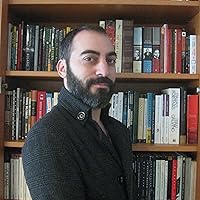
Sayed Kashua, an Israeli-Arab writer, journalist, and screenwriter, was born in the Israeli-Arab town of Tira in 1975. He writes exclusively in Hebrew, perhaps for practicality, having been educated at an elite Hebrew-operating Jerusalem boarding school for gifted teens and later at Hebrew University. Or perhaps he writes in Hebrew for ideological reasons, to close the linguistic and cultural divide between Jews and Muslims living in Israel. Either way, Kashua’s choice to write in Hebrew is a complicated one and does not simply represent the usual reality of a citizen writing in the language of his state. To the contrary, Hebrew is the language of the Jewish people, not his own, and as such it holds enormous cultural, historical, religious and national significance for Israeli-Jews as well as Jews worldwide. Of course, Hebrew also bears political significance, having become closely intertwined with Zionist movements of Europe in the late 19th and 20th centuries. One might assert, then, that Kashua’s choice to write in Hebrew as an Arab indicates his successful integration into Israeli society, and perhaps a yielding to or acceptance of the Zionist narrative and the legitimacy of the state of Israel. And yet, as A.J. Drijvers states in his 2015 thesis, “When it comes to the classification of Hebrew literature written by Israeli Arabs there is no scholarly consensus on whether these works belong to the body of Palestinian literature or whether they belong to the body of Israeli literature” (9). That the works of Israeli-Arabs would even be considered Palestinian is telling of the distinction or non-distinction between the two groups: that by standards of religion and ethnicity, and specifically not geography, Israeli-Arabs and Palestinians have close ties and are, in fact, even members of the same family in many cases. What Kashua expresses, then, by writing in Hebrew is a complex picture of what it means to be an Israeli-Arab, a simultaneous insider and outsider of both groups embodied by that label."
In his second novel, Let It Be Morning, Kashua explores these identities and describes the practical manifestations of the various tensions between them. After returning to his hometown village with his wife and baby after living and working as a journalist in Jewish Jerusalem, the unnamed protagonist is bewildered along with everyone else when the village is besieged by the Israeli Defense Forces (IDF). As the besiegement continues to strangle the village day after day, life inside becomes nearly anarchical as theft becomes rampant and gangs begin to exert control by force. Ultimately the blockade is uplifted, and life returns to normal, except for the fact that the village was part of land-swap between Israel and the Palestinian Authority and is now located in the new state of Palestine, all of which further confuses for the villagers their already-unclear nationalist loyalties.
The protagonist himself, an Israeli-Arab, is the object of constant suspicion and feelings of betrayal throughout the novel by both Israeli-Jewss and Israeli-Arabs. As the Second Intifada, a period of armed and deadly conflict from 2000-2004, rages on, the protagonist begins to encounter racism against Arabs in Israel. He confronts graffiti calling for Arab deportation, becomes subject to harsher editorial checks by his editor-in-chief, and security guards start to frisk him more carefully than his Jewish counterparts. Arabs, he explains, are viewed by Jews as an insidious fifth column, a parasitic force that is eating away at the very Jewish fabric of the state. As the situation worsens, no longer can he criticize the Israeli government, he says, such a thing became “an exclusively Jewish prerogative” (20). The protagonist experiences shame, resentment, and even guilt, for the Arab suicide bombers, the “cold-blooded murders…, God, the virgins, paradise” and himself, for surrendering himself to such overt racism (21). At a certain point the cognitive dissonance becomes too overbearing. The journalist needs to clarify his loyalties to himself and escape the tensions that living and working as an Arab in Jewish-Israel brings. So he returns with his family back to his hometown Arab village, a place that unbeknownst to him at the time is relatively impoverished, rife with crime, and virtually absent of social and economic advancement.
The Israeli-Arab’s in the village, living under democratic Israeli rule, try to rationalize and understand the Israeli military’s rather unusual besiegement of their village, which is reminiscent of any Kafka novel and the utter confusion that his characters’ experience in their absurd situations. It is especially confusing to them because the Israeli-Arabs, on the whole, view themselves as loyal, upstanding citizens. At first the protagonist’s family and others believe that the besiegement may be part of a covert Israeli operation to arrest someone inside, someone who is perhaps devising a terrorist attack. The protagonist’s father suggests that the Israeli military will enter the village in the middle of the night, with two jeeps, and leave without a word. It’ll be easy, he says, “[c]ause [sic] there’s no way you can keep anything hidden in this village. Nobody gives a damn and everybody cooperates with the police and the security forces. It stopped being considered betrayal long ago” (93). In this way, the Arabs trust the Israelis, or at least cede to their demands. Later, however, just before a mob storms the protagonist’s home for food, he is rebuked with disdain by the local supermarket owner. After the protagonist denies having any food in his home, the supermarket owner yells out, “The guy you [the mob] are talking to bought out half my store…People at his newspaper must have told him [of the approaching besiegement]” (224). In this way, the protagonist is viewed by the Arabs as a traitor, someone who left home and acculturated to Jewish Israeli society at the expense of his own people. In this position, torn between the urban Jews and village Muslims, he feels like an outsider in both societies.
As an important side note, Sayed Kashua himself, during the summer of 2014, left Hebrew altogether for English (He had already abandoned Arabic at the age of 14.) Now he teaches at the University of Illinois. Just before he picked up his things and emigrated with the family, during Israel’s Operation Protective Edge in Gaza, he penned a rather tragic article in Haaretz explaining his decision to leave. “I will write in English,” he says, about “love stories” and “the weather…Snow will be a central character.” The burden became too heavy, the stress too demanding. In a Guardian article that same summer, he elaborates to say that the little war he had been waging for coexistence as an Israeli-Arab to Hebrew-speaking Israel had utterly failed. “Twenty-five years of writing in Hebrew, and nothing has changed,” he writes. “Twenty-five years clutching at the hope, believing it is not possible that people can be so blind,” but they were, and he failed, he says. He mentions Palestinian boy Mohammed Abu Khdeir who was killed by an Israeli-Jewish terrorists following the kidnapping and subsequent murder of three Israeli-Jewish boys, and how, with the flare of anti-Arab sentiment in Israel, he had already felt exiled and obliged to emigrate. That autumn, in October, Kashua exchanged a series of letters with Israeli-Jewish author Etgar Keret that The New Yorker published. They shed additional light upon the motivations behind Kashua’s emigration, which was ultimately prompted by the fact that he saw no sustainable future in Israel for children and that his own career endeavoring to communicate the Israeli-Arab experience to the Israeli-Jewish public had been in vain. “This summer, the last vestiges of hope in my heart were crushed,” he writes to Keret. But, at least in Let it Be Morning, Kashua’s protagonist holds out and continues to operate with one foot, so to speak, in both the Israeli-Arab and Israeli-Jewish societies of which he is a part.
Another prime function of Kashua’s novel is to humanize Arab society, exposing both its patriarchal nature and anti-Semitism, while also jettisoning the yellow-license-plate (Israeli) and green-license-plate (Palestinian) dichotomy for a far more nuanced understanding of these different but overlapping groups. One theory that the Arab village concocts in Kashua’s novel to explain the IDF’s besiegement is social and economic: that there are many Palestinians from the West Bank and Gaza working illegally in the village. As a result, the mayor as well as the gangs, decide to gather all these workers and submit them to the Israeli military, which stands at the village entrance with foot soldiers, tanks, and a full blockade. The first illegal worker who walks across is shot, and the same with the second, but the mayor is convinced this is because the military assumed they might be holding bombs. Thus he orders them to strip down to their undergarments, at which point the workers continue to cross. Another one is shot. Now they realize, ironically, that it is not the illegal Palestinian workers that the Israelis want. No one knows what they want, or if they want anything at all. But what’s remarkable about this passage is not the villagers’ ignorance but rather how quickly the Israeli-Arab’s distinguish themselves from the illegal Palestinians, thus revealing in reality that these two groups perhaps identify as distinct, though usually conflated by the Israeli public and even Arab members of Knesset, Israel’s parliament.