

What do you think?
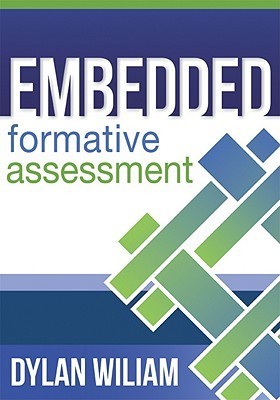
Embedded Formative Assessment
If we are to maintain our status as one of the world's leading economies and secure our economic futures, and if we want our students to thrive in the impossibly complex, unpredictable world of the 21st century, we must concentrate on increasing educational achievement by increasing the quality of the teachers in our schools. The author faces this challenge head-on by making a case for the important role of formative assessment in increasing teacher quality and student learning. Formative assessment plays an important role in increasing teacher quality and student learning when it's viewed as a process rather than a tool. Emphasizing the instructional side of formative assessment, this book explores in-depth the use of classroom questioning, learning intentions and success criteria, feedback, collaborative and cooperative learning, and self-regulated learning to engineer effective learning environments for students. Benefits * Presents five key strategies with research evidence to show the impact of each * Includes over 50 practical techniques for classroom formative assessment Contents
Introduction
Chapter 1: Why Educational Achievement Matters
Chapter 2: The Case for Formative Assessment
Chapter 3: Clarifying, Sharing, and Understanding Learning Intentions and Success Criteria
Chapter 4: Eliciting Evidence of Learners Achievement
Chapter 5: Providing Feedback That Moves Learning Forward
Chapter 6: Activating Students as Instructional Resources for One Another
Chapter 7: Activating Students as Owners of Their Own Learning
Epilogue
References and Resources
Introduction
Chapter 1: Why Educational Achievement Matters
Chapter 2: The Case for Formative Assessment
Chapter 3: Clarifying, Sharing, and Understanding Learning Intentions and Success Criteria
Chapter 4: Eliciting Evidence of Learners Achievement
Chapter 5: Providing Feedback That Moves Learning Forward
Chapter 6: Activating Students as Instructional Resources for One Another
Chapter 7: Activating Students as Owners of Their Own Learning
Epilogue
References and Resources
162 pages, Paperback
First published May 1, 2011
Ratings & Reviews
Friends & Following
Create a free account to discover what your friends think of this book!
Community Reviews
Displaying 1 - 30 of 54 reviews

November 22, 2012
I "finished" this book a long time ago, but keep going back to it. I am a veteran teacher and this is currently my most valued resource. It is changing certain crucial aspects of the way I teach.
My attention was riveted when I noticed that Wiliam seems to know all the ways that teaching can be frustrating--especially aspects related to practices that seem like they should work but do not. In order to change those practices, I must have an open mind and be disciplined because it involves changing practices that were integrated into my teaching long ago.
I still haven't mastered these changes and new techniques. This is why I keep going back to the book. It's not just that I need to review the techniques, but I need to remember the philosophy behind them. Changing teaching practices is difficult because the practices consist of hundreds of non-trivial decisions made in real time every day, as Charlotte Danielson put it. And those decisions are based on my underlying philosophy of teaching, parts of which are slowly but surely evolving.
I am very cautious about changing my teaching philosophy in this time of what feels like constant change in education. I want to make sure I am doing what I know is right for the hearts and minds of my students. I want to make sure I'm not just drinking the latest flavor of koolaid that has been set out.
The ideas in this book are not any sort of koolaid. They are based on thoughtful ideas, backed up by well-explained research, and speak to improving student learning. Anyone who works in a school should read it.
My attention was riveted when I noticed that Wiliam seems to know all the ways that teaching can be frustrating--especially aspects related to practices that seem like they should work but do not. In order to change those practices, I must have an open mind and be disciplined because it involves changing practices that were integrated into my teaching long ago.
I still haven't mastered these changes and new techniques. This is why I keep going back to the book. It's not just that I need to review the techniques, but I need to remember the philosophy behind them. Changing teaching practices is difficult because the practices consist of hundreds of non-trivial decisions made in real time every day, as Charlotte Danielson put it. And those decisions are based on my underlying philosophy of teaching, parts of which are slowly but surely evolving.
I am very cautious about changing my teaching philosophy in this time of what feels like constant change in education. I want to make sure I am doing what I know is right for the hearts and minds of my students. I want to make sure I'm not just drinking the latest flavor of koolaid that has been set out.
The ideas in this book are not any sort of koolaid. They are based on thoughtful ideas, backed up by well-explained research, and speak to improving student learning. Anyone who works in a school should read it.
October 24, 2014
Good connection to pedagogical theories earlier lifted in Wiliams research. This is a book for teachers who want to develop the assessment for teaching/formative assessment in classroom. But if you are interested I can recommend shorter articles where you get a faster overview over formative assessment. It is still worth to read if you do researches around this area of subject. But as a book to read back home after a tough day... Maybe not my first choise :P
July 25, 2017
A teacher is never done learning and when we listen closely to students, parents and our colleagues there are a lot of formative opportunities to improve our craft.
I have been meaning to read this book for a few years as I have found the book's author cited frequently in educational research I find interesting. Wiliam's laser focus on improving learning and creating an environment throughout a unit/cycle/year to enhance learning was extremely helpful as I reflect on the role of feedback and the different forms it can take. William's book is well researched and would be a book I would recommend highly to any teacher regardless of content area.
I have been meaning to read this book for a few years as I have found the book's author cited frequently in educational research I find interesting. Wiliam's laser focus on improving learning and creating an environment throughout a unit/cycle/year to enhance learning was extremely helpful as I reflect on the role of feedback and the different forms it can take. William's book is well researched and would be a book I would recommend highly to any teacher regardless of content area.
June 22, 2014
Another great book for educators by Solution Tree Press.
This is a great book for someone like me who is in mid career and wants to reflect upon their own practices and come up with new (and old) ways of monitoring student learning.
What I appreciated about the author, Dylan Williams, is that he tells it like it is, and makes no apologies for calling out the errors of the past decade's movement to reform the system. He uses studies to back up his propositions and then moves on to the heart of the matter, successful ways to gauge learner success. Many of the strategies, and there are plenty in this thin book to select from, are familiar but have twists that I have not encountered before. There are others that made me pause and think about I would use such a strategy in my class room, and what the necessary steps would be at the beginning of the year in order to best adopt them.
One of the things i appreciated about the book was the fact that Mr. Wiliam is not intending on teachers to overburden themselves with new, overwhelming systems, nor does he bother with the current trend of advising readers how to broaden the strategies in play to the larger arena, or school. Instead he focuses on what seems to work, giving the reader permission to use strategies that are efficient, effective, and more likely to engage students in the feedback loop.
Overall, this is a great book for honing one's use of feedback so that students do not simply look at their grade and ignore the commentary that is often at waste by teachers. Additionally, Mr. Wiliam does not suggest taking by taking ten of these strategies, that a teacher can transform themselves: instead he suggests taking two strategies and trying them out. I suppose I appreciate his pragmatism, which foe me was one of the themes of this great book for teachers.
This is a great book for someone like me who is in mid career and wants to reflect upon their own practices and come up with new (and old) ways of monitoring student learning.
What I appreciated about the author, Dylan Williams, is that he tells it like it is, and makes no apologies for calling out the errors of the past decade's movement to reform the system. He uses studies to back up his propositions and then moves on to the heart of the matter, successful ways to gauge learner success. Many of the strategies, and there are plenty in this thin book to select from, are familiar but have twists that I have not encountered before. There are others that made me pause and think about I would use such a strategy in my class room, and what the necessary steps would be at the beginning of the year in order to best adopt them.
One of the things i appreciated about the book was the fact that Mr. Wiliam is not intending on teachers to overburden themselves with new, overwhelming systems, nor does he bother with the current trend of advising readers how to broaden the strategies in play to the larger arena, or school. Instead he focuses on what seems to work, giving the reader permission to use strategies that are efficient, effective, and more likely to engage students in the feedback loop.
Overall, this is a great book for honing one's use of feedback so that students do not simply look at their grade and ignore the commentary that is often at waste by teachers. Additionally, Mr. Wiliam does not suggest taking by taking ten of these strategies, that a teacher can transform themselves: instead he suggests taking two strategies and trying them out. I suppose I appreciate his pragmatism, which foe me was one of the themes of this great book for teachers.
August 8, 2015
While educators may be turned off with the first two chapters, I personally appreciate when the researcher builds his/her
case for the why. That being said, I enjoyed the last four chapters as he shared practical application and examples to apply theory to practice. I think teachers would use all suggested examples to deepen their own assessment practice, to possibly change their understanding of learning vs achievement, and/or to try out their assessments with students. What I liked best in the book was his statement of how the students and teachers bring egos to the classroom and those egos interfere with learning. Through active formative checks as ongoing both students and teachers change the focus to real-time learning creating a flexible learning environment depending on whose creating the feedback and then determine how it will be used to boost achievement as the long-term goal. If a teacher needs to get started using formative checks, Wiliams examples help someone get started. I would also envision a veteran teacher reaching for the book when they want to refresh types of formative assessments in their classrooms. It is easy for a veteran teacher to use what has successfully worked over and over. Students, though, bring a freshness or curiosity of learning to the class. So, trying a different formative assessment with students would energize the teacher as well.
case for the why. That being said, I enjoyed the last four chapters as he shared practical application and examples to apply theory to practice. I think teachers would use all suggested examples to deepen their own assessment practice, to possibly change their understanding of learning vs achievement, and/or to try out their assessments with students. What I liked best in the book was his statement of how the students and teachers bring egos to the classroom and those egos interfere with learning. Through active formative checks as ongoing both students and teachers change the focus to real-time learning creating a flexible learning environment depending on whose creating the feedback and then determine how it will be used to boost achievement as the long-term goal. If a teacher needs to get started using formative checks, Wiliams examples help someone get started. I would also envision a veteran teacher reaching for the book when they want to refresh types of formative assessments in their classrooms. It is easy for a veteran teacher to use what has successfully worked over and over. Students, though, bring a freshness or curiosity of learning to the class. So, trying a different formative assessment with students would energize the teacher as well.

October 28, 2015
Teachers hear about formative assessment frequently, seldom is it used well. Dylan William does an outstanding job of brushing off the sugar coating and getting right to the heart of the matter. He supplies outstanding research and suggestions about teacher prep and PD, as well as providing 53 formative assessment techniques teachers can use daily in the classroom. William drove several points home in this book classroom teachers need to reflect on and take to heart. These three resonated with me.
* The quality of the teacher is the single most important determinant of how much students learn. In the classroom of the most effective teachers, students from disadvantaged backgrounds learn as much as those from advantaged backgrounds.
*Differences in quality of schools are almost entirely accounted for by differences in the quality of teachers at the schools. To raise student improvement we have to improve teacher quality.
* When effective formative assessment techniques are used in the minute-by-minute and day-by-day classrooms activities of teachers there is a 70-80 percent increase in the speed of learning. Even when outcomes are measured by externally mandated standardized tests.
This is a book teachers should not only read, but consider doing as a book study with colleagues.
* The quality of the teacher is the single most important determinant of how much students learn. In the classroom of the most effective teachers, students from disadvantaged backgrounds learn as much as those from advantaged backgrounds.
*Differences in quality of schools are almost entirely accounted for by differences in the quality of teachers at the schools. To raise student improvement we have to improve teacher quality.
* When effective formative assessment techniques are used in the minute-by-minute and day-by-day classrooms activities of teachers there is a 70-80 percent increase in the speed of learning. Even when outcomes are measured by externally mandated standardized tests.
This is a book teachers should not only read, but consider doing as a book study with colleagues.

July 31, 2014
William's book is all about formative assessment - the assessment a teacher does while teaching, not at the end of teaching with, say, a test (that's summative evaluation)but while teaching, quick, easy strategies that lets a teacher know if she is getting her message to the students and, if not, how she can adjust her teaching - and while some of what he writes is not realistic, or even desirable (like American schools ideally would get rid of all grading) most of what he includes is sound, especially the strategies for checking on students' understanding of material. Teachers would definitely benefit from reading this.

August 18, 2015
Mycket intressant att läsa Dylan Williams sammanställning om hur lärarkvalitet definieras och hur det i sin tur påverkar elevframsteg. Mer effektiva intelligenta lärare som brinner för sina ämnen och älskar att arbeta med barn och unga!
Jag förstår varför lärare har den här boken som uppslagsbok. Jag lånade den på biblioteket, men jag har redan antecknat så mycket så jag får definitivt köpa den. Jag läser lite varje morgon och kväll och hjärnan går på högvarv. Hela tiden sprutar det ut konkreta idéer och upplägg till lektioner och bedömningstillfällen. I love it! Jag kanske ska boka hans nya handbok redan nu.
Bara ett måste för lärare och lärarkandidater!
Jag förstår varför lärare har den här boken som uppslagsbok. Jag lånade den på biblioteket, men jag har redan antecknat så mycket så jag får definitivt köpa den. Jag läser lite varje morgon och kväll och hjärnan går på högvarv. Hela tiden sprutar det ut konkreta idéer och upplägg till lektioner och bedömningstillfällen. I love it! Jag kanske ska boka hans nya handbok redan nu.
Bara ett måste för lärare och lärarkandidater!

December 28, 2013
A comprehensive review of the research conducted and collected on formative assessment by Wiliam. He clearly breaks down formative assessment into five tenets, making it more likely for practicing educators to understand the concept and apply it to his or her classrooms.

June 30, 2018
It was a good review of research and gave plenty of example lessons across ages and subject areas. I liked the table of activities and their pages in the appendix. Well organized and easy to read.
Read it in between a two day workshop with Anita Archer. She had let me borrow it.
Read it in between a two day workshop with Anita Archer. She had let me borrow it.

April 8, 2019
Svårförståelig at times, men intressant.

May 26, 2013
This is one of the very BEST books in education that I have read in a very long time.
I heard Dylan Wiliam speak in Nashua last summer, Granite State College brought him in as the kick-off to s school improvement work session for teacher teams. He models good teaching and what he outlines in this book which is refreshing in educational speakers. Michael Fullan and Robin Fogarty are two other speakers who come to mind and do this in their sessions. He is great with wait time, circulating among ALL the tables in the room, not giving an answer until a number of people have answered. (He doesn't even give the answer then, he has the participants choose which they think is correct among the answers given.) There are a number of instructional strategies recommended in his book, and he uses many of these in his session.
What also struck me is that though the book does not give quick, easy steps to improved student engagement and achievement, it gives very solid, doable strategies that any teacher can, with time and practice, adapt and use. His explanation of formative assessment and how to use it in the classroom will transform education and truly help both instruction and achievement. The book is any easy read, a very accessible read. It is the putting in to practice that will take time.
This is not a one time read, but a book to keep coming back to until the strategies become second-nature. The strategies need practice. Working collaboratively and/or with a coach would certainly help make this easier and possibly quicker. Bottom line: any teacher or administrator who wants to improve student engagement and improvement would be well served by reading this little book and putting the suggestions in to daily practice.
>>>Having read this for a second time, it still stands at a "5" and a "must-read." It was a bit more of a slog the second time through but I did catch some different take-aways then the first time through. Such as the fact that he bases his ideas solidly on research and his experiences working with teachers in the classroom.
So, this time through, I saw it as more of establishing a case for using formative assessments as a way to improve student learning. I agree that it this is a very important component in teaching and learning. I look forward to finishing Embedding Formative Assessment, Practical Techniques for K-12 Classrooms.<<<
I heard Dylan Wiliam speak in Nashua last summer, Granite State College brought him in as the kick-off to s school improvement work session for teacher teams. He models good teaching and what he outlines in this book which is refreshing in educational speakers. Michael Fullan and Robin Fogarty are two other speakers who come to mind and do this in their sessions. He is great with wait time, circulating among ALL the tables in the room, not giving an answer until a number of people have answered. (He doesn't even give the answer then, he has the participants choose which they think is correct among the answers given.) There are a number of instructional strategies recommended in his book, and he uses many of these in his session.
What also struck me is that though the book does not give quick, easy steps to improved student engagement and achievement, it gives very solid, doable strategies that any teacher can, with time and practice, adapt and use. His explanation of formative assessment and how to use it in the classroom will transform education and truly help both instruction and achievement. The book is any easy read, a very accessible read. It is the putting in to practice that will take time.
This is not a one time read, but a book to keep coming back to until the strategies become second-nature. The strategies need practice. Working collaboratively and/or with a coach would certainly help make this easier and possibly quicker. Bottom line: any teacher or administrator who wants to improve student engagement and improvement would be well served by reading this little book and putting the suggestions in to daily practice.
>>>Having read this for a second time, it still stands at a "5" and a "must-read." It was a bit more of a slog the second time through but I did catch some different take-aways then the first time through. Such as the fact that he bases his ideas solidly on research and his experiences working with teachers in the classroom.
So, this time through, I saw it as more of establishing a case for using formative assessments as a way to improve student learning. I agree that it this is a very important component in teaching and learning. I look forward to finishing Embedding Formative Assessment, Practical Techniques for K-12 Classrooms.<<<
May 25, 2015
When I was hired a year ago, I was given a stack of dreadful-looking professional development books during orientation. This was one of those books. Upon further inspection, it didn't look so bad. As it turns out, it was pretty good! It wasn't earth shattering for me, mostly because I was already familiar with many of the strategies from reading copious amounts of professional development books. That said, I did highlight a lot of parts that I want to come back to and try in my classroom.
The book starts off with research that shows that the greatest factor in predicting student achievement is teacher quality. Actually measuring teacher quality is essentially impossible (hear that, reformers and politicians?), but Wiliam has taken some of the guesswork out of the equation by compiling a handful of strategies that have been proven to have the largest impact on student learning, all centered around formative assessment.
What I liked best was Wiliam's writing style. He doesn't talk down to teachers or pretend that he knows what's best. He knows teaching is incredibly difficult, and his book is simply the research behind the most powerful, proven methods in education and some strategies for teachers to try as we see fit.
The idea I found most interesting was centered around feedback. I'm definitely going to work on being more purposeful on how I give feedback and grades, and how I have my students use and interact with that feedback. There were studies which found that if students can work with teacher feedback to achieve a product of higher-quality, learning will improve more than if comments are written and students do nothing with them. Also, giving grades along with feedback, when we want students to USE the feedback, absolutely negates the feedback; students won't use it. So, bottom line: don't grade formative assessments but do give feedback and ensure students act on that feedback in class.
I would recommend this book in particular to teachers who were trained in the era before learning targets and formative assessments were commonplace. These ideas were drilled into my brain in my teacher education program, so a lot of the big ideas in this book were just reminders of what I already knew (but could improve upon still), but I see how older generations of teachers could be impacted heavily and positively.
The book starts off with research that shows that the greatest factor in predicting student achievement is teacher quality. Actually measuring teacher quality is essentially impossible (hear that, reformers and politicians?), but Wiliam has taken some of the guesswork out of the equation by compiling a handful of strategies that have been proven to have the largest impact on student learning, all centered around formative assessment.
What I liked best was Wiliam's writing style. He doesn't talk down to teachers or pretend that he knows what's best. He knows teaching is incredibly difficult, and his book is simply the research behind the most powerful, proven methods in education and some strategies for teachers to try as we see fit.
The idea I found most interesting was centered around feedback. I'm definitely going to work on being more purposeful on how I give feedback and grades, and how I have my students use and interact with that feedback. There were studies which found that if students can work with teacher feedback to achieve a product of higher-quality, learning will improve more than if comments are written and students do nothing with them. Also, giving grades along with feedback, when we want students to USE the feedback, absolutely negates the feedback; students won't use it. So, bottom line: don't grade formative assessments but do give feedback and ensure students act on that feedback in class.
I would recommend this book in particular to teachers who were trained in the era before learning targets and formative assessments were commonplace. These ideas were drilled into my brain in my teacher education program, so a lot of the big ideas in this book were just reminders of what I already knew (but could improve upon still), but I see how older generations of teachers could be impacted heavily and positively.

February 18, 2012
I first read Wiliam and Black's "Inside the Black Box: Raising Standards through Classroom Assessment" (1998) (just google it) two years ago, and it had a profound effect on the way I thought about assessment in the classroom. Engagement in good assessment practices is not something that comes naturally to teachers, in my opinion, except perhaps in the form of asking good questions and giving students sufficient (but not too much) wait time. Actually, most teachers in this system would think of assessment as the setting of exams - and not as classroom practice!
After reading Wiliam and Black, I started to set out success criteria more explicitly, and started to emphasise improvement (rather than achievement) and peer learning/coaching more (also because of my belief in the triangle that shows that one learns best by teaching - if one is equipped with the skills to teach).
Having had the opportunity now to read this book by Dylan Wiliam, I am even more in awe of the simplicity and effectiveness of his arguments and methods. It all sounds absolutely commonsensical, and nothing takes elaborate preparation to implement. What he does require, though, is for teachers to be more 'thinking' in their approach towards the setting and posing of questions - and make the distinction between good diagnostic (to check understanding) and discussion (to generate critical conversations) questions.
Professional development and reading can be challenging in the context of everyday school life but I think they are absolutely essential for any teacher who wishes to hone his craft. Evidence-based research such as that presented by Wiliam is extremely compelling, and what he advocates on the basis of this research takes teachers beyond activities that merely engage students affectively and behaviourally, to those that engage students cognitively.
('The Classroom Experiment' on youtube shows how many of the strategies and principles he advocates play out in a UK classroom.)
After reading Wiliam and Black, I started to set out success criteria more explicitly, and started to emphasise improvement (rather than achievement) and peer learning/coaching more (also because of my belief in the triangle that shows that one learns best by teaching - if one is equipped with the skills to teach).
Having had the opportunity now to read this book by Dylan Wiliam, I am even more in awe of the simplicity and effectiveness of his arguments and methods. It all sounds absolutely commonsensical, and nothing takes elaborate preparation to implement. What he does require, though, is for teachers to be more 'thinking' in their approach towards the setting and posing of questions - and make the distinction between good diagnostic (to check understanding) and discussion (to generate critical conversations) questions.
Professional development and reading can be challenging in the context of everyday school life but I think they are absolutely essential for any teacher who wishes to hone his craft. Evidence-based research such as that presented by Wiliam is extremely compelling, and what he advocates on the basis of this research takes teachers beyond activities that merely engage students affectively and behaviourally, to those that engage students cognitively.
('The Classroom Experiment' on youtube shows how many of the strategies and principles he advocates play out in a UK classroom.)

October 10, 2014
The last four chapters of the book are chock-full of excellent suggestions about how to embed formative assessment into everyday teaching practise. Some of them are hard and require quite a lot of time (from my perspective); some of them take little time but do require forethought and, in particular, a sense of being deliberate about doing and using the different strategies. I am challenged to improve, and appalled by some things I have been doing for years, and determined to do better.
Two things made this book imperfect for me. One was feeling that it was imbalanced towards maths; the author is a maths teacher, so I can understand it, but still - I found it frustrating that (what felt like) most of the initial and more detail examples were maths-y (sorry, USAns, math) - and that's really quite hard for this English/history teacher to convert.
The other is the first chapter, which is just weird: it's all about why 'we' need to improve educational outcomes. I don't really understand why this is even a question; why would anyone need to be convinced of this? Are there really classroom teachers who are completely happy with how their kids are performing, or who are so mired in grumpiness that they can't be bothered trying to improve for them? May I never, ever get to that stage.
My copy of this book likes like an echidna, spines sticking out everywhere. Now to figure out how to apply it and not feel overwhelmed when it doesn't work first time out.
Two things made this book imperfect for me. One was feeling that it was imbalanced towards maths; the author is a maths teacher, so I can understand it, but still - I found it frustrating that (what felt like) most of the initial and more detail examples were maths-y (sorry, USAns, math) - and that's really quite hard for this English/history teacher to convert.
The other is the first chapter, which is just weird: it's all about why 'we' need to improve educational outcomes. I don't really understand why this is even a question; why would anyone need to be convinced of this? Are there really classroom teachers who are completely happy with how their kids are performing, or who are so mired in grumpiness that they can't be bothered trying to improve for them? May I never, ever get to that stage.
My copy of this book likes like an echidna, spines sticking out everywhere. Now to figure out how to apply it and not feel overwhelmed when it doesn't work first time out.
March 5, 2016
Verassend leuk en herkenbaar. Wiliam haalt veel pakkend onderzoek erbij en vertaald deze ook naar praktische klassentools. Het raamwerk dat hij aandraagt om er continu alles aan te doen om de leerling op het juiste leerpad te houden is eenvoudig en dus zeer bruikbaar. Het raamwerk maakt ieders rol duidelijk, die van de leerkracht, van de leerling maar ook die van de medeleerling. Wat mij in de leerkrachtrol aanspreekt is het duidelijk maken en delen van de leerintenties maar ook de succescriteria. Het feedback verhaal is ook zeer interessant. Gezien de jaartallen van veel onderzoeken is mijn minder rooskleurige blik: we doen al heel lang de verkeerde dingen terwijl er genoeg bewijs is iets anders voor te staan. Want gaat verandering brengen?

April 6, 2015
Great book. Highly relevant theories with some solid practical techniques & applications. Probably deserves more than 3 stars but I found myself getting disconcerted and somewhat removed from some of the elaborate examples described. I agreed with so much from this book but may always maintain the importance of human teacher relationship - a teacher is a professional relationship builder/ educator. Education IS our 'core business' but is hard to quantify or qualify & often means nothing outside a context of meaningful, deep relationship & knowledge of the learner. I finished the book satisfied but still having many questions - probably questions no book will ever answer.

June 27, 2015
Excellent book on both the theory and practise of assessment for learning.
Epilogue has very useful list off all the strategies talked about in the book.
Really like Williams suggestion to not try everything but to select two or three things and embed them into teaching until they become natural.
Top favourites -
1. organizing mark book with assessment criteria as well as names so can see clearly what they have learnt. Excel would allow number scores to change to colour for ease of viewing
2. Popsicle sticks for choosing students that answer question
3. ABC cards when answering questions (could use socratives if have enough iPads)
4. Traffic light cups
Epilogue has very useful list off all the strategies talked about in the book.
Really like Williams suggestion to not try everything but to select two or three things and embed them into teaching until they become natural.
Top favourites -
1. organizing mark book with assessment criteria as well as names so can see clearly what they have learnt. Excel would allow number scores to change to colour for ease of viewing
2. Popsicle sticks for choosing students that answer question
3. ABC cards when answering questions (could use socratives if have enough iPads)
4. Traffic light cups

November 3, 2011
This book is filled with excellent suggestions, research-based, for embedding informative assessment in your classroom WITHOUT more testing. Many of the techniques involve helping students take responsibility for their own learning in excellent ways. My 4* reflect that while it has a ton of hands-on, ready-to-go ideas, it also contains a fair amount of research and policy ideas, as if the author was split between two audiences.

June 23, 2015
Dylan Wiliam is my assessment geek crush. EFA provides an excellent overview of the research behind the formative assessment process and describes a variety of practical applications within the classroom. Coupled with Stiggins/Chappuis' work on assessment for learning, Brookhart's work on effective feedback, and Wiliam's earlier work on assessment, this is a great resource to get you thinking about your classroom practices. I highly recommend this book to any teacher!
July 3, 2015
I found this book to be dry at first. The science of studying assessment was convincing, but not motivating. However, once the author moved past explaining why we should change our assessment practices to enhance learning, and focused more on how to do so, it became an amazingly practical and helpful book. I found it to be broadly applicable, while still individually useful. My intention is to peruse the book again with the intention of continuing to build my formative assessment practices.

June 14, 2012
At times this books was a little overwhelming, but it was also an inspiring call to action with a great deal of ready-to-use classroom techniques. The book touched on a variety of areas such as motivation, student engagement, and student accountability, as well as assessment. This was nice because it placed assessment within the big picture of teaching, rather than talking about it in isolation.
November 7, 2013
I liked this book, even though it is a bit hard to read at times. His understanding of educational research, and the flaws of much of that research. Useful to refute admin types that arbitrarily site the strategy of the month as "researched based" The second half of chapters 3-7 focuses on strategies that can be used in the classroom. I found some of them helpful.
July 31, 2015
Wiliam offers a very clear definition of formative assessment and sets out the perimeters for how teachers can go about embedding useful everyday tasks and techniques for students that move them forward in their learning. The back of the book even offers a list of techniques to use and their descriptions. Definitely a worthwhile read.

October 15, 2011
Genius. I especially appreciate Mr. Wiliam's analogies, as well as acknowledgment of classroom realities. The usual gap between "ivory-tower" theory and "in-the-trenches" practice is bridged brilliantly, which sets his book apart from most.
March 16, 2012
Wiliam makes a great case for why formative assessment has the power to transform student achievement. The second part of the book has lots of strategies that teacher can implement in the classroom.
May 27, 2012
Second half of the book is the best - filled with suggestions about how to get students more engaged in the classroom with use of some quick and easy formative assessment strategies. LOADED with research.
October 26, 2012
The 'why' of formative assessment is powerfully covered within this book. I have read many on the topic and this is credible and powerful as a good initial reference. It is also easy to read as well and enjoyable.

June 9, 2014
This is a formative assessment of the book, and I should give more constructive, quality feedback after implementing some of the strategies. It seems to be researched based. It reads as a blend of styles of persuasive, narrative, and instructional-strategies.

January 8, 2015
A valuable book to read to get good input on formative assessment. The book is written so that you both get practical tools of how to work with formative assessment and wide view of research done in the field of assessment. The book is a must read for teachers.
Displaying 1 - 30 of 54 reviews