

What do you think?

L'uomo che guarda
This rare and vintage book is a perfect addition to any bibliophile's collection
218 pages, Paperback
First published January 1, 1985
Ratings & Reviews
Friends & Following
Create a free account to discover what your friends think of this book!
Community Reviews
Displaying 1 - 30 of 75 reviews

August 5, 2022
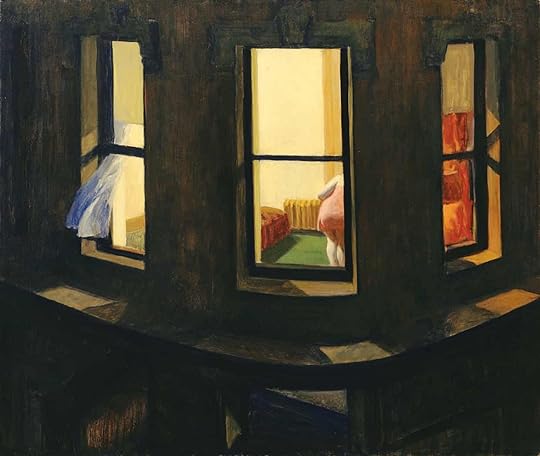
(Edward Hopper, Night Windows, 1928).
She sends me a sidelong and clearly ironic look: “You know what you make me think of. Of the ostrich that that buries its head in the sand and doesn't want to see anything." She's right this time , and I say nothing for a moment , thinking it over . I tell myself that all my craving to know, to know everything, has, at the first hurdle, shown itself to be that quality that goes under the name of forward flight, fear of knowing masked under a proclaimed determination to leave no stone unturned.
This novel is fodder for psychologists, as Harry Mulisch would say. Or quoting Dr Abbott in Fawlty towers "My gosh, there's enough material here for an entire conference"!
Quite reminiscent of Contempt in themes, characters and psychological intensity, hoping to write a review of this soon, or at least dream one. In the meantime, The Not-Knowing is stuck on repeat in my mind.

August 3, 2020
Αναλόγως τον τρόπο που κοιτάζει κανείς τα πράγματα, μπορεί άλλοτε απλώς να τους ρίχνει φευγαλέες ματιές κι άλλοτε να τα παρατηρεί επίμονα. Κι, ασφαλώς, υπάρχουν κι εκείνες οι στιγμές που, κοιτάζοντας κάποιον (ή κάτι), τυχαίνει να απολαμβάνεις μια σπάνια αισθητική ευχαρίστηση, ανάλογη μ’ εκείνη ενός ηδονοβλεψία.
Η σκοποφιλία του «ανθρώπου που κοιτάζει», ενός διανοούμενου καθηγητή της γαλλικής λογοτεχνίας που βλέπει τις σχέσεις του με τον άρρωστο πατέρα του και τη σύζυγό του να δοκιμάζονται, δεν έχει τίποτε το διεστραμμένο και νοσηρό. Λειτουργεί περισσότερο ως αφηγηματικό εργαλείο, ως ένας μεγεθυντικός φακός που, προσαρμοσμένος στο μάτι του Αλμπέρτο Μοράβια, συνδράμει τον συγγραφέα στην προσπάθειά του να ανατμήσει τις σχέσεις μεταξύ των ανθρώπων και να φωτίσει (ιδανικά) τους χαρακτήρες τους. Με τον τρόπο αυτόν, μέσα από το μηχανικά αποστασιοποιημένο βλέμμα του ανθρώπου που κοιτάζει, διακρίνει ο αναγνώστης μια επιβλητική πατρική φιγούρα, εξουσιαστική και χειριστική συνάμα, μια αποπροσανατολισμένη σύζυγο που μεγεθύνει την απόσταση μεταξύ πατέρα και γιού, και κάνα δυο ακόμη γυναικείες παρουσίες που πλαισιώνουν όμορφα την αφήγηση, ως ερωτικά αντικείμενα ενός πόθου που δεν είναι πάντα απόλυτα σαφής και περισσότερο υποδηλώνεται παρά φανερώνεται.
Περίπλοκες συναισθηματικές καταστάσεις κι αινιγματικοί χαρακτήρες μέσα από μια αφήγηση απόλυτα σαγηνευτική σ’ ένα μυθιστόρημα που απόλαυσα όσο λίγα.
Η σκοποφιλία του «ανθρώπου που κοιτάζει», ενός διανοούμενου καθηγητή της γαλλικής λογοτεχνίας που βλέπει τις σχέσεις του με τον άρρωστο πατέρα του και τη σύζυγό του να δοκιμάζονται, δεν έχει τίποτε το διεστραμμένο και νοσηρό. Λειτουργεί περισσότερο ως αφηγηματικό εργαλείο, ως ένας μεγεθυντικός φακός που, προσαρμοσμένος στο μάτι του Αλμπέρτο Μοράβια, συνδράμει τον συγγραφέα στην προσπάθειά του να ανατμήσει τις σχέσεις μεταξύ των ανθρώπων και να φωτίσει (ιδανικά) τους χαρακτήρες τους. Με τον τρόπο αυτόν, μέσα από το μηχανικά αποστασιοποιημένο βλέμμα του ανθρώπου που κοιτάζει, διακρίνει ο αναγνώστης μια επιβλητική πατρική φιγούρα, εξουσιαστική και χειριστική συνάμα, μια αποπροσανατολισμένη σύζυγο που μεγεθύνει την απόσταση μεταξύ πατέρα και γιού, και κάνα δυο ακόμη γυναικείες παρουσίες που πλαισιώνουν όμορφα την αφήγηση, ως ερωτικά αντικείμενα ενός πόθου που δεν είναι πάντα απόλυτα σαφής και περισσότερο υποδηλώνεται παρά φανερώνεται.
Περίπλοκες συναισθηματικές καταστάσεις κι αινιγματικοί χαρακτήρες μέσα από μια αφήγηση απόλυτα σαγηνευτική σ’ ένα μυθιστόρημα που απόλαυσα όσο λίγα.

April 6, 2025
Männliche Selbstzerfleischung, kafkaesk durchdekliniert: Unterhaltsam.
Inhalt: 4/5 Sterne (männliche Selbstzerfleischung)
Form: 2/5 Sterne (unscheinbar)
Erzählstimme: 2/5 Sterne (Ich-Erzählung im Präsens)
Komposition: 3/5 Sterne (dramatisches Crescendo)
Leseerlebnis: 4/5 Sterne (unterhaltsam)
Alberto Moravia (1907-1990) schrieb einen der ersten existentialistischen Romane Die Gleichgültigen. Sein gesamtes literarisches Schaffen dreht sich um Sex und Macht und Geld und Trägheit. Mit Der Zuschauer aus dem Jahr 1985 legt er nochmals den Finger in die Wunde von klischiert-männlichen Ängsten. Es geht um einen Vater-Sohn-Konflikt par exellence:
Seit [mein Vater] den schweren Autounfall gehabt hat, der ihn nun schon seit drei Monaten ans Bett fesselt, erfülle ich für ihn diese und andere kleine Pflichten, die zu übernehmen mir »vorher« nicht im Traum eingefallen wäre. Warum ich »vorher« in Gänsefüßchen setze? Weil ich seit dem Tag des Unfalls gleichsam entdeckt habe, daß ich nicht nur ein Intellektueller, sondern auch ein Sohn bin. […] In meinem Innersten aber dachte und wünschte ich, daß mein Vater für mich ein gänzlich Fremder wäre.
Der Vater liegt im Bett, und Edoardo, der bei ihm wohnt, und die Haushaltshilfe und die Krankenschwester, Fausta, kümmern sich um ihn, und auch ein bisschen Silvia, die Ehefrau Edoardos. Eines Tages wird die Alltagsroutine unterbrochen: Silvia zieht aus und keiner weiß warum. Edoardo ist am Boden zerstört, denn nun fällt auch der tägliche Sex in der Wohnung aus. Sie bietet es ihm zwar an, sich in der Wohnung ihrer Tante zu vergnügen, aber das passt Edoardo nicht. Wieso? Wahrscheinlich aus dem einfachen Grunde, dass Silvia zu haben und mit ihr in der väterlichen Wohnung zu schlafen, ihm einen gewissen eingebildeten männlichen Vorteil verschafft, denn er befindet sich im permanenten Wettstreit mit ihm:
Ich muß wirklich sagen, ich traue meinen Augen nicht: da steht Fausta mit der Spritze in der Hand, und da liegt mein Vater und betrachtet seinen Penis mit selbstgefällig-autoritärer Miene, als wolle er ihr zeigen, daß er außergewöhnlich gut ausgerüstet sei, daß sie dies gefälligst bemerken und in ihrer Beziehung berücksichtigen solle. […] Er will, daß ich seine Manneskraft bemerke und über sie erstaune, in einem stummen Wettstreit, in dem Fausta als Schiedsrichterin und Spruchfällende angerufen ist.
Literarisch etwas unbalanciert komponiert, vieles erübrigt sich, manches reiht sich nicht ein, sprachlich unterkomplex und flüssig, aber langweilig geschrieben, besitzt der Text dennoch eine gewisse psychodramatische Ausstrahlungskraft, wie die Figur Edoardo an seinen eigenen Ansprüchen und Versuchen, sich zu behaupten, unterzugehen droht. Moravia besitzt einen Hang zum Derben und zum Tabubruch, der hier im professoralen Haushalt gut aufgehoben ist. Die etwas manierierten Topiken stören am Ende wenig.
Mein Einspruch klingt bitter. »O nein, allenfalls bin ich ein braver Christenmensch. Oder vielleicht, und das ist die richtigere Hypothese, ein braver Intellektueller, der nicht zu handeln versteht und die Dinge zwar denkt, aber nicht tut.«
Der Witz des Buches besteht in dem kafkaschen Gestus, dass Selbsterkenntnis nicht allein zur Selbstveränderung führt. Die ständige Selbstbeharkung führt nicht weit, und die Selbstzerfleischung auch nicht, wiewohl sie eben vergnügliche Minuten gewährt in dem ganzen Schlamassel, in den sich Edoardo freiwillig verstrickt. Anleihen zu Jean-Paul Sartres Die Eingeschlossenen von Altona und Franz Kafkas Das Urteil sind unübersehbar.
---------------------------------
---------------------------------
Details – ab hier Spoilergefahr (zur Erinnerung für mich):
---------------------------------
---------------------------------
Inhalt: ● Protagonist: Edoardo, Dodo, 35 Jahre alt, Professor für Französische Literatur, Intellektueller und Anhänger der 1968er Bewegung; Silvia, Ehefrau von Dodo, Beruf: unbekannt, Alter: unbekannt; Vater von Edoardo, Name: unbekannt; Beruf: Physik-Professor, 70 Jahre alt, bettlägerig.
Inhaltsangabe/Zusammenfassung: Der Vater (V) liegt im Bett und muss gepflegt werden. Sein Sohn Edoardo (E), der noch bei ihm wohnt, übernimmt einige Aufgaben. Den Rest übernehmen die Krankenschwester Rita, später Fausta, und die Haushaltshilfe sowie der Physiotherapeut Osvaldo. Es ist nun drei Monate her, dass der Unfall geschehen ist. Der Roman beginnt mit der Darstellung eines typischen Tages, bevor das ausordentliche passiert: Silvia (S), seine Ehefrau, zieht aus. Sie will sich über ihr Leben klar werden. E meint zu wissen, dass das Problem darin besteht, dass sie keine eigene Wohnung haben, und beschließt die Wohnung, die ihm aus dem Erbe von seiner Mutter zusteht, das er aber aus politischen und ideologischen Gründen abgelehnt hat, doch anzunehmen. Es liegt im selben Haus wie das des Vaters. Während der Trennung lernt E Pascasia kennen, eine Schwarze, die mit einem Schlagzeuger zusammen ist, der aber von ihr getrennt auf Tournee weilt, und mit der er die Faszination von Voyeurismus und Exhibitionismus teilt. Er schießt ein paar Fotos mit ihr, die mal Model gewesen ist. S rückt bei ihren gemeinsamen Treffen nicht mit der Sprache heraus, weshalb sie ausgezogen ist. Eine neue Krankenschwester tritt die Nachfolge von Rita an, Fausta, F, die sich über sexuelle Belästigung durch den Vater beschwert. Bei einem weiteren Treffen eröffnet ihm S, dass sie eine Affäre hat, mit einem anderen Mann. Sie erzählt aber E nicht, wer es ist, nur dass sie wilden Sex und sich „eine Sau“ nennen lässt. Bei den Treffen kommen sie sich sexuell etwas näher, versöhnen sich fast wieder. Bei einem weiteren Treffen mit Pascasie treiben sie den Voyeurismus etwas weiter, aber lassen die Nachbarstochter Gesuina außen vor. Am Abend bespitzelt E seinen Vater und sieht, wie er F für sich posieren lässt. F kommt später in Es Zimmer, um sich zu rechtfertigen, zeigt Interesse an ihm. Am nächsten Morgen überkommt E das plötzliche Verlangen, seinen Vater zu schlagen. Er erinnert sich an eine Szene, in der er ihn beim Sex mit seiner Mutter überrascht hat, bei welchem sein Vater die Mutter „Sau“ genannt hat. Später kommt noch heraus, dass F den Vater beim Sex letzte Nacht belauscht hat, und nun dämmert es E, dass S und sein Vater eine Affäre haben. E will F zum Sex zwingen, die lässt sich aber nicht ein. Er schämt sich, fährt durch die Stadt, trifft zufällig Pascasie und schläft mit ihr. Später treffen sich S und E und besichtigen die neue Wohnung, bei der E versucht, mit S ruppig Sex zu haben, was sie aber verweigert. Sie will weiterhin die Madonna für ihn sein, außerdem weigert sie sich in der Wohnung zu leben. Die Wohnung entspreche nicht ihrem Lebensstil. Sie seien arm und sollten weiterhin beim Vater leben. E willigt ein.
… Vorläufer der männlichen Selbstzerfleischungen aus dem Intellektuellen- und Künstlermilieu, die Selbstbestrafungssehnsüchte wie bei Michel Houellebecq, bei Heinz Strunk, aber auch bei Quentin Tarantino, Maxim Biller oder Emannuel Carrère. Bei ganz klar eine Art übermächtiger Vater, der den Sohn unter seinen Fittichen hält. Sehr verwandt zu Jean-Paul Sartres „Die Eingeschlossenen von Altona“, dort, wo Werners Frau Johanna nicht möchte, dass Werner die Leitung des Familienunternehmens übernimmt – der Vater aber eine allbeherrschende Rolle innehat; und auch „Verhängnis“ von Josephine Hart, das beinahe ein selbiges Thema besitzt, nämlich die Affäre eines Vaters mit der Partnerin des Sohnes. Ähnlich auch Franz Kafkas „Das Urteil“.
… spannend zu lesen, leider mit Längen in den an den Haaren gezogenen Passagen mit Pascasie, die wie eine künstliche Streckung wirken, ebenso die Situation mit Fausta, die gar nicht nötig wäre. Überhaupt besitzt der Roman hierdurch eine zu lockere Bindung mit dem Plot. Die Situation zwischen Ehefrau, Vater und Sohn hätte ausgereicht, auch hätte der Platz eher für eine Beleuchtung von Silvia genutzt werden sollen, deren ganzer sozialer und familiärer Hintergrund ausgeblendet bleibt. Dass die Frauen über weite Strecken nur als Gespielinnen auftreten, erhöht den Schundcharakter des ansonsten interessanten Werkes.
… insgesamt handelt das Buch also davon, dass ein rebellierender Jugendlicher sich gegen den Vater zu behaupten sucht, indem er das Erbe ausschlägt, indem er die Gefahren, die die Physik bergen, ihm vorwirft (der Vater ist Physiker), indem er überhaupt die Notwendigkeit ständig im Mund herumführt, dass die Gesellschaft sich ändern muss; aber als der Protagonist seine Frau zu verlieren droht, knickt er ein, sagt Ja und Amen zu allem, und muss dann noch erfahren, dass der Vater von Anfang an eine Affäre mit seiner Frau gehabt hat, und von Anfang an die Schwäche seines Sohnes kannte.
--> 4 Sterne
Form: Sprachlich wohlfeiler Durchschnitt, journalistisch gerafft, mit ein paar interessanten Beschreibungspassagen, leider doppeln sich Beschreibungen, eintönige Wiederholung vom Römischen Himmel, vom Petersdom, wenig wirklich Aufregendes, keine Sprachmelodie, kein Sprachwitz, keine Neologismen … ziemlicher Standard, aber ohne Befremden zu bewirken.
--> 2 Sterne
Erzählstimme: In Präsens geschriebene Ich-Perspektive, die zwar klar situiert ist, im Laufe des Textes konsequent beibehalten wird, aber eben zeitliche Sprünge beinhaltet, die nicht so klar werden. Überhaupt in „Präsens“ als „Ich“ lässt sich höchstens im Ticker-Verfahren verstehen. Nicht aber als reflexive Grundhaltung. Das zeigt aber auf seine Weise auch die Auflösung der Psyche Edoardos, dennoch über Tage gestreckt funktioniert das genauso wenig wie „Der Fall“ von Albert Camus. Es ist konsequent inkonsequent.
--> 2 Sterne
Komposition: Leider aufgebläht durch die störenden Pascasia-Sequenzen, und die gewollte Situation mit der Krankenschwester. Gelungen jedoch sehr der innere Aufbau und die Dramatik, wie die Affäre ans Licht kommt, der Plot selbst mit der Wohnung, den Eigentumsverhältnissen, aber auch dieser Zwang des Protagonisten die Weltkrise der atomaren Bedrohung beständig heranzuziehen, um sich hinter ihr zu verstecken, ja mit ihr den Vater zu kritisieren, an den er aber nicht herankommt. Durchaus schlüssiges Psychogramm, wären diese dummen erotomanischen Stellen über Mallarmé und Dostojewski nicht.
--> 3 Sterne
Leseerlebnis: Mythisch kommt der insbesondere am Anfang daher, die Repetitionen, die Problematik mit dem Vater, das Aufeinanderfolgen der Rituale, das Geheimnis um die Macht des Vaters, die etwas im Schatten bleibende Ehefrau, all dies führt zu dem Eindruck, dass Edoardo extrem ausgeliefert ist. Diese Zwangsneurosen geben dem Text Intensität. Es gibt eine klare Suche, eine klare Angst, und so liest sich der Text gut und unterhält, trotz einiger nervender Szenen.
--> 4 Sterne
Inhalt: 4/5 Sterne (männliche Selbstzerfleischung)
Form: 2/5 Sterne (unscheinbar)
Erzählstimme: 2/5 Sterne (Ich-Erzählung im Präsens)
Komposition: 3/5 Sterne (dramatisches Crescendo)
Leseerlebnis: 4/5 Sterne (unterhaltsam)
Alberto Moravia (1907-1990) schrieb einen der ersten existentialistischen Romane Die Gleichgültigen. Sein gesamtes literarisches Schaffen dreht sich um Sex und Macht und Geld und Trägheit. Mit Der Zuschauer aus dem Jahr 1985 legt er nochmals den Finger in die Wunde von klischiert-männlichen Ängsten. Es geht um einen Vater-Sohn-Konflikt par exellence:
Seit [mein Vater] den schweren Autounfall gehabt hat, der ihn nun schon seit drei Monaten ans Bett fesselt, erfülle ich für ihn diese und andere kleine Pflichten, die zu übernehmen mir »vorher« nicht im Traum eingefallen wäre. Warum ich »vorher« in Gänsefüßchen setze? Weil ich seit dem Tag des Unfalls gleichsam entdeckt habe, daß ich nicht nur ein Intellektueller, sondern auch ein Sohn bin. […] In meinem Innersten aber dachte und wünschte ich, daß mein Vater für mich ein gänzlich Fremder wäre.
Der Vater liegt im Bett, und Edoardo, der bei ihm wohnt, und die Haushaltshilfe und die Krankenschwester, Fausta, kümmern sich um ihn, und auch ein bisschen Silvia, die Ehefrau Edoardos. Eines Tages wird die Alltagsroutine unterbrochen: Silvia zieht aus und keiner weiß warum. Edoardo ist am Boden zerstört, denn nun fällt auch der tägliche Sex in der Wohnung aus. Sie bietet es ihm zwar an, sich in der Wohnung ihrer Tante zu vergnügen, aber das passt Edoardo nicht. Wieso? Wahrscheinlich aus dem einfachen Grunde, dass Silvia zu haben und mit ihr in der väterlichen Wohnung zu schlafen, ihm einen gewissen eingebildeten männlichen Vorteil verschafft, denn er befindet sich im permanenten Wettstreit mit ihm:
Ich muß wirklich sagen, ich traue meinen Augen nicht: da steht Fausta mit der Spritze in der Hand, und da liegt mein Vater und betrachtet seinen Penis mit selbstgefällig-autoritärer Miene, als wolle er ihr zeigen, daß er außergewöhnlich gut ausgerüstet sei, daß sie dies gefälligst bemerken und in ihrer Beziehung berücksichtigen solle. […] Er will, daß ich seine Manneskraft bemerke und über sie erstaune, in einem stummen Wettstreit, in dem Fausta als Schiedsrichterin und Spruchfällende angerufen ist.
Literarisch etwas unbalanciert komponiert, vieles erübrigt sich, manches reiht sich nicht ein, sprachlich unterkomplex und flüssig, aber langweilig geschrieben, besitzt der Text dennoch eine gewisse psychodramatische Ausstrahlungskraft, wie die Figur Edoardo an seinen eigenen Ansprüchen und Versuchen, sich zu behaupten, unterzugehen droht. Moravia besitzt einen Hang zum Derben und zum Tabubruch, der hier im professoralen Haushalt gut aufgehoben ist. Die etwas manierierten Topiken stören am Ende wenig.
Mein Einspruch klingt bitter. »O nein, allenfalls bin ich ein braver Christenmensch. Oder vielleicht, und das ist die richtigere Hypothese, ein braver Intellektueller, der nicht zu handeln versteht und die Dinge zwar denkt, aber nicht tut.«
Der Witz des Buches besteht in dem kafkaschen Gestus, dass Selbsterkenntnis nicht allein zur Selbstveränderung führt. Die ständige Selbstbeharkung führt nicht weit, und die Selbstzerfleischung auch nicht, wiewohl sie eben vergnügliche Minuten gewährt in dem ganzen Schlamassel, in den sich Edoardo freiwillig verstrickt. Anleihen zu Jean-Paul Sartres Die Eingeschlossenen von Altona und Franz Kafkas Das Urteil sind unübersehbar.
---------------------------------
---------------------------------
Details – ab hier Spoilergefahr (zur Erinnerung für mich):
---------------------------------
---------------------------------
Inhalt: ● Protagonist: Edoardo, Dodo, 35 Jahre alt, Professor für Französische Literatur, Intellektueller und Anhänger der 1968er Bewegung; Silvia, Ehefrau von Dodo, Beruf: unbekannt, Alter: unbekannt; Vater von Edoardo, Name: unbekannt; Beruf: Physik-Professor, 70 Jahre alt, bettlägerig.
Inhaltsangabe/Zusammenfassung: Der Vater (V) liegt im Bett und muss gepflegt werden. Sein Sohn Edoardo (E), der noch bei ihm wohnt, übernimmt einige Aufgaben. Den Rest übernehmen die Krankenschwester Rita, später Fausta, und die Haushaltshilfe sowie der Physiotherapeut Osvaldo. Es ist nun drei Monate her, dass der Unfall geschehen ist. Der Roman beginnt mit der Darstellung eines typischen Tages, bevor das ausordentliche passiert: Silvia (S), seine Ehefrau, zieht aus. Sie will sich über ihr Leben klar werden. E meint zu wissen, dass das Problem darin besteht, dass sie keine eigene Wohnung haben, und beschließt die Wohnung, die ihm aus dem Erbe von seiner Mutter zusteht, das er aber aus politischen und ideologischen Gründen abgelehnt hat, doch anzunehmen. Es liegt im selben Haus wie das des Vaters. Während der Trennung lernt E Pascasia kennen, eine Schwarze, die mit einem Schlagzeuger zusammen ist, der aber von ihr getrennt auf Tournee weilt, und mit der er die Faszination von Voyeurismus und Exhibitionismus teilt. Er schießt ein paar Fotos mit ihr, die mal Model gewesen ist. S rückt bei ihren gemeinsamen Treffen nicht mit der Sprache heraus, weshalb sie ausgezogen ist. Eine neue Krankenschwester tritt die Nachfolge von Rita an, Fausta, F, die sich über sexuelle Belästigung durch den Vater beschwert. Bei einem weiteren Treffen eröffnet ihm S, dass sie eine Affäre hat, mit einem anderen Mann. Sie erzählt aber E nicht, wer es ist, nur dass sie wilden Sex und sich „eine Sau“ nennen lässt. Bei den Treffen kommen sie sich sexuell etwas näher, versöhnen sich fast wieder. Bei einem weiteren Treffen mit Pascasie treiben sie den Voyeurismus etwas weiter, aber lassen die Nachbarstochter Gesuina außen vor. Am Abend bespitzelt E seinen Vater und sieht, wie er F für sich posieren lässt. F kommt später in Es Zimmer, um sich zu rechtfertigen, zeigt Interesse an ihm. Am nächsten Morgen überkommt E das plötzliche Verlangen, seinen Vater zu schlagen. Er erinnert sich an eine Szene, in der er ihn beim Sex mit seiner Mutter überrascht hat, bei welchem sein Vater die Mutter „Sau“ genannt hat. Später kommt noch heraus, dass F den Vater beim Sex letzte Nacht belauscht hat, und nun dämmert es E, dass S und sein Vater eine Affäre haben. E will F zum Sex zwingen, die lässt sich aber nicht ein. Er schämt sich, fährt durch die Stadt, trifft zufällig Pascasie und schläft mit ihr. Später treffen sich S und E und besichtigen die neue Wohnung, bei der E versucht, mit S ruppig Sex zu haben, was sie aber verweigert. Sie will weiterhin die Madonna für ihn sein, außerdem weigert sie sich in der Wohnung zu leben. Die Wohnung entspreche nicht ihrem Lebensstil. Sie seien arm und sollten weiterhin beim Vater leben. E willigt ein.
… Vorläufer der männlichen Selbstzerfleischungen aus dem Intellektuellen- und Künstlermilieu, die Selbstbestrafungssehnsüchte wie bei Michel Houellebecq, bei Heinz Strunk, aber auch bei Quentin Tarantino, Maxim Biller oder Emannuel Carrère. Bei ganz klar eine Art übermächtiger Vater, der den Sohn unter seinen Fittichen hält. Sehr verwandt zu Jean-Paul Sartres „Die Eingeschlossenen von Altona“, dort, wo Werners Frau Johanna nicht möchte, dass Werner die Leitung des Familienunternehmens übernimmt – der Vater aber eine allbeherrschende Rolle innehat; und auch „Verhängnis“ von Josephine Hart, das beinahe ein selbiges Thema besitzt, nämlich die Affäre eines Vaters mit der Partnerin des Sohnes. Ähnlich auch Franz Kafkas „Das Urteil“.
… spannend zu lesen, leider mit Längen in den an den Haaren gezogenen Passagen mit Pascasie, die wie eine künstliche Streckung wirken, ebenso die Situation mit Fausta, die gar nicht nötig wäre. Überhaupt besitzt der Roman hierdurch eine zu lockere Bindung mit dem Plot. Die Situation zwischen Ehefrau, Vater und Sohn hätte ausgereicht, auch hätte der Platz eher für eine Beleuchtung von Silvia genutzt werden sollen, deren ganzer sozialer und familiärer Hintergrund ausgeblendet bleibt. Dass die Frauen über weite Strecken nur als Gespielinnen auftreten, erhöht den Schundcharakter des ansonsten interessanten Werkes.
… insgesamt handelt das Buch also davon, dass ein rebellierender Jugendlicher sich gegen den Vater zu behaupten sucht, indem er das Erbe ausschlägt, indem er die Gefahren, die die Physik bergen, ihm vorwirft (der Vater ist Physiker), indem er überhaupt die Notwendigkeit ständig im Mund herumführt, dass die Gesellschaft sich ändern muss; aber als der Protagonist seine Frau zu verlieren droht, knickt er ein, sagt Ja und Amen zu allem, und muss dann noch erfahren, dass der Vater von Anfang an eine Affäre mit seiner Frau gehabt hat, und von Anfang an die Schwäche seines Sohnes kannte.
--> 4 Sterne
Form: Sprachlich wohlfeiler Durchschnitt, journalistisch gerafft, mit ein paar interessanten Beschreibungspassagen, leider doppeln sich Beschreibungen, eintönige Wiederholung vom Römischen Himmel, vom Petersdom, wenig wirklich Aufregendes, keine Sprachmelodie, kein Sprachwitz, keine Neologismen … ziemlicher Standard, aber ohne Befremden zu bewirken.
--> 2 Sterne
Erzählstimme: In Präsens geschriebene Ich-Perspektive, die zwar klar situiert ist, im Laufe des Textes konsequent beibehalten wird, aber eben zeitliche Sprünge beinhaltet, die nicht so klar werden. Überhaupt in „Präsens“ als „Ich“ lässt sich höchstens im Ticker-Verfahren verstehen. Nicht aber als reflexive Grundhaltung. Das zeigt aber auf seine Weise auch die Auflösung der Psyche Edoardos, dennoch über Tage gestreckt funktioniert das genauso wenig wie „Der Fall“ von Albert Camus. Es ist konsequent inkonsequent.
--> 2 Sterne
Komposition: Leider aufgebläht durch die störenden Pascasia-Sequenzen, und die gewollte Situation mit der Krankenschwester. Gelungen jedoch sehr der innere Aufbau und die Dramatik, wie die Affäre ans Licht kommt, der Plot selbst mit der Wohnung, den Eigentumsverhältnissen, aber auch dieser Zwang des Protagonisten die Weltkrise der atomaren Bedrohung beständig heranzuziehen, um sich hinter ihr zu verstecken, ja mit ihr den Vater zu kritisieren, an den er aber nicht herankommt. Durchaus schlüssiges Psychogramm, wären diese dummen erotomanischen Stellen über Mallarmé und Dostojewski nicht.
--> 3 Sterne
Leseerlebnis: Mythisch kommt der insbesondere am Anfang daher, die Repetitionen, die Problematik mit dem Vater, das Aufeinanderfolgen der Rituale, das Geheimnis um die Macht des Vaters, die etwas im Schatten bleibende Ehefrau, all dies führt zu dem Eindruck, dass Edoardo extrem ausgeliefert ist. Diese Zwangsneurosen geben dem Text Intensität. Es gibt eine klare Suche, eine klare Angst, und so liest sich der Text gut und unterhält, trotz einiger nervender Szenen.
--> 4 Sterne

March 6, 2019
What a quirky, odd, naughty novel this is.
Edoardo and Silvia are a young, married couple living with Edoardo’s father. The first chapter gives the illusion that the couple is happily married until the last line where we learn that Silvia up and left him suddenly. The hook is, she didn’t leave him because she stopped loving him, but because, as we learn along with Edoardo, of other inexplicable reasons that she refuses to explain to him. He is put in a position where he simply has to accept her choice of needing time to think things through. But little by little, Moravia weaves an interesting relationship dynamic between Edoardo, Edoardo’s father, Silvia and several other characters. The strength of this short novel is, in fact, in these relationships and Edoardo’s analytical interpretations of them. Actually, the most poignant and beautiful passage in the book sums it up nicely:
It is precisely this principle of relationships that drives the novel forward, and also the blasé mannerisms of the characters relating to sex, infidelity, and taboos let the reader realize that there are no moral judgments here; the only character that comes close to this is Pascasie who towards the end is the voice of reason and anything resembling a moral perspective. But even she is morally compromised for having had a fling with Edoardo.
So, the reader is left in an interesting position, and I think this is the genius of this novel: without moral judgments, the characters lack that certain depth that can make us root for them or not, but simultaneously, because of Edoardo’s personality and background, and because of the ‘inexplicable’ reasons Silvia moved out ‘temporarily,’ we are able to suspend our disbelief and go along for the quirky ride.
The writing is crisp and cyclical, in that points introduced are returned to later on in inventive ways. Erotic descriptions are on the weak side, with some repetitiveness. Mostly though, the journey through Edoardo’s eyes and inside his head are fascinating, no matter how pathetic or misguided or traumatized he may seem, which makes him a rather interesting narrator.
And in case you are wondering, the novel is not exactly an erotic novel about voyeurism, although there are subtle situations of that. But the voyeurism is self-defined in the book, first non-sexually and brilliantly by describing literature as an act of voyeurism, i.e. the reader is, in the company of the narrator, a voyeur on all the other characters and happenings in a novel; and later sexually and rousingly in the given manner that voyeurism is.
Edoardo and Silvia are a young, married couple living with Edoardo’s father. The first chapter gives the illusion that the couple is happily married until the last line where we learn that Silvia up and left him suddenly. The hook is, she didn’t leave him because she stopped loving him, but because, as we learn along with Edoardo, of other inexplicable reasons that she refuses to explain to him. He is put in a position where he simply has to accept her choice of needing time to think things through. But little by little, Moravia weaves an interesting relationship dynamic between Edoardo, Edoardo’s father, Silvia and several other characters. The strength of this short novel is, in fact, in these relationships and Edoardo’s analytical interpretations of them. Actually, the most poignant and beautiful passage in the book sums it up nicely:
Life is a question of relationships, not moral judgments; and you pretty soon have to realize that a new relationship alters all the others that came before it.
It is precisely this principle of relationships that drives the novel forward, and also the blasé mannerisms of the characters relating to sex, infidelity, and taboos let the reader realize that there are no moral judgments here; the only character that comes close to this is Pascasie who towards the end is the voice of reason and anything resembling a moral perspective. But even she is morally compromised for having had a fling with Edoardo.
So, the reader is left in an interesting position, and I think this is the genius of this novel: without moral judgments, the characters lack that certain depth that can make us root for them or not, but simultaneously, because of Edoardo’s personality and background, and because of the ‘inexplicable’ reasons Silvia moved out ‘temporarily,’ we are able to suspend our disbelief and go along for the quirky ride.
The writing is crisp and cyclical, in that points introduced are returned to later on in inventive ways. Erotic descriptions are on the weak side, with some repetitiveness. Mostly though, the journey through Edoardo’s eyes and inside his head are fascinating, no matter how pathetic or misguided or traumatized he may seem, which makes him a rather interesting narrator.
And in case you are wondering, the novel is not exactly an erotic novel about voyeurism, although there are subtle situations of that. But the voyeurism is self-defined in the book, first non-sexually and brilliantly by describing literature as an act of voyeurism, i.e. the reader is, in the company of the narrator, a voyeur on all the other characters and happenings in a novel; and later sexually and rousingly in the given manner that voyeurism is.

September 29, 2022
WARNING THIS NOVEL CONTAINS PORNOGRAPHY, AND SEX SCENES.
Ladies and gentlemen
I always put this notice in case someone does not want to read this review. It can be said that this novel has been my guilty pleasure. It happens many times that we like books, that we should not like. I am in the antipodes of Alberto Moravia, Italian communist author (and as we have seen, despite having the same ideological ascription personal enemy of Curzio Malaparte who has surprised us with two jewels "Don Chameleon", https://www.goodreads.com/book/show/2... a critique against fascism, although Mussolini did not come out very badly) and the very interesting ucronía where communism took over Western Europe "History of tomorrow" in which at least Malaparte was sincere the work had a lot of intelligence, and a sense of humor, and great respect for his ideological adversaries. It won't show you on Wikipedia, but for me it's one of the best Alternative Stories I've ever read https://www.goodreads.com/review/show...). However, the best of the Italians, and it is not a surprise for those who know me has been Giovanni Papini, who has done double with two fives. One in fiction with the sequel to "Gog"
https://www.goodreads.com/book/show/1... and "The Black Book", https://www.goodreads.com/book/show/3... but it still fits I liked even more the biography of Dante written by the Florentine author. I do not know if next year I will be able to write any criticism, but without a doubt "Dante Vivo" https://www.goodreads.com/book/show/2... in which Papini not only analyzes the life of Dante, but his work, the soul of the writer, the historical context, and his lights, and his shadows demonstrating his great erudition, and that he is one of the best prose writers I have read. His prose is beautiful, and incendiary so I think that the Italians I have read this year I give an A, or an honors.
But returning to Moravia despite the sordidness of his novel is very well written, and is not irreligious at all (as I feared being a communist Moravia). In fact, Stephen Vicnczey https://www.goodreads.com/author/show... in his "In Praise of the Mature Woman" https://www.goodreads.com/book/show/1... should learn from Moravia how to write a good erotic novel, and not fail in the attempt, because if something requires an erotic novel, and this is. It is about sex, and describing the sex scenes, and this is done very well by Moravia. In fact, the interest in this novel was born because the director of Erotic Cinema Tinto Brass adapted it to the cinema, and thanks to him, and Albino Luciani I was able to know another masterpiece of Italian literature such as "La Locandiera" by Carlo Goldoni https://www.goodreads.com/book/show/3... thanks to "Ilustrísimos Señores" https://www.goodreads.com/book/show/1... https://www.goodreads.com/author/show... and Tinto Brass's adaptation of Carlo Goldoni's play "Miranda", which seemed to me the counterpart of Don Juan, because in this case it is the woman who seduces the man, and I have always found this charming. Which is not to say, despite being lewd, lustful, and libidinous. In fact, I suffer from one of the passions that my admired Don Juan Manuel de Prada defines https://www.goodreads.com/author/show... as commoners. Hopefully one day I can correct my addiction to the deadly sin that is lust. Yes I am Catholic, but my Achilles heel is lust, and I have not had relationships with anyone, but I am very attracted to sex. This may be because I would have liked women to love me, but unfortunately it happens to me as Captain Hook in the sequel directed by Steven Spielberg (which is not a remake of Peter Pan https://www.goodreads.com/book/show/3... but an alternative sequel to what would have happened, if Peter Pan had fallen in love with the granddaughter of his playmate Wendy Darling, and had abandoned Neverland, and decided to have children, while James Hook was still alive, and having gotten rid of his other great enemy the crocodile). In one of the brilliant dialogues of the film Captain Hook tells Smee "that not Smee that children do not love me", because the same thing happens to me, but with women. Never, despite how hard I have tried, I have not succeeded, that none of them loved me, and when I thought there was one that seemed to have done it I discovered that he never wanted me. I have very loyal friends, but I have never managed to get women to love me. So I have to look in books for the love that has been denied to me from this world. Although I believe that my sexual awakening began when I was twelve. Something that saddened me, because the sooner your sexual awakening begins, the less childhood you have, and the faster you lose your innocence. He spared the audience the most abject acts of my life, for they have not come to know this, but because I may like something which is so contrary to my nature, and to my natural piety, and which makes me wallow in the mire of pleasure like a pig in a puddle. That, yes despite this weakness (the tragedy of sin is that it makes us weaker) I am very moral, and I do not like that sex scenes are marked by immorality so I suspend so many erotic novels. I don't like irreligious novels, or ones that mock religion, if I'm going to sin I want to be like the Magdalene, and if I give myself over to sin at least I want to have loved a lot, and that's why this Moravian novel has not displeased me, because it is very respectful of religion, and has a very interesting Dostoyevskian influence https://www.goodreads.com/author/show... (an author who has been talked about a lot at the Catholic Book Club.)
The great theme of this novel is the Voeuyerism of which Moravia through its character Dodo speaks. It is also a very Dostoyevskian story very much in the line of "The Brothers Karamazov" https://www.goodreads.com/book/show/4... (for the rivalry between a father and a son, which can lead if it follows to its ultimate consequences to parricide) with a strong component of rivalry. Dodo Alberto's father is a Professor of Physics (also as you will see is a love machine, and his ability to seduce women a mystery, as in the case of Don Mendo https://www.goodreads.com/book/show/6... the secret of his success with the beautiful sex is not known), while the communist son and follower of the theories of May 68 is a mediocre professor of French literature, married to a beautiful woman named Silvia (played in the Tinto Brass film Katarzyna Kozaczyk which makes me more attracted to this character, because a particular inclination for Polish women. As I have always said, I have always found them the most beautiful women in the world, and I like a kindness, and religiosity that he missed in Western Europe), that is not happy.
One of the charms of the novel precisely consists of Silvia's way of having sex with Dodo and has to act as if she were the Virge Maria, or a saint, because that is the kind of women that the protagonist Dodo likes, and it is a form of religiosity that permeates this story.
Of course we follow Dodo, and we think that the reason for marital infidelity is one, but it is more Freudian https://www.goodreads.com/author/show... all. The thing is complicated when the Father has an accident, and they must take care of him with what all the secrets of the family will come to light. The novel revolves around the women Silvia, Fausta (the nurse, who sells photos to erotic magazines to earn money), and the black woman Pascassie. While the first two love Dodo (you see the same thing that happened in one of my favorite novels "The Painted Veil" by W. Somerset Maugham), https://www.goodreads.com/book/show/9... https://www.goodreads.com/author/show... where the protagonist Kitty Fane loved her husband Walter, for his kindness, but was sexually attracted to adultery, and libertine Charles Towsend, but the wonderful thing about that novel apart from the love story is the religious awakening of the protagonist to Catholicism. This novel should not be confused with another little gem, perhaps "The Seventh Veil" by Juan Manuel de Prada https://www.goodreads.com/book/show/7... apart from the first novel I read to him is my favorite novel by this author), but they are sexually attracted to another. Although the story ends up becoming a story of forgiveness, it is still marked by sordid themes adultery, pedophilia (there is a poem by Mallarme https://www.goodreads.com/author/show... where it is told how a black woman sleeps with a white girl), suicide (one of the characters comments that if a world war broke out he would commit suicide with his boyfriend). There is a film adaptation of this film made by Tinto Brass, but it eliminates the essential part that gives meaning to the novel, and in the film the protagonist is like a calzonazos pelele instead in the novel everything makes sense (this already happened with another wonderful novel "A Clockwork Orange" in which Kubrick https://www.goodreads.com/book/show/4... https://www.goodreads.com/author/show... https://www.goodreads.com/book/show/8... https://www.goodreads.com/author/show..., whose latest film Eyes Wide Shut https://www.goodreads.com/book/show/4... is based on a novel by the Austrian Arthur Schnitzler https://www.goodreads.com/author/show... now I begin to understand what happens, that perhaps this film is a dream, but returning to A Clockwork Orange the big problem of this novel is that in America the final chapter of Anthony Burgess's novel did not come out in the one that the protagonist Alex de la Garde redeems himself, making that with the unhealthy and equivocal ending that Kubrick gave him an ode to violence, and immorality).
It is not understood how Brass omitted the key scene of the film, which prevents the protagonist from committing a crime, it is also a contempt for Pascassie (apart from eliminating the possibility of an interracial love, although adulterous), whose presence in Brass's film is cut, and replaced by a lesbian relationship, which does not appear in the novel, loading the most beautiful of the plot. The problem is that it is adultery, and that, and perhaps the despair, and pessimism of Moravia's work, may be the worst of the novel (about despair I do not say it, but the wonderful book by Juan Gutiérrez Palacios that is not in Goodreads, which includes Moravia in the list of hopeless writers. It is a pity that this novel is not in Goodreads, because I would have written a good review of his book "Contemporary European Writers", and also of the novel "Una golfa subió a los cielos" by Emilio Romero). But for me there is no evil in Silvia as some critics have maintained. I believe that forgiveness is the appropriate solution in this case.
Maybe there are no women like those in this novel, but I like very holy, or very sinful women so I enjoyed reading this novel. My grade is (3'5/5). PS. Guilty pleasure. Apart from this, the novel touches on the theme of a nuclear war, and the end of the world so there is an apocalyptic theme which makes its interest, at least on my part has increased.
Ladies and gentlemen
I always put this notice in case someone does not want to read this review. It can be said that this novel has been my guilty pleasure. It happens many times that we like books, that we should not like. I am in the antipodes of Alberto Moravia, Italian communist author (and as we have seen, despite having the same ideological ascription personal enemy of Curzio Malaparte who has surprised us with two jewels "Don Chameleon", https://www.goodreads.com/book/show/2... a critique against fascism, although Mussolini did not come out very badly) and the very interesting ucronía where communism took over Western Europe "History of tomorrow" in which at least Malaparte was sincere the work had a lot of intelligence, and a sense of humor, and great respect for his ideological adversaries. It won't show you on Wikipedia, but for me it's one of the best Alternative Stories I've ever read https://www.goodreads.com/review/show...). However, the best of the Italians, and it is not a surprise for those who know me has been Giovanni Papini, who has done double with two fives. One in fiction with the sequel to "Gog"
https://www.goodreads.com/book/show/1... and "The Black Book", https://www.goodreads.com/book/show/3... but it still fits I liked even more the biography of Dante written by the Florentine author. I do not know if next year I will be able to write any criticism, but without a doubt "Dante Vivo" https://www.goodreads.com/book/show/2... in which Papini not only analyzes the life of Dante, but his work, the soul of the writer, the historical context, and his lights, and his shadows demonstrating his great erudition, and that he is one of the best prose writers I have read. His prose is beautiful, and incendiary so I think that the Italians I have read this year I give an A, or an honors.
But returning to Moravia despite the sordidness of his novel is very well written, and is not irreligious at all (as I feared being a communist Moravia). In fact, Stephen Vicnczey https://www.goodreads.com/author/show... in his "In Praise of the Mature Woman" https://www.goodreads.com/book/show/1... should learn from Moravia how to write a good erotic novel, and not fail in the attempt, because if something requires an erotic novel, and this is. It is about sex, and describing the sex scenes, and this is done very well by Moravia. In fact, the interest in this novel was born because the director of Erotic Cinema Tinto Brass adapted it to the cinema, and thanks to him, and Albino Luciani I was able to know another masterpiece of Italian literature such as "La Locandiera" by Carlo Goldoni https://www.goodreads.com/book/show/3... thanks to "Ilustrísimos Señores" https://www.goodreads.com/book/show/1... https://www.goodreads.com/author/show... and Tinto Brass's adaptation of Carlo Goldoni's play "Miranda", which seemed to me the counterpart of Don Juan, because in this case it is the woman who seduces the man, and I have always found this charming. Which is not to say, despite being lewd, lustful, and libidinous. In fact, I suffer from one of the passions that my admired Don Juan Manuel de Prada defines https://www.goodreads.com/author/show... as commoners. Hopefully one day I can correct my addiction to the deadly sin that is lust. Yes I am Catholic, but my Achilles heel is lust, and I have not had relationships with anyone, but I am very attracted to sex. This may be because I would have liked women to love me, but unfortunately it happens to me as Captain Hook in the sequel directed by Steven Spielberg (which is not a remake of Peter Pan https://www.goodreads.com/book/show/3... but an alternative sequel to what would have happened, if Peter Pan had fallen in love with the granddaughter of his playmate Wendy Darling, and had abandoned Neverland, and decided to have children, while James Hook was still alive, and having gotten rid of his other great enemy the crocodile). In one of the brilliant dialogues of the film Captain Hook tells Smee "that not Smee that children do not love me", because the same thing happens to me, but with women. Never, despite how hard I have tried, I have not succeeded, that none of them loved me, and when I thought there was one that seemed to have done it I discovered that he never wanted me. I have very loyal friends, but I have never managed to get women to love me. So I have to look in books for the love that has been denied to me from this world. Although I believe that my sexual awakening began when I was twelve. Something that saddened me, because the sooner your sexual awakening begins, the less childhood you have, and the faster you lose your innocence. He spared the audience the most abject acts of my life, for they have not come to know this, but because I may like something which is so contrary to my nature, and to my natural piety, and which makes me wallow in the mire of pleasure like a pig in a puddle. That, yes despite this weakness (the tragedy of sin is that it makes us weaker) I am very moral, and I do not like that sex scenes are marked by immorality so I suspend so many erotic novels. I don't like irreligious novels, or ones that mock religion, if I'm going to sin I want to be like the Magdalene, and if I give myself over to sin at least I want to have loved a lot, and that's why this Moravian novel has not displeased me, because it is very respectful of religion, and has a very interesting Dostoyevskian influence https://www.goodreads.com/author/show... (an author who has been talked about a lot at the Catholic Book Club.)
The great theme of this novel is the Voeuyerism of which Moravia through its character Dodo speaks. It is also a very Dostoyevskian story very much in the line of "The Brothers Karamazov" https://www.goodreads.com/book/show/4... (for the rivalry between a father and a son, which can lead if it follows to its ultimate consequences to parricide) with a strong component of rivalry. Dodo Alberto's father is a Professor of Physics (also as you will see is a love machine, and his ability to seduce women a mystery, as in the case of Don Mendo https://www.goodreads.com/book/show/6... the secret of his success with the beautiful sex is not known), while the communist son and follower of the theories of May 68 is a mediocre professor of French literature, married to a beautiful woman named Silvia (played in the Tinto Brass film Katarzyna Kozaczyk which makes me more attracted to this character, because a particular inclination for Polish women. As I have always said, I have always found them the most beautiful women in the world, and I like a kindness, and religiosity that he missed in Western Europe), that is not happy.
One of the charms of the novel precisely consists of Silvia's way of having sex with Dodo and has to act as if she were the Virge Maria, or a saint, because that is the kind of women that the protagonist Dodo likes, and it is a form of religiosity that permeates this story.
Of course we follow Dodo, and we think that the reason for marital infidelity is one, but it is more Freudian https://www.goodreads.com/author/show... all. The thing is complicated when the Father has an accident, and they must take care of him with what all the secrets of the family will come to light. The novel revolves around the women Silvia, Fausta (the nurse, who sells photos to erotic magazines to earn money), and the black woman Pascassie. While the first two love Dodo (you see the same thing that happened in one of my favorite novels "The Painted Veil" by W. Somerset Maugham), https://www.goodreads.com/book/show/9... https://www.goodreads.com/author/show... where the protagonist Kitty Fane loved her husband Walter, for his kindness, but was sexually attracted to adultery, and libertine Charles Towsend, but the wonderful thing about that novel apart from the love story is the religious awakening of the protagonist to Catholicism. This novel should not be confused with another little gem, perhaps "The Seventh Veil" by Juan Manuel de Prada https://www.goodreads.com/book/show/7... apart from the first novel I read to him is my favorite novel by this author), but they are sexually attracted to another. Although the story ends up becoming a story of forgiveness, it is still marked by sordid themes adultery, pedophilia (there is a poem by Mallarme https://www.goodreads.com/author/show... where it is told how a black woman sleeps with a white girl), suicide (one of the characters comments that if a world war broke out he would commit suicide with his boyfriend). There is a film adaptation of this film made by Tinto Brass, but it eliminates the essential part that gives meaning to the novel, and in the film the protagonist is like a calzonazos pelele instead in the novel everything makes sense (this already happened with another wonderful novel "A Clockwork Orange" in which Kubrick https://www.goodreads.com/book/show/4... https://www.goodreads.com/author/show... https://www.goodreads.com/book/show/8... https://www.goodreads.com/author/show..., whose latest film Eyes Wide Shut https://www.goodreads.com/book/show/4... is based on a novel by the Austrian Arthur Schnitzler https://www.goodreads.com/author/show... now I begin to understand what happens, that perhaps this film is a dream, but returning to A Clockwork Orange the big problem of this novel is that in America the final chapter of Anthony Burgess's novel did not come out in the one that the protagonist Alex de la Garde redeems himself, making that with the unhealthy and equivocal ending that Kubrick gave him an ode to violence, and immorality).
It is not understood how Brass omitted the key scene of the film, which prevents the protagonist from committing a crime, it is also a contempt for Pascassie (apart from eliminating the possibility of an interracial love, although adulterous), whose presence in Brass's film is cut, and replaced by a lesbian relationship, which does not appear in the novel, loading the most beautiful of the plot. The problem is that it is adultery, and that, and perhaps the despair, and pessimism of Moravia's work, may be the worst of the novel (about despair I do not say it, but the wonderful book by Juan Gutiérrez Palacios that is not in Goodreads, which includes Moravia in the list of hopeless writers. It is a pity that this novel is not in Goodreads, because I would have written a good review of his book "Contemporary European Writers", and also of the novel "Una golfa subió a los cielos" by Emilio Romero). But for me there is no evil in Silvia as some critics have maintained. I believe that forgiveness is the appropriate solution in this case.
Maybe there are no women like those in this novel, but I like very holy, or very sinful women so I enjoyed reading this novel. My grade is (3'5/5). PS. Guilty pleasure. Apart from this, the novel touches on the theme of a nuclear war, and the end of the world so there is an apocalyptic theme which makes its interest, at least on my part has increased.

November 5, 2014
Un romanzo per alcuni versi simile alla Noia.Il protagonista è anch'esso figlio di una borghesia detestata e rinnegata con apparente forza...Un sessantottino che fallisce nel suo tentativo di ribellione perché incapace di slegarsi dalla figura "imperiosa" del padre. Professori universitari entrambi, padre e figlio, il primo "barone" uomo stimato e di scienza, al contrario del figlio che insegna senza grande passione ad un gruppo di "bestie" ingrate come lui stesso definisce gli studenti di letteratura francese. Il distacco fra i due personaggi viene mostrato sia dal punto di vista delle scelte di vita professionale, sia in maniera più sottile dal punto di vista erotico. Il figlio ribelle e sdegnoso ripiegato sulle allegorie letterarie che ne fanno un voyeur che gode con gli occhi, si contrappone al genitore anziano che mostra la forza del suo essere in quell'organo sessuale attivo e autorevole , capace di "umiliare" e frustrare la vita sessuale del figlio. Le figure femminili che racconta l'autore sono la rappresentaziond della "femmina" anni 70, la descizione fisica ricalca appieno una sensualità "selvaggia" scomparsa con l'avvento del nuovo secolo, dove i canoni di bellezza femminile sono glabri. L'ossessione per l'atomica del protagonista, la sua incapacità di ribellione vera, di troncare il rapporto di sudditanza dal padre, ne rivela l'estrema codardia. Come nella noia, il protagonista era incapace di possedere la lolita, così in questo romanzo il protagonista non riesce a possedere sua moglie, la quale sfugge e rimane, senza che lui possa fare l'unica cosa che lo renderebbe meno inetto : odiarla e lasciarla andare, si ostina come con il padre a restare fermo, immobile, barricato dietro i suoi "ideali" sempre più sviliti dalla forza di una realta in cui si adagia, osservatore puntiglioso senza capacità di azione.

May 18, 2022
Ο "ανθρωπος που κοιταζει" ειναι ενας καθηγητης που τον χαρακτηριζουν οι περιπλοκες σχεσεις με τον πατερα του και τη συζυγο του. Άλλες φορες κοιταζει τα πραγματα ηρεμα και νηφάλια και αλλες φορες μεσα απο το πρισμα της επιστήμης του, αλλες φορες μεσα απο το υποσυνειδητο του. Αλλες φορες κοιτάζει ευθεια μεσα απο τη δικη του οπτικη και αλλες μεσω των δικων του ανθρωπων και πώς εκεινοι αντιλαμβανονται τα πραγματα. Ποια μπορει λοιπον να ειναι η πραγματικιτητα μεσα σε ολο αυτο το μπερδεμα?
Ο Μοραβια ειναι ενας φοβερος συγγραφεας που πλεκει απιστευτους χαρακτηρες και τους "υποβαλει" σε πολλες δοκιμασιες μεχρι να φτασουν σε καποιο ειδος καθαρσης.ετσι κι εδω ο πρωταγωνιστης μας, ο οποιος πρεπει να περασει δια πυρος και σιδηρου για να μπορεσει να βρει την ακρη στη ζωη του, αλλα και το τι πραγματικα αξιζει μεσα σε αυτην.
Αλλη μια πετυχημενη αγορα απο το παζαρι βιβλιου ✌️
🌟🌟🌟🌟/5 αστερια
Ο Μοραβια ειναι ενας φοβερος συγγραφεας που πλεκει απιστευτους χαρακτηρες και τους "υποβαλει" σε πολλες δοκιμασιες μεχρι να φτασουν σε καποιο ειδος καθαρσης.ετσι κι εδω ο πρωταγωνιστης μας, ο οποιος πρεπει να περασει δια πυρος και σιδηρου για να μπορεσει να βρει την ακρη στη ζωη του, αλλα και το τι πραγματικα αξιζει μεσα σε αυτην.
Αλλη μια πετυχημενη αγορα απο το παζαρι βιβλιου ✌️
🌟🌟🌟🌟/5 αστερια

July 17, 2019
İtalyan yazını içinde belirgin bir yeri olan yazarla rastlantısal olarak tanışma kitabım.
Yazım tekniğini sevdim diyemem konu da çok öyle beni aldı götürdü diyemiyorum.
Yayınevinden kaynaklı epey redaksiyon hatası da bulunuyordu ki bu da beni rahatsız etti. Kitap üzerinde dura dura okuduğum bir metin olmamasına rağmen göze çarpan hatalar üzüyor bence.
Baba- oğul, anne-kız rekabeti çok anlam veremediğim akıl hafzalamda mantıklı bir açıklama bulamadığım hissiyat. Kitapta bu rekabet hali hayatın tüm yönleriyle ele alınıyor. Biraz sınır zorluyor biraz Müge Anlı’ ya bağlıyor.
Psikolojik önermeleri ve Roma tasvirleri baya iyiydi.
Ama koşun gidin alın okuyun demiyorum.
Tercih sizin olsun.
Keyifli okumalar!
Yazım tekniğini sevdim diyemem konu da çok öyle beni aldı götürdü diyemiyorum.
Yayınevinden kaynaklı epey redaksiyon hatası da bulunuyordu ki bu da beni rahatsız etti. Kitap üzerinde dura dura okuduğum bir metin olmamasına rağmen göze çarpan hatalar üzüyor bence.
Baba- oğul, anne-kız rekabeti çok anlam veremediğim akıl hafzalamda mantıklı bir açıklama bulamadığım hissiyat. Kitapta bu rekabet hali hayatın tüm yönleriyle ele alınıyor. Biraz sınır zorluyor biraz Müge Anlı’ ya bağlıyor.
Psikolojik önermeleri ve Roma tasvirleri baya iyiydi.
Ama koşun gidin alın okuyun demiyorum.
Tercih sizin olsun.
Keyifli okumalar!

June 8, 2016
A great psychological novel, but the characters are slightly (intentionally, I presume) unbelievable. Their actions don't have what T S Eliot would call an objective correlative. That most people we know don't act in believable ways perhaps makes this realistic, but because we are used to fictional characters having a perfect symmetry between their thoughts and deeds, or situation and reaction, these characters are troubling. Or, rather, the main character and narrator, Dodo, is troubling, because it is his reality we inhabit.

April 7, 2020
Alberto Moravia ken ik vooral voor zijn Romeinse Verhalen (1954), een vuistdikke bundel kortverhalen die op licht ironische, vaak onderkoelde wijze een heerlijk portret schetsen van de Italiaanse Jan-met-de-Pet. De woorden ‘onderkoeld’ en ‘Italiaans’ komen allicht niet zo vaak in dezelfde zin voor. Ook in dat opzicht was Moravia uniek.
De voyeur (1985) is een laat werk, een kamerspel, een beetje een fantasietje van een ‘dirty old man’ ook. Eduardo, een docent Franse literatuur, woont samen met zijn sexy vrouw in bij zijn pa, een professor in de wetenschappen, die – zelfs nu hij geveld door een ongeluk het bed moet houden – opvallend vitaal blijkt.
De hoofdintrige die verder weinig om het lijf heeft (…) laat zich raden. Maar Moravia slaat in deze zwarte, erotische komedie ook graag wat zijpaadjes in. De lezer mag zich verwachten aan – uiteraard filosofisch verantwoorde – beschouwingen over voyeurisme, exhibitionisme en diverse seksuele standjes.
De al dan niet stiekeme pleziertjes worden afgewisseld met donkere gedachten over de bom en het einde der tijden. Waarschijnlijk klinkt daarin niet alleen het naderende levenseinde van de auteur door, maar ook zijn bezoek aan Hiroshima kort daarvoor.
Onderweg komt ook de wetenschappelijke blik en de erfenis van mei ’68 aan bod. Voor zo’n korte roman zit er dus heel wat in, maar een groots literair meesterwerk is dit niet. Toch is het, hoewel soms wat gedateerd, best onderhoudend.
De voyeur (1985) is een laat werk, een kamerspel, een beetje een fantasietje van een ‘dirty old man’ ook. Eduardo, een docent Franse literatuur, woont samen met zijn sexy vrouw in bij zijn pa, een professor in de wetenschappen, die – zelfs nu hij geveld door een ongeluk het bed moet houden – opvallend vitaal blijkt.
De hoofdintrige die verder weinig om het lijf heeft (…) laat zich raden. Maar Moravia slaat in deze zwarte, erotische komedie ook graag wat zijpaadjes in. De lezer mag zich verwachten aan – uiteraard filosofisch verantwoorde – beschouwingen over voyeurisme, exhibitionisme en diverse seksuele standjes.
De al dan niet stiekeme pleziertjes worden afgewisseld met donkere gedachten over de bom en het einde der tijden. Waarschijnlijk klinkt daarin niet alleen het naderende levenseinde van de auteur door, maar ook zijn bezoek aan Hiroshima kort daarvoor.
Onderweg komt ook de wetenschappelijke blik en de erfenis van mei ’68 aan bod. Voor zo’n korte roman zit er dus heel wat in, maar een groots literair meesterwerk is dit niet. Toch is het, hoewel soms wat gedateerd, best onderhoudend.

June 16, 2015
One of the oddest books I've ever read. Swings between genius and plain disgusting at points. Maybe I should read more of Moravia to come to a judgement if I ever have to make one. When I saw Bertolucci's Il Confirmista, I felt this strange aweness for the most impossible exploration of morals/ideology/life, the interconnectedness was too good. I thought maybe I should read this guy, I couldn't get The Confirmist, but I got the Voyeur and here I am feeling squeamish because I read this.
But it is good though and thats the damn problem!
But it is good though and thats the damn problem!

June 21, 2016
Προσωπικά, σαν λάτρης της γαλλικής λογοτεχνίας (αλλά και γερμανικής και ρώσικης), δεν έχω διαβάσει πολλά από ιταλούς συγγραφείς. Και όσα έχω διαβάσει ως τώρα, μπορεί να μη με ενθουσίασαν, αλλά με προβλημάτησαν μέσα στην απλότητά τους. Το ίδιο και με αυτό.
Είναι ένα βιβλίο που μπορεί για κάποιους να μη λέει πολλά. Έχει μια απλή πρόζα, αλλά όχι απλοϊκή. Μια ιστορία που ίσως πολλοί να τη βρουν προβλέψιμη.
Αυτό που σίγουρα άξιζε είναι ο προβληματισμός μετά το τέλος της ανάγνωσης. Προβληματισμός πάνω στις διαπροσωπικές σχέσεις. Δεν μπορώ να ξέρω εάν ο Moravia ήθελε να δημιουργήσει έναν ήρωα με "σουρρεαλιστική" συμπεριφορά ή έναν ήρωα-αντιπροσωπευτικό δείγμα ενός άνδρα που αγαπάει πολύ μια γυναίκα. Ο Ντοντό, αν είσαι Έλληνας αναγνώστης, θα εκκινήσει μέσα σου μια πάλη ανάμεσα στο ελληνικό σου ταμπεραμέντο και στον ευρωπαϊκό-εκσυγχρονισμένο και πολιτισμένο τρόπο σκέψης και συμπεριφοράς σου. Θα σε διχάσει και θα αναρωτηθείς: πόση "Σουηδία" μπορεί ένας άνθρωπος να αντέξει;; Πού βρίσκονται τα όρια μεταξύ μαλάκα και πολιτισμένου;; Επίσης, υπάρχει πραγματική συγχώρεση σε έναν γάμο ή μήπως πληρώνοντας το ταίρι σου με το ίδιο νόμισμα το εξαγνίζεις απο τις δικές του αμαρτίες;
Το θέμα του βιβλίου είναι η ψυχολογία του ήρωα που είτε ακούσια είτε εκούσια έχει υπάρξει ηδονοβλεψίας σε διάφορες φάσεις της ζωής του. Επικεντρώνεται σε μια μόνο από τις 5 αισθήσεις, την όραση και ίσως η εξήγηση για την όλη συμπεριφορά του να βρίσκεται στον τίτλο του βιβλίου: είναι, δηλαδή, απλά ένας άνθρωπος που κοιτάζει.
Είναι ένα βιβλίο που μπορεί για κάποιους να μη λέει πολλά. Έχει μια απλή πρόζα, αλλά όχι απλοϊκή. Μια ιστορία που ίσως πολλοί να τη βρουν προβλέψιμη.
Αυτό που σίγουρα άξιζε είναι ο προβληματισμός μετά το τέλος της ανάγνωσης. Προβληματισμός πάνω στις διαπροσωπικές σχέσεις. Δεν μπορώ να ξέρω εάν ο Moravia ήθελε να δημιουργήσει έναν ήρωα με "σουρρεαλιστική" συμπεριφορά ή έναν ήρωα-αντιπροσωπευτικό δείγμα ενός άνδρα που αγαπάει πολύ μια γυναίκα. Ο Ντοντό, αν είσαι Έλληνας αναγνώστης, θα εκκινήσει μέσα σου μια πάλη ανάμεσα στο ελληνικό σου ταμπεραμέντο και στον ευρωπαϊκό-εκσυγχρονισμένο και πολιτισμένο τρόπο σκέψης και συμπεριφοράς σου. Θα σε διχάσει και θα αναρωτηθείς: πόση "Σουηδία" μπορεί ένας άνθρωπος να αντέξει;; Πού βρίσκονται τα όρια μεταξύ μαλάκα και πολιτισμένου;; Επίσης, υπάρχει πραγματική συγχώρεση σε έναν γάμο ή μήπως πληρώνοντας το ταίρι σου με το ίδιο νόμισμα το εξαγνίζεις απο τις δικές του αμαρτίες;
Το θέμα του βιβλίου είναι η ψυχολογία του ήρωα που είτε ακούσια είτε εκούσια έχει υπάρξει ηδονοβλεψίας σε διάφορες φάσεις της ζωής του. Επικεντρώνεται σε μια μόνο από τις 5 αισθήσεις, την όραση και ίσως η εξήγηση για την όλη συμπεριφορά του να βρίσκεται στον τίτλο του βιβλίου: είναι, δηλαδή, απλά ένας άνθρωπος που κοιτάζει.
This entire review has been hidden because of spoilers.

March 31, 2007
extremely uncomfortable dark comedy. I enjoyed most of it, yet the story leaves on a very sour note so I was confused on my opinions of the characters. overall a good book.

October 22, 2024
L’uomo che guarda (1985)
Seconda tappa del nostro percorso moraviano.
Pubblicato nel 1985, 15 anni dopo “Io e lui”, ma altrettanto, se non più, cerebrale nel raccontare sesso e psicanalisi nelle confessioni un esponente del ceto intellettuale (romano e progressista); in questo caso Dodo, docente universitario di letteratura francese, figlio di docente di fisica; orfano di madre, insieme alla moglie Silvia convive con il padre e non ha figli. Come da titolo, la scopofilia, ovvero il voyeurismo, è uno dei temi principali del romanzo: vista come chiave per conoscere i segreti altrui, e come tale ispiratrice anche della letteratura; come esemplificato dalla poesia oscena di Mallarmé attentamente analizzata.
L’altro tema intrecciato a questo è quello del rapporto con il padre, e di conseguenza dei rapporti familiari del protagonista: tanto questi a 35 anni vive come un pensionato, quanto il padre, pur anziano e in fase di recupero da un incidente, viene ancora visitato dalle amanti di una vita (l’essere piuttosto dotato, evidentemente, non gli ha impedito di essere “sublimato”, come avrebbe detto Rico, protagonista di “Io e lui”: l’approccio al sesso si è invertito!); il nostro Dodo invece a 35 anni non ha nemmeno più amici, e per fortuna che la moglie mantiene un giro di vita sociale seppur ipocrita; è inoltre totalmente appagato dalla quotidiana devozione sessuale della moglie, dove lui sceglie la posizione sessuale che meglio gli permette di vederla e idealizzarla come una madonna (ovviamente laica) (nonostante lei gli faccia intuire che “vorrebbe di più”, per esempio attraverso rapporti orali al cinema; descritti dall’autore in un dettaglio che nel ’70 non aveva osato). Da notare che c’è qualcosa di autobiografico nella rivalità del protagonista con il padre fin dall’infanzia: Moravia lo racconta di sè verso il padre, affermato architetto; chissà se anche lui, come Dodo, assistè alla “scena primaria”? (il che non gli impedì di vivere come un erotomane: un Simenon italiano, da questo punto di vista!).
Del resto la narrazione è in prima persona, il che crea anche un affascinante margine di ambiguità (saranno proprio tutte vere le ossessioni del protagonista?); anche se Moravia non è certo un narratore postmoderno, ma piuttosto un neorealista che non ha smesso di aggiornarsi; e prima che il romanzo finisca la maggior parte delle ambiguità sarà sfumata.
Ma insomma il nostro Dodo è inquieto, tra un’angoscia per la bomba atomica (vera preoccupazione e serio impegno per il Moravia impegnato di quegli anni) e un edipico ricordo d’infanzia. Per distrarsi vaga sul Lungotevere immaginando una nube atomica sopra il Cupolone; per fortuna viene notato dalla congolese Pascasie (nome davvero usato in quell’area), a sua volta voyeuse o meglio esibizionista, con cui allaccia un rapporto platonico a base di sfide reciproche: chi è più guardone? Chi dei due sarà così “debole” da cedere al sesso praticato? Pur di farlo cedere, la Venere nera gli propone anche la figlia quattordicenne della portinaia.. (come in “Io e lui”, si vede che la pedofilia, o quasi, non era ancora diventata il tabù che è oggi).
Pascasie rappresenta l’evasione da un ménage frustrante: Edoardo (Dodo) e la moglie vivono da anni nello stesso, ampio appartamento del padre; la madre è morta molti anni prima, lasciando in eredità al figlio un appartamento nello stesso palazzo; che lui però ha sempre rifiutato in segno di rivolta verso il padre. La mancanza di una casa tutta loro è però causa di un sordo attrito con Silvia, che esplode quando lei decide di prendersi una pausa di riflessione e andare a stare da una zia; pur proponendo a Dodo di raggiungerla quando la zia è assente, per fare l’amore ogni tanto; compromesso che lui rifiuta con sdegno.
Per sfogarsi, sia pure verbalmente (il sesso praticato dal nostro Dodo è pochissimo, seppure tutte le donne intorno a lui sembrino implorarglielo), il protagonista si mette a provocare la procace e provocante infermiera Fausta, che (per gelosia o per invidia?) sospetta offra al padre prestazioni più che professionali; ma nemmeno una scena di triplo voyeurismo (davvero un capolavoro di architettura narrativa!), chiarirà del tutto il punto. Fausta gli offre però preziose rivelazioni sulla moglie.
Infatti, in un intenso capitolo ambientato nel loro abituale ristorante cinese, scopriamo che il problema di Silvia non è solo la casa (che Edoardo si è finalmente forzato a chiedere indietro a suo padre): lei ha un altro uomo! che non ama, ma di cui ha bisogno, perchè si sente “in una fase animalesca”: con lui ha scoperto il sesso “more ferarum”, in cui è passiva e non è vista in faccia (non sente di essere osservata come una Madonna come quando fa l’amore con Dodo), quindi può permettersi qualunque smorfia.. e per di più lui la prende per i capelli ordinandole di dire volgarità! La situazione sembra critica ma ne escono rievocando il modo in cui si conobbero: guardandosi tra le finestre delle pensioni dove stavano a Forte dei Marmi, Silvia improvvisò spontaneamente uno spogliarello per quello sconosciuto.. Come con Pascasie, il nostro Edoardo ha sempre saputo incuriosire le donne: e per ogni guardone (come lui) c’è una esibizionista (come le due donne dette).
In definitiva la storia di un intellettuale post-contestatario profondamente irrisolto e rimasto bloccato nel suo sterile conflitto-rivalità con il padre; un io narrante che sembra complicarsi la vita inutilmente, e dettagliare le varie sfumare di “scopofilia”: da quella dei banali guardoni a quella degli scienziati atomici (che lo ossessionano), alla sua propria, che è desiderio di conoscere e profanare, come disquisisce commentando la poesia di Mallarmé.
Un romanzo scritto in pieno riflusso, dove la contestazione (vista in piena attività in “Io e lui”) è ormai un ricordo lontano, una frustrazione mai chiarita del figlio contro il padre. Non ha molta importanza come si concludano i temi narrativi indicati: quel che interessa all’autore è descrivere un “caso clinico” e al tempo stesso esporre interessanti teorie cognitive; Moravia si conferma un maestro della psicologia e della pittura d’ambiente, ma non posso non osservare che l’interesse del romanzo è molto più limitato rispetto a “Io e lui”, e il personaggio persino più cerebrale, addirittura lambiccato.
Seconda tappa del nostro percorso moraviano.
Pubblicato nel 1985, 15 anni dopo “Io e lui”, ma altrettanto, se non più, cerebrale nel raccontare sesso e psicanalisi nelle confessioni un esponente del ceto intellettuale (romano e progressista); in questo caso Dodo, docente universitario di letteratura francese, figlio di docente di fisica; orfano di madre, insieme alla moglie Silvia convive con il padre e non ha figli. Come da titolo, la scopofilia, ovvero il voyeurismo, è uno dei temi principali del romanzo: vista come chiave per conoscere i segreti altrui, e come tale ispiratrice anche della letteratura; come esemplificato dalla poesia oscena di Mallarmé attentamente analizzata.
L’altro tema intrecciato a questo è quello del rapporto con il padre, e di conseguenza dei rapporti familiari del protagonista: tanto questi a 35 anni vive come un pensionato, quanto il padre, pur anziano e in fase di recupero da un incidente, viene ancora visitato dalle amanti di una vita (l’essere piuttosto dotato, evidentemente, non gli ha impedito di essere “sublimato”, come avrebbe detto Rico, protagonista di “Io e lui”: l’approccio al sesso si è invertito!); il nostro Dodo invece a 35 anni non ha nemmeno più amici, e per fortuna che la moglie mantiene un giro di vita sociale seppur ipocrita; è inoltre totalmente appagato dalla quotidiana devozione sessuale della moglie, dove lui sceglie la posizione sessuale che meglio gli permette di vederla e idealizzarla come una madonna (ovviamente laica) (nonostante lei gli faccia intuire che “vorrebbe di più”, per esempio attraverso rapporti orali al cinema; descritti dall’autore in un dettaglio che nel ’70 non aveva osato). Da notare che c’è qualcosa di autobiografico nella rivalità del protagonista con il padre fin dall’infanzia: Moravia lo racconta di sè verso il padre, affermato architetto; chissà se anche lui, come Dodo, assistè alla “scena primaria”? (il che non gli impedì di vivere come un erotomane: un Simenon italiano, da questo punto di vista!).
Del resto la narrazione è in prima persona, il che crea anche un affascinante margine di ambiguità (saranno proprio tutte vere le ossessioni del protagonista?); anche se Moravia non è certo un narratore postmoderno, ma piuttosto un neorealista che non ha smesso di aggiornarsi; e prima che il romanzo finisca la maggior parte delle ambiguità sarà sfumata.
Ma insomma il nostro Dodo è inquieto, tra un’angoscia per la bomba atomica (vera preoccupazione e serio impegno per il Moravia impegnato di quegli anni) e un edipico ricordo d’infanzia. Per distrarsi vaga sul Lungotevere immaginando una nube atomica sopra il Cupolone; per fortuna viene notato dalla congolese Pascasie (nome davvero usato in quell’area), a sua volta voyeuse o meglio esibizionista, con cui allaccia un rapporto platonico a base di sfide reciproche: chi è più guardone? Chi dei due sarà così “debole” da cedere al sesso praticato? Pur di farlo cedere, la Venere nera gli propone anche la figlia quattordicenne della portinaia.. (come in “Io e lui”, si vede che la pedofilia, o quasi, non era ancora diventata il tabù che è oggi).
Pascasie rappresenta l’evasione da un ménage frustrante: Edoardo (Dodo) e la moglie vivono da anni nello stesso, ampio appartamento del padre; la madre è morta molti anni prima, lasciando in eredità al figlio un appartamento nello stesso palazzo; che lui però ha sempre rifiutato in segno di rivolta verso il padre. La mancanza di una casa tutta loro è però causa di un sordo attrito con Silvia, che esplode quando lei decide di prendersi una pausa di riflessione e andare a stare da una zia; pur proponendo a Dodo di raggiungerla quando la zia è assente, per fare l’amore ogni tanto; compromesso che lui rifiuta con sdegno.
Per sfogarsi, sia pure verbalmente (il sesso praticato dal nostro Dodo è pochissimo, seppure tutte le donne intorno a lui sembrino implorarglielo), il protagonista si mette a provocare la procace e provocante infermiera Fausta, che (per gelosia o per invidia?) sospetta offra al padre prestazioni più che professionali; ma nemmeno una scena di triplo voyeurismo (davvero un capolavoro di architettura narrativa!), chiarirà del tutto il punto. Fausta gli offre però preziose rivelazioni sulla moglie.
Infatti, in un intenso capitolo ambientato nel loro abituale ristorante cinese, scopriamo che il problema di Silvia non è solo la casa (che Edoardo si è finalmente forzato a chiedere indietro a suo padre): lei ha un altro uomo! che non ama, ma di cui ha bisogno, perchè si sente “in una fase animalesca”: con lui ha scoperto il sesso “more ferarum”, in cui è passiva e non è vista in faccia (non sente di essere osservata come una Madonna come quando fa l’amore con Dodo), quindi può permettersi qualunque smorfia.. e per di più lui la prende per i capelli ordinandole di dire volgarità! La situazione sembra critica ma ne escono rievocando il modo in cui si conobbero: guardandosi tra le finestre delle pensioni dove stavano a Forte dei Marmi, Silvia improvvisò spontaneamente uno spogliarello per quello sconosciuto.. Come con Pascasie, il nostro Edoardo ha sempre saputo incuriosire le donne: e per ogni guardone (come lui) c’è una esibizionista (come le due donne dette).
In definitiva la storia di un intellettuale post-contestatario profondamente irrisolto e rimasto bloccato nel suo sterile conflitto-rivalità con il padre; un io narrante che sembra complicarsi la vita inutilmente, e dettagliare le varie sfumare di “scopofilia”: da quella dei banali guardoni a quella degli scienziati atomici (che lo ossessionano), alla sua propria, che è desiderio di conoscere e profanare, come disquisisce commentando la poesia di Mallarmé.
Un romanzo scritto in pieno riflusso, dove la contestazione (vista in piena attività in “Io e lui”) è ormai un ricordo lontano, una frustrazione mai chiarita del figlio contro il padre. Non ha molta importanza come si concludano i temi narrativi indicati: quel che interessa all’autore è descrivere un “caso clinico” e al tempo stesso esporre interessanti teorie cognitive; Moravia si conferma un maestro della psicologia e della pittura d’ambiente, ma non posso non osservare che l’interesse del romanzo è molto più limitato rispetto a “Io e lui”, e il personaggio persino più cerebrale, addirittura lambiccato.

December 19, 2017
A late book and not a great Moravia, though it still contains great observation of the middle class in action but is marred by the dislocations throughout the text and his atomic obsession. The big thing that comes out this book is the identification of the voyeur, in that we all betray ourselves as voyeurs, but "for every voyeur there is an exhibitionist."
The lock between father and son is so closely observed and when this becomes a troilist passage with the son's estranged wife and we learn of the reasons for this estrangement, it becomes really obsessive.
But to a degree, that’s what you get with Moravia, someone who obsessively follows his subject down every bitter lane to the very end. It’s a pity that this is spoiled by the breaking of that line of examination with his later obsession with the atom bomb, perhaps understandable at the time when Moravia was consumed by fear of the bomb following his time in Japan and how the threat of nuclear annihilation was so proximal during the Cold War.
This should not be discounted as a book by Moravia but it is shallow fodder compared to his earlier books.
____________________________________________________
I wrote that the first time around, and eight years later, the second time confirms most of those views with a few additions.
The first chapter is so incredibly well-written and observed. And it has a degree of jocularity about it too – not outright belly laughs but Moravia’s acute observations make the scenes so ridiculous as to be quite humorous almost as if he was poking fun at himself, plus it is also a bit flippant like a ‘what-I-do-in-the-morning’ writing exercise. What he establishes in chapter 1 is how the father and son are intimately connected and intimately separate. It’s that hubris/nemesis thing like Laurel and Hardy personified in the cerebral breakfast time conversation. It is farcical and at the same time pointedly gimlet-like, sharp but stripped of passion, truly meant to be truthful observations, wounding without being acidly vindictive. Familial. It is the psychological battle between father and son, between ‘manhood’ and ‘patriarchy’.
The reasons why the writer (the son, Eduardo) and his wife, Silvia, don’t move out of the shared apartment are explained coming down to the practical materialist father and the impractical idealist son still couched in his vows from 1968. It is the interweaving of vanity and ideology. What do we allow ourselves to give away in our interactions and what do we keep hidden and does this amount to lying at one remove? Moravia embarks upon what is NOT said in a close familial relationship. He is identifying not only bourgeois traits but human behaviour. It is the novelist as voyeur of the bourgeois family.
The exploration of Voyeurism becomes the second main strand. ”The representation of an event is as private as sexual intercourse.” This theme develops rapidly such that it becomes like a private conversation between Moravia and the reader, it is such person-to-person writing that it assumes the character of voyeurism and is added to by making the dualism apparent between voyeurism and exhibitionism as if we, the readers are the voyeurs on this life that Moravia has written. The Watcher watching watched.” I am convinced on this second read that Moravia wants the reader to realise that the novel is just like peeping through a gap into a private world laid out by the novelist. The reader as voyeur; the novelist as exhibitionist AND voyeur.
The third strand is more troubling in a number of ways. But Moravia is a bold writer and he plunges in following the lines that he has elicited. The wife reveals she is seeing another man (i.e. having sex with another man) and she cannot let it go like a teenage fascination but that she still loves her husband, the son. This is looked at from all sides. Does she prefer to be treated like a Madonna and worshipped during sex or fucked violently like an animal and overpowered. He then turns it around and uses it as a ploy, a tactic in the battle of one male against another, the father against the son against the father ( BIG REVEAL: If he were to assault his father he would become merely a jealous husband seeking revenge by attacking his wife’s lover rather than the son attacking the father for violating not only his wife but the sanctity of family relationships. The father would cease to be father and become just another rival lover. In the end he sees the father’s bedding of his wife as an act of violence against himself, the son and he cannot follow through by confronting the father because this would make EVERYTHING explicit and destroy entirely the father / son relationship as well as the totality of the family. (you might argue that that has already been destroyed by the act of the father).
Does the son want to know undeniably that the lover is his father. He seems to and the evidence appears to point that way. But he also does NOT want to know. And again this is tied back to the father / son battle for registry.
The Voyeur was published in 1986 and is a late Moravia novel. He died in 1990. It is totally Freudian, like Moravia’s attempt to illustrate the father / son – father / daughter relationships exposed by Freud in his early writings. As noted in the first read it is somewhat spoiled as an exposition of the family, and of course Moravia’s constant lifetime assessment of bourgeois values, by his obsession with atomic threat. It is also an examination however hidden of Italian Manhood and the thoughts of Moravia – but then how much do we identify the thoughts of the writer in his writing as his real and actual beliefs rather than words placed into his characters. It is also a very Male book, a male perspective and what does this say about Moravia’s views on women.
It is still worth reading however and I feel I under-rated it. It warrants 4 stars but I will leave it as the original given 3 star. There are better Moravia novels out there but this is still a good read and as the LA Times said 'both satyrical and satirical'.
The lock between father and son is so closely observed and when this becomes a troilist passage with the son's estranged wife and we learn of the reasons for this estrangement, it becomes really obsessive.
But to a degree, that’s what you get with Moravia, someone who obsessively follows his subject down every bitter lane to the very end. It’s a pity that this is spoiled by the breaking of that line of examination with his later obsession with the atom bomb, perhaps understandable at the time when Moravia was consumed by fear of the bomb following his time in Japan and how the threat of nuclear annihilation was so proximal during the Cold War.
This should not be discounted as a book by Moravia but it is shallow fodder compared to his earlier books.
____________________________________________________
I wrote that the first time around, and eight years later, the second time confirms most of those views with a few additions.
The first chapter is so incredibly well-written and observed. And it has a degree of jocularity about it too – not outright belly laughs but Moravia’s acute observations make the scenes so ridiculous as to be quite humorous almost as if he was poking fun at himself, plus it is also a bit flippant like a ‘what-I-do-in-the-morning’ writing exercise. What he establishes in chapter 1 is how the father and son are intimately connected and intimately separate. It’s that hubris/nemesis thing like Laurel and Hardy personified in the cerebral breakfast time conversation. It is farcical and at the same time pointedly gimlet-like, sharp but stripped of passion, truly meant to be truthful observations, wounding without being acidly vindictive. Familial. It is the psychological battle between father and son, between ‘manhood’ and ‘patriarchy’.
The reasons why the writer (the son, Eduardo) and his wife, Silvia, don’t move out of the shared apartment are explained coming down to the practical materialist father and the impractical idealist son still couched in his vows from 1968. It is the interweaving of vanity and ideology. What do we allow ourselves to give away in our interactions and what do we keep hidden and does this amount to lying at one remove? Moravia embarks upon what is NOT said in a close familial relationship. He is identifying not only bourgeois traits but human behaviour. It is the novelist as voyeur of the bourgeois family.
The exploration of Voyeurism becomes the second main strand. ”The representation of an event is as private as sexual intercourse.” This theme develops rapidly such that it becomes like a private conversation between Moravia and the reader, it is such person-to-person writing that it assumes the character of voyeurism and is added to by making the dualism apparent between voyeurism and exhibitionism as if we, the readers are the voyeurs on this life that Moravia has written. The Watcher watching watched.” I am convinced on this second read that Moravia wants the reader to realise that the novel is just like peeping through a gap into a private world laid out by the novelist. The reader as voyeur; the novelist as exhibitionist AND voyeur.
The third strand is more troubling in a number of ways. But Moravia is a bold writer and he plunges in following the lines that he has elicited. The wife reveals she is seeing another man (i.e. having sex with another man) and she cannot let it go like a teenage fascination but that she still loves her husband, the son. This is looked at from all sides. Does she prefer to be treated like a Madonna and worshipped during sex or fucked violently like an animal and overpowered. He then turns it around and uses it as a ploy, a tactic in the battle of one male against another, the father against the son against the father ( BIG REVEAL: If he were to assault his father he would become merely a jealous husband seeking revenge by attacking his wife’s lover rather than the son attacking the father for violating not only his wife but the sanctity of family relationships. The father would cease to be father and become just another rival lover. In the end he sees the father’s bedding of his wife as an act of violence against himself, the son and he cannot follow through by confronting the father because this would make EVERYTHING explicit and destroy entirely the father / son relationship as well as the totality of the family. (you might argue that that has already been destroyed by the act of the father).
Does the son want to know undeniably that the lover is his father. He seems to and the evidence appears to point that way. But he also does NOT want to know. And again this is tied back to the father / son battle for registry.
The Voyeur was published in 1986 and is a late Moravia novel. He died in 1990. It is totally Freudian, like Moravia’s attempt to illustrate the father / son – father / daughter relationships exposed by Freud in his early writings. As noted in the first read it is somewhat spoiled as an exposition of the family, and of course Moravia’s constant lifetime assessment of bourgeois values, by his obsession with atomic threat. It is also an examination however hidden of Italian Manhood and the thoughts of Moravia – but then how much do we identify the thoughts of the writer in his writing as his real and actual beliefs rather than words placed into his characters. It is also a very Male book, a male perspective and what does this say about Moravia’s views on women.
It is still worth reading however and I feel I under-rated it. It warrants 4 stars but I will leave it as the original given 3 star. There are better Moravia novels out there but this is still a good read and as the LA Times said 'both satyrical and satirical'.

October 9, 2022
Ιταλική φινέτσα, ο Moravia γράφει και ξεδιπλώνει μοναδικά τα ψυχογραφηματα των χαρακτήρων που δημιουργεί.

April 13, 2024
Francamente non mi sento abbastanza preparata per fare una recensione degna di questo libro.
La storia è complessa, sentimenti e sessualità si mischiano in un contesto quasi edipico. Il mio personaggio preferito è senza dubbio Pascasie, con Fausta subito dietro. Sono le due figure femminili più libere, che si occupano di Edoardo e del padre con una malizia intelligente e non compressa in un qualche ruolo sociale.
La relazione tra i due uomini invece è complicata dal desiderio di Edoardo di battere in qualche modo il padre, vuoi in campo sessuale, vuoi rifiutando la vita borghese che il padre rappresenta. Il paragone però sembra sempre a favore dell'anziano, principalmente per i continui dubbi che affliggono Edoardo.
La storia è complessa, sentimenti e sessualità si mischiano in un contesto quasi edipico. Il mio personaggio preferito è senza dubbio Pascasie, con Fausta subito dietro. Sono le due figure femminili più libere, che si occupano di Edoardo e del padre con una malizia intelligente e non compressa in un qualche ruolo sociale.
La relazione tra i due uomini invece è complicata dal desiderio di Edoardo di battere in qualche modo il padre, vuoi in campo sessuale, vuoi rifiutando la vita borghese che il padre rappresenta. Il paragone però sembra sempre a favore dell'anziano, principalmente per i continui dubbi che affliggono Edoardo.

December 16, 2014
To read and enjoy this book reader must be familiar and comfortable to Moravia's work. It is an extraordinary narration of a first person in a simple present tense of his disturbed life and depressed characteristic. Only few will like such a mind churning philosophy and a new dimensional thinking with an extended but wonderfully interpreted meanings of French poet Stéphane Mallarmé's poem. Moravia never disappoints!
September 6, 2026
Wow quina porqueria de llibre. Irracional i repugnant. Tothom és moralment detestable, i a més el protagonista és insoportable.
September 7, 2025
3,5 ⭐️

December 22, 2022
This title has been overdue to be reviewed and so I'm going to fix it, thus completing the entire year 2022. In comparison to other Italian works of previous year, I actually enjoyed this one, giving it enough time to go chapter by chapter. Like with some previous works from this literature, the best themes are those dealing with a society and relationships between people within it. Each chapter is dedicated to a specific event, which discovers human intimacy, with an erotic vibe, although this reading (in Italian, just to mention) made me think that the characters aren't related and that work was actually a collection of short stories, rather than a novel (later I checked on the site and discovered that wasn't the case). I always love those situations in a book when people feel free to speak openly to one another in this kind of work, while the other person doesn't feel disgusted, but, rather, let the conversation flows it's course and then see what happens next. I'm intrigued by this author and would love to read more from his works, so I hope to borrow some from a friend during this year.
November 6, 2022
Psychological portrait of a man who refuses to act - only observe. In voyeurism and as professor (observes & analyzes only). I can understand the ideological rift between father and son (paralleling the aptly named novel 'Fathers and Sons') but failed to see the relevance of the reoccurring worries about nuclear war - is this present only to further cement the generational rift / attitudes of the bougiouse vs. Post 68 students? Initially I interpreted this as the characters paranoia and expected this to coalesce into a story about a voyeur who views outward and forgets that he himself can be viewed (structurally like the film 'Following' by Chrsitopher Nolan) but instead the story largely resolves by the characters lack of action - only voyeuristically observing his own life. Great psychological insight as a character study, but perhaps lacking in terms of plot and/or more focused thematics. Perhaps at less than 200 pages though, one shouldn't harbour such grandiose expectations. Worth reading if one enjoys Moravias work (The Conformist, Contempt, etc.)
This entire review has been hidden because of spoilers.

January 13, 2013
Alberto Moravia narra, como pocos, las dificultades en las relaciones humanas.
July 10, 2021
Vigyázat naughty tartalom.
-Volt már, hogy rajtakaptad magad olyan kényelmetlen, szexuális töltetű gondolaton ami zavarba hozott és megrémültél tőle?
Mindjárt egy példával rávilágítok, hogy mire gondolok.
-A voyeur azaz a leselkedő, kukkoló ember az, aki elsősorban a szemével éli az életet. Aki az érzékszervei közül a pupilláján beszűrődő ingerekben leli meg a legnagyobb eufóriát.*
Ezek olyan szemek amik megállapodnak bizonyos, sokszor közel sem átlagos pontokon és a tulajdonosuk merengve elgondolkodik: “vajon miért nem tudom levenni tekintetem a balesettől sérült ágyban fekvő apám falloszáról?! Miért kutatom és méregetem most apám heréinek a duzzadtságát? És végképp, miért fantáziálok róla, hogy milyen lenne mereven?!”
-MI VAN?! Ez beteg…- fakad ki az olvasó.
Igen, ez lehet már abba a kategóriába esik és ezt érzi a főhősünk Dodó is (akinek a neve is már perverzül cseng) ,aki ezen abszurd és tiszteletlen gondolatokra rádöbben ,hogy ideje kimenni az adott szobából és erősen elgondolkodni az indíttatásokon.
-A voyeur mellett a másik csapatot képezik az exhibicionisták akik élvezkednek, sőt kéjelegnek a tudatban, hogy egy szemérmetlenebb szituációban, mint mondjuk a vetkőzés, maszturbálás vagy akár szex közben izgatott, akár perverz szemek lesik “titkon” őket. És akkor itt lehet tágítani a sztorit, ahol furcsán és bonyolultan keresztezik egymást a tekintetek, úgy hogy például van a szeretkező pár ahol teszem azt a férfi a nőre koncentrál és az aktusra, a nő az őket megleső kukkolóra míg a voyeur értelem szerűen (milyen variációt tudsz elképzelni még?) az aktust végző párra.
-Morávia elénk tár egy rettentően kényelmetlen de zseniálisan megírt jelenetet egy visszaemlékezés keretében, amiben a gyerek “rányit” a vadul, sőt kimondottan felkavaróan, határokat átlépően szexelő szüleire. Ez az emlékfoszlány engedi következtetni az igen fájó, sajgó tényre, hogy **
A korosztályunk sarjai közül vajon hánynak kell majd befogadnia ezt a traumának mondható látványt?!
-Pár kérdés, ami feljött bennem az olvasás közben:
Mennyiben szexeltek a maitól eltérően*** a különböző korokban? Mennyiben befolyásol minket a pornó? A nők egy része ténylegesen szereti ha megalázás közeli vagy kimondottan megalázó állapotba helyezik őket az ágyban (lásd szájba köpés, bántó neveken hívás)? Belefér ez? Nincs lelkiismeretfurdalásuk utána?
Akkor már kérdezek párat magamtól is: miért izgat fel szexuálisan a határok közötti fojtogatás? Talán ettől domináns férfinek érzem magam? Egy harcosnak? Talán egy felszabadult him vadállatnak? Hogyan?! Az emberben lévő állat felemelkedése lenne ez? Hmm
Na és az egyik legfontosabb, hogy milyen elváltozásokat okozhat ez a személyiségben, valamint lelki síkon? Meg lehet ezt úszni következmény és különösebb torzulás nélkül?
Ugyan… Naiv kérdés, hisz tudjuk hogy nincs ingyen ebéd….
*aki a ”szemével szeret”, azaz befekszik alulra és figyeli a performanszot különösebb aktívság nélkül.
** inkább olvasd el
*** hadd ne mondjam, hogy nyílván vannak ma is akik relatíve “prűd” produkciót adnak elő az ágyban. Itt a tendenciákról van szó.
-Volt már, hogy rajtakaptad magad olyan kényelmetlen, szexuális töltetű gondolaton ami zavarba hozott és megrémültél tőle?
Mindjárt egy példával rávilágítok, hogy mire gondolok.
-A voyeur azaz a leselkedő, kukkoló ember az, aki elsősorban a szemével éli az életet. Aki az érzékszervei közül a pupilláján beszűrődő ingerekben leli meg a legnagyobb eufóriát.*
Ezek olyan szemek amik megállapodnak bizonyos, sokszor közel sem átlagos pontokon és a tulajdonosuk merengve elgondolkodik: “vajon miért nem tudom levenni tekintetem a balesettől sérült ágyban fekvő apám falloszáról?! Miért kutatom és méregetem most apám heréinek a duzzadtságát? És végképp, miért fantáziálok róla, hogy milyen lenne mereven?!”
-MI VAN?! Ez beteg…- fakad ki az olvasó.
Igen, ez lehet már abba a kategóriába esik és ezt érzi a főhősünk Dodó is (akinek a neve is már perverzül cseng) ,aki ezen abszurd és tiszteletlen gondolatokra rádöbben ,hogy ideje kimenni az adott szobából és erősen elgondolkodni az indíttatásokon.
-A voyeur mellett a másik csapatot képezik az exhibicionisták akik élvezkednek, sőt kéjelegnek a tudatban, hogy egy szemérmetlenebb szituációban, mint mondjuk a vetkőzés, maszturbálás vagy akár szex közben izgatott, akár perverz szemek lesik “titkon” őket. És akkor itt lehet tágítani a sztorit, ahol furcsán és bonyolultan keresztezik egymást a tekintetek, úgy hogy például van a szeretkező pár ahol teszem azt a férfi a nőre koncentrál és az aktusra, a nő az őket megleső kukkolóra míg a voyeur értelem szerűen (milyen variációt tudsz elképzelni még?) az aktust végző párra.
-Morávia elénk tár egy rettentően kényelmetlen de zseniálisan megírt jelenetet egy visszaemlékezés keretében, amiben a gyerek “rányit” a vadul, sőt kimondottan felkavaróan, határokat átlépően szexelő szüleire. Ez az emlékfoszlány engedi következtetni az igen fájó, sajgó tényre, hogy **
A korosztályunk sarjai közül vajon hánynak kell majd befogadnia ezt a traumának mondható látványt?!
-Pár kérdés, ami feljött bennem az olvasás közben:
Mennyiben szexeltek a maitól eltérően*** a különböző korokban? Mennyiben befolyásol minket a pornó? A nők egy része ténylegesen szereti ha megalázás közeli vagy kimondottan megalázó állapotba helyezik őket az ágyban (lásd szájba köpés, bántó neveken hívás)? Belefér ez? Nincs lelkiismeretfurdalásuk utána?
Akkor már kérdezek párat magamtól is: miért izgat fel szexuálisan a határok közötti fojtogatás? Talán ettől domináns férfinek érzem magam? Egy harcosnak? Talán egy felszabadult him vadállatnak? Hogyan?! Az emberben lévő állat felemelkedése lenne ez? Hmm
Na és az egyik legfontosabb, hogy milyen elváltozásokat okozhat ez a személyiségben, valamint lelki síkon? Meg lehet ezt úszni következmény és különösebb torzulás nélkül?
Ugyan… Naiv kérdés, hisz tudjuk hogy nincs ingyen ebéd….
*aki a ”szemével szeret”, azaz befekszik alulra és figyeli a performanszot különösebb aktívság nélkül.
** inkább olvasd el
*** hadd ne mondjam, hogy nyílván vannak ma is akik relatíve “prűd” produkciót adnak elő az ágyban. Itt a tendenciákról van szó.

August 25, 2025
Like Eduardo, I used to wake up each day in fear of atomic obliteration/the end of the world, so much so, I had to see a psychiatrist about it, I was very young, in my preteen years, I don't think about it or dream about it as much as I used to, but it's always been on my mind. I liked how in Chapter Seven (“The Book-lined Corridor”), Edoardo reflects on the paradox of the atomic bomb, suddenly that thought turns him to The Revelation of St John (the apocalypse). St John personifies wormwood into a cosmic, apocalyptic star that falls to earth and brings death to many. I thought it interesting how the apocalyptic imagery of John's vision resonates with the destruction of Edoardo's thoughts on nuclear destruction, how he makes that connection.
"The reflections suddenly prompt an unexpected curiosity in a text where the end of the World is dealt with something, 'thinkable', The Revelation of St John.. Who knows, maybe, in the blinding light of the atomic explosion those ancient pages will reveal something new and significant."
And Pascasie, the good-hearted African and her beautiful fable, I loved to think about the world of the dead, and the choosing between two worlds. It was a beautifully written book, I did guess the outcome of the book very early on, but that didn't stop me from enjoying Movaria's writing.
"The reflections suddenly prompt an unexpected curiosity in a text where the end of the World is dealt with something, 'thinkable', The Revelation of St John.. Who knows, maybe, in the blinding light of the atomic explosion those ancient pages will reveal something new and significant."
And Pascasie, the good-hearted African and her beautiful fable, I loved to think about the world of the dead, and the choosing between two worlds. It was a beautifully written book, I did guess the outcome of the book very early on, but that didn't stop me from enjoying Movaria's writing.

June 22, 2022
Είναι το τελευταίο βιβλίο που έγραψε ο μεγάλος Ιταλός μάστορας της πένας. Εξαιρετική διαχείριση του θέματος που επίλεξε, που συνοψίζεται στη φράση "η διαφορά του βλέπω απ' το κοιτάζω". Πολυεπίπεδο βιβλίο που θα συναρπάσει τον κάθε αναγνώστη σε οποιοδήποτε επίπεδο κι αν επιλέξει να το δει, αυτό της υψηλής λογοτεχνίας, του εκλαϊκευμένου εγχειριδίου φιλοσοφίας, είτε απλά ως αφήγηση μιας ενδιαφέρουσας ιστορίας. Μέσα απ' την ερωτική αντιζηλία με τον ίδιο του τον πατέρα ο κεντρικός ήρωας κι αφηγητής του βιβλίου, έρχεται αντιμέτωπος με την αποκήρυξη των αρχών του Μάη του '68 που με τόσο αγώνα και κόπο είχε υιοθετήσει κι υπερασπιστεί, την αναθεώρηση των ηθικών αξιών που ανατέλλουν με τη σύγχρονη εποχή (το βιβλίο γράφτηκε το 1985) και την κριτική εν τέλει προς την αστική νεωτερικότητα. Με ένα άσεμνο ποίημα του Μαλαρμέ στον πυρήνα, ο Μοράβια θα χτίσει μια τολμηρή θεώρηση της ηδονοβλεψίας την οποία και θα υπερασπιστεί ως αποδεκτή στάση ζωής. Εξαιρετικό βιβλίο από κάθε άποψη. Μην το χάσετε!
This entire review has been hidden because of spoilers.

February 15, 2020
Interesante en la medida en lo que puede ser una película de Antonioni. La psicología de los personajes es muy años “ochenta/noventa” lo cual la convierte una obra algo anticuada :” el hijo en sus treinta observa el tamaño de la “polla” (tal cual en el libro) de su padre ya octogenario pero que rebosa virilidad y que irremediablemente se hace comparar sintiéndose inferior ; su mujer de rasgos virginales pero que en la cama le gusta sentirse como “una marrana” (tal cual en el libro) ; el cliché lo burgués (representado por el padre) versus la izquierda (representado por el protagonista); la veneración de su mujer por la polla (término tal cual en la obra); la rivalidad padre-hijo no se profundiza y solo se retrata como una disparidad en sus ideologías políticas y las diferencias sexuales (posturales y lo que psicológicamente representa= la humillación o la veneración a la amada). A pesar de todo tengo que reconocer la maestría del autor para engancharte en cada página. Moravia es , por supuesto, un autor altamente recomendable.

March 22, 2026
La verdad es que, por desgracia, me ha dejado bastante frío.
Se presentaba muy bien, estando muy bien escrito, que lo está, y con una personalidad creíble y bien llevada del protagonista, usando muy bien referencias a otras obras para explicar ciertos aspectos, pero luego en la historia flojea.
La contraposición entre el padre y el hijo estaba bien presentada, pero luego creo que flojea y se queda en una obstinación mutua y poco más, nada más allá que una insistencia infantil por salir de la sombra del árbol familiar.
Luego, la figura de la mujer no puede ser más plana y parece que está hecha para disgustar. Como una araña lobo tejiendo redes para agravar la situación padre hijo y nada más. Una lastima que se reduzca a ello a personajes importantes. En fin.
Se lee bien.
Se presentaba muy bien, estando muy bien escrito, que lo está, y con una personalidad creíble y bien llevada del protagonista, usando muy bien referencias a otras obras para explicar ciertos aspectos, pero luego en la historia flojea.
La contraposición entre el padre y el hijo estaba bien presentada, pero luego creo que flojea y se queda en una obstinación mutua y poco más, nada más allá que una insistencia infantil por salir de la sombra del árbol familiar.
Luego, la figura de la mujer no puede ser más plana y parece que está hecha para disgustar. Como una araña lobo tejiendo redes para agravar la situación padre hijo y nada más. Una lastima que se reduzca a ello a personajes importantes. En fin.
Se lee bien.

June 5, 2026
3,5 stelline
Romanzo borghese, romanzo di salotti e stanze da letto, di molti pensieri e poche azioni. Romanzo erotico, soprattutto: un erotismo evocato, mai mostrato gratuitamente, filosofeggiato, analizzato. Il tema dello sguardo e del sesso osservato e immaginato richiama a tratti "Doppio sogno", pesca dalla psicanalisi e ne rielabora gli stilemi. È una lettura breve ma in qualche modo oscura, non certo polverosa o invecchiata.
Romanzo borghese, romanzo di salotti e stanze da letto, di molti pensieri e poche azioni. Romanzo erotico, soprattutto: un erotismo evocato, mai mostrato gratuitamente, filosofeggiato, analizzato. Il tema dello sguardo e del sesso osservato e immaginato richiama a tratti "Doppio sogno", pesca dalla psicanalisi e ne rielabora gli stilemi. È una lettura breve ma in qualche modo oscura, non certo polverosa o invecchiata.
April 24, 2020
Di altissimo livello
Displaying 1 - 30 of 75 reviews