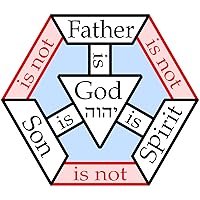
The Trinity is God as revealed in the Bible. The Bible doesn't give us a systematic statement of the doctrine of the Trinity. But that doesn't mean the Trinity is not biblical. In The Biblical Encountering the Father, Son, and Holy Spirit in Scripture , Brandon D. Smith proclaims the Trinity from the Bible. The doctrine arises not from a handful of prooftexts but from the fullness of what the Bible says about God. Through short reflections on fifteen key New Testament passages in conversation with the Old Testament, Smith shows how God’s word reveals the Trinity. The book concludes with three rules for how to encounter the truth and beauty of our Triune God in all of Scripture.
Brandon D. Smith works with the Christian Standard Bible and teaches theology at various schools. He's also the author of Rooted: Theology for Growing Christians and They Spoke of Me: How Jesus Unlocks the Old Testament, and co-hosts the Word Matters podcast. He holds a BA in Biblical Studies from Dallas Baptist University, an MA in Systematic & Historical Theology from Criswell College, and is pursuing a PhD in Theology at Ridley College in Melbourne, Australia. He lives near Nashville, Tennessee with his wife, Christa, and their two daughters.
I fell in love with the Trinity! What wonder! What awe! I Recommend this for every believer. I truly believe that to go the Deep things of God, one must know the Trinity in Unity and the Unity in Trinity. Glory be to the Father! And to the Son! And the Holy Spirit! As it was in the beginning, is now and ever shall be! World without end! Amen!
A superb little book whose worth for any Christian far exceeds its size. Smith does a marvelous job of teasing out the Trinitarian testimony of the whole canon of Scripture in clear, accessible language and in delightfully digestible selections. Moreover, and quite apart from its own tremendous devotional value, The Biblical Trinity is a wonderful spur to deeper reading and reflection upon the doctrine of the Blessed Trinity. Highest possible recommendation.
This book has quickly become my go-to recommendation for folks wanting to get their feet wet in trinitarian theology. Smith is clearly steeped in the Christian tradition, but his emphasis remains clearly focused on the triune God as revealed in Scripture.
One of my favorite little books I’ve read this year over something I knew so little about. Everything chapter is based off of Scripture and grounded in it to show how God the Father, Son, and Spirit have been present since the beginning of Genesis and will be through and beyond Revelation.
Brandon D. Smith’s The Biblical Trinity: Encountering the Father, Son, and Holy Spirit in Scripture is an accessible, concise tour of the ways in which the Christian tradition has been thoroughly Trinitarian since its first generation. “The doctrine of the Trinity was received by the Christian tradition as a faithful reading of Scripture’s presentation of God” (8). Smith demonstrates Trinitarian grammar is not a late development in the Church’s life and history, but a core theme extant in the Church’s earliest writings.
Each chapter examines a passage of Scripture to consider how that passage contributes something toward filling out our understanding of Trinitarian grammar. Each chapter ends with a brief (and memorable!) collect prayer reflecting the passage at hand, grounding the reader in the devotional nature of good Trinitarian dogmatics. Smith models precisely this devotional posture in his gladsome tone and prayerful prose meditating on what could easily be a dry cerebral introduction. The endnotes point readers to the essential primary patristic sources.
Smith shows how the Scriptures “pressure us” to say certain things about the triune God, and by this pressure we learn reliable Trinitarian grammar (25, 35, etc.). Good grammar about God guards us by providing “useful grammatical boundaries” (162). Helpfully, the introduction and conclusion offer a handful of theological principles derived from classic Trinitarian language (like “hypostatic union”) to demonstrate these words and concepts are not forcing something alien onto the language of the Scriptures, but are instead faithful summaries that bring together the Trinitarian threads explicit in the earliest apostolic tradition (3-6; 160-3).
Right Trinitarian orthodoxy matters because it leads to right worship. As Smith points out, “The doctrine of the Trinity is a call to worship, not a call to mere theological facts” (27). One notable illustration of this is seen in Smith’s chapter on Philippians 2. After Paul’s hymn honoring the shocking vertical move of the Son of God in his self-emptying to become one of us, Smith shows how Paul’s letter concludes that therefore “we should be willing to sacrifice ourselves for the sake of others, even if it means not exploiting or grasping after the advantages we possess…as followers of Christ who walk in the Spirit, we become servants of all” (120-1; emphasis original). Paul’s moral theology only works if classic Trinitarian theology is correct.
Lexham’s design team have produced another beautiful cover and overall look. My one (minor!) complaint about the design, something that will likely only bother a minority of readers, is that the chapter titles run down the margin of each page rather than across the top. This takes away valuable marginalia space for notes! No doubt tens of others will agree.
This book is good pastoral theology on display, translating historical, catholic theology into intelligible prose for any audience. Highly recommended.
Disclosure: I received a copy of the book for free from the publisher. I was not asked to provide a positive review, and this in no way affected my review.
A solid little book. Definitely geared more toward neo-Arians (i.e., Mormons, Jehovah's Witnesses) than neo-Sabellians (i.e., oneness pentecostals). Unfortunate, because I read through this to see about gifting it to somebody in the latter camp. I might still, because there's still relevant material -- it's just further from the forefront than I would have liked.
For whatever reason this book just did not do it for me. I had high hopes for it, but I think the writing style was not my preference. The 15 passages are significant and profound , but I didn’t get the practical takeaways and insights I expected regarding the Trinity.
“I have chosen passages that offer some of the clearest examples of the doctrine of the Trinity. Some texts are focused on the interactions of all three persons, and others may focus primarily on the Son or Spirit, but all help build a full-fledged biblical doctrine of the Trinity. These texts and many others are not in competition with one another. It's not as though some are more ‘Trinitarian’ than others. Instead, what we find is a choir of voices across the biblical canon that sing a beautiful song about our triune God. It's my ultimate hope that this book sparks or renews your love for our triune God and his Scriptures, that you may hear his song as you read its pages. Though in many ways the Trinity is a mystery to us, nonetheless God has meaningfully revealed himself to us in Scripture in this way” (9).
This is one of the concluding sentiments to Brandon Smith’s extremely accessible work on the unified canonical witness to the Triune God. Smith makes it clear that there is no way to ponder God and speak about God Christianly without recognizing and beginning with God as Father, Son, and Holy Spirit (Gregory of Nazianzus and T. F. Torrance would heartily agree with this idea). Throughout each chapter, Smith picks a wide selection of New Testament texts and highlights their relation to Old Testament passages to show how the biblical texts’ grammar and logic lead us to recognize one God in three persons who act inseparably and receive equal glory and praise. Indeed, the inseparable operations and the equality of glory among the persons of the Trinity are the key Trinitarian themes Smith traces throughout the biblical texts, but there are a lot of other goodies here as well. Smith demonstrates excellent interpretation of biblical texts as he employs a theological-canonical hermeneutic, and he also demonstrates great familiarity with the writings of the Church Fathers. This is book that I would easily recommend to fellow Christians in my church wondering about the biblical basis for the doctrine of the Trinity. Smith makes clear that the doctrine cannot be derived from mere proof texts or word studies in Scripture. A different kind of biblical reasoning is required. My only critique is an editorial one as I noticed a few typos throughout and like one or two clunky sentences, but this did not take away from the content at all!
This book by Brandon Smith offers a helpful exposition of how the doctrine of the Trinity arises from the biblical witness. It also shows how the doctrine fittingly expresses the biblical grammar about God (i.e., the way that the Scriptures refer to the persons and describe their relations to each other). Each chapter examines a separate passage of Scripture and provides a contextual reading that relates to an aspect of Trinitarian understanding. Smith concludes each chapter with an explicitly Trinitarian prayer.
The book is brief, and succeeds as an excellent primer on the doctrine of the Trinity as well as the interpretive issues that led the church to express the doctrine in its classical creeds. I highly recommend the book to readers of all types, especially the interested layperson or those tasked with instructing believers in the foundational teaching of the church. The book is brief and accessible yet substantive. Thus, it would work well as a book for a church reading group to discuss together. Warmly recommended.
Great book. Accessible, warm, biblical. I agree with all of the reviews on this novel so far, and would recommend it to any friend hoping to learn more about the Trinity. The Trinity is an essential doctrine of Christianity and needs to be understood correctly; I'd feel safe (and excited) to share about it through Smith's work. _______ And for anyone stumbling across this book who has no idea what this 'Trinity' is, here's a quick overview:
There is one God revealed in three persons-- the Father, the Son, and the Holy Spirit. Each person is eternally and equally God and operates in a distinct manner that aligns in attribute, mind, and will. (Deuteronomy 6:4 ; Matthew 28:19 ; Colossians 2:9 ; 2 Corinthians 13:14 ; Luke 3:22)
Also check out the Nicene Creed from 325AD... the OG trinitarian belief statement!!
Feels weird giving this 3 stars.. it was very theologically sound and so scriptural based, it just wasn’t my most enjoyable read. It felt very repetitive, but then again, the point is to hammer the nail on the head of the Trinitarian God. Also, as much as we want to wrap our head around the profound mysteries of the Trinity, we will never be able to fully fathom it. Still would highly recommend this book for people who struggle to find the Trinity in scripture!!
Short, simple, and biblical. Smith provides us with the basic categories of Trinitarian thought, and then proceeds to walk through more than a dozen pertinent passages that present us with a Trinitarian view of God. A good, short introduction to the doctrine of the Trinity.
A helpful and accessible introduction to trinitarian theology. Smith shows how the entirety of Scripture is characterized by a focus on the Father, Son, and Spirit as one nature and three persons. This is a great book for anyone wanting to better understand the core doctrine of the Christian faith.
Really enjoyed this book. Although I prefer a more systematic format for my theology books I know many will appreciate the way this book is written. It takes a verse/trinitarian concept each chapter and starts to develop a robust understanding of what it means for God to be triune.
This book is valuable in three ways—it is biblical, devotional, and readily accessible for pastors, seminarians, and anyone wishing to find answers about the Trinity or grow their faith in the Triune God.