The year is 1016 and England burns while the Viking armies blockade the great city of London. King Ethelred lies dying and the England he knew dies with him; the warring kingdoms of Mercia, Wessex and Northymbria tremble on the brink of great change. One man lives to bear witness to the upheaval: Godwin, barely out of boyhood and destined to become one of his country’s great warriors.
When Ethelred’s son Edmund takes the throne, determined to succeed where his father failed, he plucks Godwin from domestic peace to be right-hand man in his loyal shield wall. Godwin must traverse the meadows, wintry forests and fogbound marshes of Saxon England, raising armies of monks, ploughmen and shepherds against the Viking invader. With epic courage and ferocity, Godwin and Edmund repel the butchering Danes in three great battles. But an old enemy, the treacherous Earl Eadric, dogs Godwin’s footsteps, and as the final battle approaches, around the valiant English the trap begins to close.
Justin Hill is an English novelist whose work has three times been nominated for the Booker Prize. In 2001, The Independent on Sunday named him one of the UK's Top Twenty Young British Writers.
Born in Freeport, Grand Bahama Island, he grew up in York and studied Old English and Medieval Literature at Durham University. After graduating, he spent seven years working with Voluntary Service Overseas in rural China and Eritrea.
He travelled overland from China to Europe twice, once on the Trans-Siberian Railway and once back packing through Xinjiang, Kashkar, and down through the Hindu Kush. His time in Eritrea ended dramatically in June 1998, when he was airlifted out through a recently bombed airport, with Ethiopian fighter jets circling overhead.
His experiences in China inspired his early writing, including A Bend in the Yellow River and his internationally acclaimed first novel, The Drink and Dream Teahouse. The latter won the Geoffrey Faber Memorial Prize and a Betty Trask Award, was chosen by The Washington Post as one of the top novels of 2001, and was banned in China.
His second novel, Passing Under Heaven, an imagining of the life of the ninth-century Chinese poet Yu Xuanji, won the Somerset Maugham Award and was shortlisted for the Encore Award. Ciao Asmara, his account of his years in Eritrea, was shortlisted for the Thomas Cook Travel Book Award.
His fascination with the early medieval world brought him back to the history of his native Yorkshire and the events leading to the Norman Conquest. His Conquest Series began with Shieldwall, set in Anglo-Saxon England, which was chosen by The Sunday Times as a Book of the Year. Viking Fire, which follows the extraordinary life of Harald Hardrada, the last great Viking king, was a Times Book of the Year.
He was also selected to write Crouching Tiger, Hidden Dragon: Sword of Destiny, the novelisation of the sequel to the Oscar-winning film, returning him to the history and landscapes of China.
His books have been translated into seventeen languages and have received recognition from The Times, The Sunday Times, The Independent and The Washington Post.
He lives in the foothills of the North Yorkshire Moors.
Los ejércitos vikingos daneses asedian la gran ciudad de Lundenburh y asolan todo el país. El rey Ethelred yace moribundo y su amada Inglaterra muere con él. Los cimientos de los beligerantes reinos de Mercia, Wessex y Northymbria se tambalean ante los grandes cambios que se avecinan.
Godwin de Wessex, un aristócrata sajón, soporta el peso de haber sido testigo de tanto horror, y estará llamado a convertirse en uno de los más grandes guerreros de su país.
Cuando el hijo de Ethelred, Edmund, sube al trono, decidido a acabar con los daneses, convierte a Godwin en su mano derecha y principal consejero. Godwin atravesará campos, bosques helados y brumosos pantanales, y levantará a monjes, campesinos y pastores contra el invasor vikingo. Godwin y Edmund repelerán, con gran valor y tenacidad, el ataque de los despiadados daneses en tres grandes batallas.
Pero un antiguo enemigo, el traicionero conde Eadric, espera el momento oportuno para traicionarlos…
Buena lectura histórica. Recomendable. Tiene partes que salen de la mente e imaginación del autor pero hoy en día es algo normal para completar la novela.
Emocionante, apasionante e imaginativo. Una buena novela histórica vikinga. Con maravillosos pasajes, Hill con su ambientación se remonta a los salones de antepasados sajones en esos días oscuros, aventureros y crueles.
Se nota la influencia de las sagas. Como de la poesía anglosajona. Se trata de un libro para lectores históricos hambrientos de aventuras y desventuras vikingas que nos desvelan y narran hazañas de guerreros. Y guerreras.
Agradezco cuando ponen personajes femeninos, también eran unas guerreras preparadas para defenderse y luchar.
Interesante novela histórica con parte ficción pero enormemente basada en hechos reales del siglo XI. Siglo oscuro.
El lenguaje y la documentación utilizados dan una sensación de realidad e historia viva. Y eso nos ayuda a meternos de lleno en cada lugar.
La trama es una parte histórica importante y decisiva. En la que admito mi previa ignorancia.
Los personajes son coherentes con la época, son lo que son y el libro tiene un buen ritmo.
A estas alturas que he leído varios y me quedan pendientes por reseñar, no ha sido el mejor de todos ellos, un poquito menos, pero sí una buena lectura que ha merecido la pena..✍️🎩
I heard Justin Hill speak about this book at a Medievalist conference earlier this year, and I bought it on the spot. The story is set in the same historical period in which I am writing, and because I am attempting to tell a story that focuses on the women of this time, I was interested in seeing how a male author would deal with the same material and characters. What I found were similarities – after all, we based our stories on the same events – and huge differences.
In Hill’s book I could see the influence of the sagas, of Anglo-Saxon poetry, and of Professor Tolkien’s trilogy about Middle Earth. It is a man’s book, telling of the deeds of warriors, although kudos to Hill for giving small but significant roles to his female characters: to the fictional Kendra, to King Æthelred’s mother, and to Queen Emma. (He manipulates the historical time-line with Æthelred’s mother, but I could see why and this is, after all, fiction.
Hill does not shy away from describing the horrors of battle in the 11th century. It is well done, although one particular battle scene goes on a bit too long for this reader. As I said, it’s a man’s book. For me, the high point of the novel, and of Hill’s writing, comes near the end, where Hill’s prose is brilliantly moving, especially if one is familiar with the history of that pre-Conquest world. Although Godwin is the main character in this novel, Hill’s Edmund Ironside is beautifully and sympathetically drawn as he defends his kingdom against the Danes. Hill gives us an inspiring portrait of this Anglo-Saxon king, writes him as he should be written, like the warriors in the sagas of old.
Shieldwall is, I think, the best evocation of late Anglo-Saxon England that I've read. It's the turn of the second millennium and England is cursed with probably the worst king it has ever suffered - Ethelred - and also, strangely but equally, the country is cursed with a people that are too faithful to their unworthy king. Despite Ethelred's cowardice, duplicity and treachery, they stick with him through everything. Hill does a fine job of showing the reader how intertwined the House of Cerdic, the kings of Wessex, had become with the very idea of England, so that, despite Ethelred's manifest incapacity as king, no one attempted to depose him. The author shows us an England that is still strong in its bones, in the deep layers of its society, but with its sinews wasting away before the depredations of the Danes and the treachery of some of the English nobility. Although at times a difficult read, there is perhaps no more apt Anglo-Saxon era to write of, for their poetry is suffused with regret, with the passing of things and the transience of life, and this is the history of the eventide of a culture and civilisation.
The only real drawback to the story is that it is almost too painful to read, but the author draws the reader along with prose that's muscular and, often, stamped out with the alliterative metre of Anglo-Saxon verse. It might be an easier read for someone unfamiliar with the history of the period, but for me, knowing what was coming next, meant that there were days when I couldn't bring myself to pick the book up and read further. As the first part of the Conquest trilogy, I suspect things are not going to get better! However, I will wait for volumes two and three with mingled eagerness and trepidation.
My only real criticism is that the paperback edition I read had a surprising number of proofreading errors. For the next edition it might be worth going over the text again. Otherwise, an enthralling, if painful, read.
I'm giving up on this book. I had to pause it to do a group read and while it wasn't thrilling me when I paused it, it did even less for me when I restarted it. It is one of those weird books that has an important plotline from the middle of the book at the start, which effectively ruined the start of the book for me. I do not like spoilers at any stage of a book. The author led in with the protracted death of a main character and I thought the story would take off from there, only it didn't. Instead it went back in time a few years and the first half of the book dealt with this character when alive. It was a bit awkward and all over the place and I don't feel it worked in the books favour. So how can I rate it 3 stars when I didn't finish it? WellI don't always feel you have to finish a book to rate it and I feel you can still give a book 3 stars without finishing it. I lost interest, but it was still not a bad book. It wasn't awful and I am rating it off what my feelings were as i read the first half. I did 'like it'. The writing was very fair, it is just that I have so many books waiting for me that Shieldwall had to fall through the cracks. I may try Shieldwall again. At a later date. And I will reassess my 3 star rating then. It is supposed to be the first in a trilogy and I do like series' and trilogies, so, maybe Shieldwall and I shall meet another day.
What a delightful surprise! I did not have great hopes for this from reading some of the reviewers' takes on it but it was excellent! Historically as accurate as you can be about a poorly recorded era, the language evoked an earlier time without ever descending into 'writing forsoothly'. The story is about Godwin, the father of Harold Godewinson, a particular historical hero of mine, and also necessarily covers Edward Ironside, another. The author never makes them superhuman and certain passages so clearly evoked the thoughts and feelings that the character could well have had that it took my breath away. He also wrote a good Author's Note, with convincing justification for any liberties taken.
One reviewer called it 'a man's book' - another writer, too - but I completely disagree with that comment.
Great historical fiction based around factual events in the early 11th century. The language and the meter used gives a real sense of place. The characters are likeable and strong and the book well-paced. Thoroughly enjoyable.
As I studied this period at degree level, I was braced for the worst... however I was very impressed, especially by the author's subtle inclusion of contemporary sources, such as charters, poems and the Chronicle into the dialogue and text.
Wow! I felt like I had lived a whole life through this book and in a way we have and a life of one Godwin Wulfnothson. You may only recognise the first name and not the last. This because as much as an incredibly hard yet deeply honourable life Godwin led we all know more about his son, Harold. I shouldnt have to explain why. I think the reason I loved this story so deeply is due to the little details, small glimpses, daily delights that kept reminding me as a reader that all these characters were people were human. That they all had dreams and desires. They did have weaknesses as well as strengths and could all act out for good or for bad. And they all often had to make life changing decisions that challenged their world view or even faith in what was right and what was wrong. Prime example being the way Edmund Ironside, once King, accepted Eadric Streona, a known traitor, back into the fold simply to try and keep the peace. Although I am not ashamed at admitting I restrained a cheer in a public place when I read his fitting end *sorry spoiler alert*. I have not read many stories from the Anglo-Saxon point of view during this most turbulent part of English history - a darn sight more complicated than the War of the Roses and even Civil War! As much as I am a fan of Cnuts achievement as King and Queen Emma for surviving 4 Kings (2 Husbands, 2 Sons) I in the end felt great pity for the common English people who had to live during all this. From the mistakes of Ethelread & Sweins invasion through the many close victories but stubbon failures of Edmund against Cnut. This was a hugely enjoyable read and really brought history to live through superb imagery of scenes, landscapes, weather and the details from clothing, travel, food, location, language and actions of the low and high born. I really cant understand how it has sat on my Kindle so long unread apart from probably reading too many other good books. I look forward to its hopeful sequel portraying the peaceful reign of Cnut and the emergence of Harald but there are storm clouds on the horizon (if you know the history you know what is to come, 1066 is some way off yet).
There seems to be a fair amount of books coming out from this time period at present...and me I'm happy as larry about it...(who is larry BTW??) anyway, the book is well written if after a well paced start it slows for a touch then slowly picks up paced into a tale that lifts the reader and takes him along with the changes in the History of England. I'm the type of reader who likes to be educated while i read but not at the expense of the pace and the plot, this is fiction after all, Justin keeps his audience all the way and manages it while sticking to the majority of accepted history (i use that phrase because, history has been written and altered by the victors, and also for selfish reasons, none of it includes the common populace of the time, so there is a fair amount we have to be sceptical about IMHO.) This is a title that's well worth going out to buy, i highly recommend it. (Parm)
I was drawn to Shieldwall because it's set in the early 11th century during the final years of Ethelred The Unready's reign,and then his son's,King Edmund II or Edmund Ironside,all to brief reign. As far as I'm aware it's the first time this era has been given the historical fiction treatment. The central character is Godwin Wulfnothson,who later became the Earl Of Essex,and is the father of King Harold. Godwin is befriended by Edmund when they're children and we travel with them through the next few years and their constant battles against the Danes,most significantly Cnut or Knut who also later became king. There's also much in-fighting amongst the English caused mainly by Earl Eadric,ealderoman of Mercia who is considered the greatest traitor of the Anglo-Saxon period,and Ethelred's supposed apathathy/weakness. I really enjoyed this fly on the 'shieldwall' of shadowy Anglo-Saxon history. Godwin and Edmund are heroes of their era and Eadric is a very good baddie!
4.5 stars as Shieldwall was absolutely fantastic. The beginning was a little slow and the ending felt slightly rushed, but everything inbetween was great. The descriptions and the voice of the novel are lovely - I really felt like I understood the time period and was able to become immersed in it. The way that Hill was able to build up the Anglo-Saxon culture without spelling it out impressed me. The other element I found very well balanced was the blood and guts, which while being healthily spread throughout the book never feels too overdone, which I always appreciate in books. Violence and death, while a fact of life for the characters, was never cheapened.
I also thought the characterisations were great. I got to know them all very well in a short space of time, and they all felt three dimensional and really lifted out of the page. I'm really looking forward to the next book in the series!
Read this a long while ago now, but its one of those books that really lives on in the mind. The start of a trilogy that will end in 1066 and...you know what. It covers the early life of Godwin Wulfnothson, who will one day father a King of England, not to mention the wife of his son's predecessor. This book is immersive, never before have I been thrust so deeply into eleventh century England, never again will I. It makes Cornwell's The Last Kingdom series seem weak and two dimensional. You see what Godwin sees, smell what he smells and feel the emotion and heartbreak of a young life spent at war. The story is one that is sparsely told, and covers the life of Edmund Ironside and Ethelred the Unready whose stories are sadly rarely told.
If that isn't enough to make you grab this book, then I can tell you that the sequel, Viking Fire, is perhaps even better!
3.5 stars -- I rounded up. I wasn't sure about this book at first, and put it down for a long time. I'm glad I picked it up again. This is the first book I've read about events in England leading up to Hastings in 1066. Mr. Hill makes that history very intriguing, even captivating. Really enjoyed it, have the next title and am starting it as soon as I'm done here!
Shieldwall by Justin Hill is the first book in a planned trilogy encapsulating the historical events that surround the Battle of Hastings and the fall of Anglo-Saxon England. Hill is an established and award winning writer, but this is his first foray into English historical fiction.
The Story
Shieldwall is set roughly 50 years before the Battle of Hastings, and is the story of Godwin Wulfnothson’s rise to power from hostage son of an Anglo-Saxon Thegn to the Jarl or Earl of Wessex. It’s a story of battles, bravery and betrayals. History has recorded facts about Godwin but not his story. Hill takes what scant historical information exists of the period - those fixed points in time, and using knowledge of Anglo-Saxon culture crafts a poetic and engaging story around them.
We follow Godwin from his boyhood, we see him build friendships, alliances and enemies. The books strongest themes appear to be honour and honouring your word. Indeed the villain of the piece embodies the exact opposite,conniving, self serving and liable to change allegiance as soon as it’s in his interest.
Who the hell is Godwin?
Despite this era holding a great deal of interest, particularly for historians, popular culture depictions of Godwin are rather scarce. There’s a couple of movies that feature him, one made in the 50’s and one due out this year – 1066,but that’s about it.
Godwin was the father of King Harold Godwinson or Harold II, the last Anglo-Saxon King of England, who fought against the Normans at the battle of Hastings and lost.
Not my usual fare
Shieldwall is a bit of a departure away from my normal reading(ie Speculative Fiction). That’s not to say that I don’t like Historical fiction, indeed I have an educational background in history(mostly North Australian and South East Asian). Shieldwall was, however, one of those unexpected gems that you get as a reviewer, a pleasant surprise that tapped into my love of history in general and fired my imagination.
The book is set in that period of English history between Alfred the Great and the coming of William the Conqueror. If you are a fan of Tolkien’s Rohrirrim (The Rider’s of Rohan) this period is more or less the fertile soil from which they grew. All that alliterative naming – “Eomer son of Eomund”, the great poetic war speeches of Theoden, have their roots deep in Anglo-Saxon culture.
Breathing life into history
Not all of us are fans of Time Team (hard to believe, but true). History can become a bit of a bore when it’s just names and dates and battles. A good writer of Historical fiction is one who can make those names and events come to life. Shieldwall ’s success I think, has to be judged on its historical accuracy, and the believability that Hill generates as he leads us between the fixed historical points.
In that sense, I find Shieldwall to be a success. Not much is known of Godwin Wulfnothson, particularly his early life, he pops up at important junctures and finally becomes the Earl of Wessex under a King he fought against.
Hill’s knowledge of Anglo-Saxon culture and his use of poetry in the Anglo-Saxon tradition breathes life into what could have been a pretty bland retelling of events separated by a number of battles. Hill manages to give us a believable story, and a believable and very human character.
Criticisms
There have been others, perhaps with a focus more on the historical rather than the fiction that have pointed out some blatant anachronisms. For myself, not being invested heavily in the period, I didn’t find this a distraction.
What I noticed more were the female characters presented – Kendra, a slave and sometimes mistress to both Godwin and his father, a duplicitous queen, and a cast of other characters who are only participate as wives of powerful lords. Only the grandmother of Edmond Ironside comes across as a truly independent and powerful woman.
I noticed the portrayal of women and I have to ask, is Hill being true to history and giving us an accurately portrayal of a male centred culture, or has a filter been placed over our interpretation of the period? Could Hill, as he is writing fiction, have presented a female character who wasn’t a sex object or man’s possession?
The book is Godwin’s story and perhaps I am being harsh?
Judgement
I found Shieldwall a pleasant read, the description of battles was gutsy and exciting, the description of fear and the urge to pee before a battle added a certain verisimilitude.
It was evocative in its portrayal of Anglo-Saxon England and Hill has given me, in Godwin, a character who I am interested in following, as he marches on to become one of Anglo-Saxon England’s most powerful figures.
Shieldwall by Justin Hill is the first book in a planned trilogy encapsulating the historical events that surround the Battle of Hastings and the fall of Anglo-Saxon England. Hill is an established and award winning writer, but this is his first foray into English historical fiction.
The Story
Shieldwall is set roughly 50 years before the Battle of Hastings, and is the story of Godwin Wulfnothson’s rise to power from hostage son of an Anglo-Saxon Thegn to the Jarl or Earl of Wessex. It’s a story of battles, bravery and betrayals. History has recorded facts about Godwin but not his story. Hill takes what scant historical information exists of the period - those fixed points in time, and using knowledge of Anglo-Saxon culture crafts a poetic and engaging story around them.
We follow Godwin from his boyhood, we see him build friendships, alliances and enemies. The books strongest themes appear to be honour and honouring your word. Indeed the villain of the piece embodies the exact opposite,conniving, self serving and liable to change allegiance as soon as it’s in his interest.
Who the hell is Godwin?
Despite this era holding a great deal of interest, particularly for historians, popular culture depictions of Godwin are rather scarce. There’s a couple of movies that feature him, one made in the 50’s and one due out this year – 1066,but that’s about it.
Godwin was the father of King Harold Godwinson or Harold II, the last Anglo-Saxon King of England, who fought against the Normans at the battle of Hastings and lost.
Not my usual fare
Shieldwall is a bit of a departure away from my normal reading(ie Speculative Fiction). That’s not to say that I don’t like Historical fiction, indeed I have an educational background in history(mostly North Australian and South East Asian). Shieldwall was, however, one of those unexpected gems that you get as a reviewer, a pleasant surprise that tapped into my love of history in general and fired my imagination.
The book is set in that period of English history between Alfred the Great and the coming of William the Conqueror. If you are a fan of Tolkien’s Rohrirrim (The Rider’s of Rohan) this period is more or less the fertile soil from which they grew. All that alliterative naming – “Eomer son of Eomund”, the great poetic war speeches of Theoden, have their roots deep in Anglo-Saxon culture.
Breathing life into history
Not all of us are fans of Time Team (hard to believe, but true). History can become a bit of a bore when it’s just names and dates and battles. A good writer of Historical fiction is one who can make those names and events come to life. Shieldwall ’s success I think, has to be judged on its historical accuracy, and the believability that Hill generates as he leads us between the fixed historical points.
In that sense, I find Shieldwall to be a success. Not much is known of Godwin Wulfnothson, particularly his early life, he pops up at important junctures and finally becomes the Earl of Wessex under a King he fought against.
Hill’s knowledge of Anglo-Saxon culture and his use of poetry in the Anglo-Saxon tradition breathes life into what could have been a pretty bland retelling of events separated by a number of battles. Hill manages to give us a believable story, and a believable and very human character.
Criticisms
There have been others, perhaps with a focus more on the historical rather than the fiction that have pointed out some blatant anachronisms. For myself, not being invested heavily in the period, I didn’t find this a distraction.
What I noticed more were the female characters presented – Kendra, a slave and sometimes mistress to both Godwin and his father, a duplicitous queen, and a cast of other characters who are only participate as wives of powerful lords. Only the grandmother of Edmond Ironside comes across as a truly independent and powerful woman.
I noticed the portrayal of women and I have to ask, is Hill being true to history and giving us an accurately portrayal of a male centred culture, or has a filter been placed over our interpretation of the period? Could Hill, as he is writing fiction, have presented a female character who wasn’t a sex object or man’s possession?
The book is Godwin’s story and perhaps I am being harsh?
Judgement
I found Shieldwall a pleasant read, the description of battles was gutsy and exciting, the description of fear and the urge to pee before a battle added a certain verisimilitude.
It was evocative in its portrayal of Anglo-Saxon England and Hill has given me, in Godwin, a character who I am interested in following, as he marches on to become one of Anglo-Saxon England’s most powerful figures.
Inglaterra está en el cambio de milenio. El rey Ethelred se está muriendo, al mismo tiempo que su país. Un hombre tendrá que levantarse para hacer frente a todo esto: Godwin de Wessex. El nuevo rey, Edmund, decide hacer frente a los vikingos y nombra a Godwin como mano derecho. Este se va a encargar de crear un ejército para expulsar a estos invasores de sus tierras, pero la traición se va fraguando en su propio país. Una trama llena de batallas, de héroes, valentía y de traiciones.
La historia tiene como protagonista a Godwin de Wessex, el padre de Harold II (último rey de la Inglaterra anglosajona). Es, por lo tanto, un héroe anglosajón, quizás poco conocido en nuestro país por la época (Edad Media, siglo XI) y por el país, pero muy interesante. No es mucho lo que se conoce de Godwin, pero el autor ha hecho una labor extraordinaria para crear una novela. Aquí no entraré si el autor ha presentado los hechos históricos reales o ha introducido parte de la imaginación (no soy experto en el tema ni es mi cometido).
Esta novela tiene una notable influencia de la poesía anglosajona y de las sagas vikingas. Hill ha elegido este momento bastante complicado para la historia de los anglosajones. El rey Ethelred era un rey traicionero, malvado, pésimo, pero con un pueblo muy fiel. Además tenemos a los daneses (vikingos) con sus continuas invasiones y a los nobles ingleses con sus traiciones. Una época muy convulsa para la historia del país.
La pluma de Hill es sublime. Hace unas descripciones de las batallas muy reales, a veces un poco largas. Una prosa que atrae, muy dura, muy bien escrita. Es muy detallista, en todos los aspectos, y eso le da también valor y calidad a la obra. El ritmo también es constante, pues está lleno de intriga, drama y acción. Una buena novela histórica con la que aprenderemos también historia.
Yes, the same Justin Hill wrote "the Drink and Dream Teahouse" and at first, it's difficult to reconcile the fact that two so seemingly different books were written with the same pen. But, once you start reading Shieldwall, what seems like a straight up serving of medieval historical literature quickly becomes a homage to and reflection of the Anglo-Saxon poetry that clearly inspired it. A ripping, exciting read that's good for you, too.
Breathtaking historical novel set around the events leading up to the battle of Ashingdon in 1016. England is in peril King Ethelred is dying and his son, Edmund Ironsides, takes a young man, Godwin to his side and together they ride to war against King Knut and the fearsome Danes. Stunningly told and very gripping. The battle descriptions are awesome.
Set in 1016, this is the story of Godwin and his loyalty to his king Edmund Ironside and their fight against the Danes and Knut. This is a well researched, historical novel. The author sticks to the historical facts as much as he can, telling a plausible story where there are no facts. The characters are believable, the battle scenes are gory, the story well written.
Very good book. A little surprised at the ending, but at the same time it clears up any time line issues with the next book (if that makes sense). Definitely worth a read.
I am an emotional reader. If some people have lost, or cannot, become so engrossed in the stories they read to the point of laughing or crying, well, I can, and just let me tell you this: Justin Hill is today’s Tolkien. You don’t believe me, I know, but you should and I will tell you why. I have this special little place in my head, and it looks like a Valhalla for writers. All the best authors sit at the same long table feasting and telling each other stories. Justin Hill sits at that table right next to Tolkien. Now let me tell you just how Dr. Hill won that seat. On a fine day as per usual, I was fumbling for new books on Amazon looking for more of that amazing historical fiction and I stumbled upon Justin Hill’s author page. I opened the preview for ‘Viking Fire’ (I was not yet aware it was the second book in the series), and I began reading the introduction. Next thing I know the physical world around me went, poof! “Okay,” I told myself, “This is promising… this is really promising. Let me just read on a little more…” and as I did, I also began stuffing my travel bag for the 11th century, when suddenly I read the opening line of PART 1:
“Harald Hardrada: Here, man, give me your hand. I will not kill you…”
I could be wrong but I think I physically reached out for Harald’s hand, and maybe I did because after that line I was gone (and I hardly cared I’d left my luggage behind!). Harald Hardrada was talking to me, he was summoning me, and I had no other choice but to follow him and listen. From there all I remember is reading poetry. It just flowed one word after another. I wanted to stop because I wished to enjoy that preview as slowly as possible, but I just couldn’t help myself and the preview reached its end. And so I just stood there staring at the last lines, blinking, breathless, and yearning for more. I immediately ordered Shieldwall and Viking Fire physical copies and even grabbed their digital copies. No regrets.
This is a review for Shieldwall, but you can find my review of book 2 on Viking Fire's page. Shieldwall is the first entry in Hill’s Viking trilogy (he is yet to release book three but he has confirmed he is writing it!). Shieldwall met all my needs and wants: historical realism, a gripping plot, characters that came alive, Anglo-Saxon poetry even! It was classy and gritty. The perfect combination of intelligent, Tolkien-like read, but not one afraid to show the grittier, romance-less side of everyday life. Shieldwall narrates the events that occurred during the 11th century Anglo-Saxon England through the life and eyes of Godwin Wulfnothson, son of Cid Wulfnoth, and right hand to the brave King Edmund Ironside. I loved how Hill started the first few chapters through Cid Wulfnoth’s eyes for he is a great character and his actions are what defined Godwin’s life story, hence putting the whole story in motion, and the moved back in time showing Godwin’s childhood in which Godwin is only a boy when he finds himself crushed by his father’s actions and is abruptly forced into manhood. Godwin’s resentment and love for his father will make him into a real-life hero and guide him throughout his life like a banner bearer carries his lord’s banner ahead. Shieldwall is a testament to his bravery and that of all the brave men of England that for better or worst found the courage to fight and dream for a better future, but also a reminder that corruption and cowardice are part of history and the real world, and more often than not are the preferred choices despite the great efforts the braves put forward. It’s a disheartening reality, but reality altogether. Through its 400 pages, Shieldwall had me crying, smiling, and laughing, yes I said smiling and laughing because Shieldwall has it all despite the dark settings. Godwin is an amazing, three-dimensional, real-life hero and an utterly compelling character, with dreams, fears, and demons. Justin Hill must have known him in a past life because I am convinced Hill’s Godwin must have been the real Godwin and I will not have it any different. The author’s prose is beautiful and evocative. The battle scenes were pure perfection, long, descriptive, realistic. Some reviewers disliked the long battle scenes, but I loved them and wouldn’t want them any shorter. I am a lover of history and battles and when I read historical fiction what I want is to feel as if I am right there with my characters. I want to see the enemy’s snarling faces, hear the swinging and clinging of their swords. I want to smell the dirt and gore of battle. I want to feel the terrain and blood dry under my fingernails. Hills does all of this and more, and I hope his writing will stay true to this in all of his books. Again, Dr. Hill is a true skald or scope, whatever you prefer, matters not, for the moment you lay your eyes on one of his pages you are called upon to gather around a fire and listen in awe as he grabs his literary harps and sings his story. Justin Hill is the new Tolkien. You still don’t agree? Suit yourself, he is the new Tolkien and I will fight you over it with my Nægling if I must! *winks* (If you wish to know more about Nægling read Shieldwall!) 5 STARS !!
A nicely written and paced novel, rich with drama and intrigue and which begins at the start of a momentous period for what was beginning to become England. The 11th Century.
If '11th Century' says nothing to you - 1066 was the second half of the 11th Century. Better?
But that's not just for fun, because this is actually a novel set in England of the early 11th Century, a century of invasions, clearly. Vikings are banging on Englands door every few years, they invade and conquer a couple of times, then there's the pesky Normans, here just waiting and watching. In Normandy.
Beginning at the start of the century and concentrating on the situation in England - and wider afield sometimes - this is a story taking place before the momentous events of later on. Pre-Conquest happenings seem to have been non the less momentous as those later on, by the sounds of it. And as I found here, obviously benefit greatly from a little illumination, context and background.
But it's not just a history lesson, though it is clearly well researched, and not just fleshing out the bare bones of history. Wikipedia could have told me that (and I did have to check a couple of times, to see if the characters were who I thought they were). Here, Justin Hill's writing really brings the period to life, the landscape, the people, the politics, the prevalent mentality of the period. Fully formed and thoroughly immersed, I think you might say it is and one becomes.
We follow, at the start of the book, one Wulfnoth, who seems to have become an Anglicised ex-Viking invader. Then for the majority of the novel, his son Godwin guides the story through the period. And if you add a '-son' to his name, as was the habit in those days, if you know anything at all of the period, you'll understand the significance of the person Justin Hill is writing about. Whilst they are the embodiment of a people becoming 'English', they are also Viking invaders of the first wave. Now fighting against new Viking invaders, to form an new land, their land, 'England'.
So this is the situation in England before the Norman conquest of 1066, that James Aitcheson and James Wilde are currently writing so evocatively about the after effects of. Where James Aitcheson's stories of the Norman knight 'Tancred' show the invaders' side and James Wilde's 'Hereward' series is about the guerrilla war of English resistance to the conquerors, this is a much more relaxed, panoramic view of the the events leading up to the conquest. As I say, there is drama and intrigue, politicking (and later, action) aplenty. And it is all handled with a confident, fluidic surety by Justin Hill. I think this is his first foray into the Historical Novel field, though you'd never know it. You can tell he had great fun writing this one, that's clear from some lovely descriptive passages that are almost lyrical and must have felt lovely when just written. The book has in parts, an almost dream-like feel to it. You can feel him looking back into history, trying to see into the mists, attempting to make sense of and see what is forming. Then there come passages and events clear, sharp and bright. And heart-pounding action, of course. Best I can sum it up as.
Interestingly, if he's got his research right and I can only presume he has, this is an England being formed by and fought over, by what we would think of as boys, young men at best. Godwin is barely 19 at the end of this, Knut is I think a little younger, and all the other main characters, Ethelred apart, are very young men.
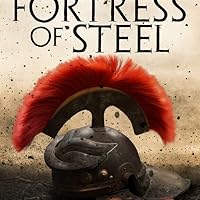
If there was one quibble I had, it was the lack of meaningful action (by which I mean, fighting) in the first half. I saw somewhere he was writing a trilogy and even with having to follow historical events pretty closely (by which I mean that if there weren't any battles, you can hardly write about them, can you?), there could have been a bit more mayhem at the start, even if you are largely setting up for a trilogy. The front cover illustration (of the paperback version I have) is also a bit non-descript. Not gonna be leaping off the shelves with that one.
Oh yeah, if I might recommend one thing to the author/publisher; it would be to change the photo of Justin Hill in the back cover (of the paperback version I have). To something more 'read my book, you'll really enjoy it'- like. Rather than the current 'read my book - or I'll break yer legs!'
The year is 1016 and England burns while the Viking armies blockade the great city of London. King Ethelred lies dying and the England he knew dies with him; the warring kingdoms of Mercia, Wessex and Northymbria tremble on the brink of great change. One man lives to bear witness to the upheaval: Godwin, barely out of boyhood and destined to become one of his country’s great warriors.
When Ethelred’s son Edmund takes the throne, determined to succeed where his father failed, he plucks Godwin from domestic peace to be right-hand man in his loyal shield wall. Godwin must traverse the meadows, wintry forests and fogbound marshes of Saxon England, raising armies of monks, ploughmen and shepherds against the Viking invader. With epic courage and ferocity, Godwin and Edmund repel the butchering Danes in three great battles. But an old enemy, the treacherous Earl Eadric, dogs Godwin’s footsteps, and as the final battle approaches, around the valiant English the trap begins to close.
My review: I found this book in a library, and without hesitation, I borrowed it. 😂 The cover caught my attention first, and after reading the title, I became even more curious. This was my first time reading a novel by Justin Hill, and I'm really glad I gave it a chance.
I found this book very well written. I've heard people describe Hill's writing as poetic, and after reading Shieldwall, I completely understand what they mean. His writing has a beautiful, almost poetic style, especially when describing the battles.
And damn, I loved the battle and action scenes. They're poetic yet brutal at the same time, and I fucking loved it. It's not something I usually expect from a war novel, but Hill somehow makes the violence and chaos of battle feel almost beautiful through his writing.
I'm really glad I found this book in that library because otherwise I might have missed it. This was a great introduction to Justin Hill's work, and I definitely want to read more from him.
This book is not typical of this type of fiction. It was a good and enjoyable read, not quite in the same league as Bernard Cromwell's Uhtred series or Giles Kristian's Raven series, but I look forward to reading the follow-up.
The author made great strides to try and develop the character, although this led to the story meandering somewhat and failed slightly because the love-interest in the story is not a particularly interesting character to the reader. Also the story seemed to rush to a close - it could have been better balanced in terms of what was covered. The author also didn't follow the modern trend of going to great detail in relation to either the sex scenes or the gore in the battle scenes. This isn't good or bad - just different!
The biggest bonus from reading the book was to get an insight into the historical time it was set in - a period that seems to be overlooked in general. Overall a book that is definitely worth reading - a 7/10 for me!
I bought this book ages ago and it's sat on my bookshelf overlooked ever since. For some reason I could never quite bring myself to start reading it. However, after reading several Roman books in a row I finally decided on a change and took the plunge and I wasn't disappointed. Set 50 years before the more popular battles of 1066, this is a fascinating insight into the life of the people who lived under King Ethelred and then King Edmund. I am a huge fan of Bernard Cornwell's "warrior" series set at the time of King Alfred and this is a worthy addition to that collection. Unfortunately as far as I know it is a one off novel, but as such it was a very enjoyable read. The only problem I had with the book was having to constantly refer back to the glossary to remind myself of where places were as I found the old Saxon town names hard to remember. That's more a reflection of my failing memory though than the book.
This book just got better and better as I read it and stands as one of the best-written of any I've read, both for style and content. Its interpretation of historical events and people was outstanding. It's entertaining approach to an interesting time in English history, using good storytelling to bring alive a real story of good people and treacherous times.
I don’t know much about this period of history but I enjoyed this book and it reminded me in style of Bernard Cornwell’s books, especially the last kingdom series. There’s plenty of gory descriptions of the battlefield which gets a tad samey but I guess that’s to be expected. I enjoyed this book reservedly but I will definitely read the next book in the series.