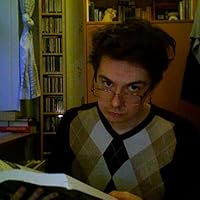
As hilarious as it is perturbing, Jon Ronson's second collection of Guardian journalism, What I Do, is a treat for everyone who has ever suspected themselves to be at the mercy of forces they can barely comprehend.In part one, read about the time Jon inadvertently made a lewd gesture to a passing fourteen-year-old girl late at night in the lobby of a country-house hotel. And about his burgeoning obsession with a new neighbour who refused to ask him what he did for a living, despite Jon's constant dropping of intriguing hints. And about the embarrassment of being caught recycling small talk at a party. In part two, read some of Jon's longer stories, which explore manifestations of insanity in the wider the tiny town of North Pole, Alaska, where it's Christmas 365 days of the year; behind the scenes at Deal or No Deal, which Jon likens to a cult with Noel Edmonds as its high priest; a meeting with TV hypnotist Paul McKenna, who has joined forces with a self-help guru who once stood trial for murder – but can they cure Jon of his one big phobia?
Jon Ronson is a British-American journalist, author, and filmmaker. He is known for works such as Them: Adventures with Extremists (2001), The Men Who Stare at Goats (2004), and The Psychopath Test (2011). He has been described as a gonzo journalist, becoming a faux-naïf character in his stories. He produces informal but sceptical investigations of controversial fringe politics and science. He has published nine books and his work has appeared in publications such as The Guardian, City Life and Time Out. He has made several BBC Television documentary films and two documentary series for Channel 4.
Mediocre. I'm a big fan of Jon Ronson, or at least I was until I read So You've Been Publicly Shamed. It was a good premise and a well-written, interesting book, but by relating people's stories of how they had been shamed, most of which had been forgotten about so quickly does the internet move on, it re-shamed people. But this book is just plain mediocre.
The first part is a diary showing that Ronson is just as mean-minded, venal, self-serving and egotistical as the rest of us via anecdotes that aren't always amusing. Ronson's wife was less than amused by his antics and anecdotes so I don't know why he thought we would be falling about laughing either. Still, some were amusing, although waiting half a dozen pages for the punchline was kind of tedious.
The second part are stories from his columns and other books and I had either read them all before or was bored by them. Two and a half stars rounded up because the author comes across in this, as in all his books, as a really great guy it would be fun to go and have a burger with.
I do hope Jon Ronson is well paid for his journalism if only to compensate his wife Elaine for his indiscreet (and hilarious) revelations of the everyday bickerings and point-scoring that punctuate their marriage and parenting. The humour of course comes partly from recognizing our own marital relations in theirs.
This collection, like the earlier 'Out of the Ordinary' has plenty of such domestic scenes, making the purchase worthy in itself, but we also have Ronson's brief and fascinating immersions into the worlds of two very different cult figures united by an almost sinister command over their participant audiences; they are the NLP founder Richard Bandler and the former DJ and presenter of 'Deal Or No Deal' Noel Edmonds.
On a serious journalistic note, Ronson explores the reasons for the suicide of Richard Cullen, racked by credit card debt. Asking the question 'Who killed Richard Cullen?' Ronson is forensic in his examination of the cynical behaviour of banks and credit card companies that target financially vulnerable people like Richard Cullen precisely because they are more likely to be tempted by the lure of easy credit than those who are more financially sound. The outcome for many is a spiral effect of debt that can lead to misery or, in extreme cases like Cullen's, tragedy.
Whether you want to go to Jon Ronson for his self-deprecating humour or his insight into some of the more baleful and inisidious influences on the world, this collection should be for you as it offers good examples of both.
I love Jon ronson so much that I couldn’t go lower than 4 stars and I mostly bought this just to completely read his catalogue but unfortunately half of this book is in his later book lost at sea and a good chunk of the first half I heard at his live show so not much new content - but that’s not his fault
"What I Do: More True Tales Of Everyday Craziness" is an especially good read if you've had the good fortune of reading Ronson's first novel in the same series. I actually didn't enjoy his personal diary-style observations in the first part of the book as much as I had in his earlier work, however really I think this was because my expectations were resting about a hundred times higher than they had been before I'd read more of his pieces. This being said, I literally couldn't put down this book and read it in about three days. I absolutely adored part two (I'm a sucker for that kind of non-fictional-conversational-observations style) and am sure anyone else looking for a light, witty read would enjoy it much the same. I've got my fingers crossed that I'll stumble upon more of Ronson's works in the near future - needless to say, Jon Ronson, if you catch yourself googling your name anytime soon and happen to come across my review... You've certainly got an avid fan in me and all your pieces get a definite thumbs up!
It's a collection of stuff from The Guardian, basically - like other of Ronson's books, though this one is less connected.
Ronson's rather embarrassing personal revelations make up half the book (made more embarrassing by the fact that I identified with almost all his 'odd' behaviour). The second half of the book consists of a few longer-form articles, culled from the pages of Guardian magazines.
One piece, about credit card hucksters, makes Ronson appear like a consumer affairs jounalist. Another, following two "we can change your life" ex-hypnotists, is more of his classic, slightly cynical, Louis Theroux-a-like writing.
It's good stuff, partly, though parts are less good. I'm not, however, sure that it all holds together as one book; and, while reading it, I did have a nagging feeling that I could have read all this stuff for free on the web anyway...
My favourite sentence in this book is “Mike shows me the mounted head of a sheep he once shot. It’s wearing tinsel”. In the first part of this book Ronson lets us glimpse his weirdness. In the second part he goes and prods at the weirdness of others. There’s some very interesting parts about the town called North Pole and about NLP. This is a wonderful book about how people construct the world around them.
Really easy read, first half funny and quirky, second half interesting articles offering thoughtful insights on various subjects. Especially found the credit card segment thought provoking (and anger inducing!). The way Ronson writes really appeals to me... Super synical and smart-arsey but at the same time open to everything.
A very funny collection of articles written by Ronson for his Guardian column. Had me laughing aloud throughout. The second half is a collection of stories that do appear in his other themed works, however here they are essentially just thrown in. This should probably require a lower rating that 3½⭐, however, I have read and reread so many of Jon Ronson's books that this doesn't bother me in the slightest. I already know I will revisit this book, just like I have Ronson's others (aside from Clubbed Class, but more on that another time); I find Ronson so readable.
Really hope Ronson has something new in the works, although if he doesn't I'll happily reread another of his.
Not sure what the point of this book was. The first half was written like diary entries and they were all pretty dumb happenings and observations of his; none with much lasting substance. Ronson was just being cute here and was clearly impressed with himself. The second half, made up of his articles published in the Guardian (i think), would have been great if I hadn't already read them in Lost at Sea... I've read every book of his expect Frank and have loved them all. If you have never read a Jon Ronson - please pick any other one but if you are going to read this; skip the beginning.
This is my least favorite Ronson book. The collection of Guardian essays in the first section shows Ronson at his most snide and petty. It feels a bit like an act, and doesn’t have the underlying heart and honesty of his pieces from Out of the Ordinary. The second half of the book contains much better long articles, all of which were reprinted in the collection Lost at Sea. I would recommend those two books before reading this one.
This book is indeed quite a page-turner, I found the first part of it to be rather aimless (and sometimes cringeworthy) Seinfeld-like "notes about nothing", in which Ronson's wife - curiously named Elaine, just like Seinfeld's main female character - doesn't seem to be able to express herself in any other manner than by "hissing". The second part with more articulate stories is much better. One star for the first part, four for the second, rounded up to three.
Another collection of interesting tales from Jon Ronson, which is a collection of articles from the Guardian. The first section is shorter, and the second has longer tales of true and weird circumstances. I enjoyed these, but felt like I had read some of them before - perhaps in another collection? Similarly, it overall felt a bit disjointed, and I wish there was a bit of a deeper dive into some of the later parts.
I've read most of the longer stories in Lost At Sea or other books, but I always have to force myself not to laugh out loud when I read any of Ronson's work. Someone said to me recently that people are not funny when they're trying to be funny, they're funny when they're just being themselves. I hope he never changes.
Loved the first part! The diary entries are a glimpse into the mind of Jon Ronson and I found it really entertaining. I was a little disappointed that the second part only containing stories that have been used in other books - since I’m binging all of his books at the moment I didn’t bother reading part two as it was all still fresh in my mind.
Disfruté mucho este libro. No me parecieron textos de periodismo convencional, sino viñetas que retratan ciertas partes de la vida cotidiana con el clásico humor inglés. El lenguaje súper simple y de inmediato te avienta a la acción. Quisiera leer más de Ronson.
I don't often laugh out loud when reading books but I did many times in this. The latter half is more serious but anything Jon Ronson writes is worth your time and money.
I've decided that I'm making my book reviewing life easier by giving a book either one or five stars. this book gets one because about fifteen pages in and I was beginning to hate the writer as a neurotic Guardian reading liberal. Maybe you'll immediately relate to the neurotic world view that Ronson portrays but I didn't. However, I wonder if Ronson will read this review? What if he does and decides to look me up? He's a journalist, he will have methods of finding people. What if he attacks me in the street? And so on. I skipped through the pages and came on to the more journalistic essays on Noel Edmonds and "Deal or No Deal" or the town that is Christmas - North Pole in Alaska. This is seriously good writing, and I'd recommend that anyone seek these out. Five stars for those essays for sure, but one star for the neurotic stuff.
I liked this even better than the first book of True Tales of Everyday Craziness. Jon depicts his day-to-day craziness with a lot more humor in this book and I had a number of laugh-out-loud, read-out-loud-to-my-confused-husband moments. In his essays on other people, such as the residents of North Pole, Alaska, I felt that he was just scratching the surface and I would have appreciated deeper digging, more insights, more background.
I love Jon Ronson and have loved all of his books so far. I'm only giving this 3 stars as it seems to be a 'lite' version of one of his books. Still a good read though!