P.G. Wodehouse is recognized as the greatest English comic writer of the twentieth century, rightly admired throughout the world and translated into more than thirty languages. Launched on the twenty-fifth anniversary of his death, this series presents each Overlook Wodehouse as the finest edition of the master’s work ever published—beautifully designed and faithful to the original.
Over Seventy is an “autobiography with digressions” (Wodehouse’s own words again), rich with the master’s reflections on America, his adopted home.
Sir Pelham Grenville Wodehouse, KBE, was a comic writer who enjoyed enormous popular success during a career of more than seventy years and continues to be widely read over 40 years after his death. Despite the political and social upheavals that occurred during his life, much of which was spent in France and the United States, Wodehouse's main canvas remained that of prewar English upper-class society, reflecting his birth, education, and youthful writing career.
An acknowledged master of English prose, Wodehouse has been admired both by contemporaries such as Hilaire Belloc, Evelyn Waugh and Rudyard Kipling and by more recent writers such as Douglas Adams, Salman Rushdie and Terry Pratchett. Sean O'Casey famously called him "English literature's performing flea", a description that Wodehouse used as the title of a collection of his letters to a friend, Bill Townend.
Best known today for the Jeeves and Blandings Castle novels and short stories, Wodehouse was also a talented playwright and lyricist who was part author and writer of fifteen plays and of 250 lyrics for some thirty musical comedies. He worked with Cole Porter on the musical Anything Goes (1934) and frequently collaborated with Jerome Kern and Guy Bolton. He wrote the lyrics for the hit song Bill in Kern's Show Boat (1927), wrote the lyrics for the Gershwin/Romberg musical Rosalie (1928), and collaborated with Rudolf Friml on a musical version of The Three Musketeers (1928).
It's Wodehouse. He could've titled it America, It's Over and it would still be a riot. Streets filled with gentlemen, and gentlemen's gentlemen. And, rising from the oceanic depths, 47 gingerheaded sailors - because the Atlantic needs its theater
It's an autobiography of sorts - tracing (lightly, as you would a whimsical pattern on a foggy window on a lazy day) Wodehouse's years as a young writer in New York, rising from the pulps to musicals to Hollywood.
Wodehouse on income tax: And the children. As the father looks at their hideous faces and reflects that he is entitled to knock off a nice little sum per gargoyle, the austerity of his demeanor softens and he pats them on the head and talks vaguely about ice cream for supper.
Wodehouse on the dreaminess of authors: Around about the beginning of May, authors get restless and start dreaming about girls in abbreviated swim suits. It is easy to detect the symptoms. The moment you hear yours muttering about the Golden West and God's Sunshine and Out There Beyond the Stifling City put sulphur in his absinthe and lock him up in the kitchenette.
Wodehouse on pigeons: The bird just pecks at it in a condescending sort of way. 'Bread!' it says to the other pigeons with a short laugh, and not a nice laugh, either. 'Stale bread! He wouldn't spring a nickel for a bag of peanuts, would he? Oh, no, not Wodehouse. Who does the man think he is? Gaspard the Miser? We'll have to fix Wodehouse.' 'Shall we commence on him now?' says a second pigeon. 'No, we must wait,' says the first pigeon. 'We can't do nothing till Martin gets here.'
Homeboy...at age 75...totally rocked references to Daphne Du Maurier's short story "The Birds" (1952), the light opera "Bells of Corneville" (had to look that one up) and that beloved, yet scary, folk tale "Wait Till Martin Comes" (anthologized in Scary Stories to Tell in the Dark).
I always find myself at a loss when trying to review a Wodehouse book. This one is no different, although it is the only non-fiction work of his that I've read. If you already like Wodehouse, I think you'll love this book. He calls it an "autobiography with digressions", but the book doesn't feel like its filled with detours. It feels more like a road trip through his life.
Of course, you'll find the usual spattering of hilariously striking metaphors, but you'll also find some pretty insightful observations. There are many parts of this book that read very much like satire, whether that was the intention or not.
All that to say that I thoroughly enjoyed the book and will definitely read it again sometime. Although I may have to stop reading Wodehouse books in public. It's easy to disguise a slight chuckle by faking a cough, but it's much harder to cover for snaughling and tears.
Another of the somewhat fanciful Wodehouse autobiographical books, though not as fanciful as BRING ON THE GIRLS! In fact, some of the stories have an actual ring of truth about them. It is interesting to read of his home life and his pets, even though some of this makes just the faintest attempt at humor. I thought the most amusing section was the foreword, which in itself was worth the price of admission.
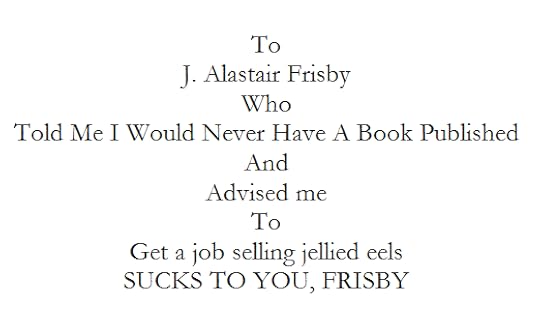
Silly, charming fun as usual—the “autobiography” is barely there, so don’t expect much that’s real. Also, no plot, which makes it less fun than the novels. Still, silly and charming. Sucks to you, Frisby!
Over Seventy is, as you'd expect from the title, a work of Wodehouse's later years. Loosely described as an autobiography with discursions, it's more a series of discursions with the occasional bit of biographical detail. Wodehouse views the world with an unique eye, whether it is explaining how the decline in theatre has been caused by union stagehands, bemoaning America's fall in the league tables for divorce or reminiscing on the golden age of Hollywood, when writers were in such demand that even those who looked vaguely like an author would be shanghaied and tied to a desk.
At this stage in his career, a world obsessed with the modern had begun to turn away from Wodehouse's work and there is a notable disjunct between when he talks about the licence to print money that was his early writing career and his resistance to using television interviews to promote more recent books. The great comic genius is, it seems, aware that he's out of step with the world, unwilling to change to become relevant, but too recent and extant to yet be regarded a classic. But even at his most self-deprecating, Wodehouse is never maudlin and his characteristic wit sparkles through as he observes the world around him. Structurally, this isn't up there with one of his novels, but as a quick dose of sunshine to brighten the day it pretty much hits the n. on the head.
Self-deprecating pseudo-autobiography, mostly digressions on varied topics by PG Wodehouse himself. At times 'laugh-out-loud' funny, this book should appeal to just about anyone, fans of British humour especially. I loved this book and it was a breeze to read.
Just under half of this book was reprinted in The Best of Wodehouse: An Anthology, which I'd read last year, but I'd liked the excerpts so much that I couldn't resist getting this new hardcover edition, part of The Everyman Wodehouse series.
Discursive and entertaining ... marred, however, by some extremely blatant offhand racism and sexism. I enjoyed the insight into Wodehouse's life and habits, but it is not as engaging as his better books.
Sort of, but not really, an autobiography. Certainly Wodehouse discusses his life and history up to a point (and with who knows how much accuracy), but this is just an excuse to tell anecdotes and be funny about a random assortment of topics ( e.g. a tirade about television and laugh tracks that is only barely justified by the fact that Wodehouse apparently had to go on television to advertise his books). Well, I say "just," but that sounds judgmental; there's a lot to enjoy in this (whether true or not, his account of how he got fired from a bank is a hoot). Still, its almost complete lack of structure, and the fact that "humorous essays about whatever is on the author's mind at the moment" is an overcrowded genre, keeps this from being one of Wodehouse's more essential books.
As expected from Wodehouse, this is also an enjoyable read. He writes about various aspects of his life the sum total of which forms a autobiography. Although this autobiography does not delve deeper into all events, it is nevertheless a satisfyingly informative read about Wodehouse's life.
Wodehouse on anything is amusing, but this doesn't soar to the hilarious heights of Wodehouse embroidering upon his own intricately constructed plots. Well worth a read nonetheless.
Very funny - the preface is a master-class in comic writing: an extended complaint about excessive use of footnotes, which is of course full of footnotes but done with his lightness of tone. I'm always puzzled as to why light comedy is so looked down upon when it is so difficult to do well - much harder than "serious" literature. Perhaps that's why - envy. All the winners in new writing competitions are always very serious "issue" pieces, and I always wonder where the fun is. This is a sort of spoof memoir and full of bits that you just want to read out to others. It's great to have something like this to cleanse the palate between heavier stuff. You come away feeling better - and that's a good thing surely?
"If any young writer with a gift for being funny has got the idea that there is something undignified and anti-social about making people laugh, let him read this from the Talmud, a book which, one may remind him, was written in an age just as grim as this one. "'And Elijah said to Berokah, 'These two will also share in the world to come.' Berokah then asked them, 'What is your occupation?' They replied, 'We are merrymakers. When we see a person who is downhearted, we cheer him up.' "These two were among the very select few who would inherit the kingdom of Heaven.'"
Not an autobiography, although there are some elements of one it in. Wodehouse tells bits and pieces of his journey as a writer along with random rambling on all sorts of subjects. I quite enjoyed it, more so than some of his novels that I've read more recently. Even though parts of it were dated, quite a bit of his hilarious musings on America still ring true today. I especially liked the part where he discussed that awful trend of recorded laughter on old television comedies (can't believe that's made a bit of a comeback). Dead on. Very entertaining read!
Quite amusing, but the foreword is the funniest bit. I read half of the foreword in the bookshop and laughed aloud a few times, but I think I only laughed aloud again about as many times during the whole rest of the book. Wodehouse spends most of his time recounting amusing stories he's seen in American papers, of holdups gone wrong and so on. It gets a little tiresome. Over Seventy is a touch endearing but ultimately little else.
I was debating whether to give the book three stars or four, but considering how many times it made me smile or even laugh out loud I could not possibly justify a 3-star rating. The book is at least as much a 'Wodehouse talks about random topics, making you laugh in the process'-book as it is a traditional biography, but it's funny and you do learn a few new things about the guy behind the books. Well worth reading if you like Wodehouse, but don't let this be the first Wodehouse book you read.
I've been extremely knackered these days, and this did very little to make me less grumpy. Two stars for the bits that put a smile on my face. Wodehouse is best when he has a plot to reign him in.
Known as Over Seventy in the UK, this slight, whimsical, and amusing anecdotal autobiography covers from his early writing apprenticeship in London, through his years in the USA, to the time of writing, 1957, when he was 75. A good read.