I’ll admit right off that one of my reading weaknesses is classic science fiction. Oh, I like the modern stuff, too, don’t get me wrong. But it just seems like there was a certain extra gear of craftsmanship in the older novels and short stories. Bradbury, Aldiss, Carter, Asimov, Moorcock, Blish…..too many giants of the genre to mention wrote tales that staggered my young imagination. My room growing up was full of cheap paperbacks and sci-fi and fantasy magazines like “Analog” and “Galaxy.” My tastes have branched out over the years, but I always enjoy coming back to a good science-fiction or fantasy paperback, literary comfort food for my soul.
I remember picking up a copy of this book sometime in the mid-'80s, in a little section of paperbacks at one of the pawn shops near where I grew up in Texarkana, Texas. That particular printing was under an alternate title, “The Synthetic Man,” and I have fond memories of reading that slim volume in a younger, simpler time for me. I went off to college and left that book behind. Somewhere along the way it got lost or sold or discarded but I have always kept an eye out for another copy so I could enjoy the story once again. As it turns out, there is a little independent used bookstore in Rockport, Texas* where we like to vacation, and this 1977 Dell reprint just happened to jump off of the shelf for me.
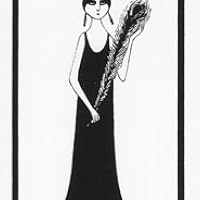
Theodore Sturgeon was not a “hard” science-fiction writer. His forte was in creating complex and believable characters and working in a lot of humanistic elements into his stories. The book starts out as eight year-old Horty Bluett is caught doing something…..unusual. Nowadays it would get him quite a few votes on a YouTube channel, but back in the day that sort of thing was not looked upon with such wonder and amusement. Horty lives in a house with his adoptive parents, a scummy couple prone to abuse. When his “father” slams Horty’s hand with a closet door, causing massive damage, Horty runs away to literally join the circus, his only possessions being a few clothes and his mysterious jack-in-the-box toy, “Junky.” Horty is accepted into the sideshow life on the condition that he masquerade as a female dwarf, a deception that he is able to pull off seamlessly. What is the connection between Junky and Horty? What darkness does the carnival hide? What mischief will his adoptive father get up to as time passes? It’s a great start to the book, and the pages turn fast as the action ramps up.
“The Dreaming Jewels” is one of Theodore Sturgeon’s best short novels. If it were released today it would probably be positioned off in the “Young Adult” section of the store, but it was originally released in 1950. Part of what makes this book so strong, though, is its timeless quality. It doesn’t seem dated despite the fact that it was released 67 years ago. There are themes of gender roles and feminism and a soft sexuality at the core of the story that are just as relevant today as they must have been shocking in 1950. I was also impressed with Sturgeon’s depiction of the ”dreaming jewels” themselves. I enjoy science-fiction where the aliens are TRULY “alien,” and that is certainly the case here. Rather than rely on standard tropes, the author gives the “other” species an original and satisfying backstory and makes them believable as a collective, while still leaving something to the reader’s imagination.
Theodore Sturgeon is one of my favorite writers in any genre. His use of language is beautiful and spare, a true wordsmith. He’s not as poetic and flowery as Bradbury, nor is he as dry and succinct as Asimov. I’d like to finish out the review with a few lines from the book.
"He began to sing, and because the truck rumbled so, he had to sing out to be heard; and because he had to sing out, he leaned on the song, giving something of himself to it as a high-steel worker gives part of his weight to the wind."
"And now, at dawn, the carnival itself. The wide, dim street, paved with wood shavings, seemed faintly luminous between the rows of stands and bally-platforms. Here a dark neon tube made ghosts of random light rays from the growing dawn; there one of the rides stretched hungry arms upward in bony silhouette. There were sounds, sleepy, restless, alien sounds; and the place smelled of damp earth, popcorn, perspiration, and sweet, exotic manures."
"Implicit in this was humanity. With it, the base of Survival emerged, a magnificent ethic: the highest command is in terms of the species, the next is survival of group. The lowest of three is survival of self. All good and all evil, all morals, all progress, depend on this order of basic commands. To survive for the self at the price of the group is to jeopardize species. For a group to survive at the price of the species is manifest suicide. Here is the essence of good and of greed, and the wellspring of justice for all of mankind."
That is good stuff, kids. I can’t recommend the classics enough, and you are not going to go wrong with Ted Sturgeon. The man was inducted into the Science Fiction and Fantasy Hall of Fame for a reason. Check out those paperback racks, don’t be afraid to get a bit of Scotch tape to keep the covers together. Read, and lose yourself for a bit in a good story………..
* Upon editing this review, I felt compelled to mention that great bookstore in Rockport, Texas no longer exists, it being a victim of hurricane Harvey. There is naught left but a scraped over empty lot lot where to store once stood. It's a sad reminder that nothing in this world is permanent, that change and nature will always win out in the end.