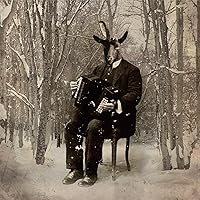
When, in later years, Sergeant Studer told the story of the Chinaman, he called it the story of three places, as the case unfolded in a Swiss country inn, in a poorhouse, and in a horticultural college. Three places and two murders. Anna Hungerlott, supposedly dead from gastric influenza, left behind handkerchiefs with traces of arsenic. One foggy November morning the enigmatic James Farny, nicknamed the Chinaman by Studer, was found lying on Anna’s grave. Murdered, a single pistol shot to the heart that did not pierce his clothing. This is the fourth in the Sergeant Studer series.
Friedrich Glauser is a legendary figure in European crime writing. He was a morphine and opium addict much of his life and began writing crime novels while an inmate of the Swiss asylum for the insane at Waldau.
Friedrich Glauser (1896 - 1938) was a German-language Swiss writer. He was a morphine and opium addict for most of his life. In his first novel Gourrama, written between 1928 and 1930, he treated his own experiences at the French Foreign Legion. The evening before his wedding day, he suffered a stroke caused by cerebral infarction, and died two days later.
Five of the author's books have recently been translated into English by Mike Mitchell: •Thumbprint (first published 1936; translated 2004) •In Matto's Realm (first published 1937; translated 2005) •Fever (first published 1938; translated 2006) •The Chinaman(first published 1939; translated 2007) •The Spoke (first published 1941; translated 2008)
It is not often that I give 5 stars for a book I have read, nothing is perfect, but I have become a Friedrich Glauser fan, although the stories around the Criminal inspector Studer all come form the 1930's. I had seen the Swiss film of The Chinese (who is not chinese actually) and decided to read the book. The plot begins with a dead man on a grave, and develops in to a murder mystery all in a small village somewhere in the Kanton of Bern, an area which I know well and the places used for the plot I have also visited. I read the book in the original German, with a touch of the Swiss language, but it seems it is also available in English. I loved the end where Inspector Studer clarifies everything. I do not want to spoil the book for other prospective readers, but I can recommend it and hope that the english translation does it the credit it deserves. Yes I am a Glauser follower
This is book 4 of Friedrich Glauser's Sergent Studer series. I think of the 5 books I liked this one the best. These books were written back in 1930s in Germany and recently translated into English. Glauser's portrayal of a detective trying to solve a murder with only the limited forensics and knowledge of the day and the social class all are locked into. This isn't someone from today writing about what it was like then. It was someone writing then on what he knows in that time period. The characters are flawed and you can't help but like Sergent Studer.
The story was a bit disjointed and it was difficult to follow the clues. I wondered whether that was down to the translation or not understanding the culture in which it was set or because of the author’s illnesses and substance habits.
The ultimate ending was obvious, but in the years since the book was written we have become used to more nuanced and involved plots.
One of Glauser's Sgt. Studer crime novels, and the first I've read, it has the flavor more of a Sherlock Holmes story with somewhat unrealistic conclusions reached in order to resolve the mystery. But Studer is an interesting, flawed character nonetheless. He seems to stumble a bit on his way to ultimately solving crimes, so he's a little less superhuman than Holmes. I'd read more Studer novels.
Der Chinese ist kein Chinese, sondern der reiche Onkel aus Amerika.
Friedrich Glauser (1896-1938) - Der Chinese (1939)
Ein klassisch konstruierter Krimi mit klassischen Motiven, diesmal ohne verwirrende Volten und Wendungen, was natürlich dem Kundigen frühzeitig ermöglichte, den oder die Täter zu identifizieren. Vielleicht der schweizerischste der bisher gelesenen Kriminalromane. Kulisse bildet ein Armenheim auf dem Lande im Bernischen, wo die Armen weggesperrt werden, wenn sie tagsüber nicht für wenig Geld in einer Baumschule schuften müssen.
Der Roman erscheint im Vergleich zu den bisherigen Romanen gerafft und linear, was an den besonderen Umständen seiner Entstehung liegt. Glauser hatte nämlich das Manuskript für einen Wettbewerb geschrieben, es wurde ihm aber kurz vor Abgabetermin gestohlen, sodass er die ganze Geschichte noch einmal in kurzer Zeit niederschreiben musste. Das ließ zwar den Roman deutlich kürzer ausfallen als sonst, aber dem Lesevergnügen tut es kein Abbruch.
Man muss ihn mögen. Vor allem wenn man ihn über die nachmaligen Verfilmungen vom Schweizer Fernsehen kennt, jenen Pionier des deutschsprachigen Maigret-Romans à la Suisse. Früh verstorben, unglücklich gelebt, von einer unfassbar poetischen Sprachkraft. All das stimmt und doch langweilt man sich fürchterlich, wenn man alle fünf Studer-Romane, die alle zu lang und zu umständlich erzählt sind, wirklich mal wieder nachliest! Ich tat dieses mit Hilfe des herrlichen Leinenbands im Schuber, ein Buch auf sehr gutem Papier, das der Diogenes vor etlichen Jahren gemacht hat. „Der Chinese“ war dann das fünfte der Bücher und somit habe ich sie alle zwei Mal in meinem leben gelesen. Und ich war froh, dass es vorbei war und weiß, dass ich es ein drittes Mal nicht mehr tun werde. Ich blieb oft stecken, wollte dieses Buch manchmal wochenlang nicht in die Hand nehmen. Wenn man so über einen Kriminalroman spricht, kann irgendwas nicht stimmen.
Interesting 1930s Euro-culture atmosphere. A corpse found atop the recent grave of a beautiful local woman. Foul play in the "glass house" of the horticultural college. Stiff people abound. Unexpected bursts of humor. Plot not so important as the scenes that Glauser paints for readers. (I'm hoping to find an English translation of his "Gourrama" novel based on the author's own experiences in the French Foreign Legion.)
Un giallo classico e carino. Risente un po’ di una nota di vecchio, nei personaggi, nei dialoghi, nelle “atmosfere”. L’autore è di poco più giovane della Christie ma sembra più vecchio.
The best protagonists are always flawed, and Wachtmeister Studer is no exception. I read 1 or 2 of these in the original German when I was a kid and enjoyed them, so when I saw these new translations I thought I would see how well they preserved the character of the originals. I am happy to say that they did quite well, actually. Good and gritty reads, all of them.
I liked this book from the beginning. The descriptions crackle with atmosphere. Studer is a detective in the Martin Beck/Maigret mold but the Swiss settings provide a different flavor. Felt very contemporary for 1939.
Accanto all'ottimo intreccio giallo, Il cinese, insieme a Il regno di Matto, è l'opera di Glauser in cui più chiaramente emerge la feroce critica sociale e "morale" dell'autore al modello svizzero. Precursore di Dürrenmatt!!