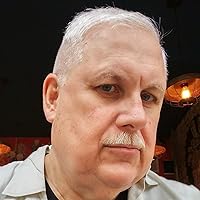
Jameson Currier expands his richly detailed storytelling to an international level, weaving together the intertwining stories of the search for a missing journalist in the Bamiyan region of Afghanistan with a young man's search for his older brother in Manhattan in the aftermath of 9/11 into a sweeping, multi-cultural novel of what it means to be a gay citizen of the world. Currier once again targets the big themes of modern gay identity, faith, homophobia, romance, and the complexity of relationships, but at the heart of The Third Buddha are the little acts of random kindness that continue to astonish in times of crisis and war.
Jameson Currier is the author of five novels, Where the Rainbow Ends, nominated for a Lambda Literary award, The Wolf at the Door, The Third Buddha, What Comes Around, and The Forever Marathon, and four collections of short fiction: Dancing on the Moon; Desire, Lust, Passion, Sex; Still Dancing: New and Selected Stories; and The Haunted Heart and Other Tales, which was awarded a Black Quill Award for Best Dark Genre Fiction Collection. His short fiction has appeared in many literary magazines and Web sites, including Velvet Mafia, Blithe House Quarterly, Confrontation, Christopher Street, and the anthologies Men on Men 5, Best American Gay Fiction 3, Boyfriends from Hell, Mammoth Book of New Gay Erotica, Best Gay Erotica, Best American Erotica, Best Gay Romance, Best Gay Stories, Circa 2000, Rebel Yell, I Do/I Don't, Where the Boys Are, Nine Hundred & Sixty-Nine, Wilde Stories, Unspeakable Horror, and Making Literature Matter. His AIDS-themed short stories have also been translated into French by Anne-Laure Hubert and published as Les Fantômes. His reviews, essays, interviews, and articles on AIDS and gay culture have been published in many national and local publications, including The Washington Post, Newsday, The Philadelphia Inquirer Magazine, Lambda Book Report, The Harvard Gay and Lesbian Review, The Washington Blade, Southern Voice, Metrosource, Bay Area Reporter, Frontiers, The New York Blade, and Body Positive. In 2010, he began Chelsea Station Editions, an independent press for gay books, and the following year launched Chelsea Station, a literary magazine devoted to gay-themed writing. In 2013 he edited two original anthologies for the press: Between: New Gay Poetry and With: New Gay Fiction. He currently resides in Manhattan.
What a magnificent novel, intimate and yet epic, related with such a clarity and a compassion for its broad cast of characters that the reader feels transported from the ruins of the World Trade Centre in 9/11 New York to Bamiyan in Afghanistan, where the Taliban army destroyed the Buddha statues.
In the ‘Acknowledgements’, Jameson Currier talks about the seed of The Third Buddha being sown as “the desire to recast and retell the story of the Good Samaritan during a time of crisis and within a clash of religions and cultures”. He adds: “I also knew I wanted it to represent what it meant to be an articulate gay activist and citizen of the world.”
Interestingly, Currier refers to Spinoza, which immediately reminded me of another recent gay novel about gay activism and citizenship, Samuel R. Delany’s Through The Valley of the Nest of Spiders, which also refers extensively to Spinoza’s idea of living a good life.
What I found fascinating about The Third Buddha is how Currier contextualises his gay characters in a fully realised global setting, where the fact of them being ‘gay’ is just another sociopolitical element, rather than being an end in itself.
In this age of liberation and openness, it might seem astonishing to have a character like Pup’s brother bemoaning the fact that there is no instruction manual on being gay, let alone a gay citizen of the world. All the gay characters in The Third Buddha struggle with personal and social/family problems impacted by them being gay, especially the cross-cultural couples like Jim and Ari.
Even in New York, where you would think it is much easier to define yourself as being gay and to develop an appropriate identity for yourself, Currier shows ordinary gay people struggling with failed (or failing) relationships, or navigating increasingly complex relationships burdened by the expectations of family and society (and the expectations of gay culture itself, which is portrayed as being out of touch with the lived reality of many gay people in other parts of the world, particularly in homophobic societies like Afghanistan and Pakistan).
If this sounds dry and academic, do not let me put you off reading The Third Buddha, which is like a gay novel that is firmly out of the literary closet. It is immensely readable and hugely affecting. The dual narrative switches between a journalist searching for his cameraman partner after an accident separates them in Afghanistan, and a young brother searching for his lost sibling in New York when he disappears after 9/11. There is enough history and cultural information woven in to make both New York and Afghanistan come alive, with a range of extremely well drawn characters, even the smaller roles.
This is a huge novel, yet it feels curiously intimate. All the characters are deeply flawed, and their separate journeys of discovery are heartbreaking to endure … and yet this is not a depressing novel by any means. The final message is one of love, hope and tolerance, of finding oneself, and staying true to who you are when you do, no matter what.
Sometimes one makes such an emotional connection with a book, because you feel there is a truth at its heart that speaks to you directly. You know instinctively that such a book will become a part of your literary history, adding an indelible something to the person you are. This book is one of mine.
Ted Bridges, a twenty-something law student, drops out of school and moves to New York to look for his brother, Phillip (“Pup”) who disappeared the day the World Trade Center towers fell. Ted moves into Pup’s Chelsea apartment and tries to piece together his dead brother’s life. Both brothers are gay, but very different. Pup was out and loved to socialize, loved being gay. Ted is closeted and has had little to no sexual experience with other men. Through the process of living in his brother’s shadow, what starts as a search for his brother turns into a search for his own sexual identity. Learning about his sibling and what it means to be gay through Pup’s friends and ex-lovers, Ted, over a period of several months, becomes his own man living a gay lifestyle.
Half a world away in a different decade, two international journalists, Ari and Jim, travel in Afghanistan. They are separated after their vehicle explodes from a roadside bomb. Ari awakes with no memory. He is taken in by hill-tribe Muslims and, for a time, becomes one of them. Jim recovers in an army hospital, and later pulls strings in order to travel back into dangerous Taliban controlled Afghanistan to find his lover, Ari.
These are two very dissimilar stories, both about searching for a loved one, but still very different in character and nature. Ted’s story is told in first person, Ari and Jim’s story is told in third person. These tales are very loosely linked by a few minor characters who live in New York, friends of Pup.
Many stories I’ve read that swing between two or more different plots has one story that intrigues me, and the other doesn’t. The Third Buddha was no exception to this rule. I found Ted’s search to be poignant and fascinating. I felt his pain and confusion, and was pulling for him all the way through his wonderfully convincing character arc.
Jim and Ari’s story I found flat, overly predictable, and often tedious. Currier did a marvelous job of creating a realistic environment of war-torn Afghanistan, and the writing was certainly accomplished, but the author keeps the reader from getting too close to his characters in this part of the story. Currier constantly switches between Jim’s adventures, to Ari’s hardships, to flashbacks of their relationship before being separated (way too many flashbacks for my tastes). This constant fractured storytelling became frustrating. It felt to me like I was following the story from an altitude of ten-thousand feet when I wanted to be right there on the ground. It simply didn’t have the same intensity as Ted’s search for his brother. And the fact that it took no guesswork to figure out exactly what would happen didn’t help.
The title, “The third Buddha” refers to an archeological site in Afghanistan where scientists search for a giant statue of the Buddha. It is near this site where tribe’s people take in Ari. This search for the statue is used as a symbol of the ongoing pursuit for something bigger than ourselves. And, of course, that is what both these stories are about.
Jameson Currier is a talented writer who has created an important and thought-provoking book. These are credible characters who experience gut-twisting emotional hardships and victories. It is a book I can highly recommend, even if it doesn’t find a place on my “favorite’s” shelf.
The events of September 11th, the war in Afghanistan and a closeted law student are just a few examples of the many areas of focus in Jameson Currier’s complex, intriguing new novel, "The Third Buddha."
Protagonist Teddy Bridges arrives in New York City after the death of his gay brother, Philip, who fell victim to the attack on the Twin Towers. Since the two were never close, Teddy is hesitant, at first, to take up residence in his brother’s Chelsea apartment. As he becomes familiar with Philip’s circle of friends, including his neighbors, Eric and Sean, Teddy also begins to experience what it’s like to be a young, gay male in the Big Apple.
In fact, the novel begins at a dinner party, hosted by Eric and Sean, where Teddy sits across from their friend, Stan, a medic who has just returned from Afghanistan. Despite Stan having recently made the acquaintance of an Afghan man who fell in love with him, he and Teddy leave the party together and hook up for the night. The introduction of Stan and his travels in the war-ravaged zone calls attention to another couple, Ari and Jim, a journalist and a cameraman, who have also spent time in the region.
In alternating chapters, the author tells Teddy’s coming-of-age story in the present, and describes Ari and Jim’s complicated, eventful partnership as a series of flashbacks. Much like his previous works (including "Where the Rainbow Ends"), Currier again proves he has an incredible knack for conveying the unbridled joy and unavoidable pain inherent in relationships. Each character is genuine and likeable in some way, yet capable of questionable or unbecoming behavior, which makes them all the more believable.
Ari and Jim’s storyline, which includes a fatal accident and a bout of amnesia, is arguably hard to follow, and their connection to Teddy is ultimately insignificant, yet both narratives make for compelling reading and provide an interesting contrast between an established couple and a curious, unsettled single young man.
"The Third Buddha" is a challenging, original novel about relationships that triumph, despite tragic and troubling circumstances.
A moving story of gay life after 9/11, told by interconnected characters in NYC and Afghanistan
The first chapter of Jameson Currier's new novel, "The Third Buddha," begins with a Chelsea dinner party and ends with hot sex between two of the diners. The second chapter opens with a roadside explosion in Afghanistan that takes place three months before the opening festivities shown in the beginning of the book. Currier uses this back-and-forth structure to tell two interrelated and fascinating stories that are often extremely moving, but this seesaw method of advancing the plot of interconnected characters often complicates both narratives.
The New York half of the novel tells the story of Ted "Teddy" Bridges, who comes to New York after the death of his gay brother Phillip ("Pup") on 9/11. Ted moves into Pup's Chelsea apartment and pieces together the story of his brother's life, his many gay friends, his outgoing personality, and his active sex life. Ted, on the other hand, is not yet out to his parents, does not feel completely comfortable in gay Chelsea, and struggles to figure out where he fits in.
The Afghanistan half of the novel revolves around two gay international journalists, Jim and Ari, who are both professional and sexual partners. After a roadside bomb destroys their vehicle, the two are separated. Currier makes a brave choice placing this gay story in Afghanistan, but he does a great job of creating a believable war environment and characters that are clearly motivated while also conflicted. The most exciting and involving parts of the novel are Jim's and Ari's hunt for each other under horrifying circumstances.
The New York sections are narrated in the first person by Ted, which leads to a disparity between the sections. Ted's discomfort and uncertainty limit the point of view of the New York portion. Meanwhile, the Afghanistan sections are narrated in the third person and jump between two extremes as Jim and Ari deal with their own physical and mental problems after the explosion. Jim searches for Ari from a U.S. hospital and military base. Before he can start his search for Jim, Ari begins his recovery with an amazingly adoptive family that lives in a cave in the Taliban-controlled countryside.
In the Afghanistan sections, we meet the various friends that Jim and Ari make to assist them in their separate searches and recoveries. We also get flashbacks of how they met, their initial jobs together, their conflicts with each other, and how they continue to grow together as a couple. These romantic flashbacks relay background information about Jim and Ari, but seem unnecessary.
In addition to the flashbacks, the novel is regularly slowed by some unnecessary history and religion lessons that don't contribute to the plot, as well as some extraneous philosophizing about the interconnection of all people, all of which are more clearly shown in the novel's events than in their discussion.
The two main plots also reveal three minor but linked characters who contribute to the overlapping stories.
One minor character is Chris, the sensitive but flakey muscle hunk who loved "Pup." He floats into Ted's life, hoping to use Ted as a substitute for his dead brother.
Another story revolves around Rico, a young Hispanic man who Ted meets at a 9/11 compensation hearing. Ted grows fond of Rico but their relationship remains platonic for a long time and Rico remains distant despite Ted's devotion.
The third linked character is Stan, an American medical worker, who uses his young Afghan lover to drive himself and the injured journalist Jim to another base where Stan abandons the young Afghan man who clearly adores him. This story frames the action in Afghanistan during the war and afterward.
The title of the novel, "The Third Buddha," refers to an archeological site being sought in Afghanistan, which Jim and Ari want to cover in a news story. While the Taliban has destroyed two giant statues of the Buddha, it remains unclear if another ancient statue is real or a myth to keep people searching. Throughout the novel, the Buddha is used as a symbol of the ongoing quest we often partake for something bigger than ourselves.
Parts of Ted's story in Chelsea after 9/11 are very appealing. Jim's and Ari's individual searches for each other in Afghanistan are remarkable. Jameson Currier shows his creativity and writing skill in these extraordinary stories of interrelated characters, but his highly fractured method can be frustrating at times.
Just finished rereading this unique warm grand story. The author asks many intelligent questions of our twenty first century world. Where is a true understanding of God in our turbulent clash of cultures and religions and terrorism? Loving deeply and honestly another person seems to be a start to the answer. Read the book with an open heart. You will be rewarded.