

What do you think?

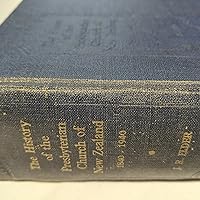
Things That Must Not Be Forgotten : A Childhood in Wartime China
Winner of the 2002 Canada-Japan Literary Award
To grow up in Beijing in the 1930s was to become engulfed in the colossal struggle between ideologies, and between nations, that shaped modern China.
Born into privilege, separated from the filthy chaos of the city by servants and limousines and the stone walls of the Legation Quarter, Michael David Kwan felt his pampered life disintegrate as the Japanese overran China in 1938 and the world moved closer to war. Gradually, inexorably, the family was drawn into the maelstrom.
Kwan’s father, a wealthy railway administrator, became active in the resistance against the Japanese. Chiang Kai-Shek’s nationalists and Mao Tse Tung’s emerging communists were united against the invaders, but Kwan’s father knew it wouldn’t always be so. He had to protect his interests, his family, and his future any way he could.
In Beijing, the Kwan household became a gathering place for high-level resistance members. At their summer villa in Baidahe, the family surreptitiously aided the guerrillas in the nearby mountains. In Qingdao, the Kwans lived next door to a Japanese admiral and his wife.
From his treehouse overlooking their garden, little David innocently befriended the Japanese couple while his father, now Commissioner of Finance in the pro-Japanese government, secretly worked for the resistance, even sheltering a wounded U.S. airman. Disclosure would have meant summary execution for the entire household.
After the dropping of atomic bombs on Hiroshima and Nagasaki, and Japan’s surrender, the family’s problems were exacerbated. David’s father, now imprisoned, had to prove he was not a collaborator but rather a leader of the resistance. China moved toward chaos as the nationalists and the communists vied for power. David, at age 12, was sent to relatives in Shanghai before being spirited out of the country, not knowing if he’d ever see his family again.
Things That Must Not Be Forgotten balances the sweet epiphanies of childhood against the grim machinations of war, self-preservation against brutal authority, love of family against love of country. It is a book that will resonate in readers’ minds long after they have turned the final, wrenching page.
From the Hardcover edition.
To grow up in Beijing in the 1930s was to become engulfed in the colossal struggle between ideologies, and between nations, that shaped modern China.
Born into privilege, separated from the filthy chaos of the city by servants and limousines and the stone walls of the Legation Quarter, Michael David Kwan felt his pampered life disintegrate as the Japanese overran China in 1938 and the world moved closer to war. Gradually, inexorably, the family was drawn into the maelstrom.
Kwan’s father, a wealthy railway administrator, became active in the resistance against the Japanese. Chiang Kai-Shek’s nationalists and Mao Tse Tung’s emerging communists were united against the invaders, but Kwan’s father knew it wouldn’t always be so. He had to protect his interests, his family, and his future any way he could.
In Beijing, the Kwan household became a gathering place for high-level resistance members. At their summer villa in Baidahe, the family surreptitiously aided the guerrillas in the nearby mountains. In Qingdao, the Kwans lived next door to a Japanese admiral and his wife.
From his treehouse overlooking their garden, little David innocently befriended the Japanese couple while his father, now Commissioner of Finance in the pro-Japanese government, secretly worked for the resistance, even sheltering a wounded U.S. airman. Disclosure would have meant summary execution for the entire household.
After the dropping of atomic bombs on Hiroshima and Nagasaki, and Japan’s surrender, the family’s problems were exacerbated. David’s father, now imprisoned, had to prove he was not a collaborator but rather a leader of the resistance. China moved toward chaos as the nationalists and the communists vied for power. David, at age 12, was sent to relatives in Shanghai before being spirited out of the country, not knowing if he’d ever see his family again.
Things That Must Not Be Forgotten balances the sweet epiphanies of childhood against the grim machinations of war, self-preservation against brutal authority, love of family against love of country. It is a book that will resonate in readers’ minds long after they have turned the final, wrenching page.
From the Hardcover edition.
256 pages, Paperback
First published May 15, 2000
Ratings & Reviews
Friends & Following
Create a free account to discover what your friends think of this book!
Community Reviews
Displaying 1 - 17 of 17 reviews
January 5, 2014
This is Kwan's memoir of his life as the "privileged" son of a Chinese father and Caucasian mother, growing up in China during the Japanese occupation and the years that followed. Once no longer considered one of the "privileged" and no longer so sheltered and protected, Kwan is faced with the many cruelties of life and war. He writes with total frankness, making no attempt to romanticize his life or the times. A must read.
December 13, 2016
Beautifully written book. Deserved to be read by more people before Mr Kwan died in 2001.

June 7, 2026
This was a book I picked up on a whim. I did not have high expectations going in, nor did I expect this book to completely broaden my understanding of early 20th century China. I hadn't really even thought of the notion of mixed-race children in China—my earlier understandings of inter-culture relations have always been focused on clear divides between the Chinese and other cultures/groups (i..e 1871 Los Angeles Chinatown, etc). However, this book changed this. From introducing me to the understanding that not only were there interracial marriages, but also hyphenated last names that carried social standing. Further, not only did Chinese women married white men, but white woman married Chinese men. I do not know why I found this to be so incredibly shocking, but I am glad that this book brought my former conceptions of what family means to a new understanding.
The only bone I do have to pick with this book, however, is that it felt so insular throughout the time period of WW2. Perhaps this was an intentional choice done by Kwan to highlight how he was sheltered from the horrors of war. This is, though insular, a perspective that one must understand, it was eye-opening to see how the war and JJS' leadership influenced "foreigners" and mixed-race families.
The only bone I do have to pick with this book, however, is that it felt so insular throughout the time period of WW2. Perhaps this was an intentional choice done by Kwan to highlight how he was sheltered from the horrors of war. This is, though insular, a perspective that one must understand, it was eye-opening to see how the war and JJS' leadership influenced "foreigners" and mixed-race families.

March 10, 2021
1st hand historic personal narratives vary greatly in quality. I found this one to be very well balanced between the personal and historic events of the time covered by the novel. For the author's rocky start with education and socialization, he weaves his story well. He is able to recount the gravity of his experiences and horrors he witnessed with just the right amount of details to not be too graphic, yet still convey the horrors of war through the lens of an innocent child. I found this book quite interesting as much of my non fiction reading of WWII covered Europe or the US experience and it helped put in perspective how much further the reach of the War was.
Thank you Mr. Kwan for sharing your story.
Thank you Mr. Kwan for sharing your story.
August 10, 2026
Picked this up from one of my town's little free libraries. I found it to be extremely interesting & very readable. Certainly not a perspective on WWII that I had any knowledge of prior to reading Mr Kwan's book. He writes from a child's perspective, and a wealthy & protected child's perspective at best. So we miss a lot of the actual worldwide action of the war. But the taunting and teasing of being a child of a European woman & a Chinese man. And then the turmoil of aftermath of the war & the politics of postwar China. Enjoyed.

February 26, 2025
This book made me almost cry many times despite its mostly mundane chapters. I really enjoyed seeing such a politically tense era depicted by a child, its an interesting perspective due to his lack of clarity on many things because his parents shielded him from the harsh realities. I was impressed by the writing because this book was just a son's transcription of an oral history from his father. He was able to add such powerful descriptions that totally hooked me in.
Also, was not going in to this book expecting to read any romantic shit but omg his step-mom and dad - the way she could have got out of such a dangerous time-period for China but refused to give up on waiting for his father to be released from prison. And even at their lowest financially she wouldn't sell her wedding ring. So happy there was a mostly happy ending for this family.
Also, was not going in to this book expecting to read any romantic shit but omg his step-mom and dad - the way she could have got out of such a dangerous time-period for China but refused to give up on waiting for his father to be released from prison. And even at their lowest financially she wouldn't sell her wedding ring. So happy there was a mostly happy ending for this family.

September 13, 2024
I picked this book up at a sale thinking it should be OK. It was brilliant and one I could not put down. This certainly opened up my eyes to how mixed marriage families of means in China, survived the war.
November 10, 2025
Another book read for Modern Chinese History, which introduced me to Chinese history predating and during World War 2. Taught me a lot about Japanese imperialism and how a rich child was impacted by a war torn country. Woukd definitely read again.
September 27, 2017
Typical of an awarding winning book this is completely forgotten.
January 23, 2024
I discovered this book through the recommended reading list in the back of Dragon Springs Road by Janie Chan. I have really enjoyed this & learning about how war affected the Chinese people.
April 5, 2010
This memoir won the 2000 Kiriyama Book Prize for nonfiction. I have read quite a few memoirs of others who survived this time period in China's history, and with all due respect to Mr. Kwan, his experience was not one of the more horrendous. Author seemed somewhat arrogant and frankly not that likeable, especially when he is describing his activities as a member of the Boy Scouts who were, at least at that time, "more like the Hitler Youth...an organization of young fanatics" who did some rather nasty cruel things. And he related these events with no real sense of regret. So I believe his motivation to write this book was more to defend his father's/family's reputation concerning alleged conspiracy with the Japanese, rather than out of any real sympathy with the suffering endured by the Chinese people, which quite frankly he didn't seem to relate to that much. A note of interest, Mr. Kwan collapsed on stage from an apparent heart attack at the Victoria, BC, Writer's Festival in 2001 while reading an excerpt from this book and died two days later. Rather eerie.
April 5, 2013
The Eurasian son of a Chinese railroad executive, young David Kwan describes the radical changes that Chinese society and government went through during the Japanese invasion in the 1930s and 1940s. David is taunted as a half-caste by norrow-minded Chinese. It’s sad to know that racism exist all over the world, just in a different ways. David went through traumatic changes during his childhood, though as a son of a wealthy individual it seems that his life was not as unbearable as that most of unprivileged Chinese during that time. Kwan seems to have very little regard for what people went through outside of his own cast during his time in China. Kwan does, however provide a good description to see what it was to live in China during the 20th century during the Japanese invasion and at the beginning of the Communist regime.

December 23, 2010
An interesting memoir about the author's childhood, which was very different than most Chinese since his mother was European and his father was an executive with the Chinese rail system, during World War 2 in China.
November 1, 2013
David Kwan's childhood during the Sino-Japanese War (and WWII) is unlike any other, since he was considered neither fully Chinese nor fully European. Interesting and easy read that I highly recommend.
July 11, 2008
Def a book people should read to learn more about what people went through during WWII. 3.5 rounded up.
June 15, 2007
Very interesting to see a different perspective. Sheds some light on my grandparents.
July 25, 2009
Really interesting read about growing up in war-torn China. Great read.
Displaying 1 - 17 of 17 reviews