Jump to ratings and reviews
Rate this book

Poems

Rate this book
A legend in her own time both for her brilliant poetry and for her resistance to oppression, Anna Akhmatovaâ denounced by the Soviet regime for her â eroticism, mysticism, and political indifferenceâ â is one of the greatest Russian poets of the twentieth century.

Before the revolution, Akhmatova was a wildly popular young poet who lived a bohemian life. She was one of the leaders of a movement of poets whose ideal was â beautiful clarityâ â in her deeply personal work, themes of love and mourning are conveyed with passionate intensity and economy, her voice by turns tender and fierce. A vocal critic of Stalinism, she saw her work banned for many years and was expelled from the Writersâ Unionâ condemned as â half nun, half harlot.â Despite this censorship, her reputation continued to flourish underground, and she is still among Russiaâ s most beloved poets.

Here are poems from all her major worksâ including the magnificent â Requiemâ commemorating the victims of Stalinâ s terrorâ and some that have been newly translated for this edition.

Paperback

First published January 1, 1962

17 people are currently reading
1534 people want to read

About the author

Anna Akhmatova

429 books958 followers
also known as: Анна Ахматова

Personal themes characterize lyrical beauty of noted work of Russian poet Anna Akhmatova, pseudonym of Anna Andreevna Gorenko; the Soviet government banned her books between 1946 and 1958.

People credit this modernist of the most acclaimed writers in the canon.

Her writing ranges from short lyrics to universalized, ingeniously structured cycles, such as Requiem (1935-40), her tragic masterpiece about the Stalinist terror. Her work addresses a variety of themes including time and memory, the fate of creative women, and the difficulties of living and writing in the shadow of Stalinism. She has been widely translated into many languages, and is one of the best-known Russian poets of 20th century.

In 1910, she married the poet, Nikolay Gumilyov, who very soon left her for lion hunting in Africa, the battlefields of World War I, and the society of Parisian grisettes. Her husband did not take her poems seriously, and was shocked when Alexander Blok declared to him that he preferred her poems to his. Their son, Lev, born in 1912, was to become a famous Neo-Eurasianist historian.

Nikolay Gumilyov was executed in 1921 for activities considered anti-Soviet; Akhmatova then married a prominent Assyriologist Vladimir Shilejko, and then an art scholar, Nikolay Punin, who died in the Stalinist Gulag camps. After that, she spurned several proposals from the married poet, Boris Pasternak.

After 1922, Akhmatova was condemned as a bourgeois element, and from 1925 to 1940, her poetry was banned from publication. She earned her living by translating Leopardi and publishing essays, including some brilliant essays on Pushkin, in scholarly periodicals. All of her friends either emigrated or were repressed.

Her son spent his youth in Stalinist gulags, and she even resorted to publishing several poems in praise of Stalin to secure his release. Their relations remained strained, however. Akhmatova died at the age of 76 in St. Peterburg. She was interred at Komarovo Cemetery.

There is a museum devoted to Akhmatova at the apartment where she lived with Nikolai Punin at the garden wing of the Fountain House (more properly known as the Sheremetev Palace) on the Fontanka Embankment, where Akhmatova lived from the mid 1920s until 1952.

Ratings & Reviews

What do you think?
Rate this book

Friends & Following

Create a free account to discover what your friends think of this book!

Community Reviews

5 stars
584 (52%)
4 stars
374 (33%)
3 stars
120 (10%)
2 stars
29 (2%)
1 star
8 (<1%)
Displaying 1 - 30 of 80 reviews
Profile Image for Steve.
441 reviews582 followers
Read
February 6, 2017


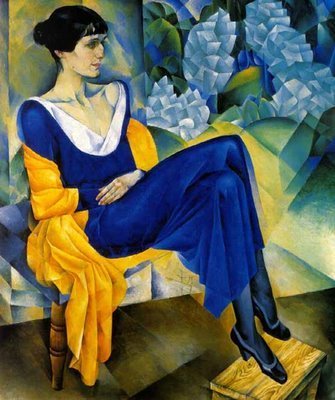
Anna Akhmatova by Natan Altman (1914)


Anna Akhmatova (1889 - 1966) lived through the worst years of the 20th century in one of the worst locations in which to be a poet unwilling to play the role of a trained parrot for the ruthless and murderous apes running the country. Born in Odessa, she grew up in the small town just outside of St. Petersburg where the Tsar's summer residence was located. At 16, her mother took her back to the Crimea where she received some education, along with a bit more schooling in Kiev. So she had little formal education, but her mother had regularly read Russian poetry to her from an early age. In 1910 she married the avant garde poet Nikolai Gumilev and began her exploration of poetry in earnest.

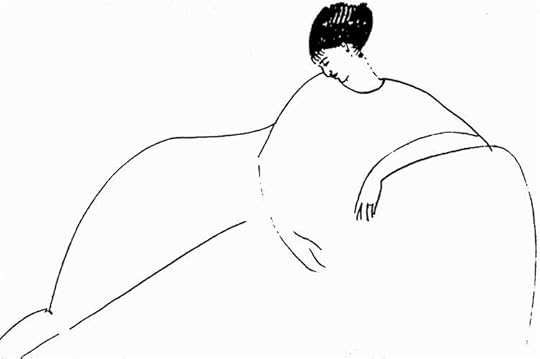
While this is not an unusual, and certainly not an ominous beginning of life for a woman in the early 20th century, the Russian Revolution was nearing with its fatal consequences for so many people. She honeymooned in Paris and returned again in 1911 because she had fallen in love with it. She spent a lot of time with Modigliani in Paris, who made many portraits of her (one of which is reproduced below) and possibly had an affair with her. Despite her connections to Paris, when she later had the opportunity to escape the Bolsheviks with friends who were emigrating to Paris, she chose to stay in Russia.

I am not one of those who left the land
to the mercy of its enemies.
Their flattery leaves me cold,
My songs are not for them to praise.

But I pity the exile's lot.
Like a felon, like a man half-dead,
dark is your path, wanderer;
wormwood infects your foreign bread.

But here, in the murk of conflagration,
where scarcely a friend is left to know,
we, the survivors, do not flinch
from anything, not from a single blow.

Surely the reckoning will be made
after the passing of this cloud.
We are the people without tears,
straighter than you...more proud...

(1922)

This pride was not without its price. Gumilev had been executed the year before this poem was written. Her work was banned from 1925 until the brief thaw in 1940 which occurred, curiously enough, at the signing of the non-aggression pact between Hitler and Stalin. And then, when Hitler fell upon Stalin before Stalin could do so to Hitler, Stalin needed everybody behind him. For her it meant she could publish again. In 1946, after the external threat had passed, her work was banned again until Stalin finally died in 1953. But during the war her only son was arrested for the third time, thrown into the Gulag and used to blackmail Akhmatova into writing paeans to the Georgian dictator. I can't bring myself to type that crap, so one can barely imagine what it meant for her to write it. At least her son was not executed. She needed no blackmail to write about the fortitude of the inhabitants of Leningrad during the lengthy and murderous siege or the necessity of courage in face of the Nazi claws tearing at the Russian people's throat, but I won't quote those poems, either.


Anna Akhmatova by Amadeo Modigliani (1911)


The KGB (and its predecessors) kept close track of Akhmatova; during the final ban two KGB officers followed her openly wherever she went. They confiscated the packages she sent to her son in the Gulag, bugged her apartment, went through her mail, etc. And during the decades of the bans she avoided starvation by translating various kinds of writings from many languages on the basis of previously prepared literal translations.

This cruel age has deflected me,
like a river from its course.
Strayed from its familiar shores,
my changeling life has flowed
into a sister channel.
How many spectacles I've missed:
the curtain rising without me,
and falling too. How many friends
I never had the chance to meet.
Here in the only city I can claim,
where I could sleepwalk and not lose my way,
how many foreign skylines I can dream,
not to be witnessed through my tears.
And how many verses I have failed to write!
Their secret chorus stalks me
close behind. One day, perhaps,
they'll strangle me.
I know beginnings, I know endings too,
and life-in-death, and something else
I'd rather not recall just now.
And a certain woman
has usurped my place
and bears my rightful name,
leaving a nickname for my use,
with which I've done the best I could.
The grave I go to will not be my own.
But if I could step outside myself
and contemplate the person that I am,
I should know at last what envy is.

(1944)

According to Osip Mandelstam's widow, Nadezhda, who became Akhmatova's closest friend, what kept Akhmatova persevering in the face of hunger, penury, persecution and blackmail was her resolution that she had a mission - a mission to endure and to witness. She became this witness even though she had to burn her manuscripts and recreate them from memory. When she was composing one of her greatest poems, the lengthy Poem Without a Hero, which powerfully crystallizes much of the travails of the Russian people during her lifetime, she would recite it to friends so that they would memorize it; in case she would die, her witness would survive.

She began her career writing about poets and her difficult relationship with Gumilev. But circumstances overtook her, and she grew incredibly strong and incredibly hard. So many of the people she had known and loved had been executed or had died in prison, and they were always with her.

There Are Four Of Us

Herewith I solemnly renounce my hoard
of earthly goods, whatever counts as chattel.
The genius and guardian angel of this place
has changed to an old tree-stump in the water.

Earth takes us in awhile as transient guests;
we live by habit, which we must unlearn.
On paths of air I seem to overhear
two friends, two voices, talking in their turn.

Did I say two?...There by the eastern wall,
where criss-cross shoots of brambles trail,
- O look! - that fresh dark elderberry branch
is like a letter from Marina in the mail.

(1961)

The four are Mandelstam, Pasternak, (Marina) Tsvetaeva and herself. All but she were long since dead.

Like most of Akhmatova's translations (she knew Italian well enough to willingly translate some of Leopardi's verse in the 60's), the work of translating Poems of Akhmatova was divided between the linguist Max Hayward and the poet Stanley Kunitz. It is a selection and does not include many of the most important poems. Poem Without a Hero is only excerpted. Both Hayward and Kunitz contribute introductions, the former on Akhmatova's life and times, the latter on the translation. In particular, Kunitz has not tried to reproduce the rhyme structure of Akhmatova's verse. However, this edition is bilingual, so one can see, if not hear, that structure as one reads the translation.
Profile Image for Ben Winch.
Author 4 books418 followers
January 1, 2019
It's unfortunate the way that Goodreads treats various collections by the same poet as one, especially when they each have a different translator. To clarify, I'm reviewing the Stanley Kunitz translation, Poems of Akhmatova, and I recommend this as the best introduction. True, not all the major poems are represented, but to my ear it's the most musical, a trait which I imagine would have been crucial to Akhmatova. Of the other versions, Judith Hemschemeyer's The Complete Poems is by far the most comprehensive, but to my ear it's slightly clinical. D.M. Thomas? Not bad, but not substantially different from Kunitz and certainly not superior. As to Lyn Coffin's Poems, I never liked the selection, and after dipping into it once or twice spent all my time on Kunitz and Hemschemeyer.

It's difficult to know what to say about an icon like Akhmatova. At this remove, knowing no Russian and only the bare bones of her life, I fear whatever I say will sound dilettantish, especially given that I have none of these books in front of me as I write this. Still it troubles me that a cheap Vintage edition of her poems can sit on the shelf in the bookstore where I work for 3 months before finding a buyer, when I can see no reason why she shouldn't be as widely-read as Emily Dickinson, as Orwell, as The Master and Margarita.

Akhmatova was a born poet. With or without the Russian Revolution and its aftermath, her destiny was to sing. Witness her early poems, already tragic in their impetus when speaking of nothing more than failing love affairs, already heart-stoppingly beautiful. And if you hear her in this early incarnation, take the ride. This ordinary young woman - not starving, not oppressed, not unlike you or me - will now (slowly in the Hemschemeyer book, quickly in the Kunitz) be transformed before your eyes into martyr, prophet and saviour, a figure who was treated with near-religious reverence in her homeland, and shaped to fit this role by history. What would have become of her without Stalinism? Probably she would still be a key figure in Russian literature, but thanks (or no thanks) to history she's more than that. She bears witness, yet always in that pitch-perfect singer's voice which sounds, even in English, like nothing else on Earth.

Akhmatova's is the most all-consuming body of poetry I know. 2 or 3 times in my life I have sat or lain with it for days, inhabiting it, suffering through it, exalting, weeping, attempting to reconcile it. Reading her will change you. You will wish like anything that you could hear her in the Russian; you will strain to listen as if to a distant sound from beyond. But if you read the Kunitz version, sometimes you will sing along with her. And you will yearn - to get closer, to hear better, to turn back time, to spare her, to spare them all.

It just might be that Akhmatova's achievement is unsurpassed by any artist in any field in the 20th Century. It's one thing to bear witness; it is another to never lose sight of beauty.

No foreign sky protected me,
no stranger's wing shielded my face.
I stand as witness to the common lot,
survivor of that time, that place.


('Requiem', translated Stanley Kunitz with Max Heyward)

Profile Image for Noel.
102 reviews225 followers
March 31, 2025
A very good, though limited selection.

“As the future ripens in the past,
so the past rots in the future —
a terrible festival of dead leaves.”
Profile Image for Holly Lindquist.
194 reviews31 followers
February 26, 2010
I know of few poets who can pack as much emotional weight and power into such spare and economical poems. The translations are excellent and the original Russian versions are included, as they should be. This slim volume may not weigh much, but the content is as heavy as the Potemkin. Akhmatova was a warrior who gave a voice to those who would not have been heard otherwise and she is a perfect example of what poetry can be at it's greatest.
Profile Image for Steve.
901 reviews275 followers
November 16, 2015
Really good, but also pretty short. I don't know what the back story was with this collection, but it seems like it could have been longer. Oh, they have the original Russian versions, but I don't read Russian. It might as well be white space. What's here however is terrific. The translators (Kunitz & Hayword)did some fine work bringing these poems to life. I compared a few of the poems (Willow, Cleopatra) with the versions in the D.M Thomas/Penguin effort, and it's clear that these are the versions to read. Also, the Kunitz/Hayward edition has a great introduction, an interesting note on the problems of translation, and informative notes on individual poems. Still, this is too brief an introduction to a great poet. For example, the last poem, "Poem without a Hero," is only a fragment of a longer poem. The Thomas/Penguin version gives you the whole poem. If you're into AA, I recommend getting both books. One has better reading translations, the other gives you more in the way of poetry. (The Thomas one also breaks down its selections so that you can see which books the poems came from.) I was tempted to ding this one a star because of these frustrations, but the poetry is too good for that.
Profile Image for Tom.
446 reviews35 followers
September 4, 2010
In his obit essay on Nadezhda Mandelstam (in "Less Than One" collection), Joseph Brodsky writes, "It's an abominable fallacy that suffering makes for greater art. Suffering blinds, deafens, ruins, often kills. Osip Mandelsam was a great poet before the revolution. So was Anna Ahkmatova, so was Marina Tsvetaeva. They would have become what they became even if none of the historical events the befell Russia in the century had taken place: because they were gifted. Basically, talent doesn't need history."

On the other hand, in the intro to this tranlsation of AA, Stanley Kunitz comments that Osip Mandelstam made a remark to the effect that "great poetry is often a response to total disaster."

The connection between genius and environment is an intriguing one, though I don't think they are mutually exclusive. Attempts to separate the two remind me of what Flannery O'Connor once said about identifying the theme of a short story: "People talk about the theme of story as if the theme were like the string that a sack of chicken feed is tied with. They think that if you can pick out the theme, the way you pick the right thread in the chicken-feed sack, you can rip the story open and feed the chickens."

Likewise, though teasing out the thread of history in a poem might enchance one's appreciation for it, I'm not sure it's essential, or even wise, for experiencing a writer's genius. (I had a student once who argued that Frost's poem "After Apple Picking" was about negative effects of too many immigrants filling America in the 20s, a bizarre interpretation that raised the disturbing specter of Frost as the Pat Buchanan of poets.) One can see evidence of both views woven together in AA's poetry.

On the one hand, you have a poem like "Voronezh," written in 1936 and dedicated to Osip M: "But in the room of the banished poet / Fear and the Muse stand watch by turn, / and the night is coming on, / which has no hope of dawn." Kunitz argues that in this poem, AA "prophesied the horrors of 1937-38, when Stalin gave his demented Commissar of Internal Affairs seemingly unlimited license to kill and imprison."

And on the other hand, you have a poem like "Lot's Wife" (my personal favorite) written in 1922-24, that ends with, "Who will grieve for this woman? Does she not seem / too insignificant for our concern? / Yet in my heart I never will deny her, / who suffered death because she chose to turn." I suppose one could read some form of political defiance in those words, but they give me goosebumps because they seem to suggest some deeply personal response to grief. Whether the grief if AA's own or that of a friend or relative who knows. Regardless, it's a great poem.

Having heard so much about AA over the years, I worried that she couldn't possibly match all the profuse acclaim, that in reading her for the first time, I would feel a bit deflated, disappointed. Ha, fat chance! She is even better than I had hoped. I won't draw any grand conclusions about the effects of history on her work except to say that it both stares down and transcends the times.
Profile Image for Marc.
990 reviews136 followers
January 23, 2021
I never really connected with the writing in this collection. I would say I admire Akhmatova for writing in a time and place in history that demanded the heroic of its artists. Not sure this is a style of poetry that speaks to me, in general. I also seem to be having trouble with shorter works these days (poems and short stories)---it's like they demand a kind of focus I can't seem to muster. Maybe I have pandemetriosis of the brain.

Two faves from this collection:
----------------------------------
"ALL HAS BEEN TAKEN AWAY..."

All has been taken: strength as well as love.
Into the unloved town the corpse is thrown.
It does not love the sun. I fear, that blood
Inside of me already cold has grown.

I do not recognize sweet Muse's loving taste:
She looks ahead and does not let a word pass,
And bows a head in the dark garland dressed
Onto my chest, exhausted from the haste.

And only conscience, scarier with each day,
Wants a great ransom and for this abuses.
Closing the face, I answer her this way...
But there remain no tears and no excuses.
----------------------------------

"WHY IS THIS AGE WORSE...?"

Why is this age worse than earlier ages?
In a stupor of grief and dread
have we not fingered the foulest wounds
and left them unhealed by our hands?

In the west the falling light still glows,
and the clustered housetops glitter in the sun,
but here Death is already chalking the doors with crosses,
and calling the ravens, and the ravens are flying in.
Profile Image for Rise.
308 reviews41 followers
January 16, 2016
This is a bilingual edition of selected poems arranged chronologically, containing her celebrated work "Requiem" and extracts from "Poem Without a Hero." Akhmatova's witness is one of profound sensitivity to human suffering and cruelty. One of the virtues of her poetry is personal pride, the positive aspect of it, the strength to resist passively and to not succumb to people and institutions in power.
Profile Image for Mark.
1,178 reviews170 followers
August 24, 2021
I got this book after seeing a wonderful painting of Anna Akhmatova by the Russian artist Natan Altman.

I'm glad I did it. I enjoyed the selected poems, if "enjoy" is the right word to use about someone who often had an understandably gloomy and heavily burdened view of life. I reread several of the poems after reading the biography of Akhmatova in the beginning of the book, because I could better understand the context in which they were written.

Some might wonder at Akhmatova's decision to stay in Russia after the accession of the Bolsheviks and her being named an enemy of the state. She managed to survive the Stalinist era by working as a translator and librarian, but her original work could not be published for decades, by decree of the Soviet authorities. As a sword over her head, the government kept arresting her son, which undoubtedly constrained her willingness to leave or try to smuggle out her writing.

Ultimately, she had the view that the poet could be a witness to the victims of history. She expressed that in classical terms in this short poem, "The Death of Sophocles."

"That night an eagle swooped down from the skies onto
Sophocles' house.
And the garden suddenly rocked with a cry of cicadas.
Already the genius strode toward his immortality,
skirting the enemy camp at the walls of his native city.
Then it was that the king had a strange dream:
Great Dionysus ordered him to lift the siege,
so as not to dishonor the service for the dead
and to grant the Athenians the solace of his fame."
Profile Image for Becky Isett.
18 reviews
March 20, 2008
Akhmatova is a Russian poet who remained isolated for most of her literary career. All of these poems reflect that a little, I think. They're intense, almost brutally so. Most are depressing and cold, but in a really passionate way. religious and historical references are the usual themes. The translation is really good, although I don't really have much to compare it to... but I think her message gets across in all her poems. Definitely not for everyone, but really breathtaking if you can get through it.
Lot's Wife
And the just man trailed God's shining agent,
over a black mountain in his giant track,
while a restless voice kept harrying his woman:
"It's not too late, you can still look back
at the red towers of your native Sodom,
the square where once you sang, the spinning-shed,
at the empty windows set in the tall house
where sons and daughters blessed your marriage bed."
A single glance: a sudden dart of pain
stitching her eyes before she made a sound...
Her body flaked into transparent salt,
and her swift legs rooted to the ground.
Who will grieve for this woman? Does she not seem
too insignificant for our concern?
Yet in my heart I never will deny her,
who suffered death because she chose to turn. 1922-24
Profile Image for Vicki.
724 reviews15 followers
June 10, 2009
I had a Russian friend who told me that there are some editorial flubs with the translations here and there (words chosen for the sake of the rhyme scheme), but that the feeling is what counts, and they have that. I can't speak Russian, of course, but I love this woman's poems. I feel like they're full of zinging language and bullets. So strong and alive.
Profile Image for Victoria.
103 reviews
May 13, 2016
i really like the fact that you can tell this collection is from across her life - it starts out with where most poets start, talking about love and failed affairs etc and then the war hits and it permeates everything with loss and dread and yet this sense of pride and it's just excellent
Profile Image for Brandon.
21 reviews1 follower
November 7, 2007
Tears dropped into the past from the crying future.
Profile Image for cara.
43 reviews25 followers
June 14, 2017
Favourites:
— I Wrung My Hands
— Heart's Memory of Sun
— How Can You Look At The Neva?
— July 1914
— Why Is This Age Worse?
— Everything Is Plundered
— Lot's Wife
— The Muse
— The Last Toast
Profile Image for Keeley.
603 reviews12 followers
March 8, 2019
I can recommend the poems contained in this collection; they are emotionally powerful and illuminate a time of great challenge as experienced by a great woman. However, based on the approach to translation outlined in the introductions, I'm not sure whether I would describe the poems as "Poems of Akhmatova" or "Poems of Kunitz, after Akhmatova." In other words, is Catullus 51 a poem of Sappho or of Catullus? Catullus added enough new material that it's not just a translation. So, I was left feeling like I had to suspend doubts to read this as "Akhmatova" without knowing any Russian.

The age of the book introduces its own issues. Published only a couple years after Akhmatova's death, while the Soviet Union was still going strong, it presents the poems from that particular perspective. I may try to read a translation of Akhmatova published in the last thirty years and see if there is a different perspective, or access to additional texts and information.
Profile Image for Astrid.
283 reviews12 followers
January 27, 2020
This was an incredibly illuminating read, and my first serious venture into Russian Poetry. I now want to explore much more; the bleak history and dark poems in this translation are gripping and more than a little prophetic, in my eyes. Several poems, in their stark descriptions of winter and the cold chill of authoritarianism, definitely evoke the storm that gathers on the horizon of our own modern lives. The standout poem in this collection is "Poem Without A Hero." A small part of it was included here, and I plan on reading the full translation of the epic as soon as possible. What I was able to read was a masterpiece. Seeing the poems both in translation and in the original Russian was illuminating as well, and the afterward and prelude give valuable context for both her life and the allusions made in her poetry.
Profile Image for Susan.
1,524 reviews56 followers
September 28, 2019
Reading poetry in translation is a frustrating exercise, knowing that it is impossible to translate poetry well without losing the sound and feel of the original language. But if we don’t read even imperfectly translated poems, we lose all access to other languages’ poets. And that would be a real loss. Take these poems: their power, vivid imagery, and vision remain fresh and inspiring all these years after they were written, even in a different language.

Stanley Kunitz who wrote these translations from the Russian with the assistance of Max Hayward was an excellent poet in his right and gives the selected poems a shape in English. An introduction gives an overview of the poet’s life, and detailed notes are provided for the poems that were included.

“How can you look at the Neva,/how can you stand on the bridges?.../No wonder people think I grieve:/his image will not let me go./Black angels’ wings can cut one down,/I count the days till Judgment Day./The streets are stained with lurid fires,/bonfires of roses in the snow”.
“How Can You Look At the Neva?”, Anna Akhmatova, 1914

“Everything is plundered, betrayed, sold,/Death’s great black wing scrapes the air,/Misery gnaws to the bone./Why then do we not despair?/By day, from the surrounding woods,/
cherries blow summer into town;/at night the deep transparent skies/glitter with new galaxies./
And the miraculous comes so close/ to the ruined, dirty houses —/something not known to anyone at all,/but wild in our breast for centuries.” “Everything Is Plundered”, Anna Akhmatova, 1921
Profile Image for Mark.
60 reviews
Read
March 7, 2024
Kunitz has translated Akhmatova into the stiff, oddly vatic idiom that Helen DeWitt calls "Penguin English," with the result that almost nothing of these poems remains in memory a few days after finishing them. As a defense of his method, his translator's introduction compares a "close [i.e. near-literal] paraphrase" of a poem with his final product, but the former is much more compelling, and has at least the illusion of transparency to the poet behind it. Fortunately this is a bilingual edition so even non-Russian readers like me can squint at the originals and see rhyme schemes and dense patterns of alliteration. Very good notes and biographical introduction—Akhmatova's life is almost unimaginable.
Profile Image for Luke.
1,629 reviews1,197 followers
November 15, 2018
3.5/5

Akhmatova is one of those names I was drawn to because I was told to do so, albeit in the passively enticing manner that repeated reverberations of a foreign name, especially intriguing with its feminine tinge, in reviews and other elitist material will accomplish. The good this edition did me, really, is that it surprisingly proved to be bilingual, and a good friend from Kyrgyzstan will benefit far more than I from the original verse. I wouldn't mind returning to Akhmatova one day, as the end notes talk about bigger and better things penned later in her career that are contained in full in other editions, but I may have to read up more on the other famous figures of her milieu (Bly's 'Petersburg', for one, for even a difference in ideology between him in Akhmatova doesn't prevent them from having known the same people and experienced the same Russian landscape) before I tackle that. As a first introduction, I wasn't majorly awed, but I found one sizable piece that has convinced me to leave the door open to future engagement. No The Complete Poems of Anna Akhmatova for me, though, surprisingly. As I said, I'm interested in the longer, more sinister works of the poet's later years, and there's no use re-experiencing what I know will fail to stir me.

I didn't think when I was growing up that, as an adult, I would spend so much time contemplating socialism and communism and what could have been had a revolution taken into account every other bigotry, or at least the patriarchy doomed to cannibalize its saints regardless of how it structured its economics. Akhmatova admittedly interests me for the pathos of it all, and as I continue to remain in monolingual ignorance (French may creep back up on me if the job security is tempting enough), I miss a great deal of what my Kyrgyzstani friend so adores in the original refrains of her poetry. As I said, though, the works grew stronger the later in the chronology I went, and I really wouldn't mind diving into a good edition of "A Poem without a Hero", pages upon pages of annotations and end notes and all. I'm not sure if such a thing even exists in English at the moment, but I have the time and the inclination, as well as this review to haggle me back into the fray once sufficient time has passed. There's something in Akhmatova's writing that I"m missing, so evidenced by lackluster rating, and unlike other spoofed up name drops, she's worth the effort of digging it out. At a later time, though. Who knows when I'll acquire that conjectured, well explicated edition, or if/when it will ever come into being.

I'm still not satisfied with my level of poetry evaluation, but one can only spend so much time in what amounts to be less than five percent of one's library. However, I am glad I got through this when I did, as my aforementioned friend has been on the lookout for Russian books of late, and my having come across one by mistake is better than nothing. Russian literature has always been a weirdly fascinating facet of my reading trajectory, and to fill it out further is always worth the effort, if not always eminently rewarding. As I said, I will return to Akhmatova at some point, better equipped and more intensely focused. For now, though, on with the future, and hopefully more fruitful, results.
This cruel age has deflected me,
like a river from its course.
Strayed from its familiar shores,
my changeling life has flowed
into a sister channel.
How many spectacles I've missed:
the curtain rising without me,
and falling too. How many friends
I never had the chance to meet.
Here in the only city I can claim,
where I could sleepwalk and not lose my way,
how many foreign skylines I can dream,
not to be witnessed through my tears.
And how many verses I have failed to write!
Their secret chorus stalks me
close behind. One day, perhaps,
they'll strangle me.
I know beginnings, I know endings too,
and life-in-death, and something else
I'd rather not recall just now.
And a certain woman
has usurped my place
and bears my rightful name,
leaving a nickname for my use,
with which I've done the best I could.
The grave I go to will not be my own.
But if I could step outside myself
and contemplate the person that I am,
I should know at last what envy is.

-Leningrad, 1944
Profile Image for Christopher.
86 reviews23 followers
January 13, 2015
Translated poetry seems to me almost an impossibility, but the Kunitz/Hayward collection is both artful and recognizably animated by Akhmatova's voice—or, over time, voices. A prefacing note on translation explains some of the choices and heads off literalist critics in advance. (Kunitz's own talents and Hayward's resume should earn them the benefit of the doubt from those who are neither poets nor translators.)

I don't read much poetry, and I scarcely know how to make sense of most of it. But Kunitz and Hayward's rendering of Akhmatova's verse rings with such clarity of feeling and tragedy and senselessness that it can take your breath away.

Here is "Imitation from the Armenian," written around the time that her only son was arrested in the Stalinist terror of the 1930s. (His father had been shot in 1921 as an alleged anti-Bolshevik conspirator.)

In the form of a black ewe my ghost
will straggle through your dreams
on faltering, withered legs,
bleating: "Shah of the Shahs,
blessed in Allah's eyes,
how did you feast?
You hold the world in your hand
as if it were a cold bright bead...
But what about my boy,
did you enjoy his taste?"

Later, in "Requiem," she wrote of the strange and tragic community of family members of the disappeared, congregating outside the walls of Leningrad's great political prison during the purges of 1937–38, hoping for news of their loved ones, or just for word that they were alive. In this stanza, Akhmatova contemplates the happy ignorance of her younger self at how her later life would pass:

They should have shown you — mocker,
delight of your friends, hearts' thief,
naughtiest girl of Pushkin's town —
this picture of your fated years,
as under the glowering wall you stand,
shabby, three hundredth in the line,
clutching a parcel in your hand,
and the New Year's ice scorched by your tears.
See there the prison poplar bending!
No sound. No sound. Yet how many
innocent lives are ending....

It's hard to imagine a more powerful evocation of this nearly incomprehensible way of living, this terrorizing and terrifying mix of uncertainty, fear, powerlessness, and injustice—something Akhmatova endured for decades. (Her son was released in 1956, but many of her close friends and family died in Stalin's prisons.)

This was my first real exposure to Akhmatova, so the sparse explanatory notes in the back of the book and the introduction to the poet's life and literary times were welcome additions to the volume.


Profile Image for Julie.
Author 14 books35 followers
February 12, 2017
My first exposure to Akhmatova, and I found her work to be like a knife: painful and sharp. I will forever be fascinated by a culture which has tolerated so much misery. The end-notes were valuable, and I'd recommend reading them to get the full picture for the poems notated.
Profile Image for Karen Michele Burns.
168 reviews32 followers
December 9, 2014
Anna Akhmatova was a character in a book I loved by William T. Vollmann, Europe Central. I have wanted to read a collection by her for a long while, but just had never picked one up. Now that has been remedied and what moving poetry about a hard life during a hard time in the history of Russia it is. My only regret is that I can’t read in the original language and must depend on a translator to bring her words to life. I was most moved by one of the poems that spoke of staying in Russia and writing instead of leaving in exile or as an emigrant. Her words of beauty were born of much ugliness and struggle. Highly recommended!
13 reviews
June 4, 2016
I had read several translations of many of Anna Akhmatova's poems and maybe because of that I was positioned to respond as I did to these moving presentations. Stanley Kunitz and Max Hayward, with a skillful translation born of an exquisite poetic sensitivity, were able to open the floodgates of emotion within me the others did not do (my own Russian language skills are puerile). In these pages are some of the best post-Symbolist works: honest, clear, present to the world responses to that world. I feel so blessed to have read (and will continue to read) poems from this courageous spirit.
Profile Image for Krystyn.
32 reviews22 followers
August 29, 2007
I received this book as a gift from my friend Yana, who played the Metacortechs ARG I worked on in October-November of 2003.

She said that the poetry here reminded her much of the writing I did for the Matrix game. After reading all of the poems several times, I am incredibly humbled by the comparison.

There is a sad weight to Akhmatova's words, but they are still strong, shining, with surprising nuances towards the simplest little things.
Profile Image for Amber.
13 reviews
June 8, 2008
I've never been a poetry fan, but Akhmatova has made me rethink how I approach reading poetry. I've found that Russian poetry is a force to be reckoned with, and Akhmatova is no exception. Like a snapshot, her poems are visually intriguing. Her poems are compact and forceful, and Mitchell does an excellent job at translating. "I wrung my hands," "Three things enchanted him," "To the Muse," and "Cleopatra" are my recommendations.
Profile Image for Drew.
Author 13 books31 followers
August 23, 2019
Stanley Kunitz's translations of Akhmatova's poetry make you completely comfortable with never learning Russian because you never feel as though you're missing some hidden, complex meaning. Everything here is pretty deep. This is a collection which I'm sure I'll pick up again and again, although I wish it included more than just a fragment of "Poem without a Hero." But if all I get is "We Are All Drunkards Here," "Hamlet," "Requiem," etc., I shan't complain.
1,333 reviews14 followers
June 16, 2012
Excellent, dramatic, painful poems written in the midst of and in the wake of the Russian Revolution. The author's painful witness against her son's unjust arrest and incarceration...her clear eyed view of what was happening in her beloved country - still speak to us today.
Profile Image for Lisa Hope.
695 reviews31 followers
January 4, 2016
There are some works for which the least said is the better. Any fulsome review would be sure to crush the thing. Delicate, hardy, economical, restrained, yet packing an emotional sock in the jaw. One leaves these works with a sense of awe at the power of words.
Profile Image for Alan.
294 reviews6 followers
August 22, 2016
English translation with Russian on the other page. The poems are best read after reading background on the poet and her life. The translator notes are copious and even richer after reading about her life. Surprisingly less grim than I expected given the eras covered.
Displaying 1 - 30 of 80 reviews

Can't find what you're looking for?

Get help and learn more about the design.