Trapped in a village no one is allowed to leave, Makilien yearns for the answers to her questions about life and the world outside the village walls. Yet no one but her closest friend seems to understand or share her desire. Despite her family's fears and warnings of the consequences, she is determined to find answers. The unexpected arrival of a stranger, and the knowledge he possesses, drives Makilien to drastic action. Confronted with a world she knows nothing about, she must choose carefully who to trust as both good and evil lurk in all places. As a battle looms, one in which will be determined the fate of all, she must decide whether to believe in the One who is truth or fall prey to the lies of the enemy.
Molly Evangeline has been using her active imagination to create stories since she was eight years old, encouraged by her mom's own love for writing. For years she wrote as a pastime until age fifteen when she began writing her first historical Christian novel, The Pirate Daughter's Promise, book one of her Pirates & Faith series. Three years later, it became the first of her books to be published.
Molly credits her success to God and her mom's teaching, guidance, and decision to homeschool her from kindergarten through high school. Since graduating she has actively pursued her independent writing career while living with her family in Wisconsin.
I don’t normally read fantasy. Most ‘Christian’ fantasy seems to be me just to be an excuse for witchcraft, and other things that I hate. Truth is a wonderful exception to the norm. Reading it was like breathing a breath of fresh air in the fantasy world.
I bought this book because the plot sounded compelling, and I was trying to find some fantasy that my siblings might like. I was totally unprepared for what I found, a fantasy series that I can’t wait to finish; A book that at times took my breath away with its poignant words.
What I loved about this book. There was absolutely no witchcraft or magic of any kind! I was so pleased! One of the things I hate about most fantasy books is the allegories of faith. Molly Evangeline didn’t make God to be a king or something in her books, even though there is an allegory. God is a deity, not anything else.
I loved Makilien. Her search for purpose and meaning in life echo the hearts cry of so many people. This message is so easy to relate to, I am sure it will bless many who read it. Makilien was a well-developed character, I feel like I know her.
Things you might want to know. Although I feel like this book is appropriate for all ages, some might find some of the creatures disturbing. Molly doesn’t go into too much detail (or so I felt) but there are some evil creatures.
For my friends who don’t like romance books, you are in luck! This book had no romance. I get the feeling that Makilien might have some romance in a future book, but if it is anything like Molly’s other books, it will be God honoring.
If you are looking for a great fantasy book that is clean and wholesome, I recommend Truth.
“I don't think I have the faith to believe in Elohim." "But He Always believes in you.” ~ From Truth by Molly Evangeline Quote used with permission.
Once upon a time there was a distant corner of the land that remained separated from the rest of the world. Almost no one ever left the quaint little village, and strangers were very rare and generally distrusted.
The villagers are content and happy with their life, except for our MC. Then one day a stranger comes to town. An older man with grey in his hair and who is by far stranger than anyone else who's stopped by.
While most people avoid him and decide he's a troublemaker, MC approaches him to find more about the world outside.
He informs her that the world is very different from what she knows. There is a great evil out there. Not a person, just EVIL incarnate. And he wants to control the whole world.
He agrees to meet her at a later date, but is captured and doesn't make the meeting.
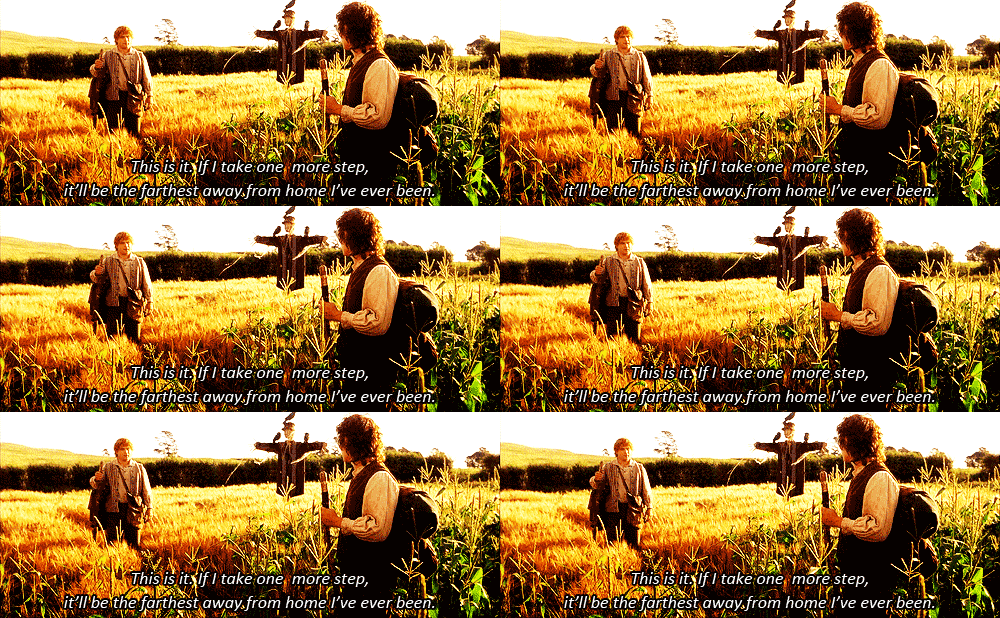
She takes matters into her own hands and leaves her village and heads to... well she's not sure where. South. She steps outside the fence and thinks:
(I swear, I'm not making any of this up. At about 10% I was done, but this was too amusing/annoying not to pursue further.)
Character is walking near the road when she hears something and dives into the forest and behind a tree.
Someone shout, "Quick! Get off the road!"
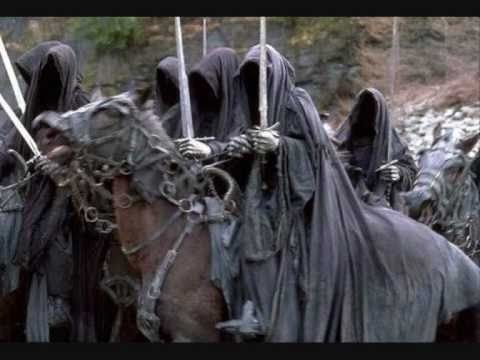
Then arrives... A host of guards dressed all in black on black horses.
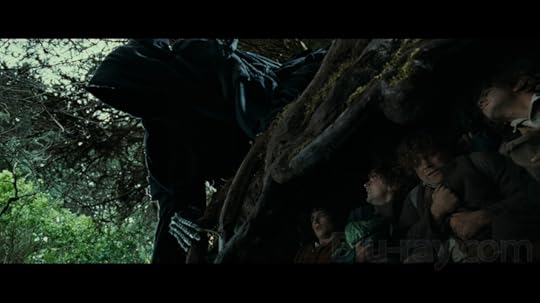
They(of course) stop right at that spot where she went off the road to discuss what to do and let her know who they're chasing(in case there was doubt). Also one of them stares oddly into the trees where she's at. Now the chances of someone stopping right where she hid and then eyeballing the forest as if "hey i might've stopped right where she's hiding and should stare at those trees" are pretty low, but you know... maybe he had a strong sense of smell.
She continues on her way and reaches a village that's slightly larger than her own. She pulls up her hood and it starts to rain.
She finds an inn(the Red Boar or something. Thank goodness it wasn't the prancing boar...) and when the innkeeper asks her business she lets him know that her business is her own.
He finds her a room. Later she goes down to the main room and gets something to eat. (no fear, she avoids pints). She foolishly leaves her gold carrying pouch showing.
This causes a stir and vagabonds descend. (the sad part is I said to my friends a few pages before this that I'd let them know when a certain ranger appeared) But no worries, she is rescued by a person she's never met before but who steps in and saves her.
[image error]
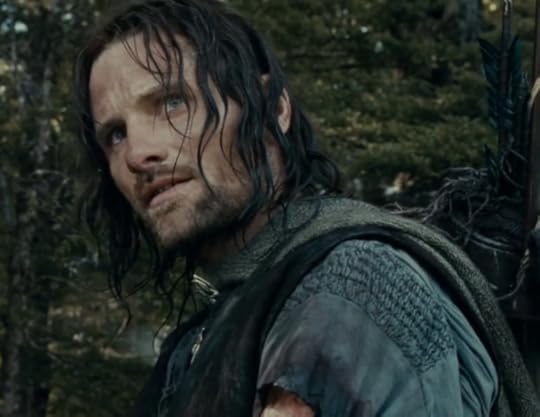
Actual scene: "Once their footsteps had died away, Makilien's captor released her. Fearing for her life, she pulled out her dagger and spun around to face the man. When her eyes settled on him, she realized only a dagger for defense would do little good if this man intended to harm her. He was tall, like her father, with dark hair that came to his shoulders and a dark beard. His clothing was worn and suited for travel, but Makilien's gaze lingered for a long moment on the sword hanging from his belt. Swallowing hard, she looked up to his face and found that, despite his rough appearance, kindness warmed his gray-green eyes.
"I'm not going to hurt you," the man said in a gentle voice, keeping his distance so he wouldn't frighten her, "but you have to be careful."
Now I don't know about anyone else... but for some reason I can really picture this character! Like what a great description. I can imagine him perfectly.
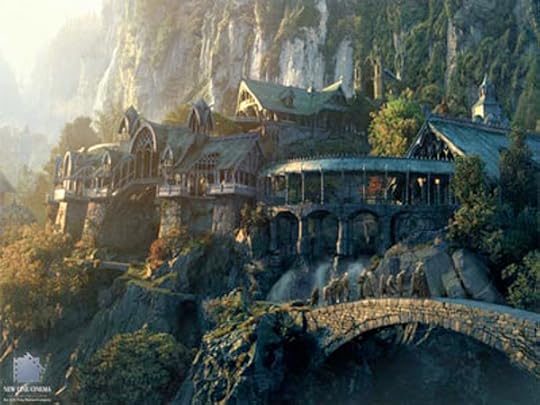
Truly incredible. Anyway, rescuer and MC leave the town together. Where are we headed? asks the MC. Why to the forest of course. We're going to the elvish city in there. Elves are all against the bad guys.
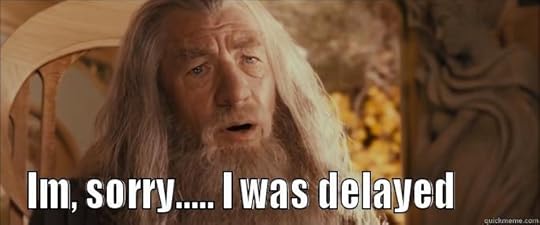
While on their way there, they're rejoined by the older guy from the beginning who has managed to escape.
They continue on and at some point discuss the Shakiers? The evil guys henchmen. They weren't originally evil but when Evil discovered them he twisted and corrupted them. Now they are bred to do his bidding.
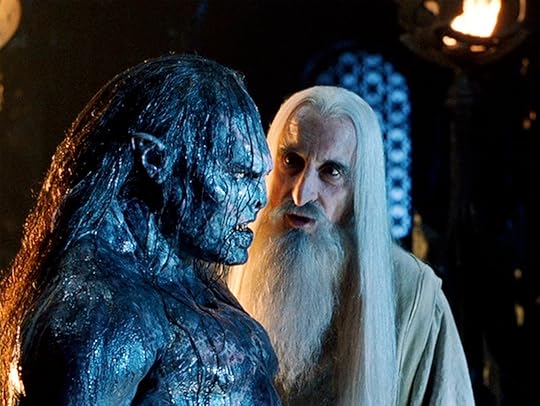
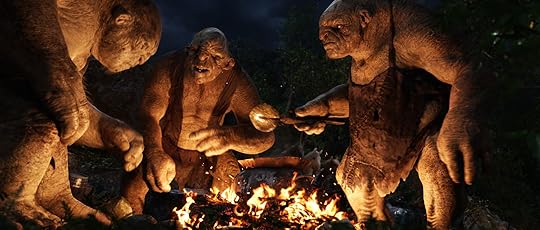
They stop and camp for the night. At some point something tips them off to another party in the woods. They sneak up on the campsite and find a group of goblins around a fire discussing if they should eat the pony they captured or use him to haul their goods.
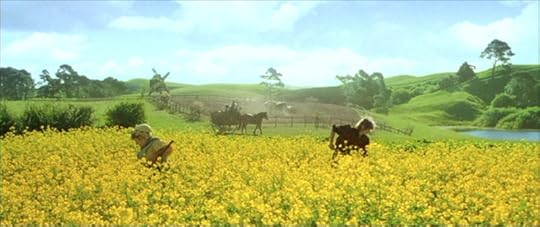
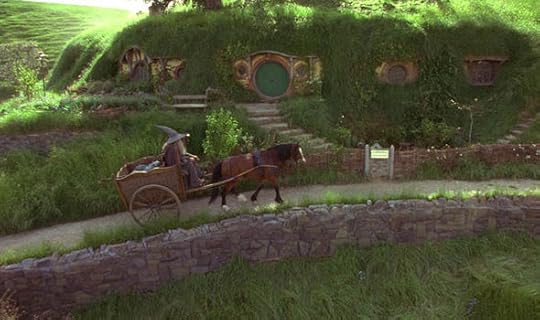
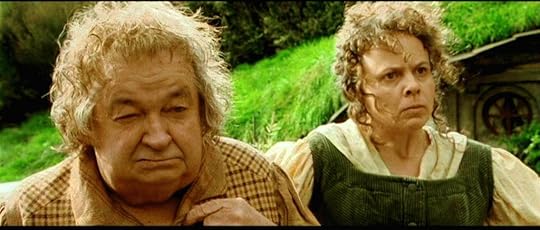
Now here's where I set the book down (23%). I have standards!!! You can't just throw in the goblin/pony scene! That's a line I won't cross.
In truth, the head hopping in this book is the worst I've ever seen. It was BAD. Besides that, this book as far as style, grammar, spelling, description, etc. goes, it was good. The author clearly has a talent for writing a cohesive plot with vivid descriptions. The pacing is well done and never is the story confusing.
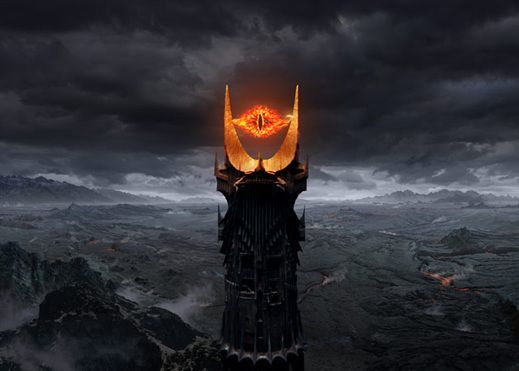
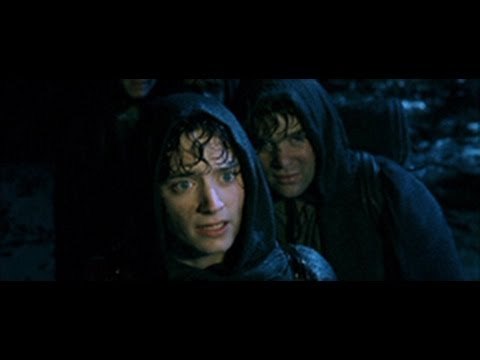
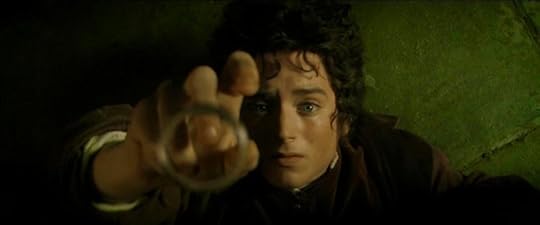
BUT, once it clicked at approx the 10% marker that this book was a knock-off of LOTR(I'm sorry, you just CAN'T hit that many similarities and not have me think that), I couldn't unsee it. I kept going at that point because it was both annoying and amusing. There were other connections and since this all cropped up in the first quarter of the book, I can only imagine the rest.
When someone clearly has this much writing talent(minus the head hopping which is at least is just a one area fix) and yet can't come up with a mostly original story, it's sad. I might try Evangeline's work again if she stopped head hopping and didn't borrow heavily from a book/movie that is not her own. I thought the throw in Hobbit scene where I quit was a nice icing on the cake and this has proved a nice source of amusement for me and my friends.
In short, I'm not rating this because I didn't read more and I honestly don't know what I'd rate it. The talent is here, the originality is not.
Thrilling the imagination ... Stirring the heart ... Impacting the soul ...
Truth swept me into a beautiful story of finding the truth of God, fighting evil, and forming bonds of love. Makilien is a young woman trapped in a village devoid of truth. Her family accepts it; but she just cannot. There’s something more out there, she knows it in her heart. So she embarks on an incredible journey in search of truth… and finds that and more.
Oh my goodness, I just can’t even find the words to describe this book properly. At first it went at a little slower pace, and I was just reading it now and then, and enjoying it. Then it became so much more! The characters were unforgettable, the relationships so real and personal. I got goose-bumps on the part where the shepherd appears to Makilien and reveals who he is. Makilien’s struggle with accepting Elohim was is such a real thing, and when she did, it was just wonderful! :) With humor, tenderness, anticipation, and surprises, Truth is a vivid and beautiful Christian allegory.
Thank you for writing this, Molly Evangeline, I loved it! :) :)
When the author posted on her blog a post for volunteers to read and review her books, and that she would send the volunteers a free book. I sent her an email at once volunteering to read Truth, the first book in her fantasy trilogy
And I’m glad I did!
The story is allegorical to the spiritual struggle of God’s people against the evils of the world. I loved the Christian Allegory in this book, and how it was handled. As Makilien goes through her journey, her new friends introduce her to Elohim, about whom she has her doubts. How can she believe in something she can’t see? Later she meets Manian … who was masterfully done.
In fact, the only issues I have with the book was that Makilien seemed to lack a feminine side.
I love fantasy novels. If you browse through my Goodreads profile or my bookshelves at home, you'll find lots of it. Tolkien and Pratchett are some of my favorite authors. I even made an impassioned effort to really enjoy the Inheritance Cycle, almost more because of the fact that I had to support young writers (solidarity and all that) than because I was particularly interested in dragon riders (I do love dragons, let it be known; even written an entire novel about them, but that is neither here nor there). So when I heard about Ms. Evangeline, I was rather excited. There aren't many Christian fantasy authors, much less female Christian fantasy authors and, while Christian fiction usually isn't quite "my thing"--I'm more familiar with George R.R. Martin than with Francine Rivers--I figured that getting a free book in exchange for a review wouldn't be too bad. I'm a sucker for free books.
Truth is the story of Makilien, a young woman from a small village in the north of an undefined fantasy world. This village is held in subjection to Zirtan, the devil-figure of this world, who portrays himself as a benevolent father to the people he has subjugated. Makilien, though, feels as if something is off about this story and, after a stranger shows up in the village (before promptly disappearing), she determines to set off and find out the truth...not just about Zirtan, but about her life and what it's supposed to mean. So begins an adventure.
There were parts of Truth which were superb. The moral--which was fuzzy in some places, but clear in others--was also quite a good one. Truth is to be found in One, and that One is not made of darkness. Makilien's story reiterates this idea over and over. Some of the backstories were amazing--I loved the Shaike, especially. I'm a sucker for well-written baddie armies, and the Shaike certainly seem to deliver at first blush. I also loved the two Elvish brothers--Elandir and Elmorhirian--who, despite their tongue-bending names (two of many such names), were absolutely hilarious. Brotherly banter will forever own my heart.
Many of the other characters, however, were easily forgotten. Backstories were revealed too late--in Sirion's case--or not at all, as with probably three-quarters the supporting cast. Even characters who weave their lives throughout the story, as with Halondar and Torick, are barely fleshed-out, and the reader is left wondering just who these men Makilien is trusting her most intimate secrets with are, precisely.
Then again, Makilien poses her own problems. Of all the characters, she was, to my regret, the one I found least relatable. She strikes the reader as a tourist, simply wandering through her own world with wide-eyed unconcern for what is actually happening, putting herself in situations where she is sure to be hurt, going off into things she's always been told are dangerous without a second's thought. Other than this appalling lack of common sense, there is nothing significant about her, no reason in-universe that she shouldn't be shuffled off into a corner, safely out of sight and in safety...so why is she not? A far more compelling choice of main character in my opinion, for the reader, would have been Halandor or Torick, or even Vanawyn if the author had absolutely had to have a female main character.
As it is, Makilien reads like a badly written self-insert in a world she is nothing but a hapless observer in. It is strange to me, then, that her in-universe companions seem so eager to let her engage in this tourism: Halandor allows her to go into numerous dangerous situations without ever questioning her decision or--what would be far more likely in a cultural setting such as this--simply telling her she is not going. Inexperienced, weak young women are liabilities to fighting men, no matter their special messages from the God-figure in their allegorical world--especially when other, perfectly capable young women (/coughvanawyncough/) are left out of these same dangerous situations, apparently due to some cultural norm despite her apparent training and skill level. As a reader, I'm mildly confused by the decision to go with this particular character as the main viewpoint character.
As always, however, there is more than one element to a story. If the characters are less than engaging, but the story is good, I can generally ignore the bad bit and move on--and vice versa. However, even the general plot and movement of Ms. Evangeline's novel struck me as both dreadfully familiar and rather stiff. It almost feels, in places, as if Truth is attempting to be not so much a thinly-veiled allegory of the Bible as it is of Lord of the Rings. Being as familiar with that story as I am, it was difficult to ignore the parallels of Minarald/Minas Tirith, Halandor/Aragorn, and the the various other creatures and characters that populate Dolennar. Even this, however, would be forgiveable, because I've found myself unconsciously borrowing from sources before--and such a source as Lord of the Rings, which has infected all of modern fantasy is hard to get out of one's system completely.
Yet even the bits of the plot that weren't (hopefully unintentionally) borrowed left me underwhelmed. The conflict moved too quickly in the beginning, and Makilien's movement through the world was alternately rushed and far too slow, leaving me simultaneously bored and trying to keep up. This was exacerbated by the lack of detail and emotion in the exposition. As Makilien sees this beautiful world that neither of us have ever seen, she rarely narrates any of the things she loves to sketch with more than a few words--or, in the case of one of the Elven cities, with no description at all.
Even amidst all this, with Makilien breathlessly narrating near the end about how heartbroken she was at saying goodbye to all her friends, throughout the preceding chapters, I felt nothing. As a reader, there was no growth of companionship or true friendship; only Makilien, the lonely observer of the world around her, never quite letting me see the world, keeping me an arm's length away from it--and from the people in it, too. Even Meniah, who is supposed to be so important that they'd trade fighting men for him, seems distant and flat. Like the others, he is a plot device for Makilien's story, not a real person with his own story that is briefly intersecting with Makilien's before going off on its own.
There are brief exceptions to these things. The Elven brothers are engaging and amazing. Sirion and Makilien have a beautiful relationship (even if I dare you to tell me that thing ain't gonna turn romantic at some point because come on, that boy screams "love interest" in every known language on earth). I can sense the mythos this world could have, and it makes me at least a little interested to see how Ms. Evangeline could take this if she wanted to.
I was drawn into the storyline almost immediately. I felt for Makilien as she tried to discover the truth in a city determined to hide it. I love how Makilien grows throughout the book, and her decision at the end.
The elves? Need I say more? These are everything you think of about elves: tall, graceful, live in the woods. But with a sense of humor. Lots of humor.
I enjoyed the adventure of this book. It’s a straight forward good-vs-evil, epic battle, adventure story with Christian themes weaved into it.
All right, let’s get this out of the way first and foremost; this book isn’t as good as the Ilyon Chronicles, not by a long shot (this author is another pen name for Jaye L. Knight), nor did I expect it to be seeing as this was one of her earlier novels, but I just wanted to point that out in case anyone was wondering.
Is it bad? No. Is it good? Yes, if you want a light fantasy Tolkien-ish adventure with a very typical Christian theme of finding God/believing in Jesus for the main character. If you want something more then that, this isn’t the book for you.
The characters were okay—I didn’t love, like, or hate any of them, they were just there. The dialogue was fine for the most part except we kept having repetitive “hi, I’m so and so” and “this is Makilien from blah, blah, blah, Makilien this is so and so” over and over and OVER again in the same pattern to the point where I started checking out whenever someone was introduced, which goes for the seemingly endless descriptions of places—I’m not fond of overly long descriptions anyways but these were so bland and I skimmed most of them, heh. Also one part really threw me off when Makilien is given a bow and arrows and can shoot like a pro though we didn’t have any prior knowledge she could do so until it’s revealed afterwords—I really wish we’d known that first and those parts were reversed to make more clarity and sense, but oh well.
Like I mentioned before the Christian themes and problems were pretty typical but they weren’t badly or irritatingly written and one part did have me tear up a bit, so there’s some punch to them, it’s just if you’ve read a lot of Christian fiction (like me) it gets old after a bit.
So while just okay I’m interested to read the next book as a friend of mine says the next two are better, so I want to try them out. I’d recommend this to a younger reader (older MG to younger teens I think would especially enjoy it—I know I would have in that age range) or to anyone who wants a fun fantasy adventure in the vein of The Fellowship of the Ring without tons of worldbuilding to keep track of.
‼️Content‼️
Violence: injuries and blood (not detailed); goblins plan to kill a horse (they’re stopped); a character is whipped (not shown); fighting with weapons (not detailed); men try to steal from and attack a girl; a wolf bites a character’s arm (not detailed); a character is stabbed in the gut (not detailed); a character is held at knife point; a character was tortured for information (not shown, only mentioned); a goblin bites a character’s arm; dragons light men and creatures on fire (not detailed)
Drug/Alcohol: a character is stabbed with a poisoned dagger
Other: people are imprisoned inside a village; fantasy creatures and races; a horse can understand and respond to a character; death and grief
This author is a real professional, and I appreciate that. Her stuff isn't embarrassing personal fantasies and rants put down on paper. It's entertainment made for an audience. In this case, a very specific audience. I admire an author who can see that writing is a legitimate entertainment business, not just self expression. :) Good Points: 1: A smooth, light reading style, very easy to read. Reading the work of some authors is like fighting your way through a swamp. But reading Molly Evangeline is like gliding on ice, only presumably less dangerous. :D I loved her simple way of putting things. No heavy, overdone language and pompous descriptions of gore. 2: That brings me to point number two. All action/violence areas were remarkably good. You felt the violence going on was actually happening precisely because the author wasn't hamming it up and indulging in childish descriptions of gore and bloodshed. She handled all these elements in a mature manner, calm and factual, like an adult discussing real events, not like a silly little boy trying to shock himself with pictures of dead bodies. 3: The opening sections with Makilien feeling trapped in a community of fearful prunes who don't like discussing the truth were very strong. Some of the events there were a tad angsty, but in general Makilien came across not only as a person with a reason to complain, but as the kind of girl who would think of asking questions. So often the heroine doesn't come across believably as the type of person who would criticize the group she was born in. 4: All the Elves are astonishingly fun and good-looking. In fact, it was hard to imagine them in traditional elven costumes. These people would make cute pirates or maybe Norman knights--one usually visualizes Elves as somber with stringy hair, but not these people! The guys are also witty and spirited--another shocker. Whoever heard of Elves with a sense of humor? Not me. But I'm liking the idea. I wish Makilien had just had adventures with those cute guys for all the book, wearing gorgeous dresses and making sassy remarks back to them. 5: Sirion is an interesting character, to the extent that he appears. Kind of a secret agent type. My main complaint with him is he doesn't appear more often. But his lines are mostly good, and most lady authors give male characters--particularly positive male characters-- horrible sappy, pseudo-feminine lines, so this was a detail that really impressed me. 6: The scene where Makilien entered the bar was realistic. Most scenes in fiction where a lady enters a bar are amazingly cheesy--representing the lady as assaulted by an avalanche of crazy guys the minute she enters the room--but this one merely showed our heroine as a little nervous, but dignified, not assuming she would be in danger from the men just because she's young and female. Very good.
Weaknesses. 1: Makilien's constant travelling with guys and fighting in battles was just not believable after a certain point. You had to wonder how dumb those Elf guys are that they don't seem to remember she's a girl and vulnerable. Indeed, it seemed odd that none of them--except maybe Sirion--showed any signs of noticing her prettiness. Far from assuming herself to be shockingly appealing to men, Makilien never seems to worry the guys will get interested in her at all. This seemed a little weird to me. Particularly since I was getting the impression she was very pretty--as pretty as the author herself! How can these guys not notice? Unless we're supposed to think she's basically a child from their point of view--but in that case her participating in the battle is just a terrible idea! Oh well, maybe that was just me and other readers won't be concerned by it. 2: All the villains are extremely superficial characters. We don't get to know any of them deeply as people. They might as well be paper dolls. This is deliberate on the author's part,and I admire her, to a certain extent, for just bluntly making the villains flat rather than pretending shallow characters were deep and realistic. But it is noticeable, and it might bother some readers. 3: Some of the more Lord-of-the-Ringsey type dialogue--grand lines about battles, fantasy creatures etc--was kind of canned. It didn't feel spontaneous, at least not to me. Not all the dialogue in the book was canned, but some of it was. 4: Makilien's worrying at the end of the book about disrespecting her parents by running away bugged me a little, mostly because I felt they were in the wrong, not her. She was reckless to run off--she could have gotten seriously hurt--but she was not wrong to disagree with them about this issue of staying in this tiny town and not seeking the truth. Sometimes, if the parent is seriously mistaken, the kid has to choose right against the parent's wishes, and that is not disrespectful. That's just doing the right thing.
Overall, a good read, and a very talented author, but not something I went crazy about. :) Though I did enjoy some parts of it very much.
Truth, by Molly Evangeline (copyright 2011, Living Sword Publishing), is a young adult fiction story of how Makilien, a 17-year-old girl with intense longings to know about the world around her enclosed village, discovers the reality and power of John 8:32, “And you will know the truth, and the truth will make you free.” As Makilien encounters opposition from fellow villagers, encounters with unknown and perhaps dangerous creatures, battles, new friends, new lifestyles, and, most importantly, significant struggles within herself regarding Truth, peace, and belief in Elohim, a powerful portrayal of learning to trust and rest in relationship with God is presented. The allegory and analogies are powerful and moving.
The author presents the search for truth in a fascinating, relatable manner that has relevance for everyone’s lives. Although her world is fictional, there is no magic, witchcraft, romance, vile descriptions of hideous creatures, or unbelievable/unrealistic scenarios. The plot includes some battles and violence, but it is within reason. The description is quite reader-friendly – details of repulsiveness or torture are kept to the barest minimum, though there are some painful scenes.
The book also deals quite well with the subject of rebellion and authority. Many books present rebelling against parents as the key step to fame, heroism, adventure, or saving the world, thus tacitly encouraging the readers to a positive view of trampling authority. Although rebellion at the beginning does start the chain of events in motion that are key to the rest of the story, the entire book portrays Makilien’s coming to grips with a proper view of authority in a very encouraging, uplifting way.
This is a straightforward narrative with very little jumping around or alternate points of view. The plot is upfront: good versus evil. Yet there are enough interesting plot twists to keep the story moving in a meaningful way. There is room for much more character development in many of the minor or supporting characters, but there are two more books in which this aspect may have been developed more fully (one cannot exhaust all possibilities in the very first book of the trilogy!). On the face of it, Meniah is my absolute favorite character. From his very first mention, it is evident that something is significantly different about Meniah – and my love of allegories feasted on it to the full. Every scene with Meniah – without exception – is perfect and moving. What is more, I can relate to all of it in my own life. The author did an excellent job of portraying Meniah, hands down. I cannot speak highly enough of her portrayal of Meniah’s wisdom, love, and most importantly, the relationship that Meniah has with Makilien from the very first meeting. Her behavior and actions towards the end of the book are inspiring and yet not “religious” or “super-spiritual,” because of the manner in which she does what she does. She’s full of life, adventure, and hope – but she spends bright morning hours talking with Elohim! What an inspiration!
This is an excellent read for young adults. It is written in an easy-to-read fashion and simple enough to get through fairly quickly. Adventure abounds, and weaved in in all is a beautiful portrayal of truths for life. Indeed, the book is aptly named: Truth. Through reading this book, may you come to know the truth in a richer and deeper way – and may His Truth make you free indeed.
If you love christian fantasy you'll love this book! It reminded me a lot of Lord of the Rings, but with a christian viewpoint; every christian Tolkien fan's dream! Molly is very creative with her imagination and it shows in her writing. Makilien, the main character in the story, is very courageous and brave, a very refreshing change from most other girl characters I've read about. I must say, I wish the focus would have strayed a bit towards some of the other amazing characters in the book instead of focusing so much on Makilien, but the book was great nonetheless. I highly recommend this book to any pre-teen\teen looking for a book filled with faith, adventure, danger, courage, and truth.
An intriguing plot from the beginning. On the very first page you are taken into this young woman's world, feeling her pain, and living in her reality. Somehow, I feel that we can all relate to her feelings. The feeling of being lost and trying to find your purpose. The feeling of needing truth so desperately you will go to any measure to find it and fearlessly face the consequences. This is exactly what Makilien learns to do in the first book of an overwhelmingly relatable trilogy.
This is a must-read. The whole series is, in fact. And I promise, once you finish the first 2, you just have to read the third.
Just re-read this while on vacation. It's still my least favorite of the three books, but it is still really awesome. I really enjoyed going back and 're-meeting' the characters and knowing where they end up. Especially Sirion.
I had considered writing up a review for the entire trilogy at one go, but I feel like these books each deserve their own review. So, let's just go for the first, and see how it goes.
After falling absolutely in love with Jaye/Molly's other series, The Ilyon Chronicles, I wanted to read more from her. I'm seriously going nuts waiting for book 4, Exiles. So, I needed a good Molly fix while I waited. She published this trilogy before the Ilyon Chronicles, and it was definitely a plus to have all three books out and available to read so I didn't have to wait at all between them. And for all fans of Molly's work, this trilogy does not disappoint. It is apparent in places that this was written early on in her writing career, but it's been so much fun watching her talent with words develop. I recommend this trilogy for anyone who enjoys Molly's writing, fans of fantasy, lovers of adventures, etc.
Makilien is an enjoyable heroine. She's brave, loyal, kind, and just everything you'd want in an epic heroine. It was a lot of fun watching her develop, and I felt her pain as she struggled along, fighting to discover the truth. (Note aside: this book is very well named.) Some of the other characters I would almost label a little stereotypical, as she has the usual older mentors that come alongside of her, but they didn't taste horribly cliche. There was the twist of having more than one mentor, and each one had their backstory.
I found it difficult to get into the story right at the beginning, just as some things were a little slow in my opinion. However, once I got into the book, I got swept away and read the entire trilogy before I knew what was happening.
Truthfully, this book as far as the plot is concerned reminded me of The Two Towers. Makilien and her friends have a large battle that they fight in preparation for a larger battle promised to arise in book two. I thoroughly enjoyed the pacing of the fighting and the scenes. Many times I got pulled in so much I felt like I was actually there. Guaranteed, once you start reading, you won't be able to *not* finish this series. It just isn't possible.
This series has no magic and is highly Christian. A few times I was afraid that the narrative was getting too "preachy" but overall I think Molly handled it really well. The message of truth and redemption is clearly portrayed in these pages, and I can only marvel at how Molly did it.
I have been reading a heap of Christian and "Christian" Fantasy lately. Truth by Molly Evangeline stands out for two reasons:
1) It is clean and clear of magic, the "good guys" show patience, restraint and let her figure the and the darkness is aptly presented as deception and lies. The battle is between the truth and the lie rather than between the mean and the good or something else. Nice.
2) The story and descriptions of the characters and settings were disappointingly shallow. I didn't get a very good sense of ANY of the characters. My take: A young woman who longs for truth ventures from the village she has never been away from, meets a man who knows the Truth and travels with him to his town. He teaches her to wield a sword and she (magically) is almost instantly able to use it in defense. The two of them are joined by others and all travel to another town where they pick up more companions and travel to another town where they are to convince the king to help them fight the evil foes who are threatening to attack their cities. Up to this point (3/4 through)it had been almost painful to read the plodding, colorless (non)descriptions and wooden dialogue between the flat characters who were not doing much besides traveling, camping, and occasionally defeating an attacker. However, when the group reaches the king they seek, the slow-motion plot picks up a little more humor and action. The last quarter of the book was better because a battle brought some action.
The idea was great. The execution left something to be desired.
Makilien is a brave and adventurous young girl. She has grown up her whole life in Reylaun. A city which lord Zirtan rules over, letting no one go out of his gates. Lord Zirtan says he is protecting them, but Makilien is frustrated with life at the sense of no purpose. Each and every day is the same, never changing. When a strange visitor enters the kingdom, Makilien sees her chance for adventure and a new life, and she takes it.
These books are a Christian series. In the beginning, Makilien doesn’t believe in God. As a matter of fact, she doesn’t even know he exists! (In this book God is called Elohim) Throughout Molly’s book, you can see Makilien really grow in her faith, and how her faith helps her through her struggles. I love the analogy she uses for God and Jesus. It really clicked home for me!
I literally could not put the book down! I finished the whole book in one day, reading it at every possible moment. Molly does a wonderful job of really capturing her audience, holding their attention from the beginning to the end!
Since her last books were so wonderful, (pirates and Faith) I was worried that fantasy wouldn’t be her cup of tea. She did a spectacular job!!! She made the fantasy animals seem real, and not overdone. Read this book!!!
"Truth" was a fun, completely clean, adventurous, allegory! It reminded me of the Kingdom Series by Chuck Black that I loved so much, except with a female lead and a more Tolkienesque world.
The story itself was interesting, but I will admit I had trouble connecting with and believing many of the characters (though the elf brothers were amusing and Siron was cool). But if I recall, this was the author's first book, so I have no doubt her writing improves with each book she writes.
Like I said, it was completely clean and had strong Christian parallels. I definitely recommend this, probably towards younger teenagers, but also for anyone tired of finding garbage in so many "older" books and would just like a decent adventure story for once. :)
For the first half of this book, I was super board. I felt the style of the writing was rather monotonies (I mean we heard about birds chirping and sun shine about three times a chapter), then really not a lot happened. But, the last half was really good. A lot happened, we got to really know characters and it ended it well. I really loved seeing Makilien's character change though the book. That was very well done. I am not a fan of Fantasy so I found all the weird creatures rather annoying, but Miss Evangeline wrote about them very well so that they were not as disturbing as they could have been. Overall, I had a lot of mixed thoughts on the book, but it was good and I look forward to reading the next book in the series.
I really enjoyed this book!! The only reason for the 3-star rating is because it took me forever to get into the book, and I couldn't really connect with the characters. However, about 2/3 of the way through the story picked up, and I ended up staying awake far too late to finish it. I'm looking forward to reading the next book in the series!
I got the first book in The Makilien Trilogy, Truth, after I met the author, Molly Evangeline, on Goodreads.com. It took some time for me to get to it, as my “to be read” pile is quite large, and that's not mentioning those books that I re-read on occasion.
Truth is a very difficult book to judge and review, as the impressions I had whilst reading were all over the place. Overall, I'd say that it was quite a page-turner and very enjoyable. The characters, whether the eponymous main character, or her friends, were very believable and sympathetic.
But there were problems. First we shall summarize the plot, and then go into the pros and cons of the book.
The story begins in the fictional city of Reylaun, where a young woman named Makilien is extremely restless with her life. The city is essentially an economically poor police state. The citizens' ability to move, make commerce, and do, well, anything really is under the control of their king, Zirtan, who seems to be deliberately suppressing them as he prepares to expand his empire.
Fed up with the situation they live in, and the docility of her family and fellow citizens, Makilien makes an escape and eventually comes to a town outside of Zirtan’s direct control. There, she meets a kind man named Halandor, and is swept up into the affairs of kingdoms to the south. Kingdoms that Zirtan wants to conquer, that is. Now Makilien must join her new friends in the fight of their lives to escape the oppression of her evil former ruler. But she is plagued with doubts about what happens if they lose or she dies. Can she trust this “Elohim” her new friends speak of with her fate?
The above is a rough sketch of the story. It seems a tad cliched, and drawn from many different well-known stories. It is, to be honest, but that isn't a bad thing. The reason that tropes and plots are re-used is because they work, and make for good stories. The same fact is at play here.
Despite the above, Evangeline does make an effort, a successful one, I believe, to paint a vivid picture of the world in which her stories take place. She differentiates the story from Narnia and Middle-Earth, which are the two fictional worlds she seems to borrow the most from. No one could look at this fictional location and mistake it for the above two places. It seems to be, in fact, somewhere in-between Narnia and Middle-Earth, which the sense of adventure and magic of Narnia and the gritty “real-life” feel of Middle-Earth.
That is not to say that the story is perfect. There were a few areas that could have been better. The first of which is that Makilien is a tad too perfect. She is the weakest of the main characters, it is true, but if you look at her skills in isolation, she kind of sounds like a “Mary Sue” character. She is extremely pretty, smart, quick-witted, kind, beloved by young men in both her hometown and the kingdoms she visits, can sketch and use a bow with ease, is a natural at learning swords and horses, saves the day, etc., etc. Now, to be fair, some of this makes sense. In an oppressive environment, the more skilled or resourceful will be the likely ones to figure out a way to escape or survive. I just wish the author had given Makilien a few more faults.
The second problem was how easy her faith was, and her expert perspective on it afterward. This book isn't the only book to do this, or even the worst, but it really drives me nuts. Yes, she struggles with believing in Elohim, but once she believes, it is easy for her to continue to believe. Elohim essentially gives her a spiritual pat on the head via a “feeling of peace”. And what's more, she seems as knowledgeable about her faith as those who have held belief in Elohim far longer. I won't critique Evangeline for this element, as it is an issue I think most Christian writers have.
The next issue is that of the Christ figure, which was just plain confusing to me. I had him pegged early on, but that was just because I anticipated where the story was going. I'll leave his name out, but you'll recognize him quickly. I felt little reaction to his death, unlike with Gandalf or Aslan. It's like Evangeline inserted him so as to have us see a Christian parallel, but spent little time trying to make us actually care about him, or develop him as a character at all.
Finally, not really a critique, so much as advice for authors in general, but I'll put it here. Please do not have your military commanders on the outnumbered side of good just do an “epic” rush of the far larger enemy. It might be good drama, but those who know anything about military strategy will recognize how bad this idea is. What's more, the commander of the forces of good in this story had no plan once the enemy was too close for his men and women to safely shoot arrows at them. At least, no plan other than a suicidal rush. It just bothered me.
The above might make it sound like I'm trying to take the story apart, but I'm not. I'm just listing the parts that I thought were weak. Overall, this book was superb. As I said, the world was vividly portrayed. In fact, this alone is a plus for Evangeline as too many authors fail to differentiate their work from that of the other authors from whom they borrow.
For that matter, the species were beautifully described by the author, and that contributed to the enjoyment. I could feel the pleasure of meeting a new type of creature on the side of good, and the revulsion of seeing new fiends on the side of evil. Despite some clumsiness in the writing at times, Evangeline overall exhibited a talent for writing quite poetically. She has a sense of how to describe or write in such a way that it seems almost an art form.
Despite my allegation of Sueishness and bad writing on military tactics, there are some caveats in that Evangeline deserves praise on these fronts. First off, Makilien, all things considered, was a fun character to “tag along with”, if you will. I felt suspense when she was in danger, and relief when she escaped or was rescued, depending on the situation. In the end, I was happy with her growth and new-found strength. She was an audience surrogate I really liked to “root for”.
For the rest of the book outside of the overall strategy of the last battle, the political and military intrigues were fascinating, and quite realistic. It seems obvious that the author researched these issues, as well as researched weapons and sword fighting. It all carried an air of authenticity, including in Makilien's individual fights in the big battle at the end.
Despite the few criticisms that I made of the book, I can honestly say that I really enjoyed this tale. I look forward to continuing with Makilien's adventures as she serves and fights for Elohim and her friends.
It's not as good as the Ilyon Chronicles, but she wrote these many years earlier, so she has developed as a writer since then. That being said, this was still a good book.
Makilien is discontent with her routine life in Reylaun and is certain there must be a purpose to life. If only she can discover what that is. In search for truth, she escapes from Reylaun and sets out into the unknown of Dolennar. Right away, she meets Halandor, who takes her under his wing and becomes a father-figure to her. He protects her and teaches her how to protect herself.
As far as female protagonists go, Makilien is well done. She is strong and capable (once taught) but not better in any way than her male counterparts. She helps and saves them; they help and save her.
Now that she's out in the world, Makilien learns that Lord Zirtan is evil, not good as she'd been told her whole life. Several kingdoms must join together if they have any chance of defeating Zirtan. Makilien travels all over Dolennar with Halandor and many other new friends in order to secure support for the coming battle against the forces of evil.
There is quite a bit of Lord of the Rings parallel in this book. I personally don't think that's bad and it doesn't bother me, but some might not like it. As I said at the beginning, Truth is not Ilyon, and as such, the Christian element is much more obvious. The author has become more subtle with her symbolism and Christian themes.
The one thing that confused/bothered me was .
I didn't have a problem really with the words because most all of them are how I would naturally pronounce them anyway. I read a lot of fantasy, so that might have helped. What I did have trouble with was putting the name "Makilien" with a girl. For some reason, that just seems like a boys name to me.
I wasn't super close to any of the characters. Elandir and Elmorhirian were funny. I liked them and their banter a lot. I could relate quite well to Sirion when he said, "I don't find I make new friends easily.... I'm afraid of losing them." I can TOTALLY relate to that!
I'm curious to see what adventures await Makilien and her friends in the future.
Fantasy is quite possibly my favorite genre ever. Certainly many of my favorite books fall into it . . . The Chronicles of Narnia, The Lord of the Rings, The Door Within . . . and now Makilien. As always with Molly's books, Truth is clean, the characters are well developed, the story is good, and leaves the reader wanting more. One of the things I liked best about Truth was the allegory. Makilien is searching for meaning for her life, for truth about the world she lives in, for a reason to fight. Her friends tell her about God, or Elohim, who is truth, the creator of Dolennar, who cares about His people. I also liked Makilien's dresses, particularly the one she wears to a party near the end. There isn't really any romance in this book, but it does set up for there to be romance in the remaining books in the trilogy. Truth is an exciting and moving story, and one I have come to love. In a way, Truth represents a journey we must all take, a search for the truth that is to be found only in Elohim.
Molly Evangeline is one of my FAVORITE authors and I am SO glad to say that I actually live in the same state as her! If I remember right, she grew up in the same town I live in. I met her once - before I read the books - and I was like "Oh cool! An author who lives here!" Then I read the books and was like "OH MY SIRION SHE IS A FLAWLESS WRITER I LOVE HER!!!!!!!" I would really like to meet her a second time now that I know she is such an amazing author. - - I know that wasn't about the book but oh well. This book, Truth, means a lot to me. I love the story it has about a girl who was trapped within the enemy and she doesn't know it. To me, it was just flawless.
I love reading medieval stories and I cannot wait for the Ilyon Chronicles to come out!
"Truth" is book one of a trilogy by Molly Evangeline. It is a pretty good Christian fantasy. I think it best suited for YA. There characters are likable, if maybe they need "fleshed out" a bit. The storyline is not real original, but told in a way that make you want to keep reading. There is a lot of moving from one place to another, (think Lord of the Rings), and a few twists. I enjoyed it and will be finishing the series. Nothing earth shattering, but a good fantasy with a Christian view point. I give "Truth" 4 stars. I liked it. No swearing or sexual content. There is battle scenes and fighting. I can recommend for teens and up.