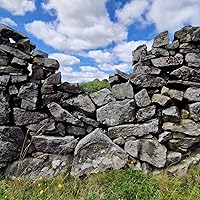
'I never imagined that the wind would blow me here, to a kind of isolation I have never experienced... There is never anything out here but my shadow, that no one treads on any more'
When Jade's partner leaves the barn that they moved into just weeks before, he leaves a dent in the wall and her life unravelled. Numbed from years in a destructive, abusive relationship, she faces an uncertain future and complete solitude. Slowly, with the help of Devon's salted cliffs and damp forested footpaths, Jade comes back to life and discovers the power of being alone.
As Jade reacclimatizes, she considers what it means to live alone. Through conversations with other hermits across the world, Fitton sheds light on the myriad - and often misunderstood - ways of living from monks to hikikomori, and the largely ignored female hermit. Jade questions whether hermitic living is possible in an era of constant communication and increased housing costs as she finds herself financially unstable and itinerant. She realises that home doesn't exist within walls, but within the landscape of her childhood home county.
Lyrically written, this is an inspirational story of recovery, of finding home, and of celebrating solitude in the natural world.
I deliberated over this rating before settling on 3.5 stars.
The first 30 pages or so of this book nearly made me give up; Jade's story was so harrowing that I thought it was going to be some sort of tragi/misery-porn type memoir, masquerading as a book on hermits! After trawling through this difficult section, we land upon Jade making a life for herself on her own and enjoying solitude. This is against the economic and political backdrop of rising house prices and commodification of South West England, the insecurity of the job market, the difficulties of freelance writing work and the mental health of the nation. The story is interesting and Jade's observations on nature are poetic and lyrical, she really captures the essence of what it is to walk alone and really "see" nature.
Historical cases of hermitage are discussed, with everyone from Benedictine monks to Hope Bourne. These are interesting to learn about and make for captivating reading. As another reviewer Louise Mullins has stated though, Jade never really lives in true isolation and therefore can't really identify as a hermit. There is some poetic license with Jade. The Dartmoor barn, despite being portrayed as remote, is still accessible by car and her mum does round trips for her for food shopping (had this girl never heard of online shopping?! Even in the wildies of Shropshire we were able to get Tesco deliveries like!) The house by the sea is in the middle of a village with plenty of peeps about. Then when she moves to the island of Lundy, she is with her husband! I think the book would have benefitted from her admitting she isn't a hermit herself, but likes her own company A LOT, possibly due to some repressed PTSD as Louise Mullins says. And we're fine with that. People like their own company. Some couples even have separate houses to pursue their own solitary interests. But you can't really start self-identifying as a hermit when you don't actually live out in the wilds alone, cut off from civilisation. This was a little grating as Jade really pushed this narrative to its maximum.
So, hmm, an enjoyable read for the nature aspects but the constant self-referencing as a hermit got a little annoying if I'm honest. Living alone does not a hermit make.
Jade talks very honestly and often shockingly about her abusive relationship from the start of the book, which I found painful to read (perhaps her writing is too good for comfort). The story of her breaking out of that relationship, taking time to be alone and learning to love and trust herself/others again was the main story arc. I had been expecting more nature-writing, so missed that aspect a bit. However she did set the scene of Lundy in the winter and the howling winds and glowing sunsets very nicely. There were some nice moments with wild horses at night and a rare bird sighting event on the island. There is also good stuff about the privatisation of land, historical hermit "heros" and the psychological benefits of time alone. Hadn't thought much about how much of a privilege the choice of being a hermit is.
The desire to live alone in the woods, by the sea or on the moors is strong. In Hermit, we see what that is really like in modern day England.
Hermit is a bit of everything: nature writing, a memoir on abuse, thoroughly-researched non-fiction on those who choose to separate from society, a story of London, Devon & Lundy. Fitton takes us with her as she learns to live alone, left by her partner as he moves out of their secluded barn, just weeks after they moved in. Originally wracked by fear, Jade soon realises that he was the thing that kept her on edge, not their isolated home. This is a book about rediscovering & recovering nature Hermit is a beautiful read, and the section set on Lundy particularly captivated me. As Jade finds herself in the unusual position of living on the island for many months, she focuses in on the vast nature of the place, and the part people have played in making the island what it is today. Set the backdrop of the housing crisis, throughout Jade finds herself tenuously employed and without a firm place to call home, moving through temporary accommodation, sofas and at one point, living in the back building of a church. She cleans holiday homes in the town she grew up in, all the while writing and longing to escape everything for a life is solitude and nature. Hermit is political at its core, but also richly personal. Reading nature written from a fresh perspective was wonderful—for too long these books have come only from the privileged.
This book is one of the only books I will ever read more than once! I need to read this book over and over and I will. This story reached me on a level I didn’t expect it to, and I asked about the ARC because I knew it was something I needed to hear at this time in my life. Still, even knowing that, I was not prepared for how comforting and simultaneously uncomfortable it was to read. Thank you Jade for noticing me in my time of need and providing me with something that not only helped me come to terms with my own solitude choice but also will also continue to help me as my life continues to change and I learn to understand it. X
Great writing is all about noticing, and Jade Angeles Fitton notices a lot. The book immerses you in first-person rural isolation, with a tonne of other interesting observations about life woven throughout.
I loved the author’s journey in figuring out who she is without the weight of everyone else’s expectations and all the other noise. The book touches on class, and whether we are what we do. There is philosophy in the pages and I feel wiser for having read it. Also vividly captured is a corrosively abusive man from a previous relationship who looms throughout: a bigger malevolent presence than any force of the wilderness.
I felt the second half was less about hermithood and more about connecting with landscape in the company of a small number of other people (i.e. her new husband, with whom she moved to an island of 20 inhabitants).
In some parts, this book can’t decide what it is. It’s autobiographical, it’s social commentary, it’s educational. It contains frequent almost academic segments on the subject of hermits (this is my Masters literature search and you will read it!). Some of these informative side stories feel crowbarred in. I found myself wanting to get past them so we could return to the “story”.
Overall, I loved this book. It covers lots of interesting themes, some sentences are pure poetry, and at its heart is a real person you will root for from cover to cover. You’ll probably also take out a National Trust membership.
To the outside world, I am a broke nobody. But season after season, this nobody stays and watches the sun go down over the sea until the sky starts to blur into darkness, and then the bats come out and sweep the sandy cliffs
It hit some cords, missed others, but overall, it was a good enough read
It’s a journey of reconnecting with nature, seeing life for what it really is, recognising our place within it all, and ultimately finding strength in acceptance. I loved it.
I found this book so beautiful, the writing is stunning. Yes, it deals with trauma and self-isolation partly because of that experienced trauma but it's not at a detriment to the author overall, she wanted to be alone and disconnected from company to reconnect with herself fully.
She rarely says she was lonely on her own in a bad way and I also truly believe there is happiness in being alone, living on your own, doing what you want to do, that isn't loneliness in a bad way, it genuinely is solitude as described in the book and that's about being comfortable with yourself and your own company and how you choose to interact with the world, it also doesn't make you weird for being a "loner"
If it was possible for me, I would happily allow myself to live in a similar way to Jade and indulge myself in nature and solitude as well. Also Lundy Island is a beautiful place, so to read about the nature and wildlife in an intimate way has made the fact that I had chance to visit there even more special.
My take home quote from the book is:
"As retirement stretches further and further away from my generation and the generations that follow, our working lives get longer and longer, so why should we not take a risk and allow ourselves a few years to do what we want, see if we can make it work?"
Even if our work is important and valuable to us, we still should work to live and not live to work and reading Jade's book really shows that we are surrounded by simple pleasures in life, if only we take the time to see and experience them. I, for one shall not be waiting until I'm "able" to retire at 71 to live my life and have wonderful experiences like what Jade writes about in her book.
This is a beautifully written book full of wise insights which covers a wide diversity of themes. I was attracted to the book due to its title but only parts of the book really deal with the ideas, thoughts and lives of hermits either historically or contemporaneously. Nevertheless, it contains much of interest and colour in those researched parts. The author considers herself a hermit but her interpretation of the term in a modern context is a very broad one. To be fair, she does attempt to justify it but it still appears to me to be somewhat stretched. She clearly enjoys her solitude in natural surroundings and her own company and thoughts, and she writes very poetically and reflectively about that. But, in reality, she is rarely unconnected with humans on any level, lives with either a boyfriend or husband for much of the book and only once withdraws herself from society on her own for any length of time and that has much to do with a natural reaction to recovering from the effects of trauma. As to its main other elements, it was a fine narrative on the seasonal beauty of rural Devon (the author's roots are here), a compelling and probably unique description of life on the island of Lundy for most of the Covid year, a visceral narration of psychological domestic abuse and its insidious destructive long term after-effects as well as being a memoir of her family and her own development as a writer.
Hermit: A Memoir of Finding Freedom in a Wild Place, by Jade Angeles Fitton Rating: 5/5 Published: Now ‘Female solitude has been viewed throughout history as something transgressive, partly for our own safety – it has always been more dangerous for a woman to live alone than a man, because we are more vulnerable to what men, and supposedly the Devil, can do – but also because stigma has been one of the best ways of keeping tabs on us. Our state of mind in solitude is viewed differently based on gender: if a man is out seeking solitude, this is often thought to be the result of, or in the pursuit of, wisdom; if a woman is out seeking solitude she is probably crazy, or has been shunned by others for her (bad) behaviour.’ Hermit is a spellbinding book about female solitude, and what it means to heal in the natural world. Jade escapes the clutches of her abusive partner when he abandons her in a barn with limited power and resources, but slowly, with the help of Devon's salted cliffs and damp forested footpaths, Jade comes back to life and discovers the power of being alone. Her descriptions of the natural world are stunning, and almost ethereal, and I loved how she brings in the histories of other ‘hermits.’ It all ties in beautifully with her exploration of how curative solitude can be. It isn’t isolating for her; it’s empowering and strengthening. An absolutely gorgeous book!
Very hard to define this, apart from that it's definitely non-fiction and autobiographical.
Jade Fitton writes very honestly about her long-term abusive relationship which is the trigger for her desire for solitude. When the relationship ends (again), Jade decides that she'll stay in the remote barn in the south-west of England that the two of them had been living in.
Ms Fitton describes how she gradually comes to feel safe and to cherish being alone and in nature, but has to balance this with a need to earn a living. I think it may have been a lot more challenging to achieve this than it's possible to convey in a fairly short book.
So, there's some beautiful writing about the natural world but the main theme of the book is, as the title suggests, hermits. Fitton doesn't necessarily consider herself a true hermit, but she has done a lot of research into hermits past and present and shares her findings in an interesting and accessible way.
Surprisingly married after some years of solitude combined with work and study, Jade and husband find themselves on the remote island of Lundy just as lockdown hits. Again, beautifully described but probably quite challenging to live through.
Absolutely loved it, but now I want to run and way and live in a cottage somewhere remote (with electricity and running water please).
This was so beautifully written, and honestly, glancing at one of the quotes on the back now, “spellbinding” really is the most apt adjective for it.
It’s such a vulnerable and honest piece of writing — Jade truly bares her soul and lets us into some of the darkest moments of her life, which in itself is incredibly courageous. But what elevates it even further is the abject beauty of the healing and refuge she finds in the natural world. When humanity fails her again and again, nature steps in to embrace and comfort her, and it’s honestly breathtaking. I can’t quite articulate the experience of reading this book — it felt like an active process for me, almost like a conversation. My furious scribblings, questions, and underlining all seem to prove that point.
I’m someone who doesn’t thrive in loud, overcrowded, urban spaces; prolonged exposure to them brings a kind of discomfort I often struggle to put into words, yet feel at a soul-deep level. I’m simply more settled when I can touch grass. Like Jade, wildness feels synonymous with freedom, and I can see myself returning to this book as a kind of natural scripture — something to revisit whenever I feel disconnected from my wilder self and need a reminder to return to it.
In this beautifully-written memoir, circumstances dictate that Jade Angeles Fitton spends several years as a modern-day hermit. She moves from an isolated barn on Exmoor, via a cottage in Croyde, to a converted vestry on Lundy. Along the way, she demonstrates her love of nature, and her growing understanding that isolation can be powerful and not necessarily something to be feared or avoided.
The third stage of her time as a modern-day hermit co-incides with the covid lockdown of early 2021, a time when we were all hermits of a kind. And there are echoes of that time in the book which most readers will recognise. There is also a fair amount of research involved, as Jade introduces the reader to hermits of the past, from religious women of the Middle Ages to the iconic Devon character, Hope Bourne.
Jade's style is highly lyrical but easy to read, reminding me in places of Robert Macfarlane. Highly recommended for anyone interested in exploring their own experiences of isolation; and for lovers of wildlife and nature.
"there is only moving forwards in search of more beauty. Hunting it like a storm chaser, dedicating my life to finding it, to immersing myself in it and learning to see it in as many places as possible. I will learn that I don't always have to do something drastic or expensive; to change my view sometimes all I need to do is turn around. Beauty is a magic trick, a celestial fluke. The light on the wall will never be bettered and yet it is better every time I see it. The less I have, the more clearly I see beauty, the more I care about it, the more it makes it all worthwhile, and we're losing things all the time. It is the promise, not that I will never fall, but the promise that every fall will be countered. To continue to witness beauty, I would choose madness for as long as the madness would not kill " .
Jade i cannot thank you enough for this book, It was literally my companion and comfort during this summer. I felt so seen and enlightened by your experience. And i learned a lot . Totally reading it again next summer ~
My sister lent me this book a couple of years ago. I didn’t need it at the time, so read a couple of pages and became distracted by another book.
However, after a rugged Cornish Christmas and burnout from the big city, I’ve decided to make my move from London back to my home county of Cornwall - with this book as confirmation. I really believe that books find us when we’re ready for them and need them most. Hermit has been a testament to this.
Jade is a beautiful writer who captures the feelings, thoughts and sensations that flood us when we’re truly connected to the natural world.
I always thought I was a bit of a recluse and worried that my introversion (in my later 20s) was a problem. However, Jade re-pictures the recluse and explores the wonders of a quieter life, and the magic you can find when you shut out the noise and tune into your natural surroundings.
I’m currently stuck in my tiny room in Streatham Hill, planning my move back to Bude, and this book has given me so much excitement of what a “quieter” life will feel like in my home county of Cornwall.
This is a stunning book. I listened to it on audible and found myself transported to the wild and solitary places Jade writes about, but also lulled by her state of mind, which is expansive and imaginative, as you would expect from someone living in solitude.
I’ve seen a few reviews suggesting Jade should have acknowledged more of her PTS, but I disagree. It is clear that the abusive experience she had drove her to solitude, but it’s also clear she was also drawn to the country because it was all she knew and it helped her reconcile herself with the losses from her childhood. The PTS is embedded in her need for recovery. It does not need to be stated. In fact I feel making more of it would have detracted from the more subtle energy of the prose.
This is a beautifully crafted memoir that flows between nature writing, research on hermits, solitude and place, and reflections on her own life. It’s a life affirming and beautiful book.
One of the most perfect books I've ever read. I've only just finished and intend to read it again, very soon, once I've had a chance to let it settle in my mind. Fitton's prose is lyrical, philosophical, confessional, poetic, humble. This memoir captures a real kind of beauty and presence, stripped of artificial additives (namely the romanticism, moralism, and intellectualism that is so common in the memoir genre). Even what she interprets, she does so loosely and modestly and in connection with the perspectives of others. Her journey into solitude, her act of collecting stories of fellow hermits (past and present), and her exploration of modern obstacles to hermetic life are deeply original. This memoir, in its balance of outward observation and inward reflection, is an illustrative example of how to live a meditative life, in which the sensory experience of the world is paired with the emotional experiences of life.
Sometimes you find a book that resonates with you, and this was it. Beautifully written, she really evoked the places she was in, wild, remote. She does begin with trauma, there is that, however I feel that this 'explains' how she got to wanting to isolate. And yes, she's not a hermit in the true sense - in some cave, cut off from all human contact. A post modern hermit then? However she does go to some pretty isolated places that most of us would never dream (or be brave enough?) to go. For me this was a book to read at home, away from distractions, I really felt it. (After some trauma, I'm withdrawing for a while, recuperating if you will). Through my work & the verbal & physical abuse & lack of support, and some physical issues (6 operations). I can understand that some people would find this book 'boring', however if you are taking time for yourself, and are in that 'zone' it's a really good read.
“Loneliness is solitude with a problem.” — Maggie Nelson
This book isn’t what I expected it to be… which was a story of overcoming a horrible, abusive relationship. Well, it is that, but it’s instead a story of just picking up and moving on to a new life chapter, and that’s a better story. She’s a hero for the hard, hard task of overcoming her fear and self-doubt and lack of self-worth, and walking away and walking away some more. But this is not a book about that heroism.
It’s beautifully written. I listened on Audible and even stopped at one point to transcribe a few paragraphs to text to a friend. The academic history of hermitude was a bit much for me, but the descriptions of the nature of Lundy were captivating.
I hope there will be more books from the author about her continuing journey.
Sono stata molto contenta di leggere questo libro e incontrare la voce di una donna che ha trovato guarigione, scoperta di sé e crescita attraverso la solitudine e la natura. Inoltre, l'autrice racconta di altre donne e uomini che nella storia hanno scelto di essere eremiti. Tuttavia ho trovato il libro un po' discontinuo, a tratti bello e profondo, a tratti un po' sbrigativo e superficiale. Lo consiglio comunque a chi abbia il desiderio di immergersi nei paesaggi naturali del Devon e nelle riflessioni sulla vita e sulla natura di una donna che, dopo una relazione violenta, è riuscita a ritrovare se stessa e a costruire una strada a sua misura.
About half way through I was preparing a wee review in my head about class and the privilege of retreat, but absolute fair play to the author who then deftly dealt with that in the body of the book, and examined practicalities of holiday home culture + the housing crisis in rural areas. A really healing, beautiful read for anybody who has experience with a toxic relationship and rural escape particularly. I live opposite an island with a similar name to Lundy and I feel an immediate draw to it :)
This is a memoir about an English woman who emerges from an abusive relationship with a desire to be alone and embarks on a journey to live as isolated a lifestyle as possible.
You know how life slows down when you’re alone for an extended period of time? This book was slooooowwwww in that way. Took me forever to finish it.
It did answer my original question of whether I could be a hermit. No, because apparently this means giving up creature comforts, food food, sanitary practices like regular showers, and even access to medical services.
For readers who love Rebecca Solnit, Amy Liptrot, Rachel Carson etc, this is a beautiful, brave telling of a life reclaimed through wild places and solitude. A gorgeous account of giving in to a healing process that is not linear, this is a female text. Lyrical writing that will leave you hungry for more
I applaud this author for coming out of such an appallingly violent relationship and forging a life for herself that has brought healing and peace. However, I found the writing tedious and her constant references to herself as a hermit rather tiresome. Living alone and enjoying solitude does not make you a hermit.
Moving account of escaping from a controlling relationship to live alone and explore our relationship to nature. How we are impacted by our surroundings and what we gain from immersion in the natural world. You don't have to agree with everything the author thinks and feels to enjoy the way the book is written, the fluidity of the prose and language, and how it acts as a prompt for reflection.
Goodreads pushed this to me after I read Ken Smith's book. THis is a memoir by a yound woman who has spent time alone and benefitted from it. I enjoyed the sketches of other historical hermits (especially the Victorian Ornamental Garden Hermits, omg). It seemed to me that the author left a great deal of her life unexamined, which is fine, it's her life, but it was a bit disppointing in a memoir.
I read this because of the local connections: I can see Lundy from my home - it’s always held a sort of mystical beauty for me. I also love the thought of living away from society, surrounded by wilderness. So a perfect book choice, right? Nope! It bored me & I skimmed through most of it. She didn’t get to Lundy until about two thirds of the way through the book & then she didn’t even live there a year! She was also with her husband & within a close knit community, so not a hermit. Before that she lived in Croyde - which is a bustling holiday town - again I question the hermit claim! There were a couple of interesting snippets about genuine hermits, so at least it wasn’t a compete waste of my time.