When Clay Spencer fails to arrive home at the expected hour on Christmas Eve of 1933, his family grows concerned. While his seven brothers and sisters and his mother keep vigil the older son, Clay-boy, goes in search of his father. But on his journey through the snowbound Virginia hills, the boy experiences a series of hazardous, touching and hilarious adventures.
His life is endangered by an enraged deer, the family's honor is threatened by a well-meaning outsider, and unexpected help is provided by the fearsome county sheriff. An encounter with the neighborhood Negro community church teaches Clay-boy a lesson in race relations and, while taking refuge from a snowstorm, he is overwhelmed by the intoxicating hospitality of two elderly genteel lady bootleggers.
Finally, at midnight, when all hope for him has been abandoned, Clay Spencer provides a surprising climax to the story, and in a single moment illuminates the triumph of the human spirit. Rich with life that rings true, filled with nostalgia, laughter and tears, The Homecoming is a warm and wonderful classic of American literature.
Earl Henry Hamner Jr. (born July 10, 1923 in Schuyler, Virginia), was an American television writer and producer (sometimes credited as Earl Hamner), best known for his work in the 1970s and 1980s on the long-running CBS series The Waltons and Falcon Crest. As a novelist, he was best known for Spencer’s Mountain, which was inspired by his own childhood and formed the basis for both the film of the same name and the television series The Waltons, for which he provided voiceover narration.
An annual reading tradition for me that I am happy to share again with readers.
No holiday season is complete in my household without remembering the story of The Homecoming. When, on Christmas Eve, Clay Spencer has not returned home from his forty mile trek for the holidays, the entire Spencer household is on edge. Olivia pines for her husband's safe return, but cannot put life on hold as she waits. With a brood of eight, she turns to Clay-Boy, her eldest, to take up the role of 'man of the house' at the tender age of fifteen.
As the story progresses, Clay-Boy is not only playing the role of man, but also must engage in a trek to locate his father and bring him home for the holidays. As Christmas Eve turns to night, the Spencers engage in their own family traditions, meagre as they may be in the midst of the Depression. It is not Santa for whom they wait this Christmas of 1933, but Clay and his safe homecoming to spend time with those he cherishes most. Sure to become an annual tradition for holiday reading lists, Hamner Jr. entertains and depicts the era so effectively.
I grew up watching The Homecoming as part of the annual Christmas preparation. The book was on hand, but I never took the time to read it until a few years ago. Doing so, I came to realise how special this story is and the tradition is one I will continue. I wish not to stand on a soapbox, but the holidays are about love and support, not the material things. Hamner Jr. makes that known throughout this novel, as well as in Spencer's Mountain. Do take some time to read them and enjoy all they have to offer.
Kudos, Mr. Hamner Jr., for instilling in me the annual reminder that love trumps all. Merriest of Christmases to all!
As I was reading this short story it seemed quite familiar to me. I can only guess that I read it in high school. Regardless, it was well worth reading again to remind me of a simpler time! Would recommend to all...five ⭐️⭐️⭐️⭐️⭐️‘s!
Over the years I have seen "The Waltons" TV show but really not very often until this last year, my husband and I watched the whole series from start to finish. Our dog Blondie was there with us and knowing a show with limited loud noises and wholesome even though she was not following the plot but sleeping as all dogs do, I will always remember her with us. I told my husband as a kid I was upset after watching a Christmas episode because a broken doll was wrapped as a gift to Elizabeth from a lady of a charity. I kept wondering was this my imagination or did I really see this, I started doubting after all seasons were finished. We watched Earl Hamner Jr.'s "The Homecoming" book on DVD last weekend and alas I found the broken doll episode from this 1971 made for TV movie. What caused me as a child to be upset at this scene? I thought it a little scary because it was a night scene and the thought that a present that was broken given to a kid was awfully sad! My parents divorced when I was in the second grade and my mom worked. She made ends meet with limited help from my dad, I never felt poor but I am sure we were a bit. I was disgusted when at school, my mom signed me up for meals given for free lunches. The other kids knew who received them and I was not teased but I suppose I had pride. I only took a couple of these lunches and the last straw was a cold hot dog. Was it cooked and cold or was it uncooked? I have no idea but the idea repulsed me. So why do I mention this? In regards to the charity given in Hamner's book which The Depression years were extremely hard compared to my so called picnic 1970's. I must say the book brought the charity lady in a better light than the movie. There was a special was a special part in the book with the lady of the city giving gifts, not all were as the broken doll that could not stay fixed but a nice coat given to a young man that everyone said was slower. In my spoiler section I will talk of the differences.
The cover is misleading because in the movie the kids are all the same actors but except Ellen Corbey, as the grandmother, the rest are different. It was enjoyable but I must say The Waltons cast was the best. Michael Lerner was a wonderful Olivia and Patricia Neal seemed too off. The names are all different but the characters' characters are basically the same. The book and movie are very similar but the book is much better though there is not much the to develop the characters more. There is a poignant part in the book where Clay-Boy, (John -Boy) has an encounter with a trapped deer. Also the mother in the book is more understanding then this movie and the series Olivia was more understanding and kind hearted regarding the elderly old maid sisters.
This is a 🎄 Christmastime 🎄 story with a community that has spirit all year around and the American Depression present but a positive view of life and though times are hard, the family and friends are their strength.
This is a heartwarming short novel that Walton fans and all will enjoy who like honest to goodness stories with a heart!💖💕💕💟💞
Olivia in the movie was very angry at the old maid sisters because they are bootleggers and thinking whisky was brought into her home. In the book Olivia does not approve of the bootlegging but is more understanding. In the book the whiskey will be used but only for her special cake frosting.
The father comes home but in the movie states he will find a job at home instead working far away. There was no accident with a bus and wondering about if he is alive, just where is he. The grandparents in this book are not fraternal but maternal.
Hamner's 1970 book became "The Homecoming: A Christmas Story" a 1971 made-for-TV movie which served as the pilot for the long-running CBS television drama The Waltons. If you've never seen the popular film, the story involves a long-ago Christmas eve where a large Depression era family awaits the return of the patriarch, who's been away working in the big city. As the hours drag with no sign of her husband, the mother grows worried, and sends her oldest son out into a storm to look for his father. There's great concern that he may have stopped off for some bootleg whiskey, or fallen into a game of cards at the Negro church -- things I don't remember being dwelt on much in the TV adaptation. The younger children are, of course, more concerned with thoughts of Santa, and whether or not barnyard animals can speak at midnight.
Even though, with the exception of the mother, all characters have different names, it's impossible NOT to picture the cast of The Waltons when reading this. Since one of the girls in this book is named Pattie-Cake, I must applaud the decision to change the monikers. Undoubtedly "Good night, John-Boy" sounds much better than "Good night, Clay-Boy."
Though I remember enjoying Spencer's Mountain in my teens, Hamner's writing here is unimpressive. This is not much more than a short story stretched to book length. I'll add this book to my "movie was better" shelf, and perhaps go looking for the DVD.
Again a great story for Christmas. How I wished that it would have been longer, that is how much I enjoyed this story. Easy read and great for a Saturday or around Christmas. The writer is great in keeping your attention. A well deserved 5 points.
This novel is so heartwarming, makes you smile, cringe and sadden at times throughout. I cannot imagine living during the depression with such a large family. The father Clay has to leave to find work and the family struggles to make Christmas special anyways. Out of the 8 children there are ones that still believe in Santa and when Clay makes it home on Christmas Eve he tells a tell of Santa that reinforces their belief.
The Homecoming is the basis for the TV show 'The Waltons'. I love watching the show when I was growing up and some of them stick with me. Family above everything else, means everything!
The audiobook narrated by Milton Bagby was pretty decent. There wasn't anything wrong with it, yet it wasn't top-tier either. I guess I'd give his performance four stars, or maybe a very high three. If I wasn't so familiar with other audiobook narrators who are at the top of their class, then I wouldn't even mention it.
I also saw the new Waltons Thanksgiving movie a couple of weeks ago that came out last year, and... Well, it wasn't terrible. It wasn't even bad, though I don't think I ever need to see it again. However, the revisionist BS requires a lot of suspension of disbelief for those of us who know our history. A father in the backwoods of Virginia who never spanked his children in the 1890/1900s because he didn't believe in physical punishment and remembered he didn't like it when his daddy did it to him once in a blue moon when he was a kid circa the 1860/70s... Give. me. a. break.
Update, 11/28/2021:
The new Homecoming movie on CW tonight was a lot better than I thought it would be, but I confess my expectations were pretty low. I mean, let's be honest here. Whenever anyone tries to remake something, there's a 98% chance they're going to screw it up. And they did mess it up, but it wasn't so bad that I couldn't watch it. In fact, I might even get the DVD to add to my Christmas collection. It actually improved on a couple of things, such as making the sibling interactions more believable... Well, some of them. However, these Waltons are even more progressive and forward-thinking than their 1970s counterparts, and the plot went from mere fiction to outright fantasy with respect to race relations. (A white family rolling up into a black church for the Christmas Eve service in 1933 Appalachia. PUH-LEASE! At least the director had the black people at the back of the bus even if John went and joined them. If they'd been scattered about, I might've had to throw in the towel.) I won't rehash the rest of the race relation stuff here since I discuss it below. That's what The Waltons was all about, though: something to make you feel good even if it required major suspension of disbelief. E.G.: the episode where Jason is shocked to discover some music festival organizers won't let his friend Josh play because he's black... How can you live in the mountains of Virginia for 20+ years in the early 20th century and not see that coming?
Anyway, if you're a fan of the original movie/show, you'd probably enjoy the new movie as well, but the book is better than both of them because it contains historic honesty.
Original review, 12/27/2018:
I need to clear up something before I hit the actual review (which I've marked below if you want to skip to it). I always thought Earl Hamner, Jr. was an accidental author, and it was due to a couple of scenes in the movie based on this book. (The movie was also the basis for the TV show The Waltons.) The sensibilities of the 1970's demanded that said scenes be cleaned up for the made-for-TV public, so you have to read between the lines to catch it. Fortunately I've been blessed with the gift of sight, and I will spell it all out for you.
John-Boy (aka Clay-Boy in the book, aka Earl Hamner, Jr. in real life... I wonder if he was called Earl-Boy as a child? That would be unfortunate.) Anyway, John-Boy (Earl) likes to go up to his room and lock his door. Occasionally his mother Olivia goes upstairs, tells him to open up, then grills him about what he's doing up in his room behind a locked door and why it takes him so long to open it. She eventually notices something might be hiding under his mattress and asks him about it... Now, I know John-Boy is Olivia's first child, but surely the father could've explained at some point that most 15-year-old boys have a preternatural fascination with their tallywhackers, and that you really ought to just let the boy be if he feels the need to hide for a bit. But nooooo. Olivia just has to pester him about it, so John-Boy spins this yarn about writing all kinds of things down in a tablet which he, ahem, hides under his mattress. Of course, we all know the tablet is just a decoy used to cover whatever passed for pud-pulling periodicals during the great depression. He talks about wanting to be a writer, and Olivia says "I do declare! Well, we'll talk about that later. Right now you have to go (do some other plot stuff)," and John-Boy is saved the necessity of explaining that he was actually trying to flog his log. But now he's in a pickle since he's unwittingly committed himself to becoming a writer, and that's how we got this book. QED: he's an accidental author. If he'd only had the courage to be forthright with his mother, he would've been able to pursue his true passion: basket weaving.
I swear all of that is true, or my name isn't Pierce-Boy.
I must confess that John-Boy's conversation with his mother is not one I would ever willingly have with my own, but mine had the grace not to pursue the matter if she knocked on my door and received the answer "reading" to her "what are you doing" query. I would also like for the record to show that I always was reading and never lied about it. (I had put a sticker with words on it on the desk by my bed, and I always cast my eye over it before giving my answer. We must always be truthful even if we're not being entirely honest. Learn that lesson well, and you too could have a successful career in politics, law, or the media. [12/27/21 update: That was true in 2018, but as of 2020, politicians and the media can now get away with outright, bald-faced lies with impunity.]) And we should all be thankful that mama Pierce didn't get pushy, or I might've had to fabricate my own writing ruse, then I'd be stuck writing all the time instead of dedicating my life to the much nobler calling of putting away folders for an accounting firm.
Something resembling a review starts here:
First, let me point out who's who since all the kids have different names in the book than they do on the show. Some of this is guesswork, and I don't suppose it's all that important since most of the kids are minor, background characters, but I couldn't find this information on the internet, and it's time somebody took care of that.
There are eight kids in the book and seven in the show, so alas for poor Matt, a middle brother who never made it to prime time, though there was one episode where Jim-Bob discovers he had a twin brother who died in childbirth, so I guess that could be Matt (Joseph in the show). The first name is the book character, and I think there's evidence here that Earl may have been a fan of the gospels.
Clay-Boy - John-Boy John - Jason Becky - Mary Ellen Mark - Ben Shirley - Erin Luke - Jim-Bob Pattie-Cake - Elizabeth
"Patty cake... Patty cake! I don't believe it! Patty cake, Patty cake... It's not true!"
Yep, I'm afraid so, but that kind of name isn't too odd for that neck of the woods. Hell, I had a family of relatives named Ladybug, Piedmont, Tootsie, Kittycome, and Hazel, so I've no room to judge. They were all siblings, and I know Hazel isn't that odd of a name. She was the youngest and got a more normal name because their mother chose it. She had gotten tired of the father picking names because he obviously didn't know what he was doing.
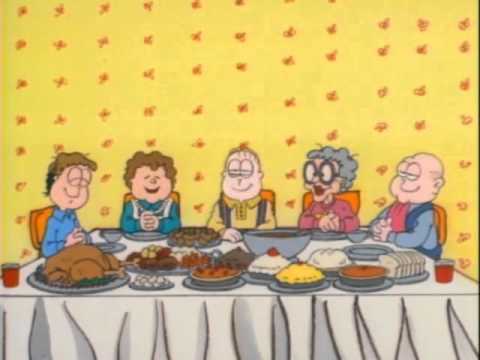
This book was surprisingly good. I'm a fan of the TV show (at least the first five or six seasons before they start getting too retarded), and Earl Hamner, Jr. does the intro and outro voice-overs. Those can get quite flowery just like Doc Boy's blessing in the Garfield Christmas Special.
"Lord, we just want to tell you - how grateful we are for this food. And, um... for letting us all be here together - on Christmas Eve... And as surely, as the waters of the streams and the rivers find the sea, let each of us find happiness and wisdom in this hour..." (I don't know how the prayer was supposed to end because Doc-Boy's grandmother conks him on the head to shut him up at this point. And what is with "boy" being added to the end of all these names?)
I assumed purple prose was just Hamner's style, so that's what I expected to find all over this book, but it was minimal. In fact, going into this I thought it was going to end up on my "liked movie better" shelf, but it didn't even come close to landing there. That's partly because I love the movie and watch it every Christmas, and I intend to continue that tradition, but the book was definitely better. The book adds a healthy dose of reality that's absent in the film and the subsequent TV show. The children are nowhere near as goody-two-shoes about everything; Clay-Boy sneaks a cigarette when he can and actually gets a bit tiddly on eggnog fortified with bootleg whiskey (though he doesn't know it's happening since it's his first experience with alcohol); he hunts and has no qualms killing game to provide food for the family because, hello, he's been exposed to that since birth and is living in the middle of the Great Depression; Clay-Boy and Becky squabble constantly like 15 and 13-year-old siblings are supposed to, and there's no heart-to-heart between them about puberty while Clay-Boy milks the cow; Clay, Sr. often drinks (though not at home), smokes, and plays pool; Olivia doesn't get quite as upset about these things because she knows a lost cause when she sees it; the sheriff is more of a dick and treats his prisoner like an actual prisoner; etc. Furthermore, I can believe that every character in this grew up in the mountains of Virginia during the great depression, and that's something I can't say for their TV counterparts who are incredibly naive about a lot of things.
This is especially noticeable when race relations get involved. Hawthorne (a black man) picking up extra work helping the Baldwin sisters is within the realm of possibility, but his son Claudie going to the Walton's house to tell them a missionary lady is handing out presents at the store? Still possible, but you're really pushing it. Then Claudie being allowed to participate in that gathering with all the other white kids? Way into the red zone now. Then John-Boy just wandering into the negro church during the middle of the Christmas Eve service and sitting down with the congregation, and joining in with the singing, and nobody batting an eye as if this happened everyday? Sorry, I gotta call it.
It's a lovely sentiment, but that simply did not happen in the mountains of Virginia in the 1930's. I don't think it happened anywhere in America back then, though I could be wrong there. But Schuyler (pronounced SKY-ler), VA? Not a chance. Shit, that kind of behavior in the blue ridge mountains will still earn you at least a few arched eyebrows in 2018! The show came out in 1971 on the heels of the Civil Rights movement, and some revisionist history was going on, so we'll just have to ignore it. Luckily all those scenes were different in the book. . I was expecting the book to be just as ridiculous with that kind of stuff as the show, but it wasn't, and I can't for the life of me figure why they made such changes with the movie. I guess that's just Hollywood for you.
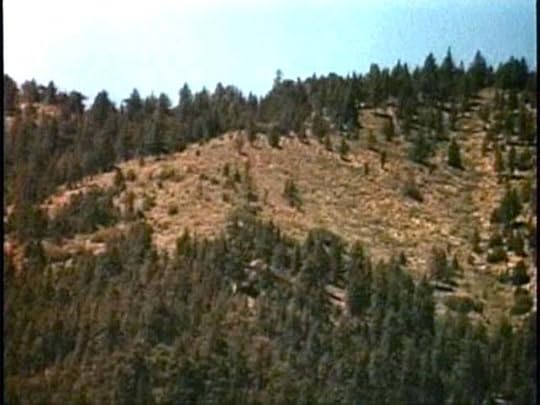
Since I'm poking fun at Hollywood, here's another thing. I've spent a lot of time in the mountains of Virginia, and I have never seen anything resembling this:
The show purports that it's part of Appalachia, but don't you believe it. It's a California mountain, (part of Hollywood Hills), and any landscape in Virginia that looks like this ought to explain itself.
One last thing which is apropos of nothing in this book, but I feel like sharing it anyway since it relates to the Waltons. I tend to play a game in my head when I see some new-fangled geegaw, hear a new style of music, see something in a movie which shows that decency and propriety have suffered another blow, or see any other sign that the times have changed again, and that's "I wonder what grandma Walton would make of that?"
"Good Lord!"
Yep, that's normally the answer that pops up in my head. I don't know why I'm so concerned about her opinion, but there it is. I suggest giving it a try yourself; the ensuing conversation/diatribe can be kind of fun, but I guess it would only work with people who are really familiar with the character.
This book won't appeal to a wide audience, but it's short, well-written, humorous, fun, touching, and paints a pretty accurate picture of life in the Blue Ridge mountains during the 1930's. Highly recommended to people who enjoy simple, backwoods stories.
From the first time I saw "The Homecoming" on television when I was a small boy I've considered it one of my most favorite Christmas films. Somewhere along the years I realized that the film was based on a book, but I never read it until now. I can't recommend it enough. The sense of family and home and the love of same is present on every page. The story differs from the film - names have changed - Clay-boy is more familiar to most of us as John-boy, and the family name here is Spencer and not Walton. However, the essence of the source material has been captured. It's Christmas and Clay Spencer hasn't arrived home yet and a blizzard is on the way. Oldest son Clay-boy is sent to find his father and bring him home. It's an odyssey. He runs into the sheriff, Ike Godsey and Charlie Sneeds (under arrest for poaching), he attends services at "the black church," and end up at the home of two elderly lady bootleggers who give him "recipe" and a ride home through the snow in a horse drawn sleigh. The book has a happy ending that doesn't seem at all forced or unreasonable and left this reader in tears. Capote's "A Christmas Memory" (and the 1966 TV film with Geraldine Page) remains my very favorite Christmas story, but this runs a very close second.
I am a huge fan of the television series, but have never read the source material until now. I should state that I love the 1st seasons of the TV show, as it obviously lost the plot as the years went on. This book is very faithful to the descriptive ness of the author. He has an obvious love for the countryside and nature surrounding the area he grew up in period some of the characters were a little more rough and I actually think they did well by Tony knows down a little for the movie. A very enjoyable read though!
I had never read this book even though it's been on my shelf for 20 years. I finally picked it up because one of the popsugar prompt for 2018 is to read a book by an author whose first or last name is the same as yours. I loved this little book. It's comforting and hopeful and full of joy and love. It puts me in the mood for Christmas.
This book started out for me like one of John-Boy's stories ... full of promise, a little stiff and very self aware. All of us older folks remember The Waltons and I was comparing the descriptions of family members to their TV counterparts and trying to match them up - until I realized there was an extra kid in here! The story unfolds slowly, considering the brevity of the book but it really is worth the time.
The old ladies who sell their papa's recipe, the worry over a father who may or may not arrive in time for Christmas, the little girl who cries over a cracked doll... all these little moments adding up to a sweet, finely drawn tale.
I enjoyed the look into Clay-Boy's mind, the description of a nighttime sleigh ride and a Christmas Eve visit to a black church where he realizes with great sadness that there are whole societies within his own that he does not know and may never be a part of.
The ending is predictable but so is the one in A Christmas Carol and I read that one every year! I think I will make a new tradition of reading this one as well.
I’m a huge fan of The Homecoming, The 1970 TV version that was the reason The Waltons was made into a series. I loved it! It was one of the shows I could watch with my elderly Mother and not cringe because it was a clean, decent show and she could relate.
I enjoyed this book. It is NOT The Waltons and readers need to not expect it to be the same as the original TV movie.
The TV movie is better, which just means that a group of editors and writers added to the truth to make it more appealing to watch.
Reading it, you did feel the true story. It was well written and easily read. I read it in less than an hour, but I truly am a very fast reader and I enjoyed it very much.
It’s NOT The Homecoming you have watched every Christmas, but it makes you smile and you feel the love.
This is a classic Christmas story, that is simultaneously a picture of life in the 30s, a coming of age tale and a holiday story. There are beautiful vignettes in here that seem from another world in how they picture life in the depression. It is moving but not sappy or overly sentimental. It's a great way to prepare for the Christmas Day.
2016: The last 5-6 pages or so were tough going ... some kind of salty discharge from my eyes kept clouding my vision.
2024: It got me again (and every year since I first read it). Amazing how such a small book can be pack such a wallop and captures so well all the different aspects of what Christmas is and should be.
A really short novella based on the Spencers of Virginia and one Christmas when. Pa was coming homeroom a job in another town. However, John-Boy goes out to find Pa, only to be lost.
These stores are the basis for the old TV favorite, "Walton's Mountain." It took me so long to read because I kept leaving it in places where I was NOT!
I loved The Waltons television show and Spencer's Mountain is one of my favorite movies, so when I saw this book on the shelf at the library I just had to read it. And the story did not disappoint. This was a nice quick holiday read. If you've seen the TV show or the movie, no surprises here.
This is the book that inspired the Waltons. It is a story of a boy who goes out on Christmas Eve in search of his father, who is late in returning from a trip. A decent story, but not as good as the television show it inpired.
Wonderful short story set during the Depression in the mountains of Virginia. I highly recommend this book that's full of History and love of a family.
Rural Americana depression era Appalachia interlaced with humor, sadness and joy of the ever day humdrum beginning one Christmas eve and ending Christmas morning...
The Waltons TV show is based on Earl Hamner's stories, and this is one of those stories. If you're expecting it to be like the show, it's not exactly, but that's o.k. A short, period read.