

What do you think?

What You Know First
The stunning picture book collaboration between Newbery Medal–winning author Patricia MacLachlan and acclaimed illustrator Barry Moser.
A young girl comes to terms with the fact that she and her family are leaving the prairie. As she talks herself into acceptance, her Mama helps her let go, commenting that the baby will need someone to tell him where he came from. So the girl gathers mementos—a bag of earth and a piece of cottonwood tree.
1995 American Bookseller Association Pick of the Lists
A young girl comes to terms with the fact that she and her family are leaving the prairie. As she talks herself into acceptance, her Mama helps her let go, commenting that the baby will need someone to tell him where he came from. So the girl gathers mementos—a bag of earth and a piece of cottonwood tree.
1995 American Bookseller Association Pick of the Lists
32 pages, Paperback
First published March 31, 1995
About the author
Patricia MacLachlan
139 books826 followersPatricia MacLachlan was born on the prairie, and always carried a small bag of prairie dirt with her wherever she went to remind her of what she knew first. She was the author of many well-loved novels and picture books, including Sarah, Plain and Tall, winner of the Newbery Medal; its sequels, Skylark and Caleb's Story; and Three Names, illustrated by Mike Wimmer. She lived in western Massachusetts.
Ratings & Reviews
Friends & Following
Create a free account to discover what your friends think of this book!
Community Reviews
Displaying 1 - 30 of 56 reviews
April 2, 2022
Adding this in honor of the author, who has died. This was a book I read to my kids and never failed to choke me up. Drawings of cottonwood leaves inspired my daughters’ first tattoos.

August 4, 2009
This book fell into my hands just after we had lost our family farm, first having to sell off the animals, and then the land and then the house, our home. My youngest was two, and I could not read this book without tears in my eyes. I imagine it is just as beautiful to anyone who doesn't so closely relate to it but I can't tell. All I know is that I am very glad to have it even now that we have a new home and are (hopefully) growing a new farm. The then 2yo is now nine, and delights to read his own story, as if it was written for him.

June 7, 2015
This is a beautiful story about leaving the place you were born. The child does not want to leave the prairie but finds that you will always remember because what you know first always stays with you. I will always be a Liberty girl! The pictures are amazing prints. The author and illustrator are neighbors, and they worked together to choose family photographs to make the engravings for the prints. I thought that this was a really cool idea.

May 15, 2008
A gift from Brooke. This is such a touching book. It truly reflects how I feel about my hometown and my childhood. If you have a special place you love you would connect with this simple, but beautiful story. The illustrations are amazing. This is a book that I will pass on to my own children.

January 24, 2017
Patricia MacLachlan and Barry Moser created a book that hits straight into the center of your heart. The engravings and words fit like pieces of a jigsaw puzzle. The story is going to stay with me always.

April 25, 2026
A family is moving from their home in the prairie and the young daughter is thinking about who she could stay with instead of leaving the place she loves. When her mother tells her that her baby brother will need to know where he came from, his sister collects some things to show him when she tells him about his prairie home. Very nicely illustrated.
February 27, 2021
I really liked this book. The main character and her family have sold their farm on the prairie to go and live elsewhere. She doesn’t want to leave, but her mother convinced her to do that her baby brother can hear her stories about what their life was like on the prairie.
LOVE the illustrations!
LOVE the illustrations!
March 3, 2024
Although I didn’t like the poetry style of the text, I enjoyed the relatability of the story. My main reason for not fully enjoying this book is the illustrations. As someone who loves color, I found them boring and not eye-catching.

May 14, 2017
Lyrical. Gorgeous woodcuts. Beautifully told story from the point of view of a child forced to leave her beloved home for a new place.

February 16, 2018
Patricia MacLachlan uses her signature crisp, simple, and poetic prose to tell a similarly simple and poetic story.

November 12, 2018
I use in writing class

December 29, 2018
The engravings are stunning!

May 21, 2019
At the end of this Maren said "Wow, that was so sad, and good." Seriously tugs at your heart strings, especially if you don't live near your childhood home/town.

July 27, 2021
Heartfelt read! It really made me think of “what I first know”. About the moves and changes of my childhood and the important thing I brought with me.

November 9, 2024
What you know first
By Patricia maclachlan
The story of love and poetry. That we know our world created by nature and family. Founding second grade class.
By Patricia maclachlan
The story of love and poetry. That we know our world created by nature and family. Founding second grade class.

October 13, 2025
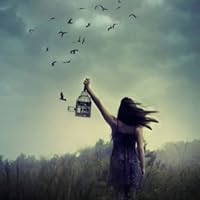
Love using this picture as a before-reading strategy to teach multiple other novels or memoir writing. I also use it as a scribble prompt.

September 3, 2019
One of the most beautiful lyrical book I've ever read. It was so dreamy tinged with nostalgia about leaving a first home.

April 3, 2009
A young girl's family is moving away from the only home she has ever known in the prairie. She thinks that her younger sibling - still an infant - won't be affected because he "doesn't know about the slough / where the pipits feed. / Where the geese sky-talk in the spring." In fact, he "hasn't even seen winter." She thinks about living with the new people who have bought their family's farm, or living in a tree, or even moving in with her Uncle Bly and eating pie for breakfast. She imagines herself living in the barn, "listening / to the rain on the tin roof / the wind rattling the windows" but ultimately, her mother convinces her that she has to come with them, if only to remind the baby what he knew first. She collects her memories of songs and the softness of cows' ears, and some mementos of her home - a bag of prairie dirt, a twig from her father's cottonwood tree - and she knows that it's so she can remember these things, too. Moser’s beautiful, moody engravings tell more of the subtextual story, and delineate time and setting.
USAGE:
The benchmarks we could hit using this book as a tool are uncountable. Just in standards about the writing process, this book could provide inspiration for many wonderful classroom experiences. Students will learn concepts of prose and poesy by discovery with a learning center dedicated to rearranging the poetry of MacLachlan’s book into prose and then back again. After this exploration, a discussion about how to decide on a structure for a particular piece of writing could lead to the students bringing in their own what-they-knew-first mementos, from which they could write their own What I Knew First poem or memoir. Afterward, they could publish them as a class.
USAGE:
The benchmarks we could hit using this book as a tool are uncountable. Just in standards about the writing process, this book could provide inspiration for many wonderful classroom experiences. Students will learn concepts of prose and poesy by discovery with a learning center dedicated to rearranging the poetry of MacLachlan’s book into prose and then back again. After this exploration, a discussion about how to decide on a structure for a particular piece of writing could lead to the students bringing in their own what-they-knew-first mementos, from which they could write their own What I Knew First poem or memoir. Afterward, they could publish them as a class.

Read
December 16, 2011A girl's family is moving away from their farm and she is worried that her baby brother will not remember the home that she has grown up in and has meant so much to her. Her parents let her know that he will always remember where he came from and what he first knew. They also reassure her that she can help her brother by telling him stories of the farm and things that used to do together there. The black and white illustrations give a calming effect and portray the farm as a truly peaceful place that would be impossible to leave behind. You feel empathy for the young girl and are drawn into the story.
This would be a good book to use in the beginning weeks of class. You can introduce the book and then ask the students where they are from and what they remember about when they were younger. It gives you a chance to get to know your students and lets them get to know each other as well.
This would be a good book to use in the beginning weeks of class. You can introduce the book and then ask the students where they are from and what they remember about when they were younger. It gives you a chance to get to know your students and lets them get to know each other as well.

May 30, 2013
The story is about a family that is selling their farm to move closer to the ocean. It has the feel of the Great Depression, but doesn't specifically identify the timeframe. the young boy does not want to move and in a poetic form, tells the story of how he will choose to stay while his parents leave with his young sibling. He describes what his life will be like, until his parents explain that he can take the memories with him and how important it will be for him to share those memories with his baby brother,, since the child is too young to remember them on his own.
For teaching, I liked the free verse poetry format and the imagination of the boy and how he thinks his life will look without his family. He decides to take a piece of a cottonwood tree and some soil with him as keepsakes.
Title Quote "What you know first, stays with you." The boys father tells him this to make him realize he must join his family and cannot stay behind.
For teaching, I liked the free verse poetry format and the imagination of the boy and how he thinks his life will look without his family. He decides to take a piece of a cottonwood tree and some soil with him as keepsakes.
Title Quote "What you know first, stays with you." The boys father tells him this to make him realize he must join his family and cannot stay behind.

July 25, 2011
This is a great lyrical text, comparable to The Goodbye Walk by Joanne Ryder or Alexander, Who's Not (Do You Hear Me? I Mean It!) Going to Move by Judith Viorst. It really clearly illustrates the feelings that moving brings on, and though it is set in the old midwest, it would be identifiable for readers with little or no understanding of that time in American history. What a combination Barry Moser and Patricia MacLachlan make. This book is perfect through and through.

January 30, 2014
I love all of Patricia MacLachlan's books but this picture book is especially good at tugging at the heartstrings. The author touches on our deep, unbreakable connection with the land and the places we especially love because they are tied to our childhood, the first innocent years of life. Bary Moser's artwork is superb as well and compliments the story perfectly. This book evokes memories of personal connections with the places, animals and things we know first in life.

September 2, 2008
This book brings tears to my eyes every time I read it! It tells the story of a young girl whose family is leaving the home she has come to love and teaches the lesson that what you know first stays with you; some memories are indelible.
The stark illustrations only add to the appeal of this book.
The stark illustrations only add to the appeal of this book.

October 20, 2008
This really is a story that effects me differently each time I read it. Also, the class I read it to effects the reaction I have to it because they have such different reactions personally. It really is heartwarming and it makes you stop and think about what you would take with you if you moved, in terms of memories. A must have for everyone, especially those with children.

February 4, 2014
This story is written from the point of view of a child who doesn't want to move away from the family home in the plains. The imagery and descriptive words in the writing allow students to visualize and feel the book as if they are in it. For this reason, it is a great book to use when working on visualization strategies.

May 31, 2015
A story about a little girl moving away from the home where she was born. The text is almost poetic and the wood carving illustrations are great. I almost teared up once (but I am an emotional mama). The first place you know stays with you. I can relate to this feeling from my childhood and moving at the age of 9 or 10.
February 11, 2009
Another fabulous children's book for mothers and soon-to-be mothers. Some of the pictures are a little spooky, but there's a beauty to them, too, that complements the themes of loss and the importance of one's past wonderfully.
February 4, 2011
This book is written as a poem about a depression era girl whose family loses their farm and has to move. It has beautifully engraved illustrations that really add to the tone and content.It would make a great creative writing prompt.

July 30, 2012
Good middle grade picture book wth several possibilites. It might make a good read aloud for the beginning of the year to discuss what each brings to our class community or even more so as an end of the year read aloud to discuss what students are taking from the class.
Displaying 1 - 30 of 56 reviews