

What do you think?

A Splendor of Letters: The Permanence of Books in an Impermanent World
In A Splendor of Letters , Nicholas A. Basbanes continues the lively, richly anecdotal exploration of book people, places, and culture he began in 1995 with A Gentle Madness (a finalist that year for the National Book Critics Circle Award) and expanded in 2001 with Patience & Fortitude , a companion work that prompted the two-time Pulitzer Prize-winning historian and biographer David McCullough to proclaim him "the leading authority of books about books." In this beautifully packaged edition, Basbanes brings to a close his wonderful trilogy on the remarkable world of books and bibliophiles.
464 pages, Paperback
First published January 1, 2003
About the author
Nicholas A. Basbanes
26 books167 followersNicholas A. Basbanes is an award-winning investigative journalist and was literary editor of the Worcester Sunday Telegram. His articles have appeared in The New York Times, the Los Angeles Times, The Washington Post, and Smithsonian, and he is a recipient of a National Endowment for the Humanities Fellowship. Basbanes lives in North Grafton, Massachusetts.
Ratings & Reviews
Friends & Following
Create a free account to discover what your friends think of this book!
Community Reviews
Displaying 1 - 30 of 30 reviews

December 1, 2011
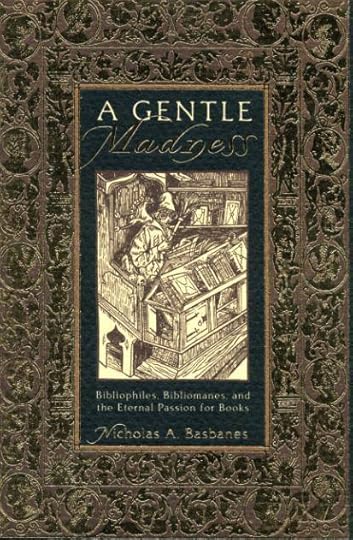
Beautiful, ornate edition of "A Gentle Madness"
This is the third volume in the bibliophile trilogy that began with A Gentle Madness: Bibliophiles, Bibliomanes, and the Eternal Passion for Books, continued Patience & Fortitude: Wherein a Colorful Cast of Determined Book Collectors, Dealers, and Librarians Go About the Quixotic Task of Preserving a Legacy, and finishes with A Splendor of Letters. The scholarship that was necessary to pull together these stories is simply astounding. The boulder that chases Indiana Jones out of the cave at the beginning of Raiders of the Lost Ark is a good representation of Nicholas Basbanes's knowledge of the book world; in comparison, my accumulated knowledge would be represented by one of the pebbles kicked out of the way as the boulder crashes through the opening. I can say after reading Basbanes's books my pebble of knowledge has become bigger. I think of it now as more of a rock that David might have picked up to hurl at Goliath. Fanciful? Yes indeed.
I found myself reading pieces of almost every page out loud to my wife. I finally desisted simply because the poor woman couldn't get any of her work done. I jotted down notes of what I felt would be important to share with my goodreads friends. A jumble of page numbers and notations on pieces of paper stuck in the binding of the book, good lord, it looks like I'm back in college about to tackle a term paper. To keep this review to a comfortable length I will be frugal keeping what I share to the highlights of the highlights.

Michael Servetus, despite the best efforts of the fire, his work survives.
Through out our sordid human history there are many cases of writing deemed heretical by the church. "Certainly one of the most egregious instances involved the Spanish physician Michael Servetus (1511-1553), a brilliant thinker who made the grave mistake of locking theological horns with John Calvin, the French-born lawyer-turned-Protestant reformer whose strict interpretation of Christian doctrine allowed little patience for the contrary views of an intellectual regarded today as a spiritual forebear of the Unitarian church." For writing his book Christianismi Restitutio Servetus was condemned. He was burned at the stake using the 1,000 copies (well 997) of his book as fuel for the fire. Only three of his book managed to survive to the present day. "In an extraordinary twist of circumstances, one of these turned out to be John Calvin's own annotated copy."

Painting of Walter Mehring by George Grosz
A German Jewish journalist, Walter Mehring, living in Berlin was condemned by the Nazis and was forced to flee. It turned into seven years of flight and the whole time his desire was to be safe and reunited with his Father's library. Through friends and "devious means" he managed to have his father's books sent to him in Austria. As Mehring said, "I was not so much interested in individual books as in the unique historical, aesthetic and philosophical configurations in my father's library." When finally his books arrived he was able to "restore the original mosaic of the library" relying heavily on his memory of where volumes had once been located in his father's library he covered three walls of his flat in Vienna. "Returning late at night and switching on the floor lamp, I felt that the books formed a magical pentagram and other necromataic patterns, producing an atmosphere that was both homelike and eerie, and bringing the dead to life. At that point he began to read madly, morning, noon and night. A man can become as addicted to reading as any other intoxicant."
Basbanes makes a good case through out the book of the association that we have with a book that goes beyond just the experience with the thoughts and words conveyed by the writer. Mehring could have replaced all of the books in his father's library, but he would not have been able to have the same experience with replacement copies. Every book is unique and this collection was assembled piece by piece by his father. Mehring certainly would not have been happy with the digital versions of the books in his father's library. His experience with an e-reader would have been, but a pale imitation of the intimate reunion he had with the books and the atmosphere that they brought with them.
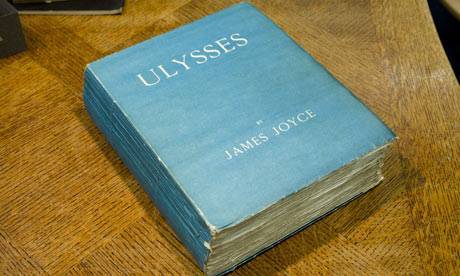
First edition of Ulysses. The first thing I would do is pick this book up and inhale that wonderful old book smell.
A good example of the tactile experience that goes with a book is the collection of Ulysses books at the University of Texas. They have twenty-seven first editions in their collection. Richard W. Oram, the university librarian explains. "The copy I like to take out and show to people is the one that belonged to T.E. Lawrence, because after all these years, it still smells strongly of his pipe tobacco. That's something I don't think you will ever get from a digitized copy."
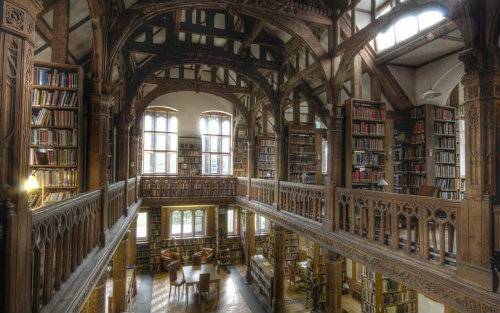
Gladstone's Library a slice of heaven.
I love tracking the stats on my goodreads book page. The most books I've ever read in a year is 125 and I don't foresee that high water mark changing any time in the near future. Sir William Ewart Gladstone (1809-1898), prime minister of England, a "towering intellect" averaged reading 250 books a year for every year of his adult life. He discussed in detail in his meticulous kept diary over twenty thousand books. How in the world he managed to squeeze that much time out of his day considering his responsibilities is truly staggering. I will admit I watch some television and an occasionally movie and do actually interact with my family, but even if you removed all those distractions I'm still not sure I could get to 250 books read a year. Gladstone was truly a dedicated reader and I am curious to learn more about him.
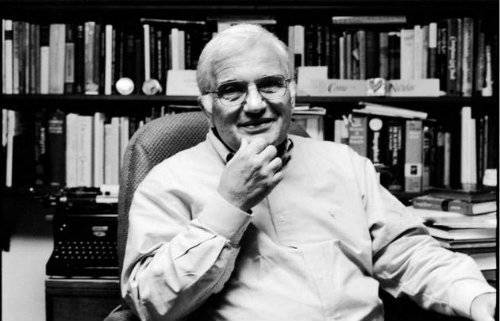
Nicholas Basbanes a man intent on preserving our book legacy.
If you truly love books and want to learn more about the history of the book, the collectors, and the great readers of history than certainly pick these books up and take a walk with Basbanes through the corridors of bibliomania. One final thought that I hadn't really considered until I read this book is how vulnerable our culture legacy is because more and more of it is being put into a digitized format, our emails, our tweets, our books, our magazines and newspapers are all drifting away from a more permanent structure that would insure that some of it would survive long after we disappear. One of the librarians in this book suggested that maybe we should be baking a version of our best books into clay tablets and burying them deep into the earth so that someday some semblance of our culture would still be left behind to be found.
It's hard to conceive that the world we know today could change so drastically that our monuments to ourselves would be in jeopardy, but Indiana Jones, fictional though he is, spends his days digging up what is left of civilizations that no longer exist. A future archaeologist can not dig this Apple computer out of the sand and resurrect, well this review, or my jocular emails to friends, or my inane Facebook posts or my amazing half completed novels. They will be lost and in my case that is probably a good thing, but there are brilliant people with thoughts and observations that should be preserved.

May 10, 2008
There is nothing more poignant and mysterious than talk of lost books and lost libraries. This book is replete with descriptions of books and libraries that we merely know about now, but no longer have. Nicholas Basbanes describes well the many ways in which books and libraries are lost to humanity, including natural disaster, political strife, diabolical maliciousness, limited shelf space, and insidious negligence. Mr. Basbanes also describes the serendipity associated with the continuing existence of some ancient records. His discussion of palimpsests is utterly fascinating. I was enthralled with most of this book. I admit to being less interested in the closing chapters that discuss the future of the book, or rather ebook. However, I enjoyed his description of various modern efforts to preserve books.
Surprisingly, when discussing record preservation efforts, he left out any mention of the vast holdings of the Mormon Church, safeguarded in the Granite Mountain Records Vault in the mountains near Salt Lake City, and the church's efforts to offer digital copies of its holdings to the public on familysearch.org. The vault preserves almost 2.4 million microfilms and nearly 1 million microfiche acquired over the decades. That represents more than 3 billion pages of family history records, the largest collection of its kind in the world. I've read on ancestry.com that the Granite Mountain Records Vault is currently processing tens of thousands of microfilm masters owned by the National Archives, including federal census and immigration records. The project is remastering the original acetate-based microfilms, creating new polyester-based replacements for the National Archives, and extending the longevity of the federal government’s records collection. See http://www.ancestry.com/learn/library...
Surprisingly, when discussing record preservation efforts, he left out any mention of the vast holdings of the Mormon Church, safeguarded in the Granite Mountain Records Vault in the mountains near Salt Lake City, and the church's efforts to offer digital copies of its holdings to the public on familysearch.org. The vault preserves almost 2.4 million microfilms and nearly 1 million microfiche acquired over the decades. That represents more than 3 billion pages of family history records, the largest collection of its kind in the world. I've read on ancestry.com that the Granite Mountain Records Vault is currently processing tens of thousands of microfilm masters owned by the National Archives, including federal census and immigration records. The project is remastering the original acetate-based microfilms, creating new polyester-based replacements for the National Archives, and extending the longevity of the federal government’s records collection. See http://www.ancestry.com/learn/library...

November 23, 2011
basbanes goes a little mad himself in this nerded out book about books. but he has some very valid points. consider, usa libraries are full of usa st*p*d c*nt b*t*ch* who throw out perfectly good excellent books to make room for more james patterson. why? cause that's what people want to check out! i say f*ck the p**pl*
he also delves into the sick and 'master race' program libraries are doing with newspapers. bastards
he also delves into the sick and 'master race' program libraries are doing with newspapers. bastards

May 4, 2008
Here is what I did not like about this book - a huge chunk of it is spent criticizing librarians for weeding and criticizing what libraries do, but he seems to have decided not to interview any actual librarians in his research, just book sellers and book collectors and people who have problems with weeding.

March 23, 2007
Excellent anecdotes concerning the preservation of information through the ages. My complaint, however, is that the author tends to write dense prose without natural breaks, leading from one topic directly into another.

October 23, 2008
I loved the beginning of this book for the history. As it went on, I struggled with the horrible destruction of books the author detailed. His assessment of the future of books in their current paper form helped me envision the future. I would recommend this book to any bibliophile out there.
June 9, 2009
Outstanding book. I usually don't read every word in a non-fiction books cause they just get very boring and monotonous. But this one was great. For bibliophiles, this was great historic background to many of the bookworld out there and pertaining to current society too.

July 9, 2009
A Splendor of Letters meanders quite a bit, and I wouldn't recommend it for focused readers. But it's really nice to feel in good company - you know that this guy cares about books in themselves, their pages, their bindings, their authors, their publishers, their shelves, their homes.
The first few chapters, on ancient texts and materials that have come to light through archaeological research, are fascinating. The few chapters concerning the wiping-out of various cultures by attacking the culture's written words are upsetting. The chapters on the breaking-up and selling of public collections, and even of centuries-old manuscripts being sold page by page are upsetting as well, but I can't always muster the indignance Basbanes wants me to.
That's as far as I've gotten. I hope he picks it back up in the next chapters.
The first few chapters, on ancient texts and materials that have come to light through archaeological research, are fascinating. The few chapters concerning the wiping-out of various cultures by attacking the culture's written words are upsetting. The chapters on the breaking-up and selling of public collections, and even of centuries-old manuscripts being sold page by page are upsetting as well, but I can't always muster the indignance Basbanes wants me to.
That's as far as I've gotten. I hope he picks it back up in the next chapters.

to-read-some-far-off-day
August 11, 2007Love this kind of book!

September 7, 2008
A few wonderful anecdotes and stories about libraries being saved in the face of wars and ethnic cleansing events around the world. Not as well organized as "Library: An unquiet history."

July 6, 2017
This book is only enjoyable if you love the smell of old books and value the worth of printed word. It was a history and backstory to books I never thought about.

Want to Read
December 18, 2009The third in Basbanes's "bibliophile trilogy". Still love you for this heads-up, karen!

March 19, 2010
So good - a delicious wander through the world of libraries and books. I couldn't put this down.

August 26, 2020
You enter into a used book shop. Pull a book off the shelf. You were drawn to this book because of the color of the cover, the printing, or the dustjacket. You look for information about the author. Search for the date of publication. Who owned this book before? Will the book be an enjoyable read? Is the book of value to you or to others? Is it worth the price? If you take the book home and keep it until you die, what happens to the book then? What happens to all the rest of your books in your personal library? What happens to discarded books in libraries?
Books do have a life, sometimes a very long lifespan. Books also have enemies. Books bear witness to culture, ideas, history, hopes for the future across generations and languages. The written word may be cherished, or it may be considered a threat that needs to be eradicated.
The Splendor of Letters takes us through the life cycle and the joys and challenges of books and the written word. Basbanes interviews book collectors, book sellers, and librarians. He reports on the destruction of libraries and books. He celebrates the miraculous and mysterious long life of books. He introduces us to magnificent private libraries and their owners.
Some of these stories are disturbing. Two that gave me pause were about books that were donated to institutions to be kept for research in perpetuity. The institutions entered into financial challenges. Those in charge began to sell off the books because of their financial value. The institutional leaders betrayed the trust of their benefactors. What was intended as a gift to the public entered into private hands.
This book was published in 2003. In the final chapter, Basbanes reports on the growing desire to make books digital. Even before the advent of the Kindle and iPhone in 2007 and the iPad in 2010, there was a vocal group advocating the end of the physical codex. While appreciating the argument, Basbanes does not expect the physical book to disappear anytime soon, if ever.
I learned a lot from The Splendor of Letters about books and the personalities that make the book world so interesting. The notes and the bibliography are a delight to read. Basbanes is a seasoned journalist and he knows how to tell a good story. I enjoyed this book immensely.
Books do have a life, sometimes a very long lifespan. Books also have enemies. Books bear witness to culture, ideas, history, hopes for the future across generations and languages. The written word may be cherished, or it may be considered a threat that needs to be eradicated.
The Splendor of Letters takes us through the life cycle and the joys and challenges of books and the written word. Basbanes interviews book collectors, book sellers, and librarians. He reports on the destruction of libraries and books. He celebrates the miraculous and mysterious long life of books. He introduces us to magnificent private libraries and their owners.
Some of these stories are disturbing. Two that gave me pause were about books that were donated to institutions to be kept for research in perpetuity. The institutions entered into financial challenges. Those in charge began to sell off the books because of their financial value. The institutional leaders betrayed the trust of their benefactors. What was intended as a gift to the public entered into private hands.
This book was published in 2003. In the final chapter, Basbanes reports on the growing desire to make books digital. Even before the advent of the Kindle and iPhone in 2007 and the iPad in 2010, there was a vocal group advocating the end of the physical codex. While appreciating the argument, Basbanes does not expect the physical book to disappear anytime soon, if ever.
I learned a lot from The Splendor of Letters about books and the personalities that make the book world so interesting. The notes and the bibliography are a delight to read. Basbanes is a seasoned journalist and he knows how to tell a good story. I enjoyed this book immensely.

May 19, 2026
This book is the last in a non-fiction trilogy but I wasn't aware of that when I picked it up. I love books about books and this one was a good read. It was a bit more academic than I was anticipating but I appreciated that challenge. The chapters about the intentional destruction of books were most interesting and the issues of discards at public libraries raises a lot of thoughtful questions. I know many libraries must discard books after a period of "non-use" because of space constraints but it makes me sad all the same. My local library didn't have a 1950's fiction Pulitzer and I had to get it through an inter library loan. The one I received was a 60 year old copy from a tiny library in my state. Odd. I'm not a librarian but I love books and this author obviously does too.

May 15, 2023
Read at work to rest my eyes from the machines. Too much to unpack in a simple review, so consider it a "must read" for the evaluation and preservation of knowledge because many of Basbanes critiques are still applicable. Some issues, such as the concept of objective truth, have become more significant in the past two decades, so read if you're concerned about deepfakes and other forms of manipulation.

August 15, 2017
An absolutely fabulous book, that opened my eyes to the world of those who attempt to kill a civilization by trying to erase history, literature, and cultural memory.
The book is filled with stories of the permanence of words imprinted on a brain even when the physical book is burned or the monument is shattered.
Very apropos for today.
The book is filled with stories of the permanence of words imprinted on a brain even when the physical book is burned or the monument is shattered.
Very apropos for today.

May 6, 2020
Not a bad book by any stretch but I found it a bit difficult to get into sometimes, particularly because the anecdotes seemed a bit thinner than I would have liked. Regardless, it's an interesting history and if you enjoy books as physical objects, this is a good one to dive into if that's something you want to know more about.

December 3, 2024
I love to read this man's books! Such unique insights and information on matters about which you would never think to ask.

February 16, 2025
I enjoyed this book that covered the importance of books, reading, memory, and the impact of the digitization of information.

April 29, 2020
I had to read this book for a class and I was planning on skimming it, but instead I ended up reading it all in one sitting. I was engrossed by the scholarship and humanity in this work. While I would like to see an updated version of this, overall I truly enjoyed this.

May 27, 2012
I found this volume much slower going than Nicholas Basbanes' other works of book history, and not quite as interesting. This has nothing to do with his writing or research ability, which are considerable. Readers with an interest in ancient civilizations should find A Spendor of Letters fascinating from the very first page.
Given my preference for the 18th through 20th centuries, the book didn't truly pull me in until the halfway mark. Then I was overwhelmed with sadness by the author's descriptions of attempts to do away with whole cultures by destroying every scrap of their written language. (This, come to think of it, must be the basis of the word "obliterate.") Luckily, there were almost always heroes who cared so much about books that they risked their own safety and their families' to spirit away at least a few endangered works. Without these brave men and women, many of his anecdotes would be hard to bear.
As always, Basbanes manages to synthesize information from hundreds of sources and interweave them with his own observations without a single seam showing. Some of his information on electronic books is already out of date, as is the coda, written just after the looting of Baghdad's museums and national library. This is one instance when a printed book--the amber in which a moment in time is embedded--could benefit from the updatable nature of a digital edition.
Given my preference for the 18th through 20th centuries, the book didn't truly pull me in until the halfway mark. Then I was overwhelmed with sadness by the author's descriptions of attempts to do away with whole cultures by destroying every scrap of their written language. (This, come to think of it, must be the basis of the word "obliterate.") Luckily, there were almost always heroes who cared so much about books that they risked their own safety and their families' to spirit away at least a few endangered works. Without these brave men and women, many of his anecdotes would be hard to bear.
As always, Basbanes manages to synthesize information from hundreds of sources and interweave them with his own observations without a single seam showing. Some of his information on electronic books is already out of date, as is the coda, written just after the looting of Baghdad's museums and national library. This is one instance when a printed book--the amber in which a moment in time is embedded--could benefit from the updatable nature of a digital edition.

September 17, 2012
Scene: I am reading Every Book Its Reader at the gym.
Guy: whatcha reading?
Me: It's a book about books.
Guy: *blank look*
Me: Like, what books are important to what people, and stuff.
Guy: Does it have a thing about how Kindle sucks?
Me: No, that was the previous book.
I think he thought I was kidding. But yeah, where Every Book Its Reader: The Power of the Printed Word to Stir the World is about the Work, this is about the Thing embodying it. Kind of a less angsty, more romantic reworking of Double Fold: Libraries and the Assault on Paper. But to be fair, it's not wholly anti-e-book, either; it's putting them in context within the publishing timeline.
Guy: whatcha reading?
Me: It's a book about books.
Guy: *blank look*
Me: Like, what books are important to what people, and stuff.
Guy: Does it have a thing about how Kindle sucks?
Me: No, that was the previous book.
I think he thought I was kidding. But yeah, where Every Book Its Reader: The Power of the Printed Word to Stir the World is about the Work, this is about the Thing embodying it. Kind of a less angsty, more romantic reworking of Double Fold: Libraries and the Assault on Paper. But to be fair, it's not wholly anti-e-book, either; it's putting them in context within the publishing timeline.

Read
October 1, 2011Because I am a bibliophile interested in books as cultural objects per se, as well as sources of edification, I really cannot say enough good things about this book, as well as the two the precede it, A Gentle Madness and Patience and Fortitude. Nicholas Basbanes is hands down the best contemporary writer of books on books I have encountered (if you look at my "Books on Books" shelf, you'll see I read a a fair amount of this stuff), and this is among his best work. Very highly recommended.

June 9, 2012
I found A Splendor of Letters to be very interesting. The historical information made it a bit dense at times, but overall I really enjoyed it.
I would say that this is a definite read for anyone who loves to read and collect books.
I would say that this is a definite read for anyone who loves to read and collect books.

March 24, 2016
A Splendor of Letters is an informative, entertaining and ultimately downright inspiring paean to books. Four stars Not the least of the book's merits is that it's like a friend telling you about stuff you'll want to read about- see The Club Dumas, my next read.

Want to Read
May 12, 2012gentle madness #3

February 2, 2013
Meh. It is a book about how much books matter, which is important to me, and I enjoy books about books, but it wasn't the very best thing I ever read, and I liked A Gentle Madness better.

March 28, 2013
A book about books? I'm hooked! Great insights and stories.

July 27, 2014
As is, the book is ramblings on a theme, with all the coherence of a shuffled deck. Best vignette: the burning and rebuilding of libraries.
Displaying 1 - 30 of 30 reviews