

What do you think?
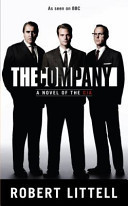
The Company
Robert Littell does for the CIA what Mario Puzo did for the Mafia Robert Littell's The Company is an engrossing, multigenerational, wickedly nostalgic yet utterly entertaining and candid saga bringing to life, through a host of characters --historical and imagined - the nearly 50 years of this secretive and powerful organization. In a style intelligent and ironic, Littell tells it like it was: CIA agents fighting not only 'the good fight' against foreign enemies, but sometimes the bad one as well, with the ends justifying such means as CIA-organized assassinations, covert wars, kidnappings, and toppling of legitimate governments. Behind every manoeuvre and counter-manoeuvre, though, one question spans the length of the book... Who is the mole within the CIA? The Company - an astonishing novel that captures the life and death struggle of an entire generation of CIA operatives during a long Cold War.
1281 pages, Paperback
First published April 1, 2002
About the author
Robert Littell
55 books455 followersAn American author residing in France. He specializes in spy novels that often concern the CIA and the Soviet Union. He became a journalist and worked many years for Newsweek during the Cold War. He's also an amateur mountain climber and is the father of award-winning novelist Jonathan Littell.
Ratings & Reviews
Friends & Following
Create a free account to discover what your friends think of this book!
Community Reviews
Displaying 1 - 30 of 552 reviews

April 24, 2018
“High over the city, a rack of clouds drifted across the hunter’s moon…On a deserted avenue near a long wall, a dirty yellow Fiat mini-taxi cut its light and its motor and coasted to the curb at Port Angelica. A lean figure wearing the rough ankle-length cassock and hood of a Dominican friar emerged from the backseat. He had been raised in the toe of the boot of Italy and was known as the Calabrian by the shadowy organizations that from time to time employed his services…”
- Robert Littell, The Company
So opens Robert Littell’s insanely ambitious, 896-page novel about the CIA. In Littell’s precise, hyper-specific way, the date is Thursday, September 28, 1978. The Calabrian is in Rome, and he is making a late-night visit to Pope John Paul I. You know Pope John Paul I, right? He died of a heart attack just 33 days into his papacy. Or so we’re told. In the alternate reality of The Company, the Pope actually fell victim to the Calabrian. Who the Calabrian is, who ordered the hit, and to what end, is a “mystery” that will not be resolved for another 600 or so pages. That does not really matter, though. The Company may begin with this interlude in Rome, but it does not end there. Indeed, the Calabrian and the Pope play a relatively small role in this massive undertaking, which seeks to give us a fictionalized history of the Central Intelligence Agency from the 1950s to the early 1990s.
It’s hard to know where to start with a book this big, this entertaining, this problematic. Thus, it helps to start at the beginning, especially since this opening section gives us a good idea of what to expect in the pages to follow. It is shadowy and mysterious and parses out its clues in a restrained and careful manner. It sets up a long-game, at which Littell specializes, one that will eventually pay off but requires some patience beforehand. It is also a seamless and confident melding of historically accepted truth with fringe conspiracies that creates an entirely new reality that feels real, since all the puzzle pieces are suddenly snug, but which is decidedly not. (Conspiracists will love this, because in Littell’s universe, there are no random occurrences; everything is controlled by a man, somewhere, hiding behind a curtain). This kind of conflation is endlessly entertaining, intellectually dangerous (a bit more on that below), and also thematically perfect, as it adds to the “wilderness of mirrors” aura that Littell successfully cultivates.
Littell’s novel follows a handful of characters, both American and Russian, as they fight the Cold War in the dark corners and blind alleys of the world. On the American side, we have the fictional Harvey “the Sorcerer” Torriti, Jack McAuliffe, Leo Kritzky, and Winstrom Ebbitt, as well as the real-life James Jesus Angleton. They are opposed by the Russian agent Yevgeni, who goes under deep cover in America (ala The Americans), and the all-powerful and mysterious Starik, who has a mole deep in the CIA, codenamed SASHA. (Unfortunately, Starik’s most defined trait is his pedophilia, and we are treated to many, many sequences of him and his “nieces” in disgusting situations. This subplot, in which Alice’s Adventures in Wonderland is used as a singularly blunt metaphor for spying, is both gratuitous and unnecessary).
In terms of characterizations, the dramatis personae presents a very mixed bag. The best, by a wide margin, is Torriti, a fat, double-chinned alcoholic who is nevertheless eminently suited for his job. His introduction is quite memorable:
Frankly, after Torriti, everyone else seems pretty much a cardboard cutout (I'm not using "cutout" in the espionage sense, either). Jack, the young Yalie who steadily rises up the ranks, is described mainly in terms of his “Cossack mustache,” which is referenced enough to make it into a drinking game. He is the stereotypical hero who plays by his own rules. When told not to fall in love with a source, he immediately falls in love with a source. When told not to land on the beaches at the Bay of Pigs, he promptly lands on the beaches at the Bay of Pigs. When asked to explain the Cold War (and the characters, irritatingly, always refer to it as the Cold War, even early in the book, when the phrase probably wouldn’t have been so widespread), Jack says: “It was about the good guys beating the bad guys.” This is about as boring a sentiment as you can imagine, and leaves one wishing for the moral complexities of Le Carre (who Littell, through his characters, gently mocks).
Littell does a fairly decent job with the real-life personages. Most of these are cameos, though some are quite brilliant, if not quite fair. This includes a sexually distracted John Kennedy, impossibly entwined with the Mob, and a clueless, dementia-addled Ronald Reagan, who keeps forgetting his own decisions. (The Company doesn’t really have a political point of view, unless you count its soft anti-democratic leanings. In Littell’s telling, foreign policy is better left to the intelligence men, rather than elected officials, a view at odds with both democracy, and the many failures of the CIA). Littell’s fictionalized Angleton, the famed CIA mole hunter, is extremely well-crafted. Right up until the end, you are not sure whether he was an addled paranoiac, haunted by his onetime friend, the British spy Kim Philby, or whether Angleton was right all along about the extent to which the USSR had penetrated western democracies.
(Interestingly, despite being exceedingly pro-CIA, it is the Russians who seem to get the better of the U.S. at every turn. While the American agents keep getting caught, the Russians go free. While American plots fizzle, the Russian plots explode. At the end, you will be almost surprised that the USSR fails, and the U.S. remains).
The Company is wildly inconsistent, a testament to how much story it is trying to tell. The early scenes set in Germany, with Torriti and Jack playing their version of the “great game,” are superb. In fact, they are the highlight of The Company. Try as it might, the book never recaptures the early magic it found in the noirish dividing line between East and West Berlin. After Berlin, The Company makes big jumps forward in time. There are satisfying set pieces aplenty, including the aforementioned plots to kill Castro, the Bay of Pigs, the Hungarian Revolution, and a surprisingly intense retelling of the attempted coup against Gorbachev by hard-line Communists in 1991. The temporal leaps are necessary, in order to get to all these momentous events. The downside, though, is that you lose the carefully modulated tension Littell meticulously builds. In a way, The Company is a series of rising and falling arcs. Once one arc is finished, Littell moves on and starts all over again. This can be a bit frustrating, and more than once, I found myself wishing that he had chosen one storyline and stuck with it. Of course, that would defeat Littell’s Mailer-like attempt to swallow and digest the whole of the CIA.
Another downside to Littell’s ambition is that his initial characters, the ones that we become most familiar with, even if they are a bit flat (e.g., Jack), cannot remain in the same place. As time moves on, they get old, and they have to be replaced. The biggest loss is Torriti, who disappears for most of the novel, only turning up now and then. In rather simplistic fashion, Littell replaces an aging Jack and an aging Ebbitt with Jack’s son, Anthony, and Ebbitt’s son, Manny. It’s saying something that Anthony and Manny are even less developed than their fathers.
Littell is at ease with the spycraft. He is awkward to the point of being cringe-worthy when he attempts to flesh out the personal lives of his characters. When two men are talking about spying, the dialogue sings, especially at Littell ladles out the lingo, using great phrases such as “barium meals” and “walking back the cat” to describe the process of flushing out a rat. But when a man attempts to talk to a woman…Well, it’s not good.
You might ask, at this point: What about the women? Well, for the most part, women need not apply. Littell has a weird habit of introducing a potentially-interesting female character, one who is dynamic, capable, driven, and then forcing her on a short, dull journey to the middle. The main role for any woman in The Company is as a wet-blanket hausfrau, relegated to nagging her man about his devotion to the job, only to be put in her place by her man’s patriotic blandishments.
In terms of writing, Littell is no Le Carre. He is not a prose stylist or deep philosophical thinker. Rather, he is a plotter. The genius of The Company is how it takes the paranoia of Angleton and allows it to infuse every page. You do not know who is who or what is what. Is this character loyal or a turncoat? Is that a defector or a dispatched agent? Every single occurrence might be a genuine event, or it might be a ploy, or it might be a genuine event that is a ploy to make you think the genuine event is not genuine. The plot is an Escherian staircase; it expands and contracts, folds and unfolds, loops back on itself. There is a long con at play, interrupted by a series of shorter ones. At times, Littell loses the thread himself, and has to resort to the Mossad to cut the Gordian know (deus ex Israeli). For the most part, though, things pay off quite satisfyingly.
At the start, I mentioned the blending of history with fiction. This is worth mentioning because Littell's third-person narrative is entirely self-assured. He describes made-up events with the same authority as he does the historical elements. He takes fragments, such as Kennedy’s alleged mob connections, and uses them to build impressive edifices. In many respects, this really is an alt-history of the Cold War, with the conspiracy theory given prevalence at almost every turn. It’s important to remind yourself: this is a novel.
But what a novel! Strange as it sounds, the prodigious length of The Company actually helps dilute its many shortcomings. And Littell’s insistence on keeping things moving forward, ever forward, never allows you time to consider quitting. That’s saying something, too. That over the course of 900 pages, despite some terrible sex scenes, grating dialogue, and limp characters, I was always anxious to find out what happened next, even though, for the most part, because this is historical fiction, I already did.
- Robert Littell, The Company
So opens Robert Littell’s insanely ambitious, 896-page novel about the CIA. In Littell’s precise, hyper-specific way, the date is Thursday, September 28, 1978. The Calabrian is in Rome, and he is making a late-night visit to Pope John Paul I. You know Pope John Paul I, right? He died of a heart attack just 33 days into his papacy. Or so we’re told. In the alternate reality of The Company, the Pope actually fell victim to the Calabrian. Who the Calabrian is, who ordered the hit, and to what end, is a “mystery” that will not be resolved for another 600 or so pages. That does not really matter, though. The Company may begin with this interlude in Rome, but it does not end there. Indeed, the Calabrian and the Pope play a relatively small role in this massive undertaking, which seeks to give us a fictionalized history of the Central Intelligence Agency from the 1950s to the early 1990s.
It’s hard to know where to start with a book this big, this entertaining, this problematic. Thus, it helps to start at the beginning, especially since this opening section gives us a good idea of what to expect in the pages to follow. It is shadowy and mysterious and parses out its clues in a restrained and careful manner. It sets up a long-game, at which Littell specializes, one that will eventually pay off but requires some patience beforehand. It is also a seamless and confident melding of historically accepted truth with fringe conspiracies that creates an entirely new reality that feels real, since all the puzzle pieces are suddenly snug, but which is decidedly not. (Conspiracists will love this, because in Littell’s universe, there are no random occurrences; everything is controlled by a man, somewhere, hiding behind a curtain). This kind of conflation is endlessly entertaining, intellectually dangerous (a bit more on that below), and also thematically perfect, as it adds to the “wilderness of mirrors” aura that Littell successfully cultivates.
Littell’s novel follows a handful of characters, both American and Russian, as they fight the Cold War in the dark corners and blind alleys of the world. On the American side, we have the fictional Harvey “the Sorcerer” Torriti, Jack McAuliffe, Leo Kritzky, and Winstrom Ebbitt, as well as the real-life James Jesus Angleton. They are opposed by the Russian agent Yevgeni, who goes under deep cover in America (ala The Americans), and the all-powerful and mysterious Starik, who has a mole deep in the CIA, codenamed SASHA. (Unfortunately, Starik’s most defined trait is his pedophilia, and we are treated to many, many sequences of him and his “nieces” in disgusting situations. This subplot, in which Alice’s Adventures in Wonderland is used as a singularly blunt metaphor for spying, is both gratuitous and unnecessary).
In terms of characterizations, the dramatis personae presents a very mixed bag. The best, by a wide margin, is Torriti, a fat, double-chinned alcoholic who is nevertheless eminently suited for his job. His introduction is quite memorable:
The Sorcerer was dressed in the shapeless trousers and ankle-length rumpled green overcoat of an East German worker. The tips of a wide and flowery Italian tie were tucked, military style, between two buttons of his shirt. His thin hair was sweat-pasted onto his glistening skull. Eying his apprentice across the room, he began to wonder how Jack would perform in a crunch; he himself had barely made it through a small Midwestern community college and then had clawed his way up through the ranks to finish the war with the fool’s gold oak leaves of a major pinned to the frayed collar of his faded khaki shirt, which left him with a low threshold of tolerance for the Harvard-Princeton-Yale crowd…Nobody in the Company bothered consulting the folks on the firing line when they press-ganged the Ivy League for recruits and came up with jokers like Jack McAuliffe, a Yalie so green behind the ears he’d forgotten to get his ashes hauled when he was sent to debrief Torriti’s hookers the week the Sorcerer came down with the clap…Clutching a bottle of PX whiskey by the throat, closing one eye and squinting through the other, the Sorcerer painstakingly filled the kitchen tumbler to the brim. “Not the same without ice,” he mumbled, belching as he carefully maneuvered his thick lips over the glass. He felt the alcohol scald the back of his throat. “No ice, no tinkle. No tinkle, schlecht!"
Frankly, after Torriti, everyone else seems pretty much a cardboard cutout (I'm not using "cutout" in the espionage sense, either). Jack, the young Yalie who steadily rises up the ranks, is described mainly in terms of his “Cossack mustache,” which is referenced enough to make it into a drinking game. He is the stereotypical hero who plays by his own rules. When told not to fall in love with a source, he immediately falls in love with a source. When told not to land on the beaches at the Bay of Pigs, he promptly lands on the beaches at the Bay of Pigs. When asked to explain the Cold War (and the characters, irritatingly, always refer to it as the Cold War, even early in the book, when the phrase probably wouldn’t have been so widespread), Jack says: “It was about the good guys beating the bad guys.” This is about as boring a sentiment as you can imagine, and leaves one wishing for the moral complexities of Le Carre (who Littell, through his characters, gently mocks).
Littell does a fairly decent job with the real-life personages. Most of these are cameos, though some are quite brilliant, if not quite fair. This includes a sexually distracted John Kennedy, impossibly entwined with the Mob, and a clueless, dementia-addled Ronald Reagan, who keeps forgetting his own decisions. (The Company doesn’t really have a political point of view, unless you count its soft anti-democratic leanings. In Littell’s telling, foreign policy is better left to the intelligence men, rather than elected officials, a view at odds with both democracy, and the many failures of the CIA). Littell’s fictionalized Angleton, the famed CIA mole hunter, is extremely well-crafted. Right up until the end, you are not sure whether he was an addled paranoiac, haunted by his onetime friend, the British spy Kim Philby, or whether Angleton was right all along about the extent to which the USSR had penetrated western democracies.
(Interestingly, despite being exceedingly pro-CIA, it is the Russians who seem to get the better of the U.S. at every turn. While the American agents keep getting caught, the Russians go free. While American plots fizzle, the Russian plots explode. At the end, you will be almost surprised that the USSR fails, and the U.S. remains).
The Company is wildly inconsistent, a testament to how much story it is trying to tell. The early scenes set in Germany, with Torriti and Jack playing their version of the “great game,” are superb. In fact, they are the highlight of The Company. Try as it might, the book never recaptures the early magic it found in the noirish dividing line between East and West Berlin. After Berlin, The Company makes big jumps forward in time. There are satisfying set pieces aplenty, including the aforementioned plots to kill Castro, the Bay of Pigs, the Hungarian Revolution, and a surprisingly intense retelling of the attempted coup against Gorbachev by hard-line Communists in 1991. The temporal leaps are necessary, in order to get to all these momentous events. The downside, though, is that you lose the carefully modulated tension Littell meticulously builds. In a way, The Company is a series of rising and falling arcs. Once one arc is finished, Littell moves on and starts all over again. This can be a bit frustrating, and more than once, I found myself wishing that he had chosen one storyline and stuck with it. Of course, that would defeat Littell’s Mailer-like attempt to swallow and digest the whole of the CIA.
Another downside to Littell’s ambition is that his initial characters, the ones that we become most familiar with, even if they are a bit flat (e.g., Jack), cannot remain in the same place. As time moves on, they get old, and they have to be replaced. The biggest loss is Torriti, who disappears for most of the novel, only turning up now and then. In rather simplistic fashion, Littell replaces an aging Jack and an aging Ebbitt with Jack’s son, Anthony, and Ebbitt’s son, Manny. It’s saying something that Anthony and Manny are even less developed than their fathers.
Littell is at ease with the spycraft. He is awkward to the point of being cringe-worthy when he attempts to flesh out the personal lives of his characters. When two men are talking about spying, the dialogue sings, especially at Littell ladles out the lingo, using great phrases such as “barium meals” and “walking back the cat” to describe the process of flushing out a rat. But when a man attempts to talk to a woman…Well, it’s not good.
You might ask, at this point: What about the women? Well, for the most part, women need not apply. Littell has a weird habit of introducing a potentially-interesting female character, one who is dynamic, capable, driven, and then forcing her on a short, dull journey to the middle. The main role for any woman in The Company is as a wet-blanket hausfrau, relegated to nagging her man about his devotion to the job, only to be put in her place by her man’s patriotic blandishments.
In terms of writing, Littell is no Le Carre. He is not a prose stylist or deep philosophical thinker. Rather, he is a plotter. The genius of The Company is how it takes the paranoia of Angleton and allows it to infuse every page. You do not know who is who or what is what. Is this character loyal or a turncoat? Is that a defector or a dispatched agent? Every single occurrence might be a genuine event, or it might be a ploy, or it might be a genuine event that is a ploy to make you think the genuine event is not genuine. The plot is an Escherian staircase; it expands and contracts, folds and unfolds, loops back on itself. There is a long con at play, interrupted by a series of shorter ones. At times, Littell loses the thread himself, and has to resort to the Mossad to cut the Gordian know (deus ex Israeli). For the most part, though, things pay off quite satisfyingly.
At the start, I mentioned the blending of history with fiction. This is worth mentioning because Littell's third-person narrative is entirely self-assured. He describes made-up events with the same authority as he does the historical elements. He takes fragments, such as Kennedy’s alleged mob connections, and uses them to build impressive edifices. In many respects, this really is an alt-history of the Cold War, with the conspiracy theory given prevalence at almost every turn. It’s important to remind yourself: this is a novel.
But what a novel! Strange as it sounds, the prodigious length of The Company actually helps dilute its many shortcomings. And Littell’s insistence on keeping things moving forward, ever forward, never allows you time to consider quitting. That’s saying something, too. That over the course of 900 pages, despite some terrible sex scenes, grating dialogue, and limp characters, I was always anxious to find out what happened next, even though, for the most part, because this is historical fiction, I already did.

November 1, 2012
Back when I was in middle school, I would have given my left nut to be James Bond (as portrayed by Sean Connery, not Roger Moore). I read all the books (they were a link from reading comics to reading actual books without pictures) and watched all the movies about a half dozen times each. The lure of being a super spy was great. I even remember reading that the CIA used to show James Bond films as part of their training.
The CIA’s version of Bond, as rendered here (code name: Sorcerer), was an overweight alcoholic who played opera full blast in his office just in case the Commies were trying to listen in on his conversations, so any illusions I might still have about Bondian spycraft (drinking martinis, shagging supermodel villainesses, driving sports cars, fighting lethal hat throwing henchman) have now officially evaporated.
This James Michner-like tome charts the history of the CIA from their early days in Berlin up until the Gorbachev-Yeltsin years. The CIA went from a unit who did intelligence gathering and counter-intelligence to covertly trying to topple regimes.
The book can be a load at times, but some of the early set pieces work well, specifically the ones dedicated to the Hungarian’s attempted overthrow of Communism in 1956 and the CIA’s covert overt Bay of Pigs debacle in 1961. If true, the way they tried to kill Castro is laughable.* Beyond that featured point in Agency history, this colossus of a book has a tendency to get repetitive - CIA agent in danger/captured, let’s get him out. Didn’t this happen 250 pages ago? Why yes, Jeff, yes it did.
Littell populates his tale with historical figures and gamely tries to bring the past to life (“So Joe, how was Young Frankenstein?” Or “They made love while listening to new pop music sensation Madonna singing her current hit, “Like a Virgin””). Yeesh! JFK and his brother Bobby (hubris) and especially Ronald Reagan (doddering) come off poorly, as rendered here. The character that livens up the book each and every time he appears is the above mentioned Sorcerer. The fat man has moxie.
If you like spy novels or historical fiction, I would say give it a go.
*Bayer aspirin dosed with quick killing bacteria.
The CIA’s version of Bond, as rendered here (code name: Sorcerer), was an overweight alcoholic who played opera full blast in his office just in case the Commies were trying to listen in on his conversations, so any illusions I might still have about Bondian spycraft (drinking martinis, shagging supermodel villainesses, driving sports cars, fighting lethal hat throwing henchman) have now officially evaporated.
This James Michner-like tome charts the history of the CIA from their early days in Berlin up until the Gorbachev-Yeltsin years. The CIA went from a unit who did intelligence gathering and counter-intelligence to covertly trying to topple regimes.
The book can be a load at times, but some of the early set pieces work well, specifically the ones dedicated to the Hungarian’s attempted overthrow of Communism in 1956 and the CIA’s covert overt Bay of Pigs debacle in 1961. If true, the way they tried to kill Castro is laughable.* Beyond that featured point in Agency history, this colossus of a book has a tendency to get repetitive - CIA agent in danger/captured, let’s get him out. Didn’t this happen 250 pages ago? Why yes, Jeff, yes it did.
Littell populates his tale with historical figures and gamely tries to bring the past to life (“So Joe, how was Young Frankenstein?” Or “They made love while listening to new pop music sensation Madonna singing her current hit, “Like a Virgin””). Yeesh! JFK and his brother Bobby (hubris) and especially Ronald Reagan (doddering) come off poorly, as rendered here. The character that livens up the book each and every time he appears is the above mentioned Sorcerer. The fat man has moxie.
If you like spy novels or historical fiction, I would say give it a go.
*Bayer aspirin dosed with quick killing bacteria.

July 17, 2023
"But I don't want to go among mad people," Alice remarked.--- ALICE IN WONDERLAND, Lewis Carroll
"Oh, you can't help that," said the Cat:
"we're all mad here. I'm mad. You're mad,"
"How do you know I'm mad?" said Alice.
"You must be," said the Cat, "or you wouldn't have come here."
The Company: A Novel of the CIA by Robert Littell was a riveting and beautifully written tale of the Cold War from the perspective of America's Central Intelligence Agency, known as The Company to insiders. This novel exposes the Soviet power structure and its espionage tactics. Robert Littell has been lauded for his powerful spy thrillers in a Cold War setting, being America's John le Carre. And after being riveted to this book for over a week, I enthusiastically concur.
This is a blend of fictional and historical characters on the world stage as Littell reveals almost fifty years of this very complex and powerful organization in this multigenerational tale as it races through history from the legendary base of the 1950s and the front lines of the simmering Cold War, the Soviet invasion of Hungary, the Bay of Pigs, Afghanistan and the threatened coup d'etat to overthrow Gorbachev regime. And integral to all of this unfolding is the ongoing search for moles involving the CIA, MI6, KGB, and Mossad. All of this was brought out beautifully in the heading of each section of the book with another passage from Lewis Carroll's Alice in Wonderland and Through the Looking Glass. It is a stunningly conceived comparison of the world of espionage to a trip down the rabbit hole to the labyrinthine world of Alice in Wonderland.
It is the characters in this saga that grips one's attention as we learn their life story and the motivations of these people as their lives become more intertwined and interconnected. There are also the power struggles within The Company as different personalities are in charge of the CIA. What I found most endearing about this book was that it was a progression over the time of the Cold War, not only of the history of the CIA and of the changing world, but of the individuals we have come to know and how the individual choices of those characters as circumstances change, some dramatically, in the sweep of history. An epic, indeed!

March 7, 2011
I am not a patient person when it comes to books, so if I'm going to invest the time to read something this long it better be worth it.
I've read The Company three times.
I can't comment on how accurate Littell's depictions of the inner workings of the U.S. and USSR's secret intelligence and espionage agencies are, but it sure seems authentic. And on top of that, there are a number of excellent storylines running concurrently.
Even if you're not into "spy books", this is top-grade drama.
I've read The Company three times.
I can't comment on how accurate Littell's depictions of the inner workings of the U.S. and USSR's secret intelligence and espionage agencies are, but it sure seems authentic. And on top of that, there are a number of excellent storylines running concurrently.
Even if you're not into "spy books", this is top-grade drama.

July 23, 2011
One of the great cold-war, spy novel epics. Belongs on the shelf next to le Carré's Karla Trilogy: Tinker, Tailor, Soldier, Spy / The Honourable Schoolboy / Smiley's People and Mailer's Harlot's Ghost.

January 19, 2024
Catching up…
Another review I had posted on Facebook years ago.
Published post-911...
This book tells the story of agents imprisoned by double lives, fighting an amoral, elusive, formidable enemy - each other - in a battle within the Company itself.
Another review I had posted on Facebook years ago.
Published post-911...
This book tells the story of agents imprisoned by double lives, fighting an amoral, elusive, formidable enemy - each other - in a battle within the Company itself.
January 27, 2009
This doorstopper of a novel (about 900 pages) is an excellent 40 year overview of the growth of the US Intelligence structure as seen through the stories of a few men and women who started with the beginnings of the CIA after WWII and grew with the "Company" to hold positions of leadership. The method of using factual history as the backdrop for many of the plotlines was intrinsic to keeping the interest level high while Littell flipped through the decades. I'd be remiss in not saying that at times (say after 600 pages and still having a third of the book to go), I didn't think "hmm, couldn't just wrap it up here", but the continual growth in the direction the company took through the cold war and foreshadowing the beginnings of the fundamentalist ismamic terrorism that is now considered our greatest enemy called for the scope that was presented. One further point - after a brief break, the next book I picked up was a modern political suspense book (First Patient). The banality of this one along with just the poor writing makes me think even higher of Littel's opus. Anyone who enjoys the suspense and spy shelves in the library should definitely treat themselves to The Company.
July 12, 2013
I am not a big fan of spy novels, in the same way that I don't tend to favour genre fiction. However, having read a shining review for this book in "The Economist", which is not a normally frivolous publication, I picked it up and read it from cover to cover in a few days. The book is a compulsive page-turner. The story is nothing less than that of the CIA from its inception in 1950 to the end of the Cold War in 1992, seen through the lives of several CIA and KGB operatives. The story is rigorously researched and the period details seem to be perfectly portrayed (I am a big fan of contemporary history, and did not find any significant flaws in the book). They follow our boys (mostly boys in this book, no big surprise there) from Berlin in 1950 to Budapest in 1956, to Havana in 1960, to Washington and Moscow in 1974, to Afghanistan in 1983, to Moscow in 1991, with a brief coda somewhere in Virginia in 1995. The main fictional characters are three CIA agents who join at the beginning and then rise through the ranks. They are two-fisted action man Jack McAuliffe, honourable attorney (sic) Winstrom Ebbitt III and efficient organiser Leo Kritzky. An additional character who plays an important role is drunken and deadly Harvey Torriti, the Sorcerer, head of Berlin base at the beginning of the Cold War. Their counterparts are a KGB operative named Yevgeny Tsipin and spymaster Starik (the Old Man). Each of the episodes follows all these characters as the CIA spooks try to outsmart the KGB spies, and vice versa. Many historical figures drop by, some of them in a clearly ficionalised take on their lives. Thus, Martin Bormann is introduced to Yevgeny as a Communist hero who fed Hitler's paranoia and led him to eventually lose the war, Pope John Paul I is shown to have been murdered by a KGB operative for stepping too close to the truth of the dreaded Kholstomer, a far-ranging operation to bring the West to its knees, and statesmen such as Harold Wilson and Henry Kissinger are shown to have been nothing more than KGB agents.
Some of the best parts of the book concern the author's obvious delight in spy craft. Many familiar devices such as cypher books, dead box drops, barium meals and all types of bugs turn up, and we learn a few new ones, such as walking back the cat (don't ask). Littell's spies are thoroughly professional and their work is hard, dangerous and unappreciated. Old spies such as The Sorcerer, the historic James Jesus Angleton or Starik die alone, forgotten by all, or almost all. The set pieces (the Soviet invasion of Budapest in 1956, the Bay of Pigs fiasco in 1960 or the attempted coup in Moscow in 1991) are very well put together and hugely exciting. Political leaders, both American and Soviet (Eisenhower, Bobby Kennedy, Ronald Reagan, Leonid Brezhnev, Yuri Andropov, Mijail Gorbachev) come out particularly poorly as they misunderstand the very valuable intelligence information they receive and abandon their agents and allies whenever expedient. A recurrent motif, in fact, is how US governments have usually abandoned local allies to the wolves whenever things got nasty (the Hungarians in 1956, the anti-Castrista Cubans in 1960, the Czechs in 1968, the Taiwanese in 1972, friendly Vietnamese in 1975 and friendly Cambodians in that same year).
The book is definitely a must read for any fan of conspiracy theories, as it sets out quite a few that are literally mindboggling. And the leitmotiv (Alice in Wonderland and Through the Looking Glass) is apposite and never distracting.
Does the book have any weaknesses? Contrary to what may initially appear it's too damn short! Operation Kholstomer, which is built up very nicely as the standard issue mortal threat to global democracy unravels too quickly. Surely there could have been an additional chapter describing how it would have worked and specifying how it was defeated? Starik's perverted liking for pre-pubescent girls is probably unnecessary and contrived to make him the obvious baddy (although it is a nice touch since it shows a sort of malignant reflection on the historic Lewis Carroll). And the discovery of über KGB mole Sasha is too easy because Littell does not really create memorable characters and so his hints of the mole's real identity are somewhat transparent.
But these are minor quibbles. Markus Wolf once said that the only really competent intelligence services were East Germany's Stasi, Israel's Mossad and Cuba's DGI. They all turn up in this book, plus the big guys we love to see (KGB and CIA). How can you lose with this lineup?
Some of the best parts of the book concern the author's obvious delight in spy craft. Many familiar devices such as cypher books, dead box drops, barium meals and all types of bugs turn up, and we learn a few new ones, such as walking back the cat (don't ask). Littell's spies are thoroughly professional and their work is hard, dangerous and unappreciated. Old spies such as The Sorcerer, the historic James Jesus Angleton or Starik die alone, forgotten by all, or almost all. The set pieces (the Soviet invasion of Budapest in 1956, the Bay of Pigs fiasco in 1960 or the attempted coup in Moscow in 1991) are very well put together and hugely exciting. Political leaders, both American and Soviet (Eisenhower, Bobby Kennedy, Ronald Reagan, Leonid Brezhnev, Yuri Andropov, Mijail Gorbachev) come out particularly poorly as they misunderstand the very valuable intelligence information they receive and abandon their agents and allies whenever expedient. A recurrent motif, in fact, is how US governments have usually abandoned local allies to the wolves whenever things got nasty (the Hungarians in 1956, the anti-Castrista Cubans in 1960, the Czechs in 1968, the Taiwanese in 1972, friendly Vietnamese in 1975 and friendly Cambodians in that same year).
The book is definitely a must read for any fan of conspiracy theories, as it sets out quite a few that are literally mindboggling. And the leitmotiv (Alice in Wonderland and Through the Looking Glass) is apposite and never distracting.
Does the book have any weaknesses? Contrary to what may initially appear it's too damn short! Operation Kholstomer, which is built up very nicely as the standard issue mortal threat to global democracy unravels too quickly. Surely there could have been an additional chapter describing how it would have worked and specifying how it was defeated? Starik's perverted liking for pre-pubescent girls is probably unnecessary and contrived to make him the obvious baddy (although it is a nice touch since it shows a sort of malignant reflection on the historic Lewis Carroll). And the discovery of über KGB mole Sasha is too easy because Littell does not really create memorable characters and so his hints of the mole's real identity are somewhat transparent.
But these are minor quibbles. Markus Wolf once said that the only really competent intelligence services were East Germany's Stasi, Israel's Mossad and Cuba's DGI. They all turn up in this book, plus the big guys we love to see (KGB and CIA). How can you lose with this lineup?
This entire review has been hidden because of spoilers.

January 23, 2018
Blog| Facebook| https://www.instagram.com/gewispertew...
[Warnung: Wer meine Rezension auf meinem Blog lesen möchte, der wird wahrscheinlich kaum etwas erkennen, da ich momentan im Ausland bin und hier nur einen alten Computer habe, der nur Windows 7 hat und die ganze Formatierung auf Blogger einfach ignoriert und x-beliebig Grössen formatiert -.- Ende März wird alles wieder normalisiert!]
Der Zweite Weltkrieg ist beendet, doch der Kampf zwischen West- und Ostblock scheint gerade erst begonnen zu haben. Denn nicht nur um die Vorherrschaft in Berlin kämpfen der Auslandgeheimdienst Russlands und Amerikas, auch die Lage des Rests der Welt spitzt sich immer mehr zu, als die beiden Ideologien aufeinandertreffen. Doch die Central Intelligence Agency, kurz CIA, ist auf die Hilfe junger Nachwuchsamerikaner angewiesen, frischer, idealistischer Arbeitskräfte, die alles für ihr Heimatland zu tun bereit sind. Zu diesem angeworbenen Personal gehören Jack und Leo, die nach einer Rudermeisterschaft von ihrem Sportlehrer auf ihre politische Einstellung abgeklopft werden. Ihnen eröffnet sich eine arbeitsintensive neue Welt, in der es keinen Platz für Privatangelegenheiten oder Zweifel gibt. Doch mit ihnen wird ein russischer Maulwurf in die CIA eingeschleust und vierzig Jahre lang zu entlarven versucht ...
Bücher spontan mitzunehmen und zu lesen, nur weil man den Klappentext spannend findet und man es kostenlos ergattert hat, kann ziemlich riskant sein. Insbesondere wenn es sich dabei um so ein monumentales Werk handelt wie Die Company.
Und leider hat dieser historische Roman den Nachteil, den viele Bücher seines Ausmaßes häufig mit sich ziehen: Da er vierzig lange Jahre umfasst, begonnen mit dem Ende des Zweiten Weltkrieges bis zur Auflösung des Kalten Krieges in den Achziger Jahren, muss man sich auf eine recht lange Zeit einstellen, in der man die Figuren begleitet. Eine Zeit, in der politisch viel Interessantes geschieht und vom Autor auch exzellent recherchiert wurde. Die Detailliebe und die Einbeziehung von Ereignissen, die jedem etwas sagen - beispielsweise die Kubakrise -, als auch Ereignissen, über deren Umstände nicht allzu viel bekannt sein dürfte, wie etwa die Revolution in Ungarn 1956. Sollte man sich sehr für geschichtliche Hintergründe interessieren, so wird man hier mit reichlich Informationen versorgt, die auch nicht einfach abgeschrieben sind oder trocken wie in einem Wikipediaartikel beschrieben werden, sondern wahrhaft intelligent verpackt sind und immer wieder das Interesse des Lesers an sich fesseln können. Insbesondere die ab und an auftauchende kritische Reflexion der Geschehnisse lässt auf ein großes Hintergrundwissen des Autors vermuten und verleiht ihnen ein sehr realistisches Flair. Man bekommt nicht nur Revolten und den Angriff auf Kuba mit und bekommt so ein wenig Action geboten, auch ist die Grausamkeit dahinter und wie amoralisch die CIA sowie der KGB eigentlich handelt ungeschönt dargestellt und vermag den Leser immer wieder zu schockieren. Es ist noch lange nicht in das Genre ,,Splatter'' einzuordnen, schlucken muss man aber auf jeden Fall, wenn man merkt, dass selbst die Helden der US-amerikanischen sowie russischen Geschichte eigentlich keine sind. Man merkt zunehmend, dass die Ideologien von West und Ost im Grunde genommen gar nicht so verschieden sind und sich alles darauf richtet, die beste Nation der Welt mit den tugendhaftesten Absichten zu sein - um manchmal die grausamsten Taten zu rechtfertigen. Auch wenn man im Verlauf des Buches mehr von der Central Intelligence Agency mitbekommt als vom russischen Geheimdienst, man gewinnt doch einen recht guten Überblick über diese beiden und wie innerlich verstrickt sie doch sind.
Ebenfalls positiv anzumerken ist, dass Robert Littell nicht versucht, die beiden Parteien im typisch amerikanischen oder russischen Bilde darzustellen. Es gibt kein Schwarz und Weiß innerhalb der Geschichte, auch wenn die Hauptcharaktere zu Beginn in ihrem jungen Alter natürlich ohne auch nur einen kritischen Gedanken für ihr Heimatland kämpfen wollen. Sie sind die Ritter in strahlender Rüstung, während die Leute am anderen Ende der Welt einfach nur zu verachten sind. Doch beide Seiten tun Dinge, die vielfach unverzeihlich sind und mit Menschenrechten oder auch nur ihren Ideologien nichts zu tun haben. Der Zweck heiligt in beiden Fällen die Mittel und alle Mitarbeiter können anfangs vor blindem Hass auf das Gegenstück kaum etwas sehen außer ihrem Ziel, den Kalten Krieg zu gewinnen. Sympathisch ist einem demzufolge nahezu niemand, wenn man von Ebby, einem anfangs jungen CIA-Neuling, absieht, der nach und nach durchschaut, welche Spielchen in der Company getrieben werden und sich hilflos dagegen zu wehren versucht. Allgemein ist er eine recht tragische Figur, da seine Moral ihm durchaus viele Male im Wege steht, er aber Dank bestimmter Umstände keine andere Wahl hat, als in der Company zu bleiben.
Alle anderen Figuren hingegen sind, obwohl man sie über ihr halbes Leben verfolgt, eher blass und schwer überschaubar. Zeitweise überlegt man, ob man sich ein Personenregister aneignen sollte, um nicht den Überblick über die vielen Charaktere zu verlieren. Denn ihre Geschichten ähneln sich sehr: sie alle kommen zur CIA, sie alle lernen irgendwann eine Frau kennen und lieben, sie alle reden gleich und müssen während wichtigen strategischen Sitzungen oder allgemeinen Besprechungen entweder rauchen oder Alkohol trinken. Zu Beginn wird zwar beispielsweise Jack eher als Frauenheld dargestellt und Leo als Sensibelchen, jedoch verlieren diese Bilder nach und nach an Bedeutung. Der Autor fokussiert sich klar darauf, die Figuren während ihrer Arbeit näherzubringen, alles andere an sozialer Interaktion ist eher zweitklassig beschrieben. Vor allem die Liebesszenen und -geschichten sind häufig kitschig geschrieben und die Dialoge so schmalzig, dass kein Mensch dort draußen so mit seiner großen Liebe sprechen würde, und sei man noch so verliebt. Oder habt ihr schonmal jemanden als den Sand unter euren Füßen bezeichnet, wenn die Wellen an den Strand gespült werden? Diese Szenen reißen einen manchmal aus der Geschichte, da der Autor sie scheinbar auch eher ungerne geschrieben hat, wenn sie sich so x-beliebig lesen.
Ebenfalls scheint Littell einfach ein sehr plotforcierter Schriftsteller zu sein, da seine Story sich hauptsächlich in Dialogen abwickelt. Wie bereits erwähnt, kommen actionlastige und spannungsreiche Szenen auch nicht zu kurz, allerdings muss man sich auf viele Gespräche voller Input einstellen. Es ist keinesfalls so billig gemacht, dass die Figuren sich gegenseitig wichtige Geschichtsdaten oder Namen mit ellenlangen Erklärungen dahinter wie Spielbälle zuspielen, obwohl diese Informationen für den Leser bestimmt sind, repetitiv sind diese Szenen aber schon. Es wird immer währenddessen geraucht oder getrunken und jedes Gespräch wird gesäumt vom beruflichen Zynismus. Das kann zwar einige Schmunzler herbeirufen, lebendig oder greifbar macht es diese Gespräche allerdings nicht. Endlose Wiederholungen, die zwar den Plot vorangetrieben haben, dramaturgisch jedoch der reinste Einheitsbrei waren.
Zudem wird der angepriesene Haupthandlungsstrang mit dem russischen Maulwurf häufig in den Hintergrund gedrängt. Zwar versucht die sogenannte Mother, der Chef der Abteilung für Russland, die ganze Zeit den Spion zu finden, jedoch wird er durch die politischen Geschehnisse und die Einsätze der CIA häufig überschattet. Leider weiß man von Anfang an, wer der eigentliche Maulwurf ist und dieser nur durch einen Verbindungsmann an die Informationen des Geheimdienstes kommt. Über ihn erfährt man leider recht wenig und bis auf ein, zwei Verdächtige hat man niemanden im Blick, der ein Doppelagent sein könnte. Zwar ist die Auflösung einigermaßen überraschend, der Weg dahin jedoch etwas dröge und das Danach ein Epilog in Überlänge, der einen nicht mehr packen kann. Denn obwohl nach der Lösung der Frage interessante politische Gegebenheiten mit Anspielungen auf Heute folgen, ist man so unbefriedigt durch die einfache Auflösung und das dicht gespinnte Drumherum, dass man sich kaum mehr für die Wende interessiert. Das vermiest einem der Autor unter anderem dadurch, dass irgendwann die Sicht der Amerikaner und Russen exakt gespiegelt werden und man dahingehend nichts Neues erfährt. Dort wird die Länge des Buches der Geschichte zum Verhängnis.
Wer dicke Schinken allgemein mag, wird mit Interesse für die Zeitperiode des Kalten Krieges und krimiartige Spionage-Elemente sicherlich seinen Spaß mit Die Company haben. Es ist sehr handlungsreich, detailreich erzählt und bietet viel Hintergrundwissen zu diesem geschichtlichen und geheimdienstlichen Sachverhalt. Man muss hier keine Propaganda lesen, die die Amerikaner als Götter und die Russen als Ungeheuer darstellt, sondern kann sich mit einer Geschichte auseinandersetzen, die die Ähnlichkeiten dieser beiden Parteien aufzeigt und dass Ideologien einen in solchen Fällen immer an seine moralischen Grenzen treiben. Paradoxerweise sind die Charaktere jedoch nicht besonders tiefsinnig und lesen sich sehr gleich, sollte man nicht explizit auf die haarfeinen Unterschiede achten. Auch die eigentliche Storyline mit dem russischen Maulwurf wird nur immer wieder mal aufgegriffen statt sich stetig damit zu beschäftigen, weswegen sich dieses Buch oft langwierig und im Stillstand anfühlt, sollte man kein Problem damit haben, dass sich die Dialoge trotz verschiedener Themen immer gleich lesen. Ein Roman, der intelligent und historisch korrekt eine einigermaßen spannende Geschichte erzählt, die jedoch literarisch nicht so fein umgesetzt ist, wie sie es verdient hätte.
Gesamtwertung: 3.40/5.00 Sternen
[Warnung: Wer meine Rezension auf meinem Blog lesen möchte, der wird wahrscheinlich kaum etwas erkennen, da ich momentan im Ausland bin und hier nur einen alten Computer habe, der nur Windows 7 hat und die ganze Formatierung auf Blogger einfach ignoriert und x-beliebig Grössen formatiert -.- Ende März wird alles wieder normalisiert!]
Der Zweite Weltkrieg ist beendet, doch der Kampf zwischen West- und Ostblock scheint gerade erst begonnen zu haben. Denn nicht nur um die Vorherrschaft in Berlin kämpfen der Auslandgeheimdienst Russlands und Amerikas, auch die Lage des Rests der Welt spitzt sich immer mehr zu, als die beiden Ideologien aufeinandertreffen. Doch die Central Intelligence Agency, kurz CIA, ist auf die Hilfe junger Nachwuchsamerikaner angewiesen, frischer, idealistischer Arbeitskräfte, die alles für ihr Heimatland zu tun bereit sind. Zu diesem angeworbenen Personal gehören Jack und Leo, die nach einer Rudermeisterschaft von ihrem Sportlehrer auf ihre politische Einstellung abgeklopft werden. Ihnen eröffnet sich eine arbeitsintensive neue Welt, in der es keinen Platz für Privatangelegenheiten oder Zweifel gibt. Doch mit ihnen wird ein russischer Maulwurf in die CIA eingeschleust und vierzig Jahre lang zu entlarven versucht ...
Bücher spontan mitzunehmen und zu lesen, nur weil man den Klappentext spannend findet und man es kostenlos ergattert hat, kann ziemlich riskant sein. Insbesondere wenn es sich dabei um so ein monumentales Werk handelt wie Die Company.
Und leider hat dieser historische Roman den Nachteil, den viele Bücher seines Ausmaßes häufig mit sich ziehen: Da er vierzig lange Jahre umfasst, begonnen mit dem Ende des Zweiten Weltkrieges bis zur Auflösung des Kalten Krieges in den Achziger Jahren, muss man sich auf eine recht lange Zeit einstellen, in der man die Figuren begleitet. Eine Zeit, in der politisch viel Interessantes geschieht und vom Autor auch exzellent recherchiert wurde. Die Detailliebe und die Einbeziehung von Ereignissen, die jedem etwas sagen - beispielsweise die Kubakrise -, als auch Ereignissen, über deren Umstände nicht allzu viel bekannt sein dürfte, wie etwa die Revolution in Ungarn 1956. Sollte man sich sehr für geschichtliche Hintergründe interessieren, so wird man hier mit reichlich Informationen versorgt, die auch nicht einfach abgeschrieben sind oder trocken wie in einem Wikipediaartikel beschrieben werden, sondern wahrhaft intelligent verpackt sind und immer wieder das Interesse des Lesers an sich fesseln können. Insbesondere die ab und an auftauchende kritische Reflexion der Geschehnisse lässt auf ein großes Hintergrundwissen des Autors vermuten und verleiht ihnen ein sehr realistisches Flair. Man bekommt nicht nur Revolten und den Angriff auf Kuba mit und bekommt so ein wenig Action geboten, auch ist die Grausamkeit dahinter und wie amoralisch die CIA sowie der KGB eigentlich handelt ungeschönt dargestellt und vermag den Leser immer wieder zu schockieren. Es ist noch lange nicht in das Genre ,,Splatter'' einzuordnen, schlucken muss man aber auf jeden Fall, wenn man merkt, dass selbst die Helden der US-amerikanischen sowie russischen Geschichte eigentlich keine sind. Man merkt zunehmend, dass die Ideologien von West und Ost im Grunde genommen gar nicht so verschieden sind und sich alles darauf richtet, die beste Nation der Welt mit den tugendhaftesten Absichten zu sein - um manchmal die grausamsten Taten zu rechtfertigen. Auch wenn man im Verlauf des Buches mehr von der Central Intelligence Agency mitbekommt als vom russischen Geheimdienst, man gewinnt doch einen recht guten Überblick über diese beiden und wie innerlich verstrickt sie doch sind.
Ebenfalls positiv anzumerken ist, dass Robert Littell nicht versucht, die beiden Parteien im typisch amerikanischen oder russischen Bilde darzustellen. Es gibt kein Schwarz und Weiß innerhalb der Geschichte, auch wenn die Hauptcharaktere zu Beginn in ihrem jungen Alter natürlich ohne auch nur einen kritischen Gedanken für ihr Heimatland kämpfen wollen. Sie sind die Ritter in strahlender Rüstung, während die Leute am anderen Ende der Welt einfach nur zu verachten sind. Doch beide Seiten tun Dinge, die vielfach unverzeihlich sind und mit Menschenrechten oder auch nur ihren Ideologien nichts zu tun haben. Der Zweck heiligt in beiden Fällen die Mittel und alle Mitarbeiter können anfangs vor blindem Hass auf das Gegenstück kaum etwas sehen außer ihrem Ziel, den Kalten Krieg zu gewinnen. Sympathisch ist einem demzufolge nahezu niemand, wenn man von Ebby, einem anfangs jungen CIA-Neuling, absieht, der nach und nach durchschaut, welche Spielchen in der Company getrieben werden und sich hilflos dagegen zu wehren versucht. Allgemein ist er eine recht tragische Figur, da seine Moral ihm durchaus viele Male im Wege steht, er aber Dank bestimmter Umstände keine andere Wahl hat, als in der Company zu bleiben.
Alle anderen Figuren hingegen sind, obwohl man sie über ihr halbes Leben verfolgt, eher blass und schwer überschaubar. Zeitweise überlegt man, ob man sich ein Personenregister aneignen sollte, um nicht den Überblick über die vielen Charaktere zu verlieren. Denn ihre Geschichten ähneln sich sehr: sie alle kommen zur CIA, sie alle lernen irgendwann eine Frau kennen und lieben, sie alle reden gleich und müssen während wichtigen strategischen Sitzungen oder allgemeinen Besprechungen entweder rauchen oder Alkohol trinken. Zu Beginn wird zwar beispielsweise Jack eher als Frauenheld dargestellt und Leo als Sensibelchen, jedoch verlieren diese Bilder nach und nach an Bedeutung. Der Autor fokussiert sich klar darauf, die Figuren während ihrer Arbeit näherzubringen, alles andere an sozialer Interaktion ist eher zweitklassig beschrieben. Vor allem die Liebesszenen und -geschichten sind häufig kitschig geschrieben und die Dialoge so schmalzig, dass kein Mensch dort draußen so mit seiner großen Liebe sprechen würde, und sei man noch so verliebt. Oder habt ihr schonmal jemanden als den Sand unter euren Füßen bezeichnet, wenn die Wellen an den Strand gespült werden? Diese Szenen reißen einen manchmal aus der Geschichte, da der Autor sie scheinbar auch eher ungerne geschrieben hat, wenn sie sich so x-beliebig lesen.
Ebenfalls scheint Littell einfach ein sehr plotforcierter Schriftsteller zu sein, da seine Story sich hauptsächlich in Dialogen abwickelt. Wie bereits erwähnt, kommen actionlastige und spannungsreiche Szenen auch nicht zu kurz, allerdings muss man sich auf viele Gespräche voller Input einstellen. Es ist keinesfalls so billig gemacht, dass die Figuren sich gegenseitig wichtige Geschichtsdaten oder Namen mit ellenlangen Erklärungen dahinter wie Spielbälle zuspielen, obwohl diese Informationen für den Leser bestimmt sind, repetitiv sind diese Szenen aber schon. Es wird immer währenddessen geraucht oder getrunken und jedes Gespräch wird gesäumt vom beruflichen Zynismus. Das kann zwar einige Schmunzler herbeirufen, lebendig oder greifbar macht es diese Gespräche allerdings nicht. Endlose Wiederholungen, die zwar den Plot vorangetrieben haben, dramaturgisch jedoch der reinste Einheitsbrei waren.
Zudem wird der angepriesene Haupthandlungsstrang mit dem russischen Maulwurf häufig in den Hintergrund gedrängt. Zwar versucht die sogenannte Mother, der Chef der Abteilung für Russland, die ganze Zeit den Spion zu finden, jedoch wird er durch die politischen Geschehnisse und die Einsätze der CIA häufig überschattet. Leider weiß man von Anfang an, wer der eigentliche Maulwurf ist und dieser nur durch einen Verbindungsmann an die Informationen des Geheimdienstes kommt. Über ihn erfährt man leider recht wenig und bis auf ein, zwei Verdächtige hat man niemanden im Blick, der ein Doppelagent sein könnte. Zwar ist die Auflösung einigermaßen überraschend, der Weg dahin jedoch etwas dröge und das Danach ein Epilog in Überlänge, der einen nicht mehr packen kann. Denn obwohl nach der Lösung der Frage interessante politische Gegebenheiten mit Anspielungen auf Heute folgen, ist man so unbefriedigt durch die einfache Auflösung und das dicht gespinnte Drumherum, dass man sich kaum mehr für die Wende interessiert. Das vermiest einem der Autor unter anderem dadurch, dass irgendwann die Sicht der Amerikaner und Russen exakt gespiegelt werden und man dahingehend nichts Neues erfährt. Dort wird die Länge des Buches der Geschichte zum Verhängnis.
Wer dicke Schinken allgemein mag, wird mit Interesse für die Zeitperiode des Kalten Krieges und krimiartige Spionage-Elemente sicherlich seinen Spaß mit Die Company haben. Es ist sehr handlungsreich, detailreich erzählt und bietet viel Hintergrundwissen zu diesem geschichtlichen und geheimdienstlichen Sachverhalt. Man muss hier keine Propaganda lesen, die die Amerikaner als Götter und die Russen als Ungeheuer darstellt, sondern kann sich mit einer Geschichte auseinandersetzen, die die Ähnlichkeiten dieser beiden Parteien aufzeigt und dass Ideologien einen in solchen Fällen immer an seine moralischen Grenzen treiben. Paradoxerweise sind die Charaktere jedoch nicht besonders tiefsinnig und lesen sich sehr gleich, sollte man nicht explizit auf die haarfeinen Unterschiede achten. Auch die eigentliche Storyline mit dem russischen Maulwurf wird nur immer wieder mal aufgegriffen statt sich stetig damit zu beschäftigen, weswegen sich dieses Buch oft langwierig und im Stillstand anfühlt, sollte man kein Problem damit haben, dass sich die Dialoge trotz verschiedener Themen immer gleich lesen. Ein Roman, der intelligent und historisch korrekt eine einigermaßen spannende Geschichte erzählt, die jedoch literarisch nicht so fein umgesetzt ist, wie sie es verdient hätte.
Gesamtwertung: 3.40/5.00 Sternen
Want to Read
March 7, 2019Synopsis: a novel that brings to light nearly 50 years of the secretive and powerful cold war organization, the CIA. It asks who is the mole?
January 4, 2011
Littell provides an in-depth and captivating look at the history of the CIA.
The Company incited captivating discussions in my household, and has fostered in me a new found interest in the history behind the turmoil in the Middle East.
Littell is a masterful story teller and this espionage thriller is without equal.
The Company incited captivating discussions in my household, and has fostered in me a new found interest in the history behind the turmoil in the Middle East.
Littell is a masterful story teller and this espionage thriller is without equal.

April 16, 2010
Robert Littell is no Tom Clancy and I mean that in only the best sense. Littell’s style and subject matter are probably closer to that of John le Carre than to the over-the-top action/adventure novels that Clancy & Company crank out. Just as le Carre’s George Smiley bore little resemblance to fellow Englishmen James Bond, Littell’s Jack McAuliffe bears little similarity to Clancy’s Jack Ryan. Don’t take this as a knock at Clancy, whose books I happen to enjoy. It’s just that like Ian Fleming did with his most famous creation, you can’t really take any of Clancy’s novels as a serious look at what ‘real’ intelligence agencies are doing.
While Littell’s CIA may use their fair share of high tech toys in their efforts to protect the homeland, McAuliffe and his fellow veterans of “Cockroach Alley” spend most of their days sitting in dinghy little offices going through the translated radio and phone messages of their counterparts in the Soviet Union. Beginning at the very beginning of what would become known as the Cold War, Jack and his fellow recruits into the newly created Central Intelligence Agency, find themselves in the very center of events that would make headlines and history. From the construction of the Berlin Wall, through the planning of the Bay of Pigs and on to the downfall of the Soviet Union, Littell shows us the inner workings of the CIA.
Not only does Littell introduce us to these Americans, he also allows us to see what may have been going on in the opposite camp. Along with Jack, Ebby and Leo (Littell’s Three Musketeers), we also meet Yevegny Tsipin (a second-generation KGB operative) and the mysterious spymaster Starik (the Old Man), both of whom believe that it is their role to bring down the U.S. for the glory of Communism and the Soviet Union. While the CIA sends Jack and the others around the world on various assignments, Yevegny finds himself secreted into the U.S. where he assumes several identities over the years as an undercover agent.
Littell shows us two generations of Company employees as they each make their mark on some of the incidents that shaped the later part of the Twentieth Century. We see Jack, Leo and Ebby marry and watch as their sons and daughters each take their turns working to ‘make America safe from its enemies.” Whether you believe Littell’s version of events is up to you, but he certainly has done an amazing amount of research, leaving the reader to feel that things should have happened this way, even if they didn’t.
Along with his own cast of characters, Littell shows us glimpses of such actual American personages as JFK and his brother Robert, William Casey and Allen Dulles. We also get to meet more notorious folks such as Sam Giancana, Kenneth Philby and Vladimir Putin. Whether fictional or factual, Littell brings to all of these characters a sense of reality showing us human beings capable of the vices and virtues we all share. In some cases it doesn’t really matter if the person is real or not, as they all leave an impression and impact on the story.
The novels’ 800 plus pages explore the Cold War and the personalities who helped shape several generations. Littell doesn’t soft-pedal nor vilify the CIA, as much as he shows us how human beings, usually attempting to do what they thought was right (or at least prudent) to move the political, economic and social events for a ‘greater purpose.’ Whether or not we believe in that purpose, isn’t important in the end. Littell rightly uses quotes and allusions to Lewis Carrol’s ALICE IN WONDERLAND through out, as the world in which these characters move about truly is something from the far side of the looking glass.
This entire review has been hidden because of spoilers.

May 22, 2012
The company is an extraordinarily well done espionage and conspiracy thriller by author Robert Littell. Every page I read of this novel the deeper I sank into the hidden and chaotic world described by Littell. The beautiful and grotesque imagery are craft from the same wood as each scene evokes memories of bond films and mission impossible. With all the action being packed in so tightly to the book, I was pleasantly surprised by its' complexity as the political and narrative perspectives of charters really affect the direction of the story. However, the story isn't all flying cars and laser grids, as the story really strikes an emotional cord as it adds realism to the dangerous and often short lives of agents. Even more saddening is the realization that each of their deaths is for a purpose that few will know. I truly eye opening and thought provoking story. 5/5 I would recommend this to anyone who enjoys in investing much of their time in to this hefty novel, However in this case the length really just adds more to love.

May 20, 2017
Being born at the end of the baby boom, and the youngest in my family, I was surrounded by news and discussion of so many of these news headlines that came out of the second half of this book, and kept saying to myself, so that is what happened with, for instance the Bay of Pigs.
Littell presents the story of the CIA from its beginnings in post WWII, as an offshoot of the OSS, through the collapse of the Soviet Union.
While this was fiction, it read as a non-fiction work in its accuracy and revelations of so many operations during this 40 year portrayal, also the interior workings of the CIA, and the treachery, of double agents in their midst was shocking. The brutal and yet extremely gifted (always a step ahead of us) and dedicated Soviet spy network was surprising, makes you wonder why they really lost the Cold War, but economics is economics!
For those who enjoy, history and more recent events should read this one.
Littell presents the story of the CIA from its beginnings in post WWII, as an offshoot of the OSS, through the collapse of the Soviet Union.
While this was fiction, it read as a non-fiction work in its accuracy and revelations of so many operations during this 40 year portrayal, also the interior workings of the CIA, and the treachery, of double agents in their midst was shocking. The brutal and yet extremely gifted (always a step ahead of us) and dedicated Soviet spy network was surprising, makes you wonder why they really lost the Cold War, but economics is economics!
For those who enjoy, history and more recent events should read this one.

May 26, 2013
A rather engrossing novel about the CIA during the cold war. This novel is rather unique in that it deals with the Company throughout several decades, beginning in the late 1950s and going through the early 1990s. It follows the career of several spies from recruitment all the way up to retirement (or death in some cases) as they slowly climb the ladders of the organization.
But the novel is truly a work of fiction, even if it manages to incorporate some of the historical events in which the Company was historically involved into its plot. It paints the CIA as a well-intentioned body that sometimes was ineffective because of the opposition from the KGB or because of circumstances. The novel's standard of measurement is thereby success, not morality. It is hardly ever asked whether the activities in which the CIA was involved were moral. The closest the novel comes to reasonings on morality is immorality, via the motto of "the ends justify the means". In that sense the novel is historical, for I do not doubt that such thinking led to the immorally repugnant activities in which the Company did historically engage (such as torture). Unfortunately the novel does seem to endorse such flawed philosophy, since it very openly allows its CIA characters to reflect upon themselves as "the good guys" with hardly any dissenting voices of those most deeply affected by the Company's activities.
The novel does reveal an intriguing proposition, namely that John Paul I did not die of natural causes, but that his death was caused by a KGB spy. I wonder how much truth there is to this assertion. It would explain why John Paul II was selected as Pope: namely that The Church was not going to let itself be bullied by Russian thugs, and the Cardinals thereby chose one holy man deeply animated by the Spirit of Christ who was not afraid of Communism, but who instead deeply loved communists as children of God living under a very flawed philosophy. Certainly we know that The Church opposed Communism from its infancy, recognizing it for what it was (for they, too, were animated by the motto of "the ends justify the means"). An certainly we know that Communists had infiltrated the Vatican itself, and planned on killing John Paul II several times. Hence it is not too far-fetched to suggest, as the novel does, that John Paul I perished at the hands of the KGB while serving his duty to lead souls to Christ.
But the novel is truly a work of fiction, even if it manages to incorporate some of the historical events in which the Company was historically involved into its plot. It paints the CIA as a well-intentioned body that sometimes was ineffective because of the opposition from the KGB or because of circumstances. The novel's standard of measurement is thereby success, not morality. It is hardly ever asked whether the activities in which the CIA was involved were moral. The closest the novel comes to reasonings on morality is immorality, via the motto of "the ends justify the means". In that sense the novel is historical, for I do not doubt that such thinking led to the immorally repugnant activities in which the Company did historically engage (such as torture). Unfortunately the novel does seem to endorse such flawed philosophy, since it very openly allows its CIA characters to reflect upon themselves as "the good guys" with hardly any dissenting voices of those most deeply affected by the Company's activities.
The novel does reveal an intriguing proposition, namely that John Paul I did not die of natural causes, but that his death was caused by a KGB spy. I wonder how much truth there is to this assertion. It would explain why John Paul II was selected as Pope: namely that The Church was not going to let itself be bullied by Russian thugs, and the Cardinals thereby chose one holy man deeply animated by the Spirit of Christ who was not afraid of Communism, but who instead deeply loved communists as children of God living under a very flawed philosophy. Certainly we know that The Church opposed Communism from its infancy, recognizing it for what it was (for they, too, were animated by the motto of "the ends justify the means"). An certainly we know that Communists had infiltrated the Vatican itself, and planned on killing John Paul II several times. Hence it is not too far-fetched to suggest, as the novel does, that John Paul I perished at the hands of the KGB while serving his duty to lead souls to Christ.

November 3, 2011
I picked this up because it was on a list of recommended spy thrillers. And once you pick it up, you realize one thing--this is one thick book--894 pages in trade paperback. Now, there are times I can really revel in a sprawling epic book. But the characters better grip me, or I have to find the story believable, and it helps if the style is strong. That would be a "no" on all counts.
The title itself is a strike against it. What I know about the Central Intelligence Agency can fit a thimble several times over. But one thing I do know from someone who would know--whatever you've heard, the people who work there don't think of themselves as "the Company." They're "the Agency." Then there's the opening chapter. A blurb from the New York Times called the book "a gold mine for true conspiracy theorists." And what do we have? The supposed assassination of John Paul I by a Soviet agent. And good grief, it the security at the Vatican is as bad as that, it's amazing any pontiff lasted a month. If you're going to ladle out whacko conspiracy theories, at least make it more credible than an Oliver Stone film.
And then there's the writing. For one, this is one of those books with really, really intrusive dialogue tagging. It's a common flaw and one I don't notice except when 1) it's really done often and ludicrously--and here it is--this one uses "crabbed" which is a first for me. 2) The book isn't reeling me in. And it wasn't. The characters and the plot just never convinced me the author had a clue. Its Kim Philby (a historical Soviet mole within British Intelligence) was chiefly characterized by a really clunkily depicted stutter. It's CIA "heroes" Jack J. McAuliffe and Harvey "Sorcerer" Torriti were unreal one-dimensional and unengaging (and if they were typical of CIA agents, it's amazing we won the Cold War). Cheesy dialogue, adverb abuse, overwrought descriptions, stock phrases, frequent misspellings and factual errors (particularly dealing with DC...uhm ConEd is New York City's electric service--not DC's phone company) and no ethnic stereotype left behind. Eric Ambler or Alan Furst this guy is not.
The title itself is a strike against it. What I know about the Central Intelligence Agency can fit a thimble several times over. But one thing I do know from someone who would know--whatever you've heard, the people who work there don't think of themselves as "the Company." They're "the Agency." Then there's the opening chapter. A blurb from the New York Times called the book "a gold mine for true conspiracy theorists." And what do we have? The supposed assassination of John Paul I by a Soviet agent. And good grief, it the security at the Vatican is as bad as that, it's amazing any pontiff lasted a month. If you're going to ladle out whacko conspiracy theories, at least make it more credible than an Oliver Stone film.
And then there's the writing. For one, this is one of those books with really, really intrusive dialogue tagging. It's a common flaw and one I don't notice except when 1) it's really done often and ludicrously--and here it is--this one uses "crabbed" which is a first for me. 2) The book isn't reeling me in. And it wasn't. The characters and the plot just never convinced me the author had a clue. Its Kim Philby (a historical Soviet mole within British Intelligence) was chiefly characterized by a really clunkily depicted stutter. It's CIA "heroes" Jack J. McAuliffe and Harvey "Sorcerer" Torriti were unreal one-dimensional and unengaging (and if they were typical of CIA agents, it's amazing we won the Cold War). Cheesy dialogue, adverb abuse, overwrought descriptions, stock phrases, frequent misspellings and factual errors (particularly dealing with DC...uhm ConEd is New York City's electric service--not DC's phone company) and no ethnic stereotype left behind. Eric Ambler or Alan Furst this guy is not.

November 9, 2011
If I expect to get through 52 books in 2011, then I need to stop picking up 900 and 1100 page books. Littell's The Company clocks in at around 900 pages. At least 700 of those are well worth the time--I'm not going to quibble about the rest. Given that the book starts in pre-Wall Berlin, and the action ends with the August 1991 coup attempt in the Soviet Union, the length is understandable.
After finishing the book I was struck with a question of who and how much in the book was history and how much was fiction. Apparently mine was not the first mind to pose that question, given what I was able to track down on-line. The central protagonists are ostensibly fictive, but almost all of the other named characters (including numerous presidents, CIA officers, and civilians) are either historical figures or thinly disguised ones--which then leads to questions about how much of the action is "historical" or "thinly disguised." If the novel in fact hews closely to the truth I'm not sure whether I'm prouder of the C.I.A. than I ever expected to be or more appalled at the workings of both our and other governments than peace of mind can coexist with.
That said, Littell makes the characters, even minor or secondary characters like Boris Yeltsin and Kim Philby, leap off the page as people of conviction. I never thought I'd ever have any sympathy for either of them, but this book manages to make me feel that. When it comes to the main characters, he does that in spades--creating characters who can elicit a full range of emotions from the reader. I was impressed.
Apparently this author has written a number of books about modern espionage, especially the CIA. I'm going to see if any other them are shorter than this one--if yes, I'll probably read them. But now it's on to the tome on my night table. It's 200 pages longer than this one. What was I thinking?!
After finishing the book I was struck with a question of who and how much in the book was history and how much was fiction. Apparently mine was not the first mind to pose that question, given what I was able to track down on-line. The central protagonists are ostensibly fictive, but almost all of the other named characters (including numerous presidents, CIA officers, and civilians) are either historical figures or thinly disguised ones--which then leads to questions about how much of the action is "historical" or "thinly disguised." If the novel in fact hews closely to the truth I'm not sure whether I'm prouder of the C.I.A. than I ever expected to be or more appalled at the workings of both our and other governments than peace of mind can coexist with.
That said, Littell makes the characters, even minor or secondary characters like Boris Yeltsin and Kim Philby, leap off the page as people of conviction. I never thought I'd ever have any sympathy for either of them, but this book manages to make me feel that. When it comes to the main characters, he does that in spades--creating characters who can elicit a full range of emotions from the reader. I was impressed.
Apparently this author has written a number of books about modern espionage, especially the CIA. I'm going to see if any other them are shorter than this one--if yes, I'll probably read them. But now it's on to the tome on my night table. It's 200 pages longer than this one. What was I thinking?!

July 12, 2009
This was my first Littell book and I found him to be the best American spy writer I have read. His knowledge of CIA workings is comparable to LeCarre with MI-6.
This book follows a set of characters through the beginnings of the CIA and the spy hunt for double agents in the 50's-60's by James "Jesus" Angleton following the Brittish discovery of Soviet double agent Kim Philby in MI-6. It could be viewed as the American equivalent of LeCarre's Tinker, Tailor novel. It is written with an insider's view and rings with authenticity.
The recent movie "The Good Shepard" had pretty much the same story line but compares woefully to this masterly telling.
This book follows a set of characters through the beginnings of the CIA and the spy hunt for double agents in the 50's-60's by James "Jesus" Angleton following the Brittish discovery of Soviet double agent Kim Philby in MI-6. It could be viewed as the American equivalent of LeCarre's Tinker, Tailor novel. It is written with an insider's view and rings with authenticity.
The recent movie "The Good Shepard" had pretty much the same story line but compares woefully to this masterly telling.
May 9, 2011
Loved this book. Fictional characters woven into historical events of the Cold War. Comparing this book to Legacy of Ashes, it's too bad, the that the CIA gets a lot more right in the fictional book than they do in the historical one.

May 28, 2021
Had I not binge read Ben Macintyre I might find The Company entertaining. Well, it is entertaining but it's very long with repetitive plots so I lost interest at some point then back on then lost again.

February 12, 2026
Énorme et excellent roman d'espionnage. De la fin de la guerre aux années 90, on suit une dizaine de personnages à travers la vraie histoire de la CIA (façon les trois mousquetaires).

May 4, 2009
Whew, this book was LONG. 894 pages, spanning three generations of spies and over forty years of CIA operations.
Overall, I enjoyed this book. But, as I was reading, I had mixed feelings - sometimes, I thought the pacing was great. But at other times, I thought that all of the dialogue and extremely detailed outlines of the missions and political goings-on really bogged the pacing down. And, occasionally, I forgot I was reading a novel, and felt like I was reading a nonfiction novel about the Cold War.
I recommend this novel if you love spies (I do), if you're interested in the Cold War, have a penchant for double agents, and like a meaty read (I say, the bigger the better, and in this case, it is true - the span of this novel makes it a success).
Overall, I enjoyed this book. But, as I was reading, I had mixed feelings - sometimes, I thought the pacing was great. But at other times, I thought that all of the dialogue and extremely detailed outlines of the missions and political goings-on really bogged the pacing down. And, occasionally, I forgot I was reading a novel, and felt like I was reading a nonfiction novel about the Cold War.
I recommend this novel if you love spies (I do), if you're interested in the Cold War, have a penchant for double agents, and like a meaty read (I say, the bigger the better, and in this case, it is true - the span of this novel makes it a success).

December 13, 2020
This book is great if you love espionage but horrible if you appreciate women. I'll hand it to the writer, the male characters are very well written and are knitted into quite interesting pieces of history. However, every single woman character, even those that are ten years old or have had their nipples cut off, is given unnecessarily descriptive sex scenes with the oh-so-important male characters. Additionally (if you needed more), because the book is cut into sections to cover across many years there are lots of loose ends that are never readdressed and the ending is pretty lame writing (mind you after 894 pages).
----
"Only a handful of students, half of them girls, remained. The Afghan officer distributed the Molotov cocktails, two to each man ..." (870).
----
"Only a handful of students, half of them girls, remained. The Afghan officer distributed the Molotov cocktails, two to each man ..." (870).

July 11, 2013
I picked this book up for my husband thinking it would interest him. Once I ran out of books I picked it up and couldn't put it down. This is fantastic retelling of the CIA in its inception.
The author weaves together fiction and history seamlessly until you are completely engrossed. Yes you know the final outcome of these events but the characters are so engrossing you can't stop reading.
The author weaves together fiction and history seamlessly until you are completely engrossed. Yes you know the final outcome of these events but the characters are so engrossing you can't stop reading.

February 5, 2018
I haven't been this engrossed in a novel in a very long time. Easily one of the best spy novels I've ever read. Very suspenseful, but also humorous. Cannot recommend it highly enough.

January 19, 2020
The Company by Robert Littell What a massive undertaking 40 years of CIA history, fictional characters combined with real people. This story is full of everything you would expect in a spy novel. Bold face lying, double and triple agents, gadgets, casinos. What is a spy? quoted, A spy: heart of the matter, in our work boldness, daring and audacity must be combined with prudence and dialects. Dialects: Thinking conventionally and systematically & then challenge conventional thinking. You develop a thesis you contradict it with an antithesis then you resolve the contradiction with a synthesis, complicated no. I found I liked the real-life character James Jesus Angleton nicknamed “mother” as no plan got the go ahead unless he said it did, bit of a dick but definitely made stuff happen, and he was such gigantic nosed bloody bloodhound against everybody friend and foe and every and any situation the real deal if there ever was “F#ck the world” kind of a guy, nothing he wouldn’t do to protect CIA interests.
The book covers 5 main incidents from history and follows the careers from 1951 of 4 graduates through CIA training and eventual deployment from 1951 Berlin dealing with the airlift fallout and the wall. 1956 The Hungary uprising that shook to the core communism in the west where adherents left the communist cause in droves. 1960 Failed fiasco with ousting Cuba’s Communist President Fidel Castro at the disastrous Bay of Pigs, 1974 defection and counter intelligence espionage in top levels of governments. 1983 Afghanistan providing important missile technology and arms to fighter's against Russian forces the Taliban/Mujahedeen. 1991 eventual collapse of the Union Soviet Socialist Republic through extreme inefficiencies in the communist model and deep-rooted corruption at all levels.
A quote I liked was Trotski quote prior to the 1917 revolution. You may not be interested in war, but war is interested in you.
The book covers 5 main incidents from history and follows the careers from 1951 of 4 graduates through CIA training and eventual deployment from 1951 Berlin dealing with the airlift fallout and the wall. 1956 The Hungary uprising that shook to the core communism in the west where adherents left the communist cause in droves. 1960 Failed fiasco with ousting Cuba’s Communist President Fidel Castro at the disastrous Bay of Pigs, 1974 defection and counter intelligence espionage in top levels of governments. 1983 Afghanistan providing important missile technology and arms to fighter's against Russian forces the Taliban/Mujahedeen. 1991 eventual collapse of the Union Soviet Socialist Republic through extreme inefficiencies in the communist model and deep-rooted corruption at all levels.
A quote I liked was Trotski quote prior to the 1917 revolution. You may not be interested in war, but war is interested in you.

June 17, 2024
⭐️⭐️⭐️⭐️
The Company was a long book. Started with the audio, hubby and I together, but he bailed on me at 6 or 7 hours (it’s a 41 hour audio). It was so confusing at first. I did not renew the audio, and finished the book on Kindle.
It’s a fictionalized history of the CIA beginning in 1950 and continuing through 1995. The book is divided into 6 parts, each section roughly 10 years apart. As much as this is about the CIA it’s also largely Cold War history. Two main protagonists but lots of other major characters. And those characters all went by their first names, their last names and their code names. Early on, it was difficult to keep who was who straight.
Most of the episodes that occurred in the book really happened. I found myself looking up the names of these Russian guys and they were some real historical characters. Apparently there was a Hungarian Revolution in 1956 to overthrow the Communist government and the USA/CIA didn’t come through with the promised assistance. The Bay of Pigs also was featured. I think I learned some history, too!
The book was all about espionage and counter espionage and moles high up in both the CIA and the KBG. And the American guys begat sons who became agents as well. Every 20 years father then son had to be rescued from some perilous perfidy somewhere.
This book definitely held my attention!
The 52 Book Club Challenge - 2024
Prompt #45 - Chapter headings have dates
The Company was a long book. Started with the audio, hubby and I together, but he bailed on me at 6 or 7 hours (it’s a 41 hour audio). It was so confusing at first. I did not renew the audio, and finished the book on Kindle.
It’s a fictionalized history of the CIA beginning in 1950 and continuing through 1995. The book is divided into 6 parts, each section roughly 10 years apart. As much as this is about the CIA it’s also largely Cold War history. Two main protagonists but lots of other major characters. And those characters all went by their first names, their last names and their code names. Early on, it was difficult to keep who was who straight.
Most of the episodes that occurred in the book really happened. I found myself looking up the names of these Russian guys and they were some real historical characters. Apparently there was a Hungarian Revolution in 1956 to overthrow the Communist government and the USA/CIA didn’t come through with the promised assistance. The Bay of Pigs also was featured. I think I learned some history, too!
The book was all about espionage and counter espionage and moles high up in both the CIA and the KBG. And the American guys begat sons who became agents as well. Every 20 years father then son had to be rescued from some perilous perfidy somewhere.
This book definitely held my attention!
The 52 Book Club Challenge - 2024
Prompt #45 - Chapter headings have dates

June 1, 2021
Este livro conta a história da CIA desde meados do século passado até aos seus finais, e, apesar de longo, é repleto de ação. Junta ficção a acontecimentos reais, e as metáforas relacionadas com a vida de Tolstoy e com as citações de Lewis Carroll tornam tudo muito mais cativante.
Aborda alguns pormenores relativos à criação de identidades falsas, à preparação de exfiltrações, a intervenções políticas noutros países (como os episódios em Cuba - Bay of Pigs -, na Hungria, no Afgenistão e o Putsch de Gorbachev) e revela ainda algumas técnicas de contrainteligência. Conta também muito sobre a história da Rússia, já que toda a ação se enreda sobre o mistério principal de descobrir quem é o bufo que o país tem dentro da CIA.
O livro termina com uma pequena reflexão sobre a moral de tudo o que foi relatado. Afinal de contas, numa história cheja de mentiras e de manipulações a linha entre o certo e o errado acaba por se tornar bastante ténue.
Aborda alguns pormenores relativos à criação de identidades falsas, à preparação de exfiltrações, a intervenções políticas noutros países (como os episódios em Cuba - Bay of Pigs -, na Hungria, no Afgenistão e o Putsch de Gorbachev) e revela ainda algumas técnicas de contrainteligência. Conta também muito sobre a história da Rússia, já que toda a ação se enreda sobre o mistério principal de descobrir quem é o bufo que o país tem dentro da CIA.
O livro termina com uma pequena reflexão sobre a moral de tudo o que foi relatado. Afinal de contas, numa história cheja de mentiras e de manipulações a linha entre o certo e o errado acaba por se tornar bastante ténue.
December 18, 2024
This is 1 of the longest books I've ever read 1281 pages. But don't let that put you off it, it's also 1 of the best books I've ever read.
Spanning over 40 years within the CIA, 6 countries, actual historic cold war events, but yet also nicely has quite a small character base.
Definitely 1 of the best Cold War espionage books I have ever read, it's up there with any of John Le Carre books.
Even though it is a long book the writing and story telling is that good it doesn't seem as long as it is.
Great ending aswell.
Enjoy.
Spanning over 40 years within the CIA, 6 countries, actual historic cold war events, but yet also nicely has quite a small character base.
Definitely 1 of the best Cold War espionage books I have ever read, it's up there with any of John Le Carre books.
Even though it is a long book the writing and story telling is that good it doesn't seem as long as it is.
Great ending aswell.
Enjoy.

April 3, 2023
CIA historical fiction epic that weaves true events from the Cold War with the Fictional characters Littel has created. Multi generational story was was enjoyable to read. The cast of characters was intriguing.
Displaying 1 - 30 of 552 reviews