A modern Walden --if Thoreau had had three kids and a minivan-- Cabin Fever is a serious yet irreverent take on living in a cabin in the woods while also living within our high-tech, materialist culture.
Try to imagine Thoreau married, with a job, three kids, and a minivan. This is the serious yet irreverent sensibility that suffuses Cabin Fever, as the author seeks to apply the hermit-philosopher’s insights to a busy modern life.
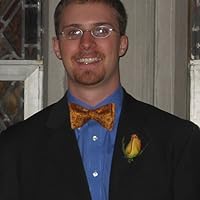
Tom Montgomery Fate lives in a Chicago suburb, where he is a husband, father, professor, and active member of his community. He also lives in a cabin built with the help of friends in the Michigan woods, where he walks by the river, chops wood, and reads Thoreau by candle light.
While he divides his time between suburbia and the cabin, Fate’s point is not to draw a line between the two but to ask what each has to say about the other. How do we balance nature (picking blackberries) with technology (tapping BlackBerrys)? What is revealed about human boundaries when a coyote wanders into a Quiznos? Can a cardinal protecting chicks from a hungry cat teach us anything about instincts and parenting? Fate seeks a more attentive, deliberate way of seeing the world and our place in it, not only among the trees and birds but also in the context of our relationships and society.
A seasonal nature memoir, Cabin Fever takes readers on a search for the wild both in the woods and within ourselves. Although we are often estranged from nature in our daily lives, Fate shows that we can recover our kinship with the earth and its other inhabitants if we are willing to pay attention.
In his exploration of how we are to live “a more deliberate life” amid a high-tech, material world, Fate invites readers into an interrogation of their own lives, and into a new kind of the possibility of enough in a culture of more.
"Cabin Fever" is a collection of essays about the author's thoughts and experiences at the family cabin. Fate, a suburban family man, identifies with Thoreau, and is a close reader of "Walden" and Thoreau's journals. Many of these essays contrast Fate's modern, somewhat fractured life with the more deliberate lifestyle Thoreau led more than a century ago.
I am very interested in the book's theme, which seems to probe various answers to the question of how a modern person who lives with a family in the suburbs can also maintain a feeling of connection with a healthy natural environment, without abandoning job and family to go live in the woods full time.
I enjoyed this book, but didn't love it. There was a sense of intellectual exploration in Fate's writing, and perhaps what I ask from memoir is more of an emotional connection than I found in these pages. Still, for a reader who is interested in the theme I described and who enjoys the essay format, this book is a worthwhile read.
What most interests me here is the natural miracle of revision, of learning to see again. I'm looking less for a pure subject than for a moment of pure vision to see what is in plain sight - a glimpse of the Wild in the ordinary.
Quotable: What I'm seeking here is a more deliberate life. But deliberate doesn't just mean "intentional" or "careful": it means "balanced".
To put it plainly, a deliberate life is a search for balance - in mind body and spirit - amid our daily lives.
Home. That's where I'm headed. This is an invitation to the way-finding. These words are tracks through a sun-dazzled meadow and a long winter night full of coughing children. They follow ants and cicadas and coyotes and the sudden twists and turns of love and marriage. They disappear for a while in a swamp but reappear along the bank of a small, polluted river. Sometimes they may grow faint or double back. So if you lose them in a thicket of buckthorn, or if they end at the water's edge, just look for them somewhere on the other side. Or perhaps find another trail you hadn't noticed before. Or do what Thoreau did: walk straight into the thorny bramble and make your own.
When, I wonder, did I first begin to lose my faith in the moment I was living in? When did my life first start to feel like a faucet that never stops dripping, like a sprawling to-do list?
Science is subjective and research is literally an unending process of searching. The experimenter "arrives" not at some final answer, but at a deeper set of questions. There is always a bit further to go.
Walking: I keep walking. But I'm losing focus and starting to tire. I've stopped wandering and started wondering. How mush further should I go? Should I not turn back, or at least point myself toward home? What time is it?
The best sentences we will ever read or write or live only lead us deeper into the woods, into a place where keys and credit cards don't matter, a place where we once belonged, and still long to be.
After a second beer, I walk down Flynn Road in the darkness back to the cabin. The full moon and the stars - spilt like sugar across the black abyss of the heavens - keep reminding me of what I am - a creature, one of billions, slowly making his way across the surface of the big, blue spinning marble. Yes, it is less a sense of isolation than of belonging. With the cornfields and vineyards glowing in the moonlight all around me, and the wind playing familiar hymns on the oak and elm, I feel more at home and less alone at that moment than I have for a long time.
Thoreau: Did he sometimes long to find the intense physical love he had for the woods, for the swamp and the pond, in a human relationship - to find not just an intellectual or familial love, but eros, a deeply romantic and sexual love?
How are we to manage our own imbalance of passion and patience? I'm wondering about the strange dissonance and resonance between these ideas, Patience and passion, words that seem to be near opposites, share a common Latin root, pati, meaning "to suffer" or "to endure." So what does suffering or enduring have to do with love and sex? Isn't love mainly about patience, and sex mainly about passion? Does the suffering come because the two are not interwoven in the relationship? Or because they are woven too tightly?
People move through the darkness and light, the shadows and shimmers of love, through moments of passion and patience, every day. And in so doing, they feel both suffering and its intimate partner, joy.
The Latin root for the word religion means "to bind together again," while the root of spirit means "wind or breath."
Thoreau found his religion in the woods themselves, in the wild, divine patterns and relationships among flora and fauna. Thus, he was finally ordained not by the Unitarians but by the sun filtering through the trees each morning.
The problem is that human truth always involves human imagination. And what many call "the facts" are open ti interpretation.
One of Thoreau's notions I do understand: "The necessity of being forever on the alert." Sometimes good things can happen to you if you just keep watch. What we seek affects what we can see. So I try to see some light, and to believe that waiting for it is as sacred as its arrivial, that patience itself is a kind of prayer.
Both seeking and seeing are essential to the traveler. Thoreau reiterates this idea in his books and his Journal, and I much admire it. Enough so that most of this book is a humble attempt to find meaning in my own "travels" on home ground, from the wilds of suburban Chicago to the woods and farms of southwest Michigan.
"Some of my townsmen...can remember, and have described to me some walks which they took ten years ago, in which they were blessed as to lose themselves for half an hour in the woods; but I know very well they have confined themselves to the highway ever since..." -Thoreau
You are my north star, the wild steadfast light that marks my way.
I enjoyed this book. Modeled after Thoreau's Walden, the book is organized by the four seasons of a year, and each reflective essay is preceded by a epigraph taken from one of Thoreau's writings. Each essay seeks the wilderness within and without, and looks for balance and meaning in the woods as well as suburbia.
I love the premise of this book of essays -- what if Thoreau was a suburban father of 3? Indeed. Didn't you think about that as you read Walden? The author, Tom Fate, is a true fan of Thoreau, and he brings a similar love for Wildness into his life in suburban Chicago, or at his primitive cabin in Sawyer, Michigan. I think this would be a great gift book for a guy who has an inner Walden!
This book was a lot funnier than I expected it to be, and also more spiritual. It's not just about finding a place in the woods in order to be reflective: it's about the balance between that space away and the space immersed in the everyday, the bustle, the technologies and demands of modern life.
Full of observations, reflections on our place in and as part of the natural world. A delightful reminiscence of a year spent building a cabin while writing with Thoreau's words as prompts.
"Wonder, and the reverence it brings, is the best part of human nature."
Not quite the book I was expecting, but I enjoyed the essays. A short book (197 pages)
The author, a community college English professor, writes of stories of his year (actually, several years condensed into one for purposes of the book) tying his time alone at his cabin in Southwestern Michigan with Thoreau and his time and musings in his book, Walden. I am far removed from high school and a time when that book was required reading. I enjoyed the essays, but grew weary when his mused at length on passages from Walden. That said, one I found emotional, for me, was one in the Summer section, titled 'In the Time of the Cicada,' in which he told of a period when his wife was going to get surgery for fibroid tumors, and the anxiety that it brought to his relationship and to the family. Another one was titled 'Falling Apart' which told of his cat, Rosie, who was elderly and failing and how he was thinking of the impending decision to be made. (being cat person, who has lost several cats, I found myself reaching for a tissue to stem the tears.) As though that was not enough, at the same time, a close friend was in end-stage cancer and facing death. Tough things to write about.
I suppose I enjoyed the book because I was familiar with the SW Michigan area, and enjoyed reading about how he came to acquire the property with several other families, build the cabin and explore the land.
This is an interesting read. Fate is a modern,'suburban' husband and father who is a huge fan of Thoreau and Walden. He chooses to emulate the Walden experience in an ostensibly much more limited way than Thoreau (notably, Thoreau's experience at Walden was far less solitary than would appear from 'Walden' itself), using a church cabin in the woods. Other members of his family and church community help in building and repairs. The story the author tells is done in a self-effacing way, and reads easily.
The book uses Walden as a frame upon which to ruminate on the experience our modern/cultural life offers us, and our relationships to nature. Each chapter begins with a quote from Walden or one of the other of his writings, and then explores some aspect of life. Topics are wide-ranging: nature, parenting, religion, home-repairs, and many more.
In this work, the author blends an obvious reverence for Thoreau with his own(Fate's) personal love of nature. Fate's knowledge of Thoreau and his writings is obviously quite extensive. In addition, he displays a fair amount of humor as he relates his own history and foibles throughout the story.
One noteworthy aspect of this book is that it has rekindled my interest in Thoreau, and for this, as well as for the interesting book the author has provided, I am grateful.
At the beginning hardly interesting, but in the middle it picks up and is more enjoyable. The chapters are loosely coupled to each other but could easily be a collection of blog posts, wanderings inside Tom's head. Open ended questions asked by Thoreau applied to a modern reader's mind and family. I read this before Walden, knowing I will end up loving that book so thank you for preparing me for that. The writing style stood in the way of a fourth star, especially in the nature-heavy sections where too many comparisons are jammed in one sentence for it's own good. Cabin Fever is not a thick book and not a difficult one to read but I enjoyed that it profiles itself as an ideal one to grab before getting to bed and to encourage my own mind to start wandering.
The author seems to be struggling with his "search for the wild." As a suburban father myself who is always searching for a grounding in my landscape, it is a struggle where very little unoccupied land is available. The pull of family and work amid a bustling landscape where free-thinking time is limited, it easy to get caught up in media and "things." Whether intended to or not, the essays/chapters in the book don't flow into each other smoothly. So the book doesn't have a logical chronology mapped out by the seasons as planned. Luckily, Fate is a skilled writer. What the book lacks in content is made up for in the quality of the read. As a reader I didn't walk away from this book with new insights, but it could be my situation as to how it parallels the authors.
Walden/Thoreau, a cabin in the woods, finding balance in one's life? Why yes please. This felt a little more "surfacey" than expected given the topic and that the author is an English professor. That said, I generally liked the book. I was happy to see him talk about belonging to a group that studied Vicki Robin's Your Money or Your Life (although he didn't name the book other than in the sources at the end). And I appreciated his reflective activism... Overall a quiet book that I generally enjoyed.
Interesting read. Read because the author is the dad of a friend of mine (shoutout Bennett). The biggest takeaway is how preoccupied we like to be at all times and how we are so easily detached from nature although it's all around us. Easy to read, however, more of an introspective journey than a real page-turner.
If a student had handed this in the author as an essay on Walden I think he would have flunked the student. I also don’t care for his personal thoughts o Walden. His personal encounters, stories are far more interesting.
Thanks to my friend Ellen for recommending this. I know both the place where he lives (Glen Ellyn) and the town where the cabin is (Sawyer, MI) so I felt right at home. The essays cover a year in both places and are funny, irreverent, deeply felt, and touching.
The author is reading Thoreau and contrasting and comparing his life to that of Thoreau. He even has a cabin in the woods near Lake Michigan. However, he is a suburban husband, father, and teacher,so life isn't the same. It's very thoughtful and thought provoking.
Nice title: Cabin Fever: A Suburban Father's Search for the Wild. More than that, though. It shows that in this chaotic world that a person with responsibilities can go back into nature, using Thoreau as his master, and not just survive but live life to its fullest. I liked this short little book, for its simplicity and calmness. The author is good at attempting to combine the feelings that he uncovers at his "house in the woods" and carry them home to his suburban Chicago family and home. Much easier to read than Walden and thus carries forward the message easier. Can't understand why only 101 reviews.
This book is an example of why you shouldn't impulse grab books at the library. I love the idea of a cabin in the woods, and thought that is what I'd get. Suburban guy buys some land designs and builds his get away place.
Instead I got a whinny overly sensitive book about life and reading Thoreau. No escapism here, no uplifting how to deal with stress by returning to nature.
I had considered one star, and then realized I should have read it closer and then I might have passed on reading it.
The themes here are interesting - finding balance in life, being a suburban parent while still trying to live in a searching sort of way. There are some nice images and some nice writing. But I just didn't feel the depth. It highlighted for me how hard really great nature and personal essay writing is to do. First you have to be one of the lucky ones that thinks really great thoughts, like Annie Dillard. If you don't have the thoughts, the illustrative observations and experiences just don't hold up very well.
I really wanted to like this but could not get into it very well, read a few chapters and skimmed a few others hoping to get into the book, just couldn't . Have read many other cabin in the woods books and enjoyed the back to nature writings but this one fell short.
very well written. Not quite what I was expecting, but I suppose if I had read the reviews (or at least read Walden first) I would have had a better idea. This is a book to get lost in the prose.