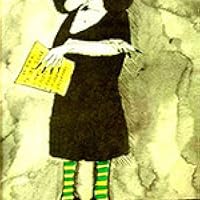
Jules Ralph Feiffer (b. 1929)is an American syndicated cartoonist, most notable for his long-run comic strip titled Feiffer. He has created more than 35 books, plays and screenplays. In 1986, he won the Pulitzer Prize for his editorial cartooning in The Village Voice.At age 16, Feiffer began as an assistant to writer-artist Eisner, whose comic strip The Spirit appeared in a seven-page insert in Sunday newspaper comics sections. As Eisner recalled in 1978: Feiffer walked in and asked me for a job and said he'd work at any price, which immediately attracted me. He began working as just a studio man — he would do erasing, cleanup... Gradually it became very clear that he could write better than he could draw and preferred it, indeed — so he wound up doing balloons . First he was doing balloons based on stories that I'd create. I would start a story off and say, 'Now here I want the Spirit to do the following things — you do the balloons, Jules.' Gradually, he would take over and do stories entirely on his own, generally based on ideas we'd talked about. I'd come in generally with the first page, then he would pick it up and carry it from there. Before this, in 1947, when Feiffer asked for a raise, Eisner instead gave him his own page in The Spirit section, where the 18-year-old Feiffer wrote and drew his first comic strip, Clifford (1949–51), published in six newspapers. Feiffer's strips ran for 42 years in The Village Voice, first under the title Sick Sick Sick, briefly as Feiffer's Fables and finally as simply Feiffer. Initially influenced by UPA and William Steig, the strip debuted October 24, 1956, and 14 months later, Feiffer had a bestseller when McGraw-Hill collected the Village Voice strips as Sick Sick A Guide to Non-Confident Living. Beginning 1959, Feiffer was distributed nationally. His strips, cartoons and illustrations have appeared in The L A Times, New Yorker, Esquire, Playboy and The Nation.
Jules Feiffer was an American cartoonist, playwright, screenwriter, and author whose work left a significant imprint on American satire and cultural commentary. Emerging from the postwar era of newspaper comics, he first gained recognition through his long-running comic strip published in The Village Voice, where his loose, expressive line drawings and psychologically sharp dialogue captured the anxieties, contradictions, and social performances of contemporary life. Feiffer used humor to critique politics, relationships, and everyday neuroses, developing a voice that felt conversational, self-aware, and deeply engaged with the shifting cultural moods of the United States. His graphic style, which often emphasized gesture and tone over detailed renderings, was equally distinctive, and helped expand the visual vocabulary of editorial and literary cartooning. Beyond his cartoons, Feiffer became an accomplished writer for stage and screen; his play Little Murders offered a darkly comic exploration of violence and alienation in urban America, while his screenplay for Mike Nichols’s film Carnal Knowledge drew widespread attention for its unflinching examination of intimacy and desire. Feiffer also wrote children’s books, including the popular The Phantom Tollbooth, for which he provided the illustrations that helped establish the book’s imaginative visual identity. He demonstrated an enduring commitment to making art accessible, engaging with students and general audiences alike through teaching and public appearances, and continued producing work across multiple genres throughout his life. His comics and writings were often autobiographical in spirit, even when fictionalized, providing commentary on his experiences growing up in New York and moving through decades of cultural change. Feiffer received numerous honors for his contributions to American arts, including major awards recognizing his innovation in cartooning, his influence on graphic storytelling, and his impact on theater and film. His later work included longer-form graphic novels and personal memoirs, reflecting on childhood, family, and the evolution of his artistic voice. Feiffer remained an active and inquisitive creator well into his later years, consistently exploring new creative forms and responding to contemporary political and social issues. His legacy is seen in the work of generations of cartoonists and writers who drew inspiration from his willingness to bring emotional depth, social critique, and literary ambition to comics and satire. Feiffer’s work stands as a testament to the power of humor to illuminate the complexities of human behavior and the cultural forces that shape everyday life.
I picked this off the bookshelf in my classroom. This was part of the CLI onslaught of books delivered to me; I thought I would work my way through what the company is recommending my students to read.
You know how in comic books to change the setting the author uses "meanwhile . . . "? That's what this book is about. The boy is summoned by his mother. He doesn't want to go, so he employs "meanwhile". He is transported from his bedroom to a pirate ship where he has great adventures . . . until he is forced to walk the plank. Then he conjures up "meanwhile".
From the pirate ship to the wild west the boy travels until he runs into a ferocious mountain lion. Yup, you got it . . . meanwhile . . . to a spaceship. Then he finds himself in a "meanwhile loop" flipping through those scenes until he has had enough. He calls out "The End".
Back home, he hears his mother calling for him to take out the trash.
This is a neat story that really highlights a literary device authors use. Yeah, I recommend it.
Raymond discovers the use of "meanwhile" as a literary device and uses it to avoid his mother. A fast paced humorous picture book that is a comic book-meets-metafiction storytelling tour de force. This is both an entertaining read aloud and a good creative writing prompt.
I dread trying to ready comic-style books to my son. Unfortunately for me - he loves them. So we wade through. Meanwhile by Jules Feiffer was one of the easier ones to get through. With pirates, space adventures, sharks, cowboys and mountain lions all making an appearance, the book was a huge hit.
Jules Feiffer's "Meanwhile" is a unique and hilarious comic-book style adventure that kids aged 7-9 will enjoy. A young boy uses the word "meanwhile" to transport himself through fantasy lands filled with danger, all while ignoring his mother's request for household chore help!
Written in cartoon (graphic novel) format, this book takes an imaginative leap to explain the concept of "meanwhile..." to children. Surprisingly, this text went over very well with Kindergarten students who grasped the idea quicker than I anticipated.
In comic books from back in the day, you always looked forward to when the narration box said the dramatic word MEANWHILE, which shifted the story to another part of the action and back. In this story, a young boy enjoys comics, anything to get away from his mom, who's been MEAN quite a WHILE. He decides to do something about it, writing the word MEANWHILE in a box, and allowing that box to transport him thru time and space to three different worlds. In one he's on a pirate ship. In another, he's a rough and ready cowboy. Still another, he's a space cadet battling Martian fleets. Each time he gets into a situation he can't escape from, not unless he writes the word MEANWHILE once more... only he may have written his last MEANWHILE. MEANWHILE this book is excellent for older kids, and it's from Jules Feiffer, who I think is the same guy who did political drawings and a nice friendly novel called.....Carnal Knowledge. Sorry kids, even a guy like Jules Feiffer writes kids lit. Sad! Four stars Feiffer will be writing a MEAN WHILE.
A boy's active imagination takes him away from his mother's calls to come help her. "Meanwhile" is the important word he discovers, and with that word he has daring adventures. Fun story with equally fun illustrations.
Super cute concept! Wouldn't it be so nice if there really was a meanwhile button so we could step out of a situation and think about things and come back to it when we have a good game plan? Or a pause button so we could pause parts of life and situations to take a break and come back to them.
This was very cute and incredibly imaginative. The art is vivid and the plot is action-packed. I highly recommend it for silent reading or as a read-aloud.
This book bring graphic novels to younger readers be creating a picture book that plays well on comic book conventions in a way that is entertaining for young readers. The main character takes advantage of the word "meanwhile..." as it is used in cartoons and comic books to change the setting. The setting is the most crucial element in this story, as Raymond uses the word to transport himself to a pirate ship, the wild west, and other settings. In each setting, however, he finds that he is still facing danger and that changing the setting cannot change the tension in the plot. This is a good introduction to genre and conventions for young readers.
Even though my dear hubby has a fairly extensive comic book collection and I've been known to enjoy the comic book Bone quite a bit, our girls don't read a lot of comic books, at least not yet. But when we saw this book at our local library, we just had to check it out. It might appeal more to boys, but we enjoyed the perilous adventures that Raymond faces. And we all had a good laugh at the Mom yelling up to her son - we all agreed that I have made similar pronouncements. Silly Mothers...
I like this book a lot. Raymond loves to lay on his bed and read comic books. And his mother always seems to call him away when his story is getting juicy. She's calling him and she wants him right now. Raymond notices that in his comic books the word MEANWHILE always changes the story to something more exciting. He writes the word on his wall and he has all sorts of wild adventures. This would be a fun book to share with my fifth graders. I think this could lead to some great discussions and writing.
This is one of my FAVORITE stories to tell grades K thru 3. There's plenty of action and it engages both boys and girls. The adventures include pirates, cowboys, panthers, sharks, and outer space shoot-outs. "The situation was hopeless..."
It also introduces the punctuation "elipsis" (The ellipsis consists of three evenly spaced ...) and its function in comic books. Very fun.
This is an excellent book on imagination and what you can do with it. The comic book aspect catches your eye from the very start and the normal typed words gives it structure. The way that the word "meanwhile" would bounce him around from place to place gave it an interesting spin on imagination. This is a very good book. Great book for elementary students.
Cute set of Calvin & Hobbes kinds of imaginary adventures, and a bit of a meta thing going on to support them, but.... "Meanwhile" changes not just the scene but the characters... it does *not* work the way Raymond wanted it to. This bothers me now, and it would have bothered me a *lot* when I was the target age for this book.
I would recommend this book to 4th and 5th grade readers. The text resemble that of a comic book. Therefore, it maight be too challenging for younger reading to comprehend. The boy in this book takes adventures until his "meanwhiles" run out and develops an appreciation for being obedient.
I dread trying to ready comic-style books to my son. Unfortunately for me - he loves them. So we wade through. Meanwhile by Jules Feiffer was one of the easier ones to get through. With pirates, space adventures, sharks, cowboys and mountain lions all making an appearance, the book was a huge hit.
Meanwhile...reminds me of Harold and the Purple Crayon, but with a focus on adverbs. WritingFix has a lesson about transitions using this as a mentor text. Here's the link: http://writingfix.com/Picture_Book_Pr...
My seven-year-old daughter loved this book. It is a fun tale with the main character, Raymond, escaping numerous threats (including his mother wanting him to clean his room) by through the literary instrument of the word meanwhile.