

What do you think?

The Plot: A Biography of My Father's English Acre
Madeleine Bunting is one of the most high-profile commentators in Britain. Her father was deeply conservative, with romantic, old-fashioned views about England. After his death, and wanting to understand him better, Bunting began to explore his passionate, lifelong attachment to a small plot of land in North Yorkshire. Delving deep into the rich history of this acre, she uncovers traces of its Neolithic inhabitants and of the Cistercian monks; she learns of the medieval battles and considers the changing face of agriculture and leisure. The result sheds a fascinating light on what a contested, layered place England is, and on what belonging to a place might mean to all of us. The Plot is an original, heartfelt and deeply political book.
304 pages, Paperback
First published October 1, 2009
About the author
Madeleine Bunting
16 books31 followersMadeleine was born in North Yorkshire, one of five children of artist parents. She studied history at Corpus Christi, Cambridge and Harvard, US. She held a number positions at the Guardian including reporter, leader writer, religious affairs editor, and for twelve years, she was a columnist. She wrote about a wide range of subjects including Islam, faith, global development, politics and social change.
She directed the Guardian’s first ever festival, Open Weekend, in 2012.
From 2012-14, she led a team as Editorial Director of Strategy, working on a project around reimagining the institution of a newspaper and its relationship with readers.
She has a longstanding interest in contemplative practices and in 2013 she co-founded The Mindfulness Initiative to explore the potential of mindfulness in public policy particularly health and education. The Initiative supported the All Party Parliamentary Group in their 10 month inquiry which led to a report Mindful Nation UK, published in October 2015.
She lives in East London with her family.
She has received a number of awards and prizes including an honorary fellowship from Cardiff University in 2013, the Portico Prize for The Plot in 2010, a Lambeth MA degree in 2006, The Race in the Media award in 2005 and the Imam wa Amal Special Award in 2002. She has won several One World Media awards for her journalism on global justice.
She directed the Guardian’s first ever festival, Open Weekend, in 2012.
From 2012-14, she led a team as Editorial Director of Strategy, working on a project around reimagining the institution of a newspaper and its relationship with readers.
She has a longstanding interest in contemplative practices and in 2013 she co-founded The Mindfulness Initiative to explore the potential of mindfulness in public policy particularly health and education. The Initiative supported the All Party Parliamentary Group in their 10 month inquiry which led to a report Mindful Nation UK, published in October 2015.
She lives in East London with her family.
She has received a number of awards and prizes including an honorary fellowship from Cardiff University in 2013, the Portico Prize for The Plot in 2010, a Lambeth MA degree in 2006, The Race in the Media award in 2005 and the Imam wa Amal Special Award in 2002. She has won several One World Media awards for her journalism on global justice.
Ratings & Reviews
Friends & Following
Create a free account to discover what your friends think of this book!
Community Reviews
Displaying 1 - 28 of 28 reviews

June 22, 2017
At its best this book is a riveting account of the Yorkshire moors through history. A refreshing Northern narrative perspective of England's growth through the last millennia. At its worst it's a moaning and unloved child trying to come to terms with her father and his distance.
The historical, anthropological and sociological components are absolutely fascinating. The necessity of sheep to maintain the landscape and the importance they had in developing the economy of the area is extremely interesting. The role of the Kings Way in England's history, the Byland Monks, the disconnection of the English from their land and the undermining of farmers both around the Plot and nationally are all fascinating insights into the nation.
Bunting's father is unique, he's of a generation that just missed the war and as such the generations before him were decimated and the ones after him didn't understand the true horror. That coupled with his artistic skill and desire to leave a transcendent and meaningful legacy through skill, art and work bring the changes in England over the last century into stark relief.
Bunting shows exceptional skill and honesty, her writing is excellent. The main criticism that will continue to be levelled at the book is the pervasiveness of her misery and her unresolved issues with her father. Though this book in many ways delivers her father the remembrance and fame he always sought, it certainly doesn't paint him the way he would have wanted to be painted. However, that's exactly what it is to be remembered, we don't choose what people remember of us. Thus we see the pamphlets that her father distributed later in life as a futile attempt to control his legacy, instead this book written by his daughter will forever be in command of his legacy.
We can't think ill of the author for using this book to work through her unresolved issues, we can however find it an uncomfortable distraction from her otherwise fascinating research and beautiful prose. While the personal information does provide one of the pillars of the story it often undermines and derails the more important larger narrative of the whole area. Definitely worth a read, especially if you're English.
The historical, anthropological and sociological components are absolutely fascinating. The necessity of sheep to maintain the landscape and the importance they had in developing the economy of the area is extremely interesting. The role of the Kings Way in England's history, the Byland Monks, the disconnection of the English from their land and the undermining of farmers both around the Plot and nationally are all fascinating insights into the nation.
Bunting's father is unique, he's of a generation that just missed the war and as such the generations before him were decimated and the ones after him didn't understand the true horror. That coupled with his artistic skill and desire to leave a transcendent and meaningful legacy through skill, art and work bring the changes in England over the last century into stark relief.
Bunting shows exceptional skill and honesty, her writing is excellent. The main criticism that will continue to be levelled at the book is the pervasiveness of her misery and her unresolved issues with her father. Though this book in many ways delivers her father the remembrance and fame he always sought, it certainly doesn't paint him the way he would have wanted to be painted. However, that's exactly what it is to be remembered, we don't choose what people remember of us. Thus we see the pamphlets that her father distributed later in life as a futile attempt to control his legacy, instead this book written by his daughter will forever be in command of his legacy.
We can't think ill of the author for using this book to work through her unresolved issues, we can however find it an uncomfortable distraction from her otherwise fascinating research and beautiful prose. While the personal information does provide one of the pillars of the story it often undermines and derails the more important larger narrative of the whole area. Definitely worth a read, especially if you're English.
June 17, 2021
I thought this book gave a good account of the history of land ownership and use in England and in particular this corner of North Yorkshire. I became engaged with the discovery of the motivation of the author’s father in purchasing “The Plot” and the building of the memorial chapel and the particular history it represented. We accept all too willingly the parcelling up of land and our exclusion from it. The history of the CPRE and forestation of North Yorkshire is particularly apposite as we tackle climate change.

February 8, 2016
Good stuff in patches. Interesting history of a part of the North York Moors (near Sutton Bank) that I know well. I lost interest in places though...

November 9, 2009
It actually took me 150 pages to really get into the book. As Bunting didn't really like her father, who was distant and following his own creative vision, it was hard to get drawn in. At it's best very beautiful nature writing that took me close to the Moors, especially when she was describing the Byland Abbey ruins.

April 3, 2023
Fascinating book, I guess as much about Bunting coming to terms with her father's death and trying to figure him out (note - this is not a book about bereavement, rather my reflection), the history, geography and life story of a patch of land, and a reflection on the changes within land use and rural society, and how it's viewed rose-tinted from the outside, and how reality doesn't always match. This was also particularly special for me as I grew up in North Yorkshire, and whilst I didn't grow up in Bunting's particular corner, I wasn't all that far away, and we did a lot of walks in that area. I've been to Scotch Corner chapel (albeit a lot of years ago, and I'm now keen to return) but never thought so much about why or how it was there. So this is a tale of "my" county, and there's much to reflect on and what feels familiar to me.
Her father, a Londoner, was sent to the private Catholic boys school at Ampleforth during the second world war. He idolised earlier pupils who had been sent off to war. Walked the area, discovered the Scotch Corner plot and fell in love. Learned carving from Mousey Thompson at Kilburn. I mean, this guy, who wasn't actually from Yorkshire, is just mired in the local history (and Bunting has interesting reflections on the concepts of "from" and "home"). So, later as an adult, art teacher and sculptor, he returned, leased the land for 50 years and built Scotch Corner Chapel by hand, as a kind of war memorial. He had rose-tinted and skewed ideas about rural life, the local community and society as a whole (made me think of the Canon Atkinson, who Bunting references now and then, and more modern accusations laid at his door).
To be perfectly frank, I don't think her father was someone I would have liked. He sounded self-absorbed, arrogant, unkind to his children, a perfect sh@t to his wife etc etc... and perhaps Bunting is dealing with such feelings herself in writing this, and trying to find common ground and peace, because at the end of the day, for better or worse, you only get one father.
There's also history and geology of this area, nature writing, conservation, farming, communities... oh, the list could be endless, but it's fascinating for so many reasons.
Her father, a Londoner, was sent to the private Catholic boys school at Ampleforth during the second world war. He idolised earlier pupils who had been sent off to war. Walked the area, discovered the Scotch Corner plot and fell in love. Learned carving from Mousey Thompson at Kilburn. I mean, this guy, who wasn't actually from Yorkshire, is just mired in the local history (and Bunting has interesting reflections on the concepts of "from" and "home"). So, later as an adult, art teacher and sculptor, he returned, leased the land for 50 years and built Scotch Corner Chapel by hand, as a kind of war memorial. He had rose-tinted and skewed ideas about rural life, the local community and society as a whole (made me think of the Canon Atkinson, who Bunting references now and then, and more modern accusations laid at his door).
To be perfectly frank, I don't think her father was someone I would have liked. He sounded self-absorbed, arrogant, unkind to his children, a perfect sh@t to his wife etc etc... and perhaps Bunting is dealing with such feelings herself in writing this, and trying to find common ground and peace, because at the end of the day, for better or worse, you only get one father.
There's also history and geology of this area, nature writing, conservation, farming, communities... oh, the list could be endless, but it's fascinating for so many reasons.

November 12, 2018
I've lived in Yorkshire for most of my life, but it is such a massive and diverse county that there are some areas I know hardly at all. One such is the western edge of the North York Moors and the Hambleton Hills. It's a measure of the success of Madeleine Bunting's evocation of the landscape of her childhood in The Plot that I now feel like I know the area like the back of my hand. Part history, part ecological survey, part memoir of life with a difficult, troubled but talented father, this is a fascinating book, full of incidental, telling details and set against the backdrop of a landscape that is constantly changing while appearing timeless.

July 26, 2023
I was a little disappointed with this one, but mainly because I was hoping for the book I would have written and what I got was nothing like it, so not really the book's fault. It was pleasant enough, seeing the plot where the author's father built a chapel through the history of the area. The majority of the book is more biography of her father and family than the actual plot, so don't expect a plot history in the research sense (where are the maps, and the land tax, and the parish records consulted...such a missed opportunity) but it's a nice ramble through the north country.

July 10, 2023
Some bits of this seemed way more interesting than others. I have actually been to a wedding at Byland Abbey and the reception was at the pub over the road so learning more about that and the Cistercian monks' innovative land use was interesting. I also learnt that cows cannot stand on 3 legs so have to get in a sling or lie down to be shod. Other than that the books sort of passed in a vague blur of not that excitingness.
October 19, 2020
The balance of the history of the plot and its surroundings, and her and her father's experience is brilliantly maintained in this book. The plot is a small number of miles from the village I grew up in and this book was both highly evocative and informative. I think Madeleine Bunting is a great writer about the British countryside, if you liked this then I strongly recommend Love of Country.
September 21, 2017
Really enjoyed the information in this book and unlike 'The Hebridean Journey' this book had a strong connection with the author as the basis for the book is discovering the place that her father made his own.
November 7, 2017
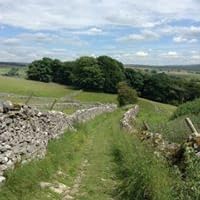
Stared up at the Kilburn White Horse she writes about this July. Gazed down from Sutton Bank, less than a mile from her family's land. Had I read this before, I could have possibly seen the centuries of history unfold...
January 21, 2019
Some lovely descriptions of the North Yorkshire countryside and some interesting sections on history and ecology, but it read more as a biography of the Author's father and her difficult relationship with him, which is not what I expected.

September 3, 2024
How can a book about a small cultivated area of land be made interesting? Bunting turns her research into the plot's life in her family, and its contextual surroundings, and makes her tale relate to its time in the past and also situate it in today's issues.
May 25, 2025
engrossing.a fascinating account of one plot and its history.also an account of a daughter trying to understand the life her father led.
A cold father at first ,the narrative as first unravels to leave you a little more warmer to him.
A cold father at first ,the narrative as first unravels to leave you a little more warmer to him.
February 27, 2020
I found this a fascinating account of the landscape and it’s development and the search to understand a parent. I enjoyed it very much.
June 19, 2023
Exceptional writing makes this book eminently readable. A lovely exploration of what it means to belong - both in terms of family and place.
August 5, 2023
It took a while to get going. But ultimately I found it to be reflective, and interesting.

February 4, 2013
In a way the title of this book is misleading. It's a book about so much more than a small plot of land, covering history, geography, natural history and human relationships. In fact, a lot of the subjects covered in the book have nothing at all to do with "the plot", and yet it serves to bring them all together as the author's main point of focus from which to branch out.
As others have commented, not a great deal has happened on the actual plot itself, other than the construction of a small chapel by the author's father. However, the surrounding countryside is rich in history and natural beauty, as I can testify, living as I do just an hour's drive away from "the plot".
The book includes some fascinating facts and anecdotes about this beautiful area, which I found absorbing and entertaining. I'm not sure how interesting this would be though, to anyone unfamiliar with the area. Also, the author devoted long passages to dissecting her relationship with her father which at times I found to be a little too self-indulgent. However, once I had finished reading I was pleasantly surprised to find that I understood how this had tied in well with the author's exploration and research of the area surrounding the plot. It was like she had made a journey and I had travelled with her. At times it was heavy going, at other times easy and fun, and when finally the destination was reached, I could look back on most parts of it with a certain fondness.
Now I am looking forward to driving out on the moors to discover the plot for myself.
As others have commented, not a great deal has happened on the actual plot itself, other than the construction of a small chapel by the author's father. However, the surrounding countryside is rich in history and natural beauty, as I can testify, living as I do just an hour's drive away from "the plot".
The book includes some fascinating facts and anecdotes about this beautiful area, which I found absorbing and entertaining. I'm not sure how interesting this would be though, to anyone unfamiliar with the area. Also, the author devoted long passages to dissecting her relationship with her father which at times I found to be a little too self-indulgent. However, once I had finished reading I was pleasantly surprised to find that I understood how this had tied in well with the author's exploration and research of the area surrounding the plot. It was like she had made a journey and I had travelled with her. At times it was heavy going, at other times easy and fun, and when finally the destination was reached, I could look back on most parts of it with a certain fondness.
Now I am looking forward to driving out on the moors to discover the plot for myself.

July 23, 2011
c2009. Chosen as a result of a recommendation in the National Trust magazine. The quote by Robert Macfarlane on the front cover is "A seriously good book".....and it is. Packed full of really interesting facts interlaced with memories of family. Beautifully written. Surprising revelations such as when the British were fighting in France for the Allies in the First World War because of the timber famine in England, the British authorities had to beg (!) the French government to be allowed to fell timber in France behind the lines - in order to continue with the trench warfare!! I will not detail what went through my mind on reading this. "The night is a time when in this crowded nation you can still find a measure of solitude". The author also quotes from Hugh Dormer a talented writer and diarist who was killed in a tank battle in Normandy in 1944 aged 27 "There is no security of faith left anywhere save in the tower of his own mind, while the darkening storm rages outside louder and louder with ever increasing violence."

November 25, 2012
This is more of a biography than a natural history book, and that is no bad thing.
John Bunting was a well known sculptor and artist, and this book is his daughter trying to find out about her father by using the lens of 'The Plot' a small parcel of land in the Yorkshire Dales, and considering aspects of his life in this context.
On this plot his built from scratch a small chapel as he was a devout catholic. There was also another small building that was modestly furnished. This was what he used as his place to contemplate the world. She considers her father through the subjects of national and local history, landscape and wars. He was a difficult, driven and focused man, who had a unique talent with regards to sculpture.
The book reminds me of the Hare with Amber Eyes, which was a family history seen through small netsuke, and The Story of England which is the history of a nation seen through the lens of a single village in England.
A good book, and one to re read to un-peel the complex layers of her father.
John Bunting was a well known sculptor and artist, and this book is his daughter trying to find out about her father by using the lens of 'The Plot' a small parcel of land in the Yorkshire Dales, and considering aspects of his life in this context.
On this plot his built from scratch a small chapel as he was a devout catholic. There was also another small building that was modestly furnished. This was what he used as his place to contemplate the world. She considers her father through the subjects of national and local history, landscape and wars. He was a difficult, driven and focused man, who had a unique talent with regards to sculpture.
The book reminds me of the Hare with Amber Eyes, which was a family history seen through small netsuke, and The Story of England which is the history of a nation seen through the lens of a single village in England.
A good book, and one to re read to un-peel the complex layers of her father.

March 23, 2011
I really like the idea of writing a biography of a particular piece of land - England is such a small country, in comparison to a lot of others, with so much history that it seems quite likely that most patches of land have seen great events pass over them - battles, rebellions, murders. Unfortunately it seems Ms Bunting is attached to a parcel of land that hasn't really seen much of any of that, perhaps this is because it seems to be quite an isolated part of North Yorkshire. It is mainly political and economic events that have affected this land, more in general than in specific. I can't say I was bored by this book, because Ms Bunting is a very engaging writer, but in between the sections on her father (who I can't say I'm especially concerned with, never having met or having any connection to the man) and the lack of anything of real interest happening to her land, I did find this book disappointing.

December 26, 2009
In 1944, the day of the D-Day landings, John Bunting was out walking with his schoolfriends. Seventeen years later he returned to buy the abandoned farm on the drover's road where he would have turned to look at the view of Yorkshire spread below. A sculptor, he built a chapel, filled it with his carvings. In this book, his daughter tries after his death to understand the significance this corner of land held for him. Lovely writing that gets right under the skin of this part of the Yorkshire landscape.

June 9, 2011
This was probably therapeutic to write, but it isn't very interesting to read when you don't know any of the people involved. I liked the idea of a biography of a piece of land, and I liked the chapter about sheep, but the problem with this particular plot of land is that nothing much happened there.
January 27, 2018
As a journalist, Bunting is best on the research of a place she grew up with, although the passages dealing with her father can seem less polished. I liked Bunting when she wrote for The Guardian, this reads like a breakout book where she begins to combine memoir, research and a gut awareness of the state of the nation.
March 20, 2010
This is a gently paced book, lyrical in places, which gradually seduces you into the history of a small one acre plot of land in North Yorkshire. It goes to show there's a book for just about every reader out there.

October 16, 2010
A most enjoyable read .I think we all dream of having our own acre somewhere but Madeleine Bunting's Father owned his to the exclusion of his family. A sad story of a man living on borrowed time , creating in his chapel a shrine to his imagined childhood heroes .
April 17, 2013
An intriguing way of coming to terms with the death of a difficult parent. Praising and appreciating what he loved and appreciated. Finding common ground in ground.
I didn't know wool hassock little value it is seen as industrial waste.
I didn't know wool hassock little value it is seen as industrial waste.

April 9, 2017
An excellent read, made more so enjoyable by knowing the area location of 'The Plot'. As with her Hebridean book, 'Love of Country', Madeleine Bunting weaves history, geography, politics, people around and in amongst her own very frank family history. The research involved is wide ranging. I have decided that my autumn break this year will be spent on the Hambleton Hills visiting the Plot.
Displaying 1 - 28 of 28 reviews