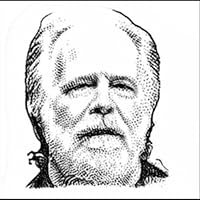
A great novelist of the sea, a poet of the tropics, a critic of empire and analyst of globalization, a harbinger of the modern spy novel, an unparalleled observer of the moments in which people are stripped of their illusions-Joseph Conrad is one of the greatest writers of the twentieth century. This revised edition of The Portable Conrad features the best known and most enduring of Conrad's works, including The Secret Agent, Heart of Darkness, and The Nigger of the "Narcissus," as well as shorter tales like "Amy Forster" and "The Secret Sharer," a selection of letters, and his observations on the sinking of the Titanic.
Joseph Conrad was a Polish-British novelist and story writer. He is regarded as one of the greatest writers in the English language and, although he did not speak English fluently until his twenties, he became a master prose stylist who brought a non-English sensibility into English literature. He wrote novels and stories, many in nautical settings, that depict crises of human individuality in the midst of what he saw as an indifferent, inscrutable, and amoral world. Conrad is considered a literary impressionist by some and an early modernist by others, though his works also contain elements of 19th-century realism. His narrative style and anti-heroic characters, as in Lord Jim, for example, have influenced numerous authors. Many dramatic films have been adapted from and inspired by his works. Numerous writers and critics have commented that his fictional works, written largely in the first two decades of the 20th century, seem to have anticipated later world events. Writing near the peak of the British Empire, Conrad drew on the national experiences of his native Poland—during nearly all his life, parceled out among three occupying empires—and on his own experiences in the French and British merchant navies, to create short stories and novels that reflect aspects of a European-dominated world—including imperialism and colonialism—and that profoundly explore the human psyche.
Like attempts to reconcile Newtonian and quantum physics, most literary attempts to use particularized human characteristics to explain broader societal phenomena are, at best, wrong and, at worst, ideologies. Conrad may be the only author to simultaneously see clearly into the individual psyche and implicitly explain the significance of that characteristic on a grand scale through his explication of it. It seems that the words he uses are created specifically for his sentences, and reading him is redolent of what it would be like to see a young Mike Tyson fight Andre the Giant.
My Portable Conrad is the old Viking selection from the 40s. Penguin's newer offering has tossed out some of the longer short stories, like Typhoon and Youth, but they now include the complete novel, The Secret Agent. You'll have to tell me if this is an improvement. It also appears to focus more on the political Conrad, which is natural in a post-Said world. The old version has an introduction which focuses mostly on Conrad's contributions to world literature rather than politics. Most stories chosen for the first Portable are "infernal" sea tales(sorry, Joe); though Heart of Darkness, my favorite in the collection, can't be successfully affixed or dismissed as a mere "sea tale". All stories are from the first half of his career with the noted exception of The Warrior's Soul. Many stories within carry their own reputation around before a reader even makes their formal acquaintance. This complicates things, undoubtedly. Narcissus is indeed a mine field, but an interesting one. Characters used as social symbols structures that story more than any other I've read so far, excluding Greene's The Quiet American. As Portables go, offering varied short stories and selected personal letters of the author, this one is worthy introduction to a truly Great Author's work.
My vote for best single-volume introduction to Conrad. When combined with Michael Gorra's excellent and entertaining introduction, it's like an undergraduate seminar on Conrad, a writer I avoided for some reason in my undergraduate years.
My first encounter with Conrad, and my most frequently recurring one since, was "Heart of Darkness". It exemplifies what, to me, seems to be the most recurring theme of his shorter fiction -- the protagonist undergoes an atypically "transformative" experience through a chance encounter, trauma, or circumstance which shakes their moral certitude, previously cherished beliefs, and/or senseless self of self-importance, often irrevocably, and generally to the bewilderment of a cast of characters who, looking on, still stand rooted in the shores of social moors, prejudices, and confidence that the now changed character has only just, unwillingly, been pushed away from.
I say atypically only because more often then not, there is no catharsis with few lessons learned. Generally, the character is left seemingly befuddled, with more questions than insights, and even if the protagonist has become the inheritor of some heretofore unrealized greater truth, it almost always serves to alienate them.
To be fair, that's a broad generalization, and in stories like "Youth", "Il Conde", aspects of "Amy Foster", and perhaps "Typhoon" there are moments of notable exception. At the very least it's fair to say that Conrad's characters tend to meet the unknown, which often proves darker and more mysterious than they ever imagined, and are rattled, sometimes for the better, but more often than not they seem merely haunted, the events playing over and over in their minds, perpetually
With the exception of "The Lagoon" and, to a lesser extent, "Il Conde" (and just MAYBE "An Outpost of Progress" -- only because its major themes become exponentially more fully realized in "Heart of Darkness"), every single selection here is fantastic. However, the crowning achievement of the collection for me is "The Secret Sharer". While its aims are markedly less ambitious than a story on the order of 'Heart of Darkness' or "The Nigger of the Narcissus", its confident clarity of prose and plot allow it to succeed where too often the former, as great as they are, become occasionally blemished.
Note well, however -- you will need a glossary of nautical terms to understand a great deal of the dramatic action taking place in some stories. Without a basic knowledge of nautical terminology, especially with regards to the layout of ships, stories like "Typhoon" will be unintelligible.
I liked Conrad after reading Heart of Darkness, Secret Agent and Under Western Skies in a college class but hadn't pursued him further in all the years since. This anthology fleshes him out further via a selection of stories, a short novel, Typhoon, and a long novel, Narcissus (plus Heart). The 50-page intro is a bit much, and I could have done without the letters at the close, but this survey made for compelling reading and deepened my appreciation of his work.
1. Character development (if they “seem real”): Half a star. They seem real, but are too distant to actually really get to know them. It's as if you were reading them through a filter. 2. Plot development (How often do I check my email?): Half. It would pick me up in waves, depositing me in little inlets of boredom every couple of pages. 3. Originality: One. Never read anything quite like it. 4. Complexity (overly complex/simplistic?): Zilch. Overly complex at times, though beautiful and true. 5. Recommendability (can I honestly recommend the book to anyone else, or is it made for a specific demographic?): Zilch. Hipsters would love it.
Summary: 2 stars
I read Conrad because his background is the same as mine: Polish. I marveled at how well he wields the English tongue, at how native he sounds, especially knowing my own circle of Polish friends here in Canada who often speak neither their native nor their adopted tongue really well. I only took in three of his works, Prince Roman, The Warrior's Soul, and the classic, The Heart of Darkness. I barely remember the first two, but that they were nice and I liked that they were full of Polish themes, while the third stuck out with its undulating rhythm, like waves rocking a boat, as the author explored the dark heart of both colonial Africa as well as of the human condition. It seems all I took away from it was its calm rhythm, worked in marvelously with the book's theme, subject, and setting, as well as with the author's own story.
The Heart of Darkness was one of very few books I enjoyed reading out loud, just for the feeling of the author's world slip off my tongue and into my ears. That being said, I'm glad this phase is behind me and I likely won't turn back to Conrad any time soon.