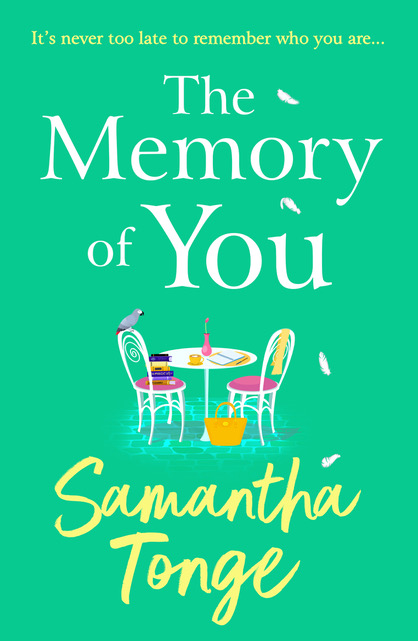
A gorgeously uplifting story about memories, storytelling, love and friendship, about the journeys we take and the people we meet, what we remember and how there are some things we can never forget. Alex would like to believe she’s a woman who has it all. Or that’s what she tells everyone, including herself. But this is far from true. Actually she’s on the cusp of losing her home, her dream career as a writer is in tatters, her ex won’t speak to her, and her mother’s gone forever. But then a chance meeting with a stranger named Hope gives her the opportunity of a lifetime, when Hope jokes that perhaps Alex should take over her job in a cafe while she goes travelling. Just at that moment, it sounds like the answer to all her problems. So Alex persuades Hope to let her step into her shoes for a month. She brushes away Hope’s attempts to explain about the café, instead demanding to know more about the owner Tom . But she should have asked to know more. Because the ‘Wrong Order Café’ isn’t like anywhere she’s ever been before. And Alex’s life is about to change forever…
Samantha Tonge lives in Manchester UK with her husband and children. She studied German and French at university and has worked abroad, including a stint at Disneyland Paris. She has travelled widely. When not writing she passes her days cycling, baking and drinking coffee. Samantha has sold many dozens of short stories to women’s magazines. She is represented by the Darley Anderson literary agency. In 2013, she landed a publishing deal for romantic comedy fiction with HQDigital at HarperCollins. In 2015 her summer novel, Game of Scones, hit #5 in the UK Kindle chart and won the Love Stories Awards Best Romantic Ebook category. In 2018 Forgive Me Not, heralded a new direction into darker women's fiction with publisher Canelo and in 2020 her novel Knowing You won the RNA's Jackie Collins Romantic Thriller Award.
Joyous moments should be truly celebrated because nothing in life stays the same; we’re in a constant state of flux.
When I saw this title on NetGalley how could I say no to a book that is about an author trying to write a book? This is my fifth book by Samantha Tonge and she never disappoints! The Memory of You has a truly unique premise and is beautifully written from the heart. It really affected me personally as my family has been touched by Alzheimer's and dementia. My granddad and mother-in-law had Alzheimer's and my aunt suffers from early-onset dementia. I learned a lot about birds, menopause and the diseases affecting the employees of The Wrong Order Cafe reading this book and the story isn't as sad as one might think with such difficult subject matter...In fact, the book was surprisingly funny at times. Such a poignant piece of writing that shows how illness affects loved ones as well as the person afflicted. The book is greatly researched and based on the author's experience of a loved one with dementia, and she writes this story sensitively and with much compassion.
What I took away from the book was the fact that it's the little things in life that matter. It isn't your job or money that makes you a happy person, it's how you treat others and what good you can do that matters most, one little thing at a time. I did not like the main character, Alex, at first. She was a little stuck up but working in the cafe taught her some important life lessons and I loved how much she changed and grew as a person. There is a little surprise at the end of the book, one that I did not see coming but loved.
I will never ask a bird "Who's a pretty boy?" ever again.
Wabi-sabi.
Thank you to NetGalley and the publisher for the Advance Readers Copy.
I wasn’t sure if I wanted to read this book due to the dementia storyline but I needn’t have worried as this book has been so carefully and beautifully written. The characters were a mixed bunch and I warmed to them and their quirks. The concept of the cafe was a novel idea and Tom was a truly special individual, as for Captain Beaky he added some entertaining moments with his colourful comments. A wonderful book which will stay with me for a long time.
This is my first exposure to this author, and I was deeply touched by this poignant story exploring the manifestations of dementia and Alzheimer’s disease and the ripple effect on family, friends, neighbors, and coworkers. It is a timely look at a devastating condition that is too often ignored in our contemporary culture.
Alex Butler’s career and life are teetering on the verge of collapse. Having left a secure position in the banking industry, she established herself as a writer with the meteoritic success of two romance novels only to have the third one bomb in sales due to a critical blog review. Now her publisher has denied the renewal of her contract, leaving her in financial and emotional straits. All this on the heels of losing her mother to cancer and the end of her twenty-year marriage.
By chance, she encounters Hope, a woman struggling to step out of her routine and accompany her daughter on an extensive trip abroad. While commiserating over their respective plights, Alex and Hope develop a plan for Alex to assume Hope’s duties as a server during her travels. The next morning Alex arrives at the Wrong Order Café to discover that several of the other servers have been diagnosed with dementia and frequently mix up the customers’ orders. As the weeks unfold, Alex begins to realize what is truly important in life, becoming more open and vulnerable as she discovers friendships and the possibility of love.
In the first few chapters, I found Alex abrasive and unlikeable as a protagonist. She came across as superficial, rude, and uncaring. However, part of the enjoyment of reading this novel is the experience of seeing the source of her antisocial behavior and her subsequent transformation. The supporting characters are relatable and provide dimension and insight to this remarkable story. I particularly enjoyed Captain Beaky, a raucous, cheeky parrot who adds a bit of levity.
Overall, this wonderful book, based on both the author’s personal experience of losing someone to dementia and her in-depth research on the topic, is engaging, informative and deeply touching. It is one I will want to read again in the future.
My thanks to the author, the publisher, and NetGalley for the privilege of reviewing this book. The opinions expressed in this review are completely my own.
This review will be posted on Amazon upon publication.
I’ve just revisited the synopsis for this lovely book, and realised there’s no mention of the reasons why the Wrong Order Cafe changed Alex’s life – but I do think I’d be doing the book a great disservice if I failed to comment on the way the author focuses so wonderfully sensitively on the whole subject of dementia. Renee and Fletch – working at Tom’s cafe, and the reason for the sometimes mangled orders that arrive at the tables – are at a relatively early stage in their dementia journeys. Tom’s father, who used to run the cafe, now only has fleeting moments of lucidity – but likes to visit from the home where he’s now cared for and soak in some of its special atmosphere.
Alex really didn’t know what she was taking on when she grasped the opportunity to stand in for Hope, living in her flat above the cafe, covering her job while she went on holiday. Selfish and self-obsessed (yes, it took a while for her to grow on me…) all Alex initially sees is a refuge from the problems in her life – a writing career that’s going down the tubes, a trail of bad choices, a lifestyle she can’t sustain any more. At first, she regrets her decision and almost walks away – but then slowly realises that she’s part of something particularly special, and becomes a very different person as she faces up to the many challenges.
The characters in this book are simply wonderful – and, given time, none more so than Alex herself as she comes up with ideas of her own to support the team of individuals she’s working with. Her relationship with owner Tom develops very nicely after a difficult start – there’s a slow-burn romance in the offing there too, but not as the most important element in the story. And there’s also a characterful parrot, Captain Beaky – the source of a lot of the humour, but when he sits on her lap and allows her to stroke him Alex knows she’s found a place she can call “home”.
The whole issue of memory, and the importance of acceptance and belonging, is just superbly handled – each individual, every one of them beautifully drawn, has their own story, often filled with sadness, and I grew to care for them all really deeply. But, as anyone whose life has been touched by dementia will know, there’s plenty of laughter too – there were so many moments and situations I recognised so well, and I can only commend and thank the author for her exceptional sensitivity and level of understanding. There were times the story made me feel tearful – but the author’s emotional touch is quite perfect, and an incident to make you smile again is never far behind. And I really loved the whole concept of “wabi-sabi”, the finding of beauty in imperfection – not as a random bolt-on, but developed as an integral part of this wonderful story.
Beautifully written, impeccably researched, it’s a book entirely filled with kindness and love that can’t fail to touch the heart – and I adored every moment. One of my books of the year – and one I’d urge everyone to add to their reading list.
Ever pick up a book that fits right with what you’re going through at this moment of time? This book was that for me having picked it up not knowing really anything about it I didn’t realize how fitting it was at this particular moment in my life and how it could make me look at life from a different point of view.
This is one of those special books where the story is not something the reader would normally think about unless being personally affected or knowing someone who is affected by these diseases
Having both my maternal and paternal grandmothers suffer through dementia and Alzheimers this book hit me right in the heart
This book offered hope and a way of looking at life from a different perspective when facing a life altering disease diagnosis id be lying if I said this one didn’t have me tearing up at certain points in the book.
My favourite paragraph of the book:
“Life was like a wrong order, you didn’t always get what you’d expected, its story may not be the one you wrote in your five year plans or fantasies. However it could still have moments of compassion, understanding, love,friendship,laughter, and just the right amount of ginger pickle.”
Overall, this was a light and enjoyable read. I liked the characters and the storyline. At times, though, I got a bit confused with the writing style; I occasionally couldn’t tell who was saying certain lines.
The book touches on several serious life issues (medical problems, work, relationships, family, self-worth), but presents them in a light and hopeful way. It introduces the concept of wabi-sabi—finding beauty in imperfection and uncertainty—which I really appreciated.
I liked the balance between the realistic aspects of life and the slightly unrealistic premise (like the coffee shop). The ending felt right to me; it was the perfect way to wrap up the story.
For me, this book started out as a bit of a slow burn. Alex is a flash-in-the-pan successful author who has had a downturn. Circumstances bring her to a temporary job as a server in a unique cafe, The Wrong Order Cafe. This cafe is full of quirky characters including a very opinionated parrot.
I was attracted to the people in the cafe instantly, but it took me a while to warm up to Alex. While she had been dealt a rough hand, she acts as a spoiled brat. At first. The reader slowly sees Alex's character evolve. She shows empathy. She reassesses her l outlook on life.
I love that 2 of the characters in the cafe had dementia. The dementia was not the focus, as they were staff, serving people to the best of their ability. I watched the different levels of dementia in my mother, so this was interesting to me, observing as a bystander instead of having an emotional investment.
This book is both character-driven and plot-driven. And it works well. As mentioned above, it deals with dementia. It also deals with menopause and self-acceptance. And a surprising bonus: a lot of little known facts about birds!
Thank you to NetGalley and the publisher for an Advance Readers Copy.
Not a bad read but a bit muddied at times. Alex was very selfish and immature for a woman her age. Constantly whining and acting like she had no idea how to do the most basic things. A very uncomfortable main character. The idea was good for the cafe and story but the characters need some work.
This was given me for my birthday....bought as 'A Blind Date with a Book'..wrapped in brown paper. Quite an easy read, but about dementia, which for me isn't always an easy topic...but well written, and a lovely story. I shall have to track down her other novels!🥰
Thank you to my partners, Rachel’s Random Resources, Boldwood Books, and NetGalley, and the author. I appreciate the gifted eARC, and I am leaving this review voluntarily! Swipe for the synopsis!
1. 𝗪𝗵𝗲𝗻 𝗮𝗻 𝗢𝗽𝗽𝗼𝗿𝘁𝘂𝗻𝗶𝘁𝘆 𝗔𝗿𝗶𝘀𝗲𝘀 - Hope and Alex have a chance to turn things around for themselves. They are both very hesitant, but as assumed, things have a way of working out perfectly for both of them.
2. 𝗔𝗿𝗿𝗼𝗴𝗮𝗻𝗰𝗲 - Alex is such an arrogant woman. I immediately had a dislike of her character. It just takes a little reality to get her off her pedestal.
3. 𝗚𝗿𝗼𝘄𝘁𝗵 - As Alex begins working at Hope’s job in the coffee shop, it doesn’t take long to see the effects the other characters begin to have on her.
4. 𝗕𝗼𝗼𝗸 𝗪𝗶𝘁𝗵𝗶𝗻 𝗮 𝗕𝗼𝗼𝗸 - Alex is trying to find inspiration for her next novel before her career hits far rock bottom. What she doesn’t foresee is that she is going to have more opportunities than she almost knows what to do with!
5. 𝗙𝗶𝗿𝘀𝘁 𝗜𝗺𝗽𝗿𝗲𝘀𝘀𝗶𝗼𝗻𝘀 - Often, a first impression is not a view into who the real person is. Nothing could be more true with the new friends that Alex is able to make within the coffee shop.
𝗧𝗵𝗲 𝗠𝗲𝗺𝗼𝗿𝘆 𝗼𝗳 𝗬𝗼𝘂 is an emotional story that will uplift you as you read. The personal growth that is shown by every character is well-written and feels complete as the last chapter closes out.
It’s the final day of the #blogtour for #TheMemoryOfYou by Samantha Tonge. They say we save the best till last. However, when it comes to doing this book the justice it deserves in a review, I’m not sure that any words I choose will be eloquent enough to sum up this very special book.
Like so many other readers, dementia has touched the heart of my family. It’s a terribly cruel and indiscriminate disease. But, as a family, we certainly felt there were lighter moments too.
Dementia isn’t a topic that we often find at the centre of mainstream fiction. Thankfully, Samantha Tonge takes this delicate subject and writes it into something quite beautiful.
Alex’s life seems to have hit the skids. Her writing career has gone off the boil, her marriage is over, her mother has passed away and she is in serious danger of losing her swanky London abode. A chance meeting with Hope, gives Alex an opportunity to step into someone else’s shoes for a month. As Alex arrives at The Wrong Order Café, it isn’t quite what she had been expecting. Alex eventually digs deep and gives the job and her new colleagues a chance, she is truly surprised and humbled by what she discovers.
It took me a few chapters to warm to Alex. At first she seemed a little self absorbed. When The Wrong Order Café finally sprinkles it’s magic on her, we see a new, much kinder and down to earth Alex emerge.
The mix of characters in this story, is wide and quirky. From the individuals whose lives have been tapped on the shoulder by the dreaded disease, to their nearest and dearest who can only watch on as dementia takes hold and try their damndest to make the most out of every day.
Tom, the café owner is a quirky but beautiful soul. He has created a space for people with dementia to shine and be accepted and respected. The friendship that developed between him and Alex is very sweet and touching.
The star of the show can only be Mr Beaky the potty mouthed, straight talking parrot. He’s a bird with his own sad story to share. But he does seem to have landed on the right perch with Tom in The Wrong Order Café.
The Memory Of You, is a gentle, but powerful story. It’s honest, raw, poignant and heartbreaking. It is also warm hearted, positive, uplifting, funny and full of love and hope. The story is captivating and written with such beautiful and tender words. This is a story that Samantha Tonge has clearly written straight from the heart.
If I’m honest, I wasn’t entirely sure that I wanted to read a book that had dementia at its heart. I am so pleased that I took the plunge and gave it a go. While the realities of this condition are not skirted around, The Memory Of You, is still a book that will make you smile and leave you with joy in your heart. This is definitely a book that will stay with you, long after the last page has been read.
All credit to Samantha Tonge, for taking her own unique style of writing and daring to go down a tricky path. Then turning it into an exquisite journey.
⭐️⭐️⭐️⭐️⭐️
With grateful thanks to Netgalley, Boldwood Books and Rachel’s Random Resources for a digital arc of this title.
Alex had reached the heights as a best selling author but after a scathing review of her latest book and an unsettling text from her agent, she felt her career was over. Consequently, she had no idea how she was going to fund the lifestyle she’d become accustomed to and was all but drowning in self pity. All this, on top of the end of her marriage and the death of her mother, sent Alex into a tailspin. Bumping into Hope in a bar offered Alex a lifeline.
Hope was in a quandary. She and her daughter, Leah, were supposed to be going travelling for a few weeks before Leah’s final year at uni. Being used to a routine Hope was getting cold feet at the thought of being in foreign climes and not knowing what each day would bring. Her job also included her apartment and if she couldn’t find someone to fill in during her absence she would lose both. She hadn’t even told Tom, her boss, about the trip.
'Alex cocked her head. Right at this minute Hope’s life sounded perfect, with an uncomplicated job, a child who clearly loved her, flights booked to somewhere sunny. But then people tended to think an author’s life was enviable, with parties and high rankings. Often it was. Sometimes it wasn’t.'
Meeting Hope changed Alex’s life in ways she could never have imagined, despite the rocky start. The Wrong Order Café was nothing like Alex had imagined and, with her present mindset, prickly attitude and health worries, feels working there is not for her. She’d been insular in her designer penthouse for too long and was finding dealing with people difficult. Tom, the café owner, had previously run the business with his father but a dementia diagnosis had forced Tom to rethink, and the Wrong Order Café was conceived.
Like countless other families, mine has also be affected by Alzheimer’s and so I was intrigued by the premise of this book. Tom and his staff, not forgetting the resident parrot, are lovely. He’s created a place where there’s the opportunity for those affected by dementia, including his father, to integrate into the community and feel appreciated. It doesn’t matter if customers are given the wrong order. I enjoyed Alex’s transformation as she begins to live in the real world, working at the cafe while getting to know the staff and witnessing how their lives are enriched.
The Memory of You is a story with heart, depth and emotion, written with empathy and understanding about the disease and the way it affects not only the person suffering, but also family members and friends. A unique concept, exploring relevant issues in a very sensitive way. Another wonderful read by Samantha Tonge.
When I looked at the synopsis for this book, I knew that I would need to dig deep to be able to read it. Dementia and Alzheimer’s have held sway over my family, including both parents, but Samantha has managed to fully share her story without creating pain for the reader. Ok, it was a challenge to read about the impact of this awful disease, but the positivity of the story far outweighed the heartache. Alex is a wonderful character who feels very sorry for herself when we first meet her. To her mind, her career is in tatters, and she can no longer fund her extravagant lifestyle. Bumping into Hope is serendipitous as Alex is offered a home away from her problems and a chance to do something kind in return. Hope has the chance to go travelling but her job will only be held available to her if she can find someone to cover for her. The job comes with on-site accommodation and an opportunity to be part of the wrong order café. Thinking the café name is simply quirky, Alex doesn’t get the full details from Hope and soon finds herself dealing with a difficult reality. Café owner, Tom, has taken control after dementia claimed the everyday functions of his father. Originally, they had run the café together, but as his father’s condition worsened, it became apparent that he could no longer cope. Discovering that Renee and Fletch, two of the members of the team had been diagnosed with early onset dementia and Alzheimer’s, Alex accepts that there is more to this café than she originally realised and regrets her decision. Even worse, from her point of view, there is a parrot with a colourful vocabulary in a food establishment. I absolutely adored Tom, he had created an extraordinary environment that, in turn, created an opportunity for those afflicted by the grasp of dementia to flourish. The more I read about him, I fell a little bit more in love with him. Samantha Tonge creates stories with humanity and depth. She observes people in a way that delves into their spirits and delivers the best version of them. When I say best version, I don’t suggest that her characters are unflawed, they are fully developed with a caring touch. Please don’t be put off by the theme of this beautiful book, it is written with a caring and gentle spirit that leads to a greater degree of understanding.
“The Memory of You” is a beautifully written, well researched story. It covers the devastation of loss in it’s many forms and ways that people can cope with the resulting changes. It feels like a hug in book form, an interesting story, quirky setting with ultimately lovable characters, whose layers of personality peep out as the story progresses. I thoroughly recommend this book.
The losses the main character, Alex, experienced prior to the start of the story are the death of her Mother and breakdown of her marriage. When we first meet Alex she is a successful and very driven woman, she hides behind fame and the glitz & glamour it brings but no longer has any true relationships with people, no emotional ties. She is scarred by her past bitter & resentful and her softer side is never visible.
The interesting premise of the story being what results when Alex takes on a “job” swap with Hope, a woman she meets in a pub, when they are both at a low moment and they encourage each other to try something new. We are then swept up into her very business like & negative mind set as she enters the cafe where she will be working for the next few weeks. We see it through her eyes until things become clearer to us. The “Wrong Order Cafe” is a place where people with dementia can work and feel useful, a place where people feel safe and at home. Quirky and very special. Alex hadn’t listened when Hope tried to explain it was no high end coffee shop!
I loved reading this book it is so well researched. The warmth and understanding of those suffering after a diagnosis of any kind is there to see in the pages of the story with hope and compassion for anyone struggling not just with an Alzheimer’s diagnosis but other conditions that change how you need to live your life. When I read, I didn’t want to leave the cafe, the fun, fellowship and safety within held me as a reader.
Thank you to Netgalley and the publishers Boldwood Books for the ARC
Lately, I’ve been blessed by unique storytelling, and The Memory of You fits that description and then some! It’s not everyday a reader gets to experience such interesting perspectives when it comes to love, loss, and navigating change. But that’s what I felt I got when journeying through Alex’s world. She is the type of character who might be dealing with a lot, but on the surface, no one would ever know it. So much of that is a defense mechanism brought on by personal pain. While the world sees her as an accomplished author who has her life in order, only she feels she knows the truth.
I can only hope for a chance encounter with someone like Hope! At first, Alex sees what Hope has to offer as a potential lifeline, but when she experiences the Wrong Order Café, that outlook changes. The Café doesn’t apologize for incorrect orders. In fact, there are many reasons it’s encouraged, and those reasons stir up a lot of deep emotion within Alex. Which only serves to scare her off. It is so much easier to compartmentalize and keep everyone at arm’s length, and that includes her past and her memories. The Wrong Order Café and its inhabitants don’t enable that kind of behavior at all, only bringing everything she’s tried to keep hidden from even herself to the surface.
Something Alex reflected on a lot is how her recent writing didn’t showcase emotional depth. I think I have that same issue within my own writing, so I could totally relate and identify with that sentiment. Given what she’s been through, I could also understand why that was. Slowly, the Café changes her and opens her up more, which is shown in her experiences with the people who either work or visit there, as well as in her outlook towards her own writing and that of others.
I think one of the biggest things I appreciated about The Memory of You is how it shines a light on dementia in a unique way. I don’t know if a place like the Wrong Order Café exists in real life, but it really should. There is hope and living beyond a diagnosis. I loved Alex’s story–it was a well-deserving five-star experience!
Alex was a top selling , highly successful author, “was” being the operative word. Her third book bombed and her agent has just let her know that the publishers won’t be asking for a new contract. Her mortgage is overdue, she and her husband split a while ago and life is generally pants. On the way back from the cancelled meeting with her agent she bumps into Hope. Hope has a quandary- she should be going travelling with her daughter but doesn't want to leave her job or the security as the job comes with living accommodation and the flights are booked for the very next day- and she hasn’t told her boss. What transpires is Alex taking over Hope’s job only Hope has been trying to tell her something and Alex either buts in or just doesnt listen. When she arrives at the cafe she is rather surprised at what she finds and gives a week tops as it's really not going to be her sort of thing at all, and somehow she will have to tell hope that her job and flat have gone to someone else. The manager Tom tries to persuade Alex in a very relaxed way and when she finds he has an unknown talent for writing things turn in a different direction.
I love Samantha’s books. There is so much more to them that “ just” a story. It's about life and taking chances. Of perhaps not being so quick to judge and to step into someone's shoes for a while to truly try and understand them. I got Alex- she had come from a busy banking environment to one when writing that she didn't have to interact with anyone if she didn't want to, and being at the café put her in the flight path of the world at large. It’s a hug in a book. A wonderful story of life and its ups and downs and sometimes how perhaps taking a step back can propel us more forward than we ever thought possible. A truly stunning read and deserved every one of the 5*in spades. Loved it doesn’t cover it.
This story is beautiful , uplifting, emotional, thought provoking and thoroughly disarming. On reading the synopsis I knew without a doubt I wanted to read it, but that with issues of Dementia, Alzheimers and the affects/impact it has on lives I admit to being a bit cautious having friends with parents going through this, but I will definitely add although it’s not a light and breezy read, that the uplifting nature, the positivity of the story shines through and it’s such a beautiful, comforting and satisfying read.
Alex is a lovely character, I did really connect with her, although initially she seemed a bit self involved, but in that situation I think it’s quite a realistic portrayal especially her initial out of her depth realisation at the cafe when she realises it’s true name meaning and the depth to its work, but after her initial regrets I loved watching her growth through . However, it’s Tom, who owns the cafe who stole my heart, I think I fell in love with him more page after page, no spoilers as to why you’ll need to read and meet him to fall in love yourself. Samantha Tonge writes beautifully constructed characters full of depth, flaws and caring, she really covers the human spirit and makes the characters so relatable.
I would thoroughly encourage anyone to read this brave, funny, beautiful story and not be deterred by the themes of dementia especially if you have experience of it, Samantha Tonge writes with such care and sensitivity, if you only have a little knowledge you will come out of this wonderful read with so much more understanding, if you do have full knowledge I think you’ll definitely come out of this life affirming read feeling comfort, recognition and acceptance.
I received an advance review copy for free, and I am leaving this review voluntarily.
What a book! And once more I'm astounded at Samantha Tonge's development as an author, as her writing seems to get more and more impressive with every single book.
And this is clearly a personal story for the author, as she deals with a variety of characters with dementia who are all working at the Wrong Order Cafe, which enables them to still feel like valued members of society. It deals with how loved ones have to come to terms with a family member or friend slowly losing their memory and watching the decline.
Whenever the story is talking about these topics, you can feel the heart and emotion, and the sensitivity that is being displayed. All signs of an awesome author.
But it's not just about that, it's also about a chance meeting between Alex and Hope, leading to a decision that will change both of their lives. Alex shows enormous character development as the story progresses, and I loved seeing her author journey.
I really enjoyed the setting of the cafe in Manchester, especially owner Tom, and his parrot who has a fabulous personality and often made me smile.
There's also another health matter that is dealt with in this book, that just doesn't seem to feature much anywhere, and although is a fact of life for women, isn't often spoken about, and the way that was included, again added extra depth to the story, is really great to see.
This is ultimately an uplifting and heartwarming story, filled with a lot of heart, that I thoroughly enjoyed.
Thank you to Boldwood Books for this copy which I have reviewed honestly and voluntarily.
Samantha Tonge’s books are just so meaningful and go beyond a simple romance trope. She always manages to embody the trials and tribulations of life but also celebrates the most joyous moments, events and occasions too. The Memory of you is no different. Poignant and beautifully written it speaks from the heart - to the heart.
As always with Samantha’s books, The Memory of You is superbly researched and sensitively delves into the world of dementia and Alzheimers. There are some personal experiences and connections for the author (I think) which shines through in the way the subject matter is dealt with. It gently navigates the experience from the perspective of the people who are battling with the condition and the impact it can have on loved ones around them. Sad in places (of course), but also uplifting and occasionally humorous in others too in the way characters care for each other and provide a nurturing environment/community.
The idea of the cafe is superb and I’d love to see more of this in real life.
Alex’s character goes through a considerable change and I found myself contemplating a lot of things alongside her as the story unfolded. It really made me think about priorities, memories and the kind of things I’d like to leave behind. It also made me feel like I have a much better insight into what other people may experience in their lives and how to be more supportive.
The Memory of You is such a beautiful and unique story and I absolutely adored it.
Thank you Samantha Tonge for writing something so wonderful.
Rating: 2.5 rounded up to 3 stars. This was my first by Samantha Tonge, so I began with it no prior expectations. The story is about Alex, an author who finds herself at something of a crossroads. Without giving too much of the plot away it is hard to review this book. What I can say is that Samantha Tonge is a writer, writing about a writer, but although she explains what makes readers like and engage with books, and that her opinions align with mine, the book itself missed the mark. There were a few odd moments which resonated with me, but they were few and far between.
It starts well enough; Alex is portrayed as unpleasant so doubtless the story is about her transformation to a better person, but about 100 pages in I was feeling that something was absent, I still wasn't engaging. I persuaded myself to continue and did complete it, but I can't say I enjoyed it and skimmed the final chapters.
The idea of the Wrong Order Café is not new, please see about the Restaurant of Mistaken Orders
I also discovered that something which personally I have found rather irritating in books published recently is acknowledged as a new genre “cli-fi” climate fiction. I am not a climate change denialist but constantly banging the eco-gong is not something I want to have included in my reading material. Be prepared for an avalanche of literature hanging from every branch of the green tree.
I received an advance review copy for free thanks to NetGalley and Boldwood Books and I am leaving this review voluntarily.
Blurb
A gorgeously uplifting story about memories, storytelling, love and friendship, about the journeys we take and the people we meet, what we remember and how there are some things we can never forget. Alex would like to believe she’s a woman who has it all. Or that’s what she tells everyone, including herself. But this is far from true. Actually she’s on the cusp of losing her home, her dream career as a writer is in tatters, her ex won’t speak to her, and her mother’s gone forever. But then a chance meeting with a stranger named Hope gives her the opportunity of a lifetime, when Hope jokes that perhaps Alex should take over her job in a cafe while she goes travelling. Just at that moment, it sounds like the answer to all her problems. So Alex persuades Hope to let her step into her shoes for a month. She brushes away Hope’s attempts to explain about the café, instead demanding to know more about the owner Tom . But she should have asked to know more. Because the ‘Wrong Order Café’ isn’t like anywhere she’s ever been before. And Alex’s life is about to change forever…
My Opinion
I really like the idea of the ‘Wrong Order Café’. Samantha Tonge has written a lovely book and delicately handles the topic of dementia. Another delightful book by Samantha Tonge.
Things are not going great for author Alex when a negative blog review leads to her latest release bombing. After her first titles went straight top of the paperback charts this is a shock to her. With her agent threatening to drop her without another successful release, Alex's newly acquired luxurious lifestyle hangs in the balance.
Feeling down in the dumps she stumbles into a quirky little cafe, which is not her usual scene. She meets waitress Hope who is also struggling and wants to go travelling with her daughter for a break but can't get time off work. On a whim Alex agrees to take on her shifts while she is away... perhaps a change of scenery will give her inspiration for her new book!
However Alex doesnt realise quite how quirky the cafe is. Will she be able to stick at it to save Hope's job?
This is a lovely story exploring a range of issues, including grief, dementia and the menopause. It is quite refreshing to see these topics appear more in fiction as so often people suffer alone.
I really enjoyed all of the characters, particularly Jade, Fletch and Captain Beaky, the parrot with a potty mouth! Although, initially, all of these characters appear unlikeable we warm to them as we find out more about their stories. The old adage "Don't judge a book by its cover" is very true! A great feel good read!
‘The Memory of You’ jumps straight in without preamble, and very quickly had me hooked. Tonge’s writing is superb. I spent the first third of the novel disliking the main protagonist, Alex, who seemed churlish and self-centred. Surrounding characters by comparison were grounded, open and kind. This led to a beautiful balance which continued throughout the book as Alex’s character developed more understanding and became eminently more likeable.
Throughout the novel big subject matters are tackled, from losing a parent, to dementia, to the menopause. Tonge addresses these with incredible care and understanding. As a reader you can sense that the ideas and words flow from hours of research and a lot of love. I appreciated the extra detail too, such as information about birds and the interesting links to elements of Japanese culture.
I thoroughly enjoyed this book and have no hesitation in giving it 5 stars. It is densely packed with brilliant storytelling, location descriptions and believable characters. I would strongly recommend that ‘The Memory of You’ goes on your reading list now!
This was a very raw and moving story. Being a woman of a similar age I could relate a lot with Alex and Hope, and it was refreshing to read about others suffering from menopausal symptoms and the impact they can have on your life with out you realising. The dementia element was also interesting and it certainly opened my eyes about the disease and how it develops and how family and friends adjust and manage. The idea of employing them in a cafe was interesting, and it certainly helps to make them feel included and to slowly eradicate the stigma attached to people with the disease.
Tom was interesting as he seemed to be the one who had it all together and was holding everyone up. To see him crumble was quite moving, but his support network was there, Alex cared more deeply than she realised and she helped Tom to find his feet and his smile again. I really enjoyed reading this, seeing Alex navigate new friendships, new skills and finding herself again, and making friends with an outspoken parrot!
There are so many layers to this story which deals with some serious issues in a warm and humane way. The Alex you meet at the beginning is not particularly likeable but then you realise that she feels that way too. There are plenty of people who you can enjoy in the Wrong Order Cafe and there is a feeling of community there and acceptance of the loss that dementia brings to people and their families. As it takes away a person’s identity as memories fade away, there is nevertheless a determination to hang onto as much as possible to what makes them unique and loved.
I enjoyed all the humour which was to be found in the story, from Captain Beaky to the customers who delighted in the wrong order being delivered. Alex’s realisation about what she values and her opinion on how she has been living strikes home. I also loved all the references to the writing process and books. Most of all, I enjoyed the setting in Manchester having caught the bus in Stevenson Square many years ago as a schoolgirl.
In short: a warm uplifting story which goes beneath the surface.
In more ways than one. Alex, a bestselling author who’s reeling from a series of recent bad reviews, meets Hope in a cafe, and after a long conversation, she decides to take Hope’s job as server in a cafe so that Hope can go on a tour of Southeast Asia for five weeks. She’ll also move into Hope’s flat above the cafe for the duration. But she doesn’t know that the Wrong Order Cafe is a quirky place that employs people who have been diagnosed with dementia and are in the early stages. Only she, Jade the counter girl, Tom the owner, the chef, and a couple of others are “ ordinary folks “. It takes her a little while to settle in but soon she’s fitting in and has even made friends with Captain Beaky, the cafe’s resident parrot. She and Tom become friends and before long she’s confessed her writing problems and he shows her something he’s written. This leads them to a collaborative effort on a new book that she’s determined to show her agent. Many surprising things happen in five weeks, just about all of them lovely!
It's never too late to remember who you are. And memory of you by the author is outstanding from start to finish.
Best selling author Alex Butler is meeting her agent Miranda in Market Street Piccadilly Gardens Manchester, when she clashes with Hope a book reader who has a bribing daughter Leah wanting her to travel for five weeks, and is thinking of her job and boss Tom Wilson, fate has brought them together and Alex agrees to do her job for her, at the Wrong Order Cafe, getting to know Tom's volunteer workers, this place having servers with Dementia, Alex see's it as a challenging journey for both her and them. It's a place of haven with cheeky parrot Caption Beaky, really what has she let herself in for, but then gets to know Tom better than she though.
A powerful strong story that will pull into your heart and soul, It's one story that a lot of readers will understand holding memories of their own, I do recommend this to all readers.
Although for me this book didn’t grab me to begin with, and if anything I couldn’t relate to any of the characters, it’s a slow burner and had me all in as the book evolves and the characters open up like beautiful flowers!! I’m glad I persevered! Samantha Tonge has great humanist insight and sensitivity, so despite first impressions it’s a heart warming read, and totally recommended. Alex has it all, she is successful, famous, but cold, and lives in a beautiful flat with no one to answer to at all. Tom runs a very unusual cafe in Manchester, quirky and unique. What they begin to create between them is magical. This is storytelling and the recording of memories with wise insight from a great author. Interesting eclectic characters, who I did want to get to know more. This is inspiring reading, it gave me lots to think about and learn from, and hugely enjoyable aswell!! Thank you to NetGalley and Boldwood Books for the early read, loved it!