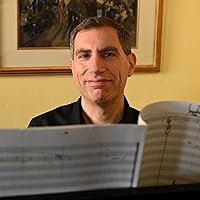
Gerhard Herm was born in 1931, studied in Munich and the United States and now lives near Munich. He has produced a number of documentary films for German television on Mediterranean civilisations and his most recent book, The Phoenicians (published in England in 1975), has been translated into twenty-four languages.
I found this full of information about an overlooked ancient peoples. I learned quite a bit about their wars, conquests, and various cultural aspects that are rarely mentioned in other places. I remember reading about Vercingetorix and Arminius in "Caesar Against The Celts" by Ramon L. Jimenez. Recommended book for anyone interest in this topic. Thanks!
Picked this up in Arnold, CA for a friend of Irish descent in Santa Rosa, then, having read a bit of it before handing it off, found my own copy at Heirloom Books in Chicago. I'd been impressed by, first, the fluidity of the translation and by, second, the lively beginning of its first chapter . Long interested in classical and Hebrew antiquity, therefore acquainted with the Celts, I'd been interested in learning just how barbaric they were after reading Caesar's Gallic Wars in high school Latin class.
Well, they were and they weren't. The Celts spanned much of Europe over the centuries. Their descendants and elements of their culture endure in modern Wales and Ireland wherewith Herm ends his account. Even in antiquity they forged their own weapons, minted their own coins, traded with the civilizations to the south.
My complaints pertain most to the very vastness of the Celtic phenomenon, Herm attempting to cover all bases (linguistic, archaeological, historical, literary, religious etc.) in less than 300 pages. It's too much and gave me no clear sense of the variation between the tribes or over the centuries. However, as an introduction to a large topic it serves perhaps as well as it might.
Die Kelten haben die europäische Geschichte entscheidend mitbestimmt - schließlich haben sie einst sogar Rom erobert - dennoch ist das Wissen über diese Volk sehr lückenhaft - das liegt wohl daran, dass Geschichte immer schon von Siegern geschrieben wurde. Dennoch gelingt es Gerhard Herm mit diesem Werk, das Volk wieder erstehen zu lassen und uns sehr viel scheinbar verlorenes Wissen wieder zu vermitteln.
Herm lässt kaum ein Thema aus. So schreibt er über Theorien über die Herkunft der Kelten, über deren Sozialsystem, über ihre Kriege, ihre Kunst, ihren Beitrag zur europäischen Entwicklung, ihr Leben auf den britischen Inseln und da dürfen dann natürlich Artus und Merlin auch nicht fehlen.
Die ausgezeichnete Recherche allein reicht aber natürlich nicht um sich fünf Sterne zu verdienen - dazu ist es auch nötig den Stoff interessant und kurzweilig aufzubereiten. Genau dies allerdings gelingt dem Autor ausgezeichnet. In einem wunderbar packenden Stil werden Fakten präsentiert, ohne jemals trocken oder gar unverständlich zu werden. Wenn Sie schon immer etwas über die Kelten erfahren wollten, dann ist dieses wohl das Buch der Wahl.
This is not a rigorous archeological investigation of a culture or people. The author relies on literary sources, particularly Roman ones, to relate how external cultures perceived various Celtic groups. There appear to be good maps, but the author doesn't tie any investigation by historical sequence to the maps presented.
As opposed to more recent in depth analysis of Norse and Viking culture, where elements that constituted a lifestyle are presented in a context where those elements expand to the translation of a community and then governmental group, complete with trade rules, routes, merchandise, equipment, and time span within the encompassing external cultures, this book goes to glimpses from the external cultures to give snapshot impressions of the people (Celts) being investigated.
The information is presented as chapters which deal with disparate and unconnected information regarding regions and time spans. There is no effort to tie all the information together. Because of the method of subject treatment, there is no smooth chronology.
This entire works appears to be scrapings from other research or from literary sagas/myths, where this author is just passing glimpses along.
Since I'm at a loss to fully describe my disappointment with this work, I'll have to use an analogy. Suppose that you are studying to be a vet and are particularly interested in the giraffe. You might expect a volume of work concerning the animal to give you various statistics such as bone structure, body mass density, blood pressure, feeding habits, mating and reproductive characteristics, range over time, subspecies variations, etc. Picture instead a work that gives you a narrative view of an entire zoological safari, in which the giraffe is only seen through interactions with the other animals, and in which the animal namings and residence areas obscure the storyline of what is seen and told of the giraffe. Nearly all direct references to the subject come from literary stories and not from actual first hand on site physical presence.
This book was a major letdown, and I did not read it all. First of all, through the first three chapters or so, I kept wondering when the book would be about the Celts. There was a chapter about Romans, another one on Greeks, and then another one apparently about Atlantis, but there really wasn't much on Atlantis in there anyway. Sure, I know that the Romans' and the Celts' history are intertwined. But I have to say that I really don't care how the Romans think the Celts lived. I want to know what archaeologists have to say about how the Celts lived. This book wasn't it.
That and some of the paragraphs made no sense. One reviewer mentioned that it seemed as though the book had been badly translated from another language, and that accurately describes my impression. In one paragraph, the author starts to talk about sacred cows, wanders off into the origin of the word "Alp" and then mentions something about the "profane" use of cattle (which by the structure of the paragraph would mean that it had something to do with the word "Alp," but since that wasn't explained, it's hard to tell). And what would that be? I have an idea, but...it was never explained in that paragraph or any of the following ones. This author needs a better editor.
Full of misinformation. Herm is not a historian, and it shows. He spends an entire chapter trying to convince you the Celts are from Atlantis, which was supposedly in the North Sea, a theory created by Jurgen Spanuth, a pastor who fancied himself an archaeologist because he studied it for a few semesters and was, more disconcertingly, a Nazi. So you're telling me a famous highly-advanced ancient civilization is suddenly located by a Nazi faux-archeoligist, not in/near the Mediterranean (as purported by every other credible/semi-credible theory), but in an Aryan area, close to Germany, providing a too-convenient idea that the "master race" could be descended from these ancient highly advanced peoples? And this theory is unanimously rejected by actual scientists and historians both in his own time and in modern day? I'm not buying it! Why would Herm use a discredited pretend-scientist as a major source for his book? This calls into question the validity (and sanity) all of his other sources, as well as that of Herm himself. I'm appalled both by this book and its apparent popularity on Goodreads.
I learned so much from reading this book. The writing style is quite a bit denser than the pop-culturish history books written these days to please the masses - but as opposed to that genre, you actually learn something when you read this book. Lots of things.
I would've given it five stars, but it lended almost to the too-dense side. Some specific problems included: not understanding the place name references (he'd use province names or old place names that unless you were a historian or devotee of geography you would not know), not explicitly tying things together enough (with historical groups of people and directly how they relate - perhaps a table would've helped), and cumbersome writing (at times I thought it seemed translated - awkwardly).
I in no way possess any substantial knowledge of ancient history. A working knowledge, but no expertise. I am certain that to a Celtic historical/anthropological/archaeological expert, this book would be about as basic as "The American Revolution for Dummies" would be to an early American historian. However, for the novice, or even the "curious", I think this is an excellent introduction to the Celtic people. As a culture, they seem mysterious, and are greatly misunderstood, mostly owing to the lack of written records. Herm's writing style was not the most readable, but I suppose this was originally written in Deutsch, meaning that something was sure to be lost in translation. Overall, an interesting read for someone just becoming acquainted with Celtic culture and history.
This book had such a comprehensive and visual description of the Celtic people in the light of history, especially in their campaigns in Italy and Europe. I learned aspects of their conquests I never could have imagined. I would highly recommend this book for anyone who is interested in learning more about this forgotten people.
This book was surprisingly interesting. It's more history than I normally enjoy. Still, the author made the history come alive by focusing on specific individuals. You learn about the Celts via the history of Europe from 200 BC. to 1200 AD.It's a good book for anyone interested in world history, Europe, the European migrations, and the Celts.
excellent and very readable resource for those interested in the early history of the celts. this is a historical and academic study, not a new age 'how to' book. highly recommended for those who are seriously interested in the true celts and not the bastardized version of them.
A curiously unenlightening story of the Celts filled with speculations, spurious linkages, and a dearth of footnotes or proof for assertions which appeared, at the time I read it (1981), to go against prevailing information, but not compelling supportive arguments.
I read this a long time ago in a galaxy far away. My first vision of the celts, and this book set the stage for my way of looking at the Dorian Greeks, who were probably celts.
This book is full of interesting tidbits and much historical information that was new to me. The maps were helpful in imagining the spread of the ancient Celts, as well. Published in 1975, one cannot pick it up expecting information on current scholarship and archeological discoveries. That’s what I will be reading next on the topic. Though a long, slow slog of a read (did you see how long it took to get through?), it fed my both my curiosity and my interest in genealogy.
Mr. Herm is German, and a professional documentary film maker. He tells an intriguing tale of a Indo-European people called the Celts, closely related to the Italians. The Celt set of languages was also closely related to Latin, and the Celt history was one of constant expansion, and forced migration. Ultimately though, this book is flawed, because no one speaks for the Celt except the Celtic enemy. Because the Celts maintained all their governance, history and religion in a spoken language, their culture is essentially lost to us. What remains are Roman accounts of the Celts, and this is a book about Roman campaigns against the Celts. Blow this one off unless you're doing research out of the library.
This book is interestingly constructed, incorporating, especially in the later chapters, a great deal of myth and speculation (indeed, speculative fiction) from post-Celtic European literature, while attempting with some success to ground it all in historical writings from the time of the early groups of Celtic-speakers and throughout their development and expansion and eventual decline. It raises a skeptical eyebrow on numerous occasions; but, overall, it fascinates, informs, and whets the appetite for further study of this complex and mysterious people.
Though I'm sure that some of the theories about the development of Celtic culture are outdated and perhaps disproved (as this book was published in 1975), it is still a great introduction not just to the study of this one culture, but also to the study of ancient Europe as well. I thoroughly enjoyed its dissection of ancient history, despite its lackluster finish of a half-hearted discussion of Irish missionaries and the Arthurian legend.
Although some of the theories presented are out dated, I still found this to be very educational and a good book for anyone interested in Celtic studies.
A most complete and comprehensive study of European ethnic history. Don't lend your copy - I did and I never got it back. Such a spell-binding narrative.
Looking over this closer, I think I read it years ago too but I couldn't date exactly when. This English translation is copyright '76, but this copy does not have a mark from a librarian when it went into the collection like some of the other books do; for example, I found a different book that has L.T. 9.23 on the inside cover.
This book, which is not L.T. (I think it stands for "large text"), offers another look at ancient European history, which I heard little bits and pieces about from the scholars at the University gradually as time passed. My copy is a little dirty, as it must be old, but it's still legible.
It could have gone into the collection any point after 1976. My mother might have read it to her stomach then, I don't know. She was a big proponent of those early literacy programs. I was in a good number of them. Head Start I think it's called. Oh, no, Wiki corrected me that it was JumpStart.
I'm not entirely sure how I feel about this book, it was definitely a bit of a letdown as I was expecting more of a focus on the Celts themselves rather than a narrative based on what the Romans and a few others thought of them. I found the first few chapters really quite confusing as Herm presented a Greek and Roman history rather than a Celtic one and there was no real tie in of the Celts into these other histories beyond the occasional casual mention. Even as we got into the Celt related chapters it was quite difficult to follow some of the narrative and chronology as things were told more like fireside stories than as a history. One thing I did learn is that us Celts were basically everywhere and we scared the living pants off the Romans, so that's cool. We also seem to have ties to a possible version of Atlantis (bit dubious about that one) as well as leaving some impressive legacies through stories, songs, and of course Arthurian legends. Overall a bit of a confusing read but an interesting one none the less.
"THE CELTS is the 2000-year epic story of the North European civilization that rivalled Greece and Rome for richness, diversity and power. Originating with fierce naked warriors who collected enemy heads as war trophies, the Celts eventually made their influence felt from the Middle East to the Atlantic, bringing with them a unique culture and mythology, and a style of art considered the greatest achievement north of the Alps after the Ice Age. The Romans called them furor celticus and at the height of their empire Ankara, Cologne, Belgrade and Milan all spoke Celtish. THE CELTS is the remarkable story of our North European cultural ancestors, whose language is still spoken by more than two million people in Brittany, Scotland, Ireland and Wales." ~~front flap
Very much a scholarly work, with details in depth of the transformation of the Celts from naked barbarian warriors to civilized empires.
This book reviews the history of the Celts from prehistory through the 17-19th Century myths based on Celtic warriors and kings. The overall conclusion: we really don't know a whole lot about this people who had no writing, no historians of their own. Much of what we know comes from the accounts of their Roman opponents and modern archaeology of remains of cities and settlements we know as theirs. The history, therefore, is somewhat sketchy, with few trustworthy details about their culture and accomplishments. The reading is dense, but fascinating for ancient history buffs. The picture of Julius Caesar as an opportunistic, exaggerating tyrant in training, and the later chapters on we know of their culture and values, and the mythology built up around King Arthur and other Celtic heroes and heroines are informative and fun to read.