Ty Cobb was one of the most famous baseball players who ever lived. The author puts Cobb into the context of his times, describing the very different game on the field then, and successfully probes Cobb's complex personality.
Pretty old writing - and a tough read. I struggled through my 10 pages a night minimum goal I set for myself for this year. It is a true biography and walks through every single detail of his life and how he was not the most likable person of all time... But I did read this while Josh Gibson's Negro League stats stats were officially validated by Major League Baseball surpassing him over a Ty Cobb record - which was ultimately hilarious because Cobb was a known racist. I guess he got what he deserved! Overall pretty intense ballplayer though, and I think I would have really enjoyed watching him fiercely play the game of baseball.
This is an authoritative biography of an immensely intense, crafty, infuriating, genius, and overall complicated man. While capable of acts of great charity, he could also be intensely petty, thin-skinned, quick to anger, and prone to bear grudges. For his era, he was considered the best baseball player of all time. His "small ball" approach to the game characterized the pre-Babe Ruth, power game, an evolvement that Cobb was notably hostile and sneeringly critical.
He was a difficult man to get to know, and an even more difficult personality to like. His life proves that you don't have to possess a lot of moral scruples to become very wealthy. Cobb was a millionaire many times over, due to shrewd investments and self-promotion, but it came at the expense of the hundreds of bridges he burned with other players and important figures in the game. Everyone respected Cobb's prowess on the baseball diamond. Few liked him.
This biography spends most of its time covering Cobb's baseball career, which is likely a wise decision, as its core audience are baseball fans. And, in fairness, Cobb's life post-baseball was not nearly as interesting, nor as notable. He faded away with time, finally submitting to cancer.
In a time where we are increasingly aware of racist tropes and conduct, Cobb is portrayed here is a virulent bigot, but conventional scholarship has softened his image. He often spoke favorably of black players, once the color barrier was broken, though in a much more impetuous younger life, often picked fights with black hecklers. In the end, he became a reckless sourpuss with an axe to grind.
I much enjoyed this book and plowed through it in three days.
Ty Cobb is one of the icons of the modern era of baseball which began in 1903. His playing years were 1904-1928 and he was in his mid-40s when he retired, although he probably should have retired earlier. But baseball was his life, his only life and he just didn't want to give up on the game he loved.
Cobb was noted for being a very difficult person, both professionally and personally.....he would sharpen his spikes and use them with abandon on his opponents; curse the umpires, players and the crowd; would fight at the drop of a hat; and was generally disliked by his team mates. The author follows his career and his retirement years which are interesting but written rather blandly. Although Cobb generated much excitement during his career, there isn't much excitement in the author's narrative. Frankly, Cobb didn't have much of a life that wasn't baseball related. The section on his retirement is ho-hum but then his life was boring at this point. He could not relate to anything or anyone that wasn't connected with baseball. The sport made him a millionaire (which was unusual for players from that era whose salaries were low) but he was a very sad and lonely person until his death in 1961 at age 74.
If you are a baseball fan, you might like this book but it is not on the top of my list of biographies of sports figures. Take your chances.
I purchased this book on a whim because Amazon practically gave it away ($1.99) and I knew next to nothing about Mr. Cobb outside of his considerable baseball achievements. His .367 lifetime batting average will NEVER be broken. I knew that anecdotally he was not popular with his teammates due to his surly disposition.
This is a very worthy read. We not only get perhaps the best bio of Cobb but also a sense of how much the game and its associated artifacts (baseballs, playing fields, etc.) has changed over the years. We also see the transforming influence of power hitters. (Mr. Cobb that this trend led to a decline of the game.)
In describing Cobb we also get confirmation that the aspects of personality that can enable one to succeed professionally can also hinder him personally. His temperament empowered him to take incredible risks that put him in a class by himself. However, his inability to laugh at himself, his inability to forgive, and his volatile temperament made it a challenge to befriend him. At the end of his life, he was mostly alone. There are sobering life lessons here that we should all gravely consider.
As an ebook this was ok. I would've appreciated if the photos were indexed better. I didn't even know it had photos until I found them between chapters. The book really needed a compilation of his stats. This is unforgivable in a book feature a sport replete with stats. That aspect alone caused me to discount my rating by a star.
Overall, this is a great book for baseball and/or history nerds that showcases one who his arguably the greatest player ever. (Personally, I would rank Willie Mays ahead of him -- maybe!).
When this book gets bogged down in season details, its a slow, tough read. When Alexander goes into the details of Cobb's post baseball life, his off season life, the fights and friendships he gets in and out of, its very interesting. Wish there had been more of that, like finding out more about how Cobb and Ruth first feuded, then later became fast friends. In retirement Alexander writes about how Cobb was big friends with White Sox catcher Ray Schalk. But again, we don't ever hear how that happened. Suddenly they are just old friends. Still an interesting read and actually makes me want to read more about Cobb and follow up to this story.
To say that Ty Cobb is the greatest baseball player to ever live wouldn't raise too many eyebrows in disagreement, but even more agreed upon by the general public is Cobb's supposedly contemptible personality. Another reviewer referred to Cobb as a "despicable human being." Those are pretty strong terms for someone like Cobb. What kind of action makes someone despicable? Let's throw all the accusations at Cobb that we can, true or not, that he was mean, racist, prone to participating in brawls, and used Machiavellian tactics in baseball to win at all costs. Even if all of this was true, does that really make him a "despicable human being?" Shouldn't such strong terms be reserved for truly wicked people like Stalin or Ted Bundy?
Charles C. Alexander shows Cobb for who he really was. Cobb was driven, intelligent, a fierce competitor, shrewd, fully devoted to the game, but he was also temperamental , possibly humorless, and prone to mind games that were meant for his advantage to win (see the Shoeless Joe Jackson story). These adjectives show someone who was essentially a true warrior and general, a man of both strong spirit and wit. He was one of the most famous men of his time, and he was so great that many despised him simply for his prowess. To show how this might work, let me provide a personal example.
I’m a big fan of MotoGP, the top level of motorcycle racing. Something exciting going on right now is the emergence of a fiery new talent named Marc Marquez, whom one could describe as the Ty Cobb of the motorcycle track. He’s wild, reckless, uses tactics that are dangerous and avant garde, and most importantly, he wins. For someone like me who has long been a fan of the man who has consistently proven to be one of the greatest motorcycle racers of all time, Valentino Rossi, this new talent is a threat to my favorite rider and my enjoyment of the sport. Marquez is simply TOO good. What’s the point in watching races where he wins every single time? This might have been what baseball fans felt like at the time. Cobb not only beat their teams senseless but he did it through unconventional tactics that might have upset more conservative fans. This led to many hecklers that were always trying to start fights with him. This is frequently how these stories start were Cobb wails on someone and wipes their sorry butts all over the stands. Notice in the book that there is never a story where a fight starts because “Cobb shot first.” It’s always someone trying to pick a fight, and Cobb simply couldn’t stop himself from letting them have it. Does this make him “despicable?” I don’t think defending yourself with more ferocity than the average bear makes you that way, but Cobb certainly should have learned that being a man sometimes means choosing your battles.
As far as Cobb’s supposed racism goes, I don’t think that’s a viable accusation. Cobb’s family had a black maid that he loved growing up, and when it came to fights, he got into more with white folks than black. It was never a concern of what race you were, just what you said. Sure he used racial slurs, but so did most of everyone else at the time. Does that make him a vile, raging racist? Please.
Most of the false claims about Cobb’s character have been perpetuated by that filthy, tabloid writer Al Stump, who wrote the famous “Cobb: The Life and Times of the Meanest Man Who Ever Played Baseball” (No agenda there obviously!). The man has been proven over and over to be a thorough liar, [1] and unfortunately these sensationalized claims were further ingrained in the public conscious by the film “Cobb," starring Tommy Lee Jones, which was based on Stump’s trash biography.
So if you’re going to read a biography of Cobb, make it this one. Whether the legend of Cobb is true to you or not, you are going to want the actual facts to back up whatever your argument is, and you’ll find the truth here. I believe Ty Cobb was the greatest player to ever play the game and I fully respect him just for that. As far as his personality goes, I think we can’t all be perfect, and Cobb was certainly no worse of a person than you or me.
I listened to this book on tape, and thoroughly enjoyed it. It was a great book describing the great and tragic life of Tyrus Cobb. His story seems made for a movie. A young boy who yearns to play ball, at first against his father's wishes, and then in order to prove himself to his father, and to honor his memory.
Ty was raised in Royston, GA, and began playing ball for a local semi-pro team that acted as the minor league team for the Detroit Tigers. He was picked up by the Tigers in 1906 at the age of 19, and received bad treatment as a southerner, a youngster, and a threat. He worked his way up to become the leading player on the Detroit team, and a baseball legend. He excelled at base stealing, hitting, bunting, and everything else that involved cunning over strength. He envisioned the base paths as his to own and defend. By forcing the defenders to commit to a course of action, Ty would then do the opposite thing while the ball was in the air.
He left baseball to find that he needed it as much if not more than it needed him. He came back several years later to play two years for the Philadelphia Athletics under Connie Mac, whom he later described as the best manager he had ever known.
On and off the field, Cobb was a hard man to know, and had a temper that was infamous for getting him in trouble. He was constantly getting into fights over trivial things, and often wining. Some of this could be attributed to the times that he lived in, but much was due in large part to his own demeanor.
He will be remembered as the best all around ball player ever. While many of his records have been broken, no one person has been able to do as much as he did.
---- SPOILERS ----
He eventually managed the Tigers for several years, but never won a World Series despite appearing in 3. In the end, Cobb dies alone and unloved by either his 2 ex wives, or his 5 children, 2 of which had died.
This biography of Ty Cobb is among the best sports biographies that I've ever read. As an athlete and a reader, I really appreciated the author's ability to put me on the baseball field at the beginning of the 20th century, an era that is more difficult to judge because of its distance from the present. Cobb was a brilliant ballplayer and a complex person whose outbursts of temper and latent racism created problems for him both on and off the field. Alexander describes the man, warts and all, with an immediacy and wealth of detail that make Cobb come alive. His drive to succeed, his ability to unnerve opponents, and his relationships with others, including his family, reveal a temperament and will unable to take second place to anyone.
The bulk of the book describes his career, but a substantial portion is also devoted to Cobb's life after baseball. When Cobb was playing, there were no blacks or Hispanics in American baseball, no night games, and no relief specialists throwing 90+ mph in the late innings. Still, I have to believe after reading this book that Ty Cobb would've been a great player in any era. It's interesting that when his peers had the opportunity to vote on the best players of the day, Cobb was regarded more highly than Babe Ruth. Cobb's lifetime batting average is still the highest in the history of baseball, and only Pete Rose, currently banned from baseball, had more hits. Cobb was a shrewd businessman all his life and died a multimillionaire in 1961, though he described himself as an embittered man at the end.
I think Ty Cobb by Charles Alexander is a must read for any baseball fan. I've read other books about Cobb, but none compare to this one. Alexander presents us with a very balanced, fair view of Ty Cobb that I found quite interesting and well written.
This book is mostly recording Cobb's on the field accomplishments. It does talk about his personal life a bit, but it sticks mostly to baseball while he was still playing. I found some of Cobb's off the field antics quite interesting. I think there were some stories in this books that I hadn't read about in other Cobb biographies. Once Cobb is finally out of baseball, the last part of the books deals with his personal life in a more in-depth fashion. It also gets into his business life a bit. All of it is informative and interesting.
I enjoyed this book a lot. Ty Cobb was a fascinating character. He was an extremely complex person psychologically. This book is a must read for anyone that calls themselves a fan of baseball.
A few years ago I worked in downtown Nashville and rode the metro bus quite a bit. Read this back and forth for about two weeks and thoroughly enjoyed the ride so to speak. I would confidently state as a result that Cobb's rude and crude disposition on the field is far overshadowed by his acts of charity and loyalty to his family. Would have liked to have known him personally but not necessarily in the early teens, 20's & 30's. His incredible talent and will to succeed with very few boundaries pretty much sums up this very well written account of a true American legend......Five stars easily!!
I was a bit disappointed. I thought this would be an incisive character study (and it was, in part). But the overwhelming sense was season after season of baseball stats, all the seasons blending together as my eyes glazed over. Still, there were those moments when something truly surprising was revealed about Ty Cobb. And certainly the life of someone who played 24 years in the major leagues would seem like a lot of baseball. So I guess I did get a sense of who this man was. You can too, but you'll have to work pretty hard at it.
I found this languishing in the bargain bins at work, and felt that Mr. Cobb deserved better than that, so I have now revisited it after about ten years. This is definitely one of the best written of all baseball biographies. In his prologue, Alexander renounces a psychoanalytic approach to his subject, instead determining to rely on "common sense, logic, a broader awareness of the history of his times, and, I would hope, an adequate measure of sympathy and compassion", and I would argue that he succeeded very well.
I have always been interested in Ty Cobb and this was a solid biography of the man. It tended to stay away from the more sensationalist aspects of Mr. Cobb, which was nice but did not sugar coat the meanness and overt racism Cobb was known for. It also did a good job of describing the difference in the older style of baseball Cobb was known for and the more home run based style now on vouge. a solid read.
This was a wonderful way for me to prepare for the opening of baseball season. Say what you will about Mister Cobb - and plenty have done so - he was one of the greatest, if not THE greatest, ballplayer of all time. Unfornately, toward the end it relied too much on Al Stump's now discredited smear of Cobb in his final months but, overall, it was a delightful book to read.
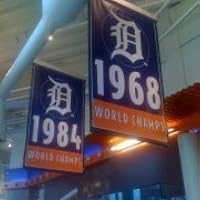
As a Detroit Tiger fan, it was interesting to read about Cobb and the early days of baseball in the Motor City. The book, however, was filled with statistics and play-by-play events. Cobb was a complex and controversial man, as well as a great ball player. Although I enjoyed the book, it would have been nice to learn more about what made him tick.
For someone who's in the argument for greatest baseball player ever, Ty Cobb led an explosive life. This is a great baseball read not for the faint of heart. It was a different time and Cobb too often comes across as the villain. He was eccentric to be sure, carrying around $10,000 in a paper bag after he retired. It's a fast read, as was he, always taking chances to make his own breaks.
This was a very good baseball bio. Never read the Al Stump Cobb bio, but this one by all accounts is probably more balanced. A great look at the personality of this crazy person.
Very disturbing and yet I could not put it down, go figure so much God given athletic talent in a brutally honest, extremely intelligent individual and self educated.
Thorough if at times dry (I like piles of stats so this is saying something) look at an important if unusual player. Really loved the emphasis on the era and its influence.