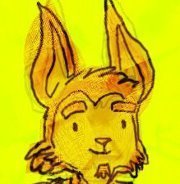
Pascal mène une petite vie tranquille à Québec jusqu’au jour où il reçoit une invitation pour une soirée de retrouvailles avec ses anciens camarades de classe. L’angoisse monte ! Il se sent gros et vieux, bien loin de l’image de gagnant qu’il aimerait donner. Course à pied, régime, nouvelle garde-robe, Pascal se donne à fond pour être à la hauteur. Mais le jour J, il semble frappé d’une malédiction…
Pascal Girard est né à Jonquière en 1981. Dès sa première journée sur les bancs d’école, il remplit de dessins les marges de ses cahiers et agendas. Comme il n’a jamais pu se débarasser de cette bonne habitude, il a naturellement décidé d’en faire son métier. En 2004, il termine un baccalauréat interdisciplinaire en arts à l’Université du Québec à Chicoutimi.
Depuis, il a déménagé à Québec où il mène une double carrière d’illustrateur et d’auteur de bandes dessinées. Ses deux premiers livres Dans un cruchon et Nicolas, se sont partagé le prix Réal-Fillion au Festival de la bande dessinée francophone de Québec en 2006. Il a fait paraître Paresse et Jimmy et le Bigfoot à la Pastèque.
I originally picked it up because the art looked nice, but I dunno, there just didn't seem to be any thing nice to say about Pascal! There wasn't even a point where I felt bad for him! It just seemed to get worse, and that he deserved every little bit of unhappiness. I feel bed for the girl he's dating because he didn't say anything about wanting to see an old flame. I like the art, but meh on the story.
I'm not sure how much of this is true, or exaggerated, or slightly true, or what... in the end it doesn't matter, because it reads true enough, and it reads emotionally true, and this book is not only another example of Pascal Girard's ability to get at awkward, hard to face emotions (in this book, the idea of getting older even when you don't finish growing up), but it's also an example of how Girard is really funny.
J'ai ri. Je me suis aussi tenue la tête entre les mains à quelques reprises. Parce que ce roman graphique-là, c'est à la fois drôle et douloureux.
On suit ici les péripéties de Pascal Girard, ancien ferblantier devenu dessinateur (et alter ego de l'auteur), qui se prépare fébrilement- le mot est faible- à ses retrouvailles du secondaire. On accompagne aussi Pascal aux retrouvailles.
Pascal est dévoré par l'anxiété à l'idée de revoir le monde du secondaire. Comment se mesure-t-il aux autres? Comment sera-t-il perçu? Les fantasmes de Pascal à l'idée de revoir la belle Lucie cohabitent avec les scénarios de catastrophe. La moindre petite affaire devient une montagne et nourrit l'insécurité du personnage. Une hygiéniste dentaire vraiment pas diplomate lui dit que son menton est prognathe et son apparence s'améliorerait grandement avec une opération : il ne voit plus que son menton et il est persuadé que tout le monde le voit aussi. Il se trouve trop gros : il court trop longtemps, trop vite au risque de se démolir les genoux et il s'assure, pour bien faire le travail, de courir dans des souliers à moitié défoncés. Il a une verrue au doigt : l'odieuse ne veut pas partir, même après deux mois de traitement, et il s'obstine à vouloir guérir ça tout seul.
Quand tu as le cerveau qui baigne dans le cortisol, tu ne prends pas de bonnes décisions, c'est évident. (Pièce à conviction: la bière au pamplemousse achetée au dépanneur en catastrophe quelques minutes avant les retrouvailles.) Comme lectrice, j'avais envie de cuisiner un lunch pour Pascal, de m'attabler avec lui et de lui parler dans le casque.
Mais en même temps, Pascal est un personnage-miroir, où on peut tous se regarder et peut-être y saisir une toute petite vérité sur soi et sur ses bibittes. Cette idée qu'on est transparent, et que les autres détiennent la vérité sur nous, juste en nous voyant le menton (ou mes quatre cheveux, c'est tout comme). Le veston trop serré, la parole malaisante, les gaffes...quand on n'est pas sûr qu'être soi est suffisant, il est fort probable qu'on se mette les pieds dans les plats en essayant d'être un autre.
Le ton est léger, mais même si j'ai ri à quelques reprises, j'ai encore ce personnage dans la gorge, quelques heures après en avoir terminé ma lecture. À lire avant de voir des gens que l'on n'a pas vu depuis longtemps, qui nous ont connu autrement (chevelu.e / beau.belle / en santé / avant les épreuves qui laissent des traces), ne serait-ce que pour se dire que ça ne peut jamais être aussi terrible que ce que le pauvre Pascal s'inflige.
Pretty excruciatingly painful and often hilarious story of a high school reunion from completely self-deprecating Girard, who identifies every terrible character trait he has… this is not as funny as Jeffrey Brown when he does similarly humiliating things (Every Girl is the End of the World For Me, Clumsy, and so many hilarious stories); Brown works the endearing and charming angle far better. Still Girard is funny; some people find him too painful to read, and I get that, but the honesty is great, and compelling in so many ways. The art is simple and terrific, really. A kind of classic and almost predictably disastrous high school reunion story, that had me entertained all the way!
Pascal Girard is invited to his high school reunion 10 years after finishing high school. But he’s undecided – should he attend? He wants to but he’s worried about his appearance (he’s too overweight) and his job might not be glamorous enough (he’s a cartoonist with, at the time, 1 published book – the delightful “Nicolas” - that barely sold) but he wants to go if only to lose the weight and then meet his high school crush for another shot, as back then he was too fat and now he wants to show her he’s now thin and “cool”.
I’m not sure how autobiographical the book is but Girard seems determined to make the reader see him as a pathetic idiot who makes some pretty hateful decisions. He has a lovely girlfriend but he spends most of the book plotting to somehow win the affections of a girl he hasn’t seen in years who may or may not even show up, and who barely knew him back then anyway. He Facebook-stalks other former female classmates, leering at photos of them at the beach; he has a wart on his thumb; he is diagnosed with an under-bite and as he loses weight by running (also not depicted charitably) he draws his chin as more pronounced; he’s constantly making a fool of himself in public and his lack of confidence and poor social skills lead to embarrassing scenes throughout – this is confessional comic-book hara-kiri.
It’s a credit to Girard then that he is so entertaining and his fairly ordinary story is a compelling read from start to finish. He tells the story in panel-like layouts without the panel frames, drawing in a sketchy, almost shaky hand, so the reader gets a sense of Girard’s chronic nervousness. The story is well told with the confidence of an experienced storyteller who understands how to pace a tale to keep the reader engaged. It’s also his explicit approach revealing his inner-most thoughts that connect the reader to him – I won’t say which but I recognised certain less-than-wholesome qualities in Girard that I also share.
Despite portraying himself as a clueless and conceited wannabe still using embarrassingly teenage terms like “winner” or “loser” when defining a person, Girard is fully aware of how he comes across. “Reunion” is an entertaining story of adulthood, change and not growing up with a strangely charming anti-hero for a narrator. Pascal Girard is definitely one of the bright stars in Drawn and Quarterly’s catalogue and worth looking up for all comics readers who enjoy independent comics.
Conventum c’est: Pascal Girard qui se met les pieds dans les plats exponentielle infini! Tsé, quand le karma est juste... pas de ton bord? Ou que tu t’arranges pour ne pas te faire aimer?
Le livre ne m’a pas accroché, ce qui explique la note Goodreads.
Conventum est un roman graphique d'autofiction à la fois intelligent et très, très, très malaisant! Les critiques que j'en avais lu en vantaient l'humour, avec raison; c'est un humour particulier, du genre qui vous fait bouger de malaise sur votre chaise chaque fois que le personnage de Pascal se met les pieds dans les plats. On rit, mais on rit jaune - au moins aussi jaune que la couverture. Et à la fin, on referme le livre avec un sourire, mais avec une petite tristesse, aussi.
C'est avec beaucoup de justesse que Pascal Girard approche les affres du secondaire et les marques indélibiles que ces années bouleversantes laissent parfois sur ses victimes! Pour Pascal le personnage, son conventum se veut une occasion de refaire son image telle qu'il la souhaiterait. Dès le départ, il est plutôt évident que les rêves de Pascal ne vont sans doute pas correspondre à la réalité, et cette anticipation ne fait qu'ajouter au malaise qu'on éprouve tout au long de la lecture.
Il faut aussi souligner que Pascal n'attire pas forcément toute notre sympathie! Le personnage est loin d'être parfait, ce qui donne un ton très vrai au livre, mais j'avoue que j'aurais bien aimé le voir se faire prendre un peu plus dans ses mensonges!
Au final, j'ai beaucoup aimé. Après Valentin, c'était ma seconde rencontre avec l'oeuvre de Pascal Girard, et je compte bien poursuivre l'aventure en mettant la main sur les copies de ses autres livres.
I'm giving this book 3 stars because I liked the art. Otherwise, I found it to have little going for it. There was nothing new in the narrative. It was pretty standard fare in the straight, white, cis, neurotic cartoonist memoir (a well stocked genre). I'm not sure what Girard thought he was adding to the medium. That he had a wart on his thumb? (no one cares) That he lusted after girls he knew in high school? (welcome to the club) That his life is otherwise boring, and full of doubt? (prerequisites for being a cartoonist) I will say that I'm looking forward to reading his fiction in hopes that he has more interesting things to say.
Well, this was a disconcerting read; I share far too many tendencies with Pascal but on the whole I'd rather be like him than some of the other characters. I found most of the them frightening and nauseating, which means I'm missing the point of the book right?
I'm sure there are many messages that one can take from this title but the one that stuck with me was that the groups you get selected into in school, "popular", "unpopular", "weird" etc, actually stay with you as you navigate your life; somehow people just know. Schools are a great example of natural selection, if not of empathetic humanism. I was in the "weird loner" category at school by the way, which explains a great deal.
I thought this was a particularly enjoyable graphic novel - about the mishaps of the author, which seem to consist of constantly doing or saying the wrong thing, managing to alienate almost everyone he comes into contact with, but extremely humorously/self-deprecatingly. The closest analogy to the story "structure" was "Seinfeld" although of course Seinfeld wasn't inept socially, somehow the hapless "comedy" endless series of gags/comic situations (mostly at the expense of Pascal) reminded me of the landmark TV comedy series. Maybe because the women (mostly) in the book seem invariably more knowledgeable/socially adept vs. the protagonist, who seems hopelessly mired in social awkwardness - verging on self-consciousness. This graphic novel is extremely well-done - the drawings seem to mirror the tentative, "tortured" soul of the protagonist, who is clearly yearning to be accepted or to make his mark - desperately trying to escape the "social stigma" of once having worked in sheet metal. Clearly, he had humble beginnings - we can see that when he swings by his parents' house prior to setting out for the dreaded/highly anticipated (yes - both simultaneously) ten-year HS reunion. He's trying to rise in the world - improve his status to that of cartoonist, and even has a book out in print. The graphic novel is perhaps autobiographical - or, somewhat based on the real life of the author. Pascal's (the author's) feel for social nuance/niceties - which is important at about the age the story takes place, in one's late 20's, is both spot on and ironic, pathetic and satiric all at once. Pascal both looks forward to/fantasizes about and dreads the reunion - wants to build himself up as an artist who has made it, and thus be in a position to compete or out-do the other attendees (or some of them) he is still caught up in the competitive small-minded superficial world of the in-crowd and marginalized students of HS, still wants to appear cool, exactly as he did in HS when he'd be invited to parties (although the truth is, he was always invited because he'd always bring pot). The graphic novel portrays the author's social illusions getting shattered - or, they should be shattered and he should be learning what the important things in life are in the course of the party - but Pascal simply cannot let go of the ingrained social structures, almost hierarchical social classification schema he still adheres to, years after graduating HS. His publications are for him the proof that he's risen above his working class background - his stifling family life, and so forth. He can't unbend from seeking social acceptance, but only from the "right people" therefore he misses opportunity after opportunity to become friends with people if they do not fit his particular notion of what is cool, or successful, or interesting. He has in this way, possibly nearly isolated himself socially because almost everyone on some level is not that cool, or exactly as cool as he would want them to be. The running gag of the book of course is the truth that Pascal himself is positively beset with faults - that's the irony of Pascal's existence; his social awkwardness, his inability to watch where's he's going - so that he constantly is "stepping in it" -- physically, not just figuratively, he has become flabby & develops all sorts of physical symptoms from his crash effort to lose weight by jogging - he doesn't buy proper footwear in which to run, he doesn't even buy new socks, he doesn't see a dentist for a dental problem which periodically flares up, and he doesn't get medical attention for a gigantic unsightly wart on his hand, which he tries to hide by means of band-aids, similar to the haphazard way his entire life is held together (with scotch-tape). However, this is Pascal, and it appears he will never change; in the end, he can't even pick up the phone when one of his old HS buddies tries to call him - instead lets the call go on to voice-mail. He is peeved because a girl he idolized in HS doesn't show up at the reunion - he lost 60 lbs in three months in order to impress her at the event - and his slapstick-like performance at the reunion, his uncanny ability to either offend or alienate everyone he interacts with - lead to his early departure from the event. At least he has an understanding and patient girlfriend - but the truth is, only Pascal in the end will be able to drag himself out of his highly rigid judgmental mind-set - only he can escape the social prison he's constructed for himself, by always focusing on social status, symbols of achievement, and so forth. Or, maybe setting barriers to contact with others is a social survival technique for him, in a reversal of the usual social pursuit or need for social contact; maybe for Pascal, limiting contact is conducive to creative focus and accomplishment. I have no idea - I'm not Pascal, only Pascal can decide in the end if the walls he's erected are in fact more or less useful or needed in his life.
I am way past the stage of life Pascal was in when he wrote/drew this book - but I remember my own HS reunion, perhaps the 15th one, many years ago. I had the same sense of trepidation and anticipation. I've never been competitive, so I had no interest in being part of any particular crowd though I had some friends - so most of the people at the reunion I didn't know in HS. I never set many life-achievement goals for myself other than surviving life in one piece, making enough money to survive and live a decent life. I exactly can identify with Pascal's dilemma at his reunion; he had to come up with something to brag about, at least to those who had clearly made it -- were constantly chatting on cell phones to clients and so forth. The symbol of accomplishment was the truck he drove to the event, but the truck wasn't actually is, it was his dad's. He insisted he was making a living by his art work alone - thus, his life as an artist, even if he didn't have a family yet, or had employees or clients - meant he'd "made it." The anxiety about having made it, or appearing to have made it, I could understand and identify with; he captures this moment in life precisely. It's almost like the "career inflation" people use to make themselves seem more important on their resumes. It's not exactly lying (Pascal didn't correct the mis-impression about the truck until later in the party) but it's trying to make oneself appear to be more successful/important - to have made it, perhaps as a defense, otherwise, to appear to be "still struggling" or not to have accomplished anything, would have been crushing (or would have been crushing to someone who values social hierarchies like Pascal). That's how things are in one's 20's - but things really do change as years pass, so that by the time you are in your 60's, many of these "social imperatives" or anxiety to impress people you meet, vanish, as you focus more on self-expansion and so forth, rather than trying to impress others, or make others think you are more important or successful than you really are. Actually, by the time you hit your 60s, the "imperative" of the "rat race" more or less vanishes, thankfully - you can look back at the adventures/misadventures of your life with a much more realistic perspective. It is impossible to have this viewpoint in one's 20's though - unless you are a person with a particularly laid-back or stoic outlook. In one's 20's the rat-race, or what you make of it, is at its height; with myriad pressures - social, financial, career, family. Your life is just starting out and if you have any chance of "making it" or "making something of it" that is the time to launch yourself (in general, although life does take many twists and turns, and people these days do tend to take many different career paths, or perhaps pursue various career paths simultaneously). You are getting enmeshed in the same "rat-race" your parents went through, and their parents and so forth; the important thing is to be on your own and make your own way - make good in some way, so as to get their approval and/or that of friends/associates (at least at first, that may be one reason why people strive to "get the brass ring"). The "imperative" of snatching the brass ring of life, as you whirl through life on the merry-go-round of time, recedes in importance with each passing decade - maybe for someone like Pascal it never really goes away, but for me, it really began to fade fast I would say by the time I hit my 40s, although I still wanted to make a good impression and appear to be solidly middle-class, prosperous to some extent even. I can't say why so much of it faded away but it did, and I suspect it has to do with life itself becoming less and less refracted through the lens of the rat-race, and more as an exercise of self-expansion (if nothing else). After all, if you think about it, we're born alone, and we die alone - the only thing that is certain, is that from the moment we are born until we die, we are caught up in a process of trying to make sense of the world. I don't think there's much difference in our life-span in this process, which is why learning new things or opening a book - like Pascal's - which open new doors, lead to new ways of seeing things, and so forth, is so genuinely satisfying, exactly as learning something new is from the moment we are born. Another bit of the puzzle of life is revealed with each new thing, or bit of information we pick up - it can be from myriad ways of acquiring information or insight. I remember growing up, me and my siblings would constantly read, and exchange books among ourselves; this was a particularly exciting thing for me, since the age difference among us meant I was exposed to tons of books my older siblings (and they were both avid readers) were reading in HS and college, while I was in elementary school. The discussions of ideas, which also represented their discussions of ideas about these books that had occurred in class (and they were both in honor bright classes themselves) was also fascinating or illuminating. I can't say I actually knew or understood everything they discussed but the books were all around me, and I knew there were books I had to read at some point to understand what they were talking about. It turns out that understanding some of these more profound themes that might be the point of some of the greatest literature ever written, or even any literature - even literature that is not "classic" or timeless - the point of it can only be appreciated later in life, as experiences, time, and loss give the reader an understanding of the lessons the author had learned by the time the book was written. Understanding is not quite the most appropriate word. If you read about a devastating love affair at an age before you've ever had a devastating love affair, yes, you do get something out of it - but certainly not as much as you might get out of it later in life, especially if by then you actually have lived through a devastating love affair. The same goes for political insight, when reading history books, and having thought about ethical problems or problems of existence and what it may mean, in reading philosophical works. Perhaps every bit of information we pick up complements the others we've already accumulated - the point is, the older we get, it is probably true that the more we get out of just about anything we pick up to read, or even cinema we may view and so forth. You invariably have a greater understanding of many aspects of life and the world the older you get - you are not the same person in some ways in your 60's as you were in your 20's, you know more, and the information you acquire may be more meaningful. This is why, returning to the comments I made above about the constant process of learning or self-expansion in life, it's so refreshing to discover new worlds or ways of looking at things, most usually, but not always by reading. Reading is an analog, it's true - it's symbolic, the reader must supply the imagery as they read; perhaps that's why travel seems so important since information can be directly absorbed in the course of travel by seeing new things and so forth. However, reading does have the key quality of bringing to life, in a very inexpensive and efficient way, new and unexpected worlds, such as the world of Pascal's social difficulties - a unique ability to supply unending new worlds to the reader, unlike any other medium of communication, since the reader more or less imaginatively "sets the stage" or supplies much of the "scene" in every book they read. The hearkening up of what these worlds actually are like - especially if only sparse descriptions are given, or minimal (yet evocative) drawings in graphic novels such as Pascal's - is yet another means of self-expansion; we connect the dots as it were in books we read, by associating characters (in literature) with "characters" we may have met, or types, and scenes, such as stores or landscapes, with ones we've actually experienced or can imagine as they might be. This again is quite different from watching the same story as told in a film, or even actually visiting a locality - and is another reason why books are so endlessly fascinating/compelling.
I've digressed quite a bit from my comments on Pascal's graphic novel "Reunion." Oddly enough, this was a book that I read in a couple of hours, and found laugh-out-loud enjoyable - I could identify with the author's simultaneous wish to impress his classmates and wish to avoid going or appearing to be a "loser" etc. Now, as a 64 year-old, having lived my life (or at least, my own "striving" or "working" life) I have a certain perspective on the rat-race, although I certainly appreciate and give credit to those who undertake as Zorba would say "the full catastrophe." I thought Pascal's book captured perfectly the simultaneous anguish/anxiety and curiosity to see how classmates are doing years later -- for some people, some things never change though (or, at least, they have not yet changed in their 20s) and so, for Pascal, in his late 20s, the same "social structures" or "games" he was caught up in - adolescent striving to be accepted, to be in the more "exalted" peer group - somehow, are still in effect. As today's lingo puts it - SMH (ruefully). Still, I would recommend this entertaining volume.. Pascal does have an impressive ability to convey social nuance, and his drawings are exactly appropriate to the social awkwardness/striving and so forth that's the theme of the book.
Pascal Girard's graphic novel of semi-autobiographical-self flagelation, Reunion brings us the news that high school reunions are terrible and will be a thousand times worse if you are a neurotic asshole. As a neurotic asshole fuck-wit, who wisely skipped his 10th, 20th, and 30th high school reunions (if they have those last two, isn't there a point where they just give up?) I didn't find this very revalatory.
It's a book of embarrassments mostly all directed at the main character - a stand in for the artist - and as such is full of those riches. At times I quite despised this 'Pascal' - especially as he actively plotted to leave his girlfriend behind in the hopes of hooking up with girls from his past, woman now at the reunion. That he fails miserably in every way to make those kinds of connections or any other for that matter just make him all the more pathetic.
This is probably the worst introduction to Pascal Girard's persona, to be charitable. I avoided my highschool reunion(s) cause I knew they would bring out the worst in me. They certainly did in the 'Pascal' of the book. I found his story telling and character work engaging enough and could see enough of the real people who swirled around him at the reunion through the artist's observation that I will go back into this wavy cartoonish, yet painfully real world.
This is an exercise in self-indulgence. (Thus in THAT respect it was success!)
The author (who is sort of a loser) is going to his class reunion and he is feeling stressed as the old social pressures (which helped define him as a loser) return. So basically he shows us he is a loser as he freaks out and sweats bullets on every single page.
.....
I stopped around page 88. But I suspect the gist of this book could have been expressed in a 3 or 4 panel comic-strip.
The inside back cover for this book claimed that it was 'laugh out loud funny' but frankly I didn't see the humour it. Throughout reading this graphic novel I spent most of my time inwardly cringing at the social awkwardness exhibited by the author and the only thing I took away from it was that he must have absolutely no social skills whatsoever. Either way, I didn't enjoy it and I wouldn't recommend it.
I DESPISED this, yet I felt compelled to finish. The main character is so awkward, self-absorbed, and unbearably rude that I found myself rooting for him to fail. Never at any point was he contrite about what a complete shit he was being to absolutely everyone. This is my second time reading and not enjoying Girard's work or characters (the first was "Petty Theft"), and I suppose I can safely say I'm not a fan.
Okay, so this is the story of how the author goes about his life in preparation for a high school reunion. This is the first work I picked up by Girard as I was attracted to the art when skimming through it at the bookstore. The story itself is kind of painful. Girard can never do anything right and just unsympathetically makes a fool of himself. I guess if cringe humor is your kind of thing this book might be fun, but otherwise, the art was probably the best thing going for it.
Overall, a pretty painful read. I enjoyed the art style (which, along with the high school reunion story, pulled me in) but the character is so delusional and narcissistic and awful that you get dragged down with his neuroses as they get worse and worse throughout the book. Would not necessarily recommend, other than as a "what not do do" primer when writing autobio comics.
A very humorous book that anyone can relate to who graduated or is still in high school. Pascal Girard brings out that inner awkward quiet high schooler in us that we thought we left behind in high school.
A semi-autobiographical graphic novel, we follow Pascal, who receives an invitation to attend his 10 year high-school reunion. What follows is a story of anxiety and cringe as he prepares to come across as a winner, with plenty of funny moments throughout.
I think we can all see ourselves in Pascal, at least a little bit. When we're nervous upon meeting someone after a long time, when we have grown, changed, and all we want is to make a good first impression now that we have the chance again. It's one of those awkward social moments that I'm guessing no one is immune to! But then, when one thing starts to go wrong, everything starts going wrote.
Between the fun Québécois (also learning that 'retrouvailles' is Francophone and 'conventum' Anglophone), new French words (I had no idea that pounds was 'livres' and was initially beyond amused that weight is measured in books..) and the absolutely excruciating behaviour of the main character, I really enjoy this read! There are definitely things I found frustrated too, for example I didn't understand why he was even together with his partner, they seemed to have different interests, social stamina, and there were no moments that showed care or love for each other, just lots of impatience and annoyance. In fact, I thought they had more of a mother/child relationship, with Pascal really testing his partner's good will, and her trying to appease him.
But despite this, I was still laughing a lot and would have happily read more pages. I wouldn't say the art was anything special, but the dialogue more than made up for it.
I’ve loved Girard’s art for a long time and this was my first time reading a comic of his!
This comic stays on the single emotional register of jumpy pining throughout. Pascal gets himself amped up and loses so much weight for this high school reunion, hoping to win over an old crush and finally ensconce himself among the “winners” of life. The poor guy gets so obsessed with this quest that it takes over all his days until the reunion itself.
I won’t spoil the reunion but it’s a whole thing into itself!!!
I found this super well drawn. Physical movements, shaking jitters, slapstick! Fantasy and reality clashing in pathetic ways! And each character, though we meet them briefly, exudes a kind of selfhood that only talented comic artists can achieve.
The style of this work reminds me of more traditional newspaper comics. I loved it! I opened it and couldn’t close it till I was done :) I know the protagonist wasn’t very lovable, but his anxiety and his sincere desires were lovable indeed.
Pascal is invited to his ten-year high school reunion. Preoccupied by this upcoming date and contacted by a girl he had a crush on at school who offers to go with him, he starts running to lose weight and look his best for the party. Obviously, the reunion does not go well for him, he is awkward, almost rude to his friends and his crush does not turn up. This graphic novel seemed to me to be a fairly accurate summary of the atmosphere at these reunions, when people are there to decide who is a loser and who is a winner. A story with an uncomfortable atmosphere.
Pascal Girardin Reunion on hirtehinen kuvaus luokkakokouksesta ja pieleen menneistä haaveista ja odotuksista. Kanadaan sijoittuva puoliomaelämäkerrallinen sarjakuva kuvaa koruttomasti päähenkilönsä neurooseja, huonoa itsetuntoa ja lukioajoilta kumpuavia haaveita päästä mukaan sisäpiiriin. Vaikkei Reunion olekaan mikään kuolematon klassikko, on piirrosjälki huoletonta ja sen kerronta etenee erittäin luontevasti.
L’histoire d’un chum (on est au Québec) qui doit se rendre à la soirée de retrouvailles de ses camarades du secondaire dix ans après leur diplôme. Poussé par la curiosité, l’auteur et personnage principal se remet au sport et devient complètement obsédé par cette échéance. La réunion ne se passe évidemment pas comme dans ses fantasmes, c’est awkward à souhait et saupoudré d’expressions québécoises !
Pascal in the book is so unlikable, yet moments of relatability carry it through - The anxious energy he carries drives a sympathetic edge that keeps you reading. This book stuck with me, after reading bigfoot, i think i perhaps feel challenged to keep on with Pascal to figure out the compulsion to read all his stuff?