Jump to ratings and reviews
Rate this book

The Dark Philosophers

Rate this book
Incest, murder, delusion and a devastating, black humour mark these three novellas that Gwyn Thomas wrote in 1946: The Dark Philosophers, Oscar, and Simeon. In the title story the grimly humorous philosophers gather in an Italian café in the Terraces to tell the dark tale of revenge that they engineer.

300 pages, Paperback

First published January 1, 1972

5 people are currently reading
302 people want to read

About the author

Gwyn Thomas

27 books9 followers
Gwyn Thomas (6 July 1913 – 13 April 1981) was a Welsh writer who has been called 'the true voice of the English-speaking valleys'.

Gwyn Thomas was born in Cymmer, Porth in the Rhondda Valley, the youngest of 12 children to coalminer Walter Morgan Thomas and his wife. His mother died when he was aged six, and he was resultantly brought up by his sister, often with handouts from the local soup kitchen.

After winning a scholarship, Thomas studied Spanish at the University of Oxford. Plagued by mysterious health problems, terribly poor and depressed, it was only after spending a summer and a term at the end of his second year at Complutense University of Madrid, thanks to a miners' scholarship, that he decided to complete his studies. Thomas was diagnosed at the age of 23 with an undiagnosed thyroid malfunction that had been poisoning him for years, which was operated on to avoid his death.

On graduation and wanting to be a writer, Thomas struggled to establish himself during the 1930s depression. He took on part-time lecturing jobs across England, while trying to get his novel Sorrow For Thy Sons published.

He married his childhood friend Lynn Williams in Pontypridd Registry Office on 5 January 1938. Failing to pass the British Army medical at the outbreak of World War II thanks to 20 years of smoking, he returned to Wales in 1940 and taught at the WEA. He then became a schoolteacher, first teaching French in Cardigan, and then Spanish in Barry at Barry County Boys School for 20 years.

Post war, his wife decided to send some of his short stories to three publishers, who all accepted the scripts for publication. Approached in 1951 by a BBC Radio Wales producer to write for the radio, he returned to his childhood memories of 1920s South Wales to create Gazuka!

A prolific novelist and short-story writer, he became a regular on chat shows such as the Brain's Trust, and after 20 years of teaching in 1962 he became a full-time writer and broadcaster, retiring with his wife to Peterstone.

However, due to a combination of diabetes, heavy drinking and smoking, his health began to fail in the late 1960s. In 1981 Thomas collapsed and was taken to the University Hospital of Wales in Cardiff, where he died on 13 April, shortly before his 68th birthday

Ratings & Reviews

What do you think?
Rate this book

Friends & Following

Create a free account to discover what your friends think of this book!

Community Reviews

5 stars
45 (31%)
4 stars
61 (42%)
3 stars
26 (18%)
2 stars
8 (5%)
1 star
3 (2%)
Displaying 1 - 16 of 16 reviews
Profile Image for Bettie.
9,977 reviews5 followers
February 28, 2016


Description: Incest, murder, delusion and a devastating, tragic humor mark these three novellas that Gwyn Thomas wrote in 1946: The Dark Philosophers, Oscar, and Simeon. In this book the grimly humorous philosophers gather in an Italian café in the terraces to tell the tragic tale of comeuppance and manslaughter that they engineer.


St. David's weekend read inbetween six nation matches, and the cooking and eating of bakestones. Three novellas here and first up is:

PART I: OSCAR: Rainwater streamed down the walls of the Harp. It had rained for a week.

Narrated by Lewis, who works for the eponymous hog. With dark humour, Oscar's Boy relates his own, and other elements' verdict, on the man who owns the mountain. Elements are anything from people to objects. Voters are adults.

The lip of the quarry we were skirting was jagged and bitten at parts, and was dangerous to all who did not know the path and had no wish to leave the path by way of the quarry. Oscar had tried stringing a wire fence across the lip, but some voters had kicked the fence down because they did not like the idea of Oscar covering the mountain with wire as well as owning it."
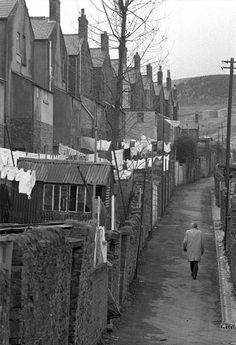
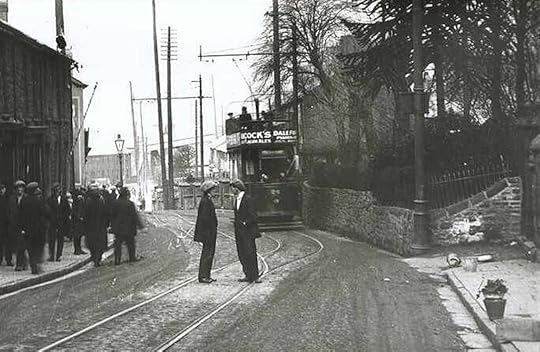
A crankshaft had gone, said Job, and from the solemn tone in which he said that, I understood that that this crankshaft was as important to this tipping contraption as rent to a landlord or breath to an ordinary voter, or God to some element at prayer."


PART II: THE DARK PHILOSOPHERS: If, instead of taking the left-hand road that led you up to the Terraces, you took the right-hand road, two things would happen.

Whenever there was an upheaval in some foreign land, there would be a procession of refugees from that land filing through Emmanuel's pulpit, with quivers full of piety, singing ballads of a sad and lowering sort like 'Russia, Holy Russia, I will die to set you free', and telling a sackful of stories about their narrow escape from the grip of the half-dozen or so godless persecutors who were at the bottom of all this trouble."

Our new meeting place in the evenings was the refreshment and confectionery shop of Idomeneo Faracci, an Italian, whose shop was on the third terrace, not far from the library and institute, where we had taken out fresh membership cards for the sake of attending lectures and borrowing books."


PART III: SIMEON: We all looked upon Simeon with respect. The house of Simeon stood nearer the mountain top than any other in the valley.

Lead Kindly Light


almost gallows-esque.

Rechabite: a Friendly Society founded in England in 1835 as part of the wider British temperance movement to promote total abstinence from alcoholic beverages. The order began was founded on 25 August 1835 as the Salford Unity of Rechabites, at the town of Salford, near Manchester, England. Their first lodge was ""Tent Ebenezer #1".

And whilst we're about making this a bit of a 'do', here's some rousing singing.


CR The Dark Philosophers
5* The Alone to the Alone
Profile Image for Ben Dutton.
Author 2 books50 followers
February 7, 2012
In 2006 the Library of Wales was set up to reprint classics of Anglo-Welsh fiction, which is Welsh fiction written in English. The aim was to bring much neglected Welsh fiction back to the public, and included such authors as Geraint Goodwin, Dorothy Edwards, Ron Berry and Gwyn Thomas. I would summarise the history of English language Welsh fiction, but poet Owen Shears did it so well in The Guardian I will link you directly to his article.

As a writer, and a writer of Anglo-Welsh fiction, I have looked to these novels, and other novels about Wales, as guides, inspirations and mirrors. As a young man I read writers who took directly from those men reprinted by the Library of Wales – Niall Griffiths owes a debt to Ron Berry, for instance – and then for a decade or so I struggle to reconcile my cultural identity with my physical identity and my national identity. I was born in England, I speak English, I have lived in Wales my whole life and write about Wales. But then there is another disparity – many of these Welsh writers write about a different Wales to the one I know. Raymond Williams, in Border Country, wrote about borderland country, much as Bruce Chatwin did in On The Black Hill, there was Dylan Thomas with his valleys and his moonless nights in small towns, but South Walian towns. I am a writer of the North, a different Wales, but still indebted to that image of the South. Gwyn Thomas is of that South too. His trio of short works that constitute The Dark Philosophers show this familiar Wales, the image of Wales known elsewhere, the Wales of coal mines and slate pits and black mountains.

Oscar is the first of the works, and it is a morbidly funny tale of drunkenness, poverty, the valleys and sex. It presents the wit Thomas was known for: “If it was water that Oscar drank, he’d be full of fish.” You can sense the dank, dark mountains leaning over this village, and on which Oscar lives, rich and dominant and hated. One knows this is a tale that can only end badly. The Dark Philosophers, the second tale, seems to be going nowhere. The characters are as rich as anything Thomas produced, and they all meet in an Italian cafe, full of smoke, to discuss finer things, to scheme, and to laugh as friends. Outside it is another dingy valley, with another man on the hill, another man deserving of hate. The final moment twist makes everything deliciously exquisite. The final story is Simeon, a bleak of tale of suggested incest and murder, and though the shortest of the pieces packs the biggest emotional punch.

The reason for Gwyn Thomas’s loss to the modern canon of British fiction – for he is surely as deserving to be there as that other Thomas of Wales – has been attributed to numerous factors: the impossibility of categorising him, the too-broad spectrum of his work (novelist, playwright, non-fiction, and broadcaster), or the length of his career (The Dark Philosophers was 1946 and his last work was forty years later). In his day, though, he was as famous as Dylan and had cult following in America. The Library of Wales’s reissue of this work should have seen his status renewed, for The Dark Philosophers is a masterpiece of British fiction, but outside of Wales I do not think his work has travelled. In his article for The Guardian Owen Shears speaks to the acceptance of knowledge of Irish fiction outside of Ireland, but that Welsh fiction has not been afforded the same attention – whether this is because of the lack of familiarity to non-Welsh readers of Welsh situations, or because, as Shears quoted in his article: “The tragedy of the Welsh”, George Borrows wrote in his 1854 travel book Wild Wales “is that they will never forget they were conquered by the English but the English have already forgotten.” So is the inherent tragedy seen by Welsh readers missed by English ones? And if so, is this inherent tragedy localised just to fiction of a certain era (1940s – 1980s)? Recently there has been a spate of Anglo-Welsh novels (not all by Welsh writers, such as Susan Fletcher with Eve Green) that has explored this diaspora and they have seen commercial and critical success. There are still, though, many more Welsh novels that do not see success outside of Welsh borders, many of them published by the Welsh presses that arose in the 1980s and became confident publishers in the 1990s and 2000s, such as Seren, Gomer, Y Lolfa and Alcemi, and who publish novels with global themes (such as Chris Keil’s Liminal, previously reviewed on these pages) but who are categorised as “Welsh Novels”. Perhaps we would be better served by a refutation of labels, but then where would there be allowance of exploration of national themes?

I will be considering these questions in more thought as I read more of the Library of Wales’s works. In what was supposed to be a review of Gwyn Thomas’s The Dark Philosophers, I have been forced into considering deeper questions of cultural identity and heritage, and of emotional transference and acceptance, and for one novel to have provoked such discussion I think is a testimony to the power of Thomas’s novel. A truly brilliant piece of work, and any writer who calls his work “Chekhov with chips” deserves to be read.
Profile Image for Nicky.
4,138 reviews1,111 followers
March 7, 2011
I only read 'Oscar' from this volume, since that's all I have to read for class. I was promised that Gwyn Thomas is pretty funny. There is a dark sort of humour in his work, yeah, but it wasn't laugh out loud funny, at least not most of the time. There's something very, very bleak about it. Oscar isn't exactly a sympathetic character, and no one else in the story has the personality to counteract how strong a character he is, so it's a pretty slimy sort of read, too.
Profile Image for Samuel.
520 reviews16 followers
July 18, 2018
This collection of three Gwyn Thomas stories/novellas are prime examples of his trademark black humour and biting satire. He presents Valleys life with unflinching eyes, in all its filth, cruelty and hardship. But he retains a wicked sense of humour in the midst of it all, and this is what makes him so entertaining to read. The last story in this collection ‘Simeon’, however, was quite astonishingly disturbing, a tale of sexual abuse and incest in a secluded house in the Valleys. The only downside to Thomas’s writing is that all the stories seem to end, quite abruptly and improbably, with an almost comedic death.
16 reviews2 followers
February 7, 2011
An interesting book, lots of dark imagery, and the best part of it all. There is a serious social political theme to all the stories. Unfortunately, none of them end well, its just a series of unfortunate events that lead to more unfortunate events.

Well written though, and there is a nice ability on the part of the author to make you feel cold and wet when the description of the story involves rain and cold weather.
Profile Image for Ceri.
9 reviews21 followers
February 2, 2009
It reinforced my impression that Gwyn Thomas is a greatly underestimated and under appreciated author. Anyone who is tired of contemporary "Welsh Noir" should sample the 1930's variety. "How Green Was My Valley" this is not. Three short stories/novellas. The title story is both darkly humorous and masterfully composed.
Profile Image for Paul Cowdell.
131 reviews6 followers
June 25, 2023
CW: sexual abuse.

This was my first encounter with Gwyn Thomas's work, and the prose in these three novellas was a revelation - rich, dark and seamed like the valleys he's writing of. There's a powerful social sense in his portrayal of these impoverished and brutalised communities, but it's not leaden or sociological in the slightest, even with such politically engaged elements as the dark philosophers of the title novella. It's mapped instead into the inner and outer lives of the characters: one can overdo mining metaphors, but Thomas folds the social acuteness into the seams of his prose like striations of rock, coal and mud. How much of an entire world is summarised in the comments about a world where individuals feel they can own a mountain, or lurks in this description of the militant pit-workers seeing a preacher's seizure:

'As people bore him home, it was said he was dead. We had seen many dead men in our time and had an instinct in these matters. We knew he was not dead; nor, of course, was he.'

It is that grim and unflinching humaneness that gives Thomas his immense warmth. Commentators write of his black humour, but it's less laughter than a rich engagement with life as a whole. Good and bad are portrayed alike, because that is the fullness of life, and his representations of these self-contained communities are wholly realised in their dark depth.

This is why I felt it necessary to offer a content warning for the final story here, 'Simeon'. Innocent and wilfully blind characters exist throughout Thomas's communities, and here it is the narrator who cannot see the historic sexual abuse in his employer's home. (While the reader is in no doubt - a solid work of clever construction). The story sits balanced against the closed house of the thuggish landowner 'Oscar', in the opening novella, but the narrator of the first story is dealing with a situation he does understand. If the sexual abuse content is triggering, don't read 'Simeon', but I'm so struck by the prose that I'd recommend the rest of the book in any case.
7 reviews
September 17, 2020
Maybe my mother was never able to afford the kind of food that makes for conscience.

Emmanuel had a mop of white hair and a pure remote look. These features helped him a lot in his work.

In some houses you would have so many people living in one room they drew lots to decide which ones would have to go and stand on the window-sill when the others stretched out to sleep. In two houses we knew you had to give the people inside formal notice of your intention. That gave the multitude a chance to shift back out of harm’s way: otherwise the person inside nearest the fireplace moved up at least a foot up the chimney, struggling and complaining all the way, and making mocking replies to the women in the room who warned him to keep clear of the saucepans when he dropped. These conditions, dark and noisy and confusing, never bread that serenity of thought and gearing which drew young people towards Emmanuel as music draws those who have long been sick of solitude.

Mr Dalbie was a hard man. He had three wooden sheds built at the back of his large house. One was for his coal, the second for his wood and the third for his pity.

We had taken a vow to get our stomachs as dark as our philosophy before we finishes, and every time we ordered a fresh round of cups Idomeneo always put an extra pinch in the pot as a tribute to the fine brooding quality of our spirits.

Now isnt that the funniest thing you ever heard, the funniest thing except for fairy-tales and speeches by the wealthy about the workless.

He clipped me so hard round the ear i thought id have to do all my listening with my nose.

Emrys said the roof in his house had leaked so much he had floated during one rainy spell, from one bedroom to another and had been rowed back by his father.
This entire review has been hidden because of spoilers.
July 10, 2019
There's something about Wales, about being Welsh. It's... different. There's something else about being Welsh and being from the valleys, and that can't be encapsulated by the word "different." It's cultural, of course; geographic; class-aware; downtrodden. It's unity. It's hate and love in the same breath: like the dragon, it's air and fire in its roar. And it's more, much more than that. But that "much more" is indefinable. If you're from the valleys you understand it, if you're not, you won't, unless you're amazingly empathetic.
What Gwyn Thomas does is captures all of that, and much of the indefinable in three extraordinary stories of real people living a real life. How he does it I don't know, but he does.
If you want to see inside Welsh people facing insurmountable odds and retaining their dignity, read this. If you want to see inside valley life, ordinary working class existence with the added weight of the remains of the English exploitative yolk, read this. Hell, if you just want three very good, highly visual and succinctly told short stories, read this.
There's little like it in English writing. And there will be little like it until this under-appreciated, undervalued writer becomes more appreciated, more famous.
I don't think I've mentioned the word "entertaining" have I? Yes, they are very entertaining.
So, bottom line, ignore everything I've just said. Read it because these three stories are great entertainment. You can name-drop Gwyn Thomas at literary dos ;) And, as an added bonus, you'll learn about the Valleys and you won't even realise it.
Profile Image for Lucienne Boyce.
Author 10 books50 followers
March 31, 2020
A very interesting read. The style is distinctive and striking; the cover quote from The New York Tribune isn't far off the mark when it says it's "as if Thomas Hardy met Damon Runyon". It has immediacy, freshness, passion and drips with rage against the system that means poverty and terrible suffering for so many people. Life is grim - but there's also humour, wit, solidarity and courage. But sometimes the style felt a little intrusive: describing people as 'voters' or 'elements' starts to distract. I enjoyed The Dark Philosophers best of the 3 stories in this edition, but found the last one, Simeon, sank into melodrama, and predictable melodrama at that.
Profile Image for Peter.
363 reviews34 followers
September 6, 2020
Poverty, death, murder, revenge, incest, violence, and more murder... Gwyn Thomas takes a bleak view of life in the Rhondda Valley in these three novellas from the 1940s. The “voters” starve miserably in the ranks of steep terraces on the valley sides, whilst grimmer things happen in the big houses on the tops.

Worse still, it’s wet.

If the Terraces had not been built on a sharp slope that let the rain drain away, all this rain water, collected up, would have risen to the voters’ hips, and we would no doubt have had a lot of such troubles as drowning and rheumatism to put up with as well as the better known troubles connected with coal and poverty of which we already had a bodyful.

When the rain came on very sharply, the voters who were in the street would have to seek shelter, because the rain would soak quickly into their boots, the rain being of much better quality than the boots. This made the boots heavy, so heavy that it became very difficult for the voters, with all this great weight dragging at their feet, to tackle the steep climb up through the Terraces. Also, the rain was so fierce it would carve deep ruts in the roads of the Terraces, so it was no new thing to see some voter making his way upward and weighed down with too much water, vanishing into one of these ruts and being stuck there, struggling to move forward but not moving an inch, just deepening the rut with all his struggles...

Still, at least this only happens “ When the rainy season was on, which was all the year round.”

The lugubrious humour rolls through these three stories – especially the title piece, The Dark Philosophers – with a certain orotundity, as if Gwyn Thomas had learnt his English at long chapel meetings. When I was looking for a sentence to quote, I found that most are about fifteen words and a subordinate clause longer than they might be...but one gets used to the style.

The publisher Victor Gollancz chided the author for being so dark that he would frighten his “tender-stomached” readers away. But his bleak humour captures something of the now vanished mining communities of the South Wales Valleys – and the rain that endures.

Emrys said the roof in his house had leaked so much that he had floated, during one rainy spell, from one bedroom to another and had been rowed back by his father.

‘That’s daft,’ said Colenso.

‘You mean you think my father can’t row?’

‘No. That about you floating. That’s daft.’
103 reviews1 follower
March 4, 2022
When I read the reference to Damon Runyon on the back cover I was surprised. The comparison can be understood, but Thomas is a greater master of literature: infinitely more than just a story teller.
He well conveys the 'things going on' within the minds of his characters. One can sense the senselessness of life in those dark times for those trapped in the valleys that had fed the growing wealth of others, yet it's impossible to resist a smile when his tales take a funny turn.

His concluding revelation of the way that the philosophy of the dark philosophers outshone that of many more accepted pervayors of deep truths can raise one's own exasperation with such as the "god moves in strange ways" squad.
Well worth trying if you want to try something 'different'.
Profile Image for Rob Thomas.
Author 2 books2 followers
August 15, 2016
This was recommended to me by a friend months and months ago, but after reminding me on a night out (of all things!) that I needed to invest some time in Thomas' work, I finally did so. I wish I'd done so sooner. I've found a lot of books during this reading challenge that should have had my attention sooner, and The Dark Philosophers, with its darkly funny tragedy set against the backdrop of the rapidly deteriorating Welsh Valleys, is something that I desperately wish I'd read at uni.
Profile Image for Peter.
40 reviews22 followers
June 16, 2007
Socialists are funny. A couple good stories a couple of ok ones.
Displaying 1 - 16 of 16 reviews

Can't find what you're looking for?

Get help and learn more about the design.