

What do you think?

Weimar and Now: German Cultural Criticism #43
Berlin Psychoanalytic: Psychoanalysis and Culture in Weimar Republic Germany and Beyond
One hundred years after the Berlin Psychoanalytic Institute was established, this book recovers the cultural and intellectual history connected to this vibrant organization and places it alongside the London Bloomsbury group, the Paris Surrealist circle, and the Viennese fin-de-siècle as a crucial chapter in the history of modernism. Taking us from World War I Berlin to the Third Reich and beyond to 1940s Palestine and 1950s New York—and to the influential work of the Frankfurt School—Veronika Fuechtner traces the network of artists and psychoanalysts that began in Germany and continued in exile. Connecting movements, forms, and themes such as Dada, multi-perspectivity, and the urban experience with the theory and practice of psychoanalysis, she illuminates themes distinctive to the Berlin psychoanalytic context such as war trauma, masculinity and femininity, race and anti-Semitism, and the cultural avant-garde. In particular, she explores the lives and works of Alfred Döblin, Max Eitingon, Georg Groddeck, Karen Horney, Richard Huelsenbeck, Count Hermann von Keyserling, Ernst Simmel, and Arnold Zweig.
- GenresPsychoanalysisPsychology
256 pages, Hardcover
First published August 2, 2011
Ratings & Reviews
Friends & Following
Create a free account to discover what your friends think of this book!
Community Reviews
Displaying 1 - 3 of 3 reviews

June 25, 2017
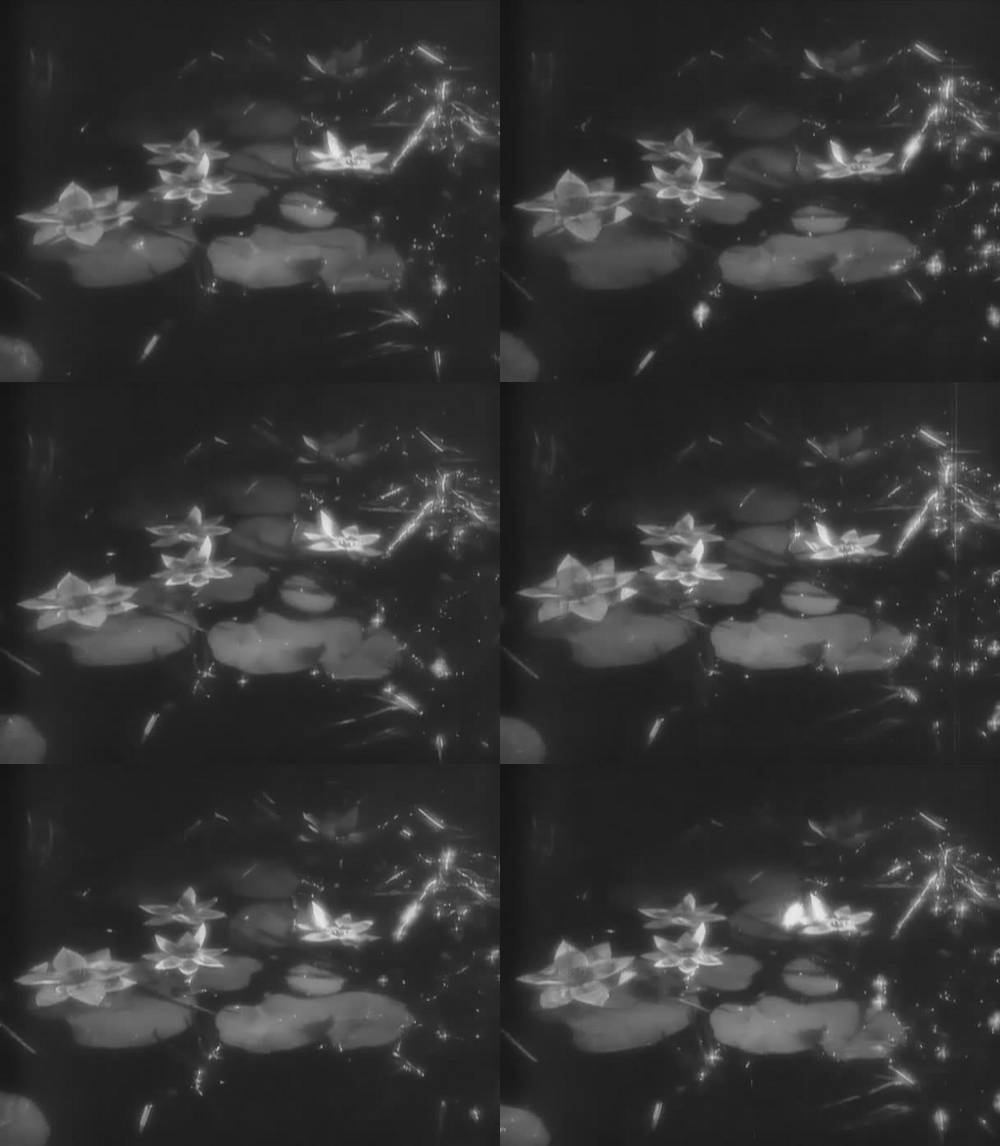
(Dream-scene from the movie Secrets of a soul, by G.W. Pabst, 1926)
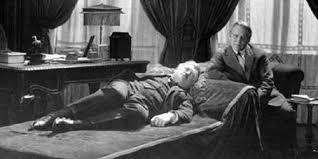
(Secrets of a soul, by G.W. Pabst, 1926)
I had to watch the Pabst movie of 1926, because it was referred by the author of the book. The movie, though silent, broadcasts loudly, so to speak, the faith in this new discipline called Psychoanalysis. The film’s story is about a character beset by [unconscious conflicts, indeed] terrible dreams and inexplicable fears of knives and blades. Psychoanalysis proves to be the way out, for the resolution of these conflicts. From a cinema perspective, the scenes portraying dreams are among the best of the movie.
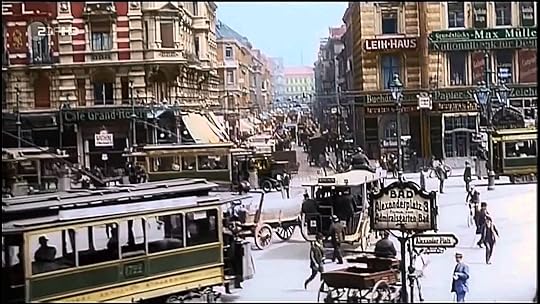
(Berlin 1900)
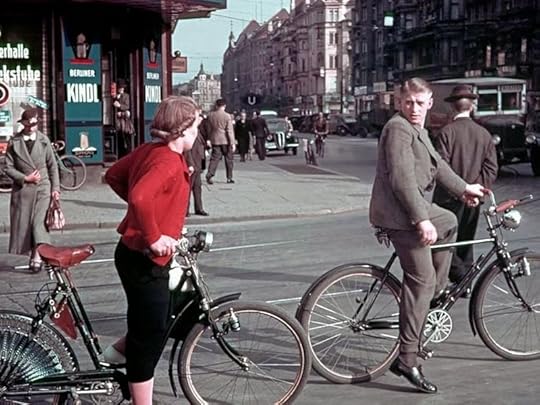
(Berlin 1927)
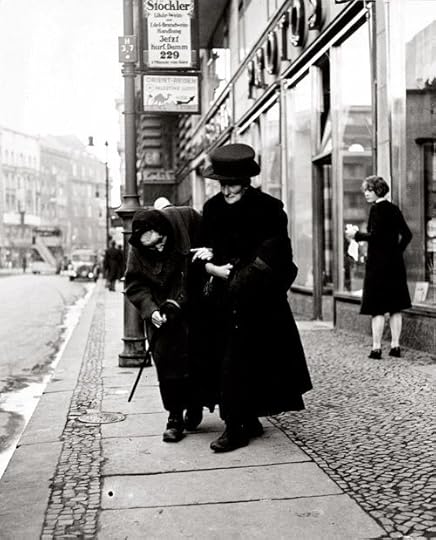
(Berlin 1929)
Well, Veronika’s book isn’t just about Berlin; the physical location. It’s more about “a culture practice” which took roots there, no doubts. In her expression: it’s about a ”conjunction of art and science”, in the periods between the end of the WWI and the start of the WWII. “Psychoanalytic Berlin”, tells the story of the BPI (Berlin Psychoanalytical Institute) through those years, starting in 1920, the date of its inception.
Karl Abraham had arrived to Berlin in 1907. Soon he would write a letter to S. Freud saying: “things are moving”. He surely meant a group of minds would gather over the years until the rise of the Third Reich, namely: William Reich, Erich Fromm, Lou-Andreas Salome …and many others; Russians, Hungarians and Austrians as well. A fecund association of minds, (some say somehow tilted left, in political terms) able to practice psychoanalysis in a city deemed by some as being the Babylon of the 1920’s. A city which went through severe financial crisis (check on the 1922 hyperinflation) and one A. Hitler would hate: that “new Berlin”, a safe harbor for Slavs, Jews and left-wingers.
Though destroyed in 1945 (but rebuilt thereafter) the BPI had a rough period in 1933, aligning with “national socialist policies”, which would be sanctioned by S. Freud.
The present book comprises 4 main case studies. The first case is dedicated to Alfred Döblin, en pair with his mentor Ernst Simmel. The second case is about Georg Groddeck, but also about Count Keyserling. The third, about Arnold Zweig (in Palestine). The last and fourth case is about Karen Horney (in New York).
"From Prinzenstrasse to Moritzplatz oh, how many memories, this city is like a sponge ,or am I such a sponge?"
Alfred Döblin
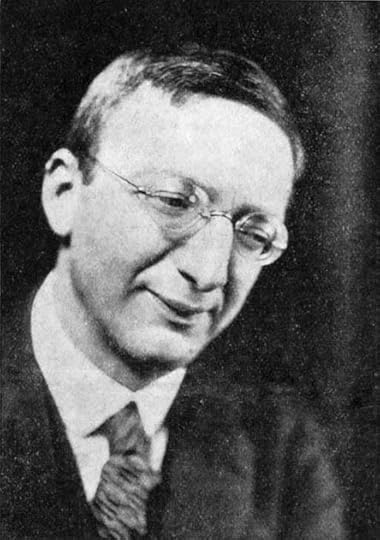
(Alfred Döblin)
E. Simmel wrote important works such as (1919) “On the psychoanalysis of war neurosis” , and “The psychoanalysis of the masses” where the treatment of the “personality split” was approached.
A. Döblin had a thesis on the Korsakoff’s psychosis and had fought in the war; his literary output would be enormous, across several genres. In the BPI he cooperated with Ernst Simmel and practiced psychotherapy. Veronika’s analysis of the novels (especially in what concerns the language used, be it technical/clinical or poetic…and its evolution) is just fine.
Some said that the characters of Döblin are a “mirror of the social and mental misery and dysfunction of post-war Berlin”. Noteworthy are: (1) the fictionalized version of a real murder case (the Klein-Nebbe trial of 1923) perpetrated by two girls; they murdered a communist man named Klein, but in the novel he’s renamed as Link. The novel “Two girlfriends commit a murder” (1924) shows new psychological concepts like this one: “SEELEN MASSE” to explain a sort of collective soul functioning (see diagrams ahead); (2) The 1929 novel “Berlin Alexanderplatz”, which deals with the “dehumanizing effects of capitalism”; later on to be adapted twice for film.
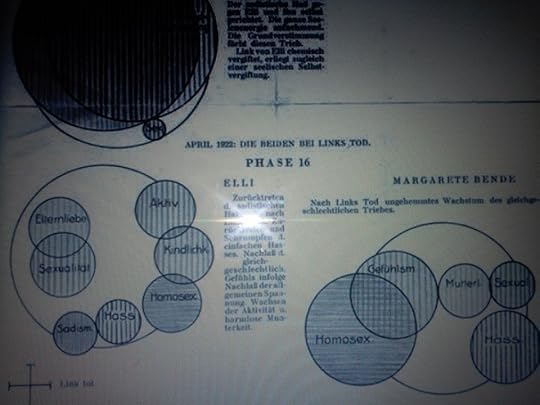
(diagrams by Döblin; souls' problems of Margarete and Elli)
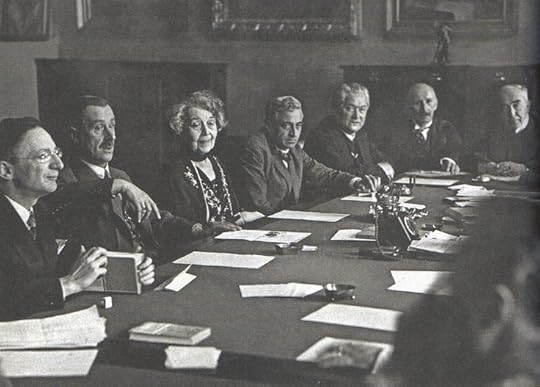
(Alfred Döblin, Thomas Mann and others)
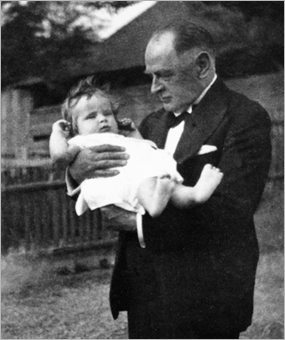
(Georg Groddeck)
Georg Groddeck is the “self-declared” “wild analyst”, eager to meet Freud in private. Groddeck’s contribution to science stems mainly from his innovative approach of the “psychosomatic” problems. One supporter of Grodeck was the Hungarian psychoanalyst Sandor Ferencz; yet Groddeck’s conceptions differed in some instances from those of Freud (especially in the conception of the “Id”).
Groddeck’s novel “Soul Searcher” (1921) was a success; incest tension was an obvious theme in it. Döblin said it was a “humorous often funny novel”. The other novel “The book of It [Id]" (1923) was a sort of epistolary interchange between Groddeck’s alter ego (called Patrick Toll) and a female character. And yet, Groddeck wrote to Hitler.
...
I've been speaking mainly of scientific and literary views; however, Veronika doesn't skip the artistic view, namely, Dadaism and the Expressionist currents. In the last chapter, a apropos Karen Horney, who had left Berlin in 1932, the author writes about the work of R. Huelsenbeck, one who worked with Horney in New York.
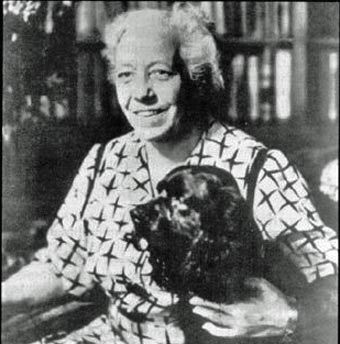
(Karen Horney and dog)
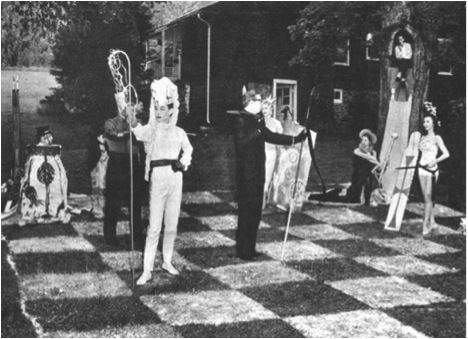
Huesenbeck wrote a lot about art and tried to "overlap" Psychoanalysis and Dadaism. The book approaches the experimental movie 8x8: a chess sonata in 8 moves; one in which Huelsenbeck is featured along with Jacqueline Matisse. For sure, it's a movie with "psychoanalytical symbolism"
Back in Germany, nothing like August Sander and Otto Dix to have a glimpse of the art of the Weimar Republic. ...Decadent enough? Some thought so*.
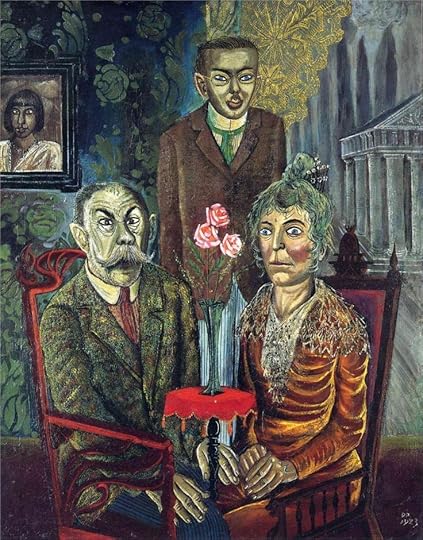
(Otto Dix "The Family of the Painter Adalbert Trillhaase", 1923 Germany)

(Der Krieg, prints by Otto Dix published in 1924)
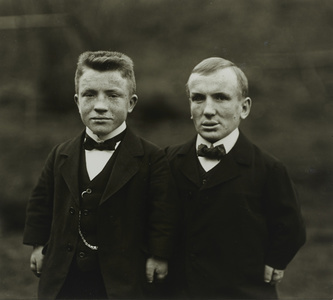
(by August Sander)
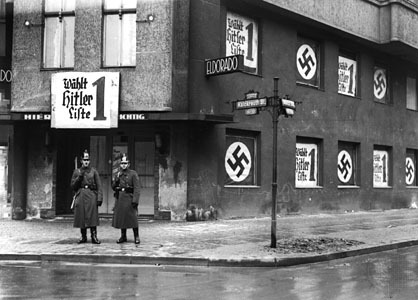
Yes, and then came 1933.
I almost left Arnold Zweig aside; yet, there's still some space to say that he was somehow pessimistic saying that the revolutionary psychoanalysis had no more place in Palestine since the death of Max Eitingon. Psychoanalysis was, no doubts, linked to the German language and to a specific "emigrant scene".
This book is surely a great feat in historical research as well as scientific and literary analysis of that period, previously mentioned.
As for Psychoanalysis, its glorious days are gone. I'm not sure if partially submerged in the waters of oblivion,....yet not totally sunken.
Berlin, lives on.


*Portraying a Nation: Germany 1919-1933 review – art at its most deliberately obscene
in: https://www.theguardian.com/artanddes...
http://www.schirn.de/en/magazine/cont...
This entire review has been hidden because of spoilers.

April 3, 2025
A fascinating, chilling, academic read. Fuechter provides detailed research and makes connections between the burgeoning analytic movement, the sexological science community, the Marxists of the Frankfurt school, and the contemporary arts movements in Berlin, demonstrating that many analysts were involved in arts and literature themselves, were studying sexology, incorporating socialism into medicine, and that the inspiration was mutual. She highlights correspondences and friendships and rivalries from within the discipline, which echo today.
The arts, culture and politics in Berlin often focused on treating “war neurosis” in individuals, and the societal-level poverty and broken national spirit following the First World War. Even before the Nazis ascended power, analysts argued for and against taking on contemporary politics and how analysts should attempt to shift the broken culture. We hear this comin continue in debates about what role politics plays in the consulting room today.
It is terrifying to read about how so many of the most prominent members of the Berlin psychoanalytic either fled or were killed by the Nazis. The Nazis attempted to remove Jews from psychoanalysis, as they feared the power of a revolutionary cultural force created by and mostly practiced by Jews. In the face of this terror, there was debate about whether analysis should be “preserved at all costs” or whether analytic Institutes should somehow try and compromise with the national socialist party. Many non-Jewish analysts were antisemitic themselves and tried to curry favor with Hitler, even though their own books were banned, for being a part of the Jewish art of psychoanalysis! Spoiler alert: compromise never works. A lesson that the psychology community must take to heart today, when fascist forces would co-opt any kind of healing we do toward harmful ableist and gender critical ideology.
One of the most compelling parts of the book is the origin of varying theories and intellectual debates within the discipline. There were Zionist analysts and anti-Zionist analysts. Analysts differed in their understanding of human nature, and with the central ideas of Freud. Many analysts saw psychoanalysis as a means of changing society for good, while others were apolitical throughout their entire careers.
This is a dense, academic read. It’s a bit dry as a result, but the chapter on (the utterly ridiculous) Georg Groddeck and Count Hermann von Keyserling was utterly juicy and filled with psychoanalytic tea, still piping hot after all these years. These two reminded me A LOT of current culty Instagram “healers.” I have longed for an intellectually rigorous review of the psychology and sociology of these cranks, and reading about some of their forefathers was satisfying in this regard. I also loved reading about the evolution of Karen Horney’s feminism; she is a name I haven’t heard since college but she provided one of the most necessary interventions in the movement’s (corny, misguided)understanding of gender. I’m also super interested Alfred Döblin’s true crime novel “Two Girlfriends Commit Murder” — lesbian psychological pulp at its origin.
The arts, culture and politics in Berlin often focused on treating “war neurosis” in individuals, and the societal-level poverty and broken national spirit following the First World War. Even before the Nazis ascended power, analysts argued for and against taking on contemporary politics and how analysts should attempt to shift the broken culture. We hear this comin continue in debates about what role politics plays in the consulting room today.
It is terrifying to read about how so many of the most prominent members of the Berlin psychoanalytic either fled or were killed by the Nazis. The Nazis attempted to remove Jews from psychoanalysis, as they feared the power of a revolutionary cultural force created by and mostly practiced by Jews. In the face of this terror, there was debate about whether analysis should be “preserved at all costs” or whether analytic Institutes should somehow try and compromise with the national socialist party. Many non-Jewish analysts were antisemitic themselves and tried to curry favor with Hitler, even though their own books were banned, for being a part of the Jewish art of psychoanalysis! Spoiler alert: compromise never works. A lesson that the psychology community must take to heart today, when fascist forces would co-opt any kind of healing we do toward harmful ableist and gender critical ideology.
One of the most compelling parts of the book is the origin of varying theories and intellectual debates within the discipline. There were Zionist analysts and anti-Zionist analysts. Analysts differed in their understanding of human nature, and with the central ideas of Freud. Many analysts saw psychoanalysis as a means of changing society for good, while others were apolitical throughout their entire careers.
This is a dense, academic read. It’s a bit dry as a result, but the chapter on (the utterly ridiculous) Georg Groddeck and Count Hermann von Keyserling was utterly juicy and filled with psychoanalytic tea, still piping hot after all these years. These two reminded me A LOT of current culty Instagram “healers.” I have longed for an intellectually rigorous review of the psychology and sociology of these cranks, and reading about some of their forefathers was satisfying in this regard. I also loved reading about the evolution of Karen Horney’s feminism; she is a name I haven’t heard since college but she provided one of the most necessary interventions in the movement’s (corny, misguided)understanding of gender. I’m also super interested Alfred Döblin’s true crime novel “Two Girlfriends Commit Murder” — lesbian psychological pulp at its origin.

March 7, 2017
I am left now with the appetite to seek out the following works mentioned in this book:
Georg Groddeck's 'Book of It'
Charlot Strasser's 'Vermin around the Lantern Glare'.
Huelsenbeck’s 'Doctor Billig at the End' with illustrations by George Grosz.
Heinrich Mann’s 'Man of Straw'
Arnold Zweig's 'De Vriendt Goes Home'
Georg Groddeck's 'Book of It'
Charlot Strasser's 'Vermin around the Lantern Glare'.
Huelsenbeck’s 'Doctor Billig at the End' with illustrations by George Grosz.
Heinrich Mann’s 'Man of Straw'
Arnold Zweig's 'De Vriendt Goes Home'
Displaying 1 - 3 of 3 reviews