Jump to ratings and reviews
Rate this book

Just for One Day: Adventures in Britpop

Rate this book
Just For One Day takes you on Louise Wener's musical odyssey from awkward 80s suburban pop geek to 90s jet-set Britpop goddess. Of course, once she's living the dream at the height of Britpop's glory, things aren't quite how they appeared from the other side. With her band Sleeper, Louise goes from doing gigs in toilets to gigs in stadiums, and on to the big interviews, constant touring and endless excess via Top of the Pops. These are the hilarious adventures of a girl's journey through Britpop, from the embarrassments of growing up to trying to remember what on earth it was you really wanted while eating Twiglets backstage and enviously eyeing up Damon Albarn's plate of foreign cheeses. PREVIOUSLY PUBLISHED AS DIFFERENT FOR GIRLS.

320 pages, Paperback

First published June 10, 2010

33 people are currently reading
899 people want to read

About the author

Louise Wener

12 books43 followers
Louise is an English writer, singer, songwriter and guitarist of the band Sleeper.

Ratings & Reviews

What do you think?
Rate this book

Friends & Following

Create a free account to discover what your friends think of this book!

Community Reviews

5 stars
366 (31%)
4 stars
525 (44%)
3 stars
240 (20%)
2 stars
35 (2%)
1 star
2 (<1%)
Displaying 1 - 30 of 107 reviews
Profile Image for Warwick.
Author 1 book15.4k followers
January 21, 2018


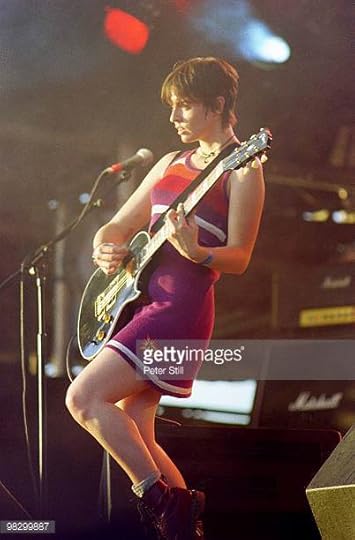
I first saw Sleeper at the Shepherds Bush Empire in May 1994, where they were supporting Blur on their Parklife tour. Their performance left more of an impression on me than the headliners': Louise Wener in her wide-eyed, breathy-voiced splendour, slashing at her Telecaster and singing punky songs about libido. The music press loved her, of course, continually sticking her on front covers and asking her how she felt about teenagers masturbating over her posters – a question that was rarely put, one noted, to Liam Gallagher or Thom Yorke.

Her Britpop memoir is smartly written and very easy to read; funnily enough, my favourite bits were actually the early parts, before she was famous, where she evokes the experience of growing up in the suburbs in the 80s and 90s really well. When she finally gets into the band stuff, she is somewhat light on details – we hear that she is touring with Elvis Costello, or going on Top of the Pops, but it's all a bit detached, and there are no details of, for instance, how particular songs were written, or where they came from.

Sleeper, despite their media-friendly exposure, were never quite a top-tier band, but perhaps that helped them avoid the worst depredations of heroin-based debauchery that seemed to overtake a lot of their compeers. ‘Fame,’ Wener concludes succinctly, ‘is a fiefdom of wank,’ and, as in The Last Party, one senses the nakedly aggressive competition that obtained between a lot of these Britpop groups. ‘We all loathe each other beyond redemption,’ she says, only half-joking.

Sleeper's own decline and fall was exacerbated by inter-band tensions – Wener was originally dating the guitarist, Jon Stewart, but left him for drummer Andy Maclure while touring – and when their tenth single went in at number 28, it was all over. By that point, only three years after I saw them on stage, Britpop had become mainstream business and there was no room left for mid-list underperformers. Surveying the landscape of the British music industry in the late 90s, Wener is understandably downbeat about how the movement worked out:

What happened to that battle? That slice of rock and roll sexual equality that we came for? It started with an attempt to level the playing field, but ended up in something altogether tamer and more dilute. You wake up one morning in the midst of the beer-swilling, coke-fuelled, self-important, macho parody that is Britpop's death rattle and say, haven't we been here before? Justine aping Christine Keeler on the cover of Select, Sonya Echobelly falling out of her shirt in i-D, Cerys Catatonia pouting half naked on the cover of a lads' mag, and how the hell did I end up being photographed in a wet-look PVC catsuit carrying a gun? I look ridiculous. Like sexy liquorice.


She has a point

Wener is still married to Maclure – they have kids and live in a little terraced house in the suburbs. She sounds quite sanguine about the celebrity merry-go-round having left her behind – although, as she puts it: ‘the further pop life recedes into the distance, the more I think I didn't grab it and snog it nearly hard enough.’ Sleeper actually reformed last year for a few special gigs, so it's nice to think she managed to slip 'em the tongue a few more times, in the strange Britpop afterlife that this engaging book evokes so well.
Profile Image for Antonomasia.
986 reviews1,490 followers
Read
December 29, 2014
[3.5] Louise from Sleeper: plenty to like and also plenty to dislike, she wasn't easy or straightforward and that was part of her awkward-squad appeal. In the first, pre-fame, half of the book I was reminded mostly of the dislike; I was annoyed and frustrated as I had been nearly twenty years ago when reading her interviews, full of disappointment that someone I thought was cool had said that. And wished, then and now, that I was reading Justine Frischmann instead because she wasn't like this.

That first half was mostly in that semi-humorous nostalgic journalese that thousands of people, including several of my friends, can write creditably probably even on a bad hangover and no sleep. Tapes made from Top of the Pops, people you liked and disliked at school (surnames always given as part of the style, though it rarely seems a fair thing to do) - you know the sort of thing. It gets old unless you really really like the person, the music they're talking about and/or they've got a transcendent writing style. I actually wouldn't swap her childhood for mine, though it, whilst far from perfect, was happier and more normal on balance. Whilst she, like me, felt a bit out of sync due to having older parents, she was just a bit brighter than average, not brilliant as I'd assumed when I was a teenager, and she seemed too content with the mediocrity around her, not weird enough - an asset in her suffocating, bully-riddled Essex school... There are shining moments but mostly it's all very stereotype-Essex, right down to the way she and her friend dress to see a Bowie gig. I used to assume that having spent teenage years closer to London would mean that interesting, less obvious music and culture and people who liked them were easier to find, but this was no better than hundreds of miles further north - and much worse than my school which was at least quite peaceful (even if it couldn't compare, in terms of academic options or interesting people, with the schools many of my university friends had been to).

Much of the meh-ness fell into place later, with this: “Our debut interview was with the NME or Melody Maker, I'm not sure which – both are interchangeable to me. Jon, Diid and Andy have grown up on these papers but they've never been part of my musical landscape.” So that's partly why her tastes stayed so mainstream-pop, why she never even referred to the idea of corporate-sellout plastic Bowie in order to dismiss it, why in her teens she hardly seems to get any more serious about music than she was as a kid. That she didn't have any idea about what you actually needed to do to be in a band until she went to university and didn't even know the difference between rhythm guitar and bass. (The fucking cheek! As far as I was concerned you were a write-off band-wise if you hadn't learned to play guitar etc reasonably well by university time . Not that I, being frequently ill and also very moody back then, would have been any sort of asset to a student band even if I could play. I had several opportunities to talk myself into bands, but wouldn't have dared because you already had to have the skillz. I was in absolute agreement with that, never liked people to see I couldn't do stuff, and simply being an okay singer was not good enough for me if I couldn't play and write. If it hadn't been for illness I certainly would have made a better stab at it, or perhaps I would have been confident enough not to think the keyboard too embarrassing to be worth working at; as it was my hands were too weak for guitar and I tired too easily in the crucial year or two when it may still have been worth seriously learning and practising guitar - pretty often even walking to lectures was too much.Yes I am bitter.)

Oh god, and then there was this bit: “He's a boy. He is very particular about amps and guitars. He's surprisingly reluctant to base his selection criteria on a) which guitar looks the prettiest b) which guitars come in green, c) what guitar Courtney Love is currently using.” [I have one of my bouts of “I'm not actually a girl, I'm something that was randomly allocated the body of one (and usually tries to make the best of this). Though at least she reminded me of an old favourite, Hole's 'Celebrity Skin'... my name is might have been, my name is never was, my name's forgotten, and that power pop chorus angrily celebrating nothing - because you might as well when you've nothing else to celebrate but almost. Words and ideas which sound quite different when nearly twenty years older; I'm just smiling in recognition. ]

And this: “His interview technique is a test of their musical hobbyism, to see if they pass muster or fail...It goes on like this for another half an hour. Endlessly on about favourite rock guitarists and obscure German electronica and not a single question directed to the girly singer. No enquiry into songwriting or lyrics.” Now, there were not a lot of social things I was good at as a fresher, but I am 100% serious that even as a teenager I dealt with equivalent group conversations way better. You fucking well interrupt, you tell them your opinions about music that are as well-informed as theirs, you watch the momentary puzzlement gradually turn to respect, which is a bit of a buzz, and you keep on with the joining in and interrupting - after all they interrupt each other all the time, so once they've noticed you in the first place it becomes equal. In my day there was even a useful comedy reference if they were being twats in certain ways. (Mentioning the Fast Show woman whose ideas were always repeated by men – I used to know her character name – leveraged several apologies. Thank you Arabella Weir.) If I'd been more truly confident and more solid, I should have started referring to them as my Sleeperblokes...
It was a great disappointment to me, and I honestly thought it would not be this way as I got older, that I can count on the fingers of one hand the other women I've known who also like this sort of intensively detailed conversation about music – and a couple of them I don't even know very well, mostly just to talk to online in group discussions.
Oh yeah, and the “musical hobbyism” thing, and not talking about songwriting? That's because the journo doesn't want to show up his own shortage of musical talent, is trying to create a level playing field with people he envies, and is doing the same for many readers who are in the same boat. Not that I realised this until I was much older...

But then, but then … In that same bit about the interview, just as they're starting to get famous, there at last is the Louise Wener who I remembered, who was the reason to read this bloody book...
Not even realising the irony of this whilst making no effort to talk to the woman, the journalist “hasn't stopped banging on about political correctness since he got here.
You use the phrase 'right on' a lot, don't you?...it's a bit prescriptive, a bit Orwellian” (p.158)
She may have felt like a controversialist cartoon, but if you were a teenage girl with strong, awkward opinions, reading this stuff was seriously inspiring.

Then remembering about when I disagreed with her and agreed with Frischmann.
“How does it feel to know boys are masturbating over your photograph?...They are questions male music journalists ask me. All the time...”
[Find quote] Justine Frischmann was detached, amused and cool, not angry or especially flattered. Which was even more cool because she didn't look like Claudia Schiffer.
Though what I don't remember anyone saying at the time was “So what? If you're not very old or a complete moose (and possibly even then given the infinite variety of humanity and its secret tastes) someone who saw you on the bus this week probably thought about you later on whilst they were having a wank. It's good that they don't tell you...”

It's probably fitting that a post about Louise Wener consists mostly of off-topic, off-the-cuff rants. But yeah, on to the good stuff, because there is also plenty of it. In the pre-fame section 1, her writing really takes off, away from the journalese, with the more melancholy stuff: the chapter on the “groundhog years” of temp jobs, cold flats, rubbish rehearsal rooms and greasy spoons, and on her father's last illness and death. That inspired her to give the band one last push, a sad event but so lucky in the timing: a band like theirs needed to pop up in 1993-4 at the beginning of the Britpop cycle; arrive very late at the party in 96 or 97 and you might only have a few months before you were dropped. (Later, she says that one thing that contributed to the rise and fall of Britpop was cuts in singles prices that record companies couldn't really afford, and in 97 they were put up again. [p.296] Which instinctively makes sense. I didn't buy a lot of singles when I already had the album, but when they were only 99p I sometimes would if I liked a B-side that Lamacq and Whiley had played, or to support a band like a team. I still remember the scorching journey into town to buy the cassette single of 'Country House', in the summer of 1995 which for me as for her is “indelibly hot and sunny in my memory”. I loved to imagine I was somewhere else (Camden), doing more exciting things, but far away in my boring life there was still some magic.)

Films or songs about being famous are often derided, and not of much interest to people who haven't experienced it, but Louise Wener's writing about her few years of fame is often much better, more alive and wiser than the by-numbers schooldays stuff (not entirely free of cliches, but there's a vivid urgency that makes them easier to disregard). I couldn't quite believe it after the disappointment of the first half. She makes me realise stuff I should have worked out years ago: the extent to which bands aren't in control of their own budget, that labels can piss them off by spending stupid amounts of royalties on promo stuff . Or (one that was more between the lines) that the stress of being cooped up with other people and their noise and smells and unending presence on tour buses can make temperamental types who need their space tip from drug use into addiction as they try to cope. I know I would have to be out of it to live with some of that stuff 24 hours a day for weeks on end. Louise Wener feels lucky not to have an addictive personality: ”you can happily regress to a sort of dirty, corrupt state of extended childhood if you want to. Other people will make your decisions for you. Other people will endlessly spin your mistakes. You see it all the time, bands laying down in the chaos and getting comfortable, forgetting to get back up again.” (p.263) I was only ever dimly aware that whilst Louise was in the band she'd been the partner of one of them for seven years, split up with him, and shortly afterwards started going out with one of the others (who she's still with now). And they managed to keep the band functioning reasonably well for about three years, including being in each others' pockets on tour, after that which is pretty impressive. You have to be a pretty solid, non-temperamental personality to pull that off. And it must have been well-managed for it not to become the defining thing about the band to someone who read as much music press as I did. (It's a bit of a shame that she wants to discourage her children from getting involved in music, but I'm not sure quite how serious she was about that bit.)

After the annoyance about pretty guitars above, I was absolutely delighted to read this: “Six hours working out the exact guitar line that fits the newly-crafted chorus. I'm getting geeky about sonics. I'm getting particular about amps and snare drum sounds. I'm not so bothered if my guitar is green or not...Music is slippery and elusive and chasing it, taming it, making it fit together is where the good stuff is. What I love most about all of this, I'm beginning to realise, is the process”. (p.245)

Sleeper may not have been as good as Blur and Pulp, but they did have some decent songs.
There were yer classic Britpop character songs ….back in the early 80s one of the seeds was sown: “the [Jam] album I fall in love with is Setting Sons. It's less Vespa and Parka than All Mod Cons, more crafted, satirical and Kinks-ish. It's crammed full of narratives about wasted lives and class rivalries... council houses, rusting bicycles and holy Coca-Cola tins... 'Smithers-Jones': I don't think I've ever heard a pop song with lyrics about a ground-down, pinstripe-suit-wearing middle-aged man before.” (p.54) But it was the songs about love and sex which stuck in my memory most.
'What Do I Do Now?', even before I'd experienced a moribund relationship, was almost too real and painful to listen to, and there's something great about the way it's so simple, so poignant and catchy and jaunty. It wasn't for years, till I'd realised about my own Inbetweeners and my dismissiveness of them that I really heard what she'd been on about in that track. Or 'Delicious', “a frank, gorgeous, throwaway, punky pop gem about the pure lustful joy of having it off with someone [you] really really like”. And which enshrined that word for me; it's rare I use it without thinking of the song. Though I always had to block out the line that created the unattractive image of some hulk of a rugby player gone to seed (“you're a big man but you're out of shape” … her type isn't mine). I never bought the second album – it didn't seem cool and I'd probably disagreed with too many of Louise's interviews – though I've heard a few friends praise it since. Sleeper are maybe a band where you'd recommend a few tracks – likewise I'd like to recommend bits of Just For One Day rather than the whole thing, though books don't really work that way.
Profile Image for Patrick Neylan.
Author 21 books27 followers
December 28, 2014
I have a confession to make: I don't really remember Sleeper, so I read this book with a song by Echobelly running through my head. Sorry Lou.

But I'm actually paying her a compliment here, if not as a rock star then as a writer. You don't need to be a fan of Sleeper or even of Brit-pop in general to enjoy Wener's honest and humorous account of the way to the top for a gawky suburban girl. And while it deals with the struggles, the boredom and the dislocated insanity of the rock'n'roll lifestyle, much of the book deals with growing up in the 1980s and the influences that created one of the era's more interesting rock stars out of some pretty unpromising adolescent ingredients.

Different For Girls is not so much a narrative as a chronologically arranged collection of essays (some of which have been published in The Times) centred on various incidents in Wener's journey to within reaching distance of the top. Her very un-rock'n'roll failure to spend her brief years of fame spaced out on booze or drugs have left her with a sharp memory of incidents and characters, and her generally ego-free account makes this a likeable and funny book.

After finishing it, I looked up Sleeper's big hit Inbetweener. Now I've heard it, I do remember it. Cracking little tune. Thanks Lou.
Profile Image for Lawrence.
174 reviews7 followers
December 22, 2011
Louise Wener is a much more interesting as a commentator on the Britpop era than she ever was as an actual pop star. Sure, Sleeper had a few good singles ('What Do I Do Now', 'Vegas'), but they were always a third-teir band - not nearly as popular as Oasis or Blur, nor as interesting as Pulp or Suede. And to be fair, Wener acknowledges this, and refers to her band (along with Shed Seven, Echolbelly et al) as "steerage class bands". Still, "Different for Girls" (also, strangely, published as "Just for One Day" is a compelling read for anyone who was in their teens/early 20s in the 1990s and spent whatever money they had on copies of Melody Maker and the NME.

If you've read Luke Haines exceptional "Bad Vibes", and Alex James' enjoyably smug "A Bit of a Blur", Wener's book falls somewhere in-between. Haines is the genius who never really made it, James the affable chancer who somehow ended up in one of the biggest bands in the world. Louise is the pop-mad kid who beavered away in various bands for years before finally getting signed in the early days of Britpop, finding herself briefly in the right place at the right time, only to have it all quickly slip through her fingers. There are plenty of interesting insights, and Wener is pretty scathing of how deeply conservative and sexist the "right on" independent music press was, and probably still is. As she points out, she was labelled a raving feminist witch for suggesting women might quite like sex too, when bands like the Manics could wish AIDs on Michael Stipe and cosy up to a totalitarian dictator with barely an eyelid batted.

Certainly not the definitive tome on Britpop (try anything John Harris has written), but an interesting read nonetheless, and one that almostmakes you want to revisit a few of those Sleeper singles for the first time in more than a decade.
Profile Image for Craig.
217 reviews4 followers
September 23, 2011
A likeable and caustic gallop through the 90's from the Britpop chanteuse.

Louise Wener fronted self confessed indie lightweights 'Sleeper' and this book is her tale of early adulthood and 2nd division indie excess. It's a very honest portrayal. She is frank about her limited talents and open about the bands hedonistic adventures, drug taking et al. She manages to name names too, Blur coming in for particular abuse but then, we always secretly knew they were cunts, didn't we?

You get the impression of someone who was slightly at odds with the male dominated and 'cooler than thou' indie sub culture. At one and the same time loving and loathing it. The quotidian realities of being a 'pop star' are well laid out and there is a lovely thread of self depreciating humour throughout the book. Sleeper's trajectory, like so many other bands, ran from the initial flush of success to the inevitable, weary tailing off. It all seems to work out for her in the end though, with perhaps all that remains being a fleeting sense of regret and a missive to seize the day whilst you still have the chance.

Profile Image for Karen.
446 reviews27 followers
December 27, 2012
Hot on the heels of Caitlin Moran's feminist manifesto-slash-1990's memoir, I scooped this up from my shelf. Ah, I remember Sleeper, I thought. Yeah, they did that cool little song for the Trainspotting soundtrack. "That cool little song", of course, turned out to be '2:1' by Elastica; Sleeper's contribution was a (largely unimaginative) Blondie cover. No matter. 'What Do I Do Now' is a lovely wee gem I rediscovered on an old compilation CD.

I kind of assumed that, like Moran, Louise Wener was about the same age as me. So my heart sank when I read the opening line - "It's a typical Sunday teatime in the Spring of '79 and I am twelve." - and realised we may not have that much in common after all. This didn't last long though; it appears that even a decade doesn't separate that much one young British girl's adolescence from another's. Besides, the memoir then appealed on a different level: a forty-something woman might be able to identify completely with every aspect of Wener's autobiographical pop-culture 'wallpaper'. A thirty-something like me did all her painful growing up to the soundtrack of Sleeper and their ilk's Britpop, Doc Martens sticking to countless bogging floors, and the behind-the-scenes (figurative!) dirt is retrospectively delicious.

Thinking back to that time does make me feel bloody old though. Not merely because it was two decades ago. Nor because it was the last (and probably only) period of my life where I could wear 30"-waisted Levi Red Tabs. But because I realise I have begun to fulfil that cliche of really pitying the next generation for the paucity of their musical upbringing. I know that everyone believes that their decade - the music, the rock stars, the drugs (should you be so inclined; Peach Schnapps and the occasional cider were about the limits of my intoxication) - is and was far superior to anything that preceded or followed it. And I'm no musical snob. I mean, just this afternoon I was singing along just as loudly as the kids to Little Mix and Olly Murs and (Saint Cecilia forgive me...) feckin 'Gangnam Style'. But, really, Rihanna, Katy Perry, David Guetta, Flo Rida? This is what these kids are making their memories to?

Brief old-person rant over.

This is better than Caitlin Moran's book. For one thing, Wener is almost as (albeit reluctantly) feminist as Moran without being as incessantly SHOUTY about it. For another, Wener can actually write consistently. She uses proper grammar and punctuation. The fact that she had already become a novelist before writing this - although I doubt I will particularly seek out these novels - has obviously made her aware of sentence structure, building your story and, to some extent, incorporating comedy (though some jokes were a tad corny and predictable). Thirdly, she was also properly famous, and skilfully balances nonchalance with incredulity in her encounters with other celebrities: the Michael Stipe episode is unbelievably charming; George Michael and Robbie Williams also get surprisingly (to me) 'good' cameos. A discussion I recently had with a friend, however, was helpfully confirmed: that Damon Albarn, although having produced a reasonable body of music over the years (60% brilliance, 40% shite, we reckoned), is probably a wanker.

Mostly, though, because Louise Wener is so damn likeable. I'm glad she and Andy got their happy ending.

237 reviews5 followers
August 22, 2012
I spotted this and bought it for my collection of Britpop books. I dimly remembered Louise Wener from the heyday of Britpop in the 1990s as the singer of the band Sleeper. I expected some behind-the-scenes stories of Blur, Suede, cocaine and wild parties, and it's all in there, but the surprise was a) that it's all written in a brilliant style, very witty and lovable and honest, very British and interesting, and b) that she speaks as much of her youth in the 80s as of the Britpop days. And that is even more endearing, because I recognize so much of it (although I'm from another country and a few years younger): all the 80s hits, the New Romantics, Bananarama, the lipgloss and the moonboots, Rocky III and Flashdance, dressing up for disco ... And it's not whiny or nostalgic. Great find!
Profile Image for Rosie Ellen.
465 reviews9 followers
April 25, 2017
I enjoyed the childhood stuff but by the time they got famous I was a bit over her "Oh being famous is so terrible, look at all the drugs we're doing" line. I mean, I'm sure it is terrible, and was especially hard for a woman at thst time, but it came across a bit... egotistical? self centered? I'm not sure. Cynical definitely. Which I suppose is at least honest, but it didn't make her a very likeable protagonist. It was interesting, and a very quick read. I liked the bits about recording the albums too.
Profile Image for Nicki.
2,162 reviews15 followers
February 28, 2013
Louise Wener is funny - who knew?!
This was a semi reluctant purchase. I knew Sleeper and was in my 20's in their heyday. Though I initially liked them, I kind of bought into Louise's "mouthy" persona and she gave me the irits so much it put me off listening to them. I think we have the two first CDs somewhere in the house, I would be hard pressed to remember too many of the songs. The one that stands out for me is Alice in vain. Haven't heard it in a long time, think that might be changing shortly!
However this book was very cheap and i figured if nothing else, it would be fun to read about Britpop since many of my favourites back then fit that category.
Very, very pleasantly surprised. Louise is very funny and relatable, I like her a lot after reading this. The first part of the book is about her childhood in the 80's, and that's a blast to read too. Her style of writing is great. I think I would quite like to check out her fiction book/s next.
I would highly recommend this to anyone who is a music fan and grew up in the 80's. it really won't matter if you like/remember Louise.
Profile Image for Stephanie.
232 reviews9 followers
August 6, 2013
I had heard that Louise Wener had become a novelist after her life as a pop star ended. All I can say is Thank Heaven! I have not read her novels but this account of fame and fortune in the Britpop years is excellent. That girl can write. Her tight, short chapters are not unlike her songs...bouncy, catchy, full of hooks.

I was very into Britpop in the 90s, although did not know much about Sleeper. Much later I did pick up The It Girl for $1 at a Rhino parking-lot sale. Maybe the best bang-for-buck I've ever gotten. But anyway, as a fan of that fresh and poppy and very British era in music I very much enjoyed reading Louise's inside story. Who knew Blur were such wankers? And the story of the hell-of-the-concert-tour-road has been told before but it is much like a brand new story here. Why? Because this chick can write! And because she's smart. And because she's got cool hair. And because she's a nice Jewish girl. And because she's from a crappy suburb outside London. I love her.

http://www.youtube.com/watch?v=Qd-RGX...
1,164 reviews15 followers
December 28, 2011
Sleeper were very much 2nd division Britpop. However Smart is one of my favourite albums of the era. Strong melodies, great lyrics and fronted by the gauche, girl next door Louise Wener. The book explains how the Jackie-loving, pop-obsessed teenager became a minor pop celebrity. Wener seems to acknowledge that there are few dedicated Sleeper fans out there seeking a blow-by-blow account of the band's rise and fall and wisely sticks to answering the question of how rock fame is achieved and what it is like to be moderately famous. The text is as honed as her best lyrics. It's funny and endearing.
132 reviews
April 9, 2012
Apparently, Britpop musicians took a lot of cocaine. Who. Knew.
Profile Image for Peter O'Connor.
85 reviews1 follower
July 11, 2019
Some books are page turners not because they are suspenseful or enthralling but because, like this one, they are just so fun to read. I always thought Sleeper's Louise Wener was cool. I didn't know she was also funny, irreverent and a fine writer. As one of Britpop's former queens, her withering and cynical take on the music industry is refreshing, amusing and always entertaining. Much like Britpop itself, there are no great revelations or insights by the time it is all over, but it was great while it lasted.
Profile Image for Craig Hannington.
60 reviews
August 8, 2017
It's a great read and Louise is really funny too...Perfect for Holiday or commute
6 reviews
July 6, 2024
Brilliantly funny and honest.
112 reviews1 follower
May 2, 2020
Nostalgia Rocks

As a fan of Sleeper from another life, I saw this on offer for a quid not even knowing the book had been written. It was interesting reading about the band and Brit pop but the parts that resonated most were the early years. Being only a few years younger than Louise Wener, I remember every pop and cultural reference as if she went to my school. However, as I am Male, Northern and ginger, or was when I had hair, then I have nothing in common. I would be interested in some detail about life after the band to see how it compares. But loved it.
Profile Image for Emma.
55 reviews1 follower
October 18, 2012
I have just read Different for Girls : My True Life Adventures in Pop by Louise Wener, former lead singer of Britpop band Sleeper. I was never especially into Britpop preferring American music like the Pixies, Sonic Youth and Pavement. In terms of UK music I was always a big Cure fan and dabbled with goth until I grew breasts and no longer felt the need to wear oversized black tshirts and jeans. I was 16 in 1994 and kinda looked old enough to get into Indie clubs, usually Stomp or Bash Street in Leeds. 1994 was the year Parklife and His n Hers were released. For a short time I got caught up with Britpop, the Adidas trainers, short haircut like Justine and Louise and a bit of razzmatazz from Pulp.
Recently on a drunken evening i agreed to put on a local indie night with my friend appealing to the late 20 early 30 somethings of my small town. This is madness I know but I made a resolution to finish what we had started and started writing an indie quiz and putting tracks together to play. I came across Sleeper again. I had got their first album and thought Wener was quite a good front woman. Looking at old YouTube videos of her on TFI Friday and The Word I admired her nonchalant attitude and the fact she was a jeans and tshirt girl. Whilst googling her i found out she was now a writer and had last year written her autobiography so I thought why not have a read.
The first half of the book is about her being a geeky kid into music who has dreams of being in a band. I related to her stories. I too wanted to be in a band but was too clumsy and self conscious to do so plus I am pretty tone deaf. She also wrote about recording the top 40 off the radio, those precious C90's she'd like to listen to again. I would love to listen to those old tapes that I used to make. The Cure spliced with Fleetwood Mac, Culture Club, Depeche Mode, Prince and bits of me and my friends giggling about boys. Ensuring you were quick on the pause and record buttons, painfully making the perfect mix tape each week. I enjoyed this section of the book the most.
The latter half is about Sleepers' rise and fall, stories of how up their own arse Blur were on tour, drugs, record companies etc Louise Wener writes well, I read it in 3 sittings, one of those walking to work avoiding lamp posts and commuters which is a good sign.
It took me back to my days of posters on the wall, being very awkward, trying to fit in, finding new musical and film tastes, cheap cider and having the best party whilst my parents were away. Well it was ok, with 8 of my like minded friends.We collectively were called the 'smellies' at school throughout our love of metal to nirvana. Then Britpop suddenly made us cool and acceptable. It had it's downsides too, my precious Pulp were no longer just mine. I still had Freaks and Intro though. They could keep their common people. After this phase I got back into American bands, noisy ones mainly and discovered Dylan. I always had to be different.
Profile Image for Pat.
41 reviews
March 31, 2015
I'm only three years younger than Louise Wener so, as a fan of most Britpop in the 1990s, I knew & liked most of her band Sleeper's singles. Sleeper only made three albums & spent just half a decade in the musical spotlight, but I was interested in reading about that time from the lead singer of one of that era's few female-fronted bands. Not only that, but Wener has become a novelist since quitting the music scene & Just For One Day is a well-written, humorous & insightful account of the music business at a time when music fans still bought singles & albums from record stores.

In the first third of her memoir, Wener tells us about her love of music & aspirations to be like the pop stars she hears on the radio & watches every week on Top of the Pops. She is an introverted, geeky kid living in a pretty happy suburban home, who doesn't feel the need to rebel against her parents. It only gets going when she finishes school & volunteers for a kibbutz in Israel after deferring college for a year. She does a lot of living there & this continues when she goes to college. The second half of the book chronicles Wener's attempts to become a pop star as part of an indie band & her reluctance to go all the way towards rock & roll excess makes for an amusing & honest account of the Britpop scene.

Sleeper never become as big as Blur or Oasis, but they have a good few hit singles, three successful albums, tours, TV appearances & tons of space in the music press. Wener is still the teenage music fan who's somehow become a bit of a pop star herself & it's this distance that allows her to be honest about her own band's rise & fall as well as of most of the other major players of the time. The chapters about supporting Blur are particularly funny & the various ways that record companies managed to waste money on marketing & drugs is quite revealing. I felt that the first hundred pages could've been edited down a good bit & I would've loved to have heard more about life in Sleeper & Britpop. Nevertheless, the repetitive & uneventful retelling of her early years does provide some clues as to why Louise Wener would become a pop star without selling her soul to the devil.
Profile Image for James Kinsley.
Author 4 books29 followers
March 23, 2014
I'm the only person I know who liked Sleeper, and I was a massive fan, so it always surprised me that they kept going as long as they did. In my circle, it always felt like they were a minority interest band - that their second album went platinum I was never aware. Just one of the things I learnt from this funny, well-written, admirably frank memoir. It's no surprise that Wener's negotiated a second career as a novelist, given that her songs showed an eye for character and story, and those skills play out well here. Bite-sized chapters and a light, down-to-earth style make for a quick read, and a love for the band is no pre-requisite for enjoyment (deliberately so, it feels, as it seems a lot more focused on being in A band, rather than THAT band. We learn, for example, that Wener was frustrated in the third album's not really saying anything, but not off the back of exploring anything about what the first two were saying, and it's eye-opening how few of their songs are namechecked - it seems certain this book is aimed at a far wider audience than her own band's fans). If she annoyed you then, she probably will still now, but even that's worth negotiating for an honest look behind the scene(s) at the Britpop years.
Profile Image for Garrie Fletcher.
Author 8 books7 followers
January 4, 2012
Nowhere near as good as the Luke Haines memoir I read before this but enjoyable non the less. There are some sleazy insights into life of the road and a couple of jaw droppers about established 'stars' but it never really grabbed me, possibly because Wener was never that into the music. A light breezy read that shouldn't take much longer than a day. Oh and word of warning it's exactly the same book as 'Different for Girls' just with a different title and a crapper cover, I prefer the title and cover of the other book but this one was cheaper.
Profile Image for Morgan Schulman.
1,295 reviews46 followers
June 22, 2013
Ok so it would be really interesting to read a 300 page book about gender, fame and Britpop. But the first hundred pages are devoted to her antics as an awkward, non-music loving teen in the early 80s and it is DULL. There are a few chapters about how awful the Britpop scene key players were, particularly Damon and Alex from blur. And one chapter about misogyny in the music world. But that's really it. I always thought her music was blah and it kind of seems like blah is where this girl hangs out. Meh. 2.5 stars.
Profile Image for Andy Sweeney.
2 reviews1 follower
February 7, 2016
An honest account of one of the most prominent figures in Britpop's life and career. Well written and engaging; I feel as if I like Louise a whole lot more after reading the book than I ever did at the time, mainly thanks to the way she was portrayed in the mainstream music media. Highly recommended for anyone who enjoyed or lived through the "indie" music scene of the mid to late nineties. The only reason it didn't score top marks is because there wasn't much in it about actually writing the songs or the ideas behind them. Other than that, a really good read.
Profile Image for Craig.
3 reviews
July 12, 2010
A fun speedy read - it's a while since I read a book in a day (and that's not a back-handed comment, it was really quite engrossing). It helped that I grew up down the road to Ilford at a similar time to the author, suffered the horror of rehearsing at Broken Lives and quite liked her band Sleeper, but she makes some good points about the inherent prejudices and contradictions at the heart of the music industry, and the strangeness of fame in general.
Profile Image for Kevin.
5 reviews
April 9, 2013
The Fearne Cotton quote on the front made me think twice about buying this book. I'm glad I ignored my instincts. This is a fine book, and one I'm sure to go back to, as with Ned's Atomic Eight Legged Groove Machine Will Eat Itself. Very funny, and insightful.
Profile Image for Lara.
674 reviews7 followers
February 2, 2011
As review above, I hadn't heard of Sleeper, but found this a fascinating read. Devoured it in a couple of sittings. Light, funny and honest.
Profile Image for Lisa.
135 reviews
February 27, 2012
was a great story of her life up until she became famous in her group sleeper, brought back alot of memories about what the world was like when i was growing up too...
Profile Image for Mira.
Author 3 books79 followers
November 28, 2011
Wener had a very different experience of Britpop to me. For one thing her band was successful. This and many other things. I wish I could remember my experiences - then I could write a book too!
Profile Image for Nina.
229 reviews
January 26, 2012
Enjoyed this book as most girls who was a teenager in the 70s and 80s, it was yeah I did that.......
Displaying 1 - 30 of 107 reviews

Can't find what you're looking for?

Get help and learn more about the design.