Este romance experimental e bem-humorado, porém de contornos trágicos, acompanha a dissolução mental de Ana, uma professora universitária de literatura às voltas com o confinamento da pandemia de Covid-19. Recém-saída de um divórcio, ela tenta elaborar o programa da disciplina que deve ministrar à distância, enquanto se divide entre uma relação paranoica com seu gato Felício, um caso com seu psiquiatra e um mergulho de cabeça em três relacionamentos amorosos seguidos. O primeiro deles, com Alice, jovem que Ana conhece em uma ocupação habitacional e com quem ela desenvolve uma plataforma de prostituição on-line para garantir a renda das demais moradoras durante a quarentena. Os outros dois casamentos fincam pé no absurdo com uma riqueza de detalhes desconcertante: um pangolim e um morcego são os improváveis parceiros — e vítimas — de Ana.
Narrado em primeira pessoa, o romance intercala relatos de uma rotina de alta voltagem sexual com lembranças da juventude da protagonista, em que já se encontrava plantada a semente da paranoia de fundo político que volta a atacar no enclausuramento doméstico. Aos relatos íntimos somam-se ainda as experimentações literárias, que Ana tenta encaixar na disciplina que precisa lecionar. Animais antropomorfizados e carregados de simbologia povoam os contos que ela, em estado de liquidação mental, julga dignos de figurar no programa do curso, enquanto seus colegas a alertam dos perigos de ir contra a correnteza em tempos politicamente sombrios.
Com uma prosa cristalina, cortante e sedutora, e coroado por um epílogo que abre a narrativa para o mundo contemporâneo com uma história real que nos convida a repensar a própria ideia de verossimilhança, o romance se metamorfoseia na caixa de Pandora. Dela também saem outros mitos clássicos, possíveis chaves de compreensão dessa atmosfera sexualizada, grotesca e violenta. Mescla habilidosa de crítica social e implacável autoironia, "Pandora" lança mão do experimentalismo para melhor descrever uma realidade em que os perigos são palpáveis, mas as consequências não são compartilhadas de forma igualitária por todos.
3.5. Such a strange, strange little book this was. Stuck at home during the early days of the pandemic and following the (unconfirmed) death of her partner, Ana finds herself in a romantic relationship with a pangolin who turns her apartment into an insect breeding ground. It’s a rather violent relationship, as the pangolin sexually assaults her in her sleep and she eventually unconsciously mauls him to death in the middle of the night. What a start!
After the untimely death of the pangolin, Ana’s new relationship with a megabat begins and her apartment is once again transformed by the bat’s bloodthirsty offspring. There’s some obvious symbolism here with the choice of animals being the species most associated with the cause of COVID.
Pacheco plays with form throughout this short novel, including Ana’s first person perspectives as a human and later on when she perceives herself to be a bald eagle, journal-like entries, and a sampling of the stories and questions included in the syllabus she’s planning for the next semester. It’s a descent into madness and an attempt at metamorphosis by a woman slowly losing her grip on reality.
It’s all quite surreal and wacky, but certainly an entertaining read. Just when you think it can’t get any more absurd, Pacheco pushes further. I think fans of Overstaying by Ariane Koch will find a lot to enjoy here.
I had sort of assumed that that this was going to be a kind of cute, kind of sweet novel about loss, grief, and recovery. My mistake. Stylistically and experientially, this book belongs to a literary tradition that begins with de Sade and passes through the almost-coherent later novels of William S. Burroughs. At times it feels like it was written to be paired with Jacques Derrida’s “The Animal that Therefore I Am” on the syllabus of a comp lit class called something like “Encountering the (m)Other.” If that appeals, you might love it, but the students you assign it to probably won’t.
Pandora je zelo nenavadna, celo čudna knjiga in definitivno ni lahko branje, saj je težko najti nit nelinearne pripovedi. Ampak po svoje je to tudi ena od močnih točk romana, ki se dogaja v času COVID pandemije, ko je življenje večine postalo surrealistično. Prav tako je bilo za glavno junakinjo Ano, profesorico književnosti, ki je zaradi COVIDa izgubila partnerico in skoraj ves stik s svetom okoli sebe, tudi digitalno. Žalovanje in izolacija imata zelo negativen vpliv na Ano in rezultirata v prividih in dissociaciji, notranji demoni dobivajo vse večjo moč.
Ta knjiga ni za vsakega, razumevanje bo lažje, če lahko o knjigi s kom debatiraš.
curioso quando vc le um livro e da pra saber que foi escrito por uma esquerdista ! enfim, achei a linguagem um pouco pretensiosa demais (ou eu que sou burra) e a narrativa vai de nada a lugar algum. beleza que é um livro experimental segundo sua sinopse, mas acho que muita coisa ficou perdida na leitura, e há partes nela só por "shock value". a metafora do "enlouquecimento" da narradora também achei na cara, creio que o livro ganharia se mais coisa ficasse subentendida do que já entregue a nós leitores.
Im not going to lie…I have no idea what I just read and I DNF’d at about 65 pages almost half way through the book.
Maybe it was too strange for me or maybe just not the right time but I really feel off hard with this book. I thought the concept was so interesting but it wasn’t executed in a way I found interesting and I just didn’t enjoy the writing style at this moment in time.
Maybe in the future I will pick it back up but this was just a strange book and one I couldn’t get into despite loving unique and out of left field books.
For a book that has a not small amount of beasteality in it, this book was surprisingly poetic and thoughtful. It was a lot of what the fuck is going on, which I love in a book. It serves as a perfect depiction of the craziness of lockdown without all the cliches that are already popping up in literature.
Fav quote: "'Things that don't age have no character,' a friend once told me. On the other hand, he was born ugly, which makes him biased. He doesn't lose any sleep over the ravages of time. Which, in a way, is a kind of backwards privilege."
The Publisher Says: Confined to her apartment, a professor falls into an unlikely romance—with a pangolin.
Ana, a literature professor, plans her remote classes while confined to her apartment during lockdown. Her lover, Alice, has died of Covid. In her place are a series of animals that demand Ana’s care and attention: an overbearing pangolin, a swarm of insects, a giant bat.
Amid changes in medication and fraught faculty meetings, Ana’s grip on reality loosens. She begins to devise a syllabus on the financialization of art and life, posing questions about labor and intimacy she will use her own body to answer. Her apartment fills with creatures, her teaching slides into absurd allegory, and her sense of what is real, permissible, or politically legible fractures.
Equal parts tender and grotesque, Pandora is a hallucinatory portrait of a mind and a world in collapse, a razor-sharp meditation on desire, delusion, and the absurd endurance of the human.
I RECEIVED A DRC FROM THE PUBLISHER VIA EDELWEISS+. THANK YOU.
My Review: Lockdown.
Shuddering yet? Five and a half years on, lots of people seem to have tossed the memory of COVID's terrifying early days down the oubliette in their brains' castle wall. This weird, weird little story reminds us of how very Kafkaeque the first six months of the plague were. Alice, Ana's other half, was lockdown-trapped away from her and Ana assumes she's dead. At least, that's how I read it...nothing so pedestrian as clear explanations are on offer here.
As lockdown wears on, Ana relies ever more on skype calls with her therapist, "White Beard", who does the medication route to help Ana get through her...unorthodox..life as she reports it to him/us. As Alice and Ana had been working on setting up a lesbian live-porn site before COVID hit, some parts of Ana's São Paulo academic's life were cast away in the now-solitary apartment, a virtual seminar on money, depression, the legal system sodomizing...wait that's not in the seminar...nor is a pangolin, and a very important role he will play. Bats, insects, critters are all memorably present, reminding us how very confusing it was in those early days trying to figure out how the heck this virus blazed through the world. Again in Kafkaesque terms, these are the main culprits of the mental map then prevailing...and in Ana's isolated, grieving, frightened mind they take on deeply disturbing sexual roles in her life as reported to "White Beard" and thus to us.
Her mind fragmenting, as we're seeing it happen, there arrives more medication from "White Beard"...that sends Ana further into psychotic break territory as she's transformed into an eagle.
I'm not making you understand how deeply relatable this story's most peculiar excesses are. I'm afraid I don't know how to. I was nodding along as Ana got it on with the pangolin, because I could *feel* her desperation as reality utterly, irrevocably altered, ripped her sense of herself into ragged shreds. Why shouldn't she have torrid sex with a pangolin? Alice is no longer with us...gotta get it somewhere....
There is nothing easy or non-confrontational about this read. It is meant to put the reader into a time, a place, a person's mind, that cracks under immense pressure. In so many ways, reading this short novel was catharsis for me, was a reminder that the times can create the break in a normal-presenting person without any unexpected or unsuspected inner flaws, faults, broken spots.
There but for the grace of the goddesses goes any one of us. I'd give it a full fifth star bit for les jeux avec les animaux. Disturbed me; it was the point to do that, but....
Pandora is a bizarre, disturbing, transgressive novel detailing one woman’s descent into unreality. The protagonist, a professor in the early days of the pandemic, has all-consuming (and sometimes sexual) relationships with an array of animals in her small apartment—a pangolin, a cat, a bat, and a myriad of insects (food for some of the animals). I was immediately pulled into this story, and was for much of the time uncertain of how much was actually happening in the protagonist’s external world versus how much she was fantasizing (or hallucinating??). Which, in my opinion, was part of what makes this book so powerful. The protagonist’s experience in some ways mirrors the surreal and violent and uncertain nature of the raging pandemic, and I couldn’t help but notice that the array of creatures in her apartment were animals—particularly in the early days of the pandemic—suspected of causing and/or spreading covid amongst humans.
I’m left pondering: What qualifies as losing touch with reality, when external reality itself no longer makes sense? Is this madness, or is this survival?
As vezes me sinto lendo um compilado de contos e por vezes parece que retorno para a história de Ana. Esse livro é sobre transformação, sobre metamorfosear!!! Me chama muita atenção essas transformações dos personagens que hora são humanos e hora são bichos... tudo vai se misturando e te convida a imaginar. Mas Ana é humana como todos nós que erramos e acertamos e erramos de novo e tá tudo bem! O livro explora o universo em sua totalidade e devo dizer que a autora explorou tudo de um modo muito incrível, maduro e inteligente! Recomendo!
For fans of the weird girl literature genre: try this morsel on for size. There were parts I was so locked in on, and parts for which I just had to be along for the ride. I’ve not been a fan of other pandemic literature, but this was surreal enough to actually touch on the absurdity of the time without requiring the reader to relive it chronologically.
If you crave a freaky little fever dream to help you digest grief, or capitalism, or health care inequality—this is for you.
My favorite review so far: “this makes pangolins look bad” (five stars)
I appreciate the attempts at capturing the absurdity and mass psychosis we experienced during the pandemic through some interesting symbolism, but it didn’t work for me here.
I gave it 2 stars because it takes special talent to write something this strange. But then I took one back because I started to miss the innocence I had before reading this book. Mildly entertaining at best in the few parts that weren't confusing or too WTF.
Weird weird weird!! Pretty sure this is the first book I've read that deals with the COVID pandemic. Lockdown as the catalyst for the narrator losing her grip on reality really drew me in. Lots of symbolism that went over my head though
tanto potencial. tantas possibilidades. tudo indo pelo ralo até eu acabar a leitura pensando ''eu podia ter lido só o primeiro capítulo e tinha sido mais feliz''.
“First off, desiring the other’s annihilation is a common feature of passion.”
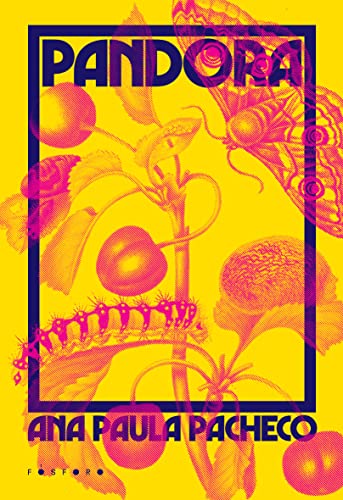
False advertising. The cute pink cover on the English edition is wildly misleading. This isn’t a story about Pangolin love, but a metaphor for abusive relationships and economic/political critique set in Brazil ft bestiality (??) What looks like a light, whimsical read is actually a deeply dark and unsettling allegory.
Wild and unexpected.
“Sometimes life is worth more than victory, and certainly more than defeat.”