

What do you think?

Reading the City: A City in Short Fiction
The Book of Prague
As a historic city centre, Prague is perhaps the perfect backdrop for story-telling. With its spectacular, baroque architecture (relatively untouched by either the 20th or 19th centuries), its winding, cobble streets, its Gothic steeples, its rich Bohemian influences... maybe it was inevitable it would become the setting for a renaissance in the fantastical, ‘ground zero’ for magic realism, birthplace of the Kafka-esque. Despite its trapped-in-aspic beauty, however, the city has still been shaped and scarred by the very modern lessons of the 20th century, with its writing being similarly dragged reluctantly into the all-too-real world.
In this unique collection of ten of the city’s most important, yet previously un-translated authors, we see the city in a completely new light. Away from the Old Town Square and the winding Vltava River, these stories take us into less visited corners of Prague: from the steep streets of the proudly edgy Žižkov neighbourhood, to the flood-ravished suburb of Karlín, from the tensions experienced by the city’s Romani community to the dehumanising post-war redevelopment of areas like Libeň. These stories prove that even in a seemingly small and compact city like Prague, there are always sides to a city’s character you would never have imagined.
Translated by Alžběta Belánová, Melwyn Clarke, Graeme Dibble, Andrew Oakland, Justin Quinn, Julia and Peter Sherwood, and Paul Wilson.
In this unique collection of ten of the city’s most important, yet previously un-translated authors, we see the city in a completely new light. Away from the Old Town Square and the winding Vltava River, these stories take us into less visited corners of Prague: from the steep streets of the proudly edgy Žižkov neighbourhood, to the flood-ravished suburb of Karlín, from the tensions experienced by the city’s Romani community to the dehumanising post-war redevelopment of areas like Libeň. These stories prove that even in a seemingly small and compact city like Prague, there are always sides to a city’s character you would never have imagined.
Translated by Alžběta Belánová, Melwyn Clarke, Graeme Dibble, Andrew Oakland, Justin Quinn, Julia and Peter Sherwood, and Paul Wilson.
144 pages, Paperback
First published July 13, 2023
About the author
Ivana Myšková
6 books7 followersVystudovala tvůrčí psaní a mediální komunikaci na Literární akademii v Praze. Její prozaický debut byl původně psán jako diplomová práce na akademii. Pracovala pro kulturní pořad Mozaika na Českém rozhlase Vltava; nejprve spolupracovala jako recenzentka, od roku 2007 jako stálá externí spolupracovnice, v letech 2010–2013 pak jako zaměstnankyně rozhlasu.
Ratings & Reviews
Friends & Following
Create a free account to discover what your friends think of this book!
Community Reviews
Displaying 1 - 5 of 5 reviews

November 1, 2023
In the editors introduction to this short story collection, there’s a quote by Franz Kafka which perfectly summarises my view of Prague
‘Prague never let’s go of you. This dear little mother has sharp claws’
I visited Prague in 2017 for five days and within a few hours I was enamoured by the city; The charming buildings, the views from St Stephen’s church, the bridge and the fact that all though it’s a small city it was pretty busy. I usually don’t gel very well with the countries I’ve been to but Prague was instantaneous. I do understand that Prague did have a tumultuous history, first being under German occupation in 1938 and then a few years later falling under a communist regime until the 90’s.
This is reflected in the 10 stories in Comma’s Press’ ever consistent ‘Reading the City’ series. There’s a mixture of up and coming authors and older ones such as Bohumil Hrabal and Marie Stryjová. As I said there are all facets of Czech life in these pieces and it’s worth focusing on a few.
One major theme is Prague’s shift from a communist city to a liberal one. For a time in the mid 90’s Prague was the ultimate destination for young people to move and try make a living thus as a result changes were made to accommodate this influx of Europeans and this can be seen in Simona Bohatá opening story Everyone has their Reasons (translated by Alžběta Belánová) which is about a pickpocket who returns to Prague on parole, only to think of a way to return due to the culture shift. Another story which riffs on the same theme is Irena Dousková;s All’s Well in the End (translated by Melvyn Clarke) which is a madcap romp about the Jewish cemetery which was partially destroyed to make way for a tower.
Keeping up with the beauty of Prague Bohumil Hrabal’s My Liben (translated by Paul Wilson) is a love letter to Prague’s outskirts, an area I passed through as well in order to see The Sedlec Ossuary in Kutná Hora. The inclusion of the story – according to the introduction is one of Hrabal’s last pieces of writing – is proof that one may not necessarily find beauty in the city centre. Jan Zábrana’s A Memory (translated by Peter and Julia Sherwood) is about a person trying to cope with doing odd jobs, mostly ones that people do not want to undertake, and a changing environment.
Michal Ajvaz’s A Summer Night ( translated by Andrew Oakland) is a more surreal one with the main protagonist encountering a life sized clam in Prague, in which ensues a cartoonish battle on a tram. This was my personal favourite and, although dark humor prevails in this collection, this was one of the lighter moments.
One cannot review these stories and leave out Marie Stryjová’s Blue (translated by Geoffrey Chew) : a heart tugging tale about a student meeting her ex on Štvanice and trying to supress the loneliness she feels around this person. The depth Stryjová manages to encompass makes this story a highlight.
When reading a set of stories about a city one gets a feel
‘Prague never let’s go of you. This dear little mother has sharp claws’
I visited Prague in 2017 for five days and within a few hours I was enamoured by the city; The charming buildings, the views from St Stephen’s church, the bridge and the fact that all though it’s a small city it was pretty busy. I usually don’t gel very well with the countries I’ve been to but Prague was instantaneous. I do understand that Prague did have a tumultuous history, first being under German occupation in 1938 and then a few years later falling under a communist regime until the 90’s.
This is reflected in the 10 stories in Comma’s Press’ ever consistent ‘Reading the City’ series. There’s a mixture of up and coming authors and older ones such as Bohumil Hrabal and Marie Stryjová. As I said there are all facets of Czech life in these pieces and it’s worth focusing on a few.
One major theme is Prague’s shift from a communist city to a liberal one. For a time in the mid 90’s Prague was the ultimate destination for young people to move and try make a living thus as a result changes were made to accommodate this influx of Europeans and this can be seen in Simona Bohatá opening story Everyone has their Reasons (translated by Alžběta Belánová) which is about a pickpocket who returns to Prague on parole, only to think of a way to return due to the culture shift. Another story which riffs on the same theme is Irena Dousková;s All’s Well in the End (translated by Melvyn Clarke) which is a madcap romp about the Jewish cemetery which was partially destroyed to make way for a tower.
Keeping up with the beauty of Prague Bohumil Hrabal’s My Liben (translated by Paul Wilson) is a love letter to Prague’s outskirts, an area I passed through as well in order to see The Sedlec Ossuary in Kutná Hora. The inclusion of the story – according to the introduction is one of Hrabal’s last pieces of writing – is proof that one may not necessarily find beauty in the city centre. Jan Zábrana’s A Memory (translated by Peter and Julia Sherwood) is about a person trying to cope with doing odd jobs, mostly ones that people do not want to undertake, and a changing environment.
Michal Ajvaz’s A Summer Night ( translated by Andrew Oakland) is a more surreal one with the main protagonist encountering a life sized clam in Prague, in which ensues a cartoonish battle on a tram. This was my personal favourite and, although dark humor prevails in this collection, this was one of the lighter moments.
One cannot review these stories and leave out Marie Stryjová’s Blue (translated by Geoffrey Chew) : a heart tugging tale about a student meeting her ex on Štvanice and trying to supress the loneliness she feels around this person. The depth Stryjová manages to encompass makes this story a highlight.
When reading a set of stories about a city one gets a feel
October 26, 2023
Ivan Myšková and Jan Zikmund start this book with an introduction that outlines a brief history of the city of Prague and fits each story into its place in this history, which is a very useful approach. The collection includes stories from various time periods from the 1950s to the 2020s and written in a variety of styles, giving a fascinating glimpse into life in this major European city.
A major theme that runs through the collection is how much the city has changes, particularly since the end of communism. These changes include, but are by no means limited to, changes in the city's green-spaces, which I'm particularly interested in as a naturalist, but which are also indicative of broader changes in societal values and quality of life.
Everyone Has Their Reasons by Simona Bohatá (translated by Alžběta Belánová) is an insightful and moving story about the connections people make and trying to make amends for wrongs done. The narrator is a released prisoner who observes how much the city has changed while he has been incarcerated:
"instead of the wild bushes and tall trees, all he saw were neat pathways, a playground and large signs with the city patting itself on the back for cleaning up so nice. They’d only left the grassy hill with flat trees as a theatre prop."
One city green-space that recurs in a number of the stories is Prague's Jewish cemetery. The Jewish cemetery is a central focus of Irena Dousková's All’s Well in the End (translated by Melvyn Clarke), in which the narrator is mourning his mother and trying to fulfil her last wishes to be buried in the old Jewish cemetery. Being a recent convert, she wasn't allowed to be buried in any of the Jewish cemeteries that were still in use. This story muses on the meaning of life and death and the relationship of Jews with their neighbours (a particularly pertinent issue at the moment).
The old Jewish Cemetery lost over half its land when a television tower was built in the late 1980s. Patrik Banga in his story Žižkovite (translated by Alex Zucker) observes: "I still wonder who had the stomach to make that decision, entirely humiliating the ancestors of the Jewish people buried there."
Banga's story focuses on his childhood in Žižkov, an area of Prague that was then considered deprived, but was rich in community spirit and that has since been replaced by modern buildings. He considers the changing attitudes to the Roma community and the central position of music to Roma culture: "one of the first questions we always asked each other whenever we got together was, What instruments do your kids play? You don’t even want to imagine the disgrace if you dared to answer None."
Like Žižkov, the old Liben area has entirely disappeared from Prague, being demolished in the 1970s/80s. In My Libeň (translated by Paul Wilson) Bohumil Hrabal remembers being "never able to get enough of the poetry of this quarter on the outskirts of Prague,"
In Realities by Marek Šindelka (translated by Graeme & Suzanne Dibble) the narrator, addressing a woman named Anna, ponders the meaning of life, love, politics and branding and concludes that: "Reality doesn’t have a story, only an infinite number of shards which form more and more new patterns in this mad kaleidoscope of our short lives."
In among an almost dizzying series of observations on the changes in the city, the story notes how technology has impacted the natural world: "The birds on the roofs weave their nests in the tops of antennae and couldn’t care less that the internet is running through them...... Foxes have learned to live in rubbish bins, all sweaty from the glutamate, and howl at the moon with tongues lacerated on tin cans."
Nature takes on a surreal edge in A Summer Night by Michal Ajvaz, (translated by Andrew Oakland) an entertaining tale on the edge of nightmare, in which the protagonist is pursued through Prague by a giant clam.
"It occurred to me to lure the clam to my home, where I would place a billiard ball inside it, feed it and wait for the ball to be coated with mother-of-pearl."
The narrator of Jan Zábrana's A Memory (translated by Julia and Peter Sherwood) looks back to 1952 when he was working in an abattoir in the city. Also set in the 1950s is Blue by Marie Stryjová (translated by Geoffrey Chew) in which two students go on an awkward date by the River Vlata. Another story of young love is Waiting for Patrik by Veronika Bendová (translated by Paul Kaye). The narrator (also called Veronika, implying that this is actually memoir rather than fiction) is waiting for her boyfriend to come back from England and listlessly working in a shop until her college course starts.
If you're starting to look for stories to read at Christmas, you could do far worse than Petr Borkovec's lovely, concise The Captain’s Christmas Eve,/i> (translated by Justin Quinn) in which a captain who lives in a care home is only allowed out once a year on Christmas Eve.
So, whether you've ever visited Prague or not, this wide-ranging collection of stories will give you glimpses into various aspects of the city.
A major theme that runs through the collection is how much the city has changes, particularly since the end of communism. These changes include, but are by no means limited to, changes in the city's green-spaces, which I'm particularly interested in as a naturalist, but which are also indicative of broader changes in societal values and quality of life.
Everyone Has Their Reasons by Simona Bohatá (translated by Alžběta Belánová) is an insightful and moving story about the connections people make and trying to make amends for wrongs done. The narrator is a released prisoner who observes how much the city has changed while he has been incarcerated:
"instead of the wild bushes and tall trees, all he saw were neat pathways, a playground and large signs with the city patting itself on the back for cleaning up so nice. They’d only left the grassy hill with flat trees as a theatre prop."
One city green-space that recurs in a number of the stories is Prague's Jewish cemetery. The Jewish cemetery is a central focus of Irena Dousková's All’s Well in the End (translated by Melvyn Clarke), in which the narrator is mourning his mother and trying to fulfil her last wishes to be buried in the old Jewish cemetery. Being a recent convert, she wasn't allowed to be buried in any of the Jewish cemeteries that were still in use. This story muses on the meaning of life and death and the relationship of Jews with their neighbours (a particularly pertinent issue at the moment).
The old Jewish Cemetery lost over half its land when a television tower was built in the late 1980s. Patrik Banga in his story Žižkovite (translated by Alex Zucker) observes: "I still wonder who had the stomach to make that decision, entirely humiliating the ancestors of the Jewish people buried there."
Banga's story focuses on his childhood in Žižkov, an area of Prague that was then considered deprived, but was rich in community spirit and that has since been replaced by modern buildings. He considers the changing attitudes to the Roma community and the central position of music to Roma culture: "one of the first questions we always asked each other whenever we got together was, What instruments do your kids play? You don’t even want to imagine the disgrace if you dared to answer None."
Like Žižkov, the old Liben area has entirely disappeared from Prague, being demolished in the 1970s/80s. In My Libeň (translated by Paul Wilson) Bohumil Hrabal remembers being "never able to get enough of the poetry of this quarter on the outskirts of Prague,"
In Realities by Marek Šindelka (translated by Graeme & Suzanne Dibble) the narrator, addressing a woman named Anna, ponders the meaning of life, love, politics and branding and concludes that: "Reality doesn’t have a story, only an infinite number of shards which form more and more new patterns in this mad kaleidoscope of our short lives."
In among an almost dizzying series of observations on the changes in the city, the story notes how technology has impacted the natural world: "The birds on the roofs weave their nests in the tops of antennae and couldn’t care less that the internet is running through them...... Foxes have learned to live in rubbish bins, all sweaty from the glutamate, and howl at the moon with tongues lacerated on tin cans."
Nature takes on a surreal edge in A Summer Night by Michal Ajvaz, (translated by Andrew Oakland) an entertaining tale on the edge of nightmare, in which the protagonist is pursued through Prague by a giant clam.
"It occurred to me to lure the clam to my home, where I would place a billiard ball inside it, feed it and wait for the ball to be coated with mother-of-pearl."
The narrator of Jan Zábrana's A Memory (translated by Julia and Peter Sherwood) looks back to 1952 when he was working in an abattoir in the city. Also set in the 1950s is Blue by Marie Stryjová (translated by Geoffrey Chew) in which two students go on an awkward date by the River Vlata. Another story of young love is Waiting for Patrik by Veronika Bendová (translated by Paul Kaye). The narrator (also called Veronika, implying that this is actually memoir rather than fiction) is waiting for her boyfriend to come back from England and listlessly working in a shop until her college course starts.
If you're starting to look for stories to read at Christmas, you could do far worse than Petr Borkovec's lovely, concise The Captain’s Christmas Eve,/i> (translated by Justin Quinn) in which a captain who lives in a care home is only allowed out once a year on Christmas Eve.
So, whether you've ever visited Prague or not, this wide-ranging collection of stories will give you glimpses into various aspects of the city.

April 27, 2024
The city in short stories - PRAGUE
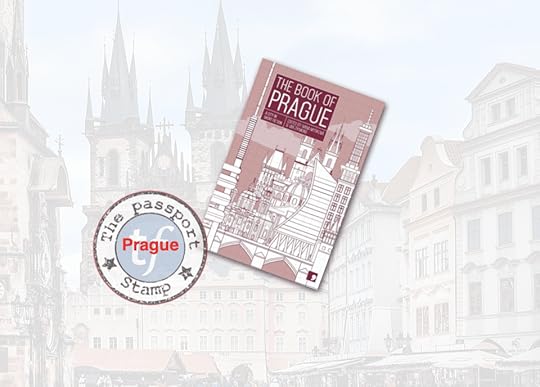
This is part of series, with new city titles regularly added to the collection. The publisher brings together short stories written by authors who are native to the country in question, and then beautifully arranges translations by a selection of skilled translators. At the end of each book there is a short bio of each author and a little about the individuals who bring the stories to life in the English language. The series is published by Comma Press, a not-for-profit publisher and development agency specialising in short fiction from the UK and beyond.
There are already several titles dotted around England, including Newcastle and Liverpool, and further afield there are set in Cairo, Beijing and particularly poignant at the moment, given the current situation, in Gaza.
The stories in The Book of Prague offer a peek into the lives and the city both past and present, through the eyes of authors who are familiar with their city, and some stories provide the wider context of what we see today. In My Libeň (an area that has been part of Prague for more than a century) we are taken on a lyrical, whistle stop tour of the quarter as it was in the 1950s:
“Sometimes, I would walk to the Vysočany railway station and from there, delight in the poetry of the train tracks and the factories towering in the background”.
In other stories there are characters who work at the abattoir, others who are recently released from prison. It is an interesting notion to feature a newly released convict because he has missed how the city has evolved during his incarceration and now he can describe what he sees through his own fresh view. One character ponders how the city might have fared had it really stood up to Nazi might.
The Introduction is a valuable opener, offering insight into the political evolution of the country – I hadn’t realised, for example, that when, in the 1930s the country was preparing for war against Germany, hostilities were averted because Great Britain, France and Italy banded together and pressured the country into ceding some of its territory to Germany. This turned out to be a double edged sword because Prague wasn’t attacked and destroyed and therefore is preserved “in aspic” in many respects for a modern visitor. And then, post WW2, of course Communism took over and that added a considerable legacy to the city, still evident in many parts today, both in attitude, learning and the mix of cultural architecture. Just from the stories the reader can deduce that the city has been through phenomenal flux.
The series is rewarding if you want something just a bit different. Each book provides an introduction to authors from the country, who are perhaps neither mainstream nor currently available in English translation. A book of stories like this is consummate reflection and observation by those who know and understand the city… literary tourism at its best.
This is part of series, with new city titles regularly added to the collection. The publisher brings together short stories written by authors who are native to the country in question, and then beautifully arranges translations by a selection of skilled translators. At the end of each book there is a short bio of each author and a little about the individuals who bring the stories to life in the English language. The series is published by Comma Press, a not-for-profit publisher and development agency specialising in short fiction from the UK and beyond.
There are already several titles dotted around England, including Newcastle and Liverpool, and further afield there are set in Cairo, Beijing and particularly poignant at the moment, given the current situation, in Gaza.
The stories in The Book of Prague offer a peek into the lives and the city both past and present, through the eyes of authors who are familiar with their city, and some stories provide the wider context of what we see today. In My Libeň (an area that has been part of Prague for more than a century) we are taken on a lyrical, whistle stop tour of the quarter as it was in the 1950s:
“Sometimes, I would walk to the Vysočany railway station and from there, delight in the poetry of the train tracks and the factories towering in the background”.
In other stories there are characters who work at the abattoir, others who are recently released from prison. It is an interesting notion to feature a newly released convict because he has missed how the city has evolved during his incarceration and now he can describe what he sees through his own fresh view. One character ponders how the city might have fared had it really stood up to Nazi might.
The Introduction is a valuable opener, offering insight into the political evolution of the country – I hadn’t realised, for example, that when, in the 1930s the country was preparing for war against Germany, hostilities were averted because Great Britain, France and Italy banded together and pressured the country into ceding some of its territory to Germany. This turned out to be a double edged sword because Prague wasn’t attacked and destroyed and therefore is preserved “in aspic” in many respects for a modern visitor. And then, post WW2, of course Communism took over and that added a considerable legacy to the city, still evident in many parts today, both in attitude, learning and the mix of cultural architecture. Just from the stories the reader can deduce that the city has been through phenomenal flux.
The series is rewarding if you want something just a bit different. Each book provides an introduction to authors from the country, who are perhaps neither mainstream nor currently available in English translation. A book of stories like this is consummate reflection and observation by those who know and understand the city… literary tourism at its best.

February 6, 2024
A good selection of short stories about the august Czech capital that capture expertly the mood of the place. The collection includes a range of authors – from established names of the past such as Bohumil Hrabal to great newcomers. I did feel that this made for a stronger whole than a similar volume I read a few years ago that was devoted to Tbilisi. The near stand outs for me were stories from Simona Bohatá and Irena Dousková although Michal Ajvaz’s tale of a giant clam pursuing a man though the city and Patrik Banga’s elegy to the Roma communities of Žižkov were the most memorable for me.
January 2, 2025
Exceptionally good and contemporary Czech literature...!
Displaying 1 - 5 of 5 reviews