Jump to ratings and reviews
Rate this book

Belladonna

Rate this book
Andreas Ban es un psicólogo que se acaba de jubilar. Vive solo en un pueblo costero de Croacia. Su cuerpo comienza a dar señales de agotamiento y, entre una consulta médica y otra, revisa su pasado y examina los retazos de su vida ―sus trabajos de investigación, sus libros, los registros médicos, las fotografías―. Andreas Ban rememora a los seres queridos mientras reflexiona sobre la ­desintegración de Yugoslavia y sobre la Segunda Guerra Mundial. Los recuerdos de sus vivencias en Belgrado, que pensó que había dejado atrás, y de Ámsterdam, donde sintió que tenía una vida diferente, se alternan con sus meditaciones sobre el tiempo, su pensión miserable, el envejecimiento y la fragilidad humanas, y también sobre una de sus la trágica historia de la Europa del siglo xx. Daša Drndić repasa una vez más los horrores de la historia con el mismo ingenio frío e inquebrantable, al tiempo que elabora un crudo retrato de la vejez en nuestro despiadado mundo un intelectual olvidado y marginado que trata de vivir y pensar en medio de una sociedad que predica la eterna juventud y reprime el pensamiento crítico.

464 pages, Paperback

First published November 1, 2012

82 people are currently reading
2850 people want to read

About the author

Daša Drndić

25 books144 followers
Daša Drndić (1946-2018) was a distinguished Croatian novelist, playwright and literary critic, author of radio plays and documentaries. She was born in Zagreb, and studied English language and literature at the University of Belgrade. Drndić worked as an editor, a professor of English, and as a TV programme editor in Belgrade. She obtained her doctorate at the University of Rijeka in Croatia, where she later taught. She is the author of thirteen novels including Leica Format (2003), Sonnenschein (2007), Trieste (2011) and Belladonna (2012). Her works have been translated into many languages, and Drndić has won the International Literary Award “Prozart" in 2014, awarded to a prominent author for their contribution towards the development of the literature on the Balkans. Her work has also been shortlisted for the Independent Foreign Fiction Prize and the inaugral EBRD Literature Prize.

Ratings & Reviews

What do you think?
Rate this book

Friends & Following

Create a free account to discover what your friends think of this book!

Community Reviews

5 stars
320 (44%)
4 stars
256 (35%)
3 stars
101 (14%)
2 stars
31 (4%)
1 star
7 (<1%)
Displaying 1 - 30 of 135 reviews
Profile Image for Orsodimondo.
2,459 reviews2,434 followers
November 2, 2025
GLI STRAPPI NON RIMARGINATI DELLA STORIA


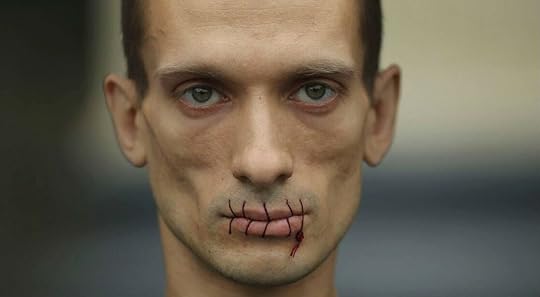
Pëtr Pavlenskij: performance presso la Cattedrale di Kazan’, San Pietroburgo, 2012.

È difficile cancellare completamente la storia e la memoria, la storia e la memoria amano ritornare. Si infilano nella testa della gente e penetrano nel loro sangue. Lì, ho imparato: le persone sono collegate in maniera invisibile senza che lo sappiano, si toccano l’un l’altra attraverso vite che per loro rimangono per sempre estranee, entrano in tempi che pensano non essere i loro, camminano per paesaggi che sono nuovi solo a loro ma che sono esistiti per secoli.


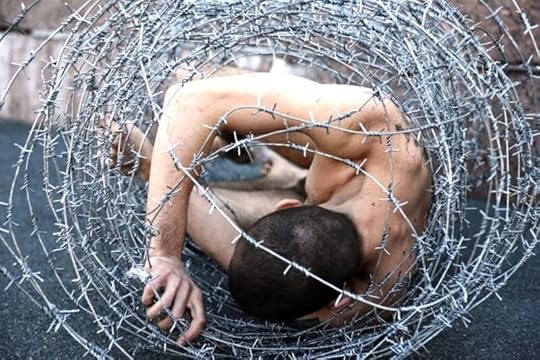
Pëtr Pavlenskij: Nudo con filo spinato.

Si direbbe che la croata Daša Drndić scriva soprattutto per ricordare, per non tacere:
la tentazione di turarsi le orecchie, cucirsi le labbra, è forte davanti agli orrori – ed errori - della storia: esercitare l’arte dell’oblio per salvaguardare la propria felicità, o, quanto meno, la propria sanità mentale.
E lo stesso fa il suo protagonista, Andreas Barn, nome che Daša Drndić ama ripetere più e più volte, come un mantra, una preghiera, o un’invocazione.
Andreas Barn è il trionfo della memoria. La memoria che ricorda tutto, che nulla vuole dimenticare. Perché tutto è parte del collage che è la vita. Proprio come viene da dire che sia questo romanzo, un collage, fatto anche di poesie, canzoni, versi, schizzi, fotografie


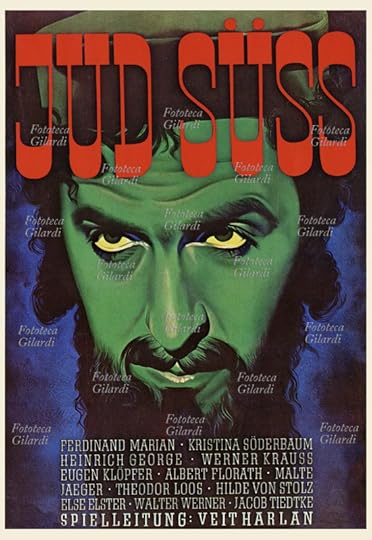
La locandina del film “Süss l'ebreo” voluto da Goebbels e diretto da Veit Harlan: film di pura propaganda antisemita fu presentato alla Mostra del Cinema di Venezia nel ’40 e non nel 1941 come scrive la Drndic, ebbe un grande successo, ma non vinse il Leone d’oro come sostiene la Drndic. Tra l’altro in quella edizione in piena guerra, il primo premio si chiamava Coppa Mussolini.

A sessantacinque anni Andreas Barn è costretto ad andare in pensione: non vorrebbe, per lui è ancora presto, ma ha raggiunto l’età ed è costretto a smettere d’insegnare. È un uomo curioso, psicologo, scrittore, intellettuale – anche se lui mai si definirebbe tale – non si ritira dalla vita, non si predispone a passeggiate con sosta sui lavori in corso e commenti, ma diventa l’occasione e la scusa per Daša Drndić di allargare ed estendere il discorso, non solo geograficamente – dalla Croazia al resto d’Europa – ma anche storicamente, temporalmente, parlando di questo e quello, a volte sembra d’essere davanti a un saggio, ma la scrittura di Daša Drndić è molto narrativa, non si può scambiare questo libro per altro che romanzo. E l’occhio e l’attenzione di Daša Drndić è puntato molto – molto – sugli orrori nazisti e dintorni (gli orrori fascisti e gli orrori ustascia), e Daša Drndić ha cuore palpitante e partigiano, non si nasconde ed esprime giudizi che a volte sorprendono – come quello su Littel e Le benevole.


Uccisione di prigionieri al campo di concentramento di Jasenovac da parte di guardie ustascia.

In questo libro dalla narrazione erratica, composta di frammenti, scritto con lingua dura, scarna, quasi “combattiva”, Daša Drndić più volte sembra sconfinare verso il saggio, procede per associazioni spinta da un rimuginare continuo, intreccia storie e destini tra loro apparentemente lontani ma invece avvicinabili, ricorre a immagini, nel senso di fotografie (non è l’unico aspetto che ricorda Sebald), e fa i conti con una vergogna nazionale, i quattro anni di dittatura ustascia (1941-1945), che gettò i semi anche per quello che avvenne poi negli anni Novanta del secolo scorso.


Ho scoperto che l’edizione originale elenca i 1055 nomi degli ebrei fucilati a Zasavica tra il 12 e il 13 ottobre 1941, nomi assenti nell’edizione italiana malgrado l’elenco venga citato nei ringraziamenti finali.
E a pagina 20, presentando Andreas Barn, l’edizione italiana gli attribuisce settantacinque anni, mentre quella originale dice sessantacinque, che era l’età di Daša Drndić quando il romanzo fu pubblicato: La Nave di Teseo traduce e pubblica dieci anni dopo, e dieci anni in più affibbia al protagonista. Stranezza per me inspiegabile. Anche perché l’essere costretto ad andare in pensione in età ancora “gagliarda” è aspetto importante del racconto.
Per la cronaca, il titolo si riferisce alla pianta di belladonna, pianta che ha effetti benefici, ma anche letali.


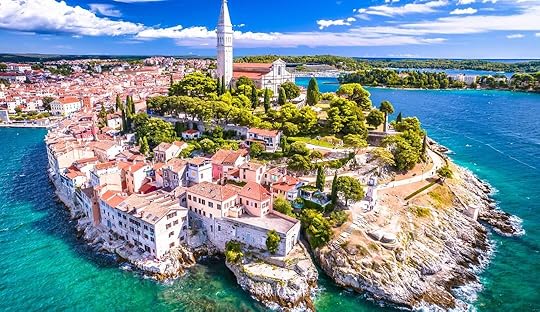
Rovigno in Istria, è spesso nominata, Andreas Bas ci si reca spesso, ci passa tempo.

Scoprii che il destino di quell’uomo che non conoscevo aveva provocato increspature che avevano toccato la mia vita. Fatti e stati dell’essere che riconosco come miei. Piccole paure e dubbi dolorosi. Ecco perché ci illudiamo se pensiamo che le storie parallele degli altri non toccheranno mai le nostre. Lo faranno. In un modo o nell’altro. In un’espressione, in un’affermazione incidentale, pronunciata casualmente, in un incontro apparentemente insignificante, anch’esso parallelo, anche se non ci raggiungono direttamente. Un parallelismo infinito conferma in realtà che i fatti e le vite sono connessi.


Daša Drndić
Profile Image for Paula Mota.
1,667 reviews567 followers
February 21, 2025
4,5*

Ler “Belladonna” deu-me vontade de me finar aos 50 com uma morte de milionário, para não ter de apodrecer aos poucos, não ser consumida por nenhuma doença, não ter de ser cliente habitual dos hospitais.

Há dias em que Andreas saúda as suas dores de braços abertos. Elas caem-lhes nos braços como maçãs podres, retumbam-lhe no peito e espalham o seu eco por todo o corpo. No seu abraço, essas dores escoam lentamente e, como uma infusão, gota a gota, fluem para as suas entranhas até que as cobrem com uma fina camada de humidade escura.

Daša Drndić não é uma autora que esteja com paninhos quentes e entra nesta obra a matar.

Em 19 de novembro de 2002, um sábado, sessenta pessoas presas num acampamento por imigração ilegal coseram os lábios.

Depois de 400 páginas de uma vontade de calar e esquecer, da confrontação com os horrores da velhice, da pobreza, da doença, da guerra, da perseguição e do fascismo, “Belladonna” termina “não com um estrondo mas com um queixume”. E então apareceu Eliot. Parou em frente de Andreas Ban e disse não perturbes o universo.

Também Andreas Ban tem a sua “terra desolada”, um apartamento minúsculo e húmido, uma reforma miserável de dois países da ex-Jugoslávia, onde foi psicólogo e professor universitário, uma viuvez triste, um corpo massacrado pela velhice e por uma miríade de doenças, a obsessão pela Segunda Guerra Mundial e pela contaminação do nazismo no seu país.

Uma enfermaria após outra, é como se ele estivesse a olhar para os feridos num campo de batalha, mutilados, estropiados, como se estivesse num campo de concentração e cada encarcerado o fosse pela fé, pelas ideias ou pelo sangue que não se coadunam com o espírito místico germânico (croata?) rural.

E esta obra, pela sua estrutura, é também a “Waste Land” de T.S.Eliot em formato de prosa, em que Daša Drndić se socorre abundantemente da intertextualidade, a qual pode traduzir-se em listas que ocupam várias páginas...

Em junho de 1945 foi aberta a vala comum de Zasavica. Os restos mortais dos judeus de Sabac refugiados, assassinados em 12 e 13 de outubro de 1941, são levados de Zasavica para o cemitério judaico de Sabac, em 1959 para o cemitério safardita em Belgrado. [Segue-se o nome e a idade de 1055 dessas vítimas]

...colagens de obras alheias...

Há um olho humano ali no convés, disse-lhe, acha que caiu, ou foi removido de alguém? Gombrowicz, um olho não pode cair assim sem mais. Claro que pode. Nas águas do Pacífico sul, quando estávamos em calmaria, perdemos três quartos dos olhos de toda a tripulação.

...participações especiais...

Ficaram parados um bocado, a fumar, Dubravka Ugrešić e Andreas Ban, a proferir palavras que pareciam longas tiras de elástico que se esticam e encolhem cadenciadamente, ali, numa rua deserta de Amesterdão.

...fotografias, referências a outras obras suas...

Em Budapeste, Andreas Ban encontra o seu primo Printz, conhecido como “Pupi”, que está hospedado no mesmo hotel. [Protagonista do livro “Doppelgänger”.]

...e talvez muito mais que me tenha escapado, porque esta autora croata tem uma mente que roça a genialidade.
Pela mudança de registo, com incursões históricas e episódios de pessoas que existiram na realidade, “Belladonna” torna-se uma obra por vezes bizarra, quase uma manta de retalhos que, se não dermos uns passos atrás para a ver a uma certa distância, não conseguiremos abarcar como um todo, porque se trata, em última instância, de um livro-tese cuja mensagem só se compreende plenamente na última página. Altura em que me senti impelida a voltar de imediato à primeira página para apreciar a mestria.

E assim, pela enésima vez, Andreas Ban confirmou que todos nós viajamos por vias paralelas, veredas que se tocam apenas por um instante no meio de centelhas enlouquecidas que se espalham de baixo das rodas de um comboio eternamente à desfilada.

Dou-me conta que, ao analisar uma obra que seja muito pesada, mesmo quando a admiro, posso afastar outros leitores falando sobre ela de modo sombrio e miserabilista, mas creio realmente que, para se ler “Belladonna”, tem de se estar num estado de espírito propício. Se forem muito novos, não vão querer saber que ser-se velho e doente é isto; se estiverem na meia-idade, não vão querer vislumbrar o que talvez vos aguarde dentro de pouco tempo; e se já forem velhos, é provável que não queiram ver as vossas dores ao espelho. Contudo, se decidirem fazê-lo, saibam que têm aqui uma obra única de uma autora que jogava numa liga reservada a poucos.

Nunca sabemos onde estamos com a história, nunca sabemos onde está a verdade. Naquilo que realmente aconteceu ou naquilo que nós gostaríamos que tivesse acontecido. A história é uma sedutora perigosa.
Profile Image for Paul Fulcher.
Author 2 books1,959 followers
December 6, 2018
Now the worthy winner of the 2018 Warwick Prize for Women in Translation.

Andreas Ban had read somewhere that wars are orgies of forgetfulness. The twentieth century as archived vast catacombs, subways of information in which researchers get lost and in the end abandon their research, catacombs which ever fewer people enter. Stored away - forgotten. The twentieth century, a century of great tidying that ends in cleansing; the twentieth century, a century of cleansing, a century of erasure.

Daša Drndić's Belladonna continues the project of combating this erasure from her IFFP prize shortlisted Trieste, the translation by Ellen Elias-Bursac of Drndić's Sonnestein. The narrator of that novel, Haya Tedeschi, concluded:

I have arranged a multitude of lives, a pile of the past, into an inscrutable, incoherent series of occurrences... I have dug up all the graves of imagination and longing... I have rummaged through a stored series of certainties without finding a trace of logic.

Belladonna is narrated by Andreas Ban, a recently retired Croatian psychologist, who similarly digs into the past of his family, those he meets and the troubled 20th Century history of his country (or countries). But he is simultaneously someone who refuses to let people forget and yet desperately wants to himself.

Andreas Ban torments himself with all of these bits of information he digs up, rummages through, which seem like unimportant facts, like desiccated data rotted in time, but they enter his rooms, sit at his table, knock into him in the street, and that is another reason why he goes out less and less, why he refuses to listen and to hear.

The present-day story follows Ban's travails with his health - he is diagnosed with male breast cancer as the novel opens, alongside multiple other conditions.

As time goes on, new cracks in the history of the Ban family open up, benign cracks, admittedly, painless, yet nonetheless gaps which once again confirm that our existence is more invented and imagined than real, and so now Andreas Ban does not know what to do with his present state, confused, chaotic and tiring, now that he is beset by all kinds of major health issues that deposit the alluvium of a suppressed, unspoken and rigged reality.

As his health deteriorates generally and he finds himself shunted from one doctor to another, it is difficult not to see both the analogy to the deterioration of humanity in the 20th Century, but also Ban's inability to find a home in the shifting borders and conflicts in the area. As another character says, he has multiple identities with which he lives in the wrong places.

Ban had been living in Serbia until the Serbian-Croatian conflict began in 1991, when he found himself, as a Croatian, forced to moving to Croatia for his own safety, but then finding himself equally not at home there:

When he arrives in this town from hostile Belgrade ... he has forty-five years of a past which those inside these walls knew nothing about ... a potentially dangerous past which would need first to be investigated and then eradicated.

And he is equally alienated by the nationalistic Tuđman regime and its apparent harking back to the Ustashe puppet regime of Ante Pavelić during World War II. One section of the book documents in detail, with footnotes, various historical figures, the crimes they committed in the 1940s and their apparent rehabilitation decades later.

He also struggles with the provincialism of the "small town" where he finds himself, drawing on Filosofija palanke ('The Philosophy of the Province) by the Serbian philosopher Radomir Konstantinović:

the impulse to exclude, by mocking, by negating what is outside the norm is strong in the provincial spirit. The provincial spirit register everything, every difference, linguistic, ethical, physical, cultural, it remembers everything and does not acknowledge any variation

a provincialism that is increasingly a key and alarming political force in the West.

The narrative is far from linear, as Ban's thoughts roam back through his life and even into history. And he follows in detail the stories of those he meets, often finding intersections with his own life:

And so for the nth time Andreas Ban confirmed that we are travelling along parallel tracks, tracks that touch for only an instant through the crazed sparks that scatter from under the wheels of an eternally rushing train.

This is a W.G. Sebaldian project - a collage of 20th Century history, particularly centred around WW2, infused with literature, fictionalised in the narration but deeply rooted in fact (per the author literature is a mélange of experienced events, proven facts, and “invented” detail which exploits language that is supposed to give it flavor, depth, spice it up, mold it, Botoxize it.), with black and white photographs as well as sheet music and testimony - but written not with his melancholy but with Thomas Bernhardian excoriating prose.

Although the sheet music, testimonies and photographs are less prominent in Belladonna than Trieste, as the author has explained in an interview:

They do not help me, they are supposed to help the reader. The reader who has lost the capacity to imagine, to rely on the word, on language, and its immense possibilities that are less and less recognized and abused. Language has turned into tweeting, ideas are blogged, so, accordingly, the process of thinking has become shamefully simplified. But I’ve decided to give up. In my latest book, there are few photographs and hardly any documents. The word is there to fight for its rite of passage.

Literature and fiction is key to Ban's exploration of the world:

What had been important to him he had registered and in his imagination touched at a distance, in the distance: old friendships, dead loves, abandoned towns, books, books, real and unreal characters, spending more and more time with writers, mostly deceased but some living ones as well.

and this includes meta-fictional touches. Ban reads Sonnestein, and even meets its (fictional) narrator Haya Tedeschi, and later (see below) meets the English translator of that book.

But the book is also filled with real life names - those of the guilty, whose crimes should not be forgotten, but also of the victims. As in Trieste, Drndić powerfully interrupts her narration in two places with simple but haunting lists of names. Asked in an interview
What do you think this act of naming accomplishes in your writing?
she replied
I do not think, I know what I want to say. However, I do not know how such an “act” resonates with an impatient reader. It is not only the names of the victims of war that I list. Now, almost fanatically, although for literature onerously—that is, needlessly—I obsessively name people, because I see more and more clearly that their names are perhaps the last cobwebby thread which singles them out from the overall chaos of the world, from the cauldron of soggy, stale mash we are immersed in. Besides, if football—soccer—fanatics can memorize teams of players through time, it is polite at least to scan through a list of victims for whose destinies all of us bear responsibility.
Here the lists are the 2,061 children deported from the Netherlands to concentration camps in 1938-1945, which Ban sees when he visits the Joods Kindermomument in Den Haag (https://nl.wikipedia.org/wiki/Joods_K...) where many of the names are engraved into the climbing frames of a children's playground, a playground he is taken to in the novel by Ellen Elias-Bursac, the translator of Trieste (although not acknowledged as such in the novel).

description

and the list of the Šabac Jewish refugees killed in Zasavica in October 1941.

This second list is an example of the novel's complex narrative approach. In the novel, Ban is consulted by a friend of his, a psychiatrist, about one of his patients who suffers psychological torments than manifest themselves physically (e.g. in excessive scratching of an anal itch). Together they trace the patient's history back to his childhood in Šabac in Serbia. The real-life story now comes into play. In November 1939, the Kladovo Transport was an illegal (because of British laws preventing settlement) attempt to get refugees from Vienna to Palestine, which was thwarted by the early freezing of the Danube.

The refugees eventually found sanctuary in Šabac, where they lived peacefully with the local population, including in the book Ban's patient who was a child at the time. Peacefully, that is, until the Nazi occupation of the country, which led to increased persecution culminating in the men being shot, in retaliation for partizan actions (1 German life = 100 Jewish executions) and the women and children taken to concentration camps and killed. In the novel, Ban's patient fears his father, who was pro-Nazi, may well have assisted with the round-up.

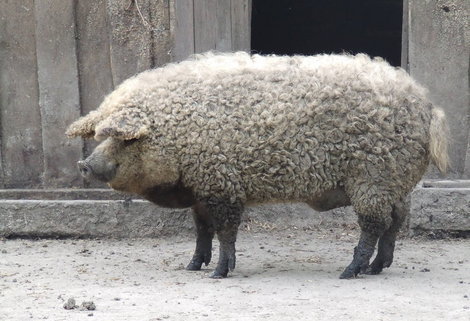
And in a follow up, Ban reflects on two contrasting legacies. First the idyllic nature today of the forest where the men were shot and lay for many years undiscovered in a mass grave, now the Zasavica Nature Reserve, home to both the famous milk-producing donkey herds responsible for the world's most expensive cheese, pule, and also the last surviving Mangalica woollen pigs

description

and on the other, the, in the book's view, lack of justice for those involved in the crimes, such as the concentration camp commander and his deputy, both eventually arrested in the 1960s but given 2.5 years in prison and a 1.5 year sentence, not actually served due to ill-health, respectively. (https://en.wikipedia.org/wiki/Sajmi%C...).

Overall, not always a particularly easy or enjoyable read, but a vital book for our times, and one that shows the vital importance of translated fiction. A surprise omission from last year's MBI longlist but perhaps a function of its publication date which came at the end of the cycle.

Interview with author:

https://www.theparisreview.org/blog/2...

External reviews:

https://lareviewofbooks.org/article/t...

http://quarterlyconversation.com/bell...

http://www.musicandliterature.org/rev...
Profile Image for Hugh.
1,293 reviews49 followers
June 3, 2020
This was my third book by Drndić after Doppelgänger and Trieste, and the links between them are increasingly clear. This one is full of quotations from other writers, and like Trieste, much of it dwells on details of the holocaust, including pages of lists of victims' names.

This one follows an academic, Andreas Ban, born to Croatian parents in Belgrade, but now living in retirement in Croatia, a country he barely knows. He is diagnosed with breast cancer early in the book, and his medical history occupies large parts of the story, as does Croatia's wartime complicity with Nazi Germany. The meaning of the title does not become clear until very late in the book.

I was struck by a couple of links to other books I have read very recently - Bertha Pappenheim (Freud's Anna O) plays a bigger part in Saving Lucia, as does the Salpêtrière mental hospital, and Glenn Gould (who is central to The Loser) appears too.

As always Drndić is incisive, unflinching and human, and this is another fine book.
Profile Image for Vesna.
239 reviews169 followers
August 31, 2020
A magisterial work, supremely rich in ideas, fictional and real-life stories, and factual histories. I found it impossible to read it without pausing at certain points to process and reflect on many challenging themes and difficult moments in the life of an extraordinary figure, Andreas Ban. Characteristically for Drndić, the ‘novel’ blends several genres, from engagingly flowing literary narrative to essayistic prose, containing photographs, several kinds of lists, among which those of the Holocaust victims are most sobering, and even a musical score.

Among many themes, Drndić above all takes issue with the historical amnesia that willingly covers up for the past atrocities and reinforces the current rise in "pathological patriotism”. The main character, Andreas Ban, is as erudite and cosmopolitan as the author herself and, to a good degree, the novel is autobiographical. The collapse of Yugoslavia shatters Ban’s sense of belonging to a ‘homeland’ as it suddenly puts him in the ‘wrong’ ethnicity or dialect box wherever he goes. As a Croat with a ‘Belgrade accent’, he is equally unwelcome at his new home in Croatia as he was at his former home in Serbia. The ugly and dehumanizing face of ultranationalism and desensitized view of ‘otherness’, no matter whether those are colleagues, neighbors, or victims of atrocious mistreatments in distant places, has been haunting Drndić’s works. Belladonna is probably the closest of all her novels to her actual home in the lands of the former Yugoslavia.

The book is also about the fragility of old age, the torturing effects of illness on the body, indiscriminately affecting both sexes (Ban suffers from breast cancer, a typical ‘female’ form that is rare and usually fatal in men), and flawed and impersonal medical care. Another side of the old age that Drndić explores is about finding the new meaning in life which is magnified in Ban’s case because of his nonconformist spirit. It takes him into the forced retirement and through his mounting loss of dignity we see the effects of another social malaise - conformism and opportunism at the workplace that stifles creativity and destroys careers…

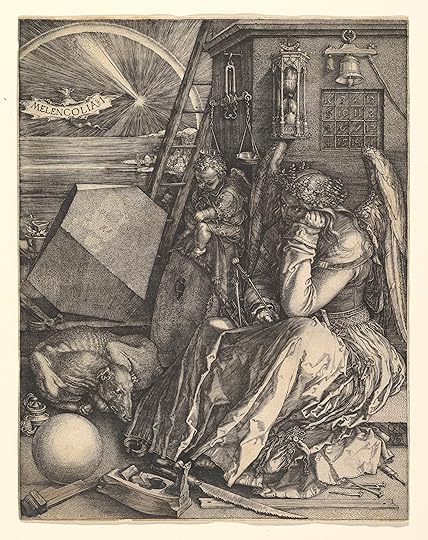
There is a crushing sense of melancholy that permeates all these themes and episodes, to which Drndić is coming back throughout the novel whether in Ban’s thoughts or its treatment in the arts, literature, psychology and philosophy.

Albrecht Dürer’s “Melencolia I” engraving (1514 )
description

The book has a deceptively ‘pretty’ title while its intended connotation is ominous. It’s named after the herb ‘atropa belladonna’ (also known as ‘deadly nightshade’) that “idle Renaissance ladies” used for eye drops to make their eyes shine while at the same time blinding them. It serves as a metaphor for Drndić’s recurring concern with the desire to embellish and glorify one’s own country that easily leads to blindness about the suffering of others. The novel's ending is ambivalent about the fate of Andreas Ban, left to different interpretations, but it will be resolved in its equally fascinating sequel EEG.

This is a tour de force in literary writing and I already recognized its influence on a talented younger writer like Valeria Luiselli who cites Belladonna, and as well uses some of its literary constructs, in her widely publicized The Lost Children Archives.

Belladonna is deservedly a modern classic.
Profile Image for Ian Scuffling.
177 reviews88 followers
April 24, 2018
In my ignorance of Croatian literature, I'm going to make a claim that I'm completely unqualified making: Daša Drndić is one of their finest, most artful writers. This book is a timespanning journey and mediation on time, history, the human body and heredity.

History is heredity is culture. History repeats itself because it's a genetic inheritance that deteriorates us as we try to push back against it. The body rejects our history and writes new history carried forward. All humans are a physical bearing of all history before them, and the future can only be inscribed by the past, therefore there is no past and there is no future.

In the novel, Drndić uses her protagonist, Andreas Ban, a deteriorating retiree, to tell the history of Croatia, it's bloodied past, marred by fascism and antisemitism, and holocaust. It tells a side of history I was not intimately familiar, a side that often goes unnoticed, untaught in America (to my experience), and so therefore it is ever more vital to see it, to learn it, to experience it. The book works by building layers and layers of metaphor into Andreas's body and mind. His experience of Europe is the experience of European history. His body and shape and poor health is defined by Croatia's history. He feels the culpability for the dead Jewish children whose names are inscribed on memorial sculpture in a park.

I feel like I'm failing to capture the essence of this book, but in some ways it works like a rubik's cube, trying to unlock the pattern of history and humanity. Being progeny of the horrors our ancestors wrought, how can we even begin to correct them? The book wrecks you over and over viscerally, intellectually, emotionally. It is existential and fatalistic. There is no optimism here as Drndić clearly sees the great, looping chain of history coming back around. Belladonna is one of the most moving reads I've experience so far this year, and I imagine will be a hard one to top.
Profile Image for Matthew Ted.
1,009 reviews1,040 followers
August 3, 2022
79th book of 2022.

I was at a complete loss on how to rate this book. Reminiscent of Sebald, Tokarczuk's Flights, it is a 400-page slog of dense, brutal pages, filled with fiction, essays, lists, quotes, allusions and historical explorations. Almost every page involves either sickness, disintegration, collapse (of body or empire), genocide, corruption, murder. Drndić does not have the light, almost mocking, touch of Sebald but a visceral and unapologetic look at some of the worst atrocities (mostly during the Second World War) in around the Balkan states and Germany, all tied up with her dying protagonist, Andreas Ban.

description

Its density comes from the digressions. A chapter opens with the failings of Andreas Ban's eyes, for example, and before long meanders into a history lesson on the removal of eyes over the last several hundred, perhaps thousand, years. There are two lists in the book that altogether take about 20/30 pages, lists of names and ages. The first for example, 'In June 1945 the mass grave at Zasavica is opened. The mortal remains of the Sabac Jewish refugees, murdered on 12 and 13 October, 1941, are taken from Zasavica to the Sabac Jewish Cemetery, and in 1959 to the Sephardic Cemetery in Belgrade.'

description

I've been to Croatia five times now, it is one of my parents' favourite countries. It was interesting to read about Rovinj, Split, Dubrovnik, and have those places in my memory. There is an interlude in Amsterdam, another place I hold in my memory. In that way the setting of this novel felt more tangible to me. But where the setting was tangible, the language was distant and cold; Drndić's style is essayistic, lacking completely in flamboyance of any kind. Though the novel sits at 400 pages long, it does feel closer to 600. My reading slump that struck around the midway point no doubt hindered my progress but it is a dense and difficult book. Whilst reading, you forget it is modern, it reads like an old 20th century piece, as Sebald often reads like too. It is extremely literary, at the back of the book there is a three page Acknowledgements where it states, 'Daša Drndić has incorporated or quoted the words of a number of writers.' Oftentimes they are quoted but are not given sources. A tapestry of a book centred around illness and genocide, fascism and death. Not for an easy summer read, but at many points quite astonishing.
Profile Image for Proustitute (on hiatus).
264 reviews
June 3, 2019
The twentieth century, a century of great tidying that ends in cleansing; the twentieth century, a century of cleansing, a century of erasure. Language perhaps remains, but it too is crumbling. A great burden falls on twentieth-century man and he drags himself out from under it, damaged.
Drndić takes a razor-sharp scythe to the lost histories and the continued legacies of Nazism and fascism, and, by suggesting that our failure to comprehend or to speak or to remember only perpetuates the erasure of these histories and is a form of passive complicity, she takes a razor-sharp scythe straight to your entrails, too.

Devastating, brutal, erudite, perfect.
Profile Image for Rita.
906 reviews185 followers
March 3, 2025
Beladona, também conhecida como erva-moura, bagas do diabo, morte bela, erva do diabo, o que parece terrível e ameaçador. Beladona tem também nomes mais inofensivos, uva-de-cão, meimendro, dulcamara, doce-amarga.
(...)
A beladona oculta o seu veneno em bonitas bagas negro-malva, nas folhas e nas raízes. As bagas estão cheias de um sumo como tinta preta, agridoce, do tamanho de cerejas, e são refrescantes como uma bebida vitaminada, por isso tentam quem passa: colhe-me, colhe-me e voa para a terra dos sonhos. Essas bagas venenosas aninham-se em pequenas taças verdes, de cinco pontas, e oscilam calmamente nelas à brisa do verão e do outono. Se as comerem, umas poucas bagas podem matar uma criança, enquanto um adulto precisa de cerca de vinte para começar a relaxar, a partir para paisagens fantásticas, porque a beladona tem um poderoso efeito alucinogénio.


É a história de:

O nome dele é Andreas Ban.
É um psicólogo que já não psicologiza.
Um escritor que já não escreve.
É um guia turístico que já não guia ninguém para lado nenhum.
Um nadador que não nada há muito tempo.
Tem outras ocupações de que ninguém já precisa. E ele, menos que todos.


Andreas Ban vive na Croácia e lida com a velhice, a doença e as memórias de uma vida marcada por tragédias pessoais e colectivas, sobre a luta para dizer as verdades que são encobertas, ignoradas, distorcidas, silenciadas.


As memórias morrem assim que são arrancadas do seu meio, quebram-se, perdem a cor, perdem a elasticidade, entorpecem como cadáveres. Todos esses restos são cascas com extremidades translúcidas. As plaquetas do cérebro meio apagadas são um terreno escorregadio, enganoso. O nosso arquivo mental está cerrado, definha no escuro. O passado está crivado de buracos, as recordações não ajudam. Tudo deve ser deitado fora. Tudo. E talvez também toda a gente.

Belladonna é um livro avassalador, mas não é uma leitura fácil. Drndić tem um estilo denso, experimental e profundamente histórico que me obrigou a fazer muitas pausas durante a leitura.
A forma como mistura ficção, factos históricos e listas intermináveis cria uma sensação de peso quase físico. Não se lê de ânimo leve, mas deixa uma marca profunda.


86/198 – Croácia
Profile Image for Grazia.
504 reviews218 followers
September 19, 2025
"È difficile cancellare completamente la storia e la memoria, la storia e la memoria amano ritornare"

Andreas Ban è uno psicologo croato, malato e pensionato. Uno psicologo che si deve accontentare di una pensione miserabile dopo essere stato liquidato da un capo servizio che non lo trova più utile. È solo un vecchio malato che sta morendo, vivendo.

Andreas Ban si ritrova quindi completamente solo, in un appartamento squallido, in cui pure i libri diventano inutili orpelli di una vita che appare ormai insignificante. Tutto ciò che gli sta intorno (esseri viventi e cose) è destinato a sfaldarsi, scomparire e costituire macerie.


"Una baracca, dice, vivo in una baracca.


In questi giorni chiamerà qualcuno che si porti via tutto questo, questi rifiuti, questa spazzatura, a cui si è ridotta la sua vita, chiamerà qualcuno che gli tolga da sotto gli occhi questo accumulo di giorni raffazzonati, affinché lui e questi numerosi ammassi non si guardino più mentre iniziano a marcire negli angoli e a mandare un odore disgustoso, non spaventoso, solo un odore irritante, estraneo, che si sgretola gradualmente in polvere e interrompe il suo respiro."


Ma il corpo che si sfalda, i ricordi che riaffiorano, le persone che sono morte e che sono scomparse, irrimediabili fantasmi dentro una Storia che non ha spazio per le persone ordinarie, sono un occasione per viaggiare all'interno degli accadimenti del ventesimo secolo. Cercando di dare luce ad episodi dimenticati per l'appunto dalla grande Storia, dalla Storia fredda ed enciclopedica costituita di date e avvenimenti degni di essere registrati.


"All’inizio di ottobre il generale Franz Böhme11 annuncia che i membri della Wehrmacht devono fucilare 2100 ebrei e zingari come rappresaglia per l’uccisione di 21 soldati tedeschi, secondo il principio di cento a uno."


"Il padre di Rudolf Sass dice, Non guardare, fa’ finta di non vedere. Ma Rudolf Sass guarda, Rudolf Sass vuole e deve guardare, oltre la piazza che attraversa sulla via di casa. La corda attorno al collo degli impiccati si inzuppa del loro sangue, i loro corpi senza vita scivolano fuori dal cappio e cadono a terra. Perché impiccano persone già assassinate, Rudolf Sass non lo capisce."


Perché la storia individuale, quella di tutti coloro che inevitabilmente spariranno inglobati nel magma dello scorrere del tempo, è fatta di tanti piccoli fatti che non necessariamente diverranno accadimenti.


"Andreas Ban aveva letto da qualche parte che le guerre sono orge di dimenticanza."


E chi è stato vittima ad un certo istante T0 del suo scorrere, incredibilmente all'istante T1 diventa carnefice.


"La vita può essere tagliata a pezzetti?


E dice: No. Eppure, ciò che la rende intera è il fatto che è composta di “pezzi”; parti che non si possono mai assemblare senza soluzione di continuità. La vita è piena di tagli, dice Földényi, anche se dedichiamo gran parte delle nostre energie per renderli impercettibili. Vorremmo credere che la nostra vita sia coerente, continua, con cuciture nascoste e tutto apparentemente levigato e costruito con logica. Le cuciture, tuttavia, sono ancor più evidenti dei tagli. Peggio, continuano a strapparsi, ancora e ancora. Questi sono ciò che si chiamano i momenti duri della vita; questi sono i tempi in cui si coglie di sfuggita la struttura divergente della vita dietro le cuciture e i tagli, quando invece di ciò a cui siamo abituati vediamo qualcosa che non è comprensibile, su cui non si può costruire niente che possa durare."


Di fronte al ripetersi di errori ed orrori cosa rimane? La risposta di Andreas Ban è chiara. La belladonna.

Profile Image for Neil.
1,007 reviews759 followers
June 24, 2022
This book has been on my virtual “to read” list for a long time. Then, a few weeks ago, I finally bought a copy. Now, I have eventually got round to reading it.

It has to be said that this isn’t an easy book to read. Its structure is complicated and its subject matter is quite heavy. I know I am late to the party, but it is only recently that I had my first experience of reading W. G. Sebald and there are some marked similarities between that and this with multiple digressions, the inclusion of photographs and the Second World War as a key topic. There’s a present day story in which Andreas Ban, a Croatian psychologist is experiencing multiple issues with his health. But mixed in with that there’s a decidedly non-linear mix of reviews of history, both Ban’s own and family history and also general European history.

This is a very clever and erudite book. There’s a list at the end of all the works Drndić has quoted from and it is quite a long list. And books are very important to Andreas Ban throughout the novel. Literature is a key topic alongside the historical events that are examined.

This isn’t a book that I can really say I enjoyed reading. But it is a book that I would say feels important and worthwhile putting in the effort required to read it.
Profile Image for Kansas.
815 reviews487 followers
October 29, 2023

https://kansasbooks.blogspot.com/2023...


"Así fue como Andreas Ban llegó a la conclusión por enésima vez de que todos viajamos en vías paralelas que apenas se rozan por un instante a través de las chispas frenéticas que salen despedidas de las ruedas de un tren eternamente en marcha."


En Belladonna, Dasa Drndic se obsesiona más que nunca por recordar. Ya tanteaba esta obsesión en Leica Format, una novela que parió en 2003 y que redefine de alguna forma en Trieste, rizando el rizo del refinamiento, en 2007. Ambas novelas son una especie de mosaico sobre la obsesión por rescatar las historias olvidadas, invisibilizadas, silenciadas en un periodo negro de la historia de Europa. Sobre todo Dasa Drndic no deja de recordar ni por un momento una máxima: “Sólo nos olvidamos de las personas cuando olvidamos sus nombres”, así que continuamente está rescatando historias anónimas y cuando estas historias se han perdido en el limbo, lo único que le queda es llenar algunas páginas con un listado de nombre:s “Mi nombre es Diana Budisaljevic. Morí en Innsbruck en 1978, a los 88 años de edad. Escribí un diario de 1941 a 1945. Hoy no se me recuerda.”, y son esos nombres, la única prueba de que han existido. Belladonna es una novela de 2012, y sirve como complemento a las dos anteriores, porque continúa con este mosaico iniciado con Leica Format, solo que aquí y lo admito, he quedado profundamente impactada por ese protagonista masculino que coloca en el centro, Andreas Ban un hombre que en sí mismo se ha convertido en memoria, a punto de jubilarse, académico, psicólogo y escritor, ha llegado a un punto de su vida en que la carga del pasado le tortura casi más que sus achaques médicos e incluso su cinísimo le sirven de bien poco para ahuyentar la deshumanización de todo lo que le rodea. Andreas es un hombre desencantado que anda desintegrándose ante nuestros ojos,


“S.Trajkovic describe el recuerdo que guarda de las discusiones entre sus padres, siendo él aun un niño, sobre su apellido Trajkovic: al respecto, su madre, Suzana, apellidada de soltera, Atlas, insistía en que volvieran a apellidarse Trajkovski porque, tras aprender la lección del juego macabro en el que la desbocada historia arrastró en 1941 a su familia Stein-Atlas, todavía podía sentir la respiración de esa voluble dama de mezquina condición. Así pues, Suzana Trajkovic, creía que sería -peligroso hasta el punto de morir-, si un día sus vecinos croatas creyeran que ellos, Trajkovic, eran serbios.”

[...]

"... se interpretan por televisión canciones con el estribillo -mi madre croata me parió-, lo cual hace que quienes no cumplan con esa irrelevante especifidad étnica en su nacimiento sientan que son unos indeseables, mientras que los que sí la cumplen se exaltan embriagados de orgullo y superioridad listos para -eliminar- de una forma u otra a aquellos no nacidos de madre croata, lapidándolos si hiciera falta..."


Dasa Drndic es una autora a la que creía ya conocer bien después de Leica Format y Trieste, y sin embargo, es en Belladonna donde realmente se me ha desplegado en toda su grandeza por cómo relata la vejez de Andreas Ban, un hombre inteligente, de talento, con un humor negro refinadísimo, que es perfectamente consciente de todo lo que sucede en su entorno, y que se ve enfrentado a la deshumanización de una sociedad, de un Estado, que prácticamente le convierte en un número. Lo que está exponiendo Dasa Drndic al contarnos la historia personal de Andreas Ban, es estableciendo un simil con la desintegración de un entorno politico donde nada parece cuestionarse. El pasado de Andreas Ban se vio sacudido cuando Yugoslavia se rompió en pedazos; pasa los primeros veinticinco años de su vida en Belgrado, Serbia, y cuando estalla el conflicto vuelve a Croacia, donde se convierte en una especie de forastero. Es la forma que tiene Dasa Drndic de hacer hincapié continuamente en la tortura que suponen los nacionalismos, que convierten a personas como Andreas Ban, en continuos extraños, emigrados que nunca se sentirán apegados a ninguna parte. A medida que Andreas se enfrenta a su enfermedad, también confronta ciertos episodios de su vida, como la vuelta a Croacia después de veinticinco años de ausencia...


"Si piensa dedicarse a la enseñanza, encajar aquí y que le aceptemos, no puede hacer solo lo que le gusta; escribir no es un trabajo, escribir es algo relajante, una diversión que se practica los fines de semana, porque en algunas facultades hay profesores con pasatiempos creativos, auténticos caprichos de aficionado y escriben bagatelas literarias. Escribir no es un arte, dicen...

[...]

“Dicen estas almas mezquinas que Andreas Ban tiene problemas con la comunicación porque no comunica como ellos creen que debe comunicarse; indirectamente, pues la forma en que se comunican es mediante una incomunicación hecha de incorrección, inclinaciones de cabeza y una correspondencia oficial llena de frases hechas, transmitida con una inaudita frecuencia desde la primera planta a todas las demás. No desean mantener una comunicación directa porque la comunicación directa significa responsabilidad. Huyen de la responsabilidad.”

[...]

“Pero Andreas Ban es un hombre superfluo en su nueva patria, ni sedentario ni nómada, es una excepción (a la norma), flota en el vacío, como un proyectil catapultado al abismo...Con tal de ser incluido, de que lo inluyeran, tuvo que pasar primero por un silencioso purgatorio de exclusión radical que duró varios años, y luego por el ritual de purificación, por el ritual de despojarse de todo hatsa la desnudez, para poder hacerse acreedor del rite of passage.”

[...]

"Porque hablaba distinto, se reía distinto, se vestía distinto [...] Es decir, para los moradores de la ciudad fortificada tenía un pasado misterioso, lo cual constituía un peligro en potencia que había primero que investigar para posteriormente borrar, con el fin de crear espacio para un nuevo pasado conforme a lo que aquí es la norma: reducido, estrecho, común y, en la práctica, familiar."


Es esta mirada analitica e introspectiva que tiene Andreas Ban sobre su entorno lo que de verdad me ha impactado. Despiadado, quisquilloso, gruñón y de un sarcasmo continuo, Andreas analiza el presente de una Croacia pomposa, pagada de sí misma y nada puede hacer para redimir los ultrajes del pasado porque él mismo está desvastado y desapareciendo: la muerte de las ideas está aquí perfectamente conectada a la muerte física. Es tanto lo que Dasa Drndic expone en esta grandiosa novela, que realmente no es fácil abordarla: la culpa no solo personal, sino la colectiva, el peso de la memoria, la carga de un pasado que ya había explorado anteriormente en Trieste y que sin embargo,, en Belladonna, es donde adquiere un significado más íntimo y revelador a través del personaje de Andreas Ban, que ha llegado hasta sus sesenta y cinco años, con una mochila de pérdidas irrecuperables. "Con Elvira no hubo tiempo para el extrañamiento y la ira, tampoco para los viajes ni las indagaciones, ni las pequeñas mentiras. Elvira fue una sacudida. Elvira se desvaneció por completo en tres meses. Simplemente desapareció."


"El corazón se le desploma. Andreas Ban siente cómo se le desprende y cruza por su espalda, y cae lentamente en el suelo. Se pone de lado y, tras el borde de la camilla, avista su corazón grande y nadador latiendo en el vacío, como si tomara aire, cada vez más despacio. Con la palma de su mano izquierda formando un cuenco, coge su corazón y lo devuelve al lugar donde debería estar."


Dasa Drndic fue una escritora valiente, continuamente exponiendo las diferencias étnicas nacionales entre Serbia y Croacia como ese pasado fascista croata en la época de la Alemania nazi tras la invasión de Croacia por las potencias del Eje, continuamente silenciado en el presente. Hay varios momentos durante la novela en el que Andreas Ban, lo expone públicamente y sin embargo, es silenciado: “En primavera, bajo la basura y la podredumbre amontonada, se asfixian las violetas, cuyas corolas Andreas Ban libera a veces con el pie para dejar que recuperen su posición correcta.”. Es esta indignación que tiene Andreas Ban hacia Croacia por no enfrentarse a los fantasmas de su pasado, lo que le hace también desintegrarse paulatinamente. En este aspecto es una novela iluminadora porque hay momentos en los que Andreas recuerda a través de los testimonios que se va encontrando, que no todo fue silencio: “Así que no todo el mundo actúa y canta. Hay gente de Zagreb que se opone al Mal y que pierde la vida por su resistencia. Soy Slawko Goldstein.” Dasa Drndic estaba obsesionada por las historias anónimas, individuales y en Belladonna a medida que nos va sumergiendo en la mente de Andreas, también nos va ayudando a reconocer el mundo en el que vivimos, nos confronta a él sin cortapisas, sin filtros. Se vuelve profundamente conmovedora ante ciertos recuerdos de amor y pérdida en la vida de Andreas, pero es una autora devastadora a la hora de gritar a los cuatro vientos que el silencio debe ser derribado a toda costa. Belladonna no es una novela fácil, no es complaciente sobre todo cuando nos enfrenta a la profunda decepción en la que vive Andreas Ban, pero esa honestidad a flor de piel de Dasa Drndic es algo que sigue impactándome. Una autora que ha influido profundamente en mis lecturas. Gracias a Automática Eidtorial.


“Andreas Ban ha leído en alguna parte que las guerras son orgías del olvido. El siglo XX, un siglo de gran (re)ordenamiento que acaba en limpieza. Siglo XX: siglo de limpieza y purificación, siglo de borrado. Queda la lengua tal vez, pero esta también se descompone. Una gran carga sobre el hombre del siglo XX, y bajo esa carga resulta dañado. ¿No fue Plinio quien escribió que nada en nosotros es tan frágil como la memoria, esa dudosa capacidad que conforma al hombre y lo desbarata?”

[...]

“La historia y la memoria son difíciles de borrar por completo, a la historia y la memoria les gusta volver. Se meten bajo la piel de las personas y entran en su torrente sanguíneo. He aquí algo que he aprendido: las personas se conectan invisiblemente sin saberlo, entran en contacto a través de vidas que les son para siempre ajenas, caminan por paisajes que son nuevos solo para ellos, pero que existen desde hace siglos. “
Profile Image for Marc.
989 reviews136 followers
June 25, 2020
Hague Monument to Jewish Children by Sara Benhamou and Eric de Vries
“Then record your nothingness by writing down the fragment, because the description of annihilation is the right fragment, because it is itself an expression of the destroyed whole. The event of destruction exists even when it is no longer happening, because it returns and is ever repeated in memory, for through memory it is annihilated anew.”

To bear witness. For me, this phrase sums up Drndić's book but falls far short in the extraordinary ways in which she does this. Moving from anecdote to musings, history to today, it's like a textual bricolage sprinkled lightly with images creating a kind of fragmentary whole that forces the reader to confront 20th century fascism and the Holocaust no matter which way one turns. Although still being whitewashed and propagandized today, history and truth are always with us and the failure to reckon with them quite literally sickens the individual and society (manifesting in the one as either mental breakdown or cancer of the flesh; and in the other as a kind of political/moral "cancer").

Lines between the innocent and the implicated blur as some obscure family tree root either leads to an involved genetic relation or an unearthed story that redefines how one understands the present. Time pushes all who survive forward but the past must not be ignored. And names are a fundamental way that we remember and keep alive the past. In two separate parts of the book, lists of those murdered appear (the 1,055 Šabac Jewish refugees and the 2,061 Jewish children taken from the Hague). When I happened upon the first list, I was tempted to skim it, but for both, I forced myself to read every single name. Occasionally, I would read a single page of the list aloud. The mind is tempted to wander when reading abstract words like the names of strangers. It's like being provided silhouettes with slightly blurred edges. Do similar surnames imply siblings or married couples or... ? I let the ages provided stir associations with family members and friends of my own to give me a sense of where such victims might have been in life in terms of education/career/physical development---this was especially heartbreaking with the list of children---and to give me a sense of reality. To remind me that these were people's brothers, sisters, sons, daughters... This was also an emotionally draining process and added to the sheer monstrosity and loss the lists represent (it is incomprehensible what a small portion this is of the total lives lost).

Belladonna is a brutal book to read as it forces the reader to confront and not forget our past, but it's also a warning that hatred, anti-semitism, and fascism are still very much a part of our present.

“...wars are orgies of forgetfulness. The twentieth century has archived vast catacombs, tunnels of information in which researchers get lost and in the end abandon their research, catacombs that ever fewer people enter. Stored away---forgotten. The twentieth century, a century of great tidying that ends in cleansing; the twentieth century, a century of cleansing, a century of erasure. Language perhaps remains, but it too is crumbling.”

-----------------------------------------
ALL MANNER OF THINGS I WAS CURIOUS TO LOOK UP
couéism | massifs | Ustasha | fata morgana | logorrheic | Bambole senza guerre | briscola | kindzal | Hongerwinter | Operation Black Tulip | Saša Baričević | Ken Saro Wiwa | collocutor | Lethe | Kragujevac Massacre | trichotillomania | Bertha Pappenheim | Chonkin | Gladishev | Col Tempo Exhibition | Durer’s Melancholia |
Zoran Mušič retrospective | Bogomil Gjuzel | Guard on the River Drina | Balasevic | O’Henry, “The Last Leaf” | Valery Sirovsky | Seven dwarfs of the Ovitz Family | Slavko Goldstein | The Discovery of Heaven
Profile Image for Elena Sala.
496 reviews93 followers
September 16, 2020
BELLADONNA (2012) is a brutal and a shocking novel about the falling apart of Yugoslavia and the atrocities of World War II, translated from the Croatian by Celia Hawkesworth

Andreas Ban, the protagonist, is a sixty-five-year old psychologist, writer, and academic, who has been forced into retirement, most likely, to silence him. He is a Croat, but he grew up in Belgrade, received his degree in Belgrade, was married in Belgrade, buried his mother and wife in Belgrade and spent most of his life in that city which he felt as his own. When ethnic tensions force him to leave in 1992, he is dismissed as “an enemy of the state" just because he is a Croat.

When the story opens, we are told that he has been denied a decent pension and that his health is failing rapidly. He contemplates his future with despair. Andreas cannot stop thinking about the past. His own past, and his country's past. As he sifts through his memories and recalls atrocious events such as the brutality and ethnic hatred of the 1990's Balkan conflic, and earlier, the war crimes committed by the Ustaše fascists of the Independent State of Croatia, a puppet regime supported by the Axis powers between 1941 and 1945 it becomes evident that past atrocities continue to reverberate down the decades. We never really leave the past behind.

Drndić's novels have been compared to those of W. G. Sebald, because she blends the intimate with the public and embeds the story with archival and research material including pictures. She also gives lengthy lists of names, detailing the invisible dead, all the victims of the massacres Andreas recalls (because “people are forgotten only when we forget their names”). Sebald's narrator, however, has a melancholic tone, Drndić's is forceful, outraged, even despairing.

BELLADONNA is a poignant and remarkable novel which deserves more readers, especially because nationalisms and ethnic hatreds still seem to flourish, as if no lessons have been learnt from the past catastrophes. It deserves all the stars, and more.
Profile Image for S P.
650 reviews119 followers
March 20, 2019
Monumental book that is still echoing loudly in my head after I have put it down. The Leopold Bloom like character of Andreas Ban is utterly intoxicating; he is surely one of the greatest personas of contemporary fiction. The mix between the decline of Andreas' body and mind, incorporated between the narrator-author's harrowing stewardship of Europe and Croatia's darkest historical periods makes for a savagely powerful and critical combination. The novel can be surprisingly tender and many of its intertextual stories, which blur fact and fiction, become unforgettable. I also loved the postmodern influences including the paratext, the usage of images, diagrams and lists. This was a real revelation to read.
Profile Image for Richard.
172 reviews
November 30, 2017
I appreciated the anti-fascist sentiments and Sebaldian textual affectations but it was all a bit heavy-handed and long-winded. Could easily have been about 100 pages shorter.
Profile Image for Ronald Morton.
408 reviews207 followers
January 18, 2020
On Saturday November 19, 2002, sixty people incarcerated in a camp for illegal immigrants sew their lips together. Sixty people with their lips sewn reel around the camp, gazing at the sky. Small muddy stray dogs scamper after them, yapping shrilly. The authorities keep postponing consideration of their applications for leave to remain.
That is a strong opening paragraph. Even stronger is to basically never come back to it at all.

So, this is the first Daša Drndić novel I’ve read.  Looking over an older TBR list, I see that Trieste has been on my radar for four or so years now, but just never got prioritized (that sounds much more dismissive than it is; that particular list, which was an excel file I kept in my email inbox for phone access, had around 400 books on it) – based on the strength of this book I’ve remedied that and put in an order for Trieste today.
 
As I was reading this I was stuck by a resemblance to Sebald’s books – that alluring hybrid of history, collage, fiction, social and literary commentary, all simmered together into distinct oddball whole.  Then I went back to the couple reviews I’d skimmed to get this on my radar, and I looked over the back of the book itself, and remembered that one of the main reasons this ended up on my list was because of the Sebald references.  Too funny.
 
Now, this book here – and, having now read a bit more about Drndić’s ouvere, her books in general – has a specific focus on the Croatian participation and complicity in the Holocaust; so she is certainly working within her own space, it’s just the literary structure feels very Sebaldian, which is awesome, because Sebald was awesome.  Also, Sebald’s stuff always felt a bit dreamy in tone to me; this here is forceful and angry, brimming with indignation and vitriol.  There are parts here – very much around some of the historical events Drndić is exploring, which are horrifying and heartbreaking.  Which, of course is the point.
 
It appears – partially through references in Belladonna, partially in the descriptions of some of her other books currently available in English – that Drndić does the thing I love where narratives of one book spill into other books; it’s a dorky thrill, but I’m always a fan of it, and it makes me want to read Trieste and EEG (Trieste being referenced quite a bit here; EEG apparently also focusing on Belladonna’s main character Andreas Ban).
 
This really was amazing, and I’ll be reading a bunch more of her stuff over the next couple years, and that I hope more of her stuff becomes available in translation soon.
Profile Image for Yuri Sharon.
270 reviews30 followers
June 1, 2019
Several reviewers of this book have expressed reservations over the author’s predilection for historical detail, which they feel is included for little more than its own sake. There are certainly places where you can see the Wikipedia entry curling off the page, and I was also sometimes irritated by this, but I believe Drndic has earned the right to construct her novel as she sees fit. If she wants to underline the notion that all lives are contingent, then perhaps it would be best for us to just pay attention and listen.
Much of the book is a non-fiction novel detailing Croatian political history, in particular that of Ante Pavelic’s fascist puppet state of 1941-45. We are told a lot about the Ustashe and its diaspora, some of which came out of the Argentinean and Australian woodwork in the 1990s, during the wars of the Yugoslav Succession. Drndic has no truck with politely “moving on”, as a Croatian she insisted we look squarely at the clear historical fact that the Ustashe were mass-murderers, so bad that even the Nazis looked askance.
Belladonna is rescued from being merely a polemical tract by the character of Andreas Ban, the novel’s prickly protagonist. His disgust with narrow-minded provincialism and the indignities of creeping decrepitude are known to me, as is the tedious, time-consuming circus of dealing with medical referrals and tests, but I am sure readers in better health will also see Andreas as a man fit for their acquaintance.
Profile Image for Michael Kuehn.
293 reviews
January 31, 2020
I can understand a reader saying “No thank you” to BELLADONNA. Not everyone is ready for a 375-page walk through darkness, a patchwork journey not unlike that guided by Virgil, through the abattoir that is the twentieth century. Through a Hell on earth.

Protagonist Andreas Ban is obsessed by the horrors of the past, haunted, he believes, by the spirits of the millions led to their deaths in the name of a million -isms – he has lost his way, consumed by remembrances, not always his own, of countless atrocities: mass graves, some still to be discovered – death camps – Poland. Germany. Croatia.

Treblinka.
Auschwitz.
Bergen-Belsen.
Sobibor.
Jadovno.
Jasenovac.
Belzec.

He has tried to forget. He cannot. So Andreas Ban is on a mission, a mission to remember, to honor the dead by remembering, even as his own body is being ravaged by disease. Has Andreas Ban become a modern day “sin eater”, absorbing the “sins of the fathers”?

This is a complex, powerful, and yes depressing, documentary style novel, an unflinching look at evil.
Profile Image for Guillermo.
299 reviews171 followers
October 9, 2023
Un monumento literario a la memoria de los asesinados por el fascismo en Centroeuropa. Un ajuste de cuentas con el pasado (y el presente) ustacha croata y toda su troupe intelectual refugiada en una academia provinciana y servilista. Un estudio aplicado sobre el cuerpo, la enfermedad y sus límites.

Daša Drndić ha escrito un libro maravilloso en el que combina lo mejor de dos de sus trabajos anteriores, la forma de 'Leica Format', y el fondo de 'Trieste'.
Profile Image for Lee Foust.
Author 11 books213 followers
September 19, 2021
Due to the vagaries of poverty and reading about 90% second hand books, a crapshoot in terms of desire to read them and quality often, I frequently find myself reading things in disordered ways that my only slightly noticeable OCD would otherwise allow. Case in point: I read EEG the sequel or second part of Andreas Ban's narrative first, exactly two years before this, the first of Drndic's two novels of his patched together thoughts, studies, opinions, and experiences. My assessment of this novel, then, follows pretty closely on my thoughts and opinions of that novel so see that review for any deeper critique.

Interesting to me at this moment is that I, completely accidentally, read this novel on the plane returning to Florence from San Francisco, exactly as I had the second of the two novels, the autumn before last, just before the Covid-19 pandemic changed my world utterly, and I finished this one the very week I have returned to teaching and things are starting, however tentatively and with new variations in behavior, returning to life somewhat as it was back then.

The protagonist of Belladonna, an aging, prolix, and thoughtful newly retired teacher, certainly was, as the kids say, relatable to this aging, prolix, and thoughtful coming-up-on-retirement university adjunct. Thus these two novels might be less accessible to the young, but they certainly pack a whollop for those of us of the post-war Baby Boom and Gen X who grew up in the cold war reality and shadow of WWII, especially those of European birth. They are both great books, post modernism par excellence, steeped in free association, historical detail, and interiority. They collect their fragments into a perfectly suitable whole despite seeming to have no noticeable desire to do so, either narratively or via some post-modern system as in a novel by Calvino or Perec. Fall into them, swim around, give yourself over to them. It's well worth it. They bracket a voice, an imagined life, just as they have bracketed, for me, the world's brush with death.
Profile Image for Justine Kaufmann.
285 reviews121 followers
January 8, 2023
Daša Drnić’s Trieste was a painstaking dive into the details of brutality so easily forgotten, there Drndić is exact and unforgiving, pouring everything onto the page. But in her next book Belladonna, the details and facts play less of a role. In Drndić’s own words:

“[Archival materials] do not help me, they are supposed to help the reader. The reader who has lost the capacity to imagine, to rely on the word, on language, and its immense possibilities that are less and less recognized and abused. Language has turned into tweeting, ideas are blogged, so, accordingly, the process of thinking has become shamefully simplified. But I’ve decided to give up. In my latest book, there are few photographs and hardly any documents. The word is there to fight for its rite of passage.”

Belladonna of course still touches on the same topics, the atrocities of WWII but brings it closer to home in the former Yugoslavia, where the silence over actions and allegiances is even more resounding:

“The twentieth century, a century of great tidying that ends in cleansing; the twentieth century, a century of cleansing, a century of erasure. Language perhaps remains, but it too is crumbling. A great burden falls on twentieth-century man and he drags himself out from under it, damaged.”

Yet more central to the story is decline and disease, how the mind and body fall apart and crumble, reflecting not only inner struggles but societal ones as well:

“which only confirms that this illness connected with the awareness of the self, with a broken reflection of our lives in reality, is not a specific kind of illness, but a phenomenon more or less common for the fragmented, perforated times in which we live.”

Belladonna is more meandering than Trieste was, along the lines of Sebald’s first three fictional works, although with more of a Bernhardian narrative tone and still uniquely Drndić in her demands for justice. This meandering, full of holes and things not fully explained, is more reminiscent of memory and thoughts, what the protagonist Andreas Ban is fixated on, what his own mind tries to cover up and forget, but also the facts and details distorted by time and buried under history.
Profile Image for Thomas.
574 reviews99 followers
August 11, 2023
at first this made me think of thomas bernhard, what with the use of italics and the venomous hatred for the narrator's country of origin, but this is really doing its own thing with the use of documentary material - photos, slightly modified quotes from relevant authors, historical infodumps, etc. it is mostly about the complicity of croatia in the holocaust and fascism more generally, and the fact that unlike for example germany there hasn't been any kind of reckoning with the crimes of the ustase in croatia, and in fact the croatian right openly praises and venerates most of the major figures involved. like all great european literature, the book is also about an old man with a variety of illnesses and medical conditions slowly dying while he thinks dperessively about the themes i mentioned in the previous sentence. all in in this is a very good book for making you feel extremely bad.
Profile Image for Nelson Zagalo.
Author 15 books466 followers
Read
August 15, 2023
Feche-se. Quis muito ler Daša Drndić desde que a descobri há uns 2 ou 3 anos, por causa das descrições que li sobre as suas qualidades literárias, mas também pela região europeia de onde provem que apesar da imensa história tem pouca representação na literatura internacional. Por outro lado, ainda, porque as temáticas eram tudo o que eu poderia pedir — psicologia, história e tragédias.

No entanto, iniciada a leitura, desisti meia-dúzia de vezes. Simplesmente não consigo continuar, desfoco, perco a concentração, a mente vai para outro lado, desligo. Drndić é Sebald, exatamente o mesmo estilo. E Sebald é Drndić, exatamente o mesmo mundo. Mas se ambos têm tudo para eu adorar, o seu estilo tem algo intrínseco que não funciona comigo.

Não perdi muito tempo a tentar perceber o que não funciona, mas parece-me ser uma questão de causalidade. Tudo vai sendo apresentado, num modo descritivo, mas sem uma construção de causa e efeito, ou de sucedâneo, ou de progressão. Parecem estar apenas interessados em descrever e em ligar o real histórico a pequenas pontes ficcionais, mas sem que isso sirva para criar narrativa, limitando-se à mera exposição.

Um dia, ainda pegarei nestes dois autores e estudarei melhor a sua estética para compreender o que me afasta.
Profile Image for Lisa.
3,785 reviews491 followers
March 10, 2018
Belladonna conceals its poison in beautiful mauve-black berries, and in its leaves and roots. The berries are full of dark inky juice, bitter-sweet, the size of cherries, and are as refreshing as a vitamin drink, so they tempt passers-by: pick me, pick me and fly away to the land of dreams. Those poisonous berries nestle comfortably in little green, five-pointed cups and sway in them quietly in the summer and autumn breeze. If eaten, just a few berries can kill a child, while an adult needs about twenty to begin to lose himself or herself, to set off for fantastical landscapes, because belladonna has a powerful hallucinogenic effect. (p.381)

Daša Drndić has named her third novel Belladonna because she fears that the poison of nationalism is again affecting Europe, and this book is a wake-up call that identifies the resonances with the evils of the twentieth century. The book has been shortlisted for the EBRD Prize for Translation, and this is the place to say that the translation is brilliant: the text is fluent, passionate and powerful in its evocation of a man at the end of his tether.
Andreas Ban is a writer and a psychologist, who retires on an inadequate pension from a university that he despises for its intellectual dishonesty and its evasions of history. Ban the man is a metaphor for Croatia, because he has failed to interrogate his past until it is too late, and now the cancers have taken hold. The book begins with an unedifying catalogue of all his ills, detailing the degeneration of his body and the dispiriting round of tests and evasive doctors (which reminded me momentarily of Wayne Macauley’s satirical Some Tests – but that was written with an entirely different purpose in mind).
The tone of the novel is excoriating. This scene is from when Andreas is at a conference entitled ‘Intellectuals and War, 1939-1947’ and he attends a session where a woman participant had interviewed intellectuals who had fled to Argentina after the war. Andreas asks a question because the presenter had condemned no one, concluded nothing, and, when he wants to know whether any of those intellectuals or their descendants
[had] apologised to the victims of their Ustasha fathers and grandfathers, because this woman scholar had talked with those bigoted ninety-year-old women, she, the scholar, shook her head in denial and everyone in the audience immediately screeched at him, Andreas Ban, That’s not the subject now, and he asked, What is the subject then and what’s all this for? (p.112)

The answer comes in a different session about journalists who had supported cultural cooperation with the enemy in order to retain their journalistic functions. Critique of their ethics
… was not important […] because those who were concerned with the essential aspects of literature, aesthetics, narrative technique and so on, they did not stick their heads in the sand, maintained that university scholar, they concerned themselves with their profession, because literary criticism was not a free space for the expression of opinions of all kinds, it was for opinions about literature. (p.113)

To read the rest of my review please visit https://anzlitlovers.com/2018/03/10/b...
222 reviews53 followers
June 15, 2020
Drndić writes some very sobering prose about an aging man outliving his use and deteriorating in health, who faces intellectual and emotional crisis, while she incorporates his story into an encyclopedic picture of Eastern Europe's history of the Holocaust.
Profile Image for Chris.
386 reviews31 followers
April 1, 2018
In the afterword to his novel The Guiltless (Die Schuldlosen, 1950), Hermann Broch states that political indifference is closely linked to ethical depravity, that is, that politically innocent people are to a considerable degree ethically suspect, that they bear ethical blame, and stresses that the German populace did not feel responsible for Hitler’s coming to power because they considered themselves “apolitical”, in no way connected to what was happening around them. And what about the “apolitical” Croatian populace, which is selectively apolitical? How does it cope with what was happening and is still happening around it? It doesn’t. It enjoys music and applauds. And writes rigged history.


Damn.

This scathing indictment, which can be leveled at virtually all western nations, exemplifies Belladonna, a book about atrocity, about memory, about death. It’s a book that reserves several pages for a list of names of jewish children murdered from one small town in the 40s, a book that wants you to gaze at the abyss, in full (impossible), that fascism rent so deeply into European landscape and consciousness.

Our protagonist is Andreas Ban, a man with a lame leg, a lame hand, a cancerous breast, the spine of a 90 year old, glaucoma, suspiciously red-tinged eyes, and an isolated and troubled soul. Ban battles the truth of his own mortality, rapidly seeping away.

He skips the first phase, the phase of rejecting the illness, he’s no fool. So he confronts it. The second phase, the phase of anger (fuck off!), settles down, he no longer shouts at the doctor, he’s tame. He rushes into the third phase, bargaining, with one sentence– Give me ten years— to which Dr. Toffetti replies, Perhaps. But then you’ll come back for another ten, and Andres Ban falls silent.


Ban’s health and history are only the half of it. He’s also obsessed with the Second World War. The holocaust looms foremost, yet it’s not simply German maleficence he’s concerned with, but the complicity of all of Europe. Examples include the Balkan states barbaric excecutions of Jewish villagers by their neighbors before the Germans even got there. Or, to take a different tact, the Dutch expelling Germans from the Netherlands post-WW2, even those who had emigrated long before the war and had Dutch spouses and children. It’s not simply the scale of torture and murder that pains Andreas, but the lengths people will go to forget, to shrug into apolitical stupor. They’ll go so far as to spin that loss of memory and responsibility into hero worship of men directly responsible for death camps.

This is one of the bleakest books I’ve read. There is no light at the end of the tunnel — just another train you can’t avoid. People will continue to forget our greatest crimes, even deny they ever occurred in the first place. Holocaust denial is on the rise. Consider this maddening article about Poland ascribing jailtime to telling the truth about its own complicity in the holocaust. It will depend on the reader whether Sadness or Anger is the primary emotion roused by Belladonna. For me, it was bitter anger. The same anger that erupts when watching Americans rewrite slavery or the Civil War. It’s not only a battle for human rights, but one for our collective memory, our history.

Drndić is a deft writer, and the front and back covers of Belladonna are eager to compare it to the work of W. G. Sebald. Though there are a handful of paragraphs that devolve into an unclear word-salad, especially when delving a little too deeply into Andreas subconscious, most of the book can be opened at random to reveal clever insights:

Cooking shows have long been universal hits. It might be worth asking why. Particularly since they are becoming increasingly tedious, unwatchable and undigestable. Since there is an ever-greater number of poor people, particularly those for whom TV shows are their only mental superstructure, these shows are also offensive. Lively performances by smiling chefs take place in elegant kitchens where high-quality pots and pans are used, the ingredients are expensive and often exotic. As Andreas fears that when he retires his nutrition will be reduced to chicken wings and innards and that he will, heaven forbid, go to the market just before it is blasted by water cannons to pick up a few rotten apples and discarded salad leaves, he find this nutrition craze nauseating.


Balkan history is unfamiliar to me, like I would assume it is for most Americans. I was a gradeschooler when the Yugoslav Wars broke out and the level of truth and history exposed to children at the time was shamelessly minimal. Yet it is important. As right-wing fascism takes deeper root in America, our own suddenly-confident Nazis scuttle from gutters like the rat on Belladonna’s cover, and we must look to the peoples who have been struggling with it for decades. It’s a disease some thought cured when the allies dismantled Auschwitz, but it lingers as a misshapen tumor, always lurking beneath humanity’s fragile skin.

Let’s end this review with one of the many different descriptions of Belladonna in this novel:

Belladonna is a bushy plant that grows up to two meters high and contains atropine, still used today to dilate the pupils, while in the Renaissance women would drop the atropine into their eyes to make them shine. And so those idle Renaissance ladies, squeezed into their corsets, in their silk, brocade, velvet and cotton dresses walk around with dilated pupils, disoriented, half-blind, winking without knowing at whom and smiling foolishly into space. Their eyes appear dark and deep, but are in fact empty and colorless. They were beautiful women, le belle donne, blinded fools.


This was originally published at The Scrying Orb.
Profile Image for LindaJ^.
2,521 reviews6 followers
June 18, 2020
Andreas Ban's body is betraying him -- breast cancer, a broken arm/hand, a knee that doesn't want to work, a broken leg, eye surgery, a querulous stomach, and more. He had to retire from his professorship -- it was required in Croatia at age 65. He lives alone now. His son Leo grew up, left home, and became a doctor. They are not estranged, just apart.

Andreas is haunted by WWII and how it seems to be being forgotten and how it resembles the Serbia/Croatian conflict in the Balkans, where he lives. Andreas was 45 when he had to leave Belgrade and return to Croatia, the country of his birth.

This book is not easy to follow. Andreas goes back and forth in time, remembering events in history and in his life in no particular order. And, particularly with his life, in snippets. And the names named are many. The lists of names are powerful. The names of authors, politicians, towns, and war criminals are overpowering -- I was unfamiliar with the vast majority and was constantly looking them up. At times, especially with the Rudolf Sass story, I was engrossed, while at other times, my eyes glazed over.

What I liked most was the comparisons of events past and present and the sense that terrible things happen over and over.

I think this is an important book but it was not an easy or particularly enjoyable read.
Profile Image for Jonathan Eisen.
130 reviews6 followers
July 30, 2024
A novel that rewrites what a novel can and should do in your brain (and heart) while reading it. No summary could ever do justice to what the experience of reading the book is. Simultaneously propels you inwardly and outwardly through time (and space) to help us come just a tad closer to understand what we are all doing on this planet.

Belladonna is thus both a difficult and easy read. It is the latter because it sweeps you into it so naturally, but it is difficult because it forces you to reckon with those elements of life and death that are so central to our experience but we prefer not to think about when we move about daily. In other words, it's so far from an escapist work that, each time you pick up the book, you must give yourself space to process what you are reading.

In this way, I don't recommend the novel lightly. It's not sentimental. You may not understand what the book is doing to you while it's working.
Displaying 1 - 30 of 135 reviews

Can't find what you're looking for?

Get help and learn more about the design.