I’ve been looking forward to reading Dorothy Tse’s debut novel for some time. Tse’s an acclaimed, Hong Kong writer whose award-winning poems and short stories often feature alternative versions of Hong Kong, fantastical yet grounded in contemporary reality; frequently boasting uprooted characters who may be nameless or known solely by their initials, their experiences shaped by grotesque or macabre incidents. Her novel occupies similar territory, building on the fascination with transformations and metamorphoses detectable in much of her earlier fiction - tracing back to her interest in fairy tales and the offbeat or surrealistic writing of authors like Xi Xi, Bruno Schulz and Walter Benjamin.
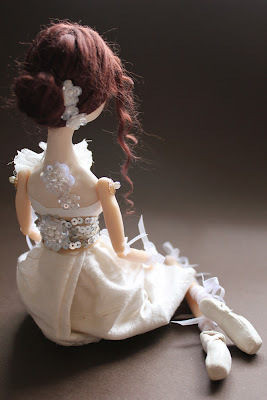
Tse’s story is set in the fictional Nevers – a name that recalls the internment camp where Walter Benjamin was held after the Nazi occupation of France. Like that camp Nevers is a sealed area, its closed borders separating the inhabitants from the outside world. Tse’s depiction of Nevers is a thinly-veiled, stand-in for Hong Kong and its features will be familiar to anyone who’s spent time there or knows its history, her descriptions of Nevers's city centre with its tall buildings and laser light shows are a perfect match for the view over Hong Kong Island at night. Tse’s Nevers was once colonised by the Western Valerians whose language dominated its elite and its educational centres but now it’s been handed back to the “motherland” Ksana which has replaced Valerian and the local Southern (Cantonese) language with its own. At the centre of Tse’s narrative are a low-level, floundering, middle-aged academic Professor Q, his outwardly-ordered wife Maria a high-ranking civil servant and Aliss a life-size, music-box ballerina. Their intertwining experiences form the bulk of Tse’s dream-like, enigmatic exploration of political upheaval, identity and self-delusion.
Professor Q and Maria seem settled, a decent apartment, sufficient finance, and for Q the changing Nevers remains a place suffused with “sunshine, dusty glass and the smell of bank notes.” However, Q has a secret, an erotic obsession with female dolls and automata that he indulges whenever he’s alone. But slowly Q’s world is upturned, there are ominous signs and menacing symbols all around him, a bizarre painting that arrives at his office from an anonymous sender, students disappearing from his lectures, and the weird, underground auction that brings him to Aliss. Meanwhile the rigidly-organised Maria is unnerved by her office rapidly becoming a disturbing site of unexplained disappearances and hints of an appalling fate for the future Nevers.
For the most part, I was quite caught up in this, partly because of my own links to Hong Kong, enjoying its moments of wry humour and absurdist passages. Using fantasy to address political concerns, particularly in contexts where these concerns can’t be directly addressed, is a well-worn tradition from Lao She’s Cat Country onwards, so it’s probably not surprising that this reminded me so strongly of aspects of Yan Ge’s Strange Beasts of China: another recent book indirectly critiquing China’s authoritarian policies. Tse is explicitly building on her own involvement in Hong Kong’s Umbrella Movement here. Woven into Tse’s novel are strands from a variety of forms from fairy tale and allegory to Japanese "doll literature", and Greek myth, echoes of Pygmalion and Galatea jostling with threads of Hoffman’s “The Sandman” albeit with an unexpected, grubbily-Nabokovian tinge. In many ways the result’s fascinating and inventive but I also found it a little slippery and sometimes quite heavy-handed, particularly in Tse’s more anarchic closing sections. And I’m not entirely convinced by Tse’s conclusion. But despite my reservations I still think it’s very much worth reading particularly for fans of writers like Yoko Tawada or Camilla Grudova. Translated here by Natascha Bruce.
Thanks to Netgalley and publisher Fitzcarraldo for an ARC
Rating: 3/3.5