Thoroughly revised, this new edition of Critical Theory of Technology rethinks the relationships between technology, rationality, and democracy, arguing that the degradation of labor--as well as of many environmental, educational, and political systems--is rooted in the social values that preside over technological development. It contains materials on political theory, but the emphasis has shifted to reflect a growing interest in the fields of technology and cultural studies.
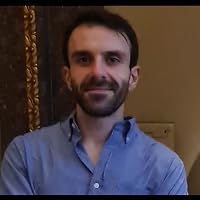
Andrew Feenberg is Canada Research Chair in Philosophy of Technology in the School of Communication, Simon Fraser University, where he directs the Applied Communication and Technology Lab. He has also taught for many years in the Philosophy Department at San Diego State University, and at Duke University, the State University of New York at Buffalo, the Universities of California, San Diego and Irvine, the Sorbonne, the University of Paris-Dauphine, the Ecole des Hautes Etudes en Sciences Sociales, and the University of Tokyo and the University of Brasilia.
He is the author of Lukacs, Marx and the Sources of Critical Theory (Rowman and Littlefield, 1981; Oxford University Press, 1986), Critical Theory of Technology (Oxford University Press, 1991), Alternative Modernity (University of California Press, 1995), and Questioning Technology (Routledge, 1999). A second edition of Critical Theory of Technology appeared with Oxford in 2002 under the title Transforming Technology. Heidegger and Marcuse: The Catastrophe and Redemption of History appeared in 2005 with Routledge. Between Reason and Experience: Essays in Technology and Modernity appeared with MIT Press in 2010. Translations of several of these books are available. Dr. Feenberg is also co-editor of Marcuse: Critical Theory and the Promise of Utopia (Bergin and Garvey Press, 1987), Technology and the Politics of Knowledge (Indiana University Press, 1995), Modernity and Technology (MIT Press, 2003), and Community in the Digital Age (Rowman and Littlefield, 2004). His co-authored book on the French May Events of 1968 appeared in 2001 with SUNY Press under the title When Poetry Ruled the Streets. With William Leiss, Feenberg has edited a collection entitled The Essential Marcuse published by Beacon Press. A book on Feenberg's philosophy of technology entitled Democratizing Technology, appeared in 2006.
In addition to his work on Critical Theory and philosophy of technology, Dr. Feenberg has published on the Japanese philosopher Nishida Kitaro. He is also recognized as an early innovator in the field of online education, a field he helped to create in 1982. He led the TextWeaver Project on improving software for online discussion forums under a grant from the Fund for the Improvement of Post-Secondary Education of the US Department of Education. For the latest web based version of this software, see http://webmarginalia.net/. Dr. Feenberg is currently studying online education on a grant from the Social Science and Humanities Research Council (SSHRC).
Feenberg's analysis and critique of theories of technology is strong and tremendously useful: ranging from Marx to Ellul to Marcuse and Foucault, he provides incisive analyses while developing a "critical theory" of technology as a social force.
Where Feenberg stumbles, rendering much of the back half of the book somewhat tedious, is in his insistence in the absence of evidence that a socialist transformation of global capitalism from within on the basis of radical uses of technology at the margins of the system is possible. Feenberg makes a theoretical case while noting again and again in passing that there is little or no evidence for the actuality, and in fact that user pressures tend towards less, not more, democratic control of technology.
There's an old joke about academics on a desert island trying to figure out how to open their only can of food. The punchline has the economist beginning with, "Assume a can opener...." Feenberg's otherwise excellent analytical case for a democratic-socialist technological regime begins, "Assume socialists...."
This was recommended by an educational technologist I respect very much, but I found it less than compelling.
In terms of education, he argues that technology can be seen as good for automation (the factory model) or as "an informating solution that incorporates human-to-human teaching" (the model of a creative, cosmopolitan city based on increasingly dense networks of human relationships) (120).
"Automated education is said to foster postindustrial virtues such as temporal and spatial flexibility, individualized products, and personal control. But in the final analysis, the main reason for automating is obvious: to cut costs." (120)
"A new economic model of education [de-skilling/replacing highly paid faculty with temps and automated content/tech] is being sold under the guise of a new technological model" (124).
In the informating model, the goal would be not to replace teachers with tech, but to replace the lecture and textbook. "Interaction with the professor will continue to be the centerpiece of education, no matter the medium." (127)
We shouldn't resist the automating trend, but be critical about how it is shaped. "the educational technology of an advanced society might be shaped by educational dialogue rather than the production-oriented logic of automation" (130). Argues that this could create fundamental social change.
Overall, I just found it boring and blustery. Maybe it simply hasn't aged well under the continuing intensity of the hegemony of late capitalism. And the fact that it predates the "weaponization of postmodernism" such that standpoint epistemologies becomes "bring your own reality" (hello, MAGA folks) and the latest stages of the intensification of late global financial capitalism may mean that it's simply no longer particularly relevant -- certainly no longer cutting edge.
Besides, any book that contains sentences like this without rewarding me with truly stunning insights at the end: no: "the holistic technology critique I propose depends on an analytic distinction between what I call the primary and secondary instrumentalizations" (175).
To be honest I didn't read the entire book so take my review with a few grains of salt. I read the parts where he explored the critical theory of Marcuse, Marx and Foucault with some interest. He has an interesting project in mind and seemingly develops it subsequently in later books and works. At the same time I have the feeling that his attempt to combine Critical Theory with STS is not going to pan out nor become as productive as he'd liked. In the end there are significant differences, even if he tries to bridge them or smooth them out. And even so, I have a hard time finding his argument persuasive enough. It ends up, in direct negation of his goal of the outset, to go away from the radical, negative critique of the Frankfurt School to some bullshit about democratic interventions for a socialist democracy. In the end, if you buy the critique of technology, it's far harder to find a way out than just claim that interest groups will make technology less oppressive. And my hopes of finding a more thouroughgoing investigation into the critique of technology turned out to be false, but that's on me not Feenberg in the end. I guess it's worth a read if you're interested but otherwise I think you'll get more out of reading Marcuse directly.
Feenberg's critical theory of technology develops a crucial framework for thinking about and transforming technology in ways that are undertheorized by both The Left and the field of technology studies.
Feenberg writes concisely on a broad topic. He visits substansive and technical views of technological progression while trying to find a middle ground. Tech doesnt have to destory nature and we dont have to abandon it. Sometimes its hard to read though.
Feenberg wants to build a critical theory of technology that can reconcile industrialism with a non-alienated way of life. I was never convinced by this premise which takes for granted that the path of more technology, more production, more consumption is the only conceivable path forward. Given this presumption, Feenberg meticulously explains how he thinks technology could be transformed toward genuinely socialist ends.