

What do you think?

Simone De Beauvoir: A Biography
Chronicles the life of the French writer, examining her roles as author, philosopher, feminist, and companion to Jean Paul Sartre
719 pages, Hardcover
First published January 1, 1990
About the author
Deirdre Bair
18 books157 followersDeirdre Bair received the National Book Award for Samuel Beckett: A Biography. Her biographies of Simone de Beauvoir and Carl Jung were finalists for the Los Angeles Times Book Prize, and the Simone de Beauvoir biography was chosen by The New York Times as a Best Book of the Year. Her biographies of Anaïs Nin and Saul Steinberg were both New York Times Notable Books.
Ratings & Reviews
Friends & Following
Create a free account to discover what your friends think of this book!
Community Reviews
Displaying 1 - 30 of 35 reviews

November 15, 2013
An expansive read, but well worth the time. To touch on the author, Bair’s, actual construction--it read in journalistic style but was sectioned into chapters that left you with whole ideas and themes within Beauvoir’s life. I appreciated that, as some biographies I've read often resigned to bait-and-switch, and though that approach may propel you throughout fiction, in biography you lose some of the sense of growth, change and large periods of time building upon each other to create a complete portrait of the subject.
As for Beauvoir herself, this book is very keen to emphasize that Beauvoir was very much philosophically dependent on Sartre for most of her life. However, I interpreted Beauvoir’s firm role as reminding Sartre of the ideas of Being and Nothingness as her own philosophy--the fact that she did not constantly move with his own philosophical fluctuation shows that she has convictions of her own, and that in many ways the ideas of Being and Nothingness were created at the pinnacle of his respect for her, when they were constantly in dialogue, and therefore she exists as a thinker within that existential system to a very great extent.
The book, or their life together really, raises another good point for dialogue also, in that she was fine doing Sartre’s social dirty work as well as giving him all the credit for the existential basis of The Second Sex. Though the author seems convinced that Simone was a man “eluded the usual duties of her sex”, in that she did not “suffer fools and [was] never to be bound by the traditional constraints of marriage, family or housework”, Simone did suffer Sartre’s foolery often, compromised her relationship with Algren to remain available constantly to Sartre (constraints, if not traditional), replicated child relationships in Slyvie (and Sartre in Arlette) and truly was constantly doing his housework--running Les Temps Modernes in its entirety because he simply grew bored.
Though I was surprised to see this, I feel it is in direct contrast to the author’s assumption that she never *succumbed* to womanhood, as she constantly makes it seem. Simone adopted if not as recognizable the predictable female role.
So, unfortunately, my initial question of whether a woman can be in tune with this tendency and also create an identity for herself unafraid to be in conflict with and exist without those for which they care goes unanswered in Simone’s life. She only put herself into her singular work outside of Sartre, feminism, when he was dead. “However in reality it should be considered separately from the decade of the 1970s when it was first of all a way of evading Sartre’s drawn out process of dying, and only after that a source of personal and professional pleasure.”
However, to read about a woman of such intellectual power, self-possession, and commitment to freedom was refreshing. She continues to be a model for both women and myself personally, in that she never faltered in confidence regarding her skills and never completely let anything subsume her until there was simply no Simone de Beauvoir left. That is a feat, and maybe over time I can begin to see she had a clearer sight into realism than I--her life attests to the constant and very real balance of both existential wholeness as well as the sacrificial nature of love.
All in all, a well documented account of her life. I'll probably write an essay on in it and leave it somewhere on the dregs of the internet because there are so many interesting both political and philosophical questions raised by such a fascinating person's life.
(Also, spoiler, piles of dry journalistic pages and turning Sartre into a cold-hearted, somewhat hedonistic egoist did not prepare me for "'The real world,' he tells her in once instance, 'That was what I lived in with you," as if to say that all other people and things mattered less to him.' Wah, it still hurts)
As for Beauvoir herself, this book is very keen to emphasize that Beauvoir was very much philosophically dependent on Sartre for most of her life. However, I interpreted Beauvoir’s firm role as reminding Sartre of the ideas of Being and Nothingness as her own philosophy--the fact that she did not constantly move with his own philosophical fluctuation shows that she has convictions of her own, and that in many ways the ideas of Being and Nothingness were created at the pinnacle of his respect for her, when they were constantly in dialogue, and therefore she exists as a thinker within that existential system to a very great extent.
The book, or their life together really, raises another good point for dialogue also, in that she was fine doing Sartre’s social dirty work as well as giving him all the credit for the existential basis of The Second Sex. Though the author seems convinced that Simone was a man “eluded the usual duties of her sex”, in that she did not “suffer fools and [was] never to be bound by the traditional constraints of marriage, family or housework”, Simone did suffer Sartre’s foolery often, compromised her relationship with Algren to remain available constantly to Sartre (constraints, if not traditional), replicated child relationships in Slyvie (and Sartre in Arlette) and truly was constantly doing his housework--running Les Temps Modernes in its entirety because he simply grew bored.
Though I was surprised to see this, I feel it is in direct contrast to the author’s assumption that she never *succumbed* to womanhood, as she constantly makes it seem. Simone adopted if not as recognizable the predictable female role.
So, unfortunately, my initial question of whether a woman can be in tune with this tendency and also create an identity for herself unafraid to be in conflict with and exist without those for which they care goes unanswered in Simone’s life. She only put herself into her singular work outside of Sartre, feminism, when he was dead. “However in reality it should be considered separately from the decade of the 1970s when it was first of all a way of evading Sartre’s drawn out process of dying, and only after that a source of personal and professional pleasure.”
However, to read about a woman of such intellectual power, self-possession, and commitment to freedom was refreshing. She continues to be a model for both women and myself personally, in that she never faltered in confidence regarding her skills and never completely let anything subsume her until there was simply no Simone de Beauvoir left. That is a feat, and maybe over time I can begin to see she had a clearer sight into realism than I--her life attests to the constant and very real balance of both existential wholeness as well as the sacrificial nature of love.
All in all, a well documented account of her life. I'll probably write an essay on in it and leave it somewhere on the dregs of the internet because there are so many interesting both political and philosophical questions raised by such a fascinating person's life.
(Also, spoiler, piles of dry journalistic pages and turning Sartre into a cold-hearted, somewhat hedonistic egoist did not prepare me for "'The real world,' he tells her in once instance, 'That was what I lived in with you," as if to say that all other people and things mattered less to him.' Wah, it still hurts)

September 7, 2020
Earlier in the year I read Deirdre Bair's memoir of writing the biographies of Samuel Beckett and de Beauvoir. I enjoyed her accounts of the pleasures and difficulties of biography and her generous portraits of the 2 subjects, and I decided to read her book on de Beauvoir (I'd read the Beckett biography years earlier).
It was important to me to read it along with the latest biography of Nelson Algren. For me Algren and de Beauvoir go together. I'd already read other biographies of both plus the de Beauvoir-Algren letters and knew about their affair begun during her tour of America in 1947. The more I learned about that affair the more interesting it became. And I was intrigued by Bair's judgment in the memoir that Algren had been the love of de Beauvoir's life.
Famously she had Jean-Paul Sartre, too. Early on they were lovers. Marriage was out because her family couldn't provide a dowry, but she and Sartre preferred the unconventional relationship which over the years morphed into the literary/philosophical partnership they're known for. By the end of WWII Sartre had become the leading French existentialist. While de Beauvoir walked in philosophic lockstep with him, she was more open to other European thought and was even an influence on Sartre's thinking. When she turned to feminist issues in 1949, that wider European vision combined with her existentialism to produce The Second Sex, the seminal work of feminism she's best known for.
She was a novelist, too, and a good one. Her The Mandarins (1954) is highly revelatory about the group of philosophers and writers around Sartre, called the Family, and is still well-regarded today. That book and her decision to not leave the Family and Sartre is what damaged her romance with Algren. His perception of her portrayal of their relationship had a lot to do with the end of it. He'd been important to her because he showed her how passion and reason could combine in a man. He therefore gave her the traditional male-female romance she'd not known she wanted. Algren made her question everything about herself except her professional bond with Sartre. Algren even helped give The Second Sex an American flavor. Pulled between the 2 men and the lives they represented, Sartre the social politics and philosophy, Algren fiction writing and the personal, in the end she chose Sartre, though she was also choosing Paris over Chicago.
This is a wonderfully rich biography and loving portrait of a woman whose rightful place we'd once thought was discipleship to Sartre but who, since their deaths, is regarded by many as the half of the duo whose ideas are of the most importance. Her feminism and social politics have overtaken Sartre's existentialism. Bair tells it all well. She's an engaging storyteller, as we learned from her memoir, and de Beauvoir gave her many stories to tell.
It was important to me to read it along with the latest biography of Nelson Algren. For me Algren and de Beauvoir go together. I'd already read other biographies of both plus the de Beauvoir-Algren letters and knew about their affair begun during her tour of America in 1947. The more I learned about that affair the more interesting it became. And I was intrigued by Bair's judgment in the memoir that Algren had been the love of de Beauvoir's life.
Famously she had Jean-Paul Sartre, too. Early on they were lovers. Marriage was out because her family couldn't provide a dowry, but she and Sartre preferred the unconventional relationship which over the years morphed into the literary/philosophical partnership they're known for. By the end of WWII Sartre had become the leading French existentialist. While de Beauvoir walked in philosophic lockstep with him, she was more open to other European thought and was even an influence on Sartre's thinking. When she turned to feminist issues in 1949, that wider European vision combined with her existentialism to produce The Second Sex, the seminal work of feminism she's best known for.
She was a novelist, too, and a good one. Her The Mandarins (1954) is highly revelatory about the group of philosophers and writers around Sartre, called the Family, and is still well-regarded today. That book and her decision to not leave the Family and Sartre is what damaged her romance with Algren. His perception of her portrayal of their relationship had a lot to do with the end of it. He'd been important to her because he showed her how passion and reason could combine in a man. He therefore gave her the traditional male-female romance she'd not known she wanted. Algren made her question everything about herself except her professional bond with Sartre. Algren even helped give The Second Sex an American flavor. Pulled between the 2 men and the lives they represented, Sartre the social politics and philosophy, Algren fiction writing and the personal, in the end she chose Sartre, though she was also choosing Paris over Chicago.
This is a wonderfully rich biography and loving portrait of a woman whose rightful place we'd once thought was discipleship to Sartre but who, since their deaths, is regarded by many as the half of the duo whose ideas are of the most importance. Her feminism and social politics have overtaken Sartre's existentialism. Bair tells it all well. She's an engaging storyteller, as we learned from her memoir, and de Beauvoir gave her many stories to tell.

April 29, 2021
WOW! so many revelations, surprises, disappointments, and unanswered questions. Deirdre Bair has done a magnificent job here. obviously, objectivity is always a complex issue - especially when it comes to biographical writing - and i may be wrong, but it seems to me that Bair has managed to provide a very full and detailed picture of de Beauvoir's multifaceted life while also being as objective as possible.

October 27, 2012
This biography was written with the full cooperation of the subject, which I suspect perhaps unconsciously softens some of the hard edges. For instance, Ms. Beauvoir was not comfortable, for a variety of reasons, with discussing her passion for women in sexual terms but had a variety of women in love with her and sleeping with Jean Paul Sartre because of their connection to her, originally. She pimped out her young philosophy students and then justified her actions with existentialism (my interpretation, not the author's). Quite a trick. This book was quite complicated for me because of the feelings that emerged when reading about her one-down relationship with Sartre which I then juxtaposed against her title of being the mother of feminism. Books should make you think and reexamine what you hold true...this one did. Now, I need to read more of her original works.
September 12, 2025
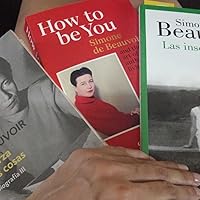
Beautifully written by the oficial biographer of Simone de Beauvoir. Very detailed and precise according with Beauvoir 's thoughts, memories, writings or what she exposed by that time, or based on Bair' s searchings and interviews with contemporary acquantainces, collegues and friends. A controversial life contained in a very well-made profuse book.

December 6, 2017
I thought the biography was well written and kept me very interested, mainly because Beauvoir was a fascinating woman. I was especially intrigued by her contradictions and her being so apolitical until the 1960's. How can one write a book "The Second Sex" published in 1949 and not be political?
The section during WWII was interesting in that Beauvoir did nothing to resist the German occupation of Paris and her country. She essentially hunkered down, continued to write and publish, and simply survive. I would think that as an intellectual, a strong person with strong convictions, and her love of Paris would have made her join the resistance, but she did not.
Her devotion to Sartre was confusing to me. I don't understand how she could totally sublimate her life, her needs, her intellectual expression and development to Sartre. She was a woman of brilliant intelligence, yet she constantly deferred to him in almost all facets of her life. This ultimately led to the ending of her relationship with Nelson Algren.
The book also shed an unflattering light on Sartre. What a womanizer! And it was creepy how many of the younger women who hung around Beauvoir and students of Beauvoir ended up as Sartre's lovers.
It also bothered me how Beauvoir kept saying she had never been discriminated against because she was a woman. Patently not true! She gave many examples of how when she was with Sartre she and her opinions were totally ignored because she was a woman. She even pointed out instances where Camus and even Sartre said women couldn't effect change politically, they didn't count because they were women.
I am also puzzled why Beauvoir didn't like Betty Friedan's "Second Stage." I remember when the book came out. It created quite a sensation in the US and helped start the Women's Liberation Movement in the US. Me and my friends bought a copy and we became feminists.
I've tried twice to read "The Second Sex." I didn't get very far in it. I am now willing to give it another try.
I highly recommend this biography. It's well written and gives a good account of a fascinating woman's life.
The section during WWII was interesting in that Beauvoir did nothing to resist the German occupation of Paris and her country. She essentially hunkered down, continued to write and publish, and simply survive. I would think that as an intellectual, a strong person with strong convictions, and her love of Paris would have made her join the resistance, but she did not.
Her devotion to Sartre was confusing to me. I don't understand how she could totally sublimate her life, her needs, her intellectual expression and development to Sartre. She was a woman of brilliant intelligence, yet she constantly deferred to him in almost all facets of her life. This ultimately led to the ending of her relationship with Nelson Algren.
The book also shed an unflattering light on Sartre. What a womanizer! And it was creepy how many of the younger women who hung around Beauvoir and students of Beauvoir ended up as Sartre's lovers.
It also bothered me how Beauvoir kept saying she had never been discriminated against because she was a woman. Patently not true! She gave many examples of how when she was with Sartre she and her opinions were totally ignored because she was a woman. She even pointed out instances where Camus and even Sartre said women couldn't effect change politically, they didn't count because they were women.
I am also puzzled why Beauvoir didn't like Betty Friedan's "Second Stage." I remember when the book came out. It created quite a sensation in the US and helped start the Women's Liberation Movement in the US. Me and my friends bought a copy and we became feminists.
I've tried twice to read "The Second Sex." I didn't get very far in it. I am now willing to give it another try.
I highly recommend this biography. It's well written and gives a good account of a fascinating woman's life.

June 10, 2014
It is no easy task, to write such an accomplished biography on a philosopher and novelist, who in their own lifetime wrote so extensively of themselves, and with such candid and unflinching self-appraisal. Deirdre Bair's portrait of Simone de Beauvoir is highly informative and provides a great deal of insight in to the wider socio-political context from which she was both enthroned and vilified at several turning points in her distinguished career. I enjoyed the revealing way Bair weaves the perspectives of Beauvoir's 'Family' in to the narrative, systematically prying apart the distinctions between what was of-Beauvoir and what was inextricably linked to Jean-Paul Sartre. I found the critical analysis of Beauvoir's ideology and behavior somewhat lacking at points, perhaps a compromise for the unprecedented access she had to Beauvoir (who authorized the book) before her death. Still, a well-pitched and must-read for existential scholars and fans of both Beauvoir's writing and celebrity.

August 18, 2024
« Those who have the most to lose from taking a stand, that is, women like me who have carved out a successful sinecure or career, have to be willing to risk insecurity -be it mere ridicule- in order to gain self-respect. And they have to understand that those of their sisters who are most exploited will be the last to join them. »

March 27, 2026
Truly brilliant! I found this book in a second hand feminist bookshop in Adelaide and once I started reading it, found it hard to put down. It’s been decades since I read any of de Beauvoir or Sartre’s books so I really enjoyed revisiting their lives in this biography, which also puts their writing, politics, philosophy and events in context.

January 14, 2022
Ask me anything about Simone de Beauvoir, anything, and I will know the answer. That's how detailed and thorough this biography is. Bair did an impressive amount of research for the book. If I become famous, I want her to write my biography lol. She was really aiming for the definitive biography accolades. A seriously dense, information laden book.
I guess my biggest issue with the biography is that I don't much care for the subject matter. This is a book club choice, otherwise I never would have picked this up. I am glad that I read it, because I learned so much about France and that era. I had no idea that French women didn't get the vote until after WWII. WHAT!? I also learned about France's relationship with Algeria. I learned about all the student rebellions there in the 1960s. There were definitely pluses to reading this massive biography. It was very educational.
I went into the book knowing very very little about Simone. I could name several of her books but hadn't read any. I knew she was considered a seminal feminist and that she worked for women's rights. I knew she'd been in a relationship with Sartre. That's it.
After finishing this biography, I understand that the bulk of her political work focusing on feminism occurred in the last 15 years of her life. Before that, it was all Sartre Sartre Sartre. I wanted to scream at times, she was such a doormat with him. Not to put all the blame on her, Sartre was horrible towards many women. However, I kept thinking of the old adage, if you don't lie down, then they can't walk all over you. She let him walk all over her. It was maddening. I guess Sartre was amazingly charismatic ? He looked like a toad. Yes, he was brilliant but so was she. She met quite a few brilliant people over the years so what was the hold he had over her? I don't get it. I did not have an opinion about Sartre the man prior to reading this. Now I do and it's a very negative opinion.
I don't want to hijack a review about Simone's biography by discussing Sartre, because I feel like he hijacked her life by always putting himself first. She put him first! She would take so much time and effort reading his manuscripts, editing, giving advice etc. I am talking every day she spent hours helping him with his work. He did not reciprocate. Sometimes she even wrote articles for him and signed his name!!! You know, because he is so busy being a genius he can't be bothered to always do the actual work.
Bair kept making excuses for Simone's behaviors, saying it was the era she was raised in that made her so uptight and subservient to Sartre. However, the book would then mention how horrified Simone was when women her age would be open about sex or would view themselves in a positive light sexually. I don't think the issue was the era Simone grew up in. I think it was a combination of her inherent personality and her specific family situation. Also, what was up with Simone and aging? Starting around age 35, she thought of herself as old. Always harping on how she was so old. Again, not an issue for women in general her age. I think she felt that way because of Sartre's overt preference for teenage girls and women in their early twenties. Sure, if you compare yourself to a 16 year old when you are 40 you will think you are old.
On a personal level, I disliked Simone. She was a terrible friend, who never showed any interest in their lives. Bair mentioned this several times and so did 'friends' that were interviewed. She had zero sense of humor and was extremely judgmental. She hated cats and dogs. She was a serious alcoholic but would never admit it. Look, if you drink a fifth of Scotch every single night, plus vodka, you are a drunk. She thought being a slob was indicative of her not bowing down to the expectations society had towards women. No, you are just a slob. She disliked children. She negatively judged women who chose a different path from her. Her feminism was not the sort that believes every avenue of life should be open to everyone - you want kids? Great! You don't want kids? Also great! You want to have a high powered career? Great! You want to focus on raising kids and not having a paid job outside the house? Great!.....She was not that person. To her, the aim of being a liberated woman was to be like a stereotypical man. And if a man was not stereotypically masculine she called him a fairy. Towards the end of her life, in the 1970s and 1980s, she seemed to loosen up a bit in terms of her Judgy McJudgerson attitudes but for me it was too little too late.
I am glad that I finished this biography because I enjoy learning new things, but I am relieved to no longer be spending my time reading about a total jerk. I'm currently reading the memoir of Harpo Marx, who was 15 years older than Simone, and his memoir is a breath of fresh air. What a relief to be reading about someone who loved their family & friends, who had lots of adventures, who had a positive attitude, who had serious struggles growing up in turn of the century NYC as a poor immigrant child in the slums but did not let that childhood negatively impact his view on life....quite a change from dour unhappy Simone.
I guess my biggest issue with the biography is that I don't much care for the subject matter. This is a book club choice, otherwise I never would have picked this up. I am glad that I read it, because I learned so much about France and that era. I had no idea that French women didn't get the vote until after WWII. WHAT!? I also learned about France's relationship with Algeria. I learned about all the student rebellions there in the 1960s. There were definitely pluses to reading this massive biography. It was very educational.
I went into the book knowing very very little about Simone. I could name several of her books but hadn't read any. I knew she was considered a seminal feminist and that she worked for women's rights. I knew she'd been in a relationship with Sartre. That's it.
After finishing this biography, I understand that the bulk of her political work focusing on feminism occurred in the last 15 years of her life. Before that, it was all Sartre Sartre Sartre. I wanted to scream at times, she was such a doormat with him. Not to put all the blame on her, Sartre was horrible towards many women. However, I kept thinking of the old adage, if you don't lie down, then they can't walk all over you. She let him walk all over her. It was maddening. I guess Sartre was amazingly charismatic ? He looked like a toad. Yes, he was brilliant but so was she. She met quite a few brilliant people over the years so what was the hold he had over her? I don't get it. I did not have an opinion about Sartre the man prior to reading this. Now I do and it's a very negative opinion.
I don't want to hijack a review about Simone's biography by discussing Sartre, because I feel like he hijacked her life by always putting himself first. She put him first! She would take so much time and effort reading his manuscripts, editing, giving advice etc. I am talking every day she spent hours helping him with his work. He did not reciprocate. Sometimes she even wrote articles for him and signed his name!!! You know, because he is so busy being a genius he can't be bothered to always do the actual work.
Bair kept making excuses for Simone's behaviors, saying it was the era she was raised in that made her so uptight and subservient to Sartre. However, the book would then mention how horrified Simone was when women her age would be open about sex or would view themselves in a positive light sexually. I don't think the issue was the era Simone grew up in. I think it was a combination of her inherent personality and her specific family situation. Also, what was up with Simone and aging? Starting around age 35, she thought of herself as old. Always harping on how she was so old. Again, not an issue for women in general her age. I think she felt that way because of Sartre's overt preference for teenage girls and women in their early twenties. Sure, if you compare yourself to a 16 year old when you are 40 you will think you are old.
On a personal level, I disliked Simone. She was a terrible friend, who never showed any interest in their lives. Bair mentioned this several times and so did 'friends' that were interviewed. She had zero sense of humor and was extremely judgmental. She hated cats and dogs. She was a serious alcoholic but would never admit it. Look, if you drink a fifth of Scotch every single night, plus vodka, you are a drunk. She thought being a slob was indicative of her not bowing down to the expectations society had towards women. No, you are just a slob. She disliked children. She negatively judged women who chose a different path from her. Her feminism was not the sort that believes every avenue of life should be open to everyone - you want kids? Great! You don't want kids? Also great! You want to have a high powered career? Great! You want to focus on raising kids and not having a paid job outside the house? Great!.....She was not that person. To her, the aim of being a liberated woman was to be like a stereotypical man. And if a man was not stereotypically masculine she called him a fairy. Towards the end of her life, in the 1970s and 1980s, she seemed to loosen up a bit in terms of her Judgy McJudgerson attitudes but for me it was too little too late.
I am glad that I finished this biography because I enjoy learning new things, but I am relieved to no longer be spending my time reading about a total jerk. I'm currently reading the memoir of Harpo Marx, who was 15 years older than Simone, and his memoir is a breath of fresh air. What a relief to be reading about someone who loved their family & friends, who had lots of adventures, who had a positive attitude, who had serious struggles growing up in turn of the century NYC as a poor immigrant child in the slums but did not let that childhood negatively impact his view on life....quite a change from dour unhappy Simone.

March 31, 2026
She was difficult, combative, opinionated, and often contradictory with her statements and opinions, but she was also probably responsible for all waves of feminism that followed in her wake.

May 3, 2007
i've read this book a few times but it's really big. it's a really great look into a life that's so cast in the shadows of jean paul sartre. the book gets real about her relationship with sartre (like how sartre never gave her an orgasm). it starts from the beginning.... and by beginning i mean her grandparents and ends with her death.

June 5, 2008
An absolutely amazing, sad and at times tiring read. I have a number of French friends and simply wanted to know more about this particular individual. Well written, it kept my interest even when there weren't interesting things going on.

January 25, 2012
What a whirlwind! Not my usual genre but fascinating look at an unusual woman--brilliant, radical, unfettered and yet bound, open and yet closed emotionally and intellectually. Great portrayal of a complex personality.

May 3, 2012
I loved this, and I will miss it. Being an existentialist is all fun and games until your liver gets bad. Ah, well.

April 18, 2013
it was a big chewy book, that often repeated itself. I ploughed through it though, and maybe while not deeply entertaining it had great value.

January 24, 2016
Tough but ultimately gratifying biography.

June 26, 2021
It's a frustrating life to read, not so much because of Bair's telling, but because of the life itself. SdB, most famous for a work that can plausibly lay claim to mothering modern feminism into being, was herself a woman fraught with contradictions that seemed to work against the fabric of her most famous philosophical narrative. There's no gainsaying the importance of The Second Sex. Yet its author seemed to exemplify, for much of her life, the self-defeating cliches of women born to imbibe and believe the cultural narratives about male priority. Or, to put it in terms SdB herself uses in the text: everywhere she preaches the crucial need for women to live lives of transcendence and yet she herself, by placing herself in service to the needs of Jean-Paul Sartre, lived a life that looks a whole lot like one of desiccated immanence. Naturally, she would disagree with such a narrative, insisting that the famous pact between her and JPS was one of honest self-assessment about the prospects and values of their respective contributions to literature and thought. Whatever. I'd take a couple more of SdB's works of sturdy autobiography and sharp-eyed cultural critique like The Second Sex over the opacity (and bleak unpleasantry) of nearly all of Sartre's writing (Being and Nothingness excepted, only for its philosophical significance). Perhaps the sharpest irony of the life as Bair tells it is that SdB actually got everything she wanted in her connection with Nelson Algren, but couldn't give up her stultifying pact with JPS to take advantage of a vibrant life (at least for a time) with the possibility of rapturous transcendence the American offered. It's no surprise a machiste like Algren couldn't stomach the pact that kept SdB from him and thus the sad fate of both lovers was more or less sealed. Other interesting surprises from reading the biography: JPS and SdB were not really effective in any political way and spent most of WWII pleasing themselves and just narrowly escaping charges of collaboration. The life lends drama to the emotional landscape SdB painstakingly fashioned and refashioned for herself; it also renders the ethical shabbiness of its central couple. Neither SdB or JPS come off more likable for this work. Indeed, I finished it with a stronger dislike for the person of JPS than ever. For a basically authorized biography, it sometimes feels a little shy of pressing some issues. Bair chronicles clear places where SdB drew a line under some inquiry or interest where it feels like Bair could have pushed harder or just speculated a little more vigorously on the basis of her ample sources. (The relationship with Sylvie for instance...) Nevertheless, if this very long and detailed work ends up leaving one with a sense of SdB in some ways diminished as a person, it nevertheless strongly reinforces the importance of her thinking and writing.

September 25, 2024
This is an excellent biography of a remarkable person. One might have questioned the need for a biography for one who was, in Bair’s words, so “publicly introspective,” given her four-volume memoir and her transparently autobiographical novels. Yet Bair demonstrates time and again how valuable it was to have personal access to Beauvoir in the last years of her life, as well as to her relatives and many of the “Sartristes.” I found this particularly so whenever she questioned Beauvoir about the frequently-uttered criticism that, apart from her refusal to bear children or do housework, her subservience to the needs of the man she’d bound herself to was that of a traditional “helpmate,” despite her scorn of the institution of marriage. It also speaks for Beauvoir that she permitted this examination, even if she sometimes refused to say more than evasive answers such as “one must have been there at the time.” In the end, I felt that while she did organize her life around the needs of Sartre, she was his intellectual equal, a valuable sparring partner in his work.
In addition to being an intellectual giant, Sartre was what one person in the book called a Peter Pan—a boy who didn’t want to grow up; less charitably, he could be called an egotistical monster (a reminder that great philosophy isn’t always produced by admirable people). Catering to him must not have been easy.
While Bair enables readers to form their own opinion of these two central figures, when it came to her depiction of the role of two persons whose closeness to Sartre toward the end of his life destabilized his relationship with Beauvoir and marginalized her, I found myself disliking them as much as Beauvoir did.
To recount Beauvoir’s life, given the volume of her and Satre’s written output, their frequent travels, and the comings and goings of associates, disciples, and lovers (including the great romantic love of her life, Nelson Algren) presented an organizational challenge. I think Bair mastered it for the most part, but not completely. At times, I didn’t feel that, as a reader, I needed to be told something for the second or third time.
These are quibbles. In the introduction, Bair reflects on why writing biography was one of her “preferred forms of critical inquiry . . . : How did X’s life and work illuminate our cultural and intellectual history; how did X influence the way we think about ourselves and interpret our society; and finally, what can we learn from X’s life and work that will be of use to us once we have read his/her biography?“ Measured by this self-imposed standard, I’d say Bair succeeded.
In addition to being an intellectual giant, Sartre was what one person in the book called a Peter Pan—a boy who didn’t want to grow up; less charitably, he could be called an egotistical monster (a reminder that great philosophy isn’t always produced by admirable people). Catering to him must not have been easy.
While Bair enables readers to form their own opinion of these two central figures, when it came to her depiction of the role of two persons whose closeness to Sartre toward the end of his life destabilized his relationship with Beauvoir and marginalized her, I found myself disliking them as much as Beauvoir did.
To recount Beauvoir’s life, given the volume of her and Satre’s written output, their frequent travels, and the comings and goings of associates, disciples, and lovers (including the great romantic love of her life, Nelson Algren) presented an organizational challenge. I think Bair mastered it for the most part, but not completely. At times, I didn’t feel that, as a reader, I needed to be told something for the second or third time.
These are quibbles. In the introduction, Bair reflects on why writing biography was one of her “preferred forms of critical inquiry . . . : How did X’s life and work illuminate our cultural and intellectual history; how did X influence the way we think about ourselves and interpret our society; and finally, what can we learn from X’s life and work that will be of use to us once we have read his/her biography?“ Measured by this self-imposed standard, I’d say Bair succeeded.
February 16, 2021
A well written, and honest account from someone who got to know de Beauvoir via one:one interviews, across several years, and so had the subject's blessing, as well as access to many important primary sources. A little long, but a thorough piece of scholarship that paints a vivid picture of the real de Beauvoir, warts and all. Deirdre Bair has produced a solid and useful account of a complex person, who lived a full, interesting and influential life (mostly, but not always, according to her own persuasions), without canonising her.

August 14, 2023
This is a monumental piece and it is clear why this is the ultimate biography of SdB. Many questions arose about relationships and identity. Perhaps it could have been more critical in a couple of places. There were also areas I wanted more - quotes from her friends or analysis from Bair.
Nonetheless, I very rarely enjoy biographies but this one captivated me almost entirely.
Nonetheless, I very rarely enjoy biographies but this one captivated me almost entirely.
January 11, 2026
A fantastic biography that I greatly enjoyed spending a month with. I highly recommend it. And now I have a big reading list to get through having finished it- I at least want to give some of Beauvoir's work a go now, as well as some other books that were mentioned!

January 5, 2018
This book is fascinating and reveals why Simone de Beauvoir spent her life with Sartre, despite his many betrayals. Based on five years of interviews with de Beauvoir.
October 24, 2019
life changing
November 27, 2019
One of the best biographies I ever read. It is very thoroughly researched and well written story of an exceptional life.

July 8, 2007
This was really more of a 2.5 than a 3, but I'm feeling a bit generous.
I'd been interested in reading this because I've read a number of her works, all while I was much younger, in college (and she was alive). Learning more about the woman who'd informed some of my philosophy and women's studies classes was interesting - the problem is, Simone de Beauvoir just seems like a not nice person. Her life, at least the way it's presented here, was a series of squabbles and justifications for her thoughts and work. In a way, this is bold because there's no sense of hagiography but 600+ pages of an unlikable person...
The writing also was slightly problematic. Most of the time this is straight chronology, but then there's a weird jag in the timeline that lends itself to repetition.l Events were occasionally covered more than once, with a different emphasis (for example, the end of her affair with Algren or relationship with Sylvie le Bon). I was also surprised to see several obvious typos (for example, "writng" and "att hat").
I'd been interested in reading this because I've read a number of her works, all while I was much younger, in college (and she was alive). Learning more about the woman who'd informed some of my philosophy and women's studies classes was interesting - the problem is, Simone de Beauvoir just seems like a not nice person. Her life, at least the way it's presented here, was a series of squabbles and justifications for her thoughts and work. In a way, this is bold because there's no sense of hagiography but 600+ pages of an unlikable person...
The writing also was slightly problematic. Most of the time this is straight chronology, but then there's a weird jag in the timeline that lends itself to repetition.l Events were occasionally covered more than once, with a different emphasis (for example, the end of her affair with Algren or relationship with Sylvie le Bon). I was also surprised to see several obvious typos (for example, "writng" and "att hat").

March 5, 2008
Whew! It took months but finally finishing Deirdre Bair's biography of the inimitable Simone de Beauvoir gave me a great feeling of satisfaction. I enjoy biography as a very focused and constructed means to gaining knowledge of a wide scope of culture and history; now I'm a great deal more familiar with early 20th-century France as well as the life of Jean Paul Sartre and even Nelson Algren. Biggest revelation: Simone de Beauvoir had no fashion sense. Her iconic turban came about because she didn't wash her hair regularly and wanted to conceal its unkempt state. This only substantiates my favorite expression of hers: "Few tasks are more like the torture of Sisyphus than housework, with its endless repetition: the clean becomes soiled, the soiled is made clean, over and over, day after day."

January 4, 2008
I don't remember the month that I read this. It was cold and I must have been bored. This book is huge and exhausting. But it REALLY helps you understand Simone de Beauvoir and modernity better. Do we really need to? I dunno.

December 17, 2011
Have been reading this over the past few months between other things. Probably the best biography I have ever read about an awesome woman leader, a mass of contradictions but in spite of that is considered "the mother of us all". What a life.

February 28, 2007
She's an amazing woman. Inspiring, intellectually and emotionally. I'm determined to read everything she's ever written now.
Displaying 1 - 30 of 35 reviews