

What do you think?

Lindsay Gordon #2
Common Murder
The second novel in the Lindsay Gordon series – a gripping psychological thriller – from No.1 bestseller Val McDermid. When her former lover is accused of murder in a women’s peace camp, Lindsay must bring all of her expertise as an investigative reporter into play.
A protest group hits the headlines when unrest at a women’s peace camp explodes into murder. Already on the scene, journalist Lindsay Gordon desperately tries to strike a balance between personal and professional responsibilities. As she peels back the layers of deception surrounding the protest and its opponents, she finds that no one – ratepayer or reporter, policeman or peace woman – seems wholly above suspicion. Then Lindsay uncovers a truth that even she can scarcely believe.
Common Murder is the gripping second novel in Val McDermid’s Lindsay Gordon series.
A protest group hits the headlines when unrest at a women’s peace camp explodes into murder. Already on the scene, journalist Lindsay Gordon desperately tries to strike a balance between personal and professional responsibilities. As she peels back the layers of deception surrounding the protest and its opponents, she finds that no one – ratepayer or reporter, policeman or peace woman – seems wholly above suspicion. Then Lindsay uncovers a truth that even she can scarcely believe.
Common Murder is the gripping second novel in Val McDermid’s Lindsay Gordon series.
337 pages, Kindle Edition
First published January 1, 1989
About the author
Val McDermid
334 books5,585 followersVal McDermid is a No. 1 bestseller whose novels have been translated into more than thirty languages, and have sold over eleven million copies.
She has won many awards internationally, including the CWA Gold Dagger for best crime novel of the year and the LA Times Book of the Year Award. She was inducted into the ITV3 Crime Thriller Awards Hall of Fame in 2009 and was the recipient of the CWA Cartier Diamond Dagger for 2010. In 2011 she received the Lambda Literary Foundation Pioneer Award.
She writes full time and divides her time between Cheshire and Edinburgh.
She has won many awards internationally, including the CWA Gold Dagger for best crime novel of the year and the LA Times Book of the Year Award. She was inducted into the ITV3 Crime Thriller Awards Hall of Fame in 2009 and was the recipient of the CWA Cartier Diamond Dagger for 2010. In 2011 she received the Lambda Literary Foundation Pioneer Award.
She writes full time and divides her time between Cheshire and Edinburgh.
Ratings & Reviews
Friends & Following
Create a free account to discover what your friends think of this book!
Community Reviews
Displaying 1 - 30 of 88 reviews

March 20, 2023

“You heard, kid. We’ve had more aggravation over you this weekend than over every other dodgy story we’ve ever done.”
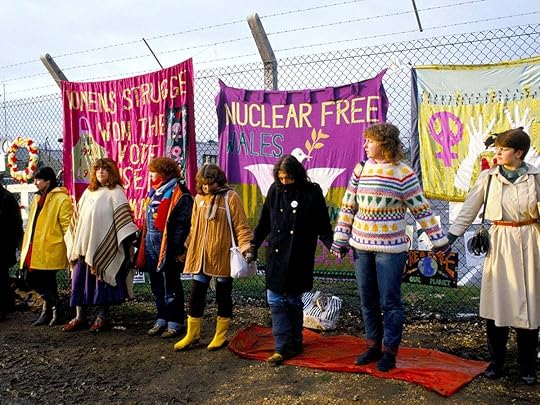
McDermid sure knows how to keep one reading! This was a quick moving, suspenseful read that had me hooked from the first murder. To think this was one of her first books, this lady truly is talented.
I enjoy Lindsay as a character, her hard-headedness and loyalty makes an interesting combination for a very authentic character. One thing though, Lindsay should really consider changing her friend circle. All of them ending up as suspects to a murder, or at least so far.

November 11, 2018
The second book featuring radical feminist lesbian journalist Lindsay Gordon covers a murder near the women's peace camp on Brownlow Common, a thinly disguised Greenham Common. The story was published in 1989 and seems a little dated now, but still a fast moving plot and a good read.

May 6, 2017
I very much enjoyed reading this book. Published in 1989 it is set in Brownlow Common, a fictional substitute for Greenham Common, where women set up a peace camp to protest about the siting of American cruise missiles on British soil. As such, it captured a sense of the late nineteen-eighties and the political turmoil of that time in the UK.
“Write what you know,” they always say, and in this, her second novel, Val McDermid does. She keeps a good pace going as her journalist protagonist, Lindsay Gordon, investigates what is happening to her friend and, in the days before mobile phones and internet access, dictates copy on public phones. She weaves a believable story, dropping necessary clues throughout so that what Lindsay finds out and what she does both have foundations in the book. I particularly approved of the ending where the events of the story have a lasting effect on Lindsay, rather than there being a simple re-set. (Cryptic, much? Trying to avoid the spoilers an’ all.)
And, yet, I did feel a little dissatisfied after finishing. I didn’t notice while reading the book which might provide the moral of “don’t analyse too much” but this is me and I can’t help it. I have struggled to explain it. The best I can say is that the psychology of the murder victim and the events make sense but I didn’t really feel them. Lindsay observes them and so do we, in fact, we observe Lindsay observing and analysing them. They didn’t quite come alive for me.
However, what happens to her personally does come alive for me, which is why reading the book was enjoyable and I do want to know what happens to her next. It is interesting watching Ms McDermid’s skill grow, as well.
In conclusion, I recommend it as a good read especially if you remember the 1980s.
“Write what you know,” they always say, and in this, her second novel, Val McDermid does. She keeps a good pace going as her journalist protagonist, Lindsay Gordon, investigates what is happening to her friend and, in the days before mobile phones and internet access, dictates copy on public phones. She weaves a believable story, dropping necessary clues throughout so that what Lindsay finds out and what she does both have foundations in the book. I particularly approved of the ending where the events of the story have a lasting effect on Lindsay, rather than there being a simple re-set. (Cryptic, much? Trying to avoid the spoilers an’ all.)
And, yet, I did feel a little dissatisfied after finishing. I didn’t notice while reading the book which might provide the moral of “don’t analyse too much” but this is me and I can’t help it. I have struggled to explain it. The best I can say is that the psychology of the murder victim and the events make sense but I didn’t really feel them. Lindsay observes them and so do we, in fact, we observe Lindsay observing and analysing them. They didn’t quite come alive for me.
However, what happens to her personally does come alive for me, which is why reading the book was enjoyable and I do want to know what happens to her next. It is interesting watching Ms McDermid’s skill grow, as well.
In conclusion, I recommend it as a good read especially if you remember the 1980s.
December 7, 2012
I enjoyed this just as much as the first of the series, Report for Murder. It's a fun, easy read, again featuring Lindsay Gordon, self-proclaimed cynical socialist lesbian feminist journalist. It has the same sharp wit and sarcasm as previously, and despite its Cold War era datedness, the plot is still pretty interesting. I enjoy mysteries that have some sort of historical context, and I remember being called some of the same names the women at the peace camp were. Personally, I found the glimpse into that bit of history absorbing; I had to look up the history of the Greenham women, and I like books that make me research something.
I find Lindsay an interesting character, and fun to read about. Wry, smart, compassionate, intensely loyal to her friends. Her impetuosity occasionally lands her in hot water, here, as the nation's intelligence(?) forces become involved, but she doesn't let that deter her from her quest for the truth. She's plucky, but willing to admit to being afraid when she realizes she's quite out of her depth. All in all, a strong,very realistic, very human protagonist.
A couple of quibbles: First, there's at least as much "telling" as there is "showing," but this was only McDermid's second novel, so a little of that is to be expected, and it isn't really that much of an issue. More serious is that the ending just seems a little too far-fetched. Even Britain's intelligence community should easily have been able to block Lindsay's attempt to outfox them by having her story published in Germany. In spite of these shortcomings, Common Murder was still an very pleasant read, and well worth the couple of hours spent.
I find Lindsay an interesting character, and fun to read about. Wry, smart, compassionate, intensely loyal to her friends. Her impetuosity occasionally lands her in hot water, here, as the nation's intelligence(?) forces become involved, but she doesn't let that deter her from her quest for the truth. She's plucky, but willing to admit to being afraid when she realizes she's quite out of her depth. All in all, a strong,very realistic, very human protagonist.
A couple of quibbles: First, there's at least as much "telling" as there is "showing," but this was only McDermid's second novel, so a little of that is to be expected, and it isn't really that much of an issue. More serious is that the ending just seems a little too far-fetched. Even Britain's intelligence community should easily have been able to block Lindsay's attempt to outfox them by having her story published in Germany. In spite of these shortcomings, Common Murder was still an very pleasant read, and well worth the couple of hours spent.

January 21, 2019
A solid Cold War mystery and a vivid snapshot of its time, especially regarding activism and women's sexuality.
December 19, 2022
This is one of Val McDermid’s earliest mysteries, written in 1989. It is part of her Lindsay Gordon series, featuring an investigative journalist rather than member of the police. I thought this was an interesting approach, with pros and cons. As a journalist Lindsay had to rely on obtaining a certain amount of information from a co-operative police superintendent, but on the other hand she had the opportunity to speak informally to potential suspects and was more likely to gain their trust, especially if they thought they were being given a chance to put their side of the story.
The story centres around a women’s peace camp (similar to Greenham Common). Lindsay gets involved when a friend (and ex) Deborah is suspected of murdering the chairman of the local ratepayers association who want the peace camp to be disbanded. Because she already knows and sympathises with the women, superintendent Rigano can see the value of involving her in the investigation by acting as liaison between the police and the peace campaigners. This seems to me a plausible reason for this scenario and it enables Lindsay to get involved in a way that a journalist normally wouldn’t.
The fact that she knows (and maybe is still in love with) Deborah also explains the rationale for Lindsay taking the (very risky) action that she takes as the investigation takes a very unexpected turn and she realises how much is at stake.
Although I enjoyed ‘Common Murder’ I think it isn’t as good as the other Val McDermid books that I’ve read. At around 300 pages it was relatively short and this meant that there was less time to develop the characters. I did not get as immersed in it as I did with ‘The Wire in the Blood’. I also thought that the final chapters were rushed and that everything seemed to work out rather too easily. I would’ve liked a bit of last minute peril to rack up the tension! But these are minor criticisms as this was a good story and as usual well written and observant.
This is also a strongly feminist novel and it made me realise just how much sexism there was even in 1989. Lindsay has to grit her teeth as she is patronised by some of the male characters but I was pleased she used it to her advantage, pretending to go along with it while probing for information.
I liked the epilogue which neatly brought matters to a very satisfying long term conclusion!
The story centres around a women’s peace camp (similar to Greenham Common). Lindsay gets involved when a friend (and ex) Deborah is suspected of murdering the chairman of the local ratepayers association who want the peace camp to be disbanded. Because she already knows and sympathises with the women, superintendent Rigano can see the value of involving her in the investigation by acting as liaison between the police and the peace campaigners. This seems to me a plausible reason for this scenario and it enables Lindsay to get involved in a way that a journalist normally wouldn’t.
The fact that she knows (and maybe is still in love with) Deborah also explains the rationale for Lindsay taking the (very risky) action that she takes as the investigation takes a very unexpected turn and she realises how much is at stake.
Although I enjoyed ‘Common Murder’ I think it isn’t as good as the other Val McDermid books that I’ve read. At around 300 pages it was relatively short and this meant that there was less time to develop the characters. I did not get as immersed in it as I did with ‘The Wire in the Blood’. I also thought that the final chapters were rushed and that everything seemed to work out rather too easily. I would’ve liked a bit of last minute peril to rack up the tension! But these are minor criticisms as this was a good story and as usual well written and observant.
This is also a strongly feminist novel and it made me realise just how much sexism there was even in 1989. Lindsay has to grit her teeth as she is patronised by some of the male characters but I was pleased she used it to her advantage, pretending to go along with it while probing for information.
I liked the epilogue which neatly brought matters to a very satisfying long term conclusion!
This entire review has been hidden because of spoilers.
Read
December 31, 2023McDermid's earlier novels, like Ian Rankin's, are finding their way. They are not as assured, not as fully-developed, not quite as clever as the mature books usually seem to be. They are still good investigative stories, full of action and plot twists--just more like appetizers than some of the 'full courses' novels later on.

May 16, 2024
Interesting herstory
April 27, 2026
Good read

June 22, 2026
The reporter in this is the very brave Lindsay Gordon.
Very brave of her.
I begun this novel disappointed that Lyndsay decided to embark on a relationship with Cordelia. I end it feeling exactly the same way. Good sex,
In my opinion, is not enough to make a good relationship, plus, Cordelia is still annoying.
Very brave of her.
I begun this novel disappointed that Lyndsay decided to embark on a relationship with Cordelia. I end it feeling exactly the same way. Good sex,
In my opinion, is not enough to make a good relationship, plus, Cordelia is still annoying.
September 6, 2026
Quite entertaining read
February 25, 2019
I liked the book but the ending seemed a bit contrived. It still was an enjoyable read. This was written early in her career and she has just gotten better and better.

December 27, 2021
BIBLIOGRAPHIC DETAILS
(Print: ©1989; ISBN 1883523087; Spinsters Ink Books; 311 pages; unabridged.)
(Digital: Yes.)
*Audio: ©5/1/2018; 978-1501990014; Publisher: Recorded Books, Inc.; File size: 207434 KB; Duration 07:15:07; Unabridged; 7 parts.
(Film: Not that I know of).
SERIES:
Lindsay Gordon Mystery Book 2.
Major CHARACTERS:
Lindsay Gordon (Journalist for “The Clarion”)
Cordelia Brown (Writer)
Deborah (Debs) Patterson (Protestor)
SUMMARY/ EVALUATION:
We (husband and I) started this series because a friend of mine emailed me a list of authors that she’d recently read Robert Galbraith (J.K. Rowling) had been categorized with. The first book in this series had kind of a light “Murder She Wrote” feel to it that my husband and I found refreshing. In other words, it had focused on the perspective of the investigator, a writer, learning of the crime and trying to determine who did it, rather than detailing the mechanics of the murder, the character of the murderer, & the fear of the victim before the murder. So, after a couple months of other books/authors, we decided it was time for the next one in this series.
Lindsay, a journalist, goes to a women’s peace camp to investigate an incident her boss at The Clarion thinks could be good fodder for an article. Upon arrival, she discovers the incident involves a former lover, Debs, who is one of the protestors at the camp. Debs has been jailed for allegedly attacking a Mr. Crabtree while he was walking his dog. Not long after Debs is out on bail, Mr. Crabtree is found dead. Since Debs is the prime suspect, Lindsay sets about exonerating her friend by attempting to unravel the mystery of who killed him.
AUTHOR:
Val McDermid (6/4/1955). Wikipedia: “Val McDermid, FRSE, FRSL (born 4 June 1955) is a Scottish crime writer, best known for a series of novels featuring clinical psychologist Dr. Tony Hill in a grim sub-genre that McDermid and others have identified as Tartan Noir. At Raith Rovers football stadium, a stand has been named after McDermid.”
NARRATOR:
Caroline Guthrie: According to networthpost.org Caroline is “an actress, known for Gregory's Girl (1980), Local Hero (1983) and Chaplin (1992).” And is worth 4 Million.
Her narration provides perfect tone and pitch to the dialogue.
GENRE:
Fiction, Mystery, LGBTQIA
LOCATIONS:
Fordham, England; London, England
TIME FRAME
Contemporary (1989)
SUBJECTS:
Gay relationships; journalism; protestors; anti-protestors; international relations; protest movements
DEDICATION:
“For my father”
SAMPLE QUOTATION:
From Chapter 1
“’Just doing the calls, Cliff,’ she answered.
‘Never mind that. There’s a bloody good tip just come in from one of the local paper lads in Fordham. Seems there’s been some aggro at the women’s peace camp at Brownlow Common. I’ve transferred the copy into your personal desk. Check it out, will you?’ he asked.
Lindsay sat up and summoned the few paragraphs on to her screen. The story seemed straightforward enough. A local resident claimed he’d been assaulted by one of those women from the peace camp. He’d had his nose broken in the incident, and the woman was in custody. Lindsay was instantly skeptical. She found it hard to believe that one of a group pledged to campaign for peace would physically attack an opponent of the anti-nuclear protest. But she was enough of a professional to concede that her initial reaction was the sort of knee-jerk she loved to condemn when it came from the other side.
The repercussions unfolding outside Fordham police station made the story interesting from the point of view of the Daily Clarion newsdesk. The assaulted man, a local solicitor called Rupert Crabtree, was the leader of Ratepayers Against Brownlow’s Destruction, a pressure group dedicated to the removal of the peace women from the common. His accusation had provoked a spontaneous demonstration from the women, who were apparently besieging the police station. That in its turn had provoked a counter-demonstration from the RABD members outraged at the alleged attack. There was a major confrontation in the making, it appeared.”
RATING:
4 stars.
STARTED-FINISHED
12/18/2021 – 12/24/2021
(Print: ©1989; ISBN 1883523087; Spinsters Ink Books; 311 pages; unabridged.)
(Digital: Yes.)
*Audio: ©5/1/2018; 978-1501990014; Publisher: Recorded Books, Inc.; File size: 207434 KB; Duration 07:15:07; Unabridged; 7 parts.
(Film: Not that I know of).
SERIES:
Lindsay Gordon Mystery Book 2.
Major CHARACTERS:
Lindsay Gordon (Journalist for “The Clarion”)
Cordelia Brown (Writer)
Deborah (Debs) Patterson (Protestor)
SUMMARY/ EVALUATION:
We (husband and I) started this series because a friend of mine emailed me a list of authors that she’d recently read Robert Galbraith (J.K. Rowling) had been categorized with. The first book in this series had kind of a light “Murder She Wrote” feel to it that my husband and I found refreshing. In other words, it had focused on the perspective of the investigator, a writer, learning of the crime and trying to determine who did it, rather than detailing the mechanics of the murder, the character of the murderer, & the fear of the victim before the murder. So, after a couple months of other books/authors, we decided it was time for the next one in this series.
Lindsay, a journalist, goes to a women’s peace camp to investigate an incident her boss at The Clarion thinks could be good fodder for an article. Upon arrival, she discovers the incident involves a former lover, Debs, who is one of the protestors at the camp. Debs has been jailed for allegedly attacking a Mr. Crabtree while he was walking his dog. Not long after Debs is out on bail, Mr. Crabtree is found dead. Since Debs is the prime suspect, Lindsay sets about exonerating her friend by attempting to unravel the mystery of who killed him.
AUTHOR:
Val McDermid (6/4/1955). Wikipedia: “Val McDermid, FRSE, FRSL (born 4 June 1955) is a Scottish crime writer, best known for a series of novels featuring clinical psychologist Dr. Tony Hill in a grim sub-genre that McDermid and others have identified as Tartan Noir. At Raith Rovers football stadium, a stand has been named after McDermid.”
NARRATOR:
Caroline Guthrie: According to networthpost.org Caroline is “an actress, known for Gregory's Girl (1980), Local Hero (1983) and Chaplin (1992).” And is worth 4 Million.
Her narration provides perfect tone and pitch to the dialogue.
GENRE:
Fiction, Mystery, LGBTQIA
LOCATIONS:
Fordham, England; London, England
TIME FRAME
Contemporary (1989)
SUBJECTS:
Gay relationships; journalism; protestors; anti-protestors; international relations; protest movements
DEDICATION:
“For my father”
SAMPLE QUOTATION:
From Chapter 1
“’Just doing the calls, Cliff,’ she answered.
‘Never mind that. There’s a bloody good tip just come in from one of the local paper lads in Fordham. Seems there’s been some aggro at the women’s peace camp at Brownlow Common. I’ve transferred the copy into your personal desk. Check it out, will you?’ he asked.
Lindsay sat up and summoned the few paragraphs on to her screen. The story seemed straightforward enough. A local resident claimed he’d been assaulted by one of those women from the peace camp. He’d had his nose broken in the incident, and the woman was in custody. Lindsay was instantly skeptical. She found it hard to believe that one of a group pledged to campaign for peace would physically attack an opponent of the anti-nuclear protest. But she was enough of a professional to concede that her initial reaction was the sort of knee-jerk she loved to condemn when it came from the other side.
The repercussions unfolding outside Fordham police station made the story interesting from the point of view of the Daily Clarion newsdesk. The assaulted man, a local solicitor called Rupert Crabtree, was the leader of Ratepayers Against Brownlow’s Destruction, a pressure group dedicated to the removal of the peace women from the common. His accusation had provoked a spontaneous demonstration from the women, who were apparently besieging the police station. That in its turn had provoked a counter-demonstration from the RABD members outraged at the alleged attack. There was a major confrontation in the making, it appeared.”
RATING:
4 stars.
STARTED-FINISHED
12/18/2021 – 12/24/2021
August 2, 2026
(First Mystery & Val Mcdermid novel ever so I judged based on this novel only)
TW: Rant
BG: late 20s straight man(might affect my perception reading this so beware of this)
I have read and lost steam around chapter 15. On the cover, on the blurb and on the prelude, there is no mention of any nation state intervention at all. Why oh why, after that chapter, we suddenly devolves into spy, espionage story? I was actually re-reading the past chapter so see any mention of a nation state and nothing was there.
I understand that it's 1989 novel and there's political background but the original whodunit of Robert Crabtree just felt..cheap. Like, his son killed him because his father caught him being a Russian spy? Like..all this crap happened due to Lindsay being too snoopy?
Given the background of the writer, I understand that she needs to flesh out the LGBT aspects of the book, and granted, that's not my cup of tea but I understand.
My concern is:
1) The pacing of this book is super slow. I read through 4 chapters and finally the mystery advertised is there.
2) We're building tension between peace woman vs police + neighbourhood association. All of the sudden, hey: the son of the killed person is a spy, oh no. All that tension goes down the drain. Seriously.
3) The actual meat of the investigative process: interview with suspects, scavenging paper trail from Mallard Walberley. Oh no, we found a Suspicious cassette tape, we pass to our expert and both members confirm this is a higher security stuff and bam: action, Debs got attacked, Police being complicit with this, Lindsay give details to German guy..and that's all...correct me if I am wrong..but the twist is..eh?
Overall: for mystery, don't buy it..seriously..don't.
For character building especially LGBT personnel? This is your gold tier as Val actually takes the time to establish the characters ideals and personality, letting the reader know who are the characters in this novel.
It's a shame since..I read this book as an initial reference for mystery genre and I fear: I might stepped on a wrong foot with this book..
TW: Rant
BG: late 20s straight man(might affect my perception reading this so beware of this)
I have read and lost steam around chapter 15. On the cover, on the blurb and on the prelude, there is no mention of any nation state intervention at all. Why oh why, after that chapter, we suddenly devolves into spy, espionage story? I was actually re-reading the past chapter so see any mention of a nation state and nothing was there.
I understand that it's 1989 novel and there's political background but the original whodunit of Robert Crabtree just felt..cheap. Like, his son killed him because his father caught him being a Russian spy? Like..all this crap happened due to Lindsay being too snoopy?
Given the background of the writer, I understand that she needs to flesh out the LGBT aspects of the book, and granted, that's not my cup of tea but I understand.
My concern is:
1) The pacing of this book is super slow. I read through 4 chapters and finally the mystery advertised is there.
2) We're building tension between peace woman vs police + neighbourhood association. All of the sudden, hey: the son of the killed person is a spy, oh no. All that tension goes down the drain. Seriously.
3) The actual meat of the investigative process: interview with suspects, scavenging paper trail from Mallard Walberley. Oh no, we found a Suspicious cassette tape, we pass to our expert and both members confirm this is a higher security stuff and bam: action, Debs got attacked, Police being complicit with this, Lindsay give details to German guy..and that's all...correct me if I am wrong..but the twist is..eh?
Overall: for mystery, don't buy it..seriously..don't.
For character building especially LGBT personnel? This is your gold tier as Val actually takes the time to establish the characters ideals and personality, letting the reader know who are the characters in this novel.
It's a shame since..I read this book as an initial reference for mystery genre and I fear: I might stepped on a wrong foot with this book..
This entire review has been hidden because of spoilers.

May 19, 2026
This is the second of Val McDermid’s novels to feature journalist Lindsay Gordon, and is set about a year after the events of Report for Murder.
Lindsay has moved down to London to set up home with her partner, bestselling novelist Cordelia. While happy for the most part, Lindsay is conscious that she and Cordelia are from different circles: Cordelia is successful and wealthy, and has a circle of friends who are very far from the circles in which Lindsay is accustomed to move, and who are entirely oblivious of the world of crime which forms the staple of her journalistic diet.
As the book opens, Lindsay has been commissioned by the editor of The Clarion, a tabloid newspaper for whom she works, to investigate an incident at an American airbase in the close hinterland of London. This is the late 1980s, and what we are now aware were the dying days of the Cold War, although that was not evident then. The airbase has drawn the attention of peace protesters, and, like the real life Greenham Common, has been made the subject of a women’s protest. The protestors have established a camp by the airforce from which they mount regular demonstrations against the presence of American nuclear weapons, which would be delivered from that base in the event of the outbreak of war.
On the day preceding her despatch to the site, one of the protestors was arrested following an altercation with a local resident, who is one of the leading figures in a local group campaigning against the women’s presence. As it happens, the woman involved turns out to be Lindsay’s former partner.
While Lindsay is around the camp, she witnesses various events which lead her to believe that there may enough to justify a series of articles for her paper. This insight proves to be correct when the camp is attacked by a group of local youths, and then the victim of the earlier altercation is killed.
McDermid develops the story very effectively – even this early in her novelist career she was adept at plot construction – and captures the different moods and attitudes of the conflicting groups. It seems funny now to see a leading reported having to resort to using public telephone kiosks to call her copy in to the paper. The use of personal computes plays a part in the plot, and as with the phones, the technology referred to, which was absolutely cutting edge at the time, now seems rather quaint, prompting us to think, ‘Did we really have to go through all that palaver?’
I think that, on balance, I preferred this to the previous novel, Report for Murder, and will look for the rest of the series.
Lindsay has moved down to London to set up home with her partner, bestselling novelist Cordelia. While happy for the most part, Lindsay is conscious that she and Cordelia are from different circles: Cordelia is successful and wealthy, and has a circle of friends who are very far from the circles in which Lindsay is accustomed to move, and who are entirely oblivious of the world of crime which forms the staple of her journalistic diet.
As the book opens, Lindsay has been commissioned by the editor of The Clarion, a tabloid newspaper for whom she works, to investigate an incident at an American airbase in the close hinterland of London. This is the late 1980s, and what we are now aware were the dying days of the Cold War, although that was not evident then. The airbase has drawn the attention of peace protesters, and, like the real life Greenham Common, has been made the subject of a women’s protest. The protestors have established a camp by the airforce from which they mount regular demonstrations against the presence of American nuclear weapons, which would be delivered from that base in the event of the outbreak of war.
On the day preceding her despatch to the site, one of the protestors was arrested following an altercation with a local resident, who is one of the leading figures in a local group campaigning against the women’s presence. As it happens, the woman involved turns out to be Lindsay’s former partner.
While Lindsay is around the camp, she witnesses various events which lead her to believe that there may enough to justify a series of articles for her paper. This insight proves to be correct when the camp is attacked by a group of local youths, and then the victim of the earlier altercation is killed.
McDermid develops the story very effectively – even this early in her novelist career she was adept at plot construction – and captures the different moods and attitudes of the conflicting groups. It seems funny now to see a leading reported having to resort to using public telephone kiosks to call her copy in to the paper. The use of personal computes plays a part in the plot, and as with the phones, the technology referred to, which was absolutely cutting edge at the time, now seems rather quaint, prompting us to think, ‘Did we really have to go through all that palaver?’
I think that, on balance, I preferred this to the previous novel, Report for Murder, and will look for the rest of the series.

November 11, 2020
We have certainly enjoyed Scot Val McDermid’s entire Carol Jordan and Tony Hill series, but were not quite as fond of our samplings of her Kate Brannigan or Karen Pirie novels. Discovering that she had another set featuring investigative reporter Lindsay Jordan, we thought we’d give that a try. “Common Murder” is the second of six to feature Jordan, and apparently was just the author’s actual second effort as a published author, copyrighted in 1989.
Lindsay turns out to be a fairly radical feminist lesbian (as is our writer) who has joined the efforts of a women’s protest group about some US nuclear missiles parked in a field in Britain. Apparently the book’s setting is a play off a real-life situation. The “peace camp” is little better than a tent city and is opposed by a neighborhood group headed by a cantankerous man who is allegedly assaulted by Lindsay’s ex-lover; and in the process, Lindsay wastes no time bedding her old flame despite a committed relationship with her current partner. When that man winds up murdered, Lindsay strikes a deal with the local police chief to collaborate on the investigation, given her “in” with the peace group members, the likely suspects.
We have no problem with the feminist, the Cold War, or the lesbian issues presented throughout, but Lindsay is hardly a likable protagonist. Her “deal” with the cops would never happen in real life, and the ultimate developments in the case were ill-founded and rather incredulous, and barely deserving of the red ribbons at the end. Fortunately, McDermid’s writing and plot crafting skills have improved significantly since this dated outing, leading us to recommend against this particular story in favor of her considerably better more recent crime novels.
Lindsay turns out to be a fairly radical feminist lesbian (as is our writer) who has joined the efforts of a women’s protest group about some US nuclear missiles parked in a field in Britain. Apparently the book’s setting is a play off a real-life situation. The “peace camp” is little better than a tent city and is opposed by a neighborhood group headed by a cantankerous man who is allegedly assaulted by Lindsay’s ex-lover; and in the process, Lindsay wastes no time bedding her old flame despite a committed relationship with her current partner. When that man winds up murdered, Lindsay strikes a deal with the local police chief to collaborate on the investigation, given her “in” with the peace group members, the likely suspects.
We have no problem with the feminist, the Cold War, or the lesbian issues presented throughout, but Lindsay is hardly a likable protagonist. Her “deal” with the cops would never happen in real life, and the ultimate developments in the case were ill-founded and rather incredulous, and barely deserving of the red ribbons at the end. Fortunately, McDermid’s writing and plot crafting skills have improved significantly since this dated outing, leading us to recommend against this particular story in favor of her considerably better more recent crime novels.

December 16, 2018
Well this was written in 1989 and it shows! No only does the technology of the time seem really quaint and awkward (no mobile phones, let alone internet, so much of the book seems to be taken up with our reporter protagonist looking for phone boxes to phone in her stories to the newsdesk).. but it just to shows what an awful long way Val McDermid has come as a writer since then.
I was listening to the audiobook, and even that rated poorly compared with more modern recordings - there wasn't even an announcement at the start and end of each disc to say what it was ('end of CD 1' etc) and the narrator was far from the best I've heard.
I know McDermid is an excellent novelist NOW, up there with the best, but back then it seems she was mediocre. At the time I guess it must have seemed very positive for the LGBT community to have a book heavily featuring lesbians, but nowadays that almost feels like campaigning, - its just part of the texture of ordinary life.
So I guess I am trying to say I was rather underwhelmed. But I feel I may have judged it more harshly because I know of what she is capable of now ... had it been written by someone else I may have awarded 3 stars!!
I was listening to the audiobook, and even that rated poorly compared with more modern recordings - there wasn't even an announcement at the start and end of each disc to say what it was ('end of CD 1' etc) and the narrator was far from the best I've heard.
I know McDermid is an excellent novelist NOW, up there with the best, but back then it seems she was mediocre. At the time I guess it must have seemed very positive for the LGBT community to have a book heavily featuring lesbians, but nowadays that almost feels like campaigning, - its just part of the texture of ordinary life.
So I guess I am trying to say I was rather underwhelmed. But I feel I may have judged it more harshly because I know of what she is capable of now ... had it been written by someone else I may have awarded 3 stars!!
September 5, 2022
This was a reread for me having read it first time round. I heard the author in interview recently on a uk radio programme and she mentioned the Lindsay Gordon series saying she thought maybe they were published too early to be popular. I would agree. Lindsay is, like Val McDermid was, a journalist living and working in London. This story is based around wrong doings at a women's peace camp, Greenham Common, though by another name. It's a good tight thriller. The key difference is that Lindsay is openly gay and even in 1989, when this was first published, that wasn't commonplace. Having read it now 33 years on I think it stands up well. I was reading VM avidly up to the Tony Hill series. I read the first one and for me it was the stuff of nightmares. It made her name though and she's now a Grand Dame of crime fiction which can only be good. I'd certainly commend the series to crime fiction fans and ditto the Kate Brannigan series. Perhaps a bit retro but still well worth the reading.

April 19, 2019
Well, I didn’t like the first book in this series at all. This was slightly better. (I’m committed to reading them all because I bought them all.)
There are editorial problems such as when Lindsay suddenly decided she’s been betrayed as she’s been followed, when I saw no evidence of that and she hadn’t noticed it in real time. Things like that break the pact between author and reader (me) to suspend my disbelief and get me paging back to see if I’d missed something or turned more than one page at a time.
Lindsay the character is softening a bit around the edges. But she’s still really arrogant. I cannot imagine any police working with her as they do in these novels.
There are editorial problems such as when Lindsay suddenly decided she’s been betrayed as she’s been followed, when I saw no evidence of that and she hadn’t noticed it in real time. Things like that break the pact between author and reader (me) to suspend my disbelief and get me paging back to see if I’d missed something or turned more than one page at a time.
Lindsay the character is softening a bit around the edges. But she’s still really arrogant. I cannot imagine any police working with her as they do in these novels.

June 8, 2017
Second in the Lindsay Gordon series. Gordon is a reporter in Scotland, working for the Daily Clarion tabloid. She decides to seek out the story about a group of peace women protesting the building of some missile silos; her ex-lover Deborah is a member of the group. Deborah is arrested for possibly assaulting a local lawyer objecting to the presence of the peace women in their small community. The lawyer is later killed and Lindsay decides to prove that her ex-lover is not the murderer. Occasionally the story drags some but overall is a very enjoyable read.

January 29, 2018
This book was written early in MacDermid's career and is set in a thinly veiled Greenham Common Women's Peace Camp. Based on the acknowledgments, it appears MacDermid was there herself. It's too bad she wasn't as polished a writer then as she is now, because the setting and characters in the camp are not as vivid or captivating as those in her more recent fiction. Still, if you're looking for detective fiction and /or lesbian romance - and if you like to get that 80s vibe from the actual 1980s rather than 80s nostalgia stuff, this is a good choice.

July 27, 2026
What I didn't like about 1980's detective fiction was not the technology or the social attitudes, but the need that any author with a woman protagonist felt to show her hero could be just as tough, heedless, and sometimes downright stupid as any man. Lindsay Gordon is V.I. Warshawski with a taste for women, and I feel sorry for her lover(s).
I have come to realize, too, that I have trouble taking spy thrillers seriously. So, this was not the book for me, even though the setting, the politics, and the plotting were first rate.
I have come to realize, too, that I have trouble taking spy thrillers seriously. So, this was not the book for me, even though the setting, the politics, and the plotting were first rate.

November 13, 2019
Lindsay Gordon is enjoying life in London if a little bored when she is contacted by a previous lover to come to Brownlow Common, a live in protest against American missiles (aka Greenham Common). The novel is a great read of the time, late 80s, no mobiles or internet and socialist politics from a lesbian point of view. The relationships between the state and Lindsay are too far fetched, however the ending is quite believable.

August 7, 2025
3.5*
I enjoyed reading this book set at a women's peace camp very much like Greenham Common, which was all over the news at the time this book was written. It's nice to listen to a book where the protagonist is a reporter rather than a police officer. The book is quite dated now, written in the time before everyone had mobile phones and the internet, and Lindsay seems to spend most of her time looking for a phone box!
I enjoyed the narration by Caroline Guthrie.
I enjoyed reading this book set at a women's peace camp very much like Greenham Common, which was all over the news at the time this book was written. It's nice to listen to a book where the protagonist is a reporter rather than a police officer. The book is quite dated now, written in the time before everyone had mobile phones and the internet, and Lindsay seems to spend most of her time looking for a phone box!
I enjoyed the narration by Caroline Guthrie.

April 20, 2026
I regret purchasing the Lindsay Gordon novels, ‘Common Murder’ is worse than the first one. It’s very dated (not in a good way) and far fetched. Intrepid, self righteous and irritating journalist Lindsay takes on the establishment in this murder mystery involving MI5 shenanigans at a Greenham Common style peace camp. I know Val McDermid has revisited this era in her Allie Burns series, but in a manner that’s much more nuanced and reflective than this tosh.

September 21, 2021
This was written in the 80s and that is reflected in everything from the Cold War politics to the hunt for phone boxes. For me that added a nostalgic charm but it might irritate others. The mystery was interesting and I enjoyed the glimpse into life in the women’s peace camp. I listened to the audio book and the narration was a bit stilted.

July 31, 2022
The first n this series was set in a public school, and it is an entertaining change of pace to find the second focused around Greenham Common (renamed Brownlow in the book). I would have liked more nitty gritty life-in-the-peace-camp material and a little less of the middle-class life of the victim and his toxic circle, but nevertheless, this book was a real pleasure.
June 16, 2023
3 1/2 stars. An older series from the author but one I would definitely read more from. Obviously a bit dated in some ways but I enjoyed the look at 80's journalism and British politics. I liked the way the protagonist's journalistic skills, quick thinking and gift of the blarney helped her in the hunt for a murderer - at least until the story took an unexpected turn.

July 18, 2023
3.5
The Lindsay Gordon series hasn't entrenched its hooks into me like the Lincoln Rhyme series firmly did from the get go.
Enjoyed A Place of Execution and The Distant Echo much more than her female protagonist series ( Pirie and Gordon).
Should I just jump straight to the Dr Tony Hill + Carol Jotdan series?
The Lindsay Gordon series hasn't entrenched its hooks into me like the Lincoln Rhyme series firmly did from the get go.
Enjoyed A Place of Execution and The Distant Echo much more than her female protagonist series ( Pirie and Gordon).
Should I just jump straight to the Dr Tony Hill + Carol Jotdan series?

June 22, 2026
For the most part, I liked this book. There were just a few things I am not that big a fan of. My main issue is with the main character. I just don't like the way she interacts with other characters.
Still I will continue to read the series as I am curious to see what happens to her in the next book.
Still I will continue to read the series as I am curious to see what happens to her in the next book.
Displaying 1 - 30 of 88 reviews