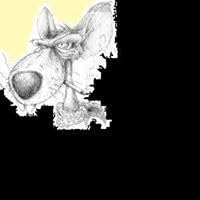
In 1941, as the Vichy regime consolidated its control of France, André Breton left the country for the island of Martinique. A poet and the principal founder of surrealism, Breton did not stay long, but his visit inspired the essays and poems of this book. Martinique: Snake Charmer is one of surrealism's most important texts, and it has been called "the most beautiful of all books" about the island. (Martinique: Snake Charmer also includes nine evocative drawings by the surrealist André Masson, a companion of Breton's during his stay on the island.) First collected into a single volume in 1948 and in print in France ever since, this is the first English translation of a work that, in series editor Franklin Rosemont's view, seeks "not merely to question the dogmas and platitudes of so-called common sense and 'established facts,' but to deviate from them, absolutely, in an imaginative quest for new and untried solutions to society's gravest problems." In the tropical beauty of Martinique, Breton found what he called "the Marvelous"; he also found outrageous greed, corruption, and colonial brutality. His guide through this schizophrenic place was Aimé Césaire, a Martinican surrealist and writer who Breton later championed in the book's most important essay, "A Great Black Poet." Breton recognized how Césaire and others had adapted surrealism to the specific conditions of the West Indies, enriching the movement in ways he could not have imagined. As a result, Breton never succumbed to the gloom that afflicted postwar Europe. He and Césaire and others continued the surrealists' quest undaunted, propelled in large part by the spirit they captured in this dynamic book.
After World War I, French poet and literary theorist André Breton began to link at first with Dadaism but broke with that movement to write the first manifesto of surrealism in 1924.
People best know this theorist as the principal founder. His writings include the Surrealist Manifesto (Manifeste du surréalisme), in which he defined this "pure psychic automatism."
This was another holiday gift. I read it while preparing green chili and blasting hillbilly music to keep away the Falangists. This is a slim work, part travelogue, part literary analysis of the poet Cesaire. It is the latter which makes this worthwhile. Breton fled France in 1940 and traveled to Martinique on a ship which was also transporting Claude Levi-Strauss. There’s a French novel awaiting translation depicting the voyage. I’m looking forward to such.
au printemps 1941, André Breton et le peintre André Masson, quittant la France de vichy pour les Etats-Unis, font une escale forcée à la Martinique. Ils découvrent les préjugés raciaux, l'oppression des masse et la triste bureaucratie coloniale, mais en même temps le paradis tropical et quelques-uns des plus beaux lieux du monde. En dialoguant, le peintre et l'écrivain s’efforcent de rendre l'ambivalence de leurs sentiments : émerveillement et horreur. L'ouvrage se termine par une étude qu'André Breton écrivit à New York sur l'homme qui incarne l'espoir de la masse martiniquaise : le grand poète Aimé Césaire.
Durante la ocupación alemana, Breton es arrestado pero luego llevado a Martinica, donde descubre la riqueza poética de lo salvaje. Su obra se convierte en una celebración de la belleza universal, fusionando ideal y realidad. La sensibilidad del artista se manifiesta como resistencia, proponiendo que otro mundo es posible.
Corto, pero denso. Lo empecé con gran interés por la gran atracción que siento hacia el surrealismo, pero lo que encontré en sus páginas no me cautivó. No he llegado a captar bien el mensaje que quería transmitir, si es que era esa su intención. Me he encontrado muy perdida. Las ilustraciones de André Masson que acompañan al libro le dan un toque de color que es de agradecer. Dos estrellas: una para André Breton y otra para André Masson.