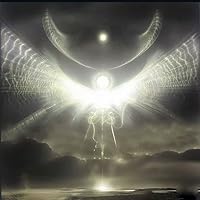
At that moment, in a flash that came like a shifting of her eyes, the world she looked at suffered a change... It was the same world, flat field for flat field and hill for hill; but radiant, vibrant, and, as it were, infinitely transparent.
Tales of eternal damnation, love, sexuality, death and supernatural talents form the core of May Sinclair’s essential and groundbreaking oeuvre. Literary and still thrilling today, her stories explore the strangeness at the heart of human experience and relationships, where the mundane and the everyday meets lurking, otherworldly weirdness.
Including the contents of the classic collections Uncanny Stories (1923) and The Intercessor and Other Stories (1931), this new volume also features two rare strange tales from a third, lesser-known book which explore further facets of Sinclair’s fascination with the uncanny.
May Sinclair was the pseudonym of Mary Amelia St. Clair, a popular British writer who wrote about two dozen novels, short stories and poetry. She was an active suffragist, and member of the Woman Writers' Suffrage League. May Sinclair was also a significant critic, in the area of modernist poetry and prose and she is attributed with first using the term stream of consciousness) in a literary context, when reviewing the first volumes of Dorothy Richardson's novel sequence Pilgrimage (1915–67), in The Egoist, April 1918.
The only May Sinclair story I'd read before was the horrifying Where Their Fire Is Not Quenched, which also opens this volume, wherein a single affair corroded an entire life and then afterlife. Reading that in isolation, and considering her dates (1863-1946), I assumed she must be a writer afflicted by the conventional morality of her time, but possessed of a rare gift for dramatising it. Well, having read a bit more of her work, don't I feel like a silly billy. I'm not sure I recall having encountered before a ghost story in which the phantom, having established communication with the person responsible for their death, takes the startling yet entirely logical position that, as shown by their being a ghost in the first place, death clearly isn't such a terrible business as the living assume, so no hard feelings. Sinclair, though, doesn't just do that once, as a twist – she maintains it as a general possibility, and once you think about it, why not?
This isn't to say she's a Pollyanna. Rather, she's keenly aware of people, of the tangles they get themselves into, and worse, of the cruelties some inflict on other people, often without even meaning to. Hauntings are one way to talk about the legacy of that, or the chance for an overdue yet still worthwhile change of path, but by no means the only metaphor in her toolbox. Some stories here don't really have any supernatural components at all; a couple, and I think it's fair to say not the strongest, employ Eastern mysticism. The title novella uses psychic abilities to reify those wonderful capybara people with a knack for chilling everyone out – and what happens when one of them gets sucked into the orbit of their opposite numbers, the sort of person whose whirlpool of drama inexorably draws in anyone who lets it. Elsewhere, yes, there are some wicked ghosts, terrible life-negating influences from beyond the grave – but as far as Sinclair is concerned, that's because those people were dreadful when they were alive too. Not just dragged down by frailty or circumstance, in which case they might have been much improved by shuffling off the mortal coil, but deep down rotten. The fullest illustration of this charitable but not endlessly forgiving metaphysic comes in The Finding Of The Absolute, which solves the problem of evil, ushers in special guest Immanuel Kant to explain how Heaven works, and then goes full Star Maker, all in the space of 20 pages. And in context it becomes clear that Quenched wasn't wagging a finger at sinners at all, but cautioning people not to let themselves get caught up in needless repression and guilt. Nothing is known for sure of Sinclair's own love life, if any – and she destroyed and redacted papers to keep it that way – but I finish this convinced that, whatever her first-hand experience, she understood much more about the strange ways of the human heart and our amazing ability to trip ourselves up than many more celebrated authors.
I first came across the name of May Sinclair in Monster, She Wrote: The Women Who Pioneered Horror and Speculative Fiction aka the bible, so obviously needed to get the latest in the British Library of the Weird series! The introduction is brilliant - Sinclair was such an interesting person! As for the stories, they were hit and miss. I liked most of the ideas and premises but with some I either didn't connect with the writing or they just turned out to be more fantasy/sci-fi, which is not quite my thing when it comes to weird and uncanny.
My favourite stories were the most spooky / supernatural ones: "The Token" "The Nature of the Evidence" "If the Dead Knew"
Out of all of the compilations in the series focusing on a single author, this might be my favourite one this far. Some of Sinclair's short stories featured here I had read in precious instalments in the series - but I re-read them with pleasure.
May Sinclair's writing is much more layered than one may originally believe; some of them even veer much more into the metaphysical than the typical for the series. This makes for a dynamic and engaging reading experience that is certainly worth the time.
Favourite stories: "The Token", "The Flaw in the Crystal", "The Nature of the Evidence", "The Intercessor" and "Jones's Karma" with "The Flaw in the Crystal" and "The Intercessor" being the absolute standouts of the collection.