Tom Crean is one of the most iconic figures in Irish history. Born in 1877 in County Kerry, he enlisted in the Royal Navy at the age of sixteen, a career that would bring him to the most extreme environments on Earth. We all think we know the Crean story, but this book charts his full naval career in rich new detail, from his start in the Americas, where he was faced with rebellions and life-threatening storms, to Australia, where he faced the Black Death and threats from cannibals. But it was Robert Scott’ s decision to employ him that led him to Antarctica, where his feats of heroism on two expeditions saw him help save the lives of crewmates on three dramatic occasions, most famously on Ernest Shackleton’ s ill-fated Endurance, when the vessel sank leaving the crew stranded on the ice for almost 500 days. Tom Crean’ s is an extraordinary tale, one of an unassuming but quietly strong man who showed remarkable bravery in the harshest conditions on the planet. This was a man who lived a life unlike others. Crean is the story of a true Irish hero.
Tim Foley is the author of Crean: The Extraordinary Life of an Irish Hero and the children's book Tom the Mighty Explorer, both telling the story of Tom Crean — the Kerry-born Antarctic explorer who survived three of the most famous expeditions in polar history, yet remained largely forgotten for decades.
Tim runs tomcreanbook.com, home to free learning resources, activities and articles inspired by Crean's life, built especially for primary school classrooms.
His hope is simple: that the best way to keep Tom Crean's name alive is to put the next generation in charge of carrying it forward.
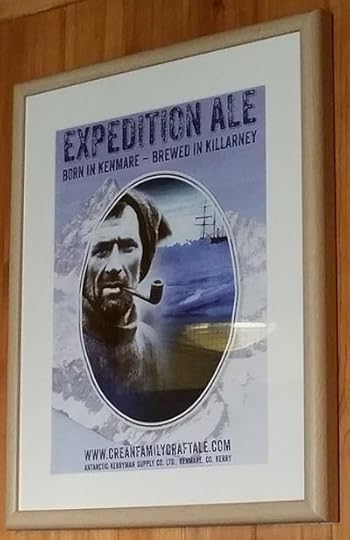
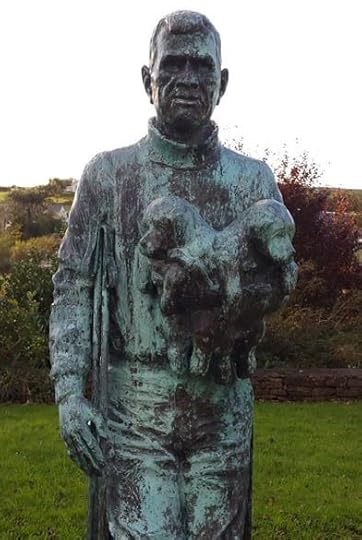
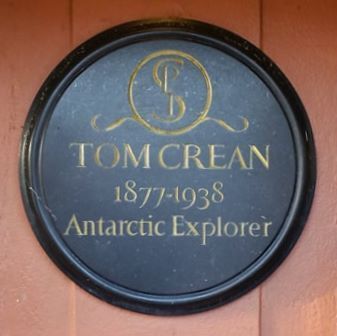
Anyone who's read any of the numerous books about Ernest Shackleton's epic tale of polar survival either recognizes the name "Tom Crean" or at least one of the below photos:
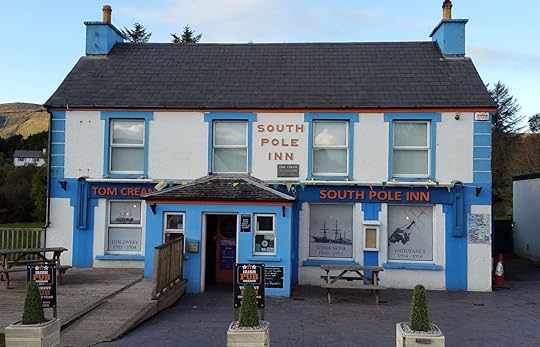
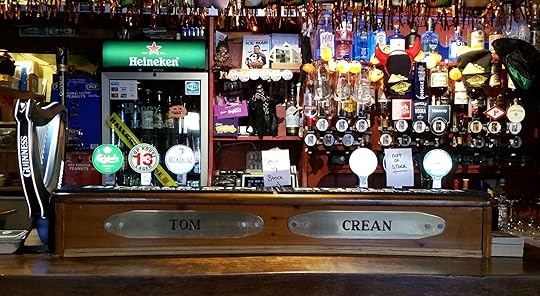
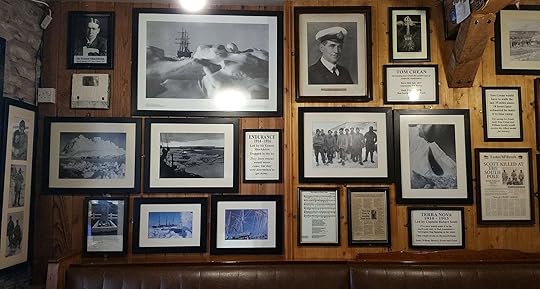
But I really knew very little about the man himself until I had the pleasure of visiting The South Pole Inn during a recent drive around Ireland's gorgeous Dingle peninsula, (most famous these days as the site of Luke Skywalker's "Ahch-To" hideaway island in the last two Star Wars films). In addition to selling a mean pint and being decorated in all sorts of Crean-related ephemera, this lovely pub also sold signed copies of this book, which now holds a special place on my Shackleton bookshelf.
Crean did indeed lead a remarkable life, which Foley's reportorial-style bio lays out in great detail. The book rightly focused on Tom's life as an explorer, but is neatly bookended with his Potat0 Famine childhood and his "retirement" from exploring, which coincided with Ireland's fight for independence. As such, it's as much a history as a biography, and all the better for it.
As an explorer, Crean is most famous for his role in the Shackleton saga, especially for being a key member of the trio that made the final harrowing trek across South Georgia Island. But until reading this book, I had no idea of his involvement in Robert Scott's fateful trek to the South Pole, (indeed, Crean was - I'm pretty sure - the only individual to take part in both the Endurance and Terra Nova expeditions). In fact, Crean's epic 35-mile solo trek to save the life of an ailing crewmate earned him the Albert Medal for bravery from King George himself. Had Scott survived his own trek, Crean's efforts would have been a high point of the entire expedition, but the tragic loss of Scott and his party ultimately overshadowed all other details of this particular voyage. (Sadly, Crean was later a member of the party that had to then go out and find/bury Scott's body.)
At times, Foley's story veers towards hagiography. But I really can't blame him; Crean led an amazing life but has long been denied his proper credit, since "back in the day" such kudos were rarely went to the front-line men and women, but were usually reserved for expedition leaders themselves, (or generals, or presidents...don't get me started). So more credit to Foley for blatantly and proudly looking to correct this oversight in his goal to gain some "official" recognition for Crean as a national hero, in the form or renaming the Kerry Airport or an Irish Navy ship in his honor, or something similar.
So, please go and like Foley's "Ireland Should Honour Tom Crean" Facebook page at https://www.facebook.com/honourtomcrean/. Buy the T-shirt! Buy the e-book! Visit the pub! Or at the very least read Crean's detailed Wiki page at https://en.wikipedia.org/wiki/Tom_Cre.... But for God's sake, don't visit Antarctica - that place is terrible!
We shall not cease from exploration, and the end of all our exploring will be to arrive where we started and know the place for the first time T.S. Eliot
An author’s comment, a second-read reassessment, and a slice of humble pie
I recently came across a comment that the author, Tim Foley, left on my original review of this biography of Tom Crean. It was pretty salty and forthright, and understandably so when I re-read my review and saw how acidic it was. The author taking the time to comment and my unusually negative review of a book about a subject close to my heart piqued my interest, so I decided to revisit Crean: The Extraordinary Life of an Irish Hero and give it another go. I’m very glad that I did, because this is a well-written, thorough and highly enjoyable biography.
For me, Tom Crean’s story has always been like the Antarctic itself: pure, white and uncomplicated. When I first read this book, it introduced unfortunately human and squalid elements to that simple story: authors bickering and squabbling over the details of Tom’s life and legacy. On reflection, I see how that coloured my entire reading and appreciation of this book. That is unfair, as taken in isolation this is a very good biography, and one that adds to our understanding of Tom and his place in both Antarctic exploration and Irish history.
That realisation has reframed most of my previous criticisms, and helps me put them into proper perspective. Tim’s research uncovered many new and corrected details about Tom’s life, and this is a welcome development. That said, without his Antarctic achievements no one would be interested in Tom’s life, and worthwhile as these corrections are, they are mostly relatively trivial details in the margins of the main story. One notable exception is the new information on Tom’s naval career before going to the Antarctic, as it is fascinating to consider how well travelled he already was before heading south. This, combined with his Naval training, is important background and context to what he did when in the Antarctic: his sense of adventure, resourcefulness and ability to overcome changes and challenges didn’t spring from nowhere. I still feel that the way some of the factual corrections are presented is somewhat sensationalised, but that didn’t jar as much on the second reading as it did first time round. Similarly, I found the speculation on what Tom may or may not have been thinking at certain points to be less intrusive on this second reading - it is still not my preferred biographical style, but it did not significantly interrupt the narrative flow.
The final chapter that recounts Tim’s work on gaining greater recognition for Tom’s legacy reads as a more natural conclusion this time round. Until relatively recently, Tom Crean’s story was one of initial obscurity, undoubted greatness, and a fading back into obscurity. Tim’s last chapter provides a fitting postscript to that story, and I am grateful to both him and Michael Smith for their work in bringing Tom’s story to much greater prominence. The sniping and snide commentary between Crean’s biographers (and, it must be said, not always coming from them directly) is still an unfortunate development in the evolution of Tom’s story, but thankfully his life and achievements tower above such petty concerns.
This review has ended up being more of a reflection on my interaction with the book and author than a comment on the book itself, but suffice to say that if you are interested in Antarctic exploration generally, and Tom Crean’s story specifically, then this book is worthy of a place in your library.
Original Review from 2025:
I didn’t gel with this biography of an undoubtedly great Irishman, for reasons that will hopefully become clear. Interest in Tom Crean has exploded in the last 25 years, with Michael Smith's biography of Crean, published in 2000, being the starting point for many people, including me. When Tim Foley outlined his interest in the subject in the preface, I was somewhat surprised that Smith didn’t get a mention - instead, there are references to “the number of falsehoods that have populated previous accounts of Tom Crean’s story” and “blunders.” I don't know if the two authors had a falling out, but there is very clearly a backstory - especially as some amateur sleuthing reveals earlier online versions of Foley’s writing about Crean that are effusive in their praise of Smith’s work.
Turning to the errors that he is setting out to correct, at first glance, two of them do seem fairly glaring - an incorrect birthdate for Crean himself, and the death of his mother being brought forward in time by 20 years. However, some further research reveals that both these errors existed in the contemporary records about Tom (his Royal Naval service record and letters written in New Zealand in 1904, respectively). The other examples of errors that Foley cites are relatively minor points of detail, and it also needs to be borne in mind that the Public Record Office of Ireland went up in flames in 1922, during the War of Independence.
Why does any of this matter, and why did it affect my enjoyment of this book? One of Foley’s main hooks is the need that he perceives to set the record straight and tell the real story of Tom Crean. “Falsehood” and “blunder” are fairly pejorative language, but in the end, these claims are a bit of a nothing-burger.
Leaving the preface behind and moving on and into the body of the book, I was struck by how often Foley used speculative language to try and convey what Crean might have said or thought in particular circumstances: “We can be fairly sure that…” or “It seems likely that…” This seems a strange choice for an author who has made correcting the facts such a central pillar of their book. I also found that Foley didn't have much that was new to say about the most interesting and significant events in Crean’s life - his exploits in Antarctica. This is hardly surprising when the Discovery, Terra Nova and Endurance expeditions have been so widely written about, but again makes the vaulted claims from the Preface ring slightly hollow. Finally, he ends the book with a chapter about…himself (!) and all the great work he has done to ensure that Crean belatedly gets the recognition that he deserves. In sum, the book struck me as more than a little self-serving.
Perhaps I am being unfair, but all of this strikes me as more than a little shabby, and not at all an appropriate way to honour the legacy of one of Ireland’s more remarkable sons. Like so much of Ireland’s history, it feels exploitative, and I didn't like it.
This is a terrific easy to read book. The author knows his stuff, and relays it effectively. One if the unsung heroes of the era of exploration, beautifully illustrates the life and character of Tom Crean . Text is interspersed with newspaper articles from the time. Well worth your time.
what an inspiring man. this book was very well researched and was not overly enhanced with boring accounts but rather riveting and poignant moments in Tom Crean's life. I read this on a whim andwas not disappointed. Very entertaining.