A mediados de la década de 1970, en el Catamount College, una universidad femenina del nordeste de los Estados Unidos, Gillian Brauer, aficionada a escribir poesía desde la adolescencia, está en su tercer año en el Catamount. Gillian ha logrado que la admitan en el taller de escritura poética de Andre Harrow, un carismático profesor que en sus clases anima a sus alumnas a expresarse de la manera más desinhibida posible.
El profesor Harrow está casado con una artista llamada Dorcas, cuyas perturbadoras esculturas de madera son muy cotizadas. Gillian, perdidamente enamorada del profesor Harrow desde el curso anterior, sabe por los rumores que corren entre sus compañeras que algunas alumnas han tenido la suerte de que el matrimonio las invitara a su casa y que alguna incluso ha viajado con ellos a Europa. A pesar de que sospecha que en los encuentros de esas alumnas con el profesor y su mujer hay algo turbio, Gillian se siente muy afortunada la tarde que Andre, días después de haberla besado por sorpresa durante un paseo, le propone que vaya a su casa, momento que señala el comienzo de una relación muy estrecha y malsana con Andre y Dorcas.
Joyce Carol Oates is an American writer. Oates published her first book in 1963, and has since published 58 novels, a number of plays and novellas, and many volumes of short stories, poetry, and nonfiction. Her novels Black Water (1992), What I Lived For (1994), and Blonde (2000), and her short story collections The Wheel of Love (1970) and Lovely, Dark, Deep: Stories (2014) were each finalists for the Pulitzer Prize. She has won many awards for her writing, including the National Book Award, for her novel Them (1969), two O. Henry Awards, the National Humanities Medal, and the Jerusalem Prize (2019). Oates taught at Princeton University from 1978 to 2014, and is the Roger S. Berlind '52 Professor Emerita in the Humanities with the Program in Creative Writing. From 2016 to 2020, she was a visiting professor at the University of California, Berkeley, where she taught short fiction in the spring semesters. She now teaches at Rutgers University, New Brunswick. Oates was elected to the American Philosophical Society in 2016. Pseudonyms: Rosamond Smith and Lauren Kelly.
As if The Secret History, Bunny, Dead Poet’s Society and My Dark Vanessa had a child, extreme in its darkness and obscenity. This is a spin on the classic gothic tale, where a young female student’s obsessive behavior and a desire to be seen lead to a feverish hell of manipulation, drugs and sexual abuse. I’m stunned by both the gorgeous writing and the intensity of its horrors.
(Why is this never mentioned on dark academia lists?)
I read Beasts in about two hours on a hot day and felt like it could have been a dream, or a hallucination. A short, hazy, spellbinding story, it quite breathlessly races through a short period of time in the life of its young protagonist, Gillian, an undergraduate at Catamount College, Massachusetts, in the autumn of 1975. Gillian is in love with her professor, Andre Harrow, and fascinated by his sculptress wife, Dorcas. She is obsessed with becoming part of the Harrows' lives and, jealously following rumours that they choose 'special' students to assist with their art, is drawn into their strange and intimate rituals. This is a very brief and highly taut novella which feels like it is meant to be read quickly and then re-read - something I think I'd need to do in order to effect a more in-depth analysis of the plot. It's all about atmosphere, with the weird, hypnotic effect of the Harrows leaping off the page and making you feel part of the narrative even though Gillian remains a somewhat remote character.
Subject: The Sundering of Innocence and its Fiery Consequence
This memorandum provides all Lovelorn Lasses an update on significant facts relating to the Pursuit of Professors (PoP) and the Investigation of their Secret Lives (ISL) and the use of the Voyeuristic Ingenue Surveillance Act (VISA) during times when they really should be studying and maybe bonding with fellow lasses and not worrying so much about their precious little feelings including their nascent sexuality. Our update below 1) raises concerns with the legitimacy and legality of certain PoP-ISL-VISA findings, and 2) represents a troubling breakdown of legal processes established to protect creative writing professors, their artistic and earthy wives, and their natural interest in seducing Lovelorn Lasses and then sharing photographic records of those seductions with various art magazines.
The “dossier” compiled by author Joyce Carol Oates detailing REDACTED is one of many such prepared by this individual. After carefully considering the ongoing recurrence of certain themes within her frequently issued reports (e.g. loss of innocence; the manipulation of younger women by older men; female sexuality as an elemental force; the appalling darkness that lies beneath civilized exteriors such as those veneers displayed by certain creative writing professors and their artistic, earthy wives), this majority audience is compelled to note that the author exhibits undue bias in favor of various Lovelorn Lasses and is clearly opposed to their manipulation and seduction by faculty members.
UPDATE: All photographic evidence destroyed by blazing fire; a certain faculty member and his wife burned alive.
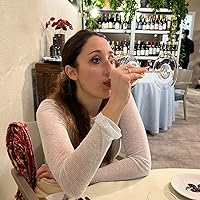
to meet a friend, and after a couple of bevvies we went here
and had a good meal - I had a weird rubbery starter followed by
PLA SAM ROD ( Boneless crispy fish cooked in exotic tamarind sauce) - most excellent. I recommend this restaurant.
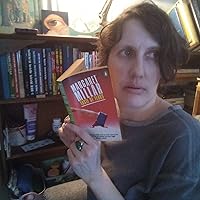
The reason I took Beasts by Joyce Carol Oates with me is because it is a very tiny itty little book and fitted into my inside jacket pocket - the Very Short Introduction series are also good for this -
and the reason I needed a book with me is that my friend is not always the most punctual of people and I hate doing nothing in a public space, I feel like a right idjit. So I always need a small book. (Most people fiddle with their iThings but not me, you won't get me up in one of those.)
Beasts (started yesterday, finished today) turned out to be not... good. JCO either never heard of The Secret History by Donna Tartt or thought in a Mozartian way that she could take the middling crapness of that inflated tale and change a few things round and boil it down to a crisp little shocker and scare everybody. However she stuffed it full of howling campus cliches - the harem of female undergrads with their knickers all on fire, the bohemian louche French-American (French = dissipated morals) poetry professor and his even more French Bohemian sculptress wife; the totemic raw sculptures; the unknown arsonist; the intense poetry "workshops"; the repressed narrator who gets all unrepressed, oh lord make it stop. And being so short, it stopped quite quickly.
Andre Harrow and his wife Dorcas came to Catamount College, in Massachusetts, in the mid 1960's
Gillian is 20 year of age ..... She was in her third year at the college... With an infatuation professor Andre Harrow.
Gillian wanted to 'be good' ... "If you love a married man you exist in a special, secret, undeclared relationship with his wife."
She told her self no more---she resolved not to brood upon Andre Harrow anymore... Ha!
"You would wonder that I could be so emotionally inexperienced, or under nourished, as well as sexually immature, at the age of 20, in 1975. I've been born in 1955 and had come into consciousness during the 1960s, the most sexually "liberated", "amoral" era in United States history."
Subtle, dark. and seductive..... Joyce Carol Oats examines the the position of power... and obsession.
Olyan, mintha a Holt költők társaságának keserű, felzaklató inverze lenne. Itt is egy tanár van a középpontban, Mr. Harrow*, aki hatással van a tanítványokra, és elég szuggesztív ahhoz, hogy saját irodalomértelmezését (vagy világnézetét - ez a kettő összemosódik) egyfajta mágikus Ígéret Földjeként mutassa fel a diákoknak. Csakhogy ezek a diákok fiatal lányok, az irodalomértelmezés pedig holmi D.H. Lawrence-ből eszkábált, de titokban de Sade-dal flörtölő szabad szerelem tana, ahol a szabály: "Minden más megengedett, de unalmasnak lenni tilos." Egyértelműen aszimmetrikus hatalmi helyzet: az egyik szereplő élvezi a tanári pozíció minden előnyét, beleértve azt is, hogy ő nem csak tanár, hanem egyenesen "jó fej tanár", aki megenged magának olyasmit is, ami a merev oktatási rendszer keretei között újszerűnek és lazának tűnik. A másik oldalon pedig a lányok, akiket egyszerűen nem készítettek fel arra, hogy egy hatalmi helyzetben lévő személy milyen módon használhatja ki sérülékenységüket és instabilitásukat. Őket arra nevelték, hogy a tanárhoz tisztelettel és bizalommal kell fordulni - erre jön egy, aki filozófiát épített a saját pénisze köré.
Súlyos könyv. Egy toxikus helyzet fájdalmasan pontos leírása. Az a fajta szöveg, amiből az ember szeretne kimenteni egyes szereplőket, mert ha rövid is a regény, nekik nem elég rövid.
* Az, hogy a tanár úrhoz tartozik egy feleség, aki egyben szobrászművész és társ a bűnben, nem ássa alá ezt az értelmezést, inkább sokrétűbbé teszi - hozzátesz egy lehetséges értelmezési tartományt a művészet démoni aspektusáról.
Joyce Carol Oates, Beasts (Carroll and Graf, 2002)
Joyce Carol Oates cannot be human.
It is simply impossible for a single human being to turn out the work she has over the course of her career, consistently stratospheric in both quality and quantity. Her thirty-year bibliography is so vast that the major internet repository of Oates research and criticism doesn't have a full list anywhere, but is now a searchable database. Another admittedly incomplete bibliography on the web lists eighty-nine books split between novels, short story collections, and poetry, fifteen anthologies she has edited or co-edited, ten works of non-fiction, and ninety anthologies in which her work has appeared since 1980 (and those are only the horror-themed anthologies). She is the Merzbow of literature, the Sun Ra of wordcraft, both the dream and the nightmare of the bibliophile with a limited reserve of cash. The truly astounding part of all this is that one can walk into a (very well-stocked) bookshop, pick up a Joyce Carol Oates book at random, and have an odds-on chance of being rewarded with one of his finest reads of the year. Now add to this idea the fact that Oates is, for all intents and purposes, a one-trick pony, and explain how one person can write so much material on a single theme and still have it come out so very, very well.
Such is certainly the case with her recent novel Beasts. Anyone who's read Oates before, in whatever form, is liable to know a few things about this book even before cracking the cover: the main theme of the book will be human degradation. One of the characters in the book will be horrified by the degradation, even while experiencing it, and this horror will cause the character to commit some sort of extreme and socially unacceptable act. There will be a great deal of uncomfortable eroticism. Then you open the book, read the first two small chapters, and here's something new: Oates is going to tell you all this in the first four pages. It's almost as if she's throwing down the gauntlet to the reader; "you know it's coming, I know it's coming, let's see how much I can give you at the beginning and still beguile you with my novel."
And utterly beguiling it is. Gillian Brauer is a student at a small college in Massachusetts who is enamored of one of her professors. She is not alone in this, but the lengths to which she goes in her obsession with him are rather farther than the others go (in one early scene, she surreptitiously follows his wife through town, and mentions she has done this a number of times before). She knows that sometimes the professor and his wife, a sculptor whose most recent show at the school's gallery has ignited a firestorm of outrage, will sometimes allow students into their inner circle, but that these students are very tight-lipped about what goes on there. Secret society stuff at its best. Gillian, too shy to confess her love for her professor and desire to be one of those students, begins to imagine that all of her housemates in the small house/dormitory where they live, are members of the inner circle, and eventually gets to the point where she must either confront her professor or go crazy.
And that's the light, optimistic part of the novel. Things get much more fun after the confrontation.
This novel is obsessed with small. It is slim--a hundred thirty pages in the hardback edition. Gillian lives in the smallest dorm on campus and is obsessed with gaining entrance into living quarters with even fewer people. Her obsession grows when, after a semester with the professor in a normal-sized lecture class, she is admitted to one of his workshops, with only eleven students. Her classmates grow thinner over time. Small is everywhere. There is a whole (probably longer than the book itself) thesis to be written on small in here. The themes Oates taken on, on the other hand, are not small in the least, as they never are. And, as always, she does so with such style that the reader cannot help be compelled. I didn't finish this book in one sitting only because I had to go to bed last night if I wanted to have a fresh enough mind in the morning to keep involved with the story.
Gillian's professor is fond of muttering Nietzsche under his breath at odd times. Funny that Nietzsche's most famous aphorism is never mentioned in the book: "...and if you gaze for long into an abyss, the abyss gazes also into you." Oates has been gazing into this particular abyss for thirty years now, throwing down that gauntlet, challenging it to gaze back, and reporting on what she finds. Perhaps she will continue to do so for another thirty years, and we will continue to get such brilliant books as this. ****½
Beasts by Joyce Carol Oates is a novella that has been on my TBR for far too many years. I'm so glad I finally read it!
Our protagonist Gillian is a college student who is completely and utterly obsessed with her poetry teacher—Andre Harrow. He's attractive, captivating, his voice is sexy. She's smitten. She wants his attention so terribly, she'd do anything to get it.
Except... talk to him. There are rumors about Andre and his wife taking girls out on trips, only none of them would ever kiss and tell. Beasts is a story about human nature in its most sinister and primitive forms. It's hard to formulate a concise review without giving the entire plot away!
“Esto no es una confesión. Como ustedes verán, no tengo nada que confesar”.
Asi se expresa Gillian, la protagonista de este relato largo o novella, durante el primer capitulo de Bestias de Joyce Carol Oates. La novela comienza en el presente, 2001, y durante este primer capitulo, Gillian visitando una exposición en el Louvre, recuerda una época de su pasado que la transporta a 1975, veinticinco años antes. Es cierto que en las historias de JCO suelen haber estos flashbacks pero en este caso concreto, cuando Gillian rememora esos hechos traumáticos de su pasado, son como otra historia dentro de la novela.
"Cuando ha nacido una obsesión, echa raices como la mala hierba...".
Localizada en un campus de una universidad imaginaria en Massachussets (un terreno que esta autora domina y controla perfectamente), el Catamount College, apenas hay unos pocos personajes y solo hay dos o tres localizaciones más aparte del campus y como es habitual en muchas de sus historias la protagonista absoluta es la mente de Gillian Brandauer, una universitaria totalmente enamorada y obsesionada por su profesor de poesía, André Harrow, uno de esos personajes masculinos, tan habituales en las historias de JCO: hombres dominantes que creyéndose superiores intelectualmente dominan bajo una falsa patina de encanto a mujeres mucho más jóvenes. André Harrow usa su poder como profesor universitario y experto en DH Lawrence para seducir a sus alumnas y bajo la excusa de enseñarles a escribir poesía, las anima a mostrar su yo más íntimo desnudándose emocionalmente y así poder ser libres a la hora de lanzarse a crear.
"Técnicamente, Gillian, tu poesía siempre es interesante pero... -casi sin querer, sus dedos tocaron mi muñeca como para consolarme- está truncada. Es como si tuvieses una mariposa atrapada en una jaula y dedicases todo tu esfuerzo a decorar las barras. La mariposa se agita, trata de salir, pero tú no la ves".
El terreno en este caso es el suspense psicológico y para llegar a este suspense, JCO tiene un mcguffin que es el misterio que envuelve la vida de André Harrow y su mujer, una pareja sofisticada que se rodea de “favoritas” elegidas por André en sus seminarios de poesía, y las introduce en su circulo social y familiar. Y digo que todo esto es un mcguffin porque lo que de verdad le interesa a esta autora es explorar la mente de Gillian; enamorada y víctima obsesionada. Pero JCO no sería quién es si sólo nos mostrara los matices planos del blanco y negro, por lo que se encarga de mostrarnos que Gillian toma sus propias decisiones y no es tan víctima como parece. Y por eso me parece tan genial la forma en que empieza la novela, diciendo Gillian que no tiene nada que confesar a la hora de contar su historia, porque no hay nada que confesar. El hecho de que nos paseemos por esta historia sólo desde el punto de vista subjetivo de la mente de Gillian, llegado un punto nos preguntamos...¿si todo lo que ella nos ha contado no estará de alguna forma maquillado por su mente? Aquí es donde radica el arte de esta autora inmensa: la cantidad de matices, recovecos que tiene la mente humana y en este caso concreto, la historia de Gillian puede tener múltiples lecturas.
La novela está cargada de tensión sexual donde la figura de DH Lawrrence juega un papel central en la simbología que los personajes quieren transmitir. Vuelven las dualidades Gillian es también Filomela, otro personaje femenino cargado de simbologia y por supuesto tenemos el tema de hasta que punto lo que empieza como un sueño idealizado se puede convertir en una pesadilla, todo muy en la linea de esta autora. En definitiva, otra novela donde Joyce Carol nos introduce en la mente de una mujer que llegado un punto no sabe distinguir realidad de idealización, sin embargo, es lo suficientemente honesta para mostrarnos que Gillian no es siempre una victima. Los matices son la esencia en la complejidad de sus personajes.
“Primero extendí periódicos sobre el suelo del cuarto de baño. Y luego corté hasta la raíz, hata dejar sólo una sombra cubriendo el cuero cabelludo. Al terminar, recogí los mechones que resplandecían en el suelo. Los separé en dos grupos y los trencé. Y al día siguiente le llevé la trenza envuelta en papel de regalo. El sr. Harrow se quedó helado: -A que te he sorprendido. Ya no soy una niña tonta. Ya no soy predecible-.”
‘How obsession begins, takes root like a virulent weed….’
This is a dark novella filled with obsessive behaviour, in response to quite evil control, manipulation and abuse. The cover is what made me pick this up. Fuseli’s Nightmare is the perfect image for the story. Told in the first person, It begins in Paris at the Louvre, where a totem prompts Gillian’s memories of her time at Catamount College, 25years earlier(1975) where she comes under the influence of her English professor, Andre Harrow and his sculptor wife, Dorcas. It’s a female college and the young women in his exclusive poetry class all seem to become obsessed with him and jealous and suspicious of each other. He reads them sexual poetry, mostly D.H.Lawrence, encourages them to write the same sort of stuff. His nickname for Gillian is Philomela, supposedly because she is quiet in class but it becomes a nastier allusion later. While repulsed by the professor, I read this book quickly. The writing pulled me through this quite horrid story. Many of the young women suffer quite terrible mental harm, there’s mysterious fires and disappearances but the ending is appropriate and I was glad to turn the final page.
Erm. The jacket made this sound a bit more like a gothic horror romance than it was. Totally false advertising. Instead, I got a tedious period piece about spoiled college students in love with their wretched abuser of a professor and his sculptress wife. I found it tedious. And more a vehicle for Ms. Oates to show her own academic prowess than a suitable vehicle for storytelling. The crux of the book only takes about 30 of the book's 138 pages; everything else merely builds up to the plot. The characters are dull and drawn poorly, seen only vaguely through the main character's eyes; although, perhaps that is only because she's so obsessed with her professor. He's actually not terribly impressive. All the girls merely suffer from guru syndrome. The climactic ending is silly and overblown and a bit improbable, frankly, speaking as one who used to be a smoker. And I tired of the constant 'beautiful Dominique' descriptions: Because she's secretly a woman of colour, she is bold and dramatic and exotic. And the main character, I swear, is in love with her. But that only serves to set Dominique apart, make her less rounded as a character. So, no. I wasn't into this one. For my first foray into a full-length JCO work, I was terribly disappointed.
I found Beasts to be a disturbing combination of traditional Gothic horror and Clive Barker at his most vulgar. While Oates does not approach the graphic nature of Barker's writing, the innocence of her setting (a small, liberal arts college) and her protagonist (Gillian, a young, student at the college) makes the vulgarity all the more unsettling. The story itself moves rapidly and draws the reader into a shadowy world of deception, drugs, and sexual deviance, while simultaneously maintaining the naivete and hopeless romanticism of narrator Gillian. The conclusion is sudden, shocking, and does not disappoint.
4,5 - J'ai adoré. Captivant, profondément dérangeant, une plongée au coeur d'une université pour filles qu'un professeur fascine. Oates à son meilleur.
In finishing the novella, I remain wholly unenthusiastic about its premise and conclusion. The characters were adequately developed: Gillian, Andre, and Dorcas made the [un?] holy trinity of main characters. The peripheral, secondary characters seemed heavy handed: Sybil? Marisa? ...They seemed written in as part of another story line that was never quite developed or integrated.
It's incidental to me that while the book takes place at a women's college, ostensibly among close friends, each action and behavior seemed totally encapsulated in the individual character. There is little non-superficial interaction between anyone, excite for Gillian's insipid fawning. Maybe that was the point, that each individual is completely isolated from one another ... but were that the intention, I remain even less impressed with this work.
I expected the book to fit more into the tradition of being John Fowles-esque, insofar as the character becomes very much a victim of others behaviors. For me, the main problem was that there wasn't enough struggle, there wasn't' enough conflict internalized by the characters.
What a book! Short. Quick. Not a wasted word anywhere.
Ms. Oates can write'm long, short and in between. This is a short novel, and a fast read. It's also intense, somewhat gory in places, riveting in others, kind of a horror-cum-thriller with sexual overtones. It's got it all.
Gillian is a junior at a small, private college in the Berkshires, MA. She's taking a poetry class which becomes - well it slowly becomes a be-all to end-all for the young woman. She falls in love with the professor who teaches it - seminar-style class - and in thrall to his wife. From the start, the reader knows that this does not bode well for young Gillian.
Yep, it's got that constantly-continuing creepy vibe that draws you in - or should I say sucks you in? Either way, you don't want to put the book down - if you're like me - and yet when you continue reading, it's like: "What am I reading here?"
I should also say it's an important book for any college-age young woman utterly besotted with one of her teachers. (Or even for a his or a their.)
Mi ha ricordato molto sia “My dark Vanessa” che “Dio di illusioni” (entrambi mi sono piaciuti di più). L’idea era buona ma non parte fino a metà circa e su un libro di 150 pagine non va benissimo.
This is a very troubling read in a really, really good way. While staying well within the POV of our now older, but generally once needy and naive young undergraduate narrator through her titillating and abusive relationship with a poetry teacher and his French artist sculptor wife, we get a panorama of beastly--non human, non rational, sensual (although perhaps that's too positive a word, but there's really less morality and more actual character study here so...)--behavior, attitudes, and acts. Nicely, artistically, in the great modernist tradition, there's not so much editorial here as raw imagined human experience and we as an audience are invited to sit back and moralize, or not, and in that I feel like Beasts is a very personal read and that each reader will take something wholly different from it--because there's nothing more interior, avoided, and therefore personal than each of our relationships to erotica and the power structures that complicate our every move in that taboo arena.
I guess there's the double taboo effect. Many are uncomfortable with erotica (not the literary genre but rather the topic of sexuality, one's relationship with all things sexy) in general because of moral/societal strictures, prudery (me--guilty), or religious doctrine. And those few who remain relatively pure in their relationship to the erotic--that is void of religious or community standards or gross trauma--will probably have pause based on the power structures that cloud sexuality when partners of different ages, experience, genders, marital relationships etc. etc. begin to couple.
Sexuality is perhaps the cloudiest of all human enterprises--despite it being, along with food and shelter one of our three natural primary concern in life--because of the societal religious discourses, the taboo on speaking of it among ourselves, and then the inevitability of how social status and power structures are implicit and create another, second level of taboo around the whole thing.
Messy, very messy. Beasts is about just how messy. The novel uses fire, a standard metaphor for passion, and art--both poetry and sculpture--as foils for our protagonist's first major experience with pure eroticism. As always, I think, those experiences, coming as they do in adolescences and young adulthood are creepily intertwined with the love that, as human beings, we've only experienced up to that time with and for our parents. This creates that most twisted of situations, the very young person becoming infatuated with the parent stand-in and the power structure so taboo it's become a cultural obsession, a kind of literary displacement of incest that's haunted Gothic as much as ghosts since Walpole's Castle of Otranto.
Oates handles all of this really well. it's a swift, engrossing read. My take on messiness? Although it's outside of what the narrator could have known--and perhaps this is the reading in, the personal reaction I warned you about earlier and mine is bound to be very different than yours--speaking as one of those semi-charismatic (at least enthusiastic) literature and creative writing teachers--their reasons for being such beasts (tee-hee, I made a pun!) are exactly the same as the narrator's reasons for becoming infatuated with one of them: we never felt loved by our mothers so we seek the limelight, attention, through writing, performing, teaching, because we too are vulnerable and needy. Is not Andre seeking some kind of mothering from Dorcas? So, it's there, perhaps, in the novel, but subtly portrayed. The final battle here seems to be fought between the two women and one could say that the focal point--poor Prof. Andre--is a pawn in these female weaknesses and strengths.
Poor humankind. We are broken, mostly, and may never be healed. it makes for good books. Who here, in the end, is the protagonist and who the antagonist, who the Svengali and who the victim? The question, as usual, is much more important than the answer.
Voilà, ça c'est de la dark academy ! Court, efficace, Joyce Carol Oates distille la tension, pendant les cours, dans le pensionnat, entre les étudiants, avec le professeur de poésie, le très emballant Andre Harrow... Mais que vient faire sur cet échiquier Dorcas, l'épouse d'Andre et sculptrice de totems énigmatiques ? 2 premiers chapitres qui répondent aux 2 derniers, comme en miroir, et au milieu chacun avance ses pions, comme un jeu de faux-semblant, un jeu du chat et de souris. Attention, petite souris, le chaos n'est pas loin...
The fascination that philosophy / poetry / literature professors exert on their students has given birth to countless books, out of which I can clearly recollect two, The Dying Animal by Roth and Disgrace by Coetzee. Both worth re-reading (a compared analysis would be worthwhile)
Unlike her male colleagues, Oates takes the narrative point of view of the young woman, and this is no small choice. The young silent Gillian alias Philomela, falls deeply in abnegation-love with her poetry professor - a vivid reader of D.H Lawrence's poems. Unlike in other books mentioned above, there is a love triangle with Dorcas, the professor's wife and sculptress. Students are trapped by the Pr H. and served on a platter to the lurid Dorcas for her totem creations. It made me think of the Minotaurus myth - young virgins sent by the King Egee to a labyrinth to appease the hunger of a monster. Yes, there is in these young students the complete surrender of their body in blossom to the immortality of art - comes before the Dyonisiac ritual elements of French feast (cassoulet), binge drinking (red wine), (maybe drugs), and sex. Why not if it is for the sake of art? (I didnt understand why Oates tricks the story with the discovery of porn magazines and other students' pictures by Gillian).
What I really liked is Oates 's dark humor. She introduces very comic characters like an old green parrot who bleeds from its own pecking, and is said to have resurrected many times like a phoenix (poor figure of the flaming phoenix though). It echoes the myth of Philomela, a young virgin deflorated by a cousin who cut her tongue - she later was metamorphosed into a blood-breasted bird. Is the old green parrot the sad version of Gillian or is it a student who got metamorphosed?
Of course, it all ends tragically by destruction by fire. But this is a very foreseeable, classic ending. Would have expected something more creative.
Great book, with a lot of mirrors - I have just noted a few ones. Would require another reading.
"...logic has nothing to do with truth, only with premises."
Apparently, the WORLD did not end today. Then again, it's still early to assume. Anyways, whether the world will end today or not, I've read Beasts in no rush at all. The pages simply flew on their own accord. Quick and haunting!
"In love at a distance, so much of life has to be invented. In love at a distance, you learn the strategies of indirection."
I'm a huge Joyce Carol Oates fan, so there is some inherent prejudice in my view of this book. I see that by other reviews here, it's one of those love it/hate it books. I'm always puzzled by why a book elicits such diverse reactions.
With "Beasts", I think a lot has to do with the atmosphere of the novel -- an Eastern liberal arts college for women. I have no idea if it depicts this world accurately, having only attended college in a somewhat backward Montana town. This is key. If you can't imagine yourself as the sensitive, shy, poetic narrator awed by the bohemian professor and his wife's earthy, erotic power, you'll find the whole premise false, even annoying. With Oates, I find I have to relax, give her the time to build a convincing voice and world and trust that I will enjoy the book in the end. She is one of those authors that will reward your patience. By the end of this, I had found the way into the main character, her motives had an internal logic, the "beastly" parts of the professor, the pretentiously arty wife and the other overly self-involved students made perfect sense.
A very worthwhile, short read. Difficult at first, but finished so well.
Second Read: (4/2/2016) Just as dark, twisted, and seductive as I remembered it. Not a big fan of Joyce Carol Oates but I do love this book!
Original Review: (1.5.2001) A gorgeous, lush, provocative story that really illustrates bond between professor/student and how corrupted it can become. I'm not a huge fan of Joyce Carol Oates, but I really enjoyed this book. The characters and writing style were so distinct and memorable. Additionally, I attribute my love of the poet D.H. Lawrence to this book!
Il gelido inverno del Vermont🍂 Una giovane inquieta che scrive poesie Un amore malato Continui richiami alla classicità🏺 Un professore carismatico e naïf Un’artista dissoluta e affascinante, che poi sarebbe sua moglie Una serie di inspiegabili incendi🕯️ Un gruppo di studentesse che si odiano di un amore bruciante📓 ⠀ Ecco tutti gli ingredienti che mi hanno fatto perdere la testa per questo romanzo breve di Joyce Carol Oates: si legge in un baleno, ma pianta gli artigli in profondità. ⠀ Il libro giusto per voi se avete amato “Dio di illusioni” e “Mia inquieta Vanessa”.
کلیت فضای اثر رو دوست داشتم اما ترجمه اصلا به دلم ننشست و خیلی جاها نمی فهمیدم جمله ها منظورشون یا ربطشون چیه. متن اصلی رو هم پیدا نکردم که حداقل موارد ابهامو چک کنم باهاش