

What do you think?

Divine Invasions
Explores the fascinating life and visionary work of the science fiction writer whose stories inspired the Philip K. Dick Award, noting his profound influence on other writers of the genre
352 pages, Hardcover
First published January 1, 1989
Ratings & Reviews
Friends & Following
Create a free account to discover what your friends think of this book!
Community Reviews
Displaying 1 - 30 of 96 reviews

March 11, 2015
Philip K. Dick was a rock star.
He was not Eric Clapton, or Paul McCartney, or Mick Jagger anymore than he was Robert A. Heinlein or Isaac Asimov or Arthur C. Clarke – but he was the legendary underground icon whom they all respected and feared.
Most any article or story about Rock legends will invariably come around to the early personalities that they worshipped on their way up. In clipped but adoring reminiscences in Liverpool English, the listener will be regaled in awed hyperbole about this “bloke who could really jam” and of the love and affection that these multi-millionaires and knighted famous success stories had for this early genius whom they all respected, but whom popular fame had eluded.
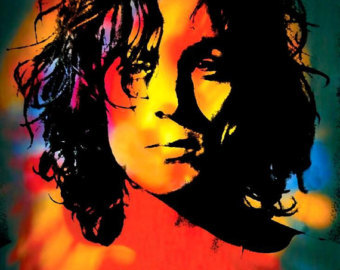
In Pink Floyd lore, PKD was akin to Syd Barrett.
Lawrence Sutin’s 1989 publication Divine Invasions is a well –researched, admiring but objectively critical biography of the late writer who died, at age 53, in March of 1982.
I have to say that I loved this book; I approached its reading with an expectation and anticipation akin to going on a date with a girl when I was a young man. I am so enamored of Phil’s writing that reading ABOUT him was something that I very much enjoyed. I liked the frequent references to his works and especially to the The Exegesis of Philip K. Dick, where is revealed so much of the backstage to his Globe performances.
Sutin coins the term PhilDickian to describe that great and ubiquitous body of influence that has changed the face of speculative fiction and has given voice to so many young writers and artists since.
In Divine Invasions we learn of Phil’s childhood and the infant death of his twin sister that seemed to have such a profound impact on his psychology. Sutin describes Dick’s difficult relationship with his mother that would last most of his lifetime, with only islands of brief truces between the two. There are passages of his early, Beatnik life in Berkley and San Francisco and of his early friendships with 50s SF writers like Van Vogt and Poul Anderson.
And the writing. Sutin’s biography follows a chronological, linear path through his marriages and the novels and short stories that were pounded out 80 words a minute, month after amphetamines swilling month in his frenetic 1960s. Phil’s was an epic, though subversive, artists Bohemian rhapsody fueled with a Wagnerian score.
Finally, Sutin tells of the fateful epiphany of 2-3-74 and of the theological musings that would transform his later writing into some of his finest. Dead too soon, and just as his fame was beginning to take a well-earned turn, Sutin’s fine work culminates into a chronological list of his work.
Goodbye Phil, wish you were here.
He was not Eric Clapton, or Paul McCartney, or Mick Jagger anymore than he was Robert A. Heinlein or Isaac Asimov or Arthur C. Clarke – but he was the legendary underground icon whom they all respected and feared.
Most any article or story about Rock legends will invariably come around to the early personalities that they worshipped on their way up. In clipped but adoring reminiscences in Liverpool English, the listener will be regaled in awed hyperbole about this “bloke who could really jam” and of the love and affection that these multi-millionaires and knighted famous success stories had for this early genius whom they all respected, but whom popular fame had eluded.
In Pink Floyd lore, PKD was akin to Syd Barrett.
Lawrence Sutin’s 1989 publication Divine Invasions is a well –researched, admiring but objectively critical biography of the late writer who died, at age 53, in March of 1982.
I have to say that I loved this book; I approached its reading with an expectation and anticipation akin to going on a date with a girl when I was a young man. I am so enamored of Phil’s writing that reading ABOUT him was something that I very much enjoyed. I liked the frequent references to his works and especially to the The Exegesis of Philip K. Dick, where is revealed so much of the backstage to his Globe performances.
Sutin coins the term PhilDickian to describe that great and ubiquitous body of influence that has changed the face of speculative fiction and has given voice to so many young writers and artists since.
In Divine Invasions we learn of Phil’s childhood and the infant death of his twin sister that seemed to have such a profound impact on his psychology. Sutin describes Dick’s difficult relationship with his mother that would last most of his lifetime, with only islands of brief truces between the two. There are passages of his early, Beatnik life in Berkley and San Francisco and of his early friendships with 50s SF writers like Van Vogt and Poul Anderson.
And the writing. Sutin’s biography follows a chronological, linear path through his marriages and the novels and short stories that were pounded out 80 words a minute, month after amphetamines swilling month in his frenetic 1960s. Phil’s was an epic, though subversive, artists Bohemian rhapsody fueled with a Wagnerian score.
Finally, Sutin tells of the fateful epiphany of 2-3-74 and of the theological musings that would transform his later writing into some of his finest. Dead too soon, and just as his fame was beginning to take a well-earned turn, Sutin’s fine work culminates into a chronological list of his work.
Goodbye Phil, wish you were here.

January 4, 2021
A Genuine Trickster
To kick things off, Philip K. Dick is an American science-fiction writer who lived from 1928 to 1982, mostly around San Francisco, California. At least, that's often how he's labelled. However, the man is not your one-dimensional guy, by a long shot. A keen observer of the United States in the 50s to the 70s and California in particular, he is a proficient conceiver of theories about the nature of mankind and the reality we live in. Soon, you realise it is by no means obvious to decide whether PKD's latest theory is designed to be a charade or not.
As for me, since I first read the French translation of a short story collection titled 'Immunity' Immunité et autres mirages futurs in 2009, I suppose Philip K. Dick has been embodying a considerable cast of characters in my life.
First, the guy is a gifted storyteller, a full-fledged builder of universes both engaging and thought-provoking. Always working on his next pet theory, he is as good a teacher of scepticism as any, successively weaving and exposing elaborate layers of deception and simulation in his works.
He is also a somewhat endearing weird guy with a childlike wonder or puzzlement at the reality around him. The flipside of it being a propensity for bouts of violent, acute, severe, depression. Also, a well-established tendency to elaborate over the mundane events of life as it is, telling conflicting versions over what's what. And that certainly makes for great biography material!
Actually, from 2009 onwards, I suspect that I more than occasionally saw occurences both personal and collective in our mad world through this lens, applying the same careful test to the self-styled obvious, myself being by no means immune to moodiness, lack of... hmm practical sens regarding time, and a deep streak of scepticism, perhaps inherited from a complicated two-sided family life and conflicting—even jarring—versions about it.
As years passed, I have been reading fewer and fewer of his works (the peak being somewhere between 2009 and 2012) however I kept on using this rigorous and yet imaginative way to look at the world as a maze, deceptively simple, all along. Reading the biography, I realised how vicariously I have been living lately, especially since the outbreak of Covid-19 and the first lockdown in March 2019. And be certain this work is no exception: it demonstrated how much I need to rely on other people's views when gauging the purpose, the value, the worthiness of life and its ambivalent interactions. Studies, jobs, decisions about my familial relationships, unrequited loves, travels, studies, you name it. The 'PKD Method' (the Voigt-Kampff test?), or rather the corpus of interrogations projected by Dick on reality (the reality projected by Dick?) has been behind many a decision, conscious or unconscious, I bet!
With some relatives and friends, he has always been a touchstone of reality somewhat, all these years. Until now, I have only ventured once into an 'authorial' account of the writer's life (namely, I Am Alive and You Are Dead: A Journey into the Mind of Philip K. Dick). Discussing the book with Tara and Mike, I thought it was time for me to apply the careful scrutiny to the original scrutinizer himself :) So here it is!
Now to the merits of the biography proper:
1) The research I deem outstanding. It certainly rivals S.T. Joshi's I Am Providence: The Life and Times of H.P. Lovecraft (a biography of H.P. Lovecraft), if not in terms of mere page count, then in how much insight you can get from reading Divine Invasions :)
2) Lawrence Sutin does not sugarcoat the narrative about his subject: you learn quite a bit about Dick's marital life, his wife Kleo's unfailling support (ill repaid*), Anne's bright personality, Nancy's human warmth and worth, Tessa's patience... Dick's qualities as a husband and shortcomings and flaws on the other hand: his propensity for falling in and out of love in rapid-fire succession, his need for a good audience, attention, control and some form of, yes, motherly support from his five successive wives.
At his very worst, he was harsh and dismissive about his mother, could prove physically violent with his wives — unnerving accusations to and from Anne, general unreliability (especially in 1971-1974) bouts of erratic, reckless behaviour. The biography even relates two disturbing, quasi-homicidal episodes.
Also, Dick proved a piece of work when it came to account for a given situation, to take full responsibility for his past decisions, telling conflicting versions of the events depending of who he was talking to at the given moment. So, although a supportive and generous dude, fairly often he would put on an act, change his mind and, yeah, end up being quite a wild card for his acquaintances, relatives and friends. Which should perhaps not come as a big shocker given the range and versatile, ever changing nature of his bibliography. Which at the same time hinges round two or three fundamental interrogations: What is human? What is reality? Why did Jane, my twin sister, die in infancy?
3) I can only imagine how complex putting together this biography was for L. Sutin, given all the inconsistencies and conflicting versions about nearly all events in Philip's life.
So much so that to me, this work appears first as a monument to the biographer's dedication to go on challenging PKD's theories and versions and eventually, Sutin's own image of his subject Philip K. Dick.
Finishing this ambitious and masterful work, there is little doubt I have acquired a keener eye as to the main character's virtues and destructive traits, and at the same time, it is as though I've just left a relative, someone I miss without having known him personally, which I tend to think, is the hallmark of conscientious work from committed biographers, and no mean achievement.
I can add little besides this: if you are looking for a committed, solid and engaging entry about the writer's life, I'm reasonably certain this is the place to go.
Sutin's biography includes an index, a sources and notes section at the end of the book and (oh joy!) a handy twenty-page long 'Chronological survey and guide' of PKD's major works and their publication history! A highly recommendable work in all regards. 5/5
REFERENCES:
Biographies/guidebooks:
I Am Alive and You Are Dead: A Journey into the Mind of Philip K. Dick
Le Petit guide à trimbaler de Philip K. Dick
My personal selection of novels from PKD if you want to give it a shot:
Eye in the Sky
The Man in the High Castle
The Three Stigmata of Palmer Eldritch
Do Androids Dream of Electric Sheep?
Ubik
A Scanner Darkly
VALIS
Short story collections:
[feel free to check the reviews for short story titles both in French and English]
Immunité et autres mirages futurs
Minority Report and Other Stories
Un vaisseau fabuleux et autres voyages galactiques
Paycheck: Et autres récits
PKD-like essays:
Travels in Hyperreality
Brave New World Revisited
La Langue des medias : Destruction du langage et fabrication du consentement
Novels & short stories with analogous spirit:
Russian-doll narratives:
The Manuscript Found in Saragossa
Drugs and Alternative realities:
The Futurological Congress: From the Memoirs of Ijon Tichy
The severe limitations of human understanding:
Solaris
For Ubik aficionados, a haunting, dreamlike story by Boris Vian:
Froth on the Daydream
Information overdrive:
Stand on Zanzibar
Sceptical short stories from writer Milan Kundera:
Laughable Loves
Yukio Mishima's systematic deconstruction of everyday reality throughout a man's life in Japan:
The Temple of Dawn
The Decay of the Angel
[Both part of Yukio Mishima's Sea of Fertility tetralogy]
Anthony Burgess complex, masterful story of an ageing Englishman looking for purpose as he writes his friend's (the Pope) hagiography, with the benefit of hindsight:
Earthly Powers
Michel Houellebecq's stunning story on work, art, consumer society, and life:
The Map and the Territory
Camille Ammoun's Borgesian quest for the Aleph:
Ougarit
Julio Cortázar's mottled, variegated, multifaced, groundbreaking, life-sized story of life and storywriting in Paris and Buenos Aires:
Rayuela
Films/series:
- Direct adaptations:
Blade Runner
A Scanner Darkly
The Truman Show
Minority Report
Total Recall
The Adjustment Bureau
- Indirectly inspired by Dick:
Eternal Sunshine of the Spotless Mind
Matrix
Dark City
Groundhog Day
Abre los Ojos
Videodrome
eXistenZ
Jacob's Ladder
The Game
Butterfly Effect
Inception
Paprika
Koyaanisqatsi
Black Mirror, and especially 'Bandersnatch'
Memento
Cypher
And commercials to boot(?)
https://www.youtube.com/watch?v=5CX9c...
Thematic soundtracks (novels in no specific order):
Time Out of Joint:
15 Step - Radiohead
VALIS:
Les Chants Magnétiques 1 - Jean-Michel Jarre
Atom Heart Mother Suite - Pink Floyd
Strawberry Fields Forever - The Beatles
Do Androids Dream of Electric Sheep:
Tearjerker - KoRn
Blade Runner End Titles - Vangelis
Paranoid Android - Radiohead
The Transmigration of Timothy Archer:
Cirrus Minor - Pink Floyd
Tubular Bells - Mike Oldfield
The Three Stigmata of Palmer Eldritch:
Atlas Air - Massive Attack
The Man in the High Castle:
Sit Down Stand Up - Radiohead
Martian Time-Slip:
Risingson - Massive Attack
Galactic Pot-Healer:
Voices of the Deep
The Penultimate Truth:
When the Wild Wind Blows - Iron Maiden
Ubik:
Sorbet aux ongles - Igorrr
A Scanner Darkly:
If - Pink Floyd
Feels Like We Only Go Backwards - Tame Impala
Lies, Inc:
Aumgn - Can
Confessions From a Crap Artist:
Jigsaw Falling Into Place - Radiohead
The Dark-Haired Girl:
Pleasure Principle - Jean-Michel Jarre
Bike - Pink Floyd
Now Wait For Last Year:
Man Of War - Radiohead
Ólafur Arnalds - Eulogy for Evolution | 3055
A Maze of Death:
A Saucerful of Secrets - Pink Floyd
Flow My Tears, The Policeman Said:
How To Disappear Completely - Radiohead
Radio Free Albemuth:
Remember a Day - Pink Floyd
Spies - Coldplay
Soon - Yes
The Divine Invasion:
The Death and Resurrection Show - Killing Joke
To kick things off, Philip K. Dick is an American science-fiction writer who lived from 1928 to 1982, mostly around San Francisco, California. At least, that's often how he's labelled. However, the man is not your one-dimensional guy, by a long shot. A keen observer of the United States in the 50s to the 70s and California in particular, he is a proficient conceiver of theories about the nature of mankind and the reality we live in. Soon, you realise it is by no means obvious to decide whether PKD's latest theory is designed to be a charade or not.
As for me, since I first read the French translation of a short story collection titled 'Immunity' Immunité et autres mirages futurs in 2009, I suppose Philip K. Dick has been embodying a considerable cast of characters in my life.
First, the guy is a gifted storyteller, a full-fledged builder of universes both engaging and thought-provoking. Always working on his next pet theory, he is as good a teacher of scepticism as any, successively weaving and exposing elaborate layers of deception and simulation in his works.
He is also a somewhat endearing weird guy with a childlike wonder or puzzlement at the reality around him. The flipside of it being a propensity for bouts of violent, acute, severe, depression. Also, a well-established tendency to elaborate over the mundane events of life as it is, telling conflicting versions over what's what. And that certainly makes for great biography material!
Actually, from 2009 onwards, I suspect that I more than occasionally saw occurences both personal and collective in our mad world through this lens, applying the same careful test to the self-styled obvious, myself being by no means immune to moodiness, lack of... hmm practical sens regarding time, and a deep streak of scepticism, perhaps inherited from a complicated two-sided family life and conflicting—even jarring—versions about it.
As years passed, I have been reading fewer and fewer of his works (the peak being somewhere between 2009 and 2012) however I kept on using this rigorous and yet imaginative way to look at the world as a maze, deceptively simple, all along. Reading the biography, I realised how vicariously I have been living lately, especially since the outbreak of Covid-19 and the first lockdown in March 2019. And be certain this work is no exception: it demonstrated how much I need to rely on other people's views when gauging the purpose, the value, the worthiness of life and its ambivalent interactions. Studies, jobs, decisions about my familial relationships, unrequited loves, travels, studies, you name it. The 'PKD Method' (the Voigt-Kampff test?), or rather the corpus of interrogations projected by Dick on reality (the reality projected by Dick?) has been behind many a decision, conscious or unconscious, I bet!
With some relatives and friends, he has always been a touchstone of reality somewhat, all these years. Until now, I have only ventured once into an 'authorial' account of the writer's life (namely, I Am Alive and You Are Dead: A Journey into the Mind of Philip K. Dick). Discussing the book with Tara and Mike, I thought it was time for me to apply the careful scrutiny to the original scrutinizer himself :) So here it is!
Now to the merits of the biography proper:
1) The research I deem outstanding. It certainly rivals S.T. Joshi's I Am Providence: The Life and Times of H.P. Lovecraft (a biography of H.P. Lovecraft), if not in terms of mere page count, then in how much insight you can get from reading Divine Invasions :)
2) Lawrence Sutin does not sugarcoat the narrative about his subject: you learn quite a bit about Dick's marital life, his wife Kleo's unfailling support (ill repaid*), Anne's bright personality, Nancy's human warmth and worth, Tessa's patience... Dick's qualities as a husband and shortcomings and flaws on the other hand: his propensity for falling in and out of love in rapid-fire succession, his need for a good audience, attention, control and some form of, yes, motherly support from his five successive wives.
At his very worst, he was harsh and dismissive about his mother, could prove physically violent with his wives — unnerving accusations to and from Anne, general unreliability (especially in 1971-1974) bouts of erratic, reckless behaviour. The biography even relates two disturbing, quasi-homicidal episodes.
Also, Dick proved a piece of work when it came to account for a given situation, to take full responsibility for his past decisions, telling conflicting versions of the events depending of who he was talking to at the given moment. So, although a supportive and generous dude, fairly often he would put on an act, change his mind and, yeah, end up being quite a wild card for his acquaintances, relatives and friends. Which should perhaps not come as a big shocker given the range and versatile, ever changing nature of his bibliography. Which at the same time hinges round two or three fundamental interrogations: What is human? What is reality? Why did Jane, my twin sister, die in infancy?
3) I can only imagine how complex putting together this biography was for L. Sutin, given all the inconsistencies and conflicting versions about nearly all events in Philip's life.
So much so that to me, this work appears first as a monument to the biographer's dedication to go on challenging PKD's theories and versions and eventually, Sutin's own image of his subject Philip K. Dick.
Finishing this ambitious and masterful work, there is little doubt I have acquired a keener eye as to the main character's virtues and destructive traits, and at the same time, it is as though I've just left a relative, someone I miss without having known him personally, which I tend to think, is the hallmark of conscientious work from committed biographers, and no mean achievement.
I can add little besides this: if you are looking for a committed, solid and engaging entry about the writer's life, I'm reasonably certain this is the place to go.
Sutin's biography includes an index, a sources and notes section at the end of the book and (oh joy!) a handy twenty-page long 'Chronological survey and guide' of PKD's major works and their publication history! A highly recommendable work in all regards. 5/5
REFERENCES:
Biographies/guidebooks:
I Am Alive and You Are Dead: A Journey into the Mind of Philip K. Dick
Le Petit guide à trimbaler de Philip K. Dick
My personal selection of novels from PKD if you want to give it a shot:
Eye in the Sky
The Man in the High Castle
The Three Stigmata of Palmer Eldritch
Do Androids Dream of Electric Sheep?
Ubik
A Scanner Darkly
VALIS
Short story collections:
[feel free to check the reviews for short story titles both in French and English]
Immunité et autres mirages futurs
Minority Report and Other Stories
Un vaisseau fabuleux et autres voyages galactiques
Paycheck: Et autres récits
PKD-like essays:
Travels in Hyperreality
Brave New World Revisited
La Langue des medias : Destruction du langage et fabrication du consentement
Novels & short stories with analogous spirit:
Russian-doll narratives:
The Manuscript Found in Saragossa
Drugs and Alternative realities:
The Futurological Congress: From the Memoirs of Ijon Tichy
The severe limitations of human understanding:
Solaris
For Ubik aficionados, a haunting, dreamlike story by Boris Vian:
Froth on the Daydream
Information overdrive:
Stand on Zanzibar
Sceptical short stories from writer Milan Kundera:
Laughable Loves
Yukio Mishima's systematic deconstruction of everyday reality throughout a man's life in Japan:
The Temple of Dawn
The Decay of the Angel
[Both part of Yukio Mishima's Sea of Fertility tetralogy]
Anthony Burgess complex, masterful story of an ageing Englishman looking for purpose as he writes his friend's (the Pope) hagiography, with the benefit of hindsight:
Earthly Powers
Michel Houellebecq's stunning story on work, art, consumer society, and life:
The Map and the Territory
Camille Ammoun's Borgesian quest for the Aleph:
Ougarit
Julio Cortázar's mottled, variegated, multifaced, groundbreaking, life-sized story of life and storywriting in Paris and Buenos Aires:
Rayuela
Films/series:
- Direct adaptations:
Blade Runner
A Scanner Darkly
The Truman Show
Minority Report
Total Recall
The Adjustment Bureau
- Indirectly inspired by Dick:
Eternal Sunshine of the Spotless Mind
Matrix
Dark City
Groundhog Day
Abre los Ojos
Videodrome
eXistenZ
Jacob's Ladder
The Game
Butterfly Effect
Inception
Paprika
Koyaanisqatsi
Black Mirror, and especially 'Bandersnatch'
Memento
Cypher
And commercials to boot(?)
https://www.youtube.com/watch?v=5CX9c...
Thematic soundtracks (novels in no specific order):
Time Out of Joint:
15 Step - Radiohead
VALIS:
Les Chants Magnétiques 1 - Jean-Michel Jarre
Atom Heart Mother Suite - Pink Floyd
Strawberry Fields Forever - The Beatles
Do Androids Dream of Electric Sheep:
Tearjerker - KoRn
Blade Runner End Titles - Vangelis
Paranoid Android - Radiohead
The Transmigration of Timothy Archer:
Cirrus Minor - Pink Floyd
Tubular Bells - Mike Oldfield
The Three Stigmata of Palmer Eldritch:
Atlas Air - Massive Attack
The Man in the High Castle:
Sit Down Stand Up - Radiohead
Martian Time-Slip:
Risingson - Massive Attack
Galactic Pot-Healer:
Voices of the Deep
The Penultimate Truth:
When the Wild Wind Blows - Iron Maiden
Ubik:
Sorbet aux ongles - Igorrr
A Scanner Darkly:
If - Pink Floyd
Feels Like We Only Go Backwards - Tame Impala
Lies, Inc:
Aumgn - Can
Confessions From a Crap Artist:
Jigsaw Falling Into Place - Radiohead
The Dark-Haired Girl:
Pleasure Principle - Jean-Michel Jarre
Bike - Pink Floyd
Now Wait For Last Year:
Man Of War - Radiohead
Ólafur Arnalds - Eulogy for Evolution | 3055
A Maze of Death:
A Saucerful of Secrets - Pink Floyd
Flow My Tears, The Policeman Said:
How To Disappear Completely - Radiohead
Radio Free Albemuth:
Remember a Day - Pink Floyd
Spies - Coldplay
Soon - Yes
The Divine Invasion:
The Death and Resurrection Show - Killing Joke

June 20, 2023
The only reason I read this biography is because I fell down 'The PKD Rabbit Hole' - meaning, I didn't just have a passing interest in the writer. For several months now, I have been making my way through all of PKD's SF titles.
I'm beyond halfway - and I'd reached the point where it seemed a good idea to augment my understanding of the guy.
I'm not sure how relevant PKD's work is considered in America (though apparently he is still highly regarded in places like France, Germany and Japan). Most American readers may mainly know of PKD as "the guy who wrote that book 'Blade Runner' is based on, that weird title with 'androids' and 'sheep' in it."
Certainly Ridley Scott's now-cult classic helped cement sudden success for Dick (just before he died). And it's very likely that 'Blade Runner 2049' has helped to keep 'Do Androids Dream of Electric Sheep?' in the minds of SF readers. And, yes, occasionally some kind of screen version is made of a PKD work - like, recently, 'The Man in the High Castle' - even if the adaptation usually, sadly, isn't all that faithful. But how many people are actually reading his novels for their actual value?
In my observations of SF enthusiasts, they tend to give preference to what's new in the field. SF is about the envisioning, the 'prophesying' of the future. Oh, sure, some well-respected oldies (like 'Dune') are still given their due, but it makes sense that SF readers would, with every passing year, gravitate towards younger or more contemporary writers; those with more informed ideas re: what's possibly to come.
Besides... maybe he wrote one or two good books, but wasn't Dick that crazy - some say "psychotic" - guy who wrote books while on drugs and had all of those loony religious 'episodes' rooted in nothing that could be substantiated as factual?
Yes and no. A lot leaning toward 'no'.
"He's so '60s! So dated!"
But, as Sutin reminds us:
Sutin's rather exhaustive biography is commendable for laying out what is known without sitting in judgment of PKD or any of the facts of his life.
Sometimes I agreed with the biographer's assessment of a particular novel; sometimes I didn't. But putting emphasis on his subject as a man, Sutin spends surprisingly little time dissecting his stories. He somewhat expounds on a handful of titles but Dick's body of work takes something of a back seat in the main text; a rounded-out compendium can be found at the end. (That suited me; I wasn't looking to have the man's books explained to me.)
As many people as possible who actually knew PKD were interviewed. And, seemingly, Sutin read just about every authorial word that Dick wrote - including the 8,000-page (!) 'Exegesis', edited down to about 1,000 pages when officially published posthumously. The 'Exegesis' is actually liberally quoted - as though that's where most of the 'secrets' lie (there's one in particular, which seems to give evidence of the presence of God... or was that a 'temporal lobe seizure'?).
Through all of those interviews and all of that reading, Sutin doesn't come close to anything resembling satisfying 'answers' about PKD. There simply aren't any - or, rather, anywhere near enough.
It seems the best we can do - those of us drawn to PKD's concerns, I mean - is to read the novels. Not that you're liable to run head-first into 'Aha!' moments. But, on the other hand, don't be surprised if something... speaks... to you in the process.
I'm beyond halfway - and I'd reached the point where it seemed a good idea to augment my understanding of the guy.
I'm not sure how relevant PKD's work is considered in America (though apparently he is still highly regarded in places like France, Germany and Japan). Most American readers may mainly know of PKD as "the guy who wrote that book 'Blade Runner' is based on, that weird title with 'androids' and 'sheep' in it."
Certainly Ridley Scott's now-cult classic helped cement sudden success for Dick (just before he died). And it's very likely that 'Blade Runner 2049' has helped to keep 'Do Androids Dream of Electric Sheep?' in the minds of SF readers. And, yes, occasionally some kind of screen version is made of a PKD work - like, recently, 'The Man in the High Castle' - even if the adaptation usually, sadly, isn't all that faithful. But how many people are actually reading his novels for their actual value?
In my observations of SF enthusiasts, they tend to give preference to what's new in the field. SF is about the envisioning, the 'prophesying' of the future. Oh, sure, some well-respected oldies (like 'Dune') are still given their due, but it makes sense that SF readers would, with every passing year, gravitate towards younger or more contemporary writers; those with more informed ideas re: what's possibly to come.
Besides... maybe he wrote one or two good books, but wasn't Dick that crazy - some say "psychotic" - guy who wrote books while on drugs and had all of those loony religious 'episodes' rooted in nothing that could be substantiated as factual?
Yes and no. A lot leaning toward 'no'.
"He's so '60s! So dated!"
But, as Sutin reminds us:
It is easy, in retrospect, to deride the naïve ideals of the sixties. More painful by far is it to contemplate what we have since become.Maybe going back still holds clues or info re: where we are today. I happen to think that's true. Aren't the past and the present connected? PKD continues to resonate in endlessly surprising ways.
Sutin's rather exhaustive biography is commendable for laying out what is known without sitting in judgment of PKD or any of the facts of his life.
Sometimes I agreed with the biographer's assessment of a particular novel; sometimes I didn't. But putting emphasis on his subject as a man, Sutin spends surprisingly little time dissecting his stories. He somewhat expounds on a handful of titles but Dick's body of work takes something of a back seat in the main text; a rounded-out compendium can be found at the end. (That suited me; I wasn't looking to have the man's books explained to me.)
As many people as possible who actually knew PKD were interviewed. And, seemingly, Sutin read just about every authorial word that Dick wrote - including the 8,000-page (!) 'Exegesis', edited down to about 1,000 pages when officially published posthumously. The 'Exegesis' is actually liberally quoted - as though that's where most of the 'secrets' lie (there's one in particular, which seems to give evidence of the presence of God... or was that a 'temporal lobe seizure'?).
Through all of those interviews and all of that reading, Sutin doesn't come close to anything resembling satisfying 'answers' about PKD. There simply aren't any - or, rather, anywhere near enough.
It seems the best we can do - those of us drawn to PKD's concerns, I mean - is to read the novels. Not that you're liable to run head-first into 'Aha!' moments. But, on the other hand, don't be surprised if something... speaks... to you in the process.

January 7, 2014
Divine Invasions: A Life of Philip K. Dick: A revealing biography of PKD
Originally posted at Fantasy Literature
Philip K. Dick is certainly one of the most iconic, unusual, and hard-luck SF writers ever to grace the field. His books subvert our everyday reality, question what is human, and explore paranoia and madness, all with a uniquely unadorned and often blackly-humorous style. In classic starving artist fashion, he only gained recognition and cult-status late in life, and much of his fame came after passing away at age 53.
In his prolific career he published 44 novels and 121 short stories, and in 2014-2015 I read 10 of his novels, 7 audiobooks, and 3 short story collections. There’s something so enticing about his paranoid, darkly-comic tales of everyday working-class heroes, troubled psychics, bizarre aliens, sinister organizations, and obscure philosophical concepts. PDK was a very eclectic reader, showing intense interest a wide range of philosophies including Christian Gnosticism, Jewish Kabbalism, Zoroastrianism, Manichaeism, anamnesis, and the dualistic nature of the ultimate divine being.
It’s hard to think of any SF writer with a larger cult following inside and outside the genre. His novel Do Androids Dream of Electric Sheep (1968) served as the inspiration for what I consider the greatest SF film of all time, Ridley Scott’s Bladerunner (1982). A number of his short stories were also adapted into feature-length films, such as “The Minority Report” (1956), which inspired the 2002 Steven Spielberg film Minority Report starring Tom Cruise, “We Can Remember It For You Wholesale” (1966), which inspired the 1990 Paul Verhoeven film Total Recall starring Arnold Schawzenegger, “Second Variety” (1953), adapted in 1995 as Screamers starring Peter Weller, “Paycheck” (1953), which John Woo directed in 2003 and starred Ben Affleck, and “Adjustment Team” (1954), made into the 2011 film The Adjustment Bureau starring Matt Damon and Emily Blunt. More recently, in 2015 Amazon made a big-budget original drama series based on his Hugo Award-winning novel The Man in the High Castle (1962).
Despite all this posthumous success and influence, what about the life of Philip Kindred Dick himself? There are a number PDK biographies available, including Lawrence Sutin’s Divine Invasions: A Life of Philip K. Dick (1989), To the High Castle, Philip K. Dick: A Life, 1928-1962 (1989) by Gregg Rickman, I Am Alive and You Are Dead: A Journey into the Mind of Philip K. Dick (2005) by Emmanuel Carrère, Philip K. Dick: Remembering Fireblight (2009) by Tessa Dick, and The Search for Philip K. Dick (2010) by Anne Dick. The latter two books are written by his former wives. Two of his late novels are extremely biographical: Radio Free Albemuth (w. 1976) and VALIS (1981). And he spent his last eight years maniacally writing thousands of pages of journal entries trying to make sense of his “2-3-74” religious experience, which was distilled by Pamela and Jonathan Lethem to just 976 pages as The Exegesis of Philip K Dick (2011).
There is a ton of information about PKD, but I think the best place to start would be Sutin’s Divine Invasions: A Life of Philip K. Dick (1989). It starts, naturally, at the beginning, with Philip Kindred Dick and his fraternal-twin sister Jane born six weeks early on December 16, 1928. Sadly, due partly to very bad medical advice at the time, his twin sister died only six weeks later. Amid the mourning and grief of his parents, his father Edgar reacted by forbidding his mother Dorothy from kissing young Philip or letting him out of the crib for 11 months. He was obsessed with germs and extremely overprotective. As a result, Phil did not receive much physical affection during his infant period. He also later developed eating difficulties as a child which would persist into adulthood. As many intelligent and athletically untalented kids, he had trouble making friends and connecting with peers. His mother was also both domineering and emotionally distant by turns. Perfect conditions for a solitary boy to spend a lot of time reading books and thinking private thoughts. His parents’ divorce at age 5 also was quite traumatic, as Phil believed his father was abandoning him. However, young Phil took refuge in pulp SF magazines, and starting writing his own stories at a young age.
Later in life, the loss of his twin sibling left its mark on his psyche for the rest of his life. Strangely, it later gave rise to a keen interest in Manichaeism, a dualistic religion founded by the Iranian prophet Mani which posits a spiritual world of light and material world of darkness. This also found expression in his obsession with Gnosticism, which suggests that the material world is an imperfect creation of a demiurge (sometimes identified as Satan), and that God is the creator of the spiritual world. Therefore, we are forced to live in the imperfect material world associated with Satan, and gnosis is the moment of realization or enlightenment when this dual reality is recognized.
I won’t summarize his entire life story, but the book covers these parts of his life:
Premature birth, loss of his twin sister just six weeks later
Unstable family life, divorce of his parents at age 5
Love-hate relationship with his domineering mother
Unhappy and lonely childhood, difficulty relating to other kids
Early days working at a record store and TV repair shop in Berkeley
Anxiety attacks while attending classes at UC Berkeley
Brief marriage at age 20 that only lasted half a year
Early SF writing attempts, magazine submissions, and first publications
True ambition to write mainstream realistic fiction, with no success
Subsequent four marriages and all the emotional drama this entailed
Constant money troubles and impoverished lifestyle
Reliance on amphetamines to fuel a stream of low-paid Ace paperbacks
Paranoia about the FBI and IRS monitoring his daily affairs
Romantic infatuation with every woman he encountered
Suicide attempt in Canada after breaking up, getting treatment
Bizarre religious experience with a pink laser beam of pure info in “2-3-74”
Obsession with understanding “2-3-74”, starts writing his Exegesis journals
Starts to gain recognition and financial success, Bladerunner movie offer
Deteriorating health due to obsession with “2-3-74”, writing of VALIS
Final books, including The Divine Invasion, The Transmigration of Timothy Archer
Intense exhaustion and stress and the strokes that led to his death
Posthumous legacy, growing fame and recognition
Throughout the biography, we learn about PKD’s philosophical interests, anxiety, paranoia, chaotic love life, crushing poverty, frustration from repeated rejections of his mainstream novels, and how these things shaped the stories and characters of his most important books, particularly Solar Lottery (1955), The Man in the High Castle (1962), Martian Time-Slip (1964), The Three Stigmata of Palmer Eldritch (1965), Do Androids Dream of Electric Sleep (1968), Ubik (1969), Flow My Tears, the Policeman Said (1974), A Scanner Darkly (1977), VALIS (1981), The Divine Invasion (1981), The Transmigration of Timothy Archer (1982).
It’s interesting to know that although author Lawrence Sutin interviewed over a hundred people intimately familiar with Philip K. Dick to write this book, he never met PKD himself. His interviews include Philip’s former wives and his children. Considering this, is Divine Invasions an objective biography of this very complex, erudite, troubled, neurotic, but deeply empathic man? Can any biographer claim such objectivity? Clearly Sutin is an admirer of Dick and his work, but he certainly doesn’t hold back on including a host of unflattering details of Dick’s life. I don’t really expect a biography to be objective — I’d rather focus on whether it reveals life details that gives me a better understanding of the author’s works. This book made we want to go back and revisit all of PKD’s major books with this rich background knowledge about his life, so I strongly recommend it for any serious PKD fan.
Originally posted at Fantasy Literature
Philip K. Dick is certainly one of the most iconic, unusual, and hard-luck SF writers ever to grace the field. His books subvert our everyday reality, question what is human, and explore paranoia and madness, all with a uniquely unadorned and often blackly-humorous style. In classic starving artist fashion, he only gained recognition and cult-status late in life, and much of his fame came after passing away at age 53.
In his prolific career he published 44 novels and 121 short stories, and in 2014-2015 I read 10 of his novels, 7 audiobooks, and 3 short story collections. There’s something so enticing about his paranoid, darkly-comic tales of everyday working-class heroes, troubled psychics, bizarre aliens, sinister organizations, and obscure philosophical concepts. PDK was a very eclectic reader, showing intense interest a wide range of philosophies including Christian Gnosticism, Jewish Kabbalism, Zoroastrianism, Manichaeism, anamnesis, and the dualistic nature of the ultimate divine being.
It’s hard to think of any SF writer with a larger cult following inside and outside the genre. His novel Do Androids Dream of Electric Sheep (1968) served as the inspiration for what I consider the greatest SF film of all time, Ridley Scott’s Bladerunner (1982). A number of his short stories were also adapted into feature-length films, such as “The Minority Report” (1956), which inspired the 2002 Steven Spielberg film Minority Report starring Tom Cruise, “We Can Remember It For You Wholesale” (1966), which inspired the 1990 Paul Verhoeven film Total Recall starring Arnold Schawzenegger, “Second Variety” (1953), adapted in 1995 as Screamers starring Peter Weller, “Paycheck” (1953), which John Woo directed in 2003 and starred Ben Affleck, and “Adjustment Team” (1954), made into the 2011 film The Adjustment Bureau starring Matt Damon and Emily Blunt. More recently, in 2015 Amazon made a big-budget original drama series based on his Hugo Award-winning novel The Man in the High Castle (1962).
Despite all this posthumous success and influence, what about the life of Philip Kindred Dick himself? There are a number PDK biographies available, including Lawrence Sutin’s Divine Invasions: A Life of Philip K. Dick (1989), To the High Castle, Philip K. Dick: A Life, 1928-1962 (1989) by Gregg Rickman, I Am Alive and You Are Dead: A Journey into the Mind of Philip K. Dick (2005) by Emmanuel Carrère, Philip K. Dick: Remembering Fireblight (2009) by Tessa Dick, and The Search for Philip K. Dick (2010) by Anne Dick. The latter two books are written by his former wives. Two of his late novels are extremely biographical: Radio Free Albemuth (w. 1976) and VALIS (1981). And he spent his last eight years maniacally writing thousands of pages of journal entries trying to make sense of his “2-3-74” religious experience, which was distilled by Pamela and Jonathan Lethem to just 976 pages as The Exegesis of Philip K Dick (2011).
There is a ton of information about PKD, but I think the best place to start would be Sutin’s Divine Invasions: A Life of Philip K. Dick (1989). It starts, naturally, at the beginning, with Philip Kindred Dick and his fraternal-twin sister Jane born six weeks early on December 16, 1928. Sadly, due partly to very bad medical advice at the time, his twin sister died only six weeks later. Amid the mourning and grief of his parents, his father Edgar reacted by forbidding his mother Dorothy from kissing young Philip or letting him out of the crib for 11 months. He was obsessed with germs and extremely overprotective. As a result, Phil did not receive much physical affection during his infant period. He also later developed eating difficulties as a child which would persist into adulthood. As many intelligent and athletically untalented kids, he had trouble making friends and connecting with peers. His mother was also both domineering and emotionally distant by turns. Perfect conditions for a solitary boy to spend a lot of time reading books and thinking private thoughts. His parents’ divorce at age 5 also was quite traumatic, as Phil believed his father was abandoning him. However, young Phil took refuge in pulp SF magazines, and starting writing his own stories at a young age.
Later in life, the loss of his twin sibling left its mark on his psyche for the rest of his life. Strangely, it later gave rise to a keen interest in Manichaeism, a dualistic religion founded by the Iranian prophet Mani which posits a spiritual world of light and material world of darkness. This also found expression in his obsession with Gnosticism, which suggests that the material world is an imperfect creation of a demiurge (sometimes identified as Satan), and that God is the creator of the spiritual world. Therefore, we are forced to live in the imperfect material world associated with Satan, and gnosis is the moment of realization or enlightenment when this dual reality is recognized.
I won’t summarize his entire life story, but the book covers these parts of his life:
Premature birth, loss of his twin sister just six weeks later
Unstable family life, divorce of his parents at age 5
Love-hate relationship with his domineering mother
Unhappy and lonely childhood, difficulty relating to other kids
Early days working at a record store and TV repair shop in Berkeley
Anxiety attacks while attending classes at UC Berkeley
Brief marriage at age 20 that only lasted half a year
Early SF writing attempts, magazine submissions, and first publications
True ambition to write mainstream realistic fiction, with no success
Subsequent four marriages and all the emotional drama this entailed
Constant money troubles and impoverished lifestyle
Reliance on amphetamines to fuel a stream of low-paid Ace paperbacks
Paranoia about the FBI and IRS monitoring his daily affairs
Romantic infatuation with every woman he encountered
Suicide attempt in Canada after breaking up, getting treatment
Bizarre religious experience with a pink laser beam of pure info in “2-3-74”
Obsession with understanding “2-3-74”, starts writing his Exegesis journals
Starts to gain recognition and financial success, Bladerunner movie offer
Deteriorating health due to obsession with “2-3-74”, writing of VALIS
Final books, including The Divine Invasion, The Transmigration of Timothy Archer
Intense exhaustion and stress and the strokes that led to his death
Posthumous legacy, growing fame and recognition
Throughout the biography, we learn about PKD’s philosophical interests, anxiety, paranoia, chaotic love life, crushing poverty, frustration from repeated rejections of his mainstream novels, and how these things shaped the stories and characters of his most important books, particularly Solar Lottery (1955), The Man in the High Castle (1962), Martian Time-Slip (1964), The Three Stigmata of Palmer Eldritch (1965), Do Androids Dream of Electric Sleep (1968), Ubik (1969), Flow My Tears, the Policeman Said (1974), A Scanner Darkly (1977), VALIS (1981), The Divine Invasion (1981), The Transmigration of Timothy Archer (1982).
It’s interesting to know that although author Lawrence Sutin interviewed over a hundred people intimately familiar with Philip K. Dick to write this book, he never met PKD himself. His interviews include Philip’s former wives and his children. Considering this, is Divine Invasions an objective biography of this very complex, erudite, troubled, neurotic, but deeply empathic man? Can any biographer claim such objectivity? Clearly Sutin is an admirer of Dick and his work, but he certainly doesn’t hold back on including a host of unflattering details of Dick’s life. I don’t really expect a biography to be objective — I’d rather focus on whether it reveals life details that gives me a better understanding of the author’s works. This book made we want to go back and revisit all of PKD’s major books with this rich background knowledge about his life, so I strongly recommend it for any serious PKD fan.

December 27, 2024
SOME FACTS
Five wives, 3 children
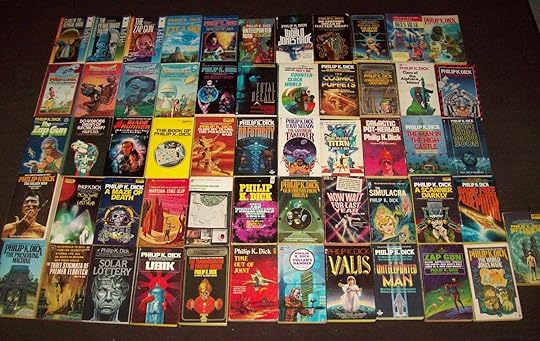
49 novels, umpteen short stories
One major encounter with God (alleged) lasting several weeks
One 8000 page journal describing and theorising about the encounter with God
Several spells in psychiatric facilities
Truckloads, no, container-loads of drugs, mainly amphetamines, which may possibly have something to do with the spells in psychiatric facilities and the early death from stroke and heart failure at age 53.
SOME QUOTES
When he was born in 1928 he was a twin but because of ineptitude on the part of his parents his sister Jane died aged 6 weeks, and all his life PKD felt his twin’s death very keenly, with great sorrow, and blamed his mother for it. Our biographer says
if that seems strange – how could what happened at his birth affect him so? – it can be corroborated by the testimony of anyone who has lost a twin. It is a bond that causes nontwins to be skeptical because it is, in truth, a bond beyond the telling.
Some years later :
Phil read James Joyce’s Finnegans Wake several times in his early twenties.
Hey, really? Have you seen how long that thing is ? 800 pages! Several times? Come on, pull the other one.
He was a very paranoid person. Example :
He would speculate that somehow, by accident, he had depicted a vital, classified secret in his sf – and had aroused the government’s suspicion.
Sometimes he realised he was a giant needy egomaniacal pain :
Gradually everybody is beginning to realize that despite my fame and my great books I am a distinct liability to know or have anything to do with.
Photos do not do him justice. He was large, physically imposing, and hairy. He was wearing slacks and an open shirt, as if his hairy barrel chest and barrel belly couldn’t stand being confined.
Here’s Phil in 1972 aged 44 writing about a new girl he’s met :
Tess is a little black-haired chick, exactly like I’m not supposed to get involved with, eighteen…it’s cool. The thing that’s so great about Tess is that she doesn’t lay any trips on me that aren’t my own.
Yes he was kind of a blissed-out hippy throughout his thirties and forties. But wait, not that blissed-out…on the very next page, a friend Linda Levy is quoted :
Tessa showed up at my apartment one day, covered with bruises, crying and very upset. She described a situation which, she said, Phil locked the front door, turned up the stereo, turned up the air conditioning, and beat her.
I probably shouldn’t quote that part, but it’s there. Anyway, back to God.

(one of over 1500 "stock God photos" you can license)
So....what sort of revelations did Phil receive from God? (This was all he wanted to talk about after a certain point in his mid life.) Well it was this kind of thing :
It was as if linear time was illusion and true time was layered : simultaneous realities stacked one upon the other, the interpenetration visible to the opened mind.
And
I began to go outdoors at night to watch the stars, with the strong impression that information was coming from them.
In fact he didn’t call it God. He called it VALIS which stands for Vast Active Living Intelligence System. Actually, Lawrence Sutin doesn’t think it was God or VALIS, he thinks it was temporal lobe epilepsy (“a reasonable diagnosis”).
FLOW MY TEARS, THE REVERED DEAD SCIENCE FICTION WRITER SAID
A messy, pretty unpleasant, drug-addled guy who couldn’t stand not being married and then after a few years of one marriage got sick of it and married somebody else. An author who would type like Glenn Gould plays the Bach Variations – pyrotechnically composing his novels as he typed, with no idea what will happen next until he sees it being typed by his breakneck fingers rattling away at 180 words per minute, a short story in two all night sessions, a novel in two or three nearly sleepless weeks. When he’s writing don’t talk to him. Bring him coffee and his amphetamines and shut up and go away. When he’s not writing give him your maximum full 100% attention, don’t go to your best friend’s wedding, stay in, he hates going out.
And like George Gissing and George Orwell, his books had just started to make serious money when he keeled over and died. VALIS always has the last laugh.
Five wives, 3 children
49 novels, umpteen short stories
One major encounter with God (alleged) lasting several weeks
One 8000 page journal describing and theorising about the encounter with God
Several spells in psychiatric facilities
Truckloads, no, container-loads of drugs, mainly amphetamines, which may possibly have something to do with the spells in psychiatric facilities and the early death from stroke and heart failure at age 53.
SOME QUOTES
When he was born in 1928 he was a twin but because of ineptitude on the part of his parents his sister Jane died aged 6 weeks, and all his life PKD felt his twin’s death very keenly, with great sorrow, and blamed his mother for it. Our biographer says
if that seems strange – how could what happened at his birth affect him so? – it can be corroborated by the testimony of anyone who has lost a twin. It is a bond that causes nontwins to be skeptical because it is, in truth, a bond beyond the telling.
Some years later :
Phil read James Joyce’s Finnegans Wake several times in his early twenties.
Hey, really? Have you seen how long that thing is ? 800 pages! Several times? Come on, pull the other one.
He was a very paranoid person. Example :
He would speculate that somehow, by accident, he had depicted a vital, classified secret in his sf – and had aroused the government’s suspicion.
Sometimes he realised he was a giant needy egomaniacal pain :
Gradually everybody is beginning to realize that despite my fame and my great books I am a distinct liability to know or have anything to do with.
Photos do not do him justice. He was large, physically imposing, and hairy. He was wearing slacks and an open shirt, as if his hairy barrel chest and barrel belly couldn’t stand being confined.
Here’s Phil in 1972 aged 44 writing about a new girl he’s met :
Tess is a little black-haired chick, exactly like I’m not supposed to get involved with, eighteen…it’s cool. The thing that’s so great about Tess is that she doesn’t lay any trips on me that aren’t my own.
Yes he was kind of a blissed-out hippy throughout his thirties and forties. But wait, not that blissed-out…on the very next page, a friend Linda Levy is quoted :
Tessa showed up at my apartment one day, covered with bruises, crying and very upset. She described a situation which, she said, Phil locked the front door, turned up the stereo, turned up the air conditioning, and beat her.
I probably shouldn’t quote that part, but it’s there. Anyway, back to God.
(one of over 1500 "stock God photos" you can license)
So....what sort of revelations did Phil receive from God? (This was all he wanted to talk about after a certain point in his mid life.) Well it was this kind of thing :
It was as if linear time was illusion and true time was layered : simultaneous realities stacked one upon the other, the interpenetration visible to the opened mind.
And
I began to go outdoors at night to watch the stars, with the strong impression that information was coming from them.
In fact he didn’t call it God. He called it VALIS which stands for Vast Active Living Intelligence System. Actually, Lawrence Sutin doesn’t think it was God or VALIS, he thinks it was temporal lobe epilepsy (“a reasonable diagnosis”).
FLOW MY TEARS, THE REVERED DEAD SCIENCE FICTION WRITER SAID
A messy, pretty unpleasant, drug-addled guy who couldn’t stand not being married and then after a few years of one marriage got sick of it and married somebody else. An author who would type like Glenn Gould plays the Bach Variations – pyrotechnically composing his novels as he typed, with no idea what will happen next until he sees it being typed by his breakneck fingers rattling away at 180 words per minute, a short story in two all night sessions, a novel in two or three nearly sleepless weeks. When he’s writing don’t talk to him. Bring him coffee and his amphetamines and shut up and go away. When he’s not writing give him your maximum full 100% attention, don’t go to your best friend’s wedding, stay in, he hates going out.
And like George Gissing and George Orwell, his books had just started to make serious money when he keeled over and died. VALIS always has the last laugh.

December 5, 2009
It has been customary for my old roommate and I to visit one another at least annually. I usually go in the fall, visiting the Bay area in order to delay the onset of winter by a couple of weeks. I travel light--just a knapsack and a satchel--because I know that my host will have many interesting books to read available during my stay.
In 1994 Michael was living in the Haight, in a avocado-green apartment building next to the more impressive mansion occasionally inhabited by the actor Danny Glover. Now he's in Sonoma and he had lived in another part of San Francisco previously, but the Haight was definitely the most fun, abounding as it does with cafes where we could study and talk all day until retiring to his digs to talk some more and watch a video over popcorn bowls.
My interest in Phil Dick had begun in elementary school. Doing this GoodReads business has caused me to recognize just how many of his novels I'd read even before high school. He was, apparently, a "safe" read, an author I'd favor when purchasing books on the paperback carousels. Later, in college, I became more conscious of Dick as a person who treated characteristic themes about self-identity and the nature of "reality", as, in other words, a serious writer despite his glaring lack of stylistic talent. Experiences with psychotropics had made me especially interested in his work.
Finding a biography of Dick on Michael's shelves (as well as a collection of his short stories billed as "complete") was therefore very intriguing, so rather than reading more of the usual "high weirdness" fare, I devoured it in short order. We also went out of our way one of those nights to seek out a French movie adaptation, Confessions d'un Barjo (1992), of one of Dick's few non-sf novels. It was, like the novel it was based on, Confessions of a Crap Artist, pretty dull.
Sutin's biography of Dick was anything but boring. I was amazed to find that there was no strong evidence he had ever taken psychedelics, just booze, amphetamines and a natural talent, if "talent" is the right word, for altered states. And these states of his, while sometimes inspired, were often quite miserable. Dick was not, generally speaking, a happy fellow, but he did believe that something like redemption was possible and he had had some experience of it. The reading of this biography proffered a lot of insight into Dick's work and helped relate his concerns to my own.
In 1994 Michael was living in the Haight, in a avocado-green apartment building next to the more impressive mansion occasionally inhabited by the actor Danny Glover. Now he's in Sonoma and he had lived in another part of San Francisco previously, but the Haight was definitely the most fun, abounding as it does with cafes where we could study and talk all day until retiring to his digs to talk some more and watch a video over popcorn bowls.
My interest in Phil Dick had begun in elementary school. Doing this GoodReads business has caused me to recognize just how many of his novels I'd read even before high school. He was, apparently, a "safe" read, an author I'd favor when purchasing books on the paperback carousels. Later, in college, I became more conscious of Dick as a person who treated characteristic themes about self-identity and the nature of "reality", as, in other words, a serious writer despite his glaring lack of stylistic talent. Experiences with psychotropics had made me especially interested in his work.
Finding a biography of Dick on Michael's shelves (as well as a collection of his short stories billed as "complete") was therefore very intriguing, so rather than reading more of the usual "high weirdness" fare, I devoured it in short order. We also went out of our way one of those nights to seek out a French movie adaptation, Confessions d'un Barjo (1992), of one of Dick's few non-sf novels. It was, like the novel it was based on, Confessions of a Crap Artist, pretty dull.
Sutin's biography of Dick was anything but boring. I was amazed to find that there was no strong evidence he had ever taken psychedelics, just booze, amphetamines and a natural talent, if "talent" is the right word, for altered states. And these states of his, while sometimes inspired, were often quite miserable. Dick was not, generally speaking, a happy fellow, but he did believe that something like redemption was possible and he had had some experience of it. The reading of this biography proffered a lot of insight into Dick's work and helped relate his concerns to my own.

May 2, 2022
What is Reality?
What is Human?
Philip K. Dick explored these two questions exhaustively in his personal canon. From aliens to androids, mind altering drugs to madness, PKD’s trippy and twisted novels play out dreams and nightmares of what is real and who am I? In his later work, he took these questions further, questioning the nature of God, how and if we can know God, and whether we can trust what knowledge we think we have of Ultimate Being.
Unsurprisingly, PKD’s work was a reflection of his life. Obsessed from his earliest years that part of him was missing because of the death of his twin sister when they were weeks old, he was never fully comfortable or whole in his own skin. He developed an antagonistic relationship with his mother, launching a lifelong quest to find “the Good Mother,” and sending him through a series of five wives. He developed paranoia that various forces, the FBI, the CIA, the Russians, the Mob, were out to get him. (Of course, the FBI did investigate him during the McCarthy era, and his correspondence with Soviet Scientists was opened by the government.) He developed a dependence on amphetamines that fueled his writing but led to eventual mental and physical breakdown. Much of his most brilliant writing was fueled by his agonies struggling with his own relationship with self and reality.
And then God spoke to him. Or Aliens. Or AI. Or Alien AI. His life altered radically from 2-3-74 onward, the date when some transcendent power began communicating information directly to him. He spent the rest of his life working out what it was, what it meant, and if it was real through his writing. This was not so much a break from his earlier themes as it was an intensification and concentration of them.
Lawrence Sutin captures PKD’s life through extensive interviews with friends, colleagues, ex wives, his children, and his work. He includes extensive sources and notes, and a Chronological Survey and Guide to Dick’s body of work. He explores PDK’s most pertinent work within the text, exploring work and author through each other. If you are a serious fan of PKD’s work you need to read this book.
What is Human?
Philip K. Dick explored these two questions exhaustively in his personal canon. From aliens to androids, mind altering drugs to madness, PKD’s trippy and twisted novels play out dreams and nightmares of what is real and who am I? In his later work, he took these questions further, questioning the nature of God, how and if we can know God, and whether we can trust what knowledge we think we have of Ultimate Being.
Unsurprisingly, PKD’s work was a reflection of his life. Obsessed from his earliest years that part of him was missing because of the death of his twin sister when they were weeks old, he was never fully comfortable or whole in his own skin. He developed an antagonistic relationship with his mother, launching a lifelong quest to find “the Good Mother,” and sending him through a series of five wives. He developed paranoia that various forces, the FBI, the CIA, the Russians, the Mob, were out to get him. (Of course, the FBI did investigate him during the McCarthy era, and his correspondence with Soviet Scientists was opened by the government.) He developed a dependence on amphetamines that fueled his writing but led to eventual mental and physical breakdown. Much of his most brilliant writing was fueled by his agonies struggling with his own relationship with self and reality.
And then God spoke to him. Or Aliens. Or AI. Or Alien AI. His life altered radically from 2-3-74 onward, the date when some transcendent power began communicating information directly to him. He spent the rest of his life working out what it was, what it meant, and if it was real through his writing. This was not so much a break from his earlier themes as it was an intensification and concentration of them.
Lawrence Sutin captures PKD’s life through extensive interviews with friends, colleagues, ex wives, his children, and his work. He includes extensive sources and notes, and a Chronological Survey and Guide to Dick’s body of work. He explores PDK’s most pertinent work within the text, exploring work and author through each other. If you are a serious fan of PKD’s work you need to read this book.

March 1, 2010
04/2010
My love for P K D grew in a bed of mystery. I don't understand his choices as a writer and this thrills me. Maybe it would be conceited to claim to understand most writer's choices, but usually, even if I'm in awe of them, at the end I can understand why they did what they did. But with Dick, it isn't that easy. It isn't easy to define him or why he's so powerful a storyteller, when his stories elude simple definition. So I fall back on the mysterious, the idiosynchratic, the inscrutable. His work makes me feel unjaded, like I've never read any fiction before.
Dick's life was strange, of course; he chose that course. I'd heard the rumours: the drugs, the five wives, the religous visions. Now I feel I understand him in more depth and detail, at least. He was an eccentric man, a kind man and (obviously, if you're familiar with his output) a very hard worker. The religous obsessions of his later years are pretty facsinating. It's sad that he died at 53 (before Blade Runner was released) and didn't get to see his reputation balloon.
This biography is amazing. It's thoroughly researched yet relaxed, serious and funny. I trusted the author. It didn't solve the mysteries. It didn't try to.
My love for P K D grew in a bed of mystery. I don't understand his choices as a writer and this thrills me. Maybe it would be conceited to claim to understand most writer's choices, but usually, even if I'm in awe of them, at the end I can understand why they did what they did. But with Dick, it isn't that easy. It isn't easy to define him or why he's so powerful a storyteller, when his stories elude simple definition. So I fall back on the mysterious, the idiosynchratic, the inscrutable. His work makes me feel unjaded, like I've never read any fiction before.
Dick's life was strange, of course; he chose that course. I'd heard the rumours: the drugs, the five wives, the religous visions. Now I feel I understand him in more depth and detail, at least. He was an eccentric man, a kind man and (obviously, if you're familiar with his output) a very hard worker. The religous obsessions of his later years are pretty facsinating. It's sad that he died at 53 (before Blade Runner was released) and didn't get to see his reputation balloon.
This biography is amazing. It's thoroughly researched yet relaxed, serious and funny. I trusted the author. It didn't solve the mysteries. It didn't try to.

June 2, 2012
1989. There are several ways to go about your discovery of PKD. You can read his best novels; you can read his best stories; you can scrounge around garage sales and on-line for old magazines with his earliest works; you can read essays and interviews by and about him in those old mags, and increasingly in the "mainstream" periodicals as his work caught on and the "mainstream" caught up; you can rent the movies made from his novels and stories then you can read the underlying works and compare them to the Hollyversions; and if you really want to go deep, you can read Exegesis, PKD's eight-year, eight-thousand page hand-written quest to answer his two BIG QUESTIONS: WHY ARE WE HERE? and WHAT IS REAL?
Or you can read Lawrence Sutin's excellent biography. Written within seven years of PKD's death, this bio is smart, thorough, and close to the subject. Sutin read it all - over forty novels and two hundred stories, the then unpublished Exegesis, and a lifetime's correspendence - no small feat. He interviewed Phil's surviving family and friends and fellow writers. Through it all, he exhibits honest respect for his subject, hairy warts and all.
NOTE: I just found this comment on Amazon from Tessa Dick and add it for perspective:
"By Tessa B. Dick
I have mixed feelings about this book. Sutin gives the impression that he interviewed me extensively, but he actually used quotes from other interviews and never met me, although I did briefly answer three of his questions by letter. Furthermore, I must disagree with most of his conclusions. Since I spent ten years with Phil, and those were the last ten years of his life, I believe that I know more about him than a biographer who never met him and simply read about him."
Wherever you start, PKD is a literary journey worth taking.
Then there is PKD the man: an only son whose twin sister died at one month and who by his own admission spent the rest of his life looking for her replacement. PKD married five times, fathered a son and two daughters, fought money troubles most of his life, attempted suicide at least once, and abused pharmaceuticals to sustain his energy and alleviate his phobias and anxieties. He loved cats, loved his children, fell in love at the drop of a hat - especially with dark-haired girls half his age - and was often generous with his friends and family.
Coming of age in the SciFi boom of the 50's when success accrued to the writer who could crank it out the fastest, PKD learned to write - and type - at break-neck speed, at one stretch composing on average fifty pages a day for weeks at a time. As he aged, the drugs which helpd him sustain that pace took their toll, and he learned as did everyone who enjoyed the synthetic highs of the 60's, that drugs had their dark side. He called Through a Scanner Darkly his anti-drug statement, even writing to the FBI to volunteer as a spokesman for anti-drug PR efforts.
As successful as PKD was at SciFi, his first and abiding ambition was to break into "mainstream" literary fiction. His only such breakthrough during his life was Confessions of a Crap Artist, published in 1975 to modest success. My intro to PKD happened to be that book which I found in a dime store on a rotating book rack. I was a lit major and had suckled on serious stuff, ya'know, but I often supplemented my diet and fattened up on richer fare. Crap was rich, and I was blown away by its energy, its humor, and its honesty. Who knew reading could be that much fun? It's like it wasn't even work; the words flew off the page and the pages turned themselves. Who was that guy?
I've since read some of his better books, some of his better stories, and plowed through all of Exegesis. None of it has disappointed. Of course, I'm a fan. And at this stage anything with his initials is going to interest me.
PKD was a man of ideas rather than a man of action. He wrote himself into physical and emotional hell, or he wrote himself out of physical and emotional hell. You could look at it either way. However you choose, he left us with a body of work that is as unique and powerful as anything from the second half of the twentieth century.
After a visionary experience in Feb/March 1974, PKD spent the last eight-and-a-half years of his life writing to try to understand the two BIG QUESTIONS. Exegesis is interesting because of the rest of PKD's fiction. Exegesis is an exploration that doesn't arrive at any conclusions. It asks THE QUESTIONS and discards every answer to further test corollaries and opposites and take unexplored paths. He read deeply and widely, dreamed constantly, thought and argued with himself consistently, and talked for hours to friends who would listen. Who knows, he may have understood THE BIG QUESTIONS a little better at the end, and as only he knows, he may have been ready for death when it came.
PKD left us with a body of work that is entertaining, provocative, funny, and capable of skewing your view of reality just enough to perhaps help you perceive it a bit more clearly. If that's not mainstream fiction, PKD, I don't know what is.
Or you can read Lawrence Sutin's excellent biography. Written within seven years of PKD's death, this bio is smart, thorough, and close to the subject. Sutin read it all - over forty novels and two hundred stories, the then unpublished Exegesis, and a lifetime's correspendence - no small feat. He interviewed Phil's surviving family and friends and fellow writers. Through it all, he exhibits honest respect for his subject, hairy warts and all.
NOTE: I just found this comment on Amazon from Tessa Dick and add it for perspective:
"By Tessa B. Dick
I have mixed feelings about this book. Sutin gives the impression that he interviewed me extensively, but he actually used quotes from other interviews and never met me, although I did briefly answer three of his questions by letter. Furthermore, I must disagree with most of his conclusions. Since I spent ten years with Phil, and those were the last ten years of his life, I believe that I know more about him than a biographer who never met him and simply read about him."
Wherever you start, PKD is a literary journey worth taking.
Then there is PKD the man: an only son whose twin sister died at one month and who by his own admission spent the rest of his life looking for her replacement. PKD married five times, fathered a son and two daughters, fought money troubles most of his life, attempted suicide at least once, and abused pharmaceuticals to sustain his energy and alleviate his phobias and anxieties. He loved cats, loved his children, fell in love at the drop of a hat - especially with dark-haired girls half his age - and was often generous with his friends and family.
Coming of age in the SciFi boom of the 50's when success accrued to the writer who could crank it out the fastest, PKD learned to write - and type - at break-neck speed, at one stretch composing on average fifty pages a day for weeks at a time. As he aged, the drugs which helpd him sustain that pace took their toll, and he learned as did everyone who enjoyed the synthetic highs of the 60's, that drugs had their dark side. He called Through a Scanner Darkly his anti-drug statement, even writing to the FBI to volunteer as a spokesman for anti-drug PR efforts.
As successful as PKD was at SciFi, his first and abiding ambition was to break into "mainstream" literary fiction. His only such breakthrough during his life was Confessions of a Crap Artist, published in 1975 to modest success. My intro to PKD happened to be that book which I found in a dime store on a rotating book rack. I was a lit major and had suckled on serious stuff, ya'know, but I often supplemented my diet and fattened up on richer fare. Crap was rich, and I was blown away by its energy, its humor, and its honesty. Who knew reading could be that much fun? It's like it wasn't even work; the words flew off the page and the pages turned themselves. Who was that guy?
I've since read some of his better books, some of his better stories, and plowed through all of Exegesis. None of it has disappointed. Of course, I'm a fan. And at this stage anything with his initials is going to interest me.
PKD was a man of ideas rather than a man of action. He wrote himself into physical and emotional hell, or he wrote himself out of physical and emotional hell. You could look at it either way. However you choose, he left us with a body of work that is as unique and powerful as anything from the second half of the twentieth century.
After a visionary experience in Feb/March 1974, PKD spent the last eight-and-a-half years of his life writing to try to understand the two BIG QUESTIONS. Exegesis is interesting because of the rest of PKD's fiction. Exegesis is an exploration that doesn't arrive at any conclusions. It asks THE QUESTIONS and discards every answer to further test corollaries and opposites and take unexplored paths. He read deeply and widely, dreamed constantly, thought and argued with himself consistently, and talked for hours to friends who would listen. Who knows, he may have understood THE BIG QUESTIONS a little better at the end, and as only he knows, he may have been ready for death when it came.
PKD left us with a body of work that is entertaining, provocative, funny, and capable of skewing your view of reality just enough to perhaps help you perceive it a bit more clearly. If that's not mainstream fiction, PKD, I don't know what is.

January 12, 2011
Answer the following True or False questions about the life of Philip K. Dick.
1) PKD's twin sister, Jane, died in the first months of her life from malnutrition and poor home care.
2) Later in life, PDK liked to imagine that his sister was living and a lesbian.
3) In high school, PKD's agoraphobia was at times so bad that he could not go to public events such as concerts. Later he was comfortable in only one Chinese restaurant that had very high sides to its booths.
4) PKS was on amphetamines from the mid 1950's until around 1972. Some were prescribed, but as the drug scene took off in the 1960's, he also bought speed off the street.
5) When he was a young man, his mother told him that if he left home he would become a homosexual.
6) PKD's first wife was also the first woman he had sex with. The marriage lasted six months and Jeanette, the wife, said in court that Phil's record playing kept her up at night.
7) PKD was married five times, towards the end to women who were barely half his age.
8) Between 1953 and 1957, PKD wrote 14 novels. Between 1963 and 1964 he wrote 11.
9) PKD wrote The Three Stigmata of Palmer Eldritch while tripping on acid.
10) PKD stole pills from his mother and blamed her for not keeping them under lock and key.
11) While trying to live in Canada, PKD felt a mental collapse coming on and pretended to be a heroin addict to get into the only treatment program he could find. He did not like the people he met there.
12) When PKD's house was broken into, ransacked, and burgled the police were not able to solve the case. They considered PKD to be their most likely suspect.
13) When PKD and his wife were investigated by the FBI, his wife fixed dinner for the agents and one agent taught PKD how to drive.
14) In February, 1974, PKD had an impacted wisdom tooth removed and sodium pentathol was used. Later that day, a girl from the drugstore who was delivering Darvon wore an icthus, the Christian fish symbol. When it caught the light, and PKD stared at it, he realized for the first time that he was an immortal being. For the remainder of his life he had visions of the divine and conversations with a divine presence he named VALIS,
15) PKD's spiritual visions, and many of his other character traits, are common symptoms of temporal lobe epilepsy.
Only number (9) is false. According to his biographer Lawrence Sutin, all the rest are true.
1) PKD's twin sister, Jane, died in the first months of her life from malnutrition and poor home care.
2) Later in life, PDK liked to imagine that his sister was living and a lesbian.
3) In high school, PKD's agoraphobia was at times so bad that he could not go to public events such as concerts. Later he was comfortable in only one Chinese restaurant that had very high sides to its booths.
4) PKS was on amphetamines from the mid 1950's until around 1972. Some were prescribed, but as the drug scene took off in the 1960's, he also bought speed off the street.
5) When he was a young man, his mother told him that if he left home he would become a homosexual.
6) PKD's first wife was also the first woman he had sex with. The marriage lasted six months and Jeanette, the wife, said in court that Phil's record playing kept her up at night.
7) PKD was married five times, towards the end to women who were barely half his age.
8) Between 1953 and 1957, PKD wrote 14 novels. Between 1963 and 1964 he wrote 11.
9) PKD wrote The Three Stigmata of Palmer Eldritch while tripping on acid.
10) PKD stole pills from his mother and blamed her for not keeping them under lock and key.
11) While trying to live in Canada, PKD felt a mental collapse coming on and pretended to be a heroin addict to get into the only treatment program he could find. He did not like the people he met there.
12) When PKD's house was broken into, ransacked, and burgled the police were not able to solve the case. They considered PKD to be their most likely suspect.
13) When PKD and his wife were investigated by the FBI, his wife fixed dinner for the agents and one agent taught PKD how to drive.
14) In February, 1974, PKD had an impacted wisdom tooth removed and sodium pentathol was used. Later that day, a girl from the drugstore who was delivering Darvon wore an icthus, the Christian fish symbol. When it caught the light, and PKD stared at it, he realized for the first time that he was an immortal being. For the remainder of his life he had visions of the divine and conversations with a divine presence he named VALIS,
15) PKD's spiritual visions, and many of his other character traits, are common symptoms of temporal lobe epilepsy.
Only number (9) is false. According to his biographer Lawrence Sutin, all the rest are true.

October 18, 2017
Lifeless style. Reads like an extended Wikipedia article.
Nice overview of some of Dick's best novels....
https://www.nytimes.com/2022/10/26/bo...
Nice overview of some of Dick's best novels....
https://www.nytimes.com/2022/10/26/bo...

October 13, 2019
Davvero un bel libro, un'esaustiva e accurata biografia di un autore "difficile" e "complicato" quale è stato Dick.
Una biografia che ci mostra i problemi psicologici che Dick ha avuto fin da piccolo, risalendo alle possibili cause -individuate nel tempo dallo stesso Dick- quali la morte della gemella, il carattere della madre e l'abbandono del padre.
Scopriamo così cosa ci fosse dietro i libri folli e visionari di questo autore. La sua ricerca dell'uomo e del reale, l'utilizzo delle droghe, la ricerca della "Dark Haired Woman" che dalla sua vita si traspone nei suoi testi.
Scopriamo delle sue crisi e della sua travagliata storia editoriale, della sua aspirazione a pubblicare libri "mainstream" e del suo bisogno di essere accettato dalla comunità degli scrittori e dei lettori, delle sue varie fasi fino alla fase di delirio filosofico-religioso vissuta negli ultimi anni di vita.
Ci viene presentato il Dick capace di affascinare chiunque, di discutere per ore saltando da un argomento all'altro, di appassionarsi follemente a qualcosa dedicandovi tutto sé stesso, la persona che si divertiva a sconvolgere e a lasciare a bocca aperta l'interlocutore.
E purtroppo si viene a conoscenza anche di altro, la sua difficoltà ad avere rapporti onesti e duraturi con l'altro sesso, la ricerca di una donna forta che si prendesse cura di lui e che fosse al tempo stesso da lui dipendente. Le liti, i tradimenti, le violenze fisiche, le accuse meschine.
Il rapporto a lungo inesistente con le figlie.
Una persona problematica, vittima anche del suo tempo, che ha saputo però trasportare sulla carta i suoi problemi, le sue crisi e le sue riflessioni, creando opere inimmaginabili.
Di certo questo libro aiuta a capire meglio i suoi libri, così pieni di elementi autobiografici come sono.
Una biografia che ci mostra i problemi psicologici che Dick ha avuto fin da piccolo, risalendo alle possibili cause -individuate nel tempo dallo stesso Dick- quali la morte della gemella, il carattere della madre e l'abbandono del padre.
Scopriamo così cosa ci fosse dietro i libri folli e visionari di questo autore. La sua ricerca dell'uomo e del reale, l'utilizzo delle droghe, la ricerca della "Dark Haired Woman" che dalla sua vita si traspone nei suoi testi.
Scopriamo delle sue crisi e della sua travagliata storia editoriale, della sua aspirazione a pubblicare libri "mainstream" e del suo bisogno di essere accettato dalla comunità degli scrittori e dei lettori, delle sue varie fasi fino alla fase di delirio filosofico-religioso vissuta negli ultimi anni di vita.
Ci viene presentato il Dick capace di affascinare chiunque, di discutere per ore saltando da un argomento all'altro, di appassionarsi follemente a qualcosa dedicandovi tutto sé stesso, la persona che si divertiva a sconvolgere e a lasciare a bocca aperta l'interlocutore.
E purtroppo si viene a conoscenza anche di altro, la sua difficoltà ad avere rapporti onesti e duraturi con l'altro sesso, la ricerca di una donna forta che si prendesse cura di lui e che fosse al tempo stesso da lui dipendente. Le liti, i tradimenti, le violenze fisiche, le accuse meschine.
Il rapporto a lungo inesistente con le figlie.
Una persona problematica, vittima anche del suo tempo, che ha saputo però trasportare sulla carta i suoi problemi, le sue crisi e le sue riflessioni, creando opere inimmaginabili.
Di certo questo libro aiuta a capire meglio i suoi libri, così pieni di elementi autobiografici come sono.

May 25, 2010
Not a lot of sunshine in this biography of the science fiction writer. As a child, Dick suffered from a number of things both physical and psychological, including vertigo, obsessions, phobias and difficulties with swallowing. Following the divorce of his parents, Dick lived with his mother, with whom he had a difficult relationship. As an adult, he became addicted to speed, lived in poverty, married five times, and wrote unusual science fiction novels (the Village Voice referred to Dick as "a poor man's Pynchon," and Ursula K. Le Guin called him "our own homegrown Borges.")
In 1974, Dick experienced a series of strange events that he spent much of the rest of his life attempting to understand, but that he could never explain to himself, although he deployed considerable mental resources in the attempt, drawing not only upon ideas from novels he had already written about characters with psychic abilities, about alien and artificial intelligence, and about simulated and alternate realities, but upon his wide reading as well, particularly on the subjects of religious and mystical experiences, and on philosophies such as Gnosticism. Dick's Exegesis is one result of his investigation; another is his experimental novel VALIS, a semi-autobiographical narrative in which the protagonist, like Dick, experiences some strange events and then attempts to make sense of them (for me Valis is one of Dick's best works).
Although much of the popular and critical recognition he received came only after his death in 1982, Dick did live to see one of his books, Do Androids Dream of Electric Sheep?, adapted to the screen (as Blade Runner).
Divine Invasions is written in an informal style, with frequent authorial asides. Sutin interviewed many people who knew Philip K. Dick, and the emphasis of the biography seems to be more on Dick's personal life than on his writings.
In many instances, and particularly in the discussion of A Scanner Darkly, Sutin notes events represented in Dick's novels that were based on Dick's personal experience.
Acquired May 24, 2010
Powell's City of Books, Portland, OR
In 1974, Dick experienced a series of strange events that he spent much of the rest of his life attempting to understand, but that he could never explain to himself, although he deployed considerable mental resources in the attempt, drawing not only upon ideas from novels he had already written about characters with psychic abilities, about alien and artificial intelligence, and about simulated and alternate realities, but upon his wide reading as well, particularly on the subjects of religious and mystical experiences, and on philosophies such as Gnosticism. Dick's Exegesis is one result of his investigation; another is his experimental novel VALIS, a semi-autobiographical narrative in which the protagonist, like Dick, experiences some strange events and then attempts to make sense of them (for me Valis is one of Dick's best works).
Although much of the popular and critical recognition he received came only after his death in 1982, Dick did live to see one of his books, Do Androids Dream of Electric Sheep?, adapted to the screen (as Blade Runner).
Divine Invasions is written in an informal style, with frequent authorial asides. Sutin interviewed many people who knew Philip K. Dick, and the emphasis of the biography seems to be more on Dick's personal life than on his writings.
In many instances, and particularly in the discussion of A Scanner Darkly, Sutin notes events represented in Dick's novels that were based on Dick's personal experience.
Acquired May 24, 2010
Powell's City of Books, Portland, OR

January 7, 2020
You know this will be an interesting review because I am going to stray from the book a little bit and talk about the reason I re-read this book after fifteen years. Almost two years ago now my writing partner Anthony Trevino suggested that we along with our buddy Langhorne J.Tweed start a podcast called Dickheads. He was surprised that no one had done a podcast about this author with this name before.
Between Novel breakdowns, (we have already covered his prolific first 10 years of novels) Story Vs Film, Dick Adjacent and various interviews we have built a catalog of 50 plus episodes. I am proud of the content we have produced and feel we have added to scholarly pursuit not just of PKD's work but the genre in general.
Through-out the podcast I have been diligent in researching the nitty-gritty details of what was going into Phil's life as he wrote each of the novels we were breaking down. I have gotten to know much more about his editors Don Wollheim and perhaps his most important early mentor Anthony Boucher. What you might notice on the show is some times when we got into the biographical details where he was living, which marriage was going on or ending I got a little more lost. I decided after our second season doing this I wanted to have the details more straight.
I decided not only did I need to re-read Lawrence Sutin's amazing biography of Philip K Dick, but I needed to have it in the studio every time we record. Divine Invasions for better or worse paints such an amazing detailed picture of the writer's life it is pretty impossible to not feel like you know Phil. From his childhood to his speed fueled early days pumping out totally bananas pulp sci-fi to his pink laser beam from god. I am not sure if scholars and podcasters knowing his life in this detail would creep out Phil but there is also an android built to act like him. Lots to chew on there.
As a podcaster devoted to the study of this man's career and output, this book is a godsend. In many ways, I can tell Sutin thinks like me wanting to know how his life and moments influence the tiny moments of his novels. It is also fascinating the in's and outs how he worked with his agents and editors.
Just as fascinating is how Phil was a husband, father, and friend. These stories are so rich and deep in the book because Sutin went crazy deep writing, researching and interviewing important and minor figures in the man's life. This time reading the book as a (digital) scholar of PKD I was just floored at the view of the man's life.
This book is not just important it is a gift. That is not to say it was all roses. While not as problematic as some of the Science Fiction genre forefathers and mothers (remember the loathsome Marion Zimmer Bradley was in PKD's circle of friends)there are lots of not so flattering moments in the man's life. The tweaker years after Nancy took Isa and left are super hard to read about even if it inspired one of his masterpieces in A Scanner Darkly. As a movement the science fiction community is coming to grips with the past and that is sometimes hard. Asimov groped hundreds of women, L Ron Hubbard started a cult, Marion Zimmer Bradley abused her children. Lovecraft and Campbell have had their faces and names stripped from awards.
I am sure that Isa Hackett and the Dick estate may cringe at the honesty of this book at this point. Warts and all I am thankful for this book. I mean Phil Dick himself and his interviews you couldn't trust. It was in part his sense of humor and playfulness, his weird memory and outright pranks that made his statements often contradictions. It is fascinating to listen to his famous 1977 speech in France, but even more so when you know that he barely made it on the plane, that it caused an uproar.
Do some of the events in PKD's life warrant canceling him as a towering figure in the field of 20th-century fiction? I would say no. I may be biased but I believe warts and struggles of this artist and many others add a wonder to what they created. When masterpieces came out of his typewriter like Man in the High Castle, Three Stigmata or others it was a wonder. The fact that he was writing in a hovel he was forced into is apart of the story. In the case of Three Stigmata, it was super important. Even his lesser works like Game Players of Titan makes more sense when you understand that he was seeing a giant mechanical god judging him each time he walked before writing.
This book is essential for fans and scholars who want to KNOW Philip K Dick, not understand him as I am not sure that is possible. Just be warned that Sutin did incredible work and many will not like what they say. If you don't like knowing your heroes you might be better off sticking to his fiction.
If you want to check out our PKD podcast:
https://soundcloud.com/dickheadspodcast
Between Novel breakdowns, (we have already covered his prolific first 10 years of novels) Story Vs Film, Dick Adjacent and various interviews we have built a catalog of 50 plus episodes. I am proud of the content we have produced and feel we have added to scholarly pursuit not just of PKD's work but the genre in general.
Through-out the podcast I have been diligent in researching the nitty-gritty details of what was going into Phil's life as he wrote each of the novels we were breaking down. I have gotten to know much more about his editors Don Wollheim and perhaps his most important early mentor Anthony Boucher. What you might notice on the show is some times when we got into the biographical details where he was living, which marriage was going on or ending I got a little more lost. I decided after our second season doing this I wanted to have the details more straight.
I decided not only did I need to re-read Lawrence Sutin's amazing biography of Philip K Dick, but I needed to have it in the studio every time we record. Divine Invasions for better or worse paints such an amazing detailed picture of the writer's life it is pretty impossible to not feel like you know Phil. From his childhood to his speed fueled early days pumping out totally bananas pulp sci-fi to his pink laser beam from god. I am not sure if scholars and podcasters knowing his life in this detail would creep out Phil but there is also an android built to act like him. Lots to chew on there.
As a podcaster devoted to the study of this man's career and output, this book is a godsend. In many ways, I can tell Sutin thinks like me wanting to know how his life and moments influence the tiny moments of his novels. It is also fascinating the in's and outs how he worked with his agents and editors.
Just as fascinating is how Phil was a husband, father, and friend. These stories are so rich and deep in the book because Sutin went crazy deep writing, researching and interviewing important and minor figures in the man's life. This time reading the book as a (digital) scholar of PKD I was just floored at the view of the man's life.
This book is not just important it is a gift. That is not to say it was all roses. While not as problematic as some of the Science Fiction genre forefathers and mothers (remember the loathsome Marion Zimmer Bradley was in PKD's circle of friends)there are lots of not so flattering moments in the man's life. The tweaker years after Nancy took Isa and left are super hard to read about even if it inspired one of his masterpieces in A Scanner Darkly. As a movement the science fiction community is coming to grips with the past and that is sometimes hard. Asimov groped hundreds of women, L Ron Hubbard started a cult, Marion Zimmer Bradley abused her children. Lovecraft and Campbell have had their faces and names stripped from awards.
I am sure that Isa Hackett and the Dick estate may cringe at the honesty of this book at this point. Warts and all I am thankful for this book. I mean Phil Dick himself and his interviews you couldn't trust. It was in part his sense of humor and playfulness, his weird memory and outright pranks that made his statements often contradictions. It is fascinating to listen to his famous 1977 speech in France, but even more so when you know that he barely made it on the plane, that it caused an uproar.
Do some of the events in PKD's life warrant canceling him as a towering figure in the field of 20th-century fiction? I would say no. I may be biased but I believe warts and struggles of this artist and many others add a wonder to what they created. When masterpieces came out of his typewriter like Man in the High Castle, Three Stigmata or others it was a wonder. The fact that he was writing in a hovel he was forced into is apart of the story. In the case of Three Stigmata, it was super important. Even his lesser works like Game Players of Titan makes more sense when you understand that he was seeing a giant mechanical god judging him each time he walked before writing.
This book is essential for fans and scholars who want to KNOW Philip K Dick, not understand him as I am not sure that is possible. Just be warned that Sutin did incredible work and many will not like what they say. If you don't like knowing your heroes you might be better off sticking to his fiction.
If you want to check out our PKD podcast:
https://soundcloud.com/dickheadspodcast
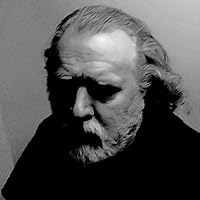
April 29, 2014
This was an excellent biography of Philip K Dick to read. It was thoroughly researched and well written. It started from his birth to his upbringing to the beginning of his writing career, through the career, his relationships with his five different wives and with his three children, his bizarre experiences, and his death in 1982. It was a very comprehensive book. And it was fascinating. I never knew -- and still don't know how or why -- that Dick was SO very obsessed with his twin sister, who died at one month. He spent his entire life searching for an adult alternative to her and made up fantasies about her being a protective lesbian. The book also chronicles his love/hate relationship with his mother, and how that impacted his views on women. Additionally, it was interesting to find out just how passionate he was. I mean he fell in love at the drop of a hat! He was in love with the idea of being in love. Her tormented himself by falling in love with girls half his age, begging them to move in with him and marry him, only to be repeatedly spurned, except on several occasions. Apparently his obsession with authority (his mother) carried over the the FBI and CIA. He just knew they were watching him, and indeed they were. It was fascinating to read about the break in at his house with his big safe being blown up and his calling the police to report he did it. He was indeed paranoid, which anyone reading his novels could figure out. He was also quite insane, while also a genius. Of course, everyone interviewed for this book by the author tried to claim he was sane, lucid, normal, but the evidence shows otherwise. He was batshit crazy. The drugs didn't help, for one thing. His near-religious experience of 2-3-74 was bizarre to read about too. And it's amazing how it impacted him and his writing for the rest of his life. I mean, he actually thought God was speaking to him and revealing himself to him through an AI satellite. Crazy! It was sad to read about how badly he wanted to become an accepted mainstream writer and how he failed so badly at it during his lifetime. But his sci fi was visionary, just fantastic! There's never been another writer like him. One thing I liked about this book was that at the end, it went over all of his books, gave a synopsis, some commentary, and a subjective rating. It was interesting to see how I rated specific books as opposed to the author. I didn't agree with all of his ratings, but I liked reading them. If you're a PKD fan, this book is a must. Get it, read it, be amazed. If you just like interesting biographies, this is also a book for you. I strongly, strongly recommend this book. It's that excellent.

February 16, 2011
Very readable and quick flowing biography, well-suited for those readers of Philip K. Dick looking to learn more about his life and perhaps structure their reading of his books in a more purposeful/enjoyable fashion.
Personally, I know that I will continue reading his earlier and mid-period SF (probably up to UBIK [published 1969]) and really immerse myself in it before I move onto any of the other, later stuff, and probably never really dip into the non-SF works - but perhaps some of his essays and shorter stories. Only later do I plan to plunge ahead into his 1970s mayhem, with Flow My Tears, The Policeman Said or A Scanner Darkly and perhaps wait quite awhile before getting involved with the whole crazy VALIS, Divine Invasion, Radio Free Albemuth, Transmigration of Timothy Archer experience, based on experiences which literally made him question his own sanity.
Basically, this biography is the tale of a strange and smart boy who grows through a weird adolescence into a weird, smart & fun young adult, then becomes a weird, crazy and smart author, who then goes on to alternate between being a smart, crazy, druggy author, a smart, paranoid and crazy author, a totally crazy nutjob, a totally spooky and crazy former nutjob seeing visions, then a plain spooky weirdo.
So many crazy things happened to Philip K. Dick in his life that it's not even worth trying to list them all, starting from his seeing visions and hearing voices as a kid (which gave him answers to tests!), his missing and implanted memories after interrogations with various governmental agents, his apartment being ransacked and Dick eventually suspecting himself of committing the crime, him calling the FBI to inform on himself and telling them "I am a machine", visions of piercing light which informed him that his son had a heart condition (rightly), which he then suspected were tachyons sent from the FUTURE, all the way to the android made in his likeness after he died, a animatronic robot called the Philip K. Dick android, which was brought to SF conventions to speak:
http://boingboing.net/2005/06/23/phil...
and which later disappeared under mysterious circumstances - apparently eluding its "owners":
http://www.pkdandroid.org/disappearan...
The man's life was basically as weird as any of his books, and weirder than any other modern author's life I know of. Totally worthwhile, and Philip K. Dick will rightly be read for many generations to come.
Personally, I know that I will continue reading his earlier and mid-period SF (probably up to UBIK [published 1969]) and really immerse myself in it before I move onto any of the other, later stuff, and probably never really dip into the non-SF works - but perhaps some of his essays and shorter stories. Only later do I plan to plunge ahead into his 1970s mayhem, with Flow My Tears, The Policeman Said or A Scanner Darkly and perhaps wait quite awhile before getting involved with the whole crazy VALIS, Divine Invasion, Radio Free Albemuth, Transmigration of Timothy Archer experience, based on experiences which literally made him question his own sanity.
Basically, this biography is the tale of a strange and smart boy who grows through a weird adolescence into a weird, smart & fun young adult, then becomes a weird, crazy and smart author, who then goes on to alternate between being a smart, crazy, druggy author, a smart, paranoid and crazy author, a totally crazy nutjob, a totally spooky and crazy former nutjob seeing visions, then a plain spooky weirdo.
So many crazy things happened to Philip K. Dick in his life that it's not even worth trying to list them all, starting from his seeing visions and hearing voices as a kid (which gave him answers to tests!), his missing and implanted memories after interrogations with various governmental agents, his apartment being ransacked and Dick eventually suspecting himself of committing the crime, him calling the FBI to inform on himself and telling them "I am a machine", visions of piercing light which informed him that his son had a heart condition (rightly), which he then suspected were tachyons sent from the FUTURE, all the way to the android made in his likeness after he died, a animatronic robot called the Philip K. Dick android, which was brought to SF conventions to speak:
http://boingboing.net/2005/06/23/phil...
and which later disappeared under mysterious circumstances - apparently eluding its "owners":
http://www.pkdandroid.org/disappearan...
The man's life was basically as weird as any of his books, and weirder than any other modern author's life I know of. Totally worthwhile, and Philip K. Dick will rightly be read for many generations to come.

December 28, 2009
4 stars for biographical content, not for enjoyability. pkd has always been my favorite author, now i can't help but think of him as kind of a dick. which is kind of annoying. but whatever.
i don't know why i read this book anyway. learning facts about artists' lives is to my mind never a good thing. colors everything, adds an extraneous real-world slant to the works, which should stand on their own. my bad.
the big fault of this book, as far as i'm concerned, is this: pkd was manic-depressive and this book pretty much ignores that. the fact that he was diagnosed manic-depressive is mentioned only twice in the 300 page book, once in passing by an ex-wife, and once in passing by the biographer, who doesn't even seem to think it might be of importance. he mentions one time that pkd was on lithium, but doesn't seem to understand its significance (lithium is used almost exclusively as a treatment for manic-depression), instead mentioning it as a possible source of pkd's delusions or hallucinations, which is utterly laughable, as lithium is a tranquilizer. meanwhile, virtually all pkd's psychological symptoms are classic symptoms of manic-depression, including most obviously and importantly his psychotic break of 2-3-74. when pkd points out that previous to this earthshattering religious vision he had gone five days and nights without sleep, this goes completely unremarked upon, even though going without sleep for that long would be enough to make even a psychologically healthy person delusional and hallucinating, let alone a manic-depressive, whose mental health is directly linked to proper sleep patterns. it is annoying to read a book that takes virtually all of pkd's terrified and confused rambling explanations for his experience at face value without ever once looking into the rather obvious physical explanation for them. granted, i'm manic-depressive, so this issue means a lot to me, but i felt so bad for pkd's position here that it was terrifying to me that no one was helping him, and that even his biographer didn't seem to see what he was so obviously going through.
[mention made in the book to virginia woolf (another manic-depressive who is not identified as such here) didn't make things any better.:]
book was exhausting to read. pkd's writings are lively and multifaceted, above all FUN and FUNNY... but when seen from the outside that humor disappears and all we see is a rather frightened and pathetic man who lies compulsively, treats people poorly, and even beats his wives. blah.
truth is lamer than fiction.
now back to our regularly scheduled program.
i don't know why i read this book anyway. learning facts about artists' lives is to my mind never a good thing. colors everything, adds an extraneous real-world slant to the works, which should stand on their own. my bad.
the big fault of this book, as far as i'm concerned, is this: pkd was manic-depressive and this book pretty much ignores that. the fact that he was diagnosed manic-depressive is mentioned only twice in the 300 page book, once in passing by an ex-wife, and once in passing by the biographer, who doesn't even seem to think it might be of importance. he mentions one time that pkd was on lithium, but doesn't seem to understand its significance (lithium is used almost exclusively as a treatment for manic-depression), instead mentioning it as a possible source of pkd's delusions or hallucinations, which is utterly laughable, as lithium is a tranquilizer. meanwhile, virtually all pkd's psychological symptoms are classic symptoms of manic-depression, including most obviously and importantly his psychotic break of 2-3-74. when pkd points out that previous to this earthshattering religious vision he had gone five days and nights without sleep, this goes completely unremarked upon, even though going without sleep for that long would be enough to make even a psychologically healthy person delusional and hallucinating, let alone a manic-depressive, whose mental health is directly linked to proper sleep patterns. it is annoying to read a book that takes virtually all of pkd's terrified and confused rambling explanations for his experience at face value without ever once looking into the rather obvious physical explanation for them. granted, i'm manic-depressive, so this issue means a lot to me, but i felt so bad for pkd's position here that it was terrifying to me that no one was helping him, and that even his biographer didn't seem to see what he was so obviously going through.
[mention made in the book to virginia woolf (another manic-depressive who is not identified as such here) didn't make things any better.:]
book was exhausting to read. pkd's writings are lively and multifaceted, above all FUN and FUNNY... but when seen from the outside that humor disappears and all we see is a rather frightened and pathetic man who lies compulsively, treats people poorly, and even beats his wives. blah.
truth is lamer than fiction.
now back to our regularly scheduled program.


September 8, 2013
I don't read literary biographies that often. In fact, I'm hard pressed to remember the name of a single one I've read. Part of the reason is I really hate the author-worship that surrounds so much of literature these days. The writer becomes so big, I can't help but think of them even when I'm reading their stuff. This is largely why I've never read David Foster Wallace, and likely never will.
But Philip K. Dick is different and I'm willing to make an exception here. Oh, I'll make other exceptions if a biography looks interesting, because I enjoy reading about interesting lives. Dick's life was interesting, but in such a strange way. Yeah, he was married five times, but he didn't really do anything. Didn't go to college (for long), didn't really have a job besides writing (he had one in a record store, for a few years out of high school). Didn't do much of anything, except write science fiction.
Of course, as with any figure who is famous enough for anecdotes to be told about and create a kind of mythos around, this book served to dispel a number of rumors. Dick's drug use wasn't really that unusual for the times, and the speed he took was prescribed for him for legitimate reasons. Most of all, however, he wasn't crazy. Well, not entirely, and not in any serious way. He was odd, but he was charming, he had friends, and was generally well-liked.
So what makes him so interesting, and this book so good? Well, I was interested for one. And Dick struggled with the same kinds of hardships that I've struggled with-- nothing too terrible (mostly), but enough to create some baggage. His relationship with his parents wasn't very good, though that was likely his fault more than anything. His twin sister died in infancy, and while I'm skeptical about the idea that this psychically scars surviving twins, the way his mother handled telling young Phil certainly would have left scars.
What really interested me, and what I could relate to, is the auto-didacticism of Dick, and his interest in the nature of things. What is real? What is human? What is god? He asks, and explores, these questions repeatedly not only in his books, but in his conversations with friends and his ongoing "exegesis" that served as a thousand-page inner dialog. Phil was a seeker, in a way that I never really was, but the curiosity and imagination that drove his seeking seemingly had no limits, to the point that it made him seem, and wonder if he was, crazy. I sometimes feel the same. Minus the imagination.
But Philip K. Dick is different and I'm willing to make an exception here. Oh, I'll make other exceptions if a biography looks interesting, because I enjoy reading about interesting lives. Dick's life was interesting, but in such a strange way. Yeah, he was married five times, but he didn't really do anything. Didn't go to college (for long), didn't really have a job besides writing (he had one in a record store, for a few years out of high school). Didn't do much of anything, except write science fiction.
Of course, as with any figure who is famous enough for anecdotes to be told about and create a kind of mythos around, this book served to dispel a number of rumors. Dick's drug use wasn't really that unusual for the times, and the speed he took was prescribed for him for legitimate reasons. Most of all, however, he wasn't crazy. Well, not entirely, and not in any serious way. He was odd, but he was charming, he had friends, and was generally well-liked.
So what makes him so interesting, and this book so good? Well, I was interested for one. And Dick struggled with the same kinds of hardships that I've struggled with-- nothing too terrible (mostly), but enough to create some baggage. His relationship with his parents wasn't very good, though that was likely his fault more than anything. His twin sister died in infancy, and while I'm skeptical about the idea that this psychically scars surviving twins, the way his mother handled telling young Phil certainly would have left scars.
What really interested me, and what I could relate to, is the auto-didacticism of Dick, and his interest in the nature of things. What is real? What is human? What is god? He asks, and explores, these questions repeatedly not only in his books, but in his conversations with friends and his ongoing "exegesis" that served as a thousand-page inner dialog. Phil was a seeker, in a way that I never really was, but the curiosity and imagination that drove his seeking seemingly had no limits, to the point that it made him seem, and wonder if he was, crazy. I sometimes feel the same. Minus the imagination.

July 13, 2013
I'm unclear whether my two stars are really an evaluation of the book or an evaluation of Philip K. Dick's life. Dick had many bad habits: he ingested too many drugs; got involved with too many women (often they were half his age); over-analyzed his spiritual visions; ate bad food; didn't exercise; had several children that he more or less abandoned; wrote whole novels in two or three week stints, after which he'd collapse for several days.
Lawrence Sutin probably deserves five stars for all the research he did to put this book together. The problem is that perhaps his subject was not worthy of the effort. It might have been great to be a casual friend of Philip K. Dick, but it would have been hard to be any closer.
Philip K. Dick wrote several masterpieces. (His best works include VALIS, Three Stigmata, Ubik, The Man in the High Castle, Do Androids Dream . . ., and Flow My Tears, and A Scanner Darkly.) He also wrote a fair amount of trash.
Sutin's biography contains a very useful chronology and summary of Dick's books. It's good to know which ones to stay away from in case one is not interested in reading Dick's entire oeuvre (which I suppose I am not).
My biggest disappointment is that I expected this biography to help me understand better the visions that Dick had in February-March of 1974. It did not.
Lawrence Sutin probably deserves five stars for all the research he did to put this book together. The problem is that perhaps his subject was not worthy of the effort. It might have been great to be a casual friend of Philip K. Dick, but it would have been hard to be any closer.
Philip K. Dick wrote several masterpieces. (His best works include VALIS, Three Stigmata, Ubik, The Man in the High Castle, Do Androids Dream . . ., and Flow My Tears, and A Scanner Darkly.) He also wrote a fair amount of trash.
Sutin's biography contains a very useful chronology and summary of Dick's books. It's good to know which ones to stay away from in case one is not interested in reading Dick's entire oeuvre (which I suppose I am not).
My biggest disappointment is that I expected this biography to help me understand better the visions that Dick had in February-March of 1974. It did not.

December 12, 2022
I recently read the SciFi story, Ubik, which I liked very much. It was unlike anything I’d ever read. In that book were a couple of pages about the author. I thought, “He sounds more interesting that his story.” He was. I didn’t think I’d ever heard of him before, but I remember seeing both Blade Runner and Total Recall at the movie theater, so I really had heard of him. This was a comprehensive biography of Dick and his stories. The one true thing I could believe from it was that Dick “exaggerated” a lot. When he wasn’t shut in his house with agoraphobia, he liked to socialize and party, especially with young dark-haired women. He liked to tell stories and pass them off as being true. His friends liked him too much to ever accuse him of being a liar. He certainly lived a strange life and had A LOT of issues. I learned more about him than I ever wanted to know. There was so much information in this book that by the end of it, I was exhausted and as ready as all of his ex-wives to get away from him.

June 2, 2013
5 stars from Stuart, read the full review at FANTASY LITERATURE
Disclaimer: just so you know, some of the books we review are received free from publishers
Philip K. Dick is certainly one of the most iconic, unusual, and hard-luck SF writers ever to grace the field. His books subvert our everyday reality, question what is human, and explore paranoia and madness, all with a uniquely unadorned and often blackly-humorous style. In classic starving artist fashion, he only gained recognition and cult-status late in life, and much of his fame came after passing away at age 53.
In his prolific career he published 44 novels and 121 short stories, and in 2014-2015 I read 10 of his novels, 7 audiobooks, and 3 short story collections. There’s something so enticing about his paranoid, darkly-comic tales of everyday working-class heroes, troubled psychics, bizarre aliens, sinister organizations, and obscure philosophical concepts. PDK was a very eclectic reader, showing intense interest a wide range of philosophies including Christian Gnosticism, Jewish Kabbalism, Zoroastrianism, Manichaeism, anamnesis, and the dualistic nature of the ultimate divine being....5 stars from Stuart, read the full review at FANTASY LITERATURE
Disclaimer: just so you know, some of the books we review are received free from publishers
Philip K. Dick is certainly one of the most iconic, unusual, and hard-luck SF writers ever to grace the field. His books subvert our everyday reality, question what is human, and explore paranoia and madness, all with a uniquely unadorned and often blackly-humorous style. In classic starving artist fashion, he only gained recognition and cult-status late in life, and much of his fame came after passing away at age 53.
In his prolific career he published 44 novels and 121 short stories, and in 2014-2015 I read 10 of his novels, 7 audiobooks, and 3 short story collections. There’s something so enticing about his paranoid, darkly-comic tales of everyday working-class heroes, troubled psychics, bizarre aliens, sinister organizations, and obscure philosophical concepts. PDK was a very eclectic reader, showing intense interest a wide range of philosophies including Christian Gnosticism, Jewish Kabbalism, Zoroastrianism, Manichaeism, anamnesis, and the dualistic nature of the ultimate divine being....5 stars from Stuart, read the full review at FANTASY LITERATURE

August 8, 2017
One of the finest biographies I have ever read. Impeccable coverage of Dick's extensive works.

April 23, 2025
Back in my sophomore year of high school, I became entranced by the future buried between the pages of Philip K. Dick’s (nearly undisputed) masterpiece Do Androids Dream of Electric Sheep? While I can’t say I understood it back then, the novel had a profound impact on me. Since that first encounter, I’ve become obsessed with the strange, prophetic, and often unsettling visions captured by the genius—albeit troubled—science fiction master.
Drawn from hundreds of interviews, letters, books, and archival resources, Divine Invasions is a brilliant and absorbing biography of one of speculative fiction’s most enigmatic minds. Lawrence Sutin does an exceptional job weaving together the many contradictions and complexities that made up Dick’s life—his paranoia and romance, his brilliance and brokenness, his failures and flashes of mysticism. The result is a portrait as surreal and compelling as the works we know him from.
My only critique is that Sutin’s personal bias toward certain works is pretty evident, and in some places, he glosses over major novels that I would have loved to see explored in greater depth. I think it’s an especially interesting move to not analyze Do Androids Dream of Electric Sheep? in more detail the way he does other major works, like The Martian Timeslip or Ubik.
That said, the wealth of insight here is, well, divine. Whether you’re a longtime devotee of PKD or just dipping your toe into his maze-like worlds, this biography is a mind-opening must-read.
Drawn from hundreds of interviews, letters, books, and archival resources, Divine Invasions is a brilliant and absorbing biography of one of speculative fiction’s most enigmatic minds. Lawrence Sutin does an exceptional job weaving together the many contradictions and complexities that made up Dick’s life—his paranoia and romance, his brilliance and brokenness, his failures and flashes of mysticism. The result is a portrait as surreal and compelling as the works we know him from.
My only critique is that Sutin’s personal bias toward certain works is pretty evident, and in some places, he glosses over major novels that I would have loved to see explored in greater depth. I think it’s an especially interesting move to not analyze Do Androids Dream of Electric Sheep? in more detail the way he does other major works, like The Martian Timeslip or Ubik.
That said, the wealth of insight here is, well, divine. Whether you’re a longtime devotee of PKD or just dipping your toe into his maze-like worlds, this biography is a mind-opening must-read.

December 9, 2020
Das Leben Philip K. Dicks wird den Lesern relativ detailliert nahegebracht, sprich es gibt einen Einblick in die Entwicklung des Menschen PKD, weniger in sein Werk. Bevor ich mit der Lektüre dieses umfangreichen Werkes anfing, habe ich schon einiges über Dick gelesen. Ich kann deshalb nicht viel Wissen diesem Buch allein zuschreiben. Es hat in dem Sinne auch kein Generalthema für mich gehabt. Es sei denn die "Göttlichen Überfälle", also die Visionen, oder die psychotischen Anfälle, wie sie Sutin sieht. Das was Dick daraus gemacht hat in seinen Romanen, interessiert ihn weniger. Aber PKDs Leben war so schon wenig geruhsam. Stress prägte sein Leben, der Erfolgsdruck als Autor, der eine Familie zu ernähren hatte. Aber eben auch das Zusammenleben selbst mit seinen Ehefrauen. Und dann kam noch die Paranoia hinzu. Dick war ein schwieriger Mensch und politisch nicht leicht einzuordnen. Aber am Ende kann man die Erkenntnis mitnehmen, dass die immer noch anhaltende Wirkung seiner Literatur zum Teil auch seinen besonderen Lebensum- und -zuständen herrührt.

February 21, 2020
An intriguing glance into the turbulent psychonaut PKD's life. From the drugs to the violence to the laughter and the tears. Horselover Fat's dead twin Jane seem to be a metaphor for "reality." A splinter between what experience and a deeper occult meaning/dimension/perception. Narc on yourself. Appreciate author pointing out Phil's generosity and good nature despite his amphetamine up down paranoid neediness. A flame that burned brightly that if got too close that could burn.

April 20, 2024
An exhaustive thorough look at Philip K Dick's life with subjective speculation and apologia thrown in. Did this make me like PKD less as a person? Yes. But did it make me more convinced of his brilliance? Also, yes. He's a complicated and flawed man but an amazing thinker. Thanks for the background to complete my research project, Mr. Sutin.

July 18, 2021
Before coming to this bio I read the better part of twenty PKD novels. PKD is a binge author. You read tons of other books in your life, but if you're a real Dickhead you'll undoubtedly find yourself neck deep in a Ganymedian slime mold one random Tuesday and next thing you know, you're reading ten PKD books in a row. And aside from my frequent binges I had also read "In Search of Philip K. Dick" by his former wife Anne, which tells you a lot about PKD the man, the husband, the father, and friend. And it gives you a good look at the people who were in his life during a very important phase of his writing career. So naturally I believed that my grasp of Dick's art and life was fairly fleshed out. And then "Divine Invasions..." by Lawrence Sutin came into my life and I realized "Wow, this PKD trip has only just begun."
I've read many author bios. I think they're the only bios I ever read. I like writers so I read about writers. They might lead relatively boring lives, but so do I. And I usually only read about 19th century authors like Balzac, Stendhal, Maupassant, Wilkie Collins, Flaubert, Zola...(How the heck did that short statured English mystery writer squeeze himself into that fancy French baguette?). And those books are always great, technically speaking. When you write about a 19th century master you're usually a great writer yourself. Any biographer would cringe at the thought of their own crummy sentences laying side by side on the page with bonafide literary gold. So if you're writing a book about the masterful Maupassant you better be able to grab the reader's attention. But no matter how talented the biographer is many of those classic biographies follow a similar formula. They start off with the author's birth, then childhood, then schooling, then...you get the idea...and all throughout the life story the biographer weaves in citations from each of the author's novels and makes comparisons between life and art, life and art, life and art. Again, as great as they are, these bios are super formulaic and after a while can get a little boring despite their technical excellence.
Well I'm here to tell you that Lawrence Sutin breathes NEW LIFE into the literary bio format. This bio reads like a fast paced documentary. Every chapter is brimming with quotes from PKD in the form of letter excerpts, lines from speeches he gave at sci-fi conventions, snippets from introductions he wrote...and these quotes are like red pins in the map of PKD's life. They place the reader into a place and time or a frame of mind. And Sutin doesn't waste his time trying to turn Dick's life into a Lawrence Sutin novel. Sutin isn't here to show off. He isn't here to share the spotlight. He came for one reason and one reason only - To celebrate the life and work (emphasis on work) of Philip K. Dick.
Fast moving chapters, excellent dissections of Dick's greatest literary moments, and probably the greatest gift of all comes at the end of the book - A complete guide to every single PKD book in chronological order (in the order they were written, not in the order they were published, which is important when you're profiling the work of a guy who published a dozen books posthumously). And my favorite part - Sutin finishes each book synopsis with a 1 thru 10 rating. Sure, these ratings are subjective...they are one man's opinion...but still, when Sutin gave "The Crack In Space" a rating of 2, I then decided to delete it from my Betterworld Books cart and replace it with "The Golden Man" story collection which rated far higher. The guide is super valuable for shopaholic Dickheads.
This has to be the best PKD bio out there. And this isn't one that you'll read and then toss aside and forget about. I feel like this is a reference book I'll hold onto and dip back into every time I find myself on another PKD binge.
I've read many author bios. I think they're the only bios I ever read. I like writers so I read about writers. They might lead relatively boring lives, but so do I. And I usually only read about 19th century authors like Balzac, Stendhal, Maupassant, Wilkie Collins, Flaubert, Zola...(How the heck did that short statured English mystery writer squeeze himself into that fancy French baguette?). And those books are always great, technically speaking. When you write about a 19th century master you're usually a great writer yourself. Any biographer would cringe at the thought of their own crummy sentences laying side by side on the page with bonafide literary gold. So if you're writing a book about the masterful Maupassant you better be able to grab the reader's attention. But no matter how talented the biographer is many of those classic biographies follow a similar formula. They start off with the author's birth, then childhood, then schooling, then...you get the idea...and all throughout the life story the biographer weaves in citations from each of the author's novels and makes comparisons between life and art, life and art, life and art. Again, as great as they are, these bios are super formulaic and after a while can get a little boring despite their technical excellence.
Well I'm here to tell you that Lawrence Sutin breathes NEW LIFE into the literary bio format. This bio reads like a fast paced documentary. Every chapter is brimming with quotes from PKD in the form of letter excerpts, lines from speeches he gave at sci-fi conventions, snippets from introductions he wrote...and these quotes are like red pins in the map of PKD's life. They place the reader into a place and time or a frame of mind. And Sutin doesn't waste his time trying to turn Dick's life into a Lawrence Sutin novel. Sutin isn't here to show off. He isn't here to share the spotlight. He came for one reason and one reason only - To celebrate the life and work (emphasis on work) of Philip K. Dick.
Fast moving chapters, excellent dissections of Dick's greatest literary moments, and probably the greatest gift of all comes at the end of the book - A complete guide to every single PKD book in chronological order (in the order they were written, not in the order they were published, which is important when you're profiling the work of a guy who published a dozen books posthumously). And my favorite part - Sutin finishes each book synopsis with a 1 thru 10 rating. Sure, these ratings are subjective...they are one man's opinion...but still, when Sutin gave "The Crack In Space" a rating of 2, I then decided to delete it from my Betterworld Books cart and replace it with "The Golden Man" story collection which rated far higher. The guide is super valuable for shopaholic Dickheads.
This has to be the best PKD bio out there. And this isn't one that you'll read and then toss aside and forget about. I feel like this is a reference book I'll hold onto and dip back into every time I find myself on another PKD binge.
September 10, 2015
DIVINE INVASIONS is a readable, revealing biography of the 20th-century sci-fi titan into whose mind we all most wish we could climb. Philip K. Dick’s brilliance is never in doubt, even as author Lawrence Sutin guides us through the labyrinthine emotional upheavals and relationships of his life. And boy, are they fraught, particularly when it comes to women. From his love/hate vacillations with his mother to a slew of girlfriends to all five of his wives, PKD’s life reads at times like a hormone-filled, drug-addled teen drama. Sutin is clearly a superfan, but he presents his subject’s literary prowess and social prescience in counterpoint to a painful lifelong search for emotional wholeness. His approach feels both balanced and intimate, but isn’t afraid of a little humor now and then.
Tessa B. Dick, PKD’s fifth wife, has criticized Sutin on Amazon for giving the impression that he interviewed her for this book. But Sutin documents his sources in copious endnotes, also making clear in the text when something she says comes from a letter to him or when it comes from her writings, so careful readers shouldn’t be confused. Sutin drew on a vast number of sources throughout, including (but not limited to) extensive interviews with the people who lived and worked most closely with PKD.
Although, as a biography, DIVINE INVASIONS rightfully focuses on life events, Sutin also delves deeply into a number of PKD’s most important works, including VALIS, THE MAN IN THE HIGH CASTLE, UBIK, and FLOW MY TEARS, THE POLICEMAN SAID, and also the lengthy EXEGESIS of his final years. For everything else, Sutin provides a comprehensive bibliography of publications and lost works, including synopses and ratings. Despite its wealth of detail, this biography is quick to devour and provides a welcome insight into the man and his prolific output.
Tessa B. Dick, PKD’s fifth wife, has criticized Sutin on Amazon for giving the impression that he interviewed her for this book. But Sutin documents his sources in copious endnotes, also making clear in the text when something she says comes from a letter to him or when it comes from her writings, so careful readers shouldn’t be confused. Sutin drew on a vast number of sources throughout, including (but not limited to) extensive interviews with the people who lived and worked most closely with PKD.
Although, as a biography, DIVINE INVASIONS rightfully focuses on life events, Sutin also delves deeply into a number of PKD’s most important works, including VALIS, THE MAN IN THE HIGH CASTLE, UBIK, and FLOW MY TEARS, THE POLICEMAN SAID, and also the lengthy EXEGESIS of his final years. For everything else, Sutin provides a comprehensive bibliography of publications and lost works, including synopses and ratings. Despite its wealth of detail, this biography is quick to devour and provides a welcome insight into the man and his prolific output.

February 3, 2014
The first major biography of Philip K. Dick. If I'm not mistaken, it was first published in 1989, and I read for the first time in about 1990. While I think Sutin is a fan, he hasn't written a hagiography. Sutin often points out Dick's contradictory, revisionist or confused accounts of events and relationships. Dick was a complicated guy, and not above giving a distorted picture of his own actions.
In re-reading, I was favorably impressed by the author's careful reading of Dick's works. He has ferreted out some interesting connections, and provides a lot of insightful commentary on which characters are based on real people from PKD's life (most of them), and where Dick's life experiences overlapped and colored his writing. I was well aware of the heavily autobiographical nature of the books PKD wrote in the last decade of his career. I was surprised however, that Sutin pointed out many similar parallels in his earlier works. I found it fascinating to see how PKD's friends, wives, obsessions, experiences and phobias all went into a kind of "science fiction writing blender," and came out the other side as his novels and stories.
The PKD bibliography after the main text includes extensive commentary, and is a valuable resource.
In re-reading, I was favorably impressed by the author's careful reading of Dick's works. He has ferreted out some interesting connections, and provides a lot of insightful commentary on which characters are based on real people from PKD's life (most of them), and where Dick's life experiences overlapped and colored his writing. I was well aware of the heavily autobiographical nature of the books PKD wrote in the last decade of his career. I was surprised however, that Sutin pointed out many similar parallels in his earlier works. I found it fascinating to see how PKD's friends, wives, obsessions, experiences and phobias all went into a kind of "science fiction writing blender," and came out the other side as his novels and stories.
The PKD bibliography after the main text includes extensive commentary, and is a valuable resource.
Displaying 1 - 30 of 96 reviews