What do you think?
Rate this book


13 pages, Audible Audio
First published January 19, 2023


Quality fantasy withstands fickle, split-second market trends if it carries meaningful messages and concepts. To my delight, this title is exactly that kind—rather than one of those sensation-oriented, one-day wonders featuring a spicy mix of violence, didactics, intentionally planted infantilism in the characters, and politically correct plot twists applied straight from a standard recipe book (twists unacceptable by the recipe book are not allowed and simply do not happen).
The struggle against the gods (from Prometheus and Doubting Thomas onwards) is that very thread in human history that has led to the most wars and pyres for those who profess it. When a faith is reduced to a cemented religion, and religion is reduced to a bureaucratically and powerfully managed idolatry and a cozy superstition for fearful little souls, then there is a problem. A problem that humanity still lives with today, but unlike in the past, at least now there is a wider choice of paths and combinations. That is no small thing. Differences have some "room" to manifest. And knowledge is more accessible.
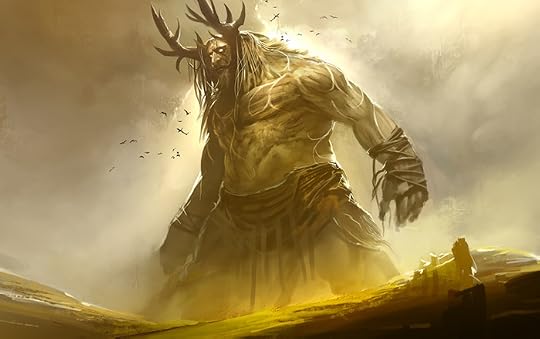
Here, Hannah Kaner has taken the bull by the horns. Midren was scorched three years prior by a horrifying war between humans and gods. The gods, fueled by human greed for power and wealth, became relentless. And the people under their sway—dangerous to their fellow men. As a result, the ancient city of Blenraden is now a heap of half-patched ruins, godkillers roam the kingdom, and a new civil war is looming. Yet, even though defeated, the gods are still there, pulling the strings of habit, comfort, superstition, and the need for blind reliance on something higher. And they still grant wishes, but never for free.
The price is always to the detriment of those begging for divine favor. And without knowing that they are rushing toward one, the paths of the four characters cross. Kissen is a mercenary and a godkiller with a horrifying past. Elogast is trying to redeem past sins with penance and a peaceful life. Inara is trying to find her way in the world outside the suffocating protection of her powerful mother. And Skedisset is, at first glance, a harmless little god of noble lies who just wants to survive in a world hostile to gods… and, if possible, find a tiny shrine of his own to receive modest offerings.
The characters are strong and well-fleshed out, even the short-lived ones, and the pace as a whole neither drags nor rushes. The atmosphere is tangible; the air literally vibrates with the problems and daily life of this fictional medieval world. I really liked the world-building itself—it's fresh, though at times Kaner overdoes it by concentrating too many colors in one place. A prime example is Kissen's character—at least one of her distinctive traits could have been spared without the plot losing a thing. Even that damn gold tooth, for instance! Also, the ending felt a bit rushed, but it turned out to be mythologically spectacular, and now I'll have to dash off to the second part.
It's a truly fresh breath of air to see the absence of the now mandatory and tedious tropes involving witches, vampires, sorcerers, dragons, and the like. Here, the game is played on an epic scale, in a Norse-style "Twilight of the Gods" fashion (but not only, not only!), and it is definitely not over in this first installment.
4.5⭐️ — oh, I'll round it up, I read it with way too much pleasure.