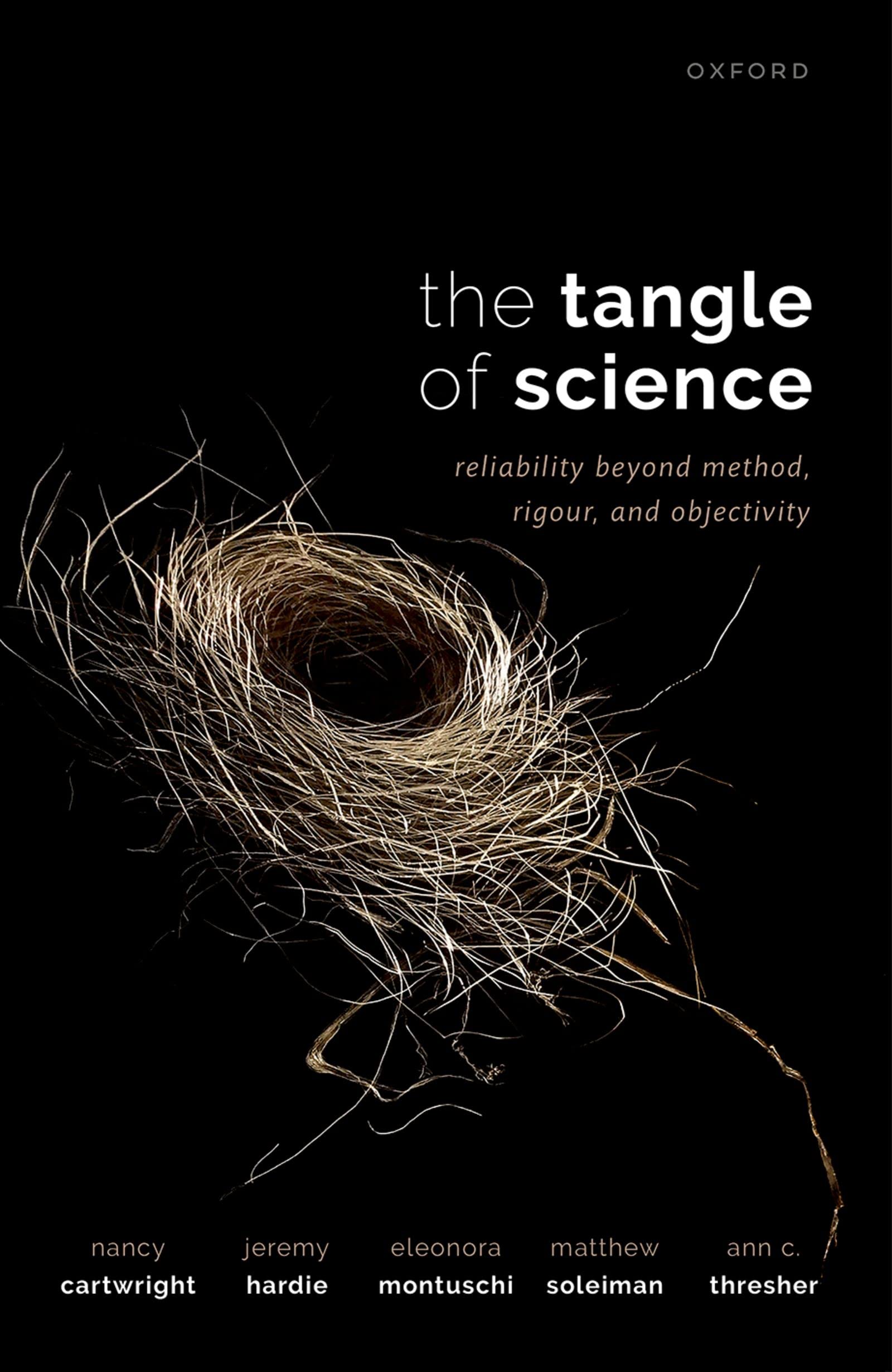
Science is remarkably reliable. It puts people on the moon, performs laser eye surgery, tells us about ancient civilizations and species, and predicts the future of our climate. What underwrites this reliability? This book argues that the standard answers--the scientific method, rigour, and objectivity--are insufficient for the job. Here we propose a new model of science which places its products front and centre. In The Tangle of Science we show how any reliable piece of science is underpinned by a vast, diverse, and thick network of other scientific products. In doing so we bring back into focus areas of science that have been long neglected, emphasizing how every product, from the screws that hold the space shuttle together, to ways of measuring the consumer price index, to Einstein's theory of general relativity, work together to support results we can trust.
This book asks a very important question-- what makes science so reliable? In public discourse, we often answer this question with answers containing terms like "the scientific method", "rigor", and "objectivity." The authors don't quibble that these concepts are important, they are not sufficient in themselves. Instead, there is a huge variety of scientific "products"-- data sets, equipment, standards, policies, and other factors-- that must be in place to ensure reliability. In that respect, science does not sit on just a few foundational pillars that one can characterize in a single sentence. Instead, science is more like a bird's nest of various interlocking parts that collectively produce reliability in specific contexts.
I certainly agree-- trying to essentialize a vast, collective human endeavor with just a few words is bound to result in a caricature that scarcely resembles the actual process. But is this insight something so profound that it's going to reconfigure how we understand the basics of science? I don't think so. Its value is more as a critique of shallow science communication, what one is apt to see in both textbooks and public discourse. Any time you resort to shorthand, you are going lose precision. I think the lesson here is not to mistake the shorthand with the real process.
The Tangle of Science offers a refreshing and thought-provoking perspective on what makes science trustworthy. Rather than relying on familiar ideas like the scientific method, objectivity, or rigor alone, the authors argue that scientific reliability emerges from an interconnected network of practices, tools, theories, measurements, and accumulated knowledge. The result is a compelling rethinking of how science actually works.
One of the book's greatest strengths is its ability to connect philosophical ideas with real-world scientific examples. From engineering and climate science to economics and physics, the authors demonstrate how reliable scientific knowledge depends on countless supporting elements working together. Their interdisciplinary approach makes complex ideas accessible while encouraging readers to rethink long-held assumptions about scientific inquiry.
Overall, this is an insightful and engaging read for anyone interested in the philosophy of science, scientific practice, epistemology, or the foundations of knowledge. It challenges conventional views in a constructive way and offers a richer understanding of why science remains one of humanity's most reliable ways of understanding the world.